
Breed profile
Tenterfield Terrier: Price in India, Health and Heat
An Australian working terrier that Dogs Australia still classes as a Breed under Development, a status written to expire on 31 December 2026, and whose healthy dogs carry a thyroid mutation at 31 percent.
Quick answer
No Tenterfield Terrier price in India exists. The breed is held by one national registry in the world, Dogs Australia, and only as a Breed under Development, a status its own regulations say continues until 31 December 2026. India's dog import policy bars commercial import for breeding, so no Indian market price can form.
This page reports published veterinary research, registry documents and Indian price data. It is not a diagnosis and it is not a treatment plan. A puppy that fails to grow, is lethargic or has a swelling in the throat, and any young dog that becomes unsteady, twitchy or has a seizure, both need veterinary examination urgently. Consult your nearby vet before acting on anything here, and before starting or stopping any medicine.
Tenterfield Terrier at a glance
What a Tenterfield Terrier is, and the status that expires this year
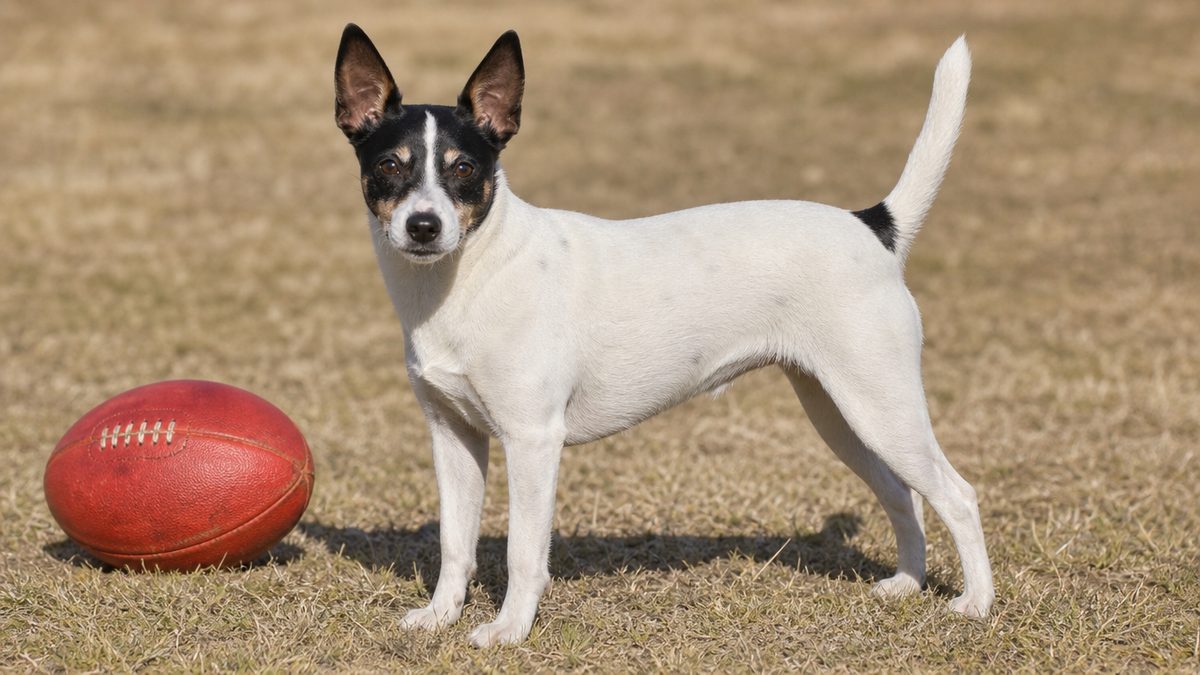
The Tenterfield Terrier is a small Australian working terrier of 25.5 to 30.5 cm, held by Dogs Australia in Group 2 Terriers, and classified in that registry's own rules not as an ordinary breed but as a Breed under Development.
Every ranking page for this dog describes it as an ANKC breed and stops there. The registry's own regulations say something more specific, and it has a date attached. Dogs Australia's Registration regulations carry a clause headed Tenterfield Terrier - Breed under Development (10/2006), and clause 1.9.4 reads, verbatim: The Tenterfield Terrier will continue as a Breed under Development until 31 December 2026.
This page was written on 9 September 2026. The clause above expires on 31 December 2026, which is 113 days later. What happens on 1 January 2027 is not stated in the regulations this page read, and no reader should assume either that the status will lapse into full recognition or that it will simply be extended again. It has already been amended at least three times, per the clause's own amendment history. Check the current regulations before relying on this.
What Breed under Development actually means in practice
The regulations spell out the consequences, and they are concrete rather than symbolic.
| Clause | What it provides |
|---|---|
| 1.9 | Heads the whole provision Tenterfield Terrier - Breed under Development (10/2006) |
| 1.9.1 | Only dogs registered with the Tenterfield Terrier Club of Australia with five generations, one plus four, all registered with the TTCA or an approved equivalent are eligible for re-registration on the Dogs Australia Main Register |
| 1.9.2 | The agreement applies only to the Tenterfield Terrier Club of Australia Inc |
| 1.9.3 | Dogs Australia will accept re-registration of a Mini Fox Terrier or Mini Foxie only if it has been accepted into the TTCA register with five generations |
| 1.9.4 | The status continues until 31 December 2026 |
| 1.2.1 | Export documents are not issued for a Breed under Development, EXCEPT for Tenterfield Terriers complying with clause 1.9.1 |
Clause 1.2.1 is the one an overseas buyer would care about most, and it is a carve-out written specifically for this breed. Breeds under Development do not normally get export documents. Tenterfield Terriers that satisfy the five-generation requirement do. That single exception is why any Tenterfield Terrier exists outside Australia at all.
Clause 1.9.3 is the historically interesting one. It keeps open a live route by which a Mini Fox Terrier or Mini Foxie can be accepted into the TTCA register and then re-registered with Dogs Australia. The Miniature Fox Terrier is not merely this breed's ancestor in a history section; it is a current registration pathway.
The name, and where it came from
The name is recent and it has an attributable author. Wikipedia records that the name Tenterfield Terrier was suggested in the 1990s by the television gardening personality Don Burke, and was adopted during the renaming of one of the then-Miniature Fox Terrier clubs. The town of Tenterfield sits on the Northern Tablelands of New South Wales, and the breed's climate section below turns on that fact.
The standard
Dogs Australia's breed standard, whose page states it was last updated 17 April 2019, gives the size clause in full: The height to be 25.5 to 30.5cms (10 to 12 ins) with ideal being 28cms (11 ins) but not exceeding 30.5cms (12 ins). The weight to be in proportion to the size of the dog. Note what that does not contain. There is no weight figure at all, only a proportionality instruction, which is why the 3 to 4.5 kg range you will read elsewhere comes from consumer sites rather than from the standard.
The same standard describes the dog's expression and temperament, and those two clauses tell you more about the breed than any measurement in it. Characteristics reads in full: A keen, intelligent and alert expression which is denoted by the carriage of the ears and erect tail. Temperament reads: Confident, with an eagerness to learn, showing great loyalty to its owner and although fearless and bold at work, he is an ideal companion dog in the home. The Eyes clause asks for the same quality a second time, requiring slightly oval, dark eyes with pigmented rims and a keen expression. A keen expression is therefore a written requirement of this breed rather than an owner's impression of it, and the standard says it is produced by the carriage of the ears and the erect tail, not by the eyes alone.
Three more clauses are worth quoting, because Indian readers usually meet them second-hand. General Appearance opens The Tenterfield Terrier is a strong, active, agile working terrier of great versatility and of pleasing proportion. Coat reads To be short and of smooth texture. The Tenterfield Terrier is a single coated dog. Tail opens Traditionally Docked, and then describes the undocked dog in the registry's own words: Tails can be of varying lengths. Bob tails often occur. That docking line records a tradition rather than an instruction an Indian breeder may follow, for the reason set out in the common mistakes section below, and the natural bob tail is why this breed does not need the procedure in the first place.
The Dogs Australia breed standard page states it was last updated 17 April 2019, while the rendered page also exposes a server file path naming the extended breed standard document as a 2022 version 4 file. The two dates disagree. Neither is likely to matter to an owner, but it is worth knowing that the standard has been revisited more recently than the page's own date line suggests.
Which registries hold the Tenterfield Terrier, and which do not
One national registry in the world holds the Tenterfield Terrier. Dogs Australia lists it in Group 2 Terriers and holds it as a Breed under Development, the Federation Cynologique Internationale does not hold it at all, the United Kennel Club does not list it in any of its nine groups, and no Indian pedigree route exists for it.
Dogs Australia's own Breed Listing settles the Australian half in one document. The listing dated 18 March 2026 is a two-page PDF of 4,956 extracted characters, with a real text layer, enumerating all seven Dogs Australia groups, and the Tenterfield Terrier appears under GROUP 2 - TERRIERS, in a run that includes the Soft Coated Wheaten Terrier, the Staffordshire Bull Terrier, the Welsh Terrier and the West Highland White Terrier. That is a positive reading from the registry's own file rather than an inference from a breed profile page.
Dogs Australia's public Browse Breeds index serves its register 100 rows at a time. Read on 10 September 2026 at 100 rows per page, page one runs Affenpinscher to German Shepherd Dog, and the Tenterfield Terrier sits on page three, which runs Shih Tzu to Yorkshire Terrier. A reader who checks only the first page sees the alphabet stop at G and concludes the breed is absent from the register. Append Search.ItemsPerPage=100&Search.GroupID=0&page=3 to the index URL, or read the Breed Listing PDF instead. This is the commonest way an absence gets manufactured about a breed whose name starts late in the alphabet.
The FCI does not hold it, and the letter index proves the search worked
The Federation Cynologique Internationale does not hold the Tenterfield Terrier. Its letter T index, read on 9 September 2026 and read again on 10 September 2026 with an identical result, returns ten entries: Taiwan Dog, Tatransky Duric, Terrier Brasileiro, Thai Bangkaew Dog, Thai Ridgeback Dog, Tibetan Spaniel, Tibetan Terrier, Tiroler Bracke, Tornjak and Tosa. Three of those are in-document controls that prove the index rendered and that terriers do file under T: Terrier Brasileiro at 341, Tibetan Terrier at 209 and Tibetan Spaniel at 231. The index carries provisional breeds as well as definitive ones, because Tatransky Duric is provisional, so this is an absence from both registers rather than from one. No Tenterfield Terrier entry appears.
The UKC does not list it either, in any of nine groups
The United Kennel Club's Breed Standards page enumerates all nine UKC groups in a single fetch, and the Tenterfield Terrier appears in none of them. Counted on 10 September 2026, the Terrier group holds 45 entries, including the Australian Terrier, the Jack Russell Terrier, the Smooth Fox Terrier, the Toy Fox Terrier, the Rat Terrier, the Patterdale Terrier and the Sporting Lucas Terrier, so small working terriers of exactly this type are well represented there. The Bloodlines Listing Service group, which is where the UKC files breeds it will register while stating that no standard exists, holds ten entries including the Alapaha Blue Blood Bulldog, the Armenian Gampr, the Phu Quoc Ridgeback and the Yakutian Laika. The Tenterfield Terrier is not in that group either, so it is not even registrable without a standard at the UKC.
| Body | Holds the breed | Document read | Control that passed |
|---|---|---|---|
| Dogs Australia (ANKC) | Yes, Group 2 Terriers, as a Breed under Development | Breed Listing PDF of 18 March 2026, plus Registration regulations clause 1.9 | All seven groups present in the same file |
| Federation Cynologique Internationale | No | Letter T index, ten entries | Terrier Brasileiro 341, Tibetan Terrier 209, Tibetan Spaniel 231 |
| United Kennel Club | No | Breed Standards page, nine groups in one fetch | Terrier group of 45 entries, Bloodlines Listing Service of 10 |
| Kennel Club of India | No route | FCI members register, India as a full member | Australia listed as a full member on the same page |
What that means for a buyer in India
A Tenterfield Terrier cannot be given an Indian pedigree, and the chain is short enough to check yourself. India is a full member of the Federation Cynologique Internationale, represented by the Kennel Club of India at Nr 28, AA Block, First Street, Anna Nagar, Chennai 600 040. An Indian pedigree is therefore issued against FCI nomenclature, and FCI nomenclature does not contain this breed. The same register lists Australia as a full member as well, which is the part worth understanding: two FCI member bodies can disagree about whether a dog is a breed, because a Breed under Development is a national arrangement inside one member's own regulations and carries no international standing.
Read that alongside the import position in the price section, where applications to import a dog for trading or breeding are refused outright, and the honest conclusion is not that this breed is expensive in India. No lawful supply chain and no registration route exist for it here at all. An Indian seller advertising a registered Tenterfield Terrier puppy is describing a document that cannot be issued in this country.
Every row in the table above is a reading taken on 9 or 10 September 2026, and the Australian row has an expiry date printed on its own face. Clause 1.9.4 of the Dogs Australia Registration regulations continues the Breed under Development status only until 31 December 2026. A registry class is an event with a date attached rather than a permanent property of a dog, so re-check all four rows before relying on any of them.
Tenterfield Terrier price in India, and why the registry status is the answer
No Tenterfield Terrier price in India exists, and for this breed the reason is unusually specific: the only registry in the world that holds it restricts export documents to dogs meeting a five-generation club requirement.
The control passed and the result is clean. A Google India search for labrador retriever puppy price in india, run in the same session, returned ten genuine Indian commercial listings with real rupee figures. Indian dog listings are richly indexed and easy to find. The Indian results page for this breed contains no rupee figure at all, and no Indian commercial listing appeared anywhere on it.
The export clause is the real barrier
For most breeds on this site the obstacle to Indian availability is India's own import policy. Here there is a second obstacle at the other end, and it is more restrictive. Dogs Australia's regulations state that export documents shall not be issued to any dog on the Limited Register or a Breed under Development, with the exception of Tenterfield Terriers who comply with Clause 1.9.1. Clause 1.9.1 requires five generations, one plus four, all registered with the Tenterfield Terrier Club of Australia or an approved equivalent.
So a Tenterfield Terrier can legally leave Australia, but only if its paperwork goes back five generations in one specific club's register. That is a genuinely narrow gate, and it explains why the breed is rare everywhere outside Australia rather than merely uncommon.
The Indian side
India's import policy for pet dogs is restricted and permitted only with a DGFT authorisation. The permitted purposes are research with a CPCSEA recommendation, internal security by the Defence and Police forces, a certified therapy or emotional support dog, and a dog that has been with its owner for at least two years arriving on transfer of residence. The guidance then states that dogs for commercial purposes like breeding, as a gift or other purposes are not allowed to be imported, and that new born puppies of less than 7 months are not to be allowed.
Import runs through seven ports only, the airports and seaports of Delhi, Mumbai, Chennai, Hyderabad, Bengaluru and Kolkata and, since October 2024, Kochi airport, under ITC(HS) code 01061900, with an advance NOC from the Animal Quarantine and Certification Station required seven days before travel. Between the Australian export clause and the Indian import policy, there is no lawful commercial route in either direction. The full route is set out in how to import a dog to India.
A stock photo library ranking for this breed on Google India asserts that the Tenterfield terrier is an Australian cross breed between a whippet and a fox terrier, and that they are really similar to American Rat Terriers. That claim appears in no Dogs Australia document this page could find, and the registry's own regulations point instead at the Miniature Fox Terrier as the breed's registration ancestor. Treat it as a caption rather than a source.
The word Terriers, and this breed
CBIC Instruction 05/2024-Customs of 14 March 2024 reproduces a Department of Animal Husbandry and Dairying letter listing breeds prohibited for import. Four of its entries are bare category words the instrument never defines: Mastiffs (boerbulls), Terriers, Wolf dogs and Canario. There is no interpretive question here. The Tenterfield Terrier is a terrier by name and by its registry's own group placement, so the word reaches it squarely on its face.
Reasoning from the absence of a proper name would clear this breed, because Tenterfield Terrier is not on the list. That reasoning is wrong. The wider legal position is separate and settled: the Karnataka High Court quashed the circular on 10 April 2024 and the Delhi High Court set it aside that month, and the Centre told the Bombay High Court in January 2025 that it is not acting on it. No Indian law in force today bans owning, breeding or selling any of the breeds that list named.
Cost of ownership in India for a 3 to 4.5 kg terrier
The cost of ownership for a Tenterfield Terrier in India would be genuinely low on consumables, because the dog is small and its coat needs nothing, and the money instead belongs in screening and prevention.
No Indian breed page carries a cost table for this dog, so there is no template constant to inherit and no fabricated monthly figure to correct. What follows is Indian retail and municipal pricing that names its supplier, sized to a dog of 3 to 4.5 kg.
- Core vaccination, per shot. Anti-rabies Rs 699, puppy DP Rs 849, 9-in-1 DHPPiL Rs 899, canine corona Rs 899 and kennel cough Rs 1,349 at one national clinic chain. These are promotional starting prices, and the same chain quotes different course totals on different city pages, so note which city quoted you.
- Deworming. Drontal Plus is Rs 754 for six tablets against an MRP of Rs 838, which is Rs 125.67 a tablet dosed at one per 10 kg. A 4 kg dog takes under half a tablet, so roughly Rs 50 of product per dose, split accurately by your vet rather than at home.
- Grooming. Effectively nothing. A short, fine, smooth single coat with no undercoat needs a rubber mitt once a week and no salon visit ever.
- Municipal registration. Rs 500 in Delhi for a new registration and Rs 500 to renew, with a Rs 100 monthly late fee. Rs 50 in Chennai, where the corporation issued 9,115 licences in 2024 and runs six pet clinics giving treatment and anti-rabies vaccination free of cost.
Where the money should actually go
For this breed, uniquely among the seven in this batch, there is a specific and worthwhile thing to spend money on: DNA testing. Two inherited alleles are documented in the breed and one of them has a published carrier frequency of 31 percent. A carrier test existed from the moment the mutation was described, and the study's authors state that a convenient carrier test was made available for screening Tenterfield Terriers used for breeding.
For a buyer that means the health question is answerable in advance rather than by hope, which is a better position than most rare breeds offer. For a breeder it means there is no excuse for producing an affected puppy.
Greater Chennai Corporation's six municipal pet clinics provide all treatment and anti-rabies vaccination free of cost, and the corporation issued 9,115 pet licences in 2024. For a Chennai household that removes the largest scheduled veterinary line above entirely, and it is a more useful fact for an Indian reader than any imported breed price.
Heat tolerance: a highland Australian dog against Indian cities
The Tenterfield Terrier has the best heat tolerance of the seven breeds in this batch, and the reason is that Tenterfield is a highland town rather than a hot one.
Almost every reader assumes an Australian breed is heat-adapted. That assumption is half right for the wrong reason, and the data explains why. Tenterfield, New South Wales, sits at about 838 metres on the Northern Tablelands. NASA POWER returned a cell elevation of 747.43 m against that real elevation, an error of about minus 91 m, so the cell is reading slightly lower ground than the town but is describing the same highland landscape rather than the coastal plain.
| Place | Cell elevation vs real | Annual mean C | Annual RH % | Hottest month | Peak wet bulb C |
|---|---|---|---|---|---|
| Tenterfield, NSW | 747 m vs 838 m | 16.29 | 67.95 | Jan 22.69 | 18.18 (Jan) |
| Bengaluru | 842 m vs 920 m | 23.74 | 67.94 | Apr 28.37 | 21.86 (May) |
| Delhi | 206 m vs 216 m | 25.60 | 45.56 | Jun 35.88 | 26.50 (Jul) |
| Chennai | 49 m vs 6 m | 27.95 | 72.39 | May 31.51 | 26.11 (May) |
The Bengaluru coincidence, which is genuinely useful
Look at the humidity column. Tenterfield runs 67.95 percent annual relative humidity. Bengaluru runs 67.94 percent. Those two figures differ by one hundredth of a percentage point, and the two places are also at comparable elevation, 838 m against 920 m. For once on this site, an imported breed and an Indian city are a genuine climatic match on two of the three variables that matter.
The third variable is where they part. Tenterfield's annual mean is 16.29 C and Bengaluru's is 23.74 C, a gap of 7.45 degrees. Tenterfield's hottest month, January, averages 22.69 C, which is a little cooler than Bengaluru's coolest month at 20.22 C is warm. The wet bulb peaks tell the same story more compactly: 18.18 C against 21.86 C, a gap of 3.68 degrees, which is by far the smallest homeland-to-India wet bulb gap on any page in this batch.
Of the seven breeds in this batch, this is the only one for which an Indian city is a reasonable climatic approximation of the homeland rather than a different world. A Tenterfield Terrier in Bengaluru would be living in air of near-identical humidity at a similar elevation, roughly seven degrees warmer. That is an adjustment. For a Schipperke or a Russkiy Toy in Chennai, the equivalent gap is eighteen to twenty-four degrees, which is not.
It is still not a hot-weather dog
Seven and a half degrees is a real difference, and Bengaluru is the best case rather than the typical one. In Delhi, whose June averages 35.88 C, the gap to Tenterfield's warmest month is more than thirteen degrees. In Chennai, whose coolest month averages 24.09 C, the city never drops to Tenterfield's annual mean at all.
The coat helps. This breed carries a short, fine, smooth single coat with no undercoat, which is thermally the most favourable arrangement of any breed in this batch. But a 4 kg dog still carries a small absolute water reserve, and it still stands with its whole body inside the superheated layer of air just above hot ground.
Dry heat and humid heat are two different problems
Dry heat and humid heat load a small dog differently, and Delhi demonstrates the gap inside a single city. Delhi's hottest month is June, at 35.88 C with 36.42 percent relative humidity, which gives a Stull wet bulb of 24.40 C. Delhi's highest wet bulb is not in June at all. It is 26.50 C in July, on air of 32.27 C and 62.72 percent humidity, and August is close behind at 26.16 C on air that has cooled to 29.79 C and turned humid at 74.90 percent. Between June and August the air cools by 6.09 degrees while the wet bulb rises by 1.76. A dog that copes with a dry June afternoon can struggle in a humid August one that reads six degrees cooler on a thermometer.
Chennai makes the same point from the opposite direction. Chennai is humid all year at 72.39 percent annual relative humidity, and its peak wet bulb of 26.11 C in May sits only 0.39 degrees below Delhi's July peak, even though Chennai's May air is 4.37 degrees cooler than Delhi's June air. The practical reading for a 4 kg dog is short. Judge an Indian month by its wet bulb rather than by its temperature, and treat a humid 30 C afternoon with the caution you would give a dry 35 C one.
It is tempting to warn that Indian humidity will overwhelm an Australian highland dog. The measurement says otherwise. Tenterfield's own annual relative humidity is 67.95 percent, well above Delhi's 45.56 percent, and its hottest month, January, runs 65.47 percent humidity at 22.69 C for a wet bulb of 18.18 C. This breed did not come from dry air. What it did not come from is heat. So frame the Indian risk as heat, or as heat combined with humidity, and not as humid air by itself.
- Prefer Bengaluru or Pune if you have a choice of city. For this breed specifically, that preference is supported by measurement rather than by generalisation.
- Walk before sunrise and after dark from March to June in the plains cities, and test the ground with the back of your hand first.
- Carry water on every outing in the hot months, because a 4 kg dog dehydrates faster than its owner expects.
- Watch for panting that does not settle within five minutes of stopping in shade.
- Treat the monsoon as a skin and parasite season rather than a cool one, since humidity rises while temperature barely falls.
India's Dog Breeding and Marketing Rules 2017, Second Schedule Part IV paragraph 21(1), bar keeping dogs in outdoor facilities without the attending veterinary practitioner's written approval where they are not accustomed to local temperatures or where the breed cannot tolerate the temperatures prevalent in the area. Even for the most heat-tolerant breed in this batch, an Indian summer courtyard is not the right answer.
Temperament and household fit
The Tenterfield Terrier is an active, agile, highly intelligent small working terrier that is friendly with children and unsafe with pocket pets, and both halves of that come from its own registry and its own vets.
Dogs Australia's description is compact and it is worth taking at face value: Tenterfield Terriers have strength beyond their small stature. They are active, extremely agile, very intelligent and highly adaptable to a variety of situations. Highly adaptable is the phrase that distinguishes this breed from the other two working terriers in this batch, and it is why it is the most realistic of the three as a companion.
Australian veterinary guidance sharpens the picture in the direction that matters. Vetwest describes a clever, lively, confident, loving and loyal breed that is friendly around children but not so with non-canine pets, especially pocket pets, having a strong terrier chase and kill instinct. Both statements are true simultaneously, and neither cancels the other.
Who this breed suits
- Active families with children, since the friendly-with-children observation comes from veterinary rather than marketing sources.
- Households that want a dog sport partner. The breed does genuinely well at agility and flyball, and both are available in Indian metros.
- Apartment dwellers who will exercise the dog properly, because the size and the coat both fit and only the energy needs managing.
- Anyone who values a low-maintenance coat, which at a short single coat with no undercoat is about as low as it goes.
Who should look elsewhere
- Households with rabbits, hamsters, guinea pigs or birds. The chase and kill instinct is documented and it is not trainable away.
- Anyone who cannot tolerate barking in a shared-wall building without a plan for it.
- Owners wanting a dog that will be left alone all day, since Australian guidance links being left alone without stimulation directly to vocal and destructive behaviour.
- Anyone unwilling to ask for DNA results before buying, given what the health section sets out.
This is the single most important compatibility fact about the breed and it deserves its own line. A Tenterfield Terrier and a pet rabbit or hamster should not live in the same household. That is not a training failure waiting to happen, it is the behaviour the breed was selected for over a century of ratting work, and the responsible response is to arrange the household rather than to supervise a risk indefinitely.
Training the most trainable terrier in this group
To train a Tenterfield Terrier, use ordinary reward-based methods and expect faster progress than with most working terriers, because the registry itself describes a very intelligent and highly adaptable dog.
This breed is genuinely easier to train than the Plummer or the Sporting Lucas, and the difference is real rather than marketing. Dogs Australia's own description leads with intelligence and adaptability, and the breed's presence in agility and flyball is evidence rather than aspiration: those sports require a dog that will take direction at speed and at distance.
Four priorities
- Build recall against movement, on a long line. The chase instinct is documented, and in an Indian street the moving things are two-wheelers, cats and children. Train against real distraction rather than in a quiet room.
- Give the drive a sport. Agility and flyball suit this breed specifically, and both can be trained indoors or early in the morning, which solves the Indian heat problem and the exercise problem together.
- Teach a quiet cue and a settle. Barking is a breed feature rather than a failure, so train an alternative behaviour that ends the alarm rather than punishing the alarm itself.
- Socialise early and widely. The window before four months is when a confident small terrier is cheapest to shape, and an Indian apartment building supplies lifts, watchmen, delivery riders and constant novel sound to practise on.
Handling tolerance deserves specific attention in this breed for a specific reason. A dog whose family carries two documented inherited alleles will be examined, blood-tested and possibly ultrasounded more often than an average dog. Teach the puppy to lie calmly on its side, have its throat palpated and its legs handled, and every subsequent veterinary visit gets easier and more informative.
Adaptable is a description of potential, not of outcome. A breed that copes well with variety copes well because it has met variety. The same puppy raised in one quiet flat and never taken out becomes exactly as reactive as any other under-socialised terrier. Spend the first four months deliberately.
How much exercise a Tenterfield Terrier needs
A Tenterfield Terrier needs about 45 to 60 minutes of activity a day plus real mental work, and it converts that into calm more reliably than the other working terriers in this batch.
Dogs Australia describes an active, extremely agile dog with strength beyond its small stature. That is a genuine exercise requirement, but it is a manageable one: this is a 4 kg dog, and 45 minutes split into two or three outings plus a training session covers it in a way that 90 minutes barely covers a larger working terrier.
The mental half matters more than the physical half here, and Australian veterinary guidance says so directly: left alone too long without stimulation, the breed can become vocal or destructive. That is a specific and actionable warning, and the fix is occupation rather than distance.
- Two or three short walks a day, on a harness, outside the heat of the day in the hot months.
- Agility or flyball, which the breed is genuinely suited to and which can be practised indoors or before sunrise.
- Scentwork and food puzzles, which tire a terrier faster than distance and cost nothing.
- Controlled play with dogs of similar size, since a 4 kg dog is easily injured by a boisterous larger one.
- A digging outlet if you have any outdoor space, since the behaviour is hardwired and relocating it is easier than removing it.
Agility is an excellent outlet for this breed and jump heights should wait for physical maturity, which in a small breed is around twelve months. Ask your nearby vet before starting, and if a young dog shows any lameness or unsteadiness, stop and have it examined rather than resting it and continuing. In this breed, unsteadiness in a young dog has a specific differential set out in the health section.
Grooming, which is the easiest part of this breed
Groom a Tenterfield Terrier with a rubber mitt once a week and nothing else, because the coat is short, fine, smooth and single with no undercoat and no feathering.
This is the lowest-maintenance coat on any page in this batch. A short, fine, single coat with no undercoat sheds a little year-round, dries almost instantly, and does not mat, cord or need stripping. In an Indian climate that is a genuine advantage: most of the monsoon skin problems this site documents for coated breeds simply do not arise here.
What replaces grooming is inspection, and for a small white-marked dog in India it is easy and valuable.
- Check the skin weekly in daylight. A predominantly white coat shows parasites, thorns and lesions far more readily than a dark one, which is a real practical benefit.
- Check for ticks by hand after any outing in grass. Given the Indian burden set out in the health section, this is the most valuable ten minutes in this list.
- Brush the teeth daily. A full dental formula in a small jaw is the most predictable long-term health cost in any dog of this size.
- Trim nails every two to three weeks. A 4 kg dog does not wear its nails down on Indian pavements as a larger dog would.
- Feel the throat while you handle the dog. Goitre, a swelling of the thyroid gland, is part of the presentation of this breed's own documented condition, and an owner who handles the throat routinely will notice a change early.
The usual Indian grooming warning on this site is not to clip a double coat. It does not apply here, because there is nothing to clip. What does apply to a short, fine, predominantly white coat is sunburn on thinly covered pink skin, particularly the nose, ear tips and belly. Shade and timing solve it; ask your vet before applying any product to a dog that will lick it.
Health: two documented alleles, and a registry claim that needs correcting
The Tenterfield Terrier is a robust small breed carrying two documented inherited mutations, one of them heterozygous in 31 percent of clinically normal dogs, which is not what its own registry's breed page says.
Start with the claim this section corrects, because it is on the page most Indian readers would find first. Dogs Australia's breed page states, under Health and Suitability, that Tenterfield Terriers are known for living a long life of anywhere from 12 to 20 years, with no major health issues. The 20-year figure is an outlier with no cohort behind it, and the phrase no major health issues is contradicted by two peer-reviewed studies of this breed specifically.
The obvious search does not find these papers. The quoted phrase Tenterfield Terrier in title or abstract returns ZERO PubMed records, with the database's own phrase-not-found warning. The PLURAL, Tenterfield Terriers, returns two, and those two are the breed's entire world literature. Running singular and plural separately is the only reason this section exists, and it is a discipline worth applying to any breed before writing that no research exists.
Congenital hypothyroidism with goitre, discovered in this breed
A 2012 study investigated a cluster of congenital hypothyroidism with goitre in Tenterfield Terriers, hypothesising dyshormonogenesis with autosomal recessive inheritance. It examined thyroid tissue from one affected Tenterfield Terrier, two affected Toy Fox Terriers and seven normal control dogs, and genotyped genomic DNA from 114 additional Tenterfield Terriers.
The findings were specific. The affected pup's thyroid showed lesions consistent with dyshormonogenesis. Thyroid peroxidase activity was absent, although normal-sized immunocrossreactive TPO protein was present. Sequencing revealed a homozygous TPO missense mutation in exon 9, R593W, which was heterozygous in all obligate carriers and, crucially, in 31 percent of other clinically normal Tenterfield Terriers.
| Study | Gene and variant | Finding in Tenterfield Terriers |
|---|---|---|
| Dodgson 2012 | TPO, R593W, exon 9 | Homozygous in the affected dog; heterozygous in all obligate carriers and in 31% of clinically normal dogs; 114 genotyped |
| Rohdin 2015 | KCNJ10 | Found heterozygous in 5 clinically unaffected Tenterfield Terriers; no affected Tenterfield reported |
Roughly one clinically normal Tenterfield Terrier in three carries the TPO mutation. That is a high carrier frequency for a recessive with a serious phenotype. Congenital hypothyroidism in a puppy presents as failure to grow, lethargy, and a goitre, and untreated it is severe. The study's authors made a carrier test available for screening breeding dogs, which converts the problem from a hidden risk into a manageable one.
A carrier is a clinically healthy dog. A carrier bred to a tested clear dog produces no affected puppies. With a test available and a carrier frequency this well characterised, the breed's own community has everything it needs to eliminate affected litters without narrowing the gene pool by discarding a third of it. The failure mode is not the mutation; it is breeding without testing.
The second allele, reported precisely
A 2015 study investigated hereditary ataxia across the Russell group of terriers and related breeds. It found a KCNJ10 mutation homozygous in three Smooth-Haired Fox Terriers and two Toy Fox Terriers with the disease phenotype, and reported that the same mutation was also found in a heterozygous state in clinically unaffected Tenterfield Terriers, n equals 5. The condition is known as spinocerebellar ataxia with myokymia, seizures, or both.
That sentence needs reading exactly as written. Five Tenterfield Terriers were tested, all five were heterozygous carriers, and no affected Tenterfield Terrier is reported anywhere in that paper. The allele is present in the breed. Its frequency is unknown, because five dogs is not a prevalence estimate, and whether the disease occurs in Tenterfields is not established. This page says that rather than converting a carrier finding into a breed disease.
What a consumer panel offers, and how it lines up
Wisdom Panel's breed page names three genetic conditions for the Tenterfield Terrier: Congenital Hypothyroidism, with its own heading noting that it was discovered in the Tenterfield Terrier, Primary Lens Luxation, and Spinocerebellar Ataxia with Myokymia and/or Seizures. Two of those three correspond directly to the published studies above, which is unusually good alignment between a commercial panel and the literature for a breed this rare.
What no register can tell you
OFA holds a breed code for this dog, TNT, with an empty groups attribute, meaning OFA maps it to no AKC, CKC, UKC or Kennel Club group. But the string TENTERFIELD appears zero times in OFA's published statistics dataset, while in-session controls of LABRADOR 109, BULLDOG 170 and BEAGLE 61 all matched. That is a threshold result: OFA publishes a breed only once it holds 100 hip evaluations or 50 for its other databases. There are no published orthopaedic or eye statistics for this breed.
There is also no life expectancy figure from any study. The breed is absent from the 344-breed frame of McMillan 2024's supplementary Table S5, although that table carries the Australian Terrier, the Toy Fox Terrier and the Smooth Fox Terrier. Google's knowledge panel says 12 to 14 years and the registry says 12 to 20; neither has a cohort behind it.
Indian law, and what it asks of a breeder
India's Dog Breeding and Marketing Rules 2017, Second Schedule Part III paragraph 8(10), require that breeding dogs have been tested for genetic defects including hip dysplasia, progressive retinal atrophy, night blindness, hypothyroidism, entropion, ectropion, overshot, undershot jaw, wry mouth, two or more missing teeth and cryptorchidism. Hypothyroidism is named explicitly, and this is a breed with a published hypothyroidism mutation and an available carrier test. For once, an Indian legal requirement and a breed's actual risk point at exactly the same test.
The Indian risk that has nothing to do with the breed
Tick-borne disease is what a Tenterfield Terrier in India would actually meet. A West Bengal study of 584 dogs screened at veterinary clinics detected Babesia gibsoni in 76.54 percent, with 72.9 percent of those 584 carrying two or more pathogens. A Kerala study of 120 dogs found Babesia in 80 of them, peaking before the monsoon between March and May. Both sampled clinic caseloads and clinically suspected animals rather than random populations, so these are not general prevalence figures. In a 4 kg dog the anaemia these organisms cause has less margin to work in than in a large one.
Feeding a 3 to 4.5 kg terrier in India
Feed a Tenterfield Terrier to body condition on a weighed ration, and treat any failure to grow or unexplained lethargy in a puppy as a reason to test the thyroid rather than to change the food.
The breed standard gives no weight at all, saying only that weight is to be in proportion to size, so there is no official number to feed towards. Consumer sources put the breed at 3 to 4.5 kg. Use body condition instead of a chart: you should feel the ribs easily under a thin covering, see a waist from above and a clear tuck from the side, all of which is easy on a short-coated dog.
Weigh the food on a kitchen scale rather than scooping it. A measuring cup is accurate to about five grams, which is trivial for a large dog and a meaningful fraction of this one's daily ration.
The growth signal that matters in this breed
There is one feeding-adjacent observation specific to the Tenterfield Terrier and it is worth stating plainly. Congenital hypothyroidism presents in puppies as a failure to grow, disproportionate dwarfism, lethargy and a goitre. An owner whose puppy is not growing will very often assume a feeding problem and increase the food.
In most breeds, a small slow-growing puppy is a nutrition or parasite question. In this breed there is a documented recessive with a 31 percent carrier rate that presents exactly that way. If a Tenterfield Terrier puppy is failing to grow, is lethargic, or has a swelling in the throat, ask your nearby vet for thyroid testing early rather than adjusting the diet and waiting. It is treatable, and the outcome depends on how quickly it is caught.
- Three or four meals a day for a young puppy, two for an adult, and never one large meal.
- Do not free-feed in monsoon humidity. Food spoils faster than owners expect and free-feeding hides the appetite change that is often the first sign of illness.
- Use part of the ration for training, which for a food-motivated intelligent terrier is more effective than any separate treat.
- Watch water intake in an Indian summer as closely as food, and mention any sustained increase to your vet.
- Keep the dog lean. A small agile breed doing dog sports needs its joints unloaded, and every extra hundred grams is proportionally significant at 4 kg.
The first year, month by month
A Tenterfield Terrier puppy's first year turns on one thing that is specific to this breed, which is confirming the thyroid status early, plus the ordinary terrier work of socialisation and recall.
- Months 0 to 2. With the breeder. Indian law sets the floor at eight weeks: Rule 8(1)(a) of the 2017 Rules provides that pups less than eight weeks in age are not sold. Ask now for both parents' TPO carrier test results, because a test has existed since 2012.
- Month 2. Home. Vaccination begins, with anti-rabies around Rs 699 and multivalent shots in the Rs 849 to Rs 899 band at one national chain. Ask your vet to record a baseline weight and to palpate the throat at the first visit.
- Months 2 to 4. The socialisation window, and the most valuable eight weeks of the year. Lifts, watchmen, traffic, monsoon rain, children, other dogs, all in short positive doses. A highly adaptable breed still has to meet the things it will adapt to.
- Month 2 to 4, continuously. Watch the growth curve. Failure to thrive, lethargy or a throat swelling in this breed is a thyroid question first.
- Month 3 to 4. Deworming on your vet's schedule, roughly Rs 50 of product at this weight. Register with your municipality: Rs 500 in Delhi, Rs 50 in Chennai. Greater Chennai Corporation veterinary…
- Months 4 to 6. Teething. Count the adult teeth as they arrive and tell your vet what is missing, since Indian law names two or more missing teeth among the defects breeding dogs must be tested for.
- Months 6 to 10. Adolescence, and the point at which the chase instinct matures and recall gets worse before it gets better. Keep the long line on and do not treat this as a training failure.
- Months 6 to 12. Watch for unsteadiness, twitching or seizures. The breed carries a KCNJ10 allele, no affected Tenterfield has been reported, and a young dog showing neurological signs should nonetheless be seen promptly.
- Month 12 onwards. Physical maturity. Agility jump heights can go up, with your vet's agreement, and the dog moves to two meals a day with monthly weighing and daily tooth brushing.
There is no coat work in this breed's first year at all. A short fine single coat needs no brushing programme, no stripping and no clipping, which frees the whole handling budget for the things that matter here: the throat, the teeth, the feet and being examined calmly by a vet.
Tenterfield Terrier against the terriers it is confused with
Google's own People also ask box asks how this breed differs from a Jack Russell, so this table answers that and places it against the two breeds it is genetically closest to.
| Tenterfield Terrier | Miniature Fox Terrier | Toy Fox Terrier | Jack Russell Terrier | |
|---|---|---|---|---|
| Origin | Australia | Australia | United States | England |
| Registry recognition | Dogs Australia, Breed under Development | Not held by Dogs Australia under that name | UKC and AKC | FCI, UKC, Kennel Club |
| Height | 25.5 to 30.5 cm, ideal 28 | Similar | Smaller | Larger and heavier |
| Coat | Short, fine, smooth, single, no undercoat | Similar | Smooth | Smooth, rough or broken |
| Shares the TPO mutation | Yes, 31% carrier in normal dogs | Not established | Yes, two affected dogs in the same study | Not reported |
| Shares the KCNJ10 allele | Yes, in 5 unaffected dogs | Not established | Yes, homozygous in affected dogs | Yes, this is the Russell group mutation |
The bottom two rows are the interesting ones and they are not decoration. The Tenterfield Terrier shares both of its documented inherited alleles with other small fox-terrier-derived breeds, which is what you would expect from its ancestry and which is why the studies that found them were studies of terrier groups rather than of this breed alone.
Against the Jack Russell, which is the actual question
The differences are coat, bone and origin. The Tenterfield carries a short, fine, smooth single coat with no undercoat, where a Jack Russell may be smooth, rough or broken coated. The Tenterfield stands 25.5 to 30.5 cm with 28 cm ideal and weighs 3 to 4.5 kg; a Jack Russell is generally heavier in bone at a similar height. Hill's Pet Nutrition Australia And the Tenterfield is Australian, descended from the Miniature Fox Terrier, where the Jack Russell descends from English hunt terriers.
The comparison that matters in India
Of the four in that table, only the Jack Russell Terrier is realistically available in India, and it is what a buyer asking for a small white working terrier will actually be shown. The honest framing is that the Tenterfield's advantages over a Jack Russell for an Indian household are a lighter frame, a simpler coat and a slightly more biddable temperament, and that none of those advantages is available to an Indian buyer because the dog cannot be obtained here.
This is the best-suited breed in this batch for Indian conditions on the climate evidence, and it is still not obtainable. If you already have one, the health and climate sections above are the most useful things on this page. If you are choosing a dog and this breed's profile appeals, an Indian pariah-descended dog delivers most of the same package, adapted to the climate, at no purchase cost.
Mistakes people make about this breed
Most errors about the Tenterfield Terrier come from believing its own registry's health copy, and most errors with the dog come from underestimating a documented chase instinct.
- Believing the no major health issues line. It appears on the breed's own registry page and is contradicted by two published studies of this breed, one reporting a 31 percent carrier rate. Dodgson SE, Day R
- Searching only the singular name. The quoted phrase Tenterfield Terrier returns zero PubMed records and the plural returns the breed's entire literature. Anyone concluding no research exists has searched one form.
- Keeping one with rabbits, hamsters or birds. Australian veterinary guidance states the breed is not good with non-canine pets, especially pocket pets, having a strong chase and kill instinct.
- Increasing the food when a puppy fails to grow. In this breed that is a thyroid question first.
- Assuming an Australian breed is heat-adapted. Tenterfield sits at about 838 m with an annual mean of 16.29 C. It is a highland dog, not a desert one.
Three errors that come from the search results
The first is treating DOGS NSW and Dogs Australia as two sources. The NSW page republishes the national body's breed copy nearly verbatim, so quoting both looks like corroboration and is not. The second is accepting the whippet and fox terrier cross claim from a stock photo caption, which appears in no registry document. The third is treating tenterfieldterrier.info as the national breed body: it is the Tenterfield Terrier Club of Western Australia, a state club, and the national body is the National Tenterfield Terrier Council of Australia.
The 2017 Rules, Second Schedule Part III paragraph 8(10), require testing for genetic defects including hypothyroidism, which is precisely this breed's documented condition. Paragraph 6(3) prohibits in-breeding within four generations and incest breeding, which matters for a breed with a five-generation registration requirement and a small founding population. Paragraph 6(8) forbids tail docking, and this breed carries natural bob tails, so a docked Tenterfield is neither necessary nor lawful here.
Adopt, verify and source responsibly
There is no route to a Tenterfield Terrier in India that this page can recommend, because the breed's own registry restricts export documents and India's import policy bars the commercial route.
The Australian side comes first for this breed, which is unusual. Dogs Australia's regulations provide that export documents shall not be issued to any dog on the Limited Register or a Breed under Development, with the exception of Tenterfield Terriers who comply with Clause 1.9.1, which requires five generations, one plus four, all registered with the Tenterfield Terrier Club of Australia or an approved equivalent. A dog without that five-generation record cannot lawfully be exported at all.
The Indian side then applies as usual. Import of pet dogs is restricted and requires a DGFT authorisation, dogs for commercial purposes like breeding, as a gift or other purposes are not allowed to be imported, and new born puppies of less than 7 months are not to be allowed. The only route without an authorisation is the customs baggage route, for up to two pets, for a person transferring residence permanently to India after two years of continuous stay abroad.
If you are bringing your own dog to India
- Confirm the export paperwork first, because for this breed it is the harder half. Your dog needs five generations registered with the Tenterfield Terrier Club of Australia to qualify for an export document at all.
- Confirm the two-year rule applies to you on the Indian side, otherwise a DGFT authorisation is required.
- Start at least two months before travel, since the Indian application goes to the Department of Animal Husbandry, Dairying and Fisheries for an NOC and then to the Exim Facilitation Committee, which meets monthly.
- Get the advance NOC from the AQCS at your port of entry seven days before travel, relaxable to three days.
- Plan on one of seven ports: Delhi, Mumbai, Chennai, Hyderabad, Bengaluru, Kolkata or, since October 2024, Kochi.
- Bring the TPO carrier test result. No Indian vet will have seen this breed, and a written thyroid genotype is the single most useful document you can hand over.
If you are choosing rather than importing
There is no Indian population of this breed and no rescue network for it here. What is worth saying instead is what the appeal consists of. Dogs Australia describes a dog with strength beyond its small stature, active, extremely agile, very intelligent and highly adaptable, with a coat that needs almost nothing and a temperament that is friendly with children.
Indian shelters rehome small, hardy, alert, intelligent dogs answering to every word of that, already adapted to a climate that even this comparatively well-suited breed would find seven degrees too warm. A pariah-descended dog trained for a dog sport is closer to the Tenterfield experience than most people expect.
- Verify any claimed pedigree against the Tenterfield Terrier Club of Australia's register, since that is the register Dogs Australia's own rules point at.
- Ask for both parents' TPO carrier status in writing. A test has existed since 2012 and roughly one healthy dog in three carries the mutation, so a breeder without results has not done the work.
- Ask about eye certification for primary lens luxation, which a major consumer panel lists for the breed.
- Check the height against the standard. A dog exceeding 30.5 cm is outside its own breed's stated ceiling.
- Register the dog with your municipality. Rs 500 in Delhi, Rs 50 in Chennai. Greater Chennai Corporation veterinary…
- Use free municipal veterinary services where they exist, such as Greater Chennai Corporation's six pet clinics.
We report published prices and registry documents as editorial content. We do not recommend breeders, link puppy listings or quote a live price as an offer. For this breed we publish no price in any currency, because no Indian figure exists and converting an Australian one would be arithmetic rather than reporting.
Tenterfield Terrier questions people actually ask
Are tenterfield terriers good dogs?
Yes, with two conditions. Dogs Australia describes a breed with strength beyond its small stature that is active, extremely agile, very intelligent and highly adaptable, and it is the most trainable of the working terriers on this site. The conditions are that it is not safe with pocket pets, and that its two inherited alleles need testing for before you breed.
What is the no. 1 lazy dog?
Google returned this generic question on a Tenterfield Terrier search, and the honest answer is that this breed is emphatically not it. Dogs Australia describes a dog that is active and extremely agile and that excels at agility and flyball. If low energy is what you want, a working terrier of any kind is the wrong family to be looking in.
Do Tenterfield Terriers bark?
Yes. Small alert terriers bred to work and to warn are vocal, and Australian veterinary breed guidance notes that if left alone too long without stimulation they can become vocal or destructive. The practical answer is to meet the exercise requirement and train an alternative behaviour, rather than trying to remove a behaviour the breed was selected for.
What is the difference between a jack russell and a Tenterfield Terrier?
Coat and origin, mainly. The Tenterfield has a short, fine, smooth single coat with no undercoat, where a Jack Russell may be smooth, rough or broken coated and is generally heavier in bone. The Tenterfield is Australian, standing 25.5 to 30.5 cm with 28 cm ideal, and descends from the Miniature Fox Terrier rather than from English hunt terriers.
What is the Tenterfield Terrier price in India?
There is none. No Indian commercial listing and no rupee figure of any kind appeared on the Indian search results page for this breed, against a control search that returned ten genuine Indian Labrador listings with real prices in the same session. India's import policy also bars commercial import for breeding.
Is the Tenterfield Terrier a fully recognised breed?
Not quite, and the distinction is documented. Dogs Australia's own Registration regulations carry a clause headed Tenterfield Terrier - Breed under Development (10/2006), and clause 1.9.4 states that the breed will continue as a Breed under Development until 31 December 2026. No other national registry holds the breed at all.
How healthy is the Tenterfield Terrier really?
Healthier than most breeds and not as healthy as its own registry says. A 2012 study identified a thyroid peroxidase mutation, R593W, causing congenital hypothyroidism with goiter, and found it heterozygous in 31 percent of clinically normal Tenterfield Terriers. A carrier test exists, which makes this a manageable problem rather than a hidden one.
How long do Tenterfield Terriers live?
No study-grade figure exists. The breed is absent from McMillan 2024's entire 344-breed frame, so it has no median or confidence interval there. Google's own knowledge panel says 12 to 14 years, its national registry says 12 to 20, and neither figure carries a stated cohort behind it.
What genetic tests should a Tenterfield Terrier have?
Three are named for the breed by a major consumer panel: congenital hypothyroidism, which was discovered in this breed; primary lens luxation; and spinocerebellar ataxia with myokymia and seizures. Two of the three correspond to published studies in Tenterfield Terriers specifically, which is unusually good evidence for a breed this rare.
Can a Tenterfield Terrier handle Indian heat?
Better than any other breed on this batch of pages, and the reason is elevation. Tenterfield sits at about 838 m on the Northern Tablelands with an annual mean of 16.29 C and humidity of 67.95 percent, which is within a hundredth of a point of Bengaluru's 67.94 percent. The gap is temperature, at 7.45 degrees, not humidity.
Is the Tenterfield Terrier really a whippet and fox terrier cross?
That claim appears in a stock photo caption on the Indian search results page and in no registry document this page could find. Dogs Australia's own history describes a breed developed to type and then named, and Wikipedia records that the name was suggested in the 1990s by the gardening presenter Don Burke during the renaming of a Miniature Fox Terrier club.
Does India's 2024 dog circular apply to this breed?
The bare word Terriers appears in that list and the instrument defines it nowhere, so on its face it reaches every terrier including this one. The Karnataka High Court quashed the circular on 10 April 2024 and the Delhi High Court set it aside that month, so no Indian law in force today bans owning, breeding or selling any breed it named.
Compare with similar breeds
Tenterfield Terrier sits in 1 Bonbeno group. Each one compares it directly against the breeds it is genuinely an alternative to, on the same figures.