
Recognition
Cat types that are not breeds
Names that are used like breeds, sold like breeds, and that no cat register anywhere holds as a breed today.
Quick answer
A cat type is not a cat breed. A breed has a written standard and a studbook, so a kitten can be checked against a document. A type is a description, and many unrelated cats satisfy it at once. Every name on this page was opened against the five registers that would hold it, on its own guide, with the breeds present in the same document recorded so an absence means something, and none is held anywhere as a breed today. Being a landrace is not what puts a cat here. The Arabian Mau is a landrace with a written WCF standard. A missing document is.
The breeds
Every name here is used as though it were a breed. None of them is one today, and each guide reaches that conclusion by opening the five registers that would hold it and reporting what was there.
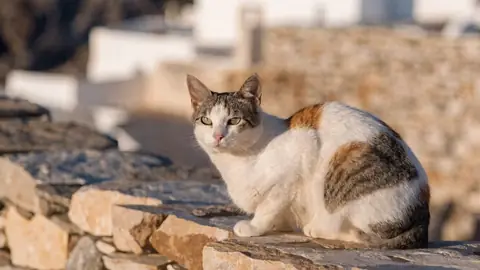 AegeanNo registry recognises this Greek island landrace, no written breed standard exists, and no Indian seller could be found. Here is...
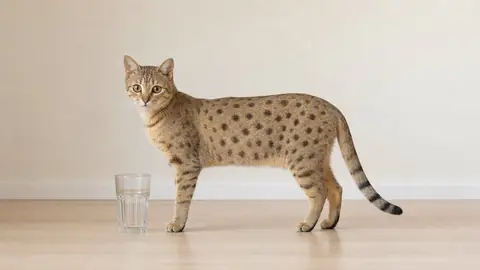 California SpangledA designed spotted cat from 1980s Los Angeles that a department store sold through its Christmas catalogue, and that no registry...
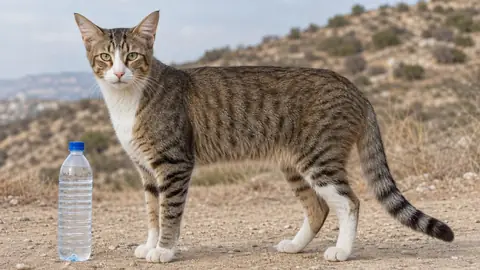 Cyprus CatAn island landrace of about a million free-roaming cats, one derived breed held by a single registry, and a coronavirus outbreak...
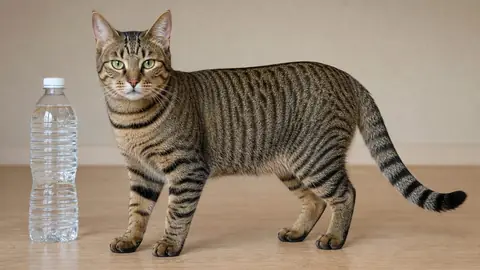 Dragon LiA Chinese tabby landrace that one registry turned into a breed for five years, then dropped. Baidu Baike files the name as a coat...
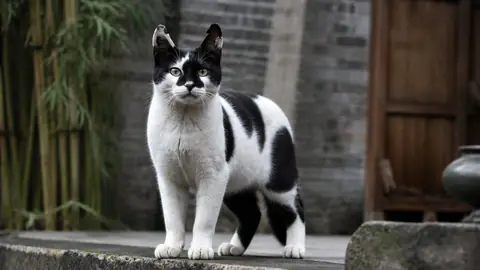 Jianzhou catA Qing-dynasty gazetteer says this cat has four ears. A Chinese encyclopedia explains that it does not. And a 2026 genome study...
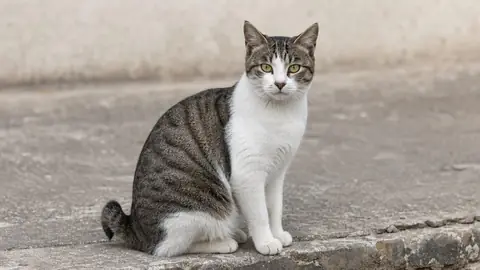 Korean BobtailFive cat registries hold 198 breed rows between them and not one of them names Korea. The page ranking first in India says the...
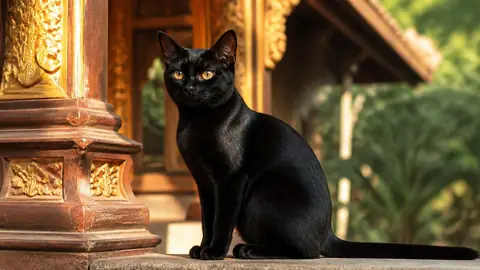 Korn JaA solid black Thai cat that Thailand's Cabinet made a national symbol in November 2025, that no cat registry on earth holds, and...
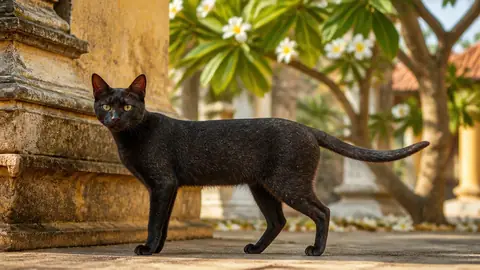 Sam SawetOne of the seventeen auspicious cats of the Ayutthaya cat-book poems, and absent from Thailand's own list of the five that...
Compare the breeds side by side
To compare these 8 breeds directly, read across the table rather than down the guides. Heat tolerance is a Bonbeno rating out of 5 for Indian conditions, and the reasoning behind each one sits on the breed's own page.
| Breed | Heat tolerance | Published price, India |
|---|---|---|
| Aegean | 3 of 5 | Rs 40,000 to Rs 1,00,000 |
| California Spangled | 2 of 5 | $1,400 each in the Neiman Marcus Christmas Book of 1986, listed as that year's His and Hers gift |
| Cyprus Cat | 3 of 5 | See page |
| Dragon Li | 3 of 5 | None found; every rupee figure traced was merchandise |
| Jianzhou cat | 2 of 5 | None sourced. Both of India's largest cat guides return zero for the name |
| Korean Bobtail | 2 of 5 | Rs 719, for a paperback book |
| Korn Ja | 5 of 5 | None sourced. Both of India's largest cat guides return zero for Korn Ja and Konja |
| Sam Sawet | 5 of 5 | None sourced. Both of India's largest cat guides return zero for the name |
What matters in this group
The points below are what the evidence on these 8 guides actually supports, not what the category is assumed to mean.
- What separates a breed from a type is a document rather than a cat. Bonbeno runs the same two-condition test on every disputed cat name that it runs on dogs, a written breed standard and a studbook recording individuals generation after generation, and a name has to pass both. That is why this page groups by status instead of by shape. The Cyprus cat is an island population of hundreds of thousands of free-roaming animals. The Dragon Li is a brown mackerel tabby that the Chinese encyclopedia files beside the orange cat and the calico as a colour-pattern variety. The Korean Bobtail is a short tail. The Jianzhou cat is a Sichuanese farm rat-catcher whose four ears are a notch in the outline of two. The Korn Ja is a solid black shorthair. These cats have almost nothing physical in common. What they share is that no register anywhere holds the name, and that a kitten offered under it cannot be checked against anything.
- Each guide opened five registers rather than repeating a sentence, and each check names a control breed found in the same document, so an absence is a finding and not a broken search. The World Cat Federation's cross-registry table serves ten of its 198 rows to an ordinary page view, so the guides pulled all 198 through the table's own data endpoint, and for the Jianzhou cat no row contains the strings China, Chinese, Dragon or Hua. The Cat Fanciers' Association prefix chart returns Korean zero times against Manx 120 times. The GCCF's June 2026 Standard of Points runs to 723,034 characters and holds a full Thai standard, and the strings Korn Ja and Konja appear in it zero times. The GCCF also publishes the best negative instrument in this work, a page enumerating breeds other bodies hold and it does not, in ten green, six amber and twelve red rows plus seven minority breeds. The Korean Bobtail and the Aegean are on none of its rows, and the one name here it mentions at all, the Chinese Li Hau, sits in its closing note of rare breeds known of elsewhere, which the CFA's closure of registration in 2015 has since overtaken. The California Spangled guide added a sixth register, the ACFA, with spotted-breed controls passing in every document.
- Landrace is not the opposite of breed, and treating it as though it were is the commonest error in this material. The Arabian Mau is the free-ranging street cat of the Arabian peninsula and it holds a one-page World Cat Federation standard, code ARM, admitted in August 2008 after a two-year study of four generations and last updated on 6 July 2012. Its own guide puts the point in one line, that a landrace does not become better or worse when a registry writes it down, it becomes legible. The Aphrodite's Giant is drawn from the very population on the Cyprus cat page, and the WCF publishes two standards for it, APS and APL, both dated February 2012, and issues pedigrees under those codes. The Raas of East Java is a landrace held at Provisional Class by the Feline Fanciers' Federation as the Busok, and its Indonesian association wrote its own standard from 23 cats assessed on 24 March 2024. FIFe fully recognises the European and the Sokoke, both landraces. The Cyprus cat guide states the pair plainly, the Cyprus cat is the raw material and the Aphrodite's Giant is the product. What puts a cat on this page is a missing document, not the way the population was shaped.
- A name can have held both documents and hold neither now, and two guides here had to learn it. The CFA accepted the Chinese Li Hua into Miscellaneous status in February 2010, its board voted on 8 February 2015 to remove it effective 1 May 2015, and the chair stated the effect, that nobody can register a Li Hua after 30 April. The Dragon Li once had a standard and a register and now has neither, which its guide calls a type, and specifically a coat pattern, which is what the Chinese sources called it all along. The California Spangled is the same shape from a designed breed. Cat Fancy reported it accepted by TICA as a new breed by May 1987, its registration document was issued by the breeder's own California Spangled Cat Association, 58 cats were ever registered, and the retailer's vice president told a wire service in the same autumn the catalogue called it a completely new breed that the cats were not a registered breed. Six registers read on 10 September 2026 hold it in no class. Its guide never calls it a type. It calls it a breed that exists in no register, and the test on this page is the document, so that is where it belongs.
- State recognition is not a registry, and the Thai cats prove it from both sides. On 19 November 2025 Thailand's Cabinet designated Thai cats a national identity and named five surviving breeds, the Suphalak, Korat, Wichienmaat, Konja and Khao Manee. That makes the Korn Ja a national symbol, and not one of the five cat registries carries a standard for it, while the Korat from the same manuscript sits on a WCF row naming eight recognising bodies. The Sam Sawet is one step further out. It is named among the seventeen auspicious cats of the Tamra Maew and described in Thai sources as a Korn Ja with white hairs interspersed, and the Fine Arts Department, the Cabinet resolution and a 2024 genetics study of 184 Thai cats each name five surviving breeds and omit it. Its guide calls it real as a historical type. The Aegean sits at the other end of the same scale. No registry recognises it, no application is pending anywhere the guide could find, and the sources cannot agree on its coat, with one ranking page calling it short-haired, medium, medium-length and semi-long-haired in four places.
- For an Indian buyer the consequence is short. No pedigree can exist under any of these names, so paperwork offered with one is either empty or for a different cat. The one self-described Aegean cattery on the Indian page one promises a CFA Registered Blue Slip for a breed CFA does not list. The Cyprus cat guide says it directly, that if somebody offers you paperwork for a Cyprus cat, the paperwork is not what it claims to be. The Korean Bobtail guide calls the premium a payment for a word with nothing behind it, and the Dragon Li guide calls it paying for a name that no longer exists. The rupee price on the first-ranking Indian page for the Aegean, Rs 40,000 to Rs 1,00,000, is described as hypothetical in that page's own body text. None of this is a criticism of the animals. The Jianzhou cat is an outstanding hunter in its own Chinese encyclopedia entry, and an unregistered cat is not an inferior one. TICA's Household Cat class and the WCF's Household Pet Shorthair standard exist for exactly these cats. It means only that there is no document to check, in a market where the document is usually the pitch.
Membership is generated from the breed data itself, not typed by hand, so this list cannot drift from the guides it points at and fills in as more publish. The 8 guides here cite 224 sources between them.
This page is a directory of published Bonbeno guides, generated from their data rather than written as clinical guidance, so no veterinarian reviewed this page itself. Each linked guide carries its own veterinary review and its own health sections. Breed level evidence describes populations, and your animal is an individual, so consult your nearby vet before acting on anything you read here.
Common questions
How does Bonbeno decide which breeds belong on this page?
Membership is generated from each breed's own published data rather than chosen by an editor. The group is defined by a shared trait rather than a rating, so its members are named in the site's own cluster definition and each one is checked against the published guide before it appears. A breed appears here the moment its guide publishes and meets that rule, and never before, which is why no link on this page can point at a guide that does not exist.
What is a Bonbeno heat tolerance rating?
It is a 1 to 5 rating of how well a breed copes with Indian conditions, where 5 is best. Almost no international breed reference publishes one, and in a country where summer temperatures pass 45 C it is the most decision-relevant trait there is. It is Bonbeno's own judgement, built from published heat-illness evidence where that exists and stated as inference where it does not.
Are the prices on this page current?
Each price is read from that breed's own guide, where it is compared across published Indian sources and cited. Published Indian breed prices disagree widely between sellers, sometimes by more than a lakh for the same breed, so treat the figure here as the lowest band Bonbeno found and read the guide for the full range.
Does Bonbeno sell or broker any of these cats?
No. Bonbeno does not sell pet food, products or animals and does not broker puppy or kitten sales. Nothing on this page is a listing, and no breeder or seller can pay to appear on it.