
Breed profile
Korean Bobtail: The Breed That No Registry Holds
Five cat registries hold 198 breed rows between them and not one of them names Korea. The page ranking first in India says the Cat Fanciers' Association recognised this breed in 1966. CFA's own breed-code chart says otherwise.
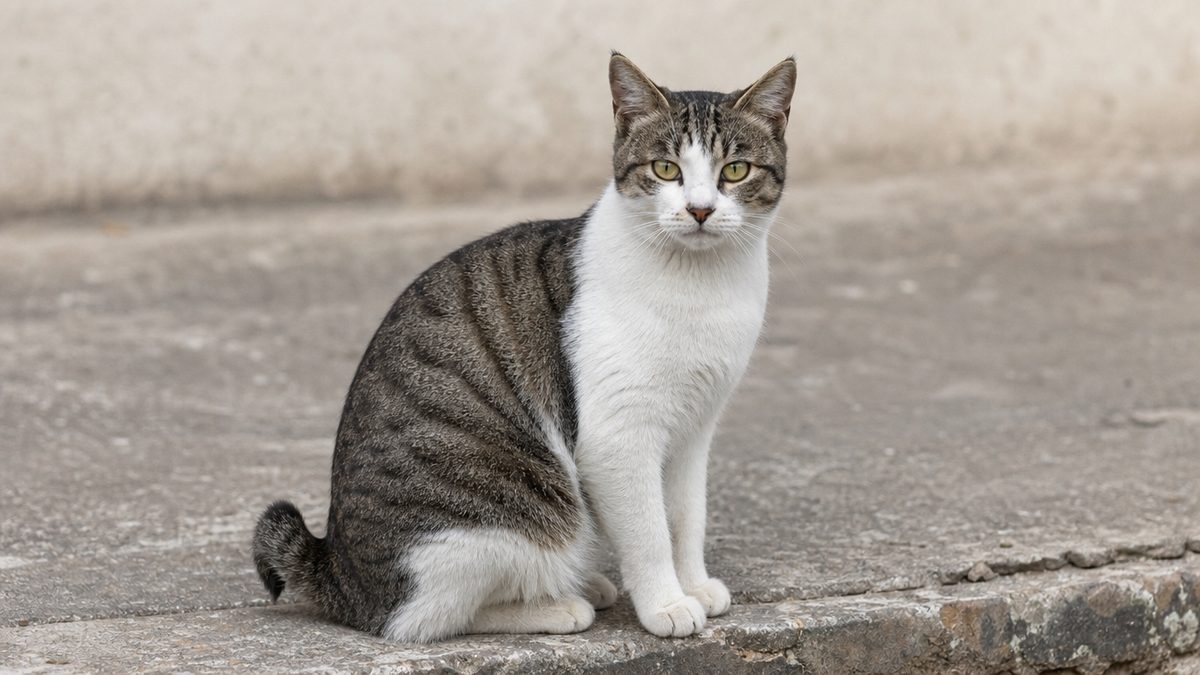
Quick answer
The korean bobtail is not a recognised cat breed. It has no breed standard and no register at WCF, CFA, TICA, FIFe or GCCF, no Wikipedia article, and zero records in PubMed. Short-tailed street cats genuinely are common in Korea, and the two papers that identified the Manx and Japanese Bobtail tail genes never sampled one.
This page reports what the registries and the published literature contain, and reports honestly that neither contains this breed. Nothing here is veterinary advice and nothing here can diagnose your cat. An absence of published health problems is not evidence of health, and a short-tailed cat of unknown genetics has had no screening at all. Any cat with an altered gait, a painful tail base, straining to urinate or defecate, or reduced sensation at the hindquarters needs a registered veterinary practitioner the same day.
Korean Bobtail at a glance
What the Korean Bobtail is, and what happens when you check
The Korean Bobtail is a name, not a breed. It has no breed standard, no register, no studbook and no published genetics anywhere in the cat fancy, and the pages selling it to Indian readers as an ancient recognised breed have not checked a single registry document.
Start with what is true. Short-tailed cats are genuinely common on the Korean peninsula. Visitors notice them, ask about them on public forums, and are told they are looking at a breed. Xu 2016 records the wider fact behind that observation: cats with shortened tails were first documented in Southeast Asia extending into southern China, and Charles Darwin was writing about the phenomenon by 1868. Kinked and shortened tails are a regional trait across East and Southeast Asia, and Korea sits inside that region.
What does not follow is that Korea has a breed. A breed needs two things that a common trait does not supply: a written standard describing what the animal should be, and a register recording which animals meet it. This page checks both, in five registries, using each registry's own documents rather than a summary of them.
The five-registry result, in one line
Zero of five. The World Cat Federation's cross-registry EMS map runs to 198 rows and the string Korea appears in none of them, while the same map carries five separate bobtail breeds. TICA's own A to Z of recognised breeds lists American Bobtail, American Bobtail Shorthair, Japanese Bobtail, Japanese Bobtail Longhair, Kurilian Bobtail and Kurilian Bobtail Longhair, and no Korean entry. FIFe's register carries none. CFA's Color Prefix Chart, which names every breed CFA registers, contains Korean zero times against Manx 120 as an in-document control. And the Governing Council of the Cat Fancy publishes a page whose entire purpose is to enumerate breeds other registries hold and GCCF does not, listing four bobtails by name, and the Korean Bobtail is not among them.
Unrecognised is not the same as fake. Plenty of real regional cat populations hold no standard, and this site has written several of them up honestly. What is being reported here is narrower and sharper: the Korean Bobtail is unrecognised by every registry, absent from the primary genetics literature, and simultaneously described online as an ancient breed recognised by the Cat Fanciers' Association in 1966. Two of those three statements cannot both be true, and it is the registry documents that settle it.
What a cat sold under this name actually is
In practice a cat offered as a Korean Bobtail is an ordinary domestic shorthair with a short tail. There is no breed standard to check it against, so no seller can be wrong about its type and no buyer can verify a claim. That matters more in India than in Korea, because an Indian buyer is being asked to pay a rarity premium for a word with nothing behind it.
The physical description that circulates is unremarkable and unsourced: a moderate, muscular cat of medium size with a short kinked tail, short coat, and any coat colour. Every ranking page gives some version of it and none of them cites a document, because no document exists. Compare that with the Japanese Bobtail, where the WCF standard specifies a tail kinked or curved and shorter than 8 cm with a pom-pom, and disqualifies an absent tail, a too-long tail and a missing pom-pom. That is what a breed description looks like when a registry writes one.
Bonbeno's overview of cat breeds with mutations sets out how few feline structural mutations have actually been identified, and this page is the boundary case: a short-tailed cat population that nobody has ever genotyped.
Registry recognition, checked one document at a time
No cat registry recognises a Korean Bobtail, and each of the five checks below reads the registry's own document with a control breed present on the same page, so an absence cannot be an artefact of a broken query.
Reading an absence off a registry is easy to get wrong. A JavaScript index that serves twelve breeds looks like a twelve-breed registry. A search box that returns nothing returns nothing for every query. Each check below therefore names the document, the retrieval method and a control breed found in the same fetch.
| Registry | Document read | Korean Bobtail | In-document control |
|---|---|---|---|
| WCF | EMS Code cross-registry map, all 198 rows via the table's data endpoint | Absent. Zero rows contain the string Korea | Five bobtails present: ABS, ABL, JBT, JBL, KAS, KAL, KBS, KBL, MBT |
| CFA | Color Prefix Chart, the codes for every registered breed | Absent. Korean 0 occurrences | Manx 120, Japanese Bobtail 82 |
| CFA | Breed Council Declared Candidates, including Miscellaneous and Provisional | Absent. Korean 0 occurrences | Manx, Japanese Bobtail, American Bobtail, Toybob all present |
| TICA | Browse All Breeds, TICA's full A to Z | Absent. No Korean entry | Korat, Khaomanee, Thai, six bobtail entries present |
| FIFe | Breeds register, parsed on the EMS three-letter code | Absent. Korean 0 occurrences | MAN, CYM, JBS, KBS, KBL, KOR present |
| GCCF | Unrecognised Breeds, the list of breeds other registries hold | Absent from all three colour grades | American Bobtail, Japanese Bobtail, Mekong Bobtail, Toybob all listed |
Why the GCCF row is the strongest of the six
The GCCF check carries more weight than the other five put together, and the reason is structural. GCCF's Unrecognised Breeds page does not list breeds GCCF recognises. It lists breeds GCCF does NOT recognise, graded green, amber and red, with the recognising body named in its own column, precisely so a British reader meeting an unfamiliar breed can find out who holds it. It runs to ten green entries, six amber and twelve red, plus a closing paragraph naming seven more minority breeds recognised elsewhere: Anatoli, Arabian Mau, Brazilian Shorthair, Chinese Li Hau, Kanaani, Tasman and Ural Rex.
So this is a document that goes looking for obscure breeds held by other registries, names four separate bobtails including one held by WCF alone, reaches down to breeds with a handful of catteries worldwide, and never once mentions a Korean Bobtail, and CFA's own candidate list behaves the same way, carrying Manx, Japanese Bobtail, American Bobtail and Toybob breed councils and no Korean one. An absence there is not an oversight. It is the considered view of a genetics committee that has enumerated the field.
One spelling trap worth knowing before you search any of this yourself
Registry indexes misspell breeds, and a correctly spelled query then returns zero for a breed that is plainly there. FIFe files the Kurilian as Kurilean, so its own register returns nothing for Kurilian. GCCF does both inside one page, printing Kurilean Bobtail in its Amber table rows and Kurilian Bobtail in the notes below them. Neither spelling helps the Korean Bobtail, which returns zero under every form tried, but it is the reason each check above quotes a control found in the same document.
For readers comparing registered short-tailed cats instead, the three Bonbeno pages that carry real registry documents are Manx, Japanese Bobtail and Kurilian Bobtail.
What the page ranking first in India says, and what CFA's own chart says
The first organic result in India for this query states that the Cat Fanciers' Association officially recognised the Korean Bobtail in 1966. CFA's own breed-code chart contains the word Korean zero times, and CFA's earliest acceptance date for any bobtail is September 1969.
This section exists because the claim is specific, checkable and false, and because it is the first thing an Indian buyer reads. Animalia.pets holds position one for korean bobtail cat in India. Its Origin section runs, in order: the breed's history dates back to the early 1800s; Dutch sailors introduced it to Korea in the late 1800s; Korean farmers bred it to guard crops; it reached the United States in the 1950s; and it was officially recognised by the Cat Fanciers' Association in 1966.
Four checks, four failures
| The page says | The document says |
|---|---|
| Officially recognised by CFA in 1966 | CFA's Color Prefix Chart names every breed CFA registers. Korean appears 0 times, Manx 120, Japanese Bobtail 82 |
| Reached the United States in the 1950s | CFA's own history: the first Japanese Bobtails were imported to the United States in 1968, and that is the earliest bobtail import CFA records |
| History dates back to the early 1800s, then Dutch sailors introduced it in the late 1800s | Two sentences, one paragraph apart, that cannot both be right. Neither is sourced |
| Recognized by: 1 register | Printed directly above a strip of fourteen registry links including CFA, TICA, FIFe, WCF and GCCF, all of which are checkable and none of which holds the breed |
The 1966 date is the load-bearing one, because it is the only thing on the page that sounds like a record. CFA's Registration Rules for the Japanese Bobtail print the acceptance dates in a block headed SIGNIFICANT ACCEPTANCE DATES: Registration effective 9/69, Provisional effective 5/1/71, Championship effective 5/1/76, and Championship for Longhairs effective 5/1/93. September 1969 is the earliest bobtail date CFA holds for anything. There was no bobtail breed at CFA in 1966 to recognise.
The page's other tells, for readers who want to judge it themselves
- Parent animals: African Wildcat. A database default. Every domestic cat descends from *Felis lybica*, so the field carries no information about this cat at all.
- Related breeds: Lykoi, Mexican Hairless, American Burmese, Kashmir cat, German Rex, Brazilian Shorthair, Chartreux, European Burmese, British Longhair, Minuet. Not one of them is short-tailed, Asian or otherwise connected.
- A health verdict with no data behind it. The page says the breed is known for its robust health and is generally not predisposed to any major health concerns, for a cat population with no screening scheme, no survey and no published study.
- A registry counter that contradicts the registry strip beside it. One number, fourteen chips, and the reader is left to guess which is the claim.
The other two ranking pages are shopfronts. Mew Modern runs H2 headings including Ancient Roots in Korea, Known health considerations and The Korean Bobtail history, on a page whose commercial purpose is retail. All For Paws opens by calling the Korean Bobtail an ancient breed with a history dating back centuries in Korea, and carries one H1 and no H2 at all. Neither cites a registry, a standard or a paper.
Search Wikipedia for Korean Bobtail and you land on Natural bobtail, because the title is a redirect and no article exists. On that page the breed is a single bare line reading "Korean Bobtail, tails are short and kinked, but not entirely absent", with no wikilink and no reference, sitting between a Karelian Bobtail line and a Mekong Bobtail line that each cite a World Cat Federation breed standard. Its row in List of cat breeds gives origin Korea with no citation at all, links to an article that does not exist, and is illustrated with File:Japanese Bobtail walking.JPG. The Korat row immediately above it carries a reference and the Korn Ja row immediately below it carries an explicit citation-needed tag, so the encyclopedia flags a weaker claim on either side and lets this one through unmarked.
Tail genetics: never tested, and here is exactly how that was established
Nobody knows what causes a short tail in a Korean cat, because no study has ever genotyped one. The two papers that identified the Manx and Japanese Bobtail tail genes both exist, both are open access, and the word Korea appears zero times in either.
Bonbeno has now built four short-tailed cat pages from the primary literature, and each of the other three has a real answer. This one does not, and the useful thing this page can do is show precisely where the blank sits rather than filling it with a neighbour's result.
Buckingham 2013 did not sample a Korean cat
Buckingham 2013 is the study that found the Manx mutations. It collected buccal swabs and phenotype data from 196 domestic cats across five short-tailed breeds: 136 Manx, 21 American Bobtail, 14 Japanese Bobtail, 15 Pixie-Bob and 10 Kurilian Bobtail. It identified four mutant alleles of the T gene, encoding Brachyury, found 78 of 82 short-tailed cats heterozygous, and found zero homozygotes in all 196 cats, which is why the homozygous state is presumed embryonically lethal.
Read that sample list again for what is not in it. The paper's full text contains Manx 73 times, Bobtail 39 times and Kurilian 12 times. It contains Korea and Korean zero times. The tailless gene that produces Manx syndrome has never been looked for in a Korean cat.
Xu 2016 did not sample one either
Xu 2016 mapped the Japanese Bobtail's cause: HES7 c.5T>C giving p.V2A, a somite segmentation gene, validated across 245 unrelated cats. Its Table 1 lists every cat genotyped, in six groups: feral cats with minor, medium and extreme kinks from southern China, 12 Japanese Bobtails of which all 12 were homozygous, and 174 wild-type cats. There is no Korean row, and the words Korea and Korean appear zero times in the paper.
Lyons 2016, the other paper reporting the HES7 variant, mentions Korea exactly once, in a co-author's university affiliation in Chungbuk, and never as a source of cats. So both HES7 papers are clear: this population has not been tested.
The literature search, with its controls
PubMed returns zero records for "Korean Bobtail"[tiab], with the quoted phrase flagged as not found in the index. The unquoted form returns exactly one record, and that record is a trap worth naming: PubMed rewrites Korean into a MeSH people term, and the single hit is Kang 2025 on hereditary mutations in native Korean dog breeds. Controls run in the same session passed normally, with Labrador retriever hip dysplasia returning 126 records and "Japanese Bobtail"[tiab] returning 6.
The Manx answer does not transfer, because the T gene has never been tested here and cannot be assumed either present or absent. The Japanese Bobtail answer does not transfer, because 12 of 12 homozygous and viable is a finding about 12 pedigree Japanese Bobtails genotyped for HES7, not about short-tailed cats generally. The Kurilian answer does not transfer either, because that breed's reassurance rests on ten cats having their T gene sequenced across every exon, and no Korean cat has had a single exon sequenced. Transferring any of the three would be fabrication with a real citation attached to it.
The one place the phrase Korean short tail does return published science is a different species entirely, and that is the next section.
The only published Korean short-tail genetics is a dog, and that is worth saying
Yoo 2017 whole-genome sequenced 22 DongGyeongi, the only dog breed in Korea with a short tail, and named a non-synonymous variant in the T gene as a candidate cause. It is the single piece of published Korean short-tail science, and it is a different species.
This section is here because the search results push readers straight into it. Ask PubMed about a Korean bobtail without quote marks and the one record you get is about dogs. Ask Wikipedia's Natural bobtail article what it cites near the Korean Bobtail line and one of the references is Yoo 2017, a Korean dog paper. The species boundary is easy to lose, so it is worth crossing deliberately once and then closing.
What Yoo 2017 actually did
The DongGyeongi, from Gyeongju in south-eastern Korea, is an endangered native dog and the paper describes it as the only dog in Korea that possesses a short tail. The team sequenced 22 whole genomes and compared them against ten other dog breeds, examining population stratification, selective sweeps and demography. Two selective-sweep genes, ANKRD11 and ACVR2B, were suggested as contributing to tail-length reduction, and two candidate causal variants were named: a non-synonymous variant in the coding sequence of the T gene, and a CpG island variant of SFRP2.
| DongGyeongi, a dog | Korean Bobtail, a cat | |
|---|---|---|
| Genomes sequenced | 22, plus 10 comparison breeds | 0 |
| Candidate genes named | T gene coding variant, SFRP2 CpG island variant | None proposed |
| Selective sweep genes | ANKRD11, ACVR2B | Not studied |
| Breed standard | Held nationally in Korea; the dog is a designated natural monument | None, in any registry |
| PubMed records | 3 under the term DongGyeongi | 0 under any quoted form |
| Published in | Scientific Reports 2017;7:10048 | Nowhere |
Two further Korean dog papers exist, Ahn 2023 on the origin and population structure of native Korean dog breeds and Kang 2025 on hereditary mutations in them Kang M, Ahn B, Shin J. Together the three are the entire body of literature the phrase Korean short tail returns, and all three are canine.
What it does and does not tell you about a cat
It tells you nothing about a cat, and saying so is the point. The T gene appears on both sides of the comparison, which is exactly the coincidence that tempts a careless writer into a conclusion. In dogs a T-gene variant is a well-established short-tail mechanism, described in the Pembroke Welsh Corgi long before the DongGyeongi work. In cats the same gene produces the Manx, where four mutant alleles cause haploinsufficiency of Brachyury and no homozygote survived in a 196-cat sample. Those are different alleles in different species with different consequences.
Korea has a documented short-tailed animal with published genetics. It is a dog. Korea also has plenty of short-tailed cats, and not one of them has been genotyped, appeared in a study, or been described in a breed standard. Anybody who tells you the Korean Bobtail's tail is caused by a known gene is either transferring a result from another cat breed or from another species, and neither is a finding.
Five short-tailed cats, five different answers, and only one blank
Put the five short-tailed cats an Indian buyer will meet on the same measures and no two of them give the same answer. One has a gene that is dangerous, one has a gene that is benign, one has a direct exclusion, one has a registry standard and no genetics, and this one has nothing at all.
This is the comparison no ranking page runs, and it is the reason to read a page about a breed that does not exist. Every row below comes from a primary document or a paper read in full.
| Measure | Korean Bobtail | Mekong Bobtail | Kurilian Bobtail | Japanese Bobtail | Manx |
|---|---|---|---|---|---|
| Gene identified | None. Never studied | None. Never studied | None. T excluded, HES7 untested | HES7 c.5T>C p.V2A | T, encoding Brachyury, four alleles |
| Tested for T | Never | Never | Yes. 10 cats, all exons, nothing found | Yes. 14 cats, nothing found | Yes. Four mutant alleles found |
| Tested for HES7 | Never | Never | Never | Yes. 12 of 12 homozygous | Not applicable |
| Homozygotes found alive | Never tested | Never tested | Never tested | 12 of 12 pedigree cats | None among 82 short-tailed cats |
| Homozygote outcome | Unknown | Unknown | Unknown | Viable, extreme kink | Presumed embryonic lethal |
| Radiographic study | None exists | None exists | None exists | Whole vertebral column, published | Multiple, from 1969 |
| Further congenital anomalies | No study exists | No study exists | No study exists | None coinciding with morbidity | About 20 percent of short-tailed cats |
| Breed standard | None, anywhere | WCF only | WCF, FIFe, TICA, LOOF | WCF, FIFe, TICA, CFA and others | All major registries |
| Registries recognising it | 0 of 5 checked | 1 of 5 checked | 4 of 5 checked | 5 of 5 checked | 5 of 5 checked |
| Wikipedia article | None. The title redirects | Yes | Yes | Yes | Yes |
Reading the table left to right
The two left-hand columns are the open cases and they are open for different reasons. The Mekong Bobtail at least has a registry document: a WCF standard specifying a tail of at least three vertebrae, no longer than a quarter of the body length, so a breeder has something to breed toward and a judge has something to measure. The Korean Bobtail has no such document, which means its column is blank not because nobody has done the genetics but because nobody has done anything.
The three right-hand columns show what a settled answer looks like. The Manx's problem is anatomical position rather than tail length: its defect sits at the sacrum where the spinal cord ends, which is why sacral agenesis, tethered cord and imperforate anus travel with it. The Japanese Bobtail's kinks sit inside the tail and remote from the sacrum, and a whole-vertebral-column radiographic study found neither the abnormal vertebral formula nor the placement of the kink coinciding with morbidity or mortality. The Kurilian sits between them with a direct exclusion and a blank.
What a buyer should take from an empty column
- Do not read blank as safe. No study has looked, so no study has found nothing.
- Do not read blank as dangerous either. The Manx's specific mechanism has not been demonstrated here and must not be assumed.
- Ask what the seller is charging for. A rarity premium on a breed with no register is a premium on a word.
- Palpate the tail base and watch the cat walk. In the absence of any test, hands and eyes are the only screening available.
- Compare against a cat you can verify. Read Japanese Bobtail, Kurilian Bobtail, Manx and Cymric and see what a documented answer looks like.
One registry decision belongs in this comparison because it shows how a body handles a regional bobtail it does not want to admit separately. CFA's Japanese Bobtail Breed Notes record that imported bobtails from the Kuril Islands were accepted for registration as Japanese Bobtails rather than being recognised as a separate breed, with the procedure the same as for cats from other Japanese islands, and those cats registered under the prefix FOR BREEDING ONLY. A registry that will fold a Russian island population into an existing breed rather than create a new one has still, notably, never done anything at all with Korean cats.
One measure is missing from that table on purpose, and it is the one an owner can actually count. Registries specify caudal vertebrae or tail length because it is the only part of the tail a judge can assess without a radiograph. The WCF Manx standard recognises rumpy, rumpy riser and stumpy varieties and awards 25 of 100 points for taillessness or for the length of the stumpy, which it caps at 3 to 4 cm. The Karelian Bobtail standard, a Russian bobtail WCF holds alone, requires a kinked or bent tail of 4 to at most 13 cm with a pom-pom. The Japanese Bobtail standard asks for under 8 cm. For the Korean Bobtail there is no number, no permitted range and no disqualification, so two cats with completely different tails can both be sold under the name and neither can be called wrong. Even a general-audience roundup of bobtail cats that gives the American Bobtail, Japanese Bobtail, Highlander, Pixie-bob, Kurilian Bobtail, Mekong Bobtail, Toybob, Manx and Cymric their own sections has no Korean entry to write. Bonbeno's American Bobtail page covers the one breed on that list whose short tail is a recessive, which is a third mechanism again.
Health issues and lifespan: nothing has been measured, and that is the answer
No health survey, screening scheme, radiographic study or life-table row exists for the Korean Bobtail. Pages calling it robustly healthy are not reporting a result, because no result exists to report.
An absence of published health problems is not evidence of health. That sentence does the work of this whole section, and it is the opposite of what the ranking pages tell an Indian buyer.
What the biggest cat life table contains
Teng 2024 is the feline life-table paper, built on VetCompass records from UK primary veterinary practices in 2019. It gives life expectancy at age 0 as 11.74 years for all cats, 11.89 for crossbred cats and 10.41 for purebred cats, and it reports that entire cats carry 4.29 times the odds of death before three years compared with neutered cats, and purebred cats 1.83 times the odds compared with crossbred.
Its Table 6 covers only the 12 breeds with 15 or more deaths: Burmese 14.42 years, Birman 14.39, crossbred 11.89, Siamese 11.69, Persian 10.93, Ragdoll 10.31, Norwegian Forest Cat 9.95, Maine Coon 9.71, Russian cats 9.65, British cats 9.58, Bengal 8.51 and Sphynx 6.68. The word Bobtail appears zero times in the entire paper. So the largest feline life table available carries no figure for any bobtail cat, let alone this one, and any lifespan quoted for a Korean Bobtail has been invented or borrowed.
The two figures that DO apply, and why they are the ones to use
Two of the Teng 2024 findings are not breed-specific and do transfer, because they are properties of neuter status and of pedigree status rather than of any breed. Neutering is the single largest modifiable factor in that dataset, at 4.29 times the odds of early death for entire cats. And a cat sold under an unverifiable pedigree label sits, functionally, in the crossbred column at 11.89 years rather than the purebred column at 10.41, which is not a disadvantage.
What to screen for anyway, in the absence of a scheme
The Manx literature tells you what to watch for in any short-tailed cat without licensing you to claim the same risk. Roughly 20 percent of short-tailed Manx in the Buckingham sample carried an additional congenital anomaly, about 90 percent of those in rumpies, the completely tailless form. The anomalies cluster at the sacrum: sacral agenesis, absence of the sacral spinal cord, tethered cord and imperforate anus.
- Watch the gait. A bunny-hopping hind-limb action or a stiff, short stride at eight to twelve weeks needs a veterinary opinion before purchase, not after.
- Monitor toileting from day one. Straining to urinate or defecate, dribbling, or faecal incontinence in a kitten is a neurological question until proved otherwise.
- Palpate the tail base gently. A short tail that formed and then bent should articulate and should not hurt. Pain on handling is a finding.
- Screen for the ordinary things instead. With no breed-specific scheme to run, spend the money on a faecal test, a FeLV and FIV test, and a full physical examination.
- Neuter on your vet's timing. This is the one intervention with a measured effect size in the cat literature.
The first-ranking page states that this breed is known for its robust health and is generally not predisposed to any major health concerns. There is no survey, no register, no screening scheme and no published paper behind that sentence. A health verdict issued about a population nobody has studied is not reassurance; it is a sentence with the shape of reassurance.
Korean Bobtail price in India: there is none, and the only rupee figures are merchandise
There is no Korean Bobtail price in india, because no Indian seller offers the cat. A commercial listing search that returned five live-animal marketplaces for the Labrador control returned a paperback, a T-shirt, greeting cards and a decor collection for this name.
Say it first because it is the answer: nobody in India sells this cat, and nobody can, because there is no register from which a pedigree could issue. Everything below is the evidence for that sentence.
The three biggest Indian cat lists do not carry it
Supertails publishes a 40-breed guide to cat breeds for the Indian climate. Read from raw markup, the string Korean appears zero times across all 40 breeds, against Manx 10, Bobtail 4, Siamese 35 and Persian 56 as in-document controls. The same publisher's dedicated all-breed Indian price guide returns Korean 0 and Bobtail 0, against Persian 52. Heads Up For Tails publishes 50 popular cat breeds in India: Korean 0, against Bobtail 4 and Manx 3.
What a commercial search actually returns
The listing search was run in India on 8 September 2026 with a Labrador retriever control in the same session. The control passed decisively, returning Mr n Mrs Pet with city-by-city price tables, Supertails, Petsworld, Tradeindia and Marshalls Petzone, all offering live animals. Against that instrument, the Korean Bobtail query returned this:
| Result | What is actually for sale | Rupee figure |
|---|---|---|
| Amazon.in | A paperback book, "Korean Bobtail Cat is my valentine" | Rs 719 |
| eBay | A paperback, "Korean Bobtail: Cat Breed Complete Guide" | Listed in dollars |
| Caroline's Treasures | Home decor and gifts collection | Listed in dollars |
| Etsy India | A T-shirt | Listed in rupees |
| Walmart | Greeting cards, pack of 8 | USD 14.99 |
| Etsy New Zealand | A wooden sign | Listed in NZ dollars |
| Live cats offered anywhere in India | None | None |
That is the merchandise trap in its purest form. A print, a mug, a T-shirt or a photo book will present itself to a search engine, and to a reader, as the breed's Indian price. The only rupee amount attached to the Korean Bobtail anywhere in the Indian market is Rs 719 for a book about it.
Why no lawful supply chain can form
Two conditions have to be met before a pedigree cat can be sold as a pedigree in India, and neither is met here. A breed standard has to exist so that an animal can be judged against it, and a register has to exist so that a pedigree can issue. The Korean Bobtail has neither at WCF, CFA, TICA, FIFe or GCCF. A seller can therefore hand you a receipt, but not a pedigree, and no registry in the world will register the kitten.
Ask three questions and stop at the first one that fails. Which registry issued the pedigree, and what is the registration number? What is the sire's and dam's registered name? Which breed standard was this cat bred to? There is no correct answer to the third question, because no standard exists, and a seller who produces one has produced it from somewhere else. Price the cat as the ordinary domestic shorthair it is.
Cost of ownership in India, once the cat is home
Budget roughly Rs 2,500 to Rs 4,500 a month for an ordinary short-coated adult cat in an Indian metro, plus a first-year veterinary block of about Rs 5,000 to Rs 7,000. Those are care costs, they are published and sourceable, and they apply to any cat of this size regardless of what the tail looks like.
This is where an honest page about an unrecognised breed becomes genuinely useful. There is no purchase price to report, but the cost of ownership after the cat arrives is real, published and identical whether the animal came from a shelter, a street or a seller with a story.
The first-year veterinary block
Vetic, a chain with clinics across seven metros, publishes its cat prices openly. The kitten vaccination course runs from Rs 3,999 against a list price of Rs 5,065, the adult annual booster from Rs 1,899, anti-rabies at Rs 699 and a CRP test at Rs 1,249. None of those figures divides cleanly by 84.38, 80 or 74, so none of them is a dollar price wearing a rupee sign.
A consultation runs Rs 500 to Rs 1,000 on the most widely repeated Indian figure. Treat that as one data point rather than two: VOSD and a large general insurer publish byte-identical ranges for both consultation and core vaccination, so one has copied the other and exact agreement between unrelated organisations is evidence against independence, not for it.
| Item | Published figure | Source |
|---|---|---|
| Kitten vaccination course, 3 visits | from Rs 3,999 | Vetic clinic price list |
| Adult annual booster | from Rs 1,899 | Vetic clinic price list |
| Anti-rabies, single | Rs 699 | Vetic clinic price list |
| Consultation | Rs 500 to Rs 1,000 | One data point, two sites publishing identically |
| Bathing | from Rs 934 | Vetic Delhi grooming list |
| Full bath and styling | from Rs 1,869 | Vetic Delhi grooming list |
| Boarding, overnight to 24 hours | Rs 899 | PawSpace Bengaluru |
| Daycare, to 10 hours | Rs 799 | PawSpace Bengaluru |
| Pet animal licence, Chennai | Rs 50 | Greater Chennai Corporation |
Two India facts worth more than any price list
Greater Chennai Corporation licenses pet animals generally at Rs 50, issued 9,115 licences in 2024, and runs six municipal veterinary clinics that provide treatment and anti-rabies vaccination free of cost. For a Chennai reader that single sentence removes the largest recurring line from the budget above. Note also a scope point Indian pages routinely get wrong: MCD Delhi's Rs 500 registration covers pet dogs only, so a Delhi cat owner should not budget for it.
The monthly figure, and why it is arithmetic rather than a quote
Food dominates the month. A 3.5 to 4.5 kg indoor adult cat on a mid-market dry and wet mix runs roughly Rs 1,400 to Rs 2,400 a month at Indian retail, litter adds Rs 500 to Rs 900 depending on whether you use clumping bentonite or paper pellets, and parasite control amortises to a few hundred rupees. Adding a proportion of the annual veterinary block gives the Rs 2,500 to Rs 4,500 band above. Treat any Indian site that prints a single monthly total for a named breed as boilerplate, because those tables are assembled from a small set of preset line items and the same total appears against unrelated breeds of very different sizes.
An unverifiable pedigree adds nothing to any line in that table. The cat eats the same food, uses the same litter box, needs the same vaccines and boards at the same rate. The only line a rarity story affects is the purchase price, and that is precisely the line with no evidence behind it.
Boarding is the line that moves most between cities and it is worth pricing before a trip rather than during one. PawSpace in Bengaluru publishes Rs 599 for up to four hours, Rs 799 for daycare to ten hours and Rs 899 for an overnight stay to 24 hours. A short-coated cat boards more cheaply than a long-coated one in most Indian facilities because it needs no coat work, which is one of the few places the coat type shows up in a budget. Readers comparing coat types before choosing can start from Bonbeno's guide to short-haired cat breeds.
Heat tolerance: a temperate-climate cat, measured against Indian cities
Korean cats come from a place with a January mean of minus 3.30 degrees C and an August mean of 24.90, which is cooler year-round than every Indian city in this table. Treat any cat sold under this name as an ordinary temperate-climate shorthair and manage the summer accordingly.
Because no breed exists, this section rates the origin population rather than a standard, and says so. What follows is real climatology for the place these cats actually live, pulled from NASA POWER by explicit latitude and longitude with the returned grid-cell elevation echoed and checked, because a cell that is standing on the wrong hill gives a confidently wrong answer.
The Seoul cell reports 73.25 m against a real city elevation near 38 m, and the Gyeongju cell 119.54 m against about 40 m. Both errors are small enough to use. Every Indian cell in the table sits within 83 m of its city, so none of them is a hill-station artefact.
| Place | Annual mean air temp | Hottest month mean | Coolest month mean | Annual relative humidity |
|---|---|---|---|---|
| Seoul, South Korea | 11.27 C | 24.90 C (Aug) | -3.30 C (Jan) | 77.00 percent |
| Gyeongju, South Korea | 13.51 C | 25.39 C (Aug) | 1.16 C (Jan) | 75.38 percent |
| Delhi | 25.60 C | 35.88 C (Jun) | 13.61 C (Jan) | 45.56 percent |
| Kolkata | 25.81 C | 31.53 C (May) | 17.31 C (Jan) | 73.93 percent |
| Mumbai | 26.77 C | 31.19 C (May) | 23.19 C (Jan) | 67.39 percent |
| Chennai | 27.95 C | 31.51 C (May) | 24.09 C (Jan) | 72.39 percent |
| Bengaluru | 23.74 C | 28.37 C (Apr) | 20.22 C (Dec) | 67.94 percent |
| Pune | 23.86 C | 28.93 C (Apr) | 19.62 C (Dec) | 66.80 percent |
Humidity is not the shock. Heat is
Seoul runs 77.00 percent annual relative humidity, which is higher than Delhi at 45.56, Pune at 66.80, Mumbai at 67.39, Bengaluru at 67.94, Chennai at 72.39 and Kolkata at 73.93. So the reflex that a temperate Asian cat will be undone by Indian damp is simply wrong, and this page will not print it. What changes is the temperature the humidity sits on top of. Seoul's hottest month averages 24.90 degrees C; Chennai's coolest month averages 24.09. The Korean summer peak is roughly the Indian winter floor.
The load that matters combines the two. Peak wet-bulb temperature is 22.69 degrees C in Seoul in August, against 27.09 in Kolkata in June, 26.50 in Delhi in July, 26.11 in Chennai in May and 25.77 in Mumbai in June. Bengaluru at 21.86 and Pune at 22.97 are the two Indian cities that sit closest to the Korean summer, which is a genuinely useful thing for a reader in either city to know.
What to do about it between March and June
- Shade the flat before you cool it. Close west-facing curtains by mid-morning; a shaded room is worth more than a fan pointed at a cat.
- Give water in more than one place. Two or three shallow bowls away from the food, refreshed twice daily, and a wide bowl rather than a deep one.
- Feed the wet portion at the coolest hours. Wet food carries water, and appetite drops in the afternoon heat.
- Never shave the coat to cool the cat. A short coat is insulation in both directions and shaving removes the sun barrier.
- Watch for open-mouth breathing. Panting is not normal in cats and is a same-day veterinary matter, not a hot-day quirk.
Bengaluru readers should note the local wrinkle that boarding kennels there publish warnings about generator backup for air conditioning during March to May load-shedding, which matters if you plan to board the cat over a summer trip.
Temperament and household fit, honestly bounded
Nobody can tell you a Korean Bobtail's temperament, because temperament descriptions come from breed clubs observing a registered population and no such population exists. What you can plan around is the temperament of an ordinary Asian domestic shorthair, which is well understood and suits Indian flats.
The ranking pages describe this cat as amiable, sociable, curious, intelligent and vocal, forming strong bonds with owners and preferring to avoid boisterous children. Every one of those adjectives is applied to almost every cat breed page on the internet, and none of them is attached to an observation of an identified population. Treat them as filler.
What you can reasonably expect
A short-coated moderate-build domestic cat from an East Asian street-cat background is typically active, curious and socially confident with people it grew up around. That is a description of the founder population rather than a breed claim, and it is enough to plan a household around. Expect a playful, intelligent cat that will use vertical space, hunt moving objects and talk to you, and expect the individual to vary far more than any label predicts.
Who this cat suits in an Indian household
- Flat dwellers with vertical space. A tall cat tree or a cleared shelf run matters more than floor area.
- Households that are out during the day but home in the evening. An active shorthair copes with routine absence; it copes badly with being ignored when you are home.
- Owners who want one cat and will interact with it. Two cats is better than one for an active animal, but one well-engaged cat beats two neglected ones.
- Families with older children who have been taught to let a cat leave. The pinch point is always the child who follows.
- Anyone prepared to socialise a kitten deliberately through the first sixteen weeks, which does more for adult temperament than any breed label.
Who should look elsewhere
If you want a documented temperament, buy a documented breed. The point of a breed standard and a breed club is that hundreds of breeders have observed hundreds of cats and written down what they found. Bonbeno's Japanese Bobtail page rests on exactly that kind of accumulated description, alongside a registry standard and a radiographic study. This page cannot offer you the same thing and will not pretend to.
Several pages say this cat prefers to avoid the boisterous energy of children. That is not a Korean Bobtail finding; it is generic cat advice restated as a breed trait. Any cat, of any breed, does better in a household where children have been taught that a cat is allowed to walk away. Judge the individual kitten in front of you, and watch how it handles being picked up by someone it does not know.
Training: what actually works with an active shorthair
Train an active domestic shorthair with short reward-based sessions, a target stick and food it genuinely wants, and expect litter training to be nearly automatic and recall to take weeks. Nothing in the tail changes the method.
Cats train well and Indian households under-use the fact. The method below is standard positive-reinforcement work and it is what to do with a cat sold under this name, because no breed-specific training guidance exists to follow.
The order to teach things in
- Establish the litter box first. One box per cat plus one, unscented clumping litter three to four centimetres deep, sited away from food and away from a noisy washing machine.
- Build a carrier association in week one. Leave the carrier open in the room with a blanket and feed treats inside it. A cat that loads calmly saves you an emergency later.
- Teach a target touch. A chopstick with a blob of paste on the end, one nose touch, one reward, thirty seconds twice a day.
- Add a name recall. Say the name, reward immediately, only ever for good things. Never use it to call the cat to a nail trim.
- Condition handling. Touch a paw, reward. Touch an ear, reward. Then screen the tail base the same way, so a monthly check is boring rather than a fight.
The tail-base check, and why it belongs in the training section
For any short-tailed cat of unknown genetics, the most valuable thing you can teach is tolerance of being handled at the tail base. There is no DNA test to run and no screening scheme to enter, so a monthly hands-on check is the only surveillance available. Palpate gently from the sacrum outward, feel for articulation rather than a rigid stub, and note pain, flinching or a change from last month. A cat conditioned to accept it as a two-second routine gives you real information for years.
What this cat will resist
Repetition without payoff, sessions longer than about three minutes, and anything that feels like restraint. Punishment does not work on cats and reliably produces avoidance of the person rather than of the behaviour. Scratching furniture is not a training failure; it is a missing scratching post, and in Indian flats a vertical sisal post beside the sofa fixes most of it inside a fortnight.
Teach the cat to stay off the kitchen platform before the first monsoon, not after. Indian kitchens run open shelves and cats follow the smell of drying fish and setting curd. A covered feeding routine, a taller cat tree in the next room and a consistent lift-and-place beats any deterrent spray, and it is far easier to establish in a kitten's first three months than to unpick in an adult.
Daily exercise: what an active shorthair actually needs
Give an active domestic shorthair two or three structured play sessions a day, ten to fifteen minutes each, plus climbing height it can use unsupervised. In an Indian flat that is a wand toy in the evening and a tall cat tree by a window.
Exercise for a cat is not distance, it is bursts. A healthy adult cat wants short, intense chase-and-pounce sequences that finish with a catch, and then it wants to sleep. Fifteen minutes of properly structured wand play does more than an hour of a laser dot with no ending.
The daily pattern that works in a flat
- Two wand sessions, morning and evening. Move the toy like prey, away from the cat and around corners, never toward it.
- Always finish on a catch. A laser session that never lets the cat win leaves it wound up rather than satisfied.
- Feed after the evening session. Hunt, catch, eat, groom, sleep is the sequence a cat is built for, and using it settles the night.
- Give one tall vertical run. A cat tree that reaches above head height, or a cleared shelf ladder, is the single best flat modification.
- Scatter-feed part of the ration. Five portions hidden around the room turns dinner into twenty minutes of work.
What happens without it
An under-exercised indoor cat in an Indian flat gains weight quietly, and weight is the thing you can actually control. Monitor body condition monthly by feel rather than by the scale: you should feel the ribs under a thin fat layer with light pressure, and see a waist from above. A cat you cannot feel ribs on is overweight regardless of what the number says, and obesity is a bigger practical risk to this animal than anything in its tail.
The secondary consequences arrive as behaviour: three-in-the-morning zoomies, over-grooming, and redirected play biting at ankles. All three respond to more structured play far more reliably than to any deterrent.
Heat changes the schedule, not the amount
Between March and June in Delhi, Chennai, Kolkata or Mumbai, move both sessions to early morning and late evening and drop the middle of the day entirely. A cat playing hard at 3 pm in a Chennai May, when the monthly mean is 31.51 degrees C, is being asked to shed heat it cannot shed. In Bengaluru and Pune, where the hottest months average 28.37 and 28.93 degrees C, the constraint is milder and an afternoon session is usually fine.
Grooming a short coat in Indian humidity
Brush a short-coated cat once a week through most of the year and twice a week through the pre-monsoon moult, and never shave it to cool it down. Everything else is nail trims, ear checks and a tail-base inspection you have already trained the cat to accept.
Assume a short coat, because every description of this cat gives one and because an ordinary Korean street-cat descendant will have one. If the animal in front of you carries a semi-long coat, groom it as a semi-longhair and treat that as more evidence that the label describes nothing consistent.
The weekly routine
- Brush once weekly with a rubber curry or a fine slicker. Ten minutes, following the lie of the coat, finishing with a damp hand to lift loose hair.
- Double it in February to May. The pre-monsoon moult is heavier in Indian metros than most owners expect, and brushed hair is hair that does not become a hairball.
- Trim nails every three to four weeks. Front only for an indoor cat, tips only, and stop well short of the quick.
- Check ears weekly and clean only when dirty. Over-cleaning causes more Indian ear problems than under-cleaning.
- Inspect the tail base monthly as part of the same session, because it is the only screening this cat has.
Bathing, and the monsoon rule that overseas advice gets wrong
A healthy indoor short-coated cat rarely needs a bath. Where one is needed after a spill or a skin treatment, the Indian constraint is drying rather than washing. Overseas club guidance routinely says to towel the animal and let it air dry, which is correct in a temperate climate and wrong in an Indian monsoon, where a damp coat and a damp room hold moisture against the skin for hours. Towel thoroughly, then finish with a cool-setting dryer at a distance the cat tolerates, and keep the animal in a dry room until the undercoat is genuinely dry.
If you use a salon rather than doing it at home, published Delhi rates run from Rs 934 for bathing and from Rs 1,869 for a complete bath and styling. For a short-coated cat the styling half of that is unnecessary.
The coat colour question, and why it has no answer here
Registered breeds specify which colours are allowed, and that specification is one of the things a standard exists to do. The WCF Japanese Bobtail standard, for example, refuses chocolate and cinnamon and their dilutions in any combination and refuses the pointed pattern outright, while permitting any amount of white. Ask what coat colour is correct for a Korean Bobtail and there is no document to consult, so the honest answer is that every colour is equally correct and equally meaningless. That is a small illustration of the larger point: a standard is not decoration, it is the thing that lets a buyer check a claim.
This comes up every April and it is wrong every April. A cat's coat insulates in both directions and shields the skin from ultraviolet. Shaving a short-coated cat removes the sun barrier, exposes pale skin to burn, and does not lower core temperature meaningfully. Cool the room and the cat, not the coat: shade, airflow, more water bowls, and a tile or marble floor the cat can stretch out on.
Feeding a short-coated cat in India, by life stage
Feed a growth-formulated kitten food four times a day to four months, three times to six months, then twice daily on an adult complete food, with wet food carrying part of the water intake. An Indian adult cat of 3.5 to 4.5 kg eats roughly Rs 1,400 to Rs 2,400 of food a month.
Cats are obligate carnivores and the Indian market's biggest practical trap is a vegetarian household defaulting the cat onto a vegetarian diet. Taurine, arachidonic acid and preformed vitamin A are not optional for a cat, and no plant-based ration supplies them without synthetic supplementation. Feed a complete cat food, not a household diet.
The life-stage schedule
| Age | Meals per day | What to feed | What to watch |
|---|---|---|---|
| 8 to 16 weeks | 4 | Kitten complete, wet and dry mixed | Weight gain every week, and a formed stool |
| 4 to 6 months | 3 | Kitten complete | Appetite dips around teething at 4 to 5 months |
| 6 to 12 months | 2 to 3 | Kitten complete to 12 months | Post-neuter appetite rise; reduce the ration, not the meals |
| 1 to 7 years | 2 | Adult complete, at least a third wet | Body condition monthly by feel, not by the scale |
| 7 years and over | 2 | Adult or senior complete | Water intake, weight loss, and annual bloodwork |
Water is the Indian-specific issue
Cats evolved to take most of their water from prey and drink poorly by choice, and an Indian summer widens that gap. Wet food is the most reliable fix, and a third to a half of the ration by weight as wet is a practical target. Two or three shallow bowls placed away from the food, refilled twice daily, will do more than one large bowl refilled once. A running fountain helps some cats and is ignored by others, so test before you invest.
What a month actually costs
A 3.5 to 4.5 kg indoor adult on a mid-market dry plus wet mix runs roughly Rs 1,400 to Rs 2,400 a month at current Indian retail. That is arithmetic from grams per day and a shelf price, not a quoted figure, and you should recompute it against the pack in front of you rather than trusting any published monthly total. Indian breed pages print monthly food figures that are preset line items reused across unrelated breeds, so a number that matches your cat exactly is a coincidence.
Energy requirement drops by roughly a quarter to a third after neutering and appetite does not. The fix is to cut the ration at the time of the surgery rather than three months later when the waist has gone. Keep the same number of meals so the cat does not feel short-changed, and reweigh monthly for the first six months.
The kitten timeline, month by month through the first year
Plan the first year in four blocks: socialisation to sixteen weeks, the vaccination course to about five months, neutering and the growth plateau to nine months, and settled adult routine by twelve. For a short-tailed kitten of unknown genetics, add a monthly hands-on neurological check to every block.
The kitten timeline below is what to do with any kitten in an Indian home, with one addition specific to a short tail. Nothing in it depends on a breed standard, which is convenient, because there is not one.
| Age | What happens | What you do |
|---|---|---|
| 8 to 12 weeks | Home, and the socialisation window is still open | Vaccination course begins, from Rs 3,999 for three visits. Handle daily. Introduce carrier, nail clippers and the tail-base check |
| 12 to 16 weeks | Socialisation window closes | Meet visitors, hear the pressure cooker, ride in the carrier. This fortnight sets the adult cat |
| 4 to 5 months | Teething, appetite dips | Soften food if needed. Watch for a retained deciduous canine at the vet check |
| 5 to 7 months | Sexual maturity approaches | Book the neuter. Entire cats carry 4.29 times the odds of death before three years |
| 7 to 9 months | Growth plateau, energy peak | Cut the ration post-neuter. Two structured play sessions daily, non-negotiable |
| 9 to 12 months | Adult body, adult routine | Switch to adult food at twelve months. Establish the annual booster date, from Rs 1,899 |
The short-tail addition, every month
Once a month, on a day you will remember, do three things and write down what you found. Watch the kitten walk away from you across a hard floor and note whether the hind limbs move independently or hop together. Check the litter box for a normal urine puddle size and a formed stool, because urinary and faecal problems are how sacral defects show up in cats. Then run a thumb from the sacrum out along the tail and feel for articulation, resistance or flinching.
That routine exists because it is the only screening available. Buckingham 2013 found roughly 20 percent of short-tailed Manx carrying an additional congenital anomaly, about 90 percent of those in the completely tailless rumpies, and the anomalies cluster where the spinal cord ends. Nobody has shown that a Korean cat shares that risk and nobody has shown it does not, so a monthly two-minute check is a proportionate response to a genuine blank.
The sixteen-week socialisation deadline and the neuter booking. Everything else in the table can slip by a fortnight without much cost. Those two cannot: the socialisation window closes whether or not you used it, and the neuter is the single intervention in the cat literature with a measured effect on early death.
Mistakes Indian buyers make with this name
The expensive mistake is paying a pedigree premium for a label no registry issues. The rest follow from it: accepting a paper that is not a pedigree, assuming a health verdict nobody has measured, and mistaking a Japanese Bobtail photograph for evidence.
Each item below has been observed on a page currently ranking in India for this term, and each is checkable in under two minutes.
1. Paying a rarity premium for a word
Rare and unrecognised are different things. A rare breed is one with few cats and a register that can count them; LOOF's live per-breed kitten counts are the clearest example of what that looks like. An unrecognised name has no register, so nobody can count anything and nobody can be shown to be wrong. Paying a premium for the second is paying for the absence of evidence.
2. Accepting a document that is not a pedigree
A pedigree is a document issued by a named registry, carrying a registration number, naming a registered sire and dam. A vaccination card, a handwritten family tree, a photograph of the parents and a receipt are none of those things. Because no registry holds this breed, no genuine pedigree for a Korean Bobtail can exist, so any document offered as one has come from somewhere else or from nowhere. Verify the registry name and the number, and call the registry if the number matters to you.
3. Believing the health verdict
The first-ranking page states that the breed is known for its robust health. There is no survey behind that. Teng 2024, the largest feline life table available, restricts its breed rows to those with 15 or more recorded deaths and the word Bobtail appears zero times in the whole paper. A page that issues a health verdict where the biggest study in the field has no row is not reporting; it is filling a field.
4. Reading a photograph as evidence
Wikipedia's List of cat breeds illustrates its Korean Bobtail row with File:Japanese Bobtail walking.JPG. That is not malice, it is what happens when a row exists and no image of the thing does. But it means an Indian buyer comparing a seller's kitten against an online reference picture may be comparing it against a different breed entirely.
5. Assuming the neighbours' genetics apply
The most technically damaging mistake, and the one this site exists to stop. Three short-tailed cat breeds have three different genetic answers and they must not be traded between. Supertails' 40-breed Indian guide inverts the Manx position outright. Its Manx entry reads, verbatim, that spinal, bladder and digestive defects "can occur when two copies of the tailless gene are inherited";. Two copies are embryonically lethal, and zero homozygotes were found in all 196 cats sampled; the defects occur in heterozygotes, which is every living Manx. What makes it worth reading closely is that the same page gets the neighbouring entry right: two rows earlier its Japanese Bobtail entry correctly names HES7 and says plainly that it is not linked to spinal problems, unlike the Manx gene. One publisher, one page, two adjacent breeds, one correct and one inverted, which is exactly why a reader cannot judge a claim by the reliability of the site it sits on. A reader who carried that inverted version across to a Korean cat would be wrong twice.
6. Skipping the neuter because the cat is indoors
The one number in this whole page with a measured effect size says otherwise: entire cats carry 4.29 times the odds of death before three years compared with neutered cats, and purebred cats 1.83 times the odds compared with crossbred. Neuter on your veterinarian's timing.
Open cfa.org's Color Prefix Chart and search the page for Korean. Open tica.org's Browse All Breeds and read the K entries. Open the GCCF Unrecognised Breeds page and read the Amber table. Three tabs, two minutes, and every one of them returns the same answer. Any seller, any blog and any answer engine that tells you otherwise has not done this.
Adoption and responsible sourcing in India
Adopt. Short-tailed cats turn up in Indian shelters and street rescues regularly, the trait costs nothing, and adopting removes the only part of this transaction that anybody was charging a premium for. If you buy instead, the Pet Shop Rules 2018 give you enforceable ground with a seller.
This is the section where an honest verdict becomes a practical recommendation rather than a disappointment. If what appeals to you is a compact, active, short-coated cat with a short kinked tail, India can supply that today, free, and with no pedigree question to worry about.
Where to look
- City shelters and municipal facilities. Greater Chennai Corporation runs six veterinary clinics providing treatment and anti-rabies vaccination free of cost, and licenses pet animals at Rs 50.
- Independent rescues and foster networks. Most Indian metros have volunteer networks that home kittens through Instagram and WhatsApp groups rather than websites.
- Veterinary clinic noticeboards. Clinics see abandoned litters first and often know a foster looking for a home.
- Ask specifically for a short-tailed kitten. Rescuers see the trait often enough that it is a reasonable request, and it will not cost you anything.
- Adopt in pairs where you can. Two active kittens entertain each other, which solves half the exercise problem described above.
The law that applies to cats in India
For cats the instrument is the Prevention of Cruelty to Animals (Pet Shop) Rules, 2018, not the Dog Breeding and Marketing Rules 2017 that Indian pet pages routinely cite by mistake. Provisions worth knowing before you walk into a shop: rule 2(1)(p)(ii) treats kittens and pups below eight weeks as un-weaned; rule 6(5) puts the onus on the shop to maintain a suitable temperature breed by breed; rule 7(1) requires a species-suitable environment; rule 7(14) prohibits the sale of mutilated animals; and rule 7(15) prohibits the sale of un-weaned or underage animals.
One citable absence is worth knowing too. Rule 7(16) makes microchipping mandatory for puppies only, so kittens fall outside it. That means a microchip is a choice you make rather than a legal requirement, and it is a choice worth making for a cat with no registry identity of any kind.
If you buy anyway
- Ask which registry issued the pedigree. There is no correct answer, and how the seller handles the question tells you what you need to know.
- See the mother with the litter, in the place they live. A seller who will only meet you elsewhere is a seller with something to not show you.
- Refuse any kitten under eight weeks. The Pet Shop Rules treat it as un-weaned and it is bad for the cat regardless.
- Get a written health record and a vet check within 48 hours. Watch the kitten walk on a hard floor in front of the vet.
- Pay a domestic-shorthair price. You are buying a cat, and the cat is worth exactly what a cat is worth.
The Korean Bobtail is not a scam so much as a vacancy that the internet has furnished. Short-tailed cats in Korea are real, common and genuinely interesting, and the honest thing a directory can do is say what is known about them, which is almost nothing, and what is not, which is almost everything. Adopt a short-tailed cat, treat it as the ordinary domestic shorthair it is, and spend the premium you saved on the vaccination course and the neuter.
Korean Bobtail questions people actually ask
Is there a Korean cat breed?
No cat registry recognises a Korean breed. The WCF cross-registry map runs to 198 rows and none of them contains the string Korea, TICA's A to Z has no Korean entry, FIFe's register has none, and CFA's Color Prefix Chart contains Korean zero times against Manx 120. Short-tailed cats are genuinely common in Korea, but common is not the same as standardised.
Are Japanese Bobtails rare?
The Japanese Bobtail is uncommon but fully established, which is the opposite of the Korean Bobtail's position. CFA accepted it for registration in September 1969, gave it Provisional status on 1 May 1971, Championship on 1 May 1976 and Championship for Longhairs on 1 May 1993. It holds standards at WCF, FIFe, TICA and CFA. In India it is rare in the ordinary sense of few cats, not rare in the sense of unverifiable.
What does a Japanese Bobtail cat look like?
The WCF standard describes a medium-sized, elongated, slender but muscular cat with long slim legs, a head shaped like an equilateral triangle with soft contours, large upright ears set wide apart, and large almond eyes set at a slight slant. The tail must be kinked or curved and shorter than 8 cm, with fur longer than the body coat to form a pom-pom. An absent tail, a too-long tail and a missing pom-pom are all disqualifications.
What cat costs $100,000?
No cat has a defensible six-figure price and Bonbeno quotes no such figure. This question arrives in Google's Indian People Also Ask box on almost any rare-cat query, and it is worth answering plainly: the only rupee amounts attached to the Korean Bobtail anywhere in India are Rs 719 for a paperback book on Amazon.in and a T-shirt on Etsy. A commercial search returned no live cat at all.
What is the Korean Bobtail price in india?
There is no Korean Bobtail price in india, because there is nothing to price. Korean appears zero times across a 40-breed Indian cat climate guide, zero times in the same publisher's all-breed price guide and zero times in a 50-breed Indian cat list. A listing search that returned Mr n Mrs Pet, Supertails and Marshalls Petzone for the Labrador control returned only merchandise for this name.
Did the Cat Fanciers' Association recognise the Korean Bobtail in 1966?
No. That claim comes from the page ranking first in India and CFA's own documents contradict it. The Color Prefix Chart, which lists the registration codes of every breed CFA registers, contains the string Korean zero times. CFA's earliest acceptance date for any bobtail is September 1969, for the Japanese Bobtail, and the first Japanese Bobtails reached the United States in 1968.
Why are there so many short-tailed cats in Korea?
Short and kinked tails are widespread across East and Southeast Asia and were documented long before modern breeds existed. Xu 2016 records that shortened tails were first documented in Southeast Asia extending into southern China, and that CFA's own Japanese Bobtail history says the cats are thought to have been brought to Japan from Korea as far back as the sixth century. The trait is regional, not Korean.
What gene causes the Korean Bobtail's short tail?
Nobody knows, because nobody has looked. Korea appears zero times in Buckingham 2013, which sequenced the T gene in 196 cats across five short-tailed breeds, and zero times in Xu 2016, which mapped HES7. Neither paper sampled a Korean cat, so the honest answer is that the tail genetics of Korean cats is untested rather than unknown-but-probably-like-the-neighbours.
Is the Korean Bobtail related to the Japanese Bobtail?
Historically the Japanese Bobtail may descend from Korean cats, and CFA states in its own breed history that the cats are thought to have been brought from Korea as far back as the sixth century. Genetically nothing has been tested. The Japanese Bobtail's own cause is HES7 c.5T>C, homozygous and viable in all 12 pedigree cats genotyped, and that finding belongs to those 12 cats.
Is there any published Korean short-tail genetics at all?
Yes, and it is a dog. Yoo 2017 whole-genome sequenced 22 DongGyeongi, the only short-tailed dog breed in Korea, and named a non-synonymous variant in the T gene and a CpG island variant of SFRP2 as candidate causal variants. That is a different species and it transfers nothing to a cat, but it is the only thing the phrase Korean short tail returns in the literature.
Are Korean Bobtails healthy cats?
Nobody can say, and the pages claiming they are robust have no data behind the claim. There is no health survey, no screening scheme, no radiographic study and no life-table row. Teng 2024 covers 12 breeds with 15 or more deaths and the word Bobtail appears zero times in the whole paper, so even the biggest UK life table has nothing on any bobtail cat.
Should I buy a cat advertised as a Korean Bobtail in India?
Treat the name as a description and price the animal as an ordinary domestic shorthair. With no standard to check against, no register to verify a pedigree and no Indian supply chain, any premium you pay buys a word. Indian shelters and street rescues carry short-tailed cats regularly, and the Pet Shop Rules 2018 give you enforceable ground to stand on with a seller.
Compare with similar breeds
Korean Bobtail sits in 1 Bonbeno group. Each one compares it directly against the breeds it is genuinely an alternative to, on the same figures.