
Breed profile
Kunma Dog: What It Actually Is, and What It Is Not
A Chinese police-service cross that reached India's search results as a breed name and nothing else.
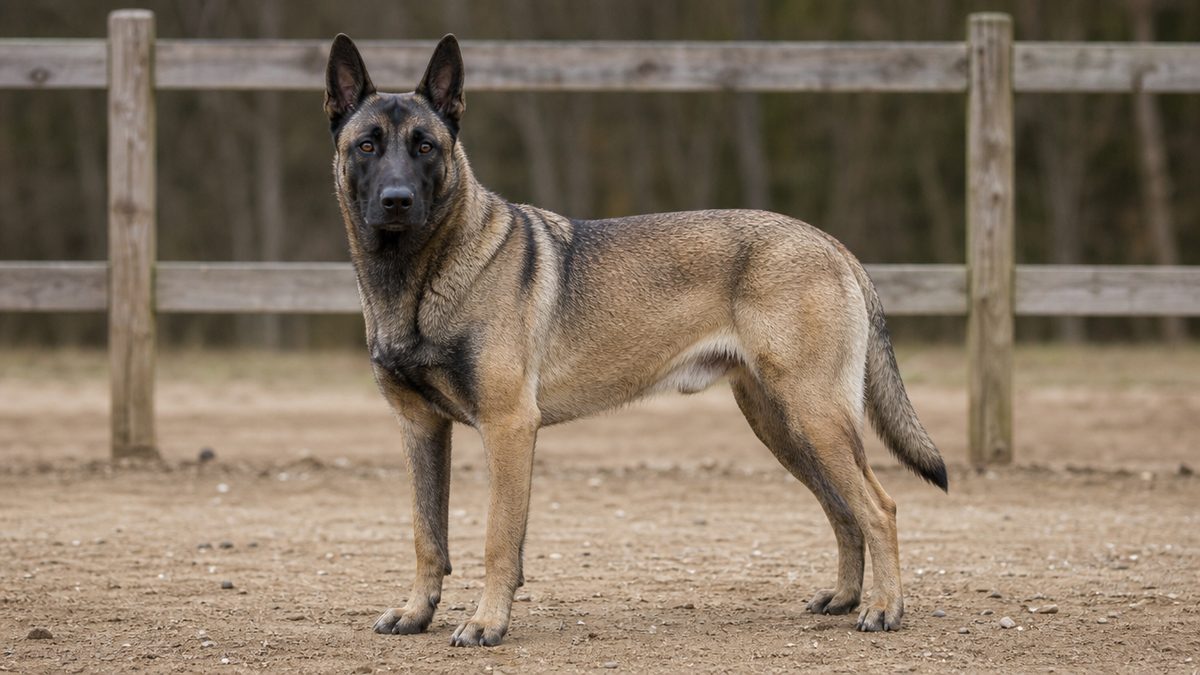
Quick answer
The Kunma dog is a first-generation working cross between the Kunming dog and the Belgian Malinois, bred at China's Kunming Police Dog Base for police service. No kennel club anywhere publishes a standard for it and no register holds a studbook, so it is a service cross rather than a settled breed. India has no Kunma population, no lawful import route and no price.
This guide is general information for Indian pet owners and is not a diagnosis. Always consult a registered veterinarian near you before acting on anything you read here, and treat any sudden change in your dog's condition as urgent.
Kunma at a glance
What the Kunma dog actually is
The Kunma dog is a first-generation working cross between the Kunming dog and the Belgian Malinois, produced at the Kunming Police Dog Base of China's Ministry of Public Security for police work rather than for the pet market.
The background is documented and the description is consistent across sources. China's Ministry of Public Security brought Belgian Malinois in from Belgium and crossed them with its own Kunming dogs at the Kunming base, and the resulting dogs went into public-security service. English Wikipedia adds the direction of the mating, naming the Kunming dog as the paternal parent and the Malinois as the maternal one, and puts the import at 67 dogs, 28 males and 39 females, in five batches.
Physically the two accounts agree. Baidu Baike gives a shoulder height of 60 to 70 cm, erect ears, a strong jaw, a short harsh coat and a predominantly greyish-black coat colour with a black face. Wikipedia gives 61 to 66 cm for males and 56 to 61 cm for females, with some dogs reaching 70 cm, and lists fawn with a black overlay and mask alongside several darker shades. Both describe a head that is narrower and longer in the muzzle than the Kunming parent's, which is what you would expect from a Malinois cross.
Where the sources stop agreeing
Two well-known sources give opposite answers to the only question that matters, and Bonbeno publishes both rather than picking one. English Wikipedia states that the Kunma "has been officially recognized as an Independent breed, with a stable breeding population established as early as 2018";. Baidu Baike, writing about the same dog, calls it a hybrid breed and says the name "was adopted by dog dealers to avoid the term hybrid dog";. A third Baidu entry, on Chinese native dogs, describes the Kunma as "currently under development";.
Neither of the recognition claims names a register. That matters, because a claim of official recognition is checkable only against the body that granted it, and the Kunma's own sources never say which body that would be.
Wikipedia dates the Belgian imports to 1991 and says they arrived in five batches. Baidu Baike dates the same programme to 2000. Both are describing the identical crossbreeding project at the identical base, nine years apart, and no page ranking for this breed name notices the gap.
The name is a portmanteau, and one half of it means something else
Kunma is not an old name. It is Kun from Kunming plus ma from maquan, and maquan, written as horse dog in Chinese, is the ordinary everyday Chinese word for the Belgian Malinois. English Wikipedia lists Chinese Maquan and the bare Maquan among the Kunma's alternative names, which quietly converts a common word meaning Malinois into a name for the cross. A Chinese source discussing maquan is usually discussing Malinois, not Kunma, and reading it the other way manufactures a breed identity out of a translation.
The same page's alternative names include Kunma Wolfdog and Chinese Horse Dog. Neither has any basis in the documented parentage. There is no wolf anywhere in this cross, and horse dog is simply the literal reading of the two characters that spell Malinois.
Why this page exists
Search for this name and you get five Pinterest pins, two Instagram tag pages, an encyclopedia stub and a Baidu entry, and not one of them tells you whether the Kunma is a breed. The one marketplace page in the set is more revealing than helpful. Its prose is honest, describing the Kunma as an obscure name that "lacks a widely published kennel standard or stable international registry identity" and advising buyers to verify provenance instead. Its data is generated: it lists 55 coat colours for this dog, including albino, blue merle, harlequin and leucistic, offers an empty Kunma herdbook and an empty breeder directory, provides a gestation calculator preset for the breed, and prints a featured listing for a blue pullet in Ravenna, Texas on a dog page.
Temperament, and who should not get one
The Kunma was selected for police work and nothing else, which makes it an excellent working dog and a poor household one, and its own encyclopedia entry says so in plain terms.
Baidu Baike's assessment is unusually blunt for a breed entry. It describes the cross as well suited to high-intensity tasks with considerable endurance and stamina, then states that "this breed is not suitable for domestic keeping as a pet and should only be used for work purposes";. Very few breed pages anywhere say that about their own subject, and an Indian reader should weigh it accordingly.
The same entry adds a warning about handling that is worth reading twice. During training the dog "demands that the handler's techniques be precise and decisive, and the measures taken must be resolute; otherwise, this dog may deceive the trainer";. A dog that will test and work around an inconsistent handler is exactly the wrong animal for a household that trains casually.
What the parents contribute
- Drive and speed from the Malinois side, the quality that made the Belgian variety the default police dog on four continents.
- Environmental hardiness from the Kunming side, a dog developed for decades of field service across Chinese policing, emergency rescue and customs work.
- A guarding default from both, since neither parent line was ever selected for tolerance of strangers.
- No companion selection at all, because no generation of this cross has been bred for a living room.
The honest summary is that a Kunma is biddable towards a competent handler and indifferent or worse to everyone else. It is alert, athletic and driven, and none of those traits is a virtue in a flat in Pune with two children and a part-time walker.
A police or military kennel with full-time handlers, a daily task, and a veterinary team. That is the entire list, and it is the list its breeders intended.
Training a Kunma, and what it resists
To train a Kunma you need consistency before technique, because the one training note its own encyclopedia entry publishes is that an imprecise handler will be worked around rather than obeyed.
Everything documented about this cross points the same way. It was bred to be trained, it takes bite work readily, and the Chinese police programme reports it performing well in training and on task. What no source claims is that it is forgiving. The Baidu entry's insistence on decisive, resolute handling is the tell that this is a dog which reads its handler and adjusts.
A realistic timeline for the parent breeds
Since no Kunma training curriculum is published, the honest guide is the parents' service pattern. Chinese police work with the Kunming dog across scent discrimination, trail following, evidence search, counter-terrorism and emergency rescue, and the Ministry of Public Security has been running that programme since the 1950s. India's own forces run the Malinois parent on explosives detection, search and patrol. Both are multi-year professional pathways with full-time handlers, not evening classes.
- Weeks 8 to 16: socialise deliberately and widely, because the guarding default arrives early in both parent lines.
- Months 4 to 9: build engagement, impulse control and a reliable recall before any protection work is considered.
- Months 9 to 18: introduce structured tasks. Deploy a real job rather than repetition, since this cross was selected for work and not for drills.
- Month 18 onwards: expect a dog that still needs daily employment. Drive does not fade because the dog has grown up.
One caution applies specifically to India. Protection training on an imported working cross, done badly, produces a liability rather than a guard dog. If you want the qualities described here, train a recognised breed with a documented temperament under a qualified Indian trainer, and register it so its background is verifiable.
Whatever a working programme abroad recommends, check it against the Prevention of Cruelty to Animals (Dog Breeding and Marketing) Rules 2017 before repeating it in India. The Rules run only from 1 to 13, so any advice citing a Rule numbered 14 or higher is quoting something that does not exist.
Daily exercise, and what happens without it
A Kunma needs about two hours of structured daily work, and the consequence of skipping it is documented in its own parents' genetics rather than guessed at.
Both parent breeds have been screened for a compulsive behaviour phenotype, and the study is unusually direct about it. Cao and colleagues used continuous circling as a representative phenotype for obsessive-compulsive disorder, screened the Belgian Malinois and the Kunming Dog, and sequenced ten circling dogs and ten unaffected dogs for each breed. They identified eleven candidate genes in the extreme tail of the differentiated regions, overlapping significantly with genes from a human obsessive-compulsive disorder genome-wide association study, and found that two of them, PPP2R2B and ADAMTSL3, affected the density and morphology of dendritic spines.
That does not mean every Kunma will circle. It means the trait exists in measurable numbers in both parent populations, which is a stronger warning than the usual advice that a working dog gets bored.
What two hours should look like in an Indian city
- Split the work across dawn and after dark, because the middle of an Indian day is unusable for a dog like this for most of the year.
- Prioritise scent work over distance running. Both parents were selected for nose work, and a scent problem tires this dog faster than a walk.
- Add a daily obedience block. Structured thinking is exercise for a purpose-bred working animal.
- Give it a job it can complete. A task with an endpoint settles a driven dog; endless ball throwing winds one up.
If you cannot commit that time every day for a decade, the correct decision is not a smaller version of this dog. It is a different dog, and the comparison table further down names the ones that suit an Indian home.
Kunma dog price in India, and why no honest one exists
There is no Kunma dog price in India, because no Kunma population exists here and no lawful route exists to create one. Any rupee figure attached to this name is either invented or attached to a different dog.
Three checkable documents close the question, and the import law closes it hardest. DGFT Trade Notice No. 22/2022-23 of 19 December 2022 files live dogs under ITC(HS) 01061900 as Restricted, and its Policy Condition 7 allows import for only three purposes, a pet dog with a valid pet book and records in the importer's own name, dogs imported by research and development organisations with a CPCSEA recommendation, and internal security use by the Defence and Police Force. Policy Condition 8 then states that import of commercial dogs for breeding or any other commercial activity outside those purposes is not permitted, and paragraph 6 says that any application for trading or breeding purposes, or made on behalf of another person or entity, "shall be duly rejected";.
That is a straightforward import restriction with no commercial exception, so no Indian breeder can lawfully found a Kunma line. Paragraph 7 adds that pet animals may enter only through the airports and seaports of Delhi, Mumbai, Chennai, Hyderabad, Bangalore and Kolkata, with quarantine at the government station of that port and an advance No Objection Certificate from the Animal Quarantine and Certification Station seven days before travel. DAHD added a seventh port, Cochin International Airport at Kochi, for pets arriving under the baggage rules in October 2024. The full route is set out in how to import a dog to India.
No register anywhere holds a studbook for it
The second document is the FCI's own nomenclature. The definitive register under the letter K lists fourteen breeds, running from the Kai to the Kuvasz, with the Komondor and the Korea Jindo Dog present as in-document controls, and the Kunma is not among them. The twenty-entry provisional register holds no Chinese entry either, its newest four admissions being the Macedonian Shepherd Dog Karaman, the Sabueso Fino Colombiano, the Segugio dell'Appennino and the Tatransky Duric. With no FCI nomenclature entry there is nothing for an Indian kennel club to register a pedigree against, which is why the breed standard question and the price question are the same question.
The third is China's own position. Dogs were left off the national livestock and poultry catalogue published in 2020, so the Kunma has no domestic livestock classification at home either. Its Kunming parent, by contrast, was formally named on Ministry of Public Security acceptance in 1988 and appraised by the national committee on genetic resources in 2007. One of these animals is an administratively settled breed and the other is an experimental service cross.
What is actually being sold under the name
The single marketplace page ranking for this term is more revealing than helpful, and it argues against itself. Its prose is honest, calling the Kunma an obscure name that "lacks a widely published kennel standard or stable international registry identity" and telling buyers to verify provenance instead. Its data is generated. It lists 55 coat colours for this dog including albino, blue merle, harlequin and leucistic, offers an empty Kunma herdbook and an empty breeder directory, provides a gestation calculator preset for the breed, and prints a featured listing for a blue pullet in Ravenna, Texas on a dog page.
Bonbeno publishes no price band for the Kunma because none can be sourced. Indian listing sites routinely print a US dollar figure converted at a single rate, and this site has caught the same house price point of Rs 98,999 attached to eleven different breeds. If you are shown a Kunma price in India, ask which dog the seller actually has, and check the photograph against the Belgian Malinois, which is the animal most often sold under an exotic name here.
The honest alternative is not a cheaper Kunma. It is the recognised parent. The Belgian Shepherd Dog holds FCI standard 15 with definitive acceptance on 1 January 1956, its Malinois variety is registrable through a kennel club, and India's own forces already run it at scale, with a Central Reserve Police Force officer putting the Malinois at about 90 percent of the force's dogs and the National Security Guard replacing Labradors with the same breed.
What a dog this size actually costs to keep in India
A 22 to 35 kg working dog costs roughly Rs 8,000 to Rs 14,000 a month to keep properly in an Indian metro, and every figure below comes from a published Indian price list rather than from a Kunma owner, because there are none in India to ask.
Start with food, because it is the largest recurring line. Supertails lists Royal Canin Maxi Adult in a 15 kg bag at Rs 9,548 against a printed maximum retail price of Rs 11,000, which works out to Rs 636.53 per kilogram. A driven 30 kg working dog eats roughly 300 to 390 g a day, so one bag lasts about 38 to 50 days and the monthly cost lands between Rs 5,730 and Rs 7,450. Treat that monthly range as arithmetic rather than a quoted price, and check the grams per day printed on your own pack before you budget from it.
Parasite control is the second fixed line and it matters more here than in a temperate country. NexGard Spectra for the 15 to 30 kg band is Rs 3,308 for three tablets against a maximum retail price of Rs 3,375, which is Rs 1,103 a month, and one tablet covers the tick, flea, roundworm and hookworm role together.
The same vaccine costs three different prices, and the spread is 3.3x
Vaccination is where Indian pricing stops being a single number. The Government of Goa told its own Legislative Assembly on 7 August 2024 that a government veterinary hospital or dispensary charges Rs 100 per dog for anti-rabies and Rs 600 per dog for the 9-in-1 canine vaccine, both inclusive of the vaccine and the certificate, with a Rs 150 service charge per vaccine where the owner brings their own. A private clinic chain charges more and a home visit charges more again.
| Channel | Anti-rabies | 9-in-1 (DHPPiL) | Extra |
|---|---|---|---|
| Goa government veterinary hospital | Rs 100 | Rs 600 | Includes vaccine and certificate |
| Vetic clinic, Mumbai | From Rs 699 | From Rs 899 | 12 clinics; puppy course from Rs 7,199 |
| ThePetNest, vet at your door | From Rs 1,199 | From Rs 1,999 | Home visit itself from Rs 699 |
Vetic's Mumbai pages price anti-rabies from Rs 699, Puppy DP from Rs 849, the 9-in-1 from Rs 899, canine corona from Rs 899 and kennel cough from Rs 1,349, with a seven-visit puppy package from Rs 7,199 and an annual adult booster package from Rs 3,299. ThePetNest, which sends a veterinarian to the house across Delhi, Mumbai, Bangalore, Hyderabad, Pune and Chennai, starts a home visit at Rs 699 and prices the same 9-in-1 from Rs 1,999. So the identical vaccine ranges from Rs 600 to Rs 1,999 depending only on who administers it, and the gap is 3.3 times.
The rest of the budget
- Consultation, Rs 500 to Rs 1,000. Count this as one data point rather than two, because a general insurer and a dog sanctuary publish byte-identical ranges for both consultation and core vaccination, and exact agreement between unrelated organisations is evidence of copying rather than of corroboration.
- Neutering, Rs 500 to Rs 2,000 at government clinics and NGOs, Rs 6,000 to Rs 15,000 at private clinics, and Rs 8,000 to Rs 20,000 or more at multispeciality pet hospitals, with pre-surgery blood tests adding Rs 800 to Rs 2,500.
- Grooming, Rs 934 for a bath, Rs 1,359 for a haircut package and Rs 1,869 for a full spa bath with body trim in Delhi. A short-coated dog needs the cheapest of these and needs it rarely.
- Boarding, Rs 130 to Rs 900 a night across fourteen verified Bengaluru providers, with most listings between Rs 500 and Rs 800.
The Bengaluru boarding marketplace warns pet parents to confirm generator or inverter backup for air conditioning during the March to May load-shedding season, and names heat-sensitive breeds as the ones at risk. A double-coated dog of highland ancestry belongs on that list even though it is not brachycephalic.
Indian heat, and why the Kunming half is the problem
A Kunma is badly matched to the Indian plains, and the measurement that shows it is the gap between its paternal homeland and an Indian summer. Delhi's June mean air temperature runs 15.00 degrees Celsius above the hottest month in Kunming.
Bonbeno works climate from NASA POWER by explicit latitude and longitude rather than from a place-name lookup, and echoes back the elevation the model reports so a reader can see whether the grid cell is standing where the town is. Queried at 25.04 north and 102.71 east, the Kunming cell returns an elevation of 2,021 m against a real city elevation near 1,890 m, an overshoot of about 131 m, which is small enough that the series describes the place.
That cell gives Kunming an annual mean of 15.34 degrees Celsius, a hottest month of 20.88 in June, a coldest month of 7.70 in January and an annual mean relative humidity of 71.41 percent. This is a mild plateau climate with no real summer, and it is what the Kunming parent was selected in for decades of field service.
| Place | Cell elevation | Annual mean | Hottest month mean | Annual mean humidity |
|---|---|---|---|---|
| Kunming (25.04N, 102.71E) | 2,021 m | 15.34 C | 20.88 C (Jun) | 71.4% |
| Delhi (28.61N, 77.21E) | 206 m | 25.60 C | 35.88 C (Jun) | 45.6% |
| Chennai (13.08N, 80.27E) | 49 m | 27.95 C | 31.51 C (May) | 72.4% |
| Pune (18.52N, 73.86E) | 636 m | 23.86 C | 28.93 C (Apr) | 66.8% |
| Bengaluru (12.97N, 77.59E) | 842 m | 23.74 C | 28.37 C (Apr) | 67.9% |
Read the table the way a buyer should. Delhi's June is 15.00 degrees hotter than Kunming's June, and Chennai's whole year averages 12.61 degrees above Kunming's. Bengaluru and Pune are the two least punishing options on this list, and even there the hottest month sits about 8 degrees above anything the Kunming parent was bred for. The elevation checks passed on all four Indian cells, at minus 10 m for Delhi, plus 43 m for Chennai, plus 76 m for Pune and minus 78 m for Bengaluru, so these are the towns rather than a mountain a grid cell happened to average in.
Indian law names the risk explicitly
Second Schedule Part IV paragraph 21(1) of the Prevention of Cruelty to Animals (Dog Breeding and Marketing) Rules 2017 bars keeping in outdoor facilities, without the attending veterinary practitioner's written approval, dogs not accustomed to local temperatures, breeds that cannot tolerate them "such as long-haired breeds in high temperature locations", and animals that are sick, infirm, aged or young. A double-coated dog of plateau ancestry is exactly the animal that clause was written about, and note the citation form, because this is a Second Schedule paragraph and not a Rule. The Rules themselves stop at Rule 13.
The monsoon question, and an Indian series that disagrees with the house view
Ear disease is the standing monsoon worry for any dog with an erect but hair-lined ear, and the Indian evidence is not settled. A study of 51 confirmed canine otitis externa cases in and around Durg district, Chhattisgarh, found prevalence highest in summer at 21 of 51 cases, 41.18 percent, against 17 cases in the rainy season, 33.33 percent, and 13 in winter, 25.49 percent, with summer defined as March to June and the rains as July to October. Those three counts sum to 51 and the three percentages sum to 100, so the table is internally sound. Other Indian series peak in the monsoon instead, so treat seasonality as unresolved and check the ears all year.
The practical rule for an Indian keeper is unchanged by any of this. Work the dog at dawn and after dark, never in the middle of the day from March to June, and never shave a double coat to cool it down, because the undercoat is what keeps radiant heat off the skin.
Grooming a short-coated working cross in Indian humidity
To groom a Kunma you brush the short coat weekly, brush it daily through the seasonal moult, and leave it otherwise alone. This is one of the cheapest coats in the working group and it needs no professional appointment at all in most months.
The coat is documented consistently across both encyclopedia sources. Baidu Baike describes a short and harsh coat with a predominantly greyish-black coat colour and a black face, while English Wikipedia records the coat as short-haired and lists fawn with a black overlay and a black mask alongside purple brown, black, reddish brown, grey-black, black-red, yellow-grey and khaki. Neither describes a furnished or corded coat, so nothing here needs stripping, scissoring or clipping.
What weekly care looks like
- Brush once a week with a rubber curry or a short-bristle brush, moving with the lie of the coat. Twice weekly is enough even for a heavy shedder.
- Check both ears every week, and dry them properly after any swim or bath, because an Indian series found canine otitis externa peaking in summer at 41.18 percent of cases and still running at 33.33 percent through the rains.
- Bathe roughly every six to eight weeks, or after real work in mud. Vetic's Delhi bathing package starts at Rs 934, so a professional bath costs less than a haircut on almost any long-coated breed.
- Feel along the coat for ticks after every off-lead session in grass, and keep the monthly acaricide going year round rather than seasonally.
Never clip the coat to cool the dog
The commonest Indian grooming mistake on a double-coated dog is shaving it for summer, and it makes the animal hotter rather than cooler. The undercoat that traps warm air in a Yunnan winter is the same layer that keeps radiant heat off the skin in a Chennai May, and clipping it exposes skin that has never seen direct sun. Where a groomer offers a summer shave for a working coat, decline it and increase shade, water and dawn walking instead.
Do not treat overseas grooming advice as transferable either. A parent club writing for a temperate country will tell you to towel a dog and let it air dry, which is sound in Wisconsin and wrong in an Indian monsoon, where a wet ear canal in 85 percent humidity is the beginning of an otitis case. Dry the ears deliberately, every time.
Second Schedule Part II paragraph 6(8) of the 2017 Rules forbids tail docking, ear cropping, de-barking, de-clawing, branding, dyeing, injecting substances to enhance visual appeal, and any change of appearance by artificial means. A Kunma carries naturally standing ears and an undocked tail, so nothing about the breed invites this, but the clause is worth knowing before any groomer offers a cosmetic extra.
Budget honestly. A short-coated dog of this size costs about Rs 934 for a bath when you want one and nothing at all in the months when you do not, against Rs 1,869 for the full spa bath and body trim that a heavily coated breed needs on a schedule. Coat is one of the few running costs where this cross is genuinely cheap to live with.
Health, screening and lifespan, with the gaps stated
No health study exists for the Kunma itself, so this page publishes no lifespan figure and no breed prevalence. What is documented sits in the two parent populations and in the Indian disease pressure any dog here will meet, and both are worth reading before you go looking for one of these dogs.
The strongest parent finding is behavioural and genetic rather than orthopaedic. Cao and colleagues used continuous circling as a representative phenotype for obsessive-compulsive disorder, screened the Belgian Malinois and the Kunming Dog, and sequenced ten circling dogs and ten unaffected dogs from each breed. They identified eleven candidate genes in the extreme tail of the differentiated regions, overlapping significantly with genes from a human obsessive-compulsive disorder genome-wide association study, and showed that two of them, PPP2R2B and ADAMTSL3, affect the density and morphology of dendritic spines. Both of the Kunma's parents were the study populations, which is as close to a breed health finding as this cross has.
The paper that should have included it, and did not
The absence is easiest to see in a study run by the breed's own institution. A 2024 comparison of gut microbiota from the Kunming Police Dog Base compares the Chinese Kunming dog, the German Shepherd dog and the Belgian Malinois, three breeds, and the Kunma is not one of them. A cross that its own base does not sample when studying its own dogs is not being treated as a settled population.
The reproductive literature tells the same story from the parent's side. A retrospective study of female reproductive parameters in the Kunming dog reports a mean litter size of 7.19 puppies across 567 litters, which is a real dataset for the parent and no dataset at all for the cross. A study of balancing selection at the MC1R gene likewise describes Kunming dog populations rather than Kunma ones.
Prove an absence before you publish it
Bonbeno checked whether a Kunma literature exists rather than assuming it does not, and the control matters more than the result. PubMed collapses an unrecognised term onto whatever concept it can match and then reports a confident count for a search nobody ran, which is why a single record identifier is worth reading back before it is cited. A PubMed identifier picked without resolution can return a real and completely unrelated paper, and record 29301266 is a spaceborne fibre-optic gyroscope study, not a dog paper at all. Treat any Kunma health figure you meet elsewhere the same way, by opening the source and checking that it names this cross.
What an Indian keeper would actually be treating
Tick-borne disease is the realistic Indian health burden for a large outdoor working dog, and the Indian series are consistent about that even though they sampled clinic caseloads rather than random populations. A national survey of canine tick-borne diseases in India found infection across the sampled sites, a molecular study in eastern India confirmed Ehrlichia canis at 56 of 178 dogs, 31.46 percent, among clinically suspected animals, and a Punjab analysis found Babesia vogeli, Babesia gibsoni, Ehrlichia canis and Hepatozoon canis all circulating. Read every one of those as "among dogs tested at veterinary clinics", because none of them sampled the general dog population.
Second Schedule Part III paragraph 8(10) of the 2017 Rules requires breeding dogs to have been tested for genetic defects "including hip dysplasia, progressive retinal atrophy, night blindness, hypothyroidism, entropion, ectropion, overshot, undershot jaw (when incisors do not touch or mesh), wry mouth, two or more missing teeth, unilateral cryptorchid or full cryptorchid males". The word including makes that list illustrative rather than closed. The same gazette never mentions deafness or a patella grade at all, so no Indian law mandates either.
The honest summary is that a structurally sound working dog of this type should be screened for hips and elbows before breeding, that no Kunma-specific screening scheme exists to screen against, and that anyone offering you health guarantees for this cross is describing a dataset that has not been collected.
Feeding a large working cross in India
To feed a dog of this build you work from body condition rather than from a breed chart, because no Kunma feeding guideline exists. A 22 to 35 kg adult in real daily work eats roughly 300 to 390 g of a large-breed dry food, which is about Rs 191 to Rs 248 a day at current Indian retail.
The arithmetic is worth showing rather than asserting. Royal Canin Maxi Adult sells at Rs 9,548 for a 15 kg bag on Supertails against a printed maximum retail price of Rs 11,000, which is Rs 636.53 per kilogram. At 300 to 390 g a day one bag lasts 38 to 50 days. Nothing in that calculation is breed specific, and that is the point, because the honest feeding advice for an unstandardised cross is the advice for any dog of its weight and workload.
Condition score beats any published quantity
A working cross of this type should look lean and muscular with the last two ribs faintly visible in motion and an obvious waist from above. Feed to that outline and adjust weekly. Weight matters more here than on most pages, because the strongest transferable finding in the veterinary literature on heat-related illness is that a dog at or above its breed and sex mean bodyweight carries higher odds of a heat event, and a Kunma in India is already living above its ancestral thermal comfort.
Life-stage feeding, without inventing a breed schedule
- Weeks 8 to 16, four meals a day on a large-breed puppy food, keeping growth deliberately slow rather than maximal.
- Months 4 to 12, three meals falling to two, with the daily quantity driven by condition score and not by the bag's weight table.
- Months 12 to 24, two meals a day. A late-maturing working dog is still filling out, so resist the urge to cut rations because the dog has stopped getting taller.
- Adult, two meals a day, with the larger one after work rather than before it, since a deep-chested dog should not exercise hard on a full stomach.
- Senior, two meals with the protein held up and the calories eased down, and a veterinary consultation at Rs 500 to Rs 1,000 before any diet change.
What Indian conditions change
Three adjustments genuinely matter here and none of them appears on an imported feeding chart. Split the daily ration so the larger meal falls after the evening work, because a dog that eats and then works in 35 degree heat is at avoidable risk. Keep water available in more than one place, since a driven dog will not stop to look for it. And store food against humidity rather than against cold, because an opened bag in a Chennai monsoon spoils on a different timetable from one in a Yunnan winter, where the Kunming parent's own feeding practice was worked out.
Deworming rides alongside feeding on the same monthly cycle. A single monthly tablet in the 15 to 30 kg band covers the tick, flea, roundworm and hookworm role together at Rs 1,103 a month, which is simpler to keep to than a separate wormer and acaricide schedule.
It is tempting to feed a Kunma on a Belgian Malinois chart because one parent is a Malinois. The Malinois is a lighter dog than the upper end of the Kunma's stated 22 to 35 kg range, so a chart built for it will underfeed a heavier animal. Weigh the dog, score its condition and feed the dog in front of you.
The first year, month by month
The first year of a purpose-bred working cross is decided in the socialisation window, because both parent lines default to guarding and neither was selected for tolerance of strangers. Everything below is drawn from the parents' documented service pattern rather than from a Kunma curriculum, because none is published.
Note first what Indian law says about when this year may start. Rule 8(1)(a) of the Prevention of Cruelty to Animals (Dog Breeding and Marketing) Rules 2017 requires that pups less than eight weeks in age are not sold. That is a Rule rather than a Second Schedule paragraph, and it is the one legal date that governs the beginning of this timeline.
- Weeks 8 to 12. Socialise deliberately and widely to people, surfaces, traffic and other dogs. Start the vaccination course, which runs from about day 30 to day 120 on the Indian schedule and costs from Rs 7,199 as a package or Rs 100 to Rs 600 a shot at a government veterinary hospital.
- Weeks 12 to 16. Keep socialising and add handling, because a dog that will later be examined, muzzled and restrained by a veterinarian has to learn it now. Introduce a crate and short separations.
- Months 4 to 6. Build engagement and impulse control. Teach a recall that works under distraction before any drive work begins, since a Malinois-derived cross with an unfinished recall becomes an outdoor management problem.
- Months 6 to 9. Introduce structured scent work. Both parents were selected for nose work, and a scent problem tires this dog faster than distance running does.
- Months 9 to 12. Add real tasks with an endpoint. Complete the deworming and booster cycle and register the dog with the municipal body where your city requires it.
- Months 12 to 18. Consider neutering timing with your veterinarian rather than by a calendar, budgeting Rs 500 to Rs 2,000 at a government clinic or NGO and Rs 6,000 to Rs 15,000 privately.
What the first year does not include
Protection work does not belong anywhere in this list. Baidu Baike's own entry warns that this cross demands precise and decisive handling and that an imprecise handler will be deceived rather than obeyed, and the same entry says plainly that the animal is not suitable for domestic keeping as a pet and should be used for work only. Bite work started early on a dog that cannot yet be recalled produces a liability, not a guard dog.
Second Schedule Part II paragraph 6(3) of the 2017 Rules prohibits in-breeding, defined as breeding between relatives of the second to fourth grade in straight or side line within the first four generations, and incest breeding between parents and children or brother and sister. Programmes abroad that manage a small founder population by close mating are describing something Indian law does not permit.
The realistic summary for an Indian household is that this year needs a full-time handler and a daily job, and that the dog which comes out of it will still need both at eighteen months. Drive does not fade because the puppy has grown up.
Kunma against the dogs an Indian buyer can actually get
Compared head to head, every alternative below beats the Kunma on availability in India, and two of them beat it on documentation as well. This is the table the ranking pages for this name do not publish.
The comparison that matters is not between the Kunma and other Chinese dogs. It is between a cross with no register and the recognised animals an Indian buyer can lawfully source, register and verify.
| Kunma | Belgian Shepherd (Malinois) | German Shepherd | Indian pariah dog | |
|---|---|---|---|---|
| Published breed standard | None anywhere | FCI 15, accepted 1 Jan 1956 | FCI standard, long established | None, and it is a landrace |
| Studbook you can register in | None | Yes, through a kennel club | Yes, through a kennel club | Not applicable |
| Lawful route into India | None for purchase | Yes | Yes | Adopt locally, free |
| Heat tolerance here | Poor | Moderate | Moderate | High, evolved here |
| Used by Indian forces | No | Yes, about 90 percent of CRPF dogs | Yes | Not typically |
| Verifiable parentage | No | Yes | Yes | Not applicable |
The Belgian Shepherd Dog is the honest substitute and it is one of the Kunma's own two parents. It holds FCI standard 15 with definitive acceptance on 1 January 1956, and its Malinois variety is what India's own forces already run, with a Central Reserve Police Force officer putting the figure at about 90 percent of the force's dogs and the National Security Guard replacing Labradors with the same breed. Everything an Indian buyer wants from a Kunma is available in a dog with a written standard, a studbook and a supply chain.
Where the Kunming parent sits
The Kunming dog is the interesting middle case, and it shows what the Kunma has not done. It was developed in Kunming in the 1950s from Alsatian stock crossed with local dogs, was recognised as a breed in 2007, and is described as the only working breed developed in China with international recognition. It carries a 1988 Ministry of Public Security naming and a 2007 appraisal by the national committee on genetic resources. Baidu Baike's own entry on Chinese native dogs, by contrast, describes the Kunma as currently under development, and its Kunming entry treats that parent as a settled breed.
English Wikipedia's lead calls the Kunming dog a wolf-dog breed, then two paragraphs later reports a 2021 behavioural study finding its stereotypes consistent with a cross between indigenous Kunming village dogs and German Shepherd Dogs. The Chinese term behind the label means shepherd or Alsatian type, so the wolf in the English name arrived through a dictionary rather than through a pedigree. Read any Kunma or Kunming claim about wolf content the same way.
For a buyer whose real requirement is a heat-tolerant, sound, low-cost dog rather than a protection animal, the Indian pariah dog wins this table outright. It is free to adopt, it evolved in this climate, and it needs none of the import paperwork that makes the Kunma impossible here in the first place.
What Indian buyers get wrong about the Kunma
The commonest mistake is treating the Kunma as a breed you can buy, and the second is confusing it with the Kunming dog. Both errors are made by pages currently ranking for this name.
Six errors this page exists to correct
- Treating the name as a settled breed. English Wikipedia says the Kunma has been officially recognised as an independent breed with a stable population since 2018, while Baidu Baike calls it a hybrid whose name "was adopted by dog dealers to avoid the term hybrid dog";. Neither names the body that granted recognition, and no register holds a studbook.
- Reading hybrid vigour as a health guarantee. Wikipedia says the cross performs well and that its hybrid advantages are obvious, but Baidu Baike says the cross works only in the first generation and that breeding beyond the second is not feasible, adding that the problem needs further research. A first-generation advantage is not an inherited one.
- Confusing the Kunma with the Kunming dog. The Kunming dog is a settled breed with a 1988 naming and a 2007 national appraisal; the Kunma is a cross derived from it. Every claim about the parent's recognition gets attached to the cross by pages that do not check.
- Trusting a rupee figure. There is no Indian supply, so an Indian price for this name describes a different animal. Divide any suspicious figure by 84.38 and by 74 before you believe it, and look at what the seller's carousel actually contains.
- Believing a name means what it looks like. Maquan, one of the Kunma's own alternative names, is written with the characters for horse and dog and is the ordinary Chinese word for the Belgian Malinois. A Chinese page about maquan is usually about Malinois.
- Buying it as a family dog. Baidu Baike states that this breed is not suitable for domestic keeping as a pet and should only be used for work purposes, which is an unusually blunt thing for a breed entry to say about its own subject.
Two mistakes about the search results themselves
Google India returns about 174 results for this name and hands the searcher a knowledge panel reading "Kunma Dog, dog breed", which reads as settled information and is not. Its People Also Ask box then asks about Pekingese, about a dog called Kuma, about Kunming wolfdogs and about the biggest Chinese breed, so not one of the four questions Google associates with this search is about the Kunma at all. A page-one Shutterstock result for Kuma stock photographs is the same collision showing up in the organic results.
The second search mistake is trusting an answer engine's rupee figure. This project has repeatedly caught generated answers quoting an Indian price back as fact after converting a dollar band, and has caught one inventing a price from a page containing no number at all. An AI summary is not a source for a figure, and a citation can be genuine while the number attached to it is not.
English Wikipedia dates the Belgian imports to 1991 and says 67 Malinois arrived in five batches, 28 males and 39 females. Baidu Baike dates the same crossbreeding programme at the same base to 2000. Both describe one project, nine years apart, and no page ranking for this breed name mentions the discrepancy.
Adoption, and the dog to look for instead
You cannot adopt a Kunma in India, because none are here. What you can do is adopt the dog that already suits this climate, and verify anything you are offered under an exotic name before money changes hands.
Begin from the origin of the animal in front of you. A dog offered as a Kunma in India has no lawful import route behind it, since DGFT Trade Notice 22/2022-23 permits entry only for a pet in the importer's own name, for CPCSEA-recommended research, or for Defence and Police use, and states that applications for trading or breeding purposes shall be duly rejected. There is also no FCI nomenclature entry to register the animal against FCI breeds recognised on a provisional basis. Between those two facts, no lawful commercial supply chain for this cross can form in India.
The adoption route that actually works here
The Indian pariah dog is the animal a Kunma buyer usually wants without knowing it. It is free to adopt through any municipal shelter or rescue, it evolved in this climate rather than on a 1,890 m plateau, it needs no import paperwork, and it carries no inherited conformation defect built by a closed studbook. The running costs are the ones set out earlier on this page, and they are the same whatever the dog's ancestry, because vaccination, parasite control and food are priced by weight and city rather than by breed Supertails, Boehringer Ingelheim NexGard….
- Adopt through a registered shelter or a municipal facility, and take the vaccination record with the dog.
- Budget Rs 100 to Rs 899 per core vaccine depending on whether you use a government hospital or a private clinic, and Rs 500 to Rs 2,000 for a subsidised neutering Vetic, Dog Neutering Cost in India.
- Start monthly parasite control immediately, because Indian clinic caseloads show heavy tick-borne disease pressure.
- Book a first veterinary consultation at Rs 500 to Rs 1,000, or a home visit from Rs 699 if the dog is fearful in a clinic.
If you are offered a Kunma anyway, verify these five things
- The import authorisation. Ask to see the DGFT authorisation and the Animal Quarantine and Certification Station No Objection Certificate for the port of entry, which can only be Delhi, Mumbai, Chennai, Hyderabad, Bengaluru, Kolkata or, since October 2024, Kochi Department of Animal Husbandry….
- The pedigree. Ask which register issued it, then check that register's own nomenclature for the breed name. The FCI's letter K list runs from the Kai to the Kuvasz and contains no Kunma.
- The parents. A first-generation cross has a Kunming sire and a Malinois dam by definition, so ask to see both and ask which register each is in.
- The photographs. Compare them against the Belgian Malinois, because that is the dog most often relabelled here.
- The breeder's registration under the 2017 Rules, which requires registration before breeding and forbids sale of pups under eight weeks.
If you want the Kunma's working qualities, buy a registered Belgian Malinois and train it with a qualified Indian trainer. If you want a hardy, heat-adapted companion, adopt an Indian pariah dog. Both routes give you an animal whose origin you can verify, which is the one thing the Kunma cannot offer anybody in India.
Kunma dog questions Indian readers actually ask
Is the Kunma a real dog breed?
The Kunma is a real dog, but it is not a recognised breed. No kennel club anywhere publishes a breed standard for it, no register holds a studbook, and Baidu Baike describes the name as one adopted by dog dealers to avoid the term hybrid dog. Treat it as a working cross.
What two breeds make a Kunma dog?
A Kunma is the Kunming dog crossed with the Belgian Malinois. English Wikipedia states the Kunming dog is used as the paternal parent and the Malinois as the maternal parent, and that China's Ministry of Public Security imported 67 Malinois from Belgium in five batches.
Can you buy a Kunma dog in India?
No verified Kunma exists in India. There is no Kennel Club of India route, no FCI recognition to register against, and dogs are a restricted import into India, so no lawful commercial supply chain can form. Anything sold under the name in India is something else.
What is the Kunma dog price in India?
There is no Kunma dog price in India, because there is no Indian market and no import route. Any rupee figure you see attached to this name is either invented or attached to a different dog, so Bonbeno publishes no price band for this cross at all.
Do Kunma dogs breed true?
Baidu Baike states that the Kunming dog can only be crossbred with the Belgian Malinois for the first generation and that breeding beyond the second generation is not feasible, adding that the problem needs further research. A cross that does not breed on cannot form a self-sustaining breed population.
Is the Kunma dog recognised by the FCI?
No. The FCI's definitive register under the letter K lists fourteen breeds, from the Kai to the Kuvasz, and the Kunma is not among them. It is also absent from the twenty-entry provisional register. Vietnam and China both sit outside FCI recognition for these dogs.
Is the Kunma dog good as a family pet?
Baidu Baike says plainly that this breed is not suitable for domestic keeping as a pet and should only be used for work purposes. It is a purpose-bred police animal with no selection for companion temperament behind it, so it is a poor choice for an Indian household.
Can a Kunma dog handle Indian heat?
Poorly. The Kunming parent was developed on the Yunnan plateau at roughly 1,890 m, where the climate is mild year round, and it carries a double coat. Neither parent was selected for the humidity and sustained heat of an Indian plains summer, so heat tolerance is a real limit.
What health problems does the Kunma dog have?
No health data exists for the Kunma itself. What is documented is that both parent breeds were screened for a compulsive circling phenotype in a 2021 whole-genome study, which identified eleven candidate genes overlapping a human obsessive-compulsive disorder association study.
Which dog do Indian forces actually use instead?
The Belgian Malinois, one of the Kunma's two parents. A CRPF officer told the Times of India that about 90 percent of dogs in the force were Belgian Malinois, and the National Security Guard is replacing its Labradors with the same breed.
Is Kunma the same as the Kunming dog?
No, and confusing the two is the commonest error on this topic. The Kunming dog is a settled Chinese breed named on Ministry of Public Security acceptance in 1988 and appraised by the national genetic-resources committee in 2007. The Kunma is a cross derived from it.
Why do Chinese sources call the Kunma a Maquan?
Because maquan, written with the characters for horse and dog, is the ordinary everyday Chinese word for the Belgian Malinois. English Wikipedia lists Chinese Maquan and the bare Maquan among the Kunma's alternative names, which quietly turns a word meaning Malinois into a name for the cross.
Who was China's favourite pet?
The Pekingese is the historical answer. English Wikipedia records that the breed was favoured by royalty of the Chinese Imperial court as a companion dog and takes its name from Beijing. Google offers this question to anyone searching the Kunma, which tells you how little Kunma-specific demand exists.
What kind of dog was Kuma?
Kuma is not a breed. It is a common dog name, and Google surfaces this question because the string Kunma collides with it, which is why a Shutterstock page of Kuma stock photographs ranks on page one for kunma dog. The Kunma is the Kunming dog crossed with the Belgian Malinois.
Are kunming wolfdogs good pets?
The Kunming dog is a working police and military breed rather than a pet, and the wolfdog label is a translation artefact. English Wikipedia itself notes a 2021 study finding its behaviour consistent with a cross between Kunming village dogs and German Shepherd Dogs, not with wolves.
What is the biggest Chinese dog breed?
The Tibetan Mastiff is the largest breed associated with China. English Wikipedia records American Kennel Club weights of 40 to 70 kg for males and 30 to 55 kg for females, which puts it far above the Kunma's 22 to 35 kg and above the Kunming parent as well.
Compare with similar breeds
Kunma sits in 1 Bonbeno group. Each one compares it directly against the breeds it is genuinely an alternative to, on the same figures.