
Register without standard
Tonya Finosu: The Turkish Register Files It Under Another Vowel
A 9.7 kg white alarm spitz from one Black Sea district, held in Turkey's national register under a code and a different vowel, with no standard anywhere. Here is what the Turkish sources say, why two papers on the same 38 dogs disagree by exactly 10 cm, and what Tonya's real elevation does to its climate data.
Quick answer
The Tonya Finosu is a small white spitz from Tonya district in Trabzon, Turkey, weighing about 9.7 kg and standing about 31 cm. Turkey's national body KIF holds it in Grup 11 under the code TFN, but spells it Tonyo Finosu with an O, so searching the register for Tonya returns nothing. KIF publishes NO standard for it, which makes this a register-without-standard case. It is absent from the FCI, the AKC, the UKC, the Royal Kennel Club, Turkey's state breed register and TURKPATENT. There is no Indian market and no pedigree route.
Nothing on this page is veterinary advice. There is no screening data and no published life expectancy for this breed, and no peer-reviewed veterinary literature names it, so this page gives no health figures for it. Every health figure quoted here belongs to a wider Indian dog population and does not transfer to any individual animal. For any decision about a real dog in front of you, consult your nearby vet, who can examine the animal and knows local disease pressure.
Tonya Finosu trait ratings, and what each rating rests on
What the Tonya Finosu is, and the spelling that hides it
The Tonya Finosu is a small white spitz from Tonya district in Trabzon province on Turkey's Black Sea coast, weighing about 9.7 kg and standing about 31 cm at the shoulder, and Turkey's national kennel body holds it in a register while publishing no standard for it.
The first thing to know is a spelling, because it decides whether you find the breed at all. Turkey's national body, KIF, files it as "Tonyo Finosu", with an O, at the slug tonyo-finosu and under the breed code TFN. Searching KIF's 460-breed register for "Tonya" returns nothing. Searching for "Tonyo" returns the breed.
That is the name-form trap running in reverse, and it matters because anyone checking the register under the spelling every English source uses would conclude the breed is absent from its own country's register. It is not absent. It is one vowel away.
The measurements, from the only researchers who took any
One pair of Turkish animal scientists, Orhan Yilmaz and Mehmet Ertugrul, measured this breed, and everything numerical published about it traces to their 2012 work on 38 dogs, 22 male and 16 female. Their figures give live weight 9.7 kg and shoulder height 31.1 cm, with the sexes separated in a companion paper at 10.2 kg and 31.4 cm for males, 9.00 kg and 30.6 cm for females.
Their Turkish-language review adds the description that matters most for understanding what the dog is for. It is a local type, also called Kobi; it guards its owner's property; and it is too small to do protection work, so it warns by barking and tries to drive off an approaching stranger or animal with noise. White is the only coat colour. It is playful, energetic and friendly especially towards children, and its breeders report that numbers are steadily declining.
A real, small, white, alarm-barking farm and house spitz from one Black Sea district, measured once by two academics, held in Turkey's national register under a code and a slightly different spelling, with no written standard anywhere, no geographical indication, no entry in Turkey's state livestock-breed register, and zero peer-reviewed veterinary literature. A conservation association was founded for it in 2017 and a university genetics project began sampling it in 2022.
Bonbeno's two-condition test, and the fourth verdict this breed illustrates
To count as a breed on this site an animal needs two documents: a written breed standard and a studbook. The Tonya Finosu has a register entry with a breed code and no standard at all, which is the state this site calls register without standard.
This breed is the cleanest example of that fourth verdict, because the absence of a standard is not an oversight. It is systematic, and KIF's own site proves it.
| Condition | Verdict | Evidence |
|---|---|---|
| A written breed standard | None, and the absence is systematic | KIF's Tonyo Finosu record contains only the breed name, the Grup 11 line and 'Irk Kodu: TFN'. There is no FCI Standard row. The same template DOES render 'FCI Standard: Standard'i Goruntule' on KIF's Kangal and Samoyed records, so KIF links a standard for Groups 1 to 10 and none for Grup 11 |
| A studbook entry | Yes, a register listing with a breed code | KIF holds the breed in Grup 11 with the code TFN. Whether KIF issues individual pedigrees for Grup 11 dogs was not established, so this is recorded as a register listing rather than a proven studbook |
| Which group, and what that group is | Grup 11, 33 entries | Grup 11 is labelled 'FCI Tarafindan Taninmayan Irklar', breeds not recognised by the FCI. It holds exactly 33 of KIF's 460 breeds, counted from 460 parsed cards |
| Turkish state breed registration | No | The Ministry of Agriculture's native-breed registration communique of 2004 lists exactly TWO dogs, the Kangal and the Izci Kopegi Zagar. Neither the Tonya Finosu nor the Zerdava appears |
| Turkish Standards Institute standard | No | Four TSE dog breed standards exist, TS 12172 Kangal, TS 12891 Akbas, TS 12892 Kars and TS 12893 Turkish Tazi. None is this breed |
| Geographical indication | No, and not for want of a route | TURKPATENT holds no GI for the dog, and no live application. The Kars Turkish Shepherd Dog holds GI number 40 from 2002, so a Turkish dog breed IS registrable this way; nobody filed for this one |
| Formal verdict | Register without standard | A national body lists it with a code and publishes no points, no heights and no weights. The only measurements that exist are two academics' figures on 38 dogs, and a measurement set is not a standard |
Why Grup 11 makes the register listing worth something
A national body that runs an eleventh group is telling you something honest about itself. The FCI has ten groups, so an eleventh is a self-declared national register, and KIF labels its own openly: Grup 11, breeds not recognised by the FCI. Spain's RSCE and Brazil's CBKC do the same thing.
What makes KIF's version a good instrument is what else is in that group of 33. Alongside the Tonya Finosu and the Zerdeva sit "Belirtilmemis" (Unspecified), "Sari Kopek" (Yellow dog) and "Karisik Kopoy" (Mixed hound), plus nine separate Kopoy variants. A body that files "Unspecified" as a register entry is not being selective, which means an absence from this list is a genuinely considered absence rather than an oversight.
The worked example is next door. The Tarsus Catalburun, Turkey's famous split-nosed pointer, is absent from all 460 KIF entries in all eleven groups, verified with the control fragment "catal" returning the Catalan Sheepdog from Grup 1 on the same data. So KIF's register does exclude Turkish breeds, and the Tonya Finosu's presence in it is a positive fact.
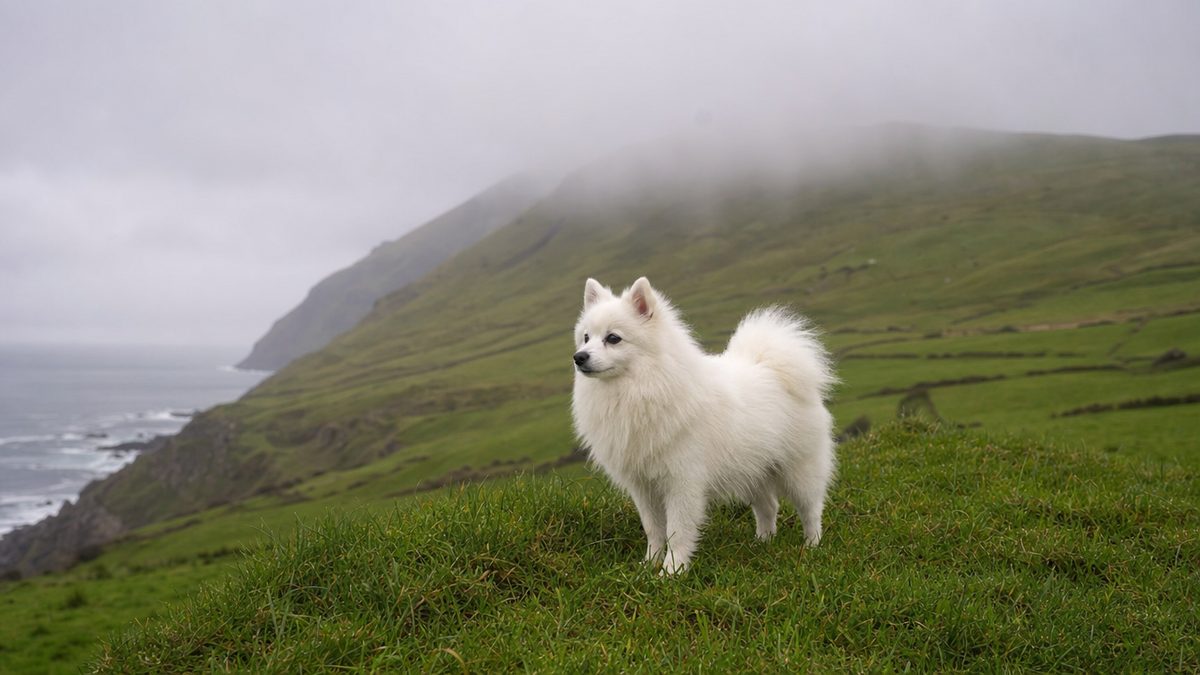
The image on KIF's Tonyo Finosu card is an AI-generated file, and the same generated image is reused on other Grup 11 cards. Do not treat it as a photograph of the breed. The register entry is still a register entry; the picture is not evidence of anything.
The 10-centimetre problem, and how to read the numbers you will find
Two papers by the same authors on the same 38 dogs give shoulder heights of 31.1 cm and 41.1 cm, and the difference is exactly 10 cm on three measurements while four others match to the decimal. This page prints both and does not resolve it.
Set the two side by side, because the pattern is what makes it interesting.
| Measurement | Journal of Veterinary Advances | Igdir Symposium | Difference |
|---|---|---|---|
| Live weight | 9.7 plus or minus 0.17 kg | 9.7 plus or minus 0.17 kg | None |
| Shoulder height | 31.1 plus or minus 0.27 cm | 41.1 plus or minus 0.27 cm | Exactly +10 cm |
| Rump height | 30.1 plus or minus 0.27 cm | 40.1 plus or minus 0.27 cm | Exactly +10 cm |
| Body length | 40 plus or minus 0.40 cm | 50 plus or minus 0.40 cm | Exactly +10 cm |
| Heart girth | 59.6 plus or minus 0.44 cm | 59.6 plus or minus 0.44 cm | None |
| Chest width | 25 plus or minus 0.22 cm | 25 plus or minus 0.22 cm | None |
| Cannon circumference | 10.1 plus or minus 0.15 cm | 10.1 plus or minus 0.15 cm | None |
| Head length | 20.6 plus or minus 0.27 cm | 20.6 plus or minus 0.27 cm | None |
A uniform ten centimetres across exactly the three vertical and length measurements, with identical standard errors and four other measurements matching exactly, is a transcription error in one version rather than two datasets. This page does not say which, because saying which would require a document neither version supplies.
For context only, and labelled as context: the authors' own third paper gives 31.4 cm for males and 30.6 cm for females, every other source clusters at 30 to 32 cm, and the comparators the first paper chose are the German White Spitz, the Japanese Spitz and the Volpino Italiano, all breeds around 30 cm. A 41 cm dog would not have been compared with those three.
The 73.5 kg figure, which belongs to a different dog in a different country
A sentence circulating beside this breed's data reads "About 74 selected dogs were used in this study. The mean body weight was 73.50 plus or minus 13.33 kg/dog." It has nothing to do with the Tonya Finosu. It is a research-network recommendation snippet that appears next to at least ten unrelated figure pages, and the study it belongs to is on the Pishdar dog, a Kurdish mastiff of Iraqi Kurdistan.
73.5 kg is about 7.5 times this breed's actual 9.7 kg. It is worth naming because the snippet sits directly beside the correct caption on the same page, and because a reasonable researcher could attach it to the wrong animal in one careless step.
While tracing that number, a rendering of one publisher's page returned body-weight figures that appear NOWHERE in that page's raw HTML. The raw bytes of the same page give a different sample size and a different mean. This is why every figure on this page was taken from raw text or from a PDF extracted locally, never from a rendering or an extraction summary.
What the Turkish state says, which is more informative than what the kennel club says
Turkey has three separate state routes by which a dog breed can be formally recognised, and the Tonya Finosu is in none of them, while other Turkish breeds are in all three. That contrast is the strongest evidence on this page.
Ministries, standards institutes and intellectual-property offices all recognise breeds, and none of them appears in a kennel club's index. Here are all three, checked.
| Route | What it holds | Tonya Finosu? |
|---|---|---|
| Ministry of Agriculture native-breed registration, Communique 2004/39 | Exactly two dogs: the Kangal at annex 29 and the Izci Kopegi Zagar at annex 42 | No |
| Turkish Standards Institute | Four dog standards: TS 12172 Kangal (1997), TS 12891 Akbas (2002), TS 12892 Kars (2002), TS 12893 Turkish Tazi (2002) | No |
| TURKPATENT geographical indications | The Kars Turkish Shepherd Dog holds GI number 40, registered 10 December 2002 | No, and no application on file |
The geographical indication that Tonya does hold
The GI register was searched properly rather than assumed, and the proof of that is what it returned. Searching the name Tonya returns exactly one record, and it is butter. Tonya Tereyagi, Tonya butter, is registered as an appellation of origin under number 380, registered 18 August 2018, applied for in December 2017, with Tonya Municipality as registrant and the geographic boundary given as Tonya district of Trabzon province. Listing all 32 Trabzon records, registered and pending, returns no dog at all.
So the district went to the trouble of protecting its butter and did not file for its dog. That is not a criticism, and it is a fact with consequences: the Kars Turkish Shepherd Dog's GI number 40 proves the route is open to a Turkish dog breed.
The 2021 headline that says less than it appears to
Turkish media reported in February 2021 that the Tonya Finosu was "on the way to a geographical indication", describing a committee that would complete research into the breed's characteristics and then file an application. Read the tense. The reporting describes an intention to apply, not an application, and as of this page's checks no registration exists and no live application is on file. "On the way to" was an aspiration in 2021 and remains one.
What IS happening, and it is real
Two things are genuinely under way. A conservation association exists: the Tonya Finosu Protection and Breeding Association was founded in 2017, and its president Eren Aydin says it was created to protect the breed and pass it to future generations, and that the breed was in danger of extinction.
And a university is doing the genetics. Ondokuz Mayis University's Department of Animal Science runs a project titled, in translation, Morphological and Genetic Characterisation of Dogs of the Black Sea Region for the Purpose of Defining Them as Breeds, and researcher Elif Cilavdaroglu took 28 blood samples from Tonya finosu at Besikduzu. The stated purpose is registration.
That is what a breed in formation actually looks like from the inside, and it is why this page's verdict is dated rather than permanent. A register listing without a standard, an association five years old, a genetics project sampling 28 animals, and a state register that has not yet admitted the breed.
International registries, and an insertion slot you can see is empty
No international registry holds the Tonya Finosu, and on three of them the gap where it would sit is directly observable in the alphabetical list rather than merely inferred from a search returning nothing.
An absence is a strong claim, so each of these was read with a control breed that returned on the same fetch.
- FCI letter T returns exactly ten entries, and Tibetan Terrier is immediately followed by Tiroler Bracke with nothing between them. Controls Tibetan Terrier and Tosa both returned.
- AKC enumerates 297 breeds, proved two ways that agree exactly, and its dropdown reads Tibetan Mastiff, Tibetan Spaniel, Tibetan Terrier, Tornjak, Tosa, Toy Fox Terrier. The slot is empty.
- The Royal Kennel Club states its own count as 227 and a link harvest returns exactly 227, and its list runs tibetan-mastiff, tibetan-spaniel, tibetan-terrier, turkish-kangal-dog, weimaraner.
- The UKC enumerates 387 breeds across all nine groups, and its Northern Breed group, where a white spitz would sit, contains no T-initial breed at all.
A correction to this project's own working assumption
The FCI letter index is not always language-dependent, and on this letter it is not. This site has recorded that the same FCI letter-index URL can return different breed names in different languages, which is true of the page chrome. On letter T, the English and French versions returned the identical ten entries in identical order, because the FCI files by official breed name and only the surrounding interface is translated. The warning still holds where a breed's name differs between languages; it does not make every letter index untrustworthy.
Turkey's own FCI status, which has changed
The FCI members register prints "TURKEY( Full member )", with the national organisation given as KIF in Kadikoy, Istanbul. That is worth dating, because the same Turkish authors' 2012 conference abstract described the same body as a contract partner of the FCI. So Turkey moved from contract partner to full member somewhere between 2012 and now, and a source describing it either way may simply be of its time.
The consequence for an Indian reader is direct. India is also an FCI full member, represented by the Kennel Club of India, so both countries issue pedigrees against FCI nomenclature. Since the Tonya Finosu holds no FCI number, no KCI pedigree for it can exist, whatever KIF's Grup 11 entry says.
The Tonya Finosu and the Zerdava, which are not two names for one dog
The Zerdava comes from the same district and is a completely different animal, roughly 20 cm taller and 10 kg heavier, brown rather than white, and a working hunting dog rather than an alarm dog.
The two are constantly conflated, and KIF's own Zerdeva record explains why: it ties the Zerdeva directly to Tonya district, recording that it is called a "kapi kopegi", a door dog, by the people of Tonya. Same place, same role in the household's mind, entirely different dog.
| Tonya Finosu | Zerdava (KIF: Zerdeva) | |
|---|---|---|
| KIF breed code | TFN | ZRV |
| Colour | White only | Brown, with white on lower legs, chest and neck |
| Shoulder height | About 31 cm | Males about 51.8 cm, females about 50.7 cm |
| Weight | 9.7 kg | Roughly 20 to 25 kg for males |
| Function | House and yard alarm dog, too small for protection work | Guard and hunting dog, used on boar and bear |
| Toward strangers | Suspicious and vocal, no physical threat | Described by the same researchers as potentially very aggressive and dangerous to strangers |
| KIF association row | No association row on the record | 'Dernegi Var', has an association |
Bonbeno's Zerdava Dog: Price in India, Size and Health page covers that breed in full. The two are sympatric, similarly undocumented and being processed together by the same university genetics project, and they are morphologically and functionally distinct.
One caution on KIF's Zerdeva text, and it is to KIF's credit. The register hedges its own history, saying that the breed's history is not clearly known before referring to sixteenth-century sources. That hedge should be carried across rather than dropped, because a hedged claim in a source that becomes an unhedged claim downstream is one of the commonest ways breed history gets manufactured.
Tonya Finosu price in India, and why the question does not arise
No Tonya Finosu price exists in India, because the breed has no Indian market, no FCI number and therefore no pedigree route, and a declining population in one Turkish district.
Two facts close the supply question before any price question opens.
First, the breed is declining in its own homeland. Its own researchers report that breeders say numbers are steadily falling, and the association founded in 2017 exists because the breed was considered in danger of extinction. A breed in that state does not export.
Second, Indian law closes the commercial route. Dogs are a Restricted import under ITC(HS) 01061900, and DGFT Trade Notice 22/2022-23 states that applications to import for trading or breeding purposes "shall be duly rejected".
How to test any rupee figure you are shown
If a listing quotes a price for this breed in India, run the arithmetic before anything else.
- Divide by 84.38. The strong test. A round dollar quotient means a converted US price.
- Divide by 74. A second widely used rate.
- Divide by 80, but never trust it alone. Any rupee figure ending in three zeros divides cleanly by 80 by construction.
- Look at the quotient, not just whether it divided. Quotients like 1,875 or 6,875 are not prices anyone quotes for a dog.
- Check the currency. Turkish lira figures converted at a stale rate are the specific risk for a Turkish breed, and "Rs" also serves Pakistani rupees.
Most likely a Pomeranian, a Japanese Spitz or a small white mixed-breed dog, since those are what a small white spitz looks like to a seller. Bonbeno publishes no Tonya Finosu price for India. Ask which register holds the dog and what its number is, and note that even KIF's Grup 11 entry carries a breed code rather than a published standard.
Monthly cost of keeping a 10 kg white-coated dog in India
A 10 kg dog with a white double coat costs roughly Rs 3,500 to Rs 8,000 a month to keep properly in an Indian metro, and the grooming line is higher than the size suggests because white shows everything.
Since no Tonya Finosu is available, these are published Indian rates for the small white spitz an Indian buyer will actually own, such as a Pomeranian or a Japanese Spitz.
| Item | Published rate | Source and caveat |
|---|---|---|
| Puppy core vaccination course | From Rs 6,499 | Vetic national page. A promotional floor from one chain; the same chain quotes Rs 7,199 on its Mumbai page the same day |
| Annual booster | From Rs 3,199 | Same chain, same caveat |
| Anti-rabies, single | Rs 699 | Against which Greater Chennai Corporation's six municipal clinics give anti-rabies vaccination free |
| Consultation | Rs 500 to Rs 1,000 | ONE data point, not two: a stray-dog charity and a general insurer publish byte-identical ranges |
| Tick and flea control, monthly | Rs 1,103 for a 15-30 kg dog | A 10 kg dog takes the smaller weight band, so price the band your dog actually falls in |
| Grooming, per session | Bath from Rs 934, full bath and styling from Rs 1,869 | Vetic Delhi. The line that runs high for a white coat, because tear staining and dust show |
| Municipal registration | Rs 500 in Delhi, Rs 50 in Chennai | Delhi registers pet dogs only; Chennai licenses pet animals generally and issued 9,115 licences in 2024 |
A small dog is not a cheap dog in India, and the saving is mostly in food. Vaccination, consultation and municipal fees do not scale with body weight at all, and grooming for a white double coat scales the wrong way.
Tonya's climate, and a grid cell that is wrong by 288 metres
Tonya sits at 818 metres above the Black Sea, only 18 km from the coast, in terrain so steep that a single climate grid cell covering it contains both open sea and a 2,021-metre peak. This section shows the check, because the check changes the answer.
The Pontic Alps are among the worst terrain in the world for gridded climate data, and this breed's home district sits in the middle of it.
The elevation, from three independent models
Tonya town centre is about 818 m above sea level, and that figure is solid because three separate digital elevation models agree within 2.4 metres: SRTM 30m gives 818 m, ASTER 30m gives 817 m and EU-DEM 25m gives 819.4 m. Trabzon city, 45 km away, is at 44 to 48 m. The two places differ by about 770 metres of altitude.
Why one grid cell cannot describe this
Sampling 25 points across a single half-degree cell covering the area returns a minimum of 0 m at open sea and a maximum of 2,021 m in the mountains, with a mean of 700 m. One cell here contains the Black Sea surface and a two-kilometre peak.
So the cell was checked before any figure was used, and it failed. NASA POWER returns a cell at 529.94 m for Tonya against a real 818 m, an error of about -288 m. At the standard lapse rate of roughly 6.5 C per 1,000 m, that means the cell is reporting a place about 1.9 C warmer than Tonya actually is.
| Point | Cell elevation | Real elevation | Error | Usable? |
|---|---|---|---|---|
| Tonya, Trabzon | 529.94 m | 818 m | -288 m | No, publish with the correction stated |
| Trabzon city | 155.92 m | 44 to 48 m | +110 m | Marginal |
| Rize, 60 km east | 936.23 m | 5 m | +931 m | No, catastrophically wrong |
The Rize row is the one to remember. A cell 931 metres above the town it is supposed to describe would make a sea-level Black Sea port look like a mountain station, and nothing in the temperature it returns would warn you.
A ground-truth station, which validates the whole method
Turkey's state meteorological service publishes normals for a Trabzon station over 1927 to 2025, giving an annual mean of 14.8 C and annual precipitation of 830.2 mm. Compare that against the POWER cell for Trabzon city, which returns 15.89 C.
The difference is 1.09 C, and the cell is 110 m too high, which at the standard lapse rate predicts 0.72 C. The observed gap and the predicted gap agree closely, which is exactly what you want: the model's error is explained by its elevation error rather than by something unknown. That is the strongest validation of this method anywhere on this site, and it exists because Turkey publishes a real station.
So what is Tonya's climate, honestly stated
Bonbeno publishes no measured annual mean for Tonya, because no usable measurement exists. MGM has no station there, and the grid cell is 288 m wrong. What can be said is bounded: the coastal station 770 m below runs 14.8 C annually, and lapse-rate correction from the cell puts Tonya near 11.2 C as an estimate labelled as one.
Against Indian cities that is a humid-temperate upland climate: Chennai runs 27.94 C annually, Delhi 25.57 C and Bengaluru 23.74 C. Even Bengaluru, India's mildest large city, is roughly 12 degrees warmer than Tonya's estimated annual mean.
This is a small dog with a dense white double coat from a wet, mild, upland Black Sea climate, and no Indian plains city resembles it. Second Schedule Part IV paragraph 21(1) of the Dog Breeding and Marketing Rules 2017 restricts outdoor housing, without a vet's written approval, for dogs not accustomed to local temperatures and for long-haired breeds in high temperature locations. On heat risk generally, the largest study of canine heat-related illness did not model this breed at all, so no breed-specific odds ratio exists; what transfers is its finding that bodyweight at or above the breed and sex mean carried an odds ratio of 1.42, confidence interval 1.12 to 1.80.
Tonya Finosu temperament, from the one description that has a source
The Tonya Finosu is described by its own researchers as playful, energetic and friendly especially towards children, and as suspicious of strangers whom it warns off by barking rather than by confronting.
That description comes from the Turkish review paper, and it is unusually specific about the mechanism. The dog guards its owner's living and non-living property, and because it is too small to carry out protection work, it generally makes noise in the form of barking to warn its owners and to try to drive away an approaching stranger or animal.
Read that as a job description and the temperament follows. An alarm dog is selected for noticing, for reacting, and for persistence, not for physical confrontation. The association president's own description adds the physical picture: white and long-coated, with a maned chest, a rounded tail, small erect ears and a black nose.
Who this dog would and would not suit
- Suits a household that wants an alert small dog and is not troubled by barking, since barking is the breed's entire working function rather than a fault in it.
- Suits families with children, on the only description with a source behind it.
- Does not suit anyone wanting a quiet apartment dog, for the same reason it suits the first group.
- Does not suit anyone wanting a guard dog, because a 10 kg dog is an alarm and not a deterrent.
- Does not suit an Indian plains household without cooling, given a dense white double coat from an upland climate.
One honest caveat. This description rests on one pair of researchers writing about a local type they surveyed once, not on a breed club's temperament survey or on any standard. It is the best available and it is thin, and pages giving this breed a numbered temperament scorecard have invented the precision.
Training a small alarm spitz, and the one behaviour to shape early
To train a Tonya Finosu or any small alarm spitz, shape the barking rather than trying to eliminate it, start handling and grooming tolerance in the first weeks, and use short reward-based sessions.
The training problem here is unusually clear, because the breed's working behaviour and the commonest owner complaint are the same behaviour.
- Teach a stop cue rather than a silence rule. A dog bred to warn will warn. Rewarding two or three barks and then quiet is achievable; expecting none is not.
- Habituate to normal traffic early, so the dog learns which events are worth reporting. An under-socialised alarm dog reports everything.
- Start grooming handling in the first weeks, because a dense white coat needs lifelong regular handling and a dog that objects at eight months is a much harder problem.
- Keep sessions short and reward-based. Ten focused minutes twice a day suits a small spitz better than one long session.
- Train in the cool hours anywhere in the Indian plains, since a thermally uncomfortable dog does not learn well.
Daily exercise for a 10 kg farm spitz
A Tonya Finosu needs about 45 to 60 minutes of activity a day split into two sessions, which is more than its size suggests because it is described as an energetic working farm dog rather than a lap dog.
The breed's own researchers call it energetic, and its role patrolling a farmstead implies a dog on its feet for much of the day.
- Morning, 25 to 35 minutes of walking in the coolest part of the day.
- Evening, 20 to 25 minutes once the ground has cooled.
- Indoors, daily, scent games and food puzzles, which suit an alert breed and add no thermal load.
- Never at midday in the Indian plains, and check the ground with the back of your hand before walking a small dog whose chest sits close to hot tarmac.
Grooming a white double coat in Indian humidity
Brush a Tonya Finosu two to three times a week and daily during a moult, dry it completely to the skin after every bath, and never shave it, and expect a white coat to need more visible upkeep in Indian dust than a coloured one.
The coat is described as white, long and dense with a mane on the chest, which is a working double coat on a small frame.
- Brush two to three times weekly with a slicker and an undercoat rake, daily during a moult.
- Dry completely after every bath, down to the skin, because a dense coat left damp in Indian humidity is a substrate for hot spots and ear disease.
- Plug the ears before bathing and dry them afterwards, since bathing without doing so has been named in Indian practice as a common cause of otitis.
- Never shave a double coat to cool the dog, because the coat insulates in both directions and shaving exposes skin that has never seen direct sun.
- Watch tear staining and muzzle discolouration, which show on white coats and on no others.
On the seasonal risk, Indian veterinary series disagree about which season peaks for canine otitis, one finding most cases in July and August and another from Durg finding a summer peak of 41.18 percent against 33.33 percent in the monsoon. Both are in the record and this page prints the disagreement, because what they agree on is enough to act on: a wet ear in a humid month is a problem.
Budget for professional drying if you cannot do it at home, from about Rs 934 for a bath in Delhi.
Tonya Finosu health, and an absence proved rather than assumed
The Tonya Finosu has zero peer-reviewed veterinary literature, zero screening data and no published life expectancy, and every one of those absences was measured against a control that succeeded in the same session.
No health issues are documented for this breed anywhere, which is a statement about the research effort rather than about the dogs.
The literature search, with its homonyms named
Every name form returned zero with PubMed's own quotedphrasesnotfound warning: the breed name in singular and plural, Tonya Fino, Finosu alone, Fino of Tonya, Kobi dog, and the comparator Zerdava. Controls in the same session returned 42 for Kangal in title or abstract and 19 for Kangal dog, so the instrument was working.
The homonyms were identified rather than guessed at, and one of them is a trap worth naming.
- Unquoted "Tonya" returns 246 records, overwhelmingly the personal name.
- "Zerdeva" returns exactly 1, and it is a Greek author's surname on an ovarian cancer paper.
- "Tonya AND dog" returns 1, and it genuinely is a dog paper on remote monitoring of canine pruritus in Florida, by an author named Tonya Springer. That is the most deceptive result of the set, because a careless searcher would count it as a hit for a Turkish breed.
One limit stated plainly. Turkish veterinary and animal-science work is largely not indexed in PubMed, and the two substantive sources on this breed were found on DergiPark, Turkey's national academic platform, and on a university repository rather than in a biomedical index. So the correct statement is that this breed has no presence in the international biomedical literature, not that no Turkish research exists, and the two papers cited on this page are themselves the proof of that distinction.
Screening data: none, with the instrument proved first
OFA's statistics dump was retrieved in full and its in-document controls all returned their expected occurrence counts, LABRADOR 109, BULLDOG 170 and BEAGLE 61, before any conclusion was drawn. In that proven-working document, TONYA, FINOSU and ZERDAV each occur zero times.
OFA's own threshold explains why that is unsurprising: "For hips, each breed must have at least 100 evaluations in the database. For all other databases, there must be at least 50". A declining breed in one Turkish district will never meet it. The right phrasing is that the breed has no row in OFA's published statistics tables, not that it is absent from the OFA database.
What a prospective owner can act on instead
With no breed-specific data, the health priorities are the ones that apply to any small double-coated dog in India, and one of them is India-specific. Indian tick-borne disease surveys report high burdens among dogs presented at veterinary clinics: a West Bengal survey of 584 dogs screened found *Babesia gibsoni* in 76.54 percent and reported that 72.9 percent of the 584 dogs screened carried two or more pathogens.
Say the denominator out loud when using that figure, because "of the 584 screened" and "of infected dogs" are different claims, and these were clinic caseloads rather than random samples. A monthly parasiticide and a weekly tick check down to the skin are the two interventions that matter, and a dense coat makes the check harder and more necessary at once.
Feeding a 10 kg dog by life stage
Feed a Tonya Finosu-sized dog a complete small-breed diet split across two meals, adjust by body condition rather than by a chart, and remember that its own researchers found the breed reaches mature weight and size at about one year.
That maturity figure is one of the few genuinely breed-specific facts available, and it comes from the measurement paper: the dogs reach mature body weight and size at around 1 year of age.
- Puppy, to 4 months, three to four meals a day on a complete small-breed growth diet.
- Puppy, 4 to 12 months, two to three meals a day, with the transition to adult food around the one-year mark that the research supports.
- Adult, two meals a day portioned to a condition where ribs are easy to feel without pressing. At roughly 9.7 kg, small errors in portion size matter proportionally more than they would on a large dog.
- Senior, two meals a day with the ration reduced as activity falls.
Keeping a small dog lean is a heat intervention in India. Dogs at or above the mean bodyweight for their breed and sex carried 1.42 times the odds of heat-related illness, with a confidence interval of 1.12 to 1.80.
Month by month through the first year
The first year with a small double-coated spitz in India is organised around three things: the vaccination schedule, establishing grooming tolerance before the adult coat arrives, and getting through the first hot season.
- Months 0 to 2. The puppy stays with its dam. Indian law is explicit that pups under eight weeks are not to be sold, at Rule 8(1)(a) of the Dog Breeding and Marketing Rules 2017.
- Month 2 to 4. Core vaccination course, from about Rs 6,499 at one national chain. Begin grooming handling now, and begin shaping the alarm bark before it becomes a habit rather than after.
- Month 4 to 6. Monthly parasite control begins, priced to the dog's actual weight band. Municipal registration, Rs 500 in Delhi or Rs 50 in Chennai.
- Month 6 to 9. First hot season, and the adult coat starts coming in. Move exercise to the cool hours.
- Month 9 to 12. Mature size is reached around twelve months on this breed's own research. Reassess food quantity and establish the weekly skin and tick check as routine.
Tonya Finosu against the small white spitzes you can actually get
An Indian buyer attracted to this breed is describing a small white spitz, and three of those are readily available in India with far better documentation.
| Breed | Registry position | Documentation | Availability in India |
|---|---|---|---|
| Tonya Finosu | KIF Grup 11 with code TFN, no published standard | Two papers by one author pair on 38 dogs, which disagree with each other by 10 cm | None, and no pedigree route |
| Japanese Spitz Price in India 2026 and Breed ID Guide | FCI recognised | Full standard, screening data available | Widely sold in India |
| Pomeranian Price in India 2026 and the Spitz Problem | FCI recognised | Full standard, extensive screening data | One of India's most commonly sold small breeds |
| German Spitz in India: Price, Registries, Care | FCI recognised | Full standard | Sold in India, often confused with the Pomeranian |
| Zerdava Dog: Price in India, Size and Health | KIF Grup 11 as Zerdeva, code ZRV | Same researchers, same limitations | None |
The three FCI breeds are the honest recommendation if the look is what attracts you, because they come with standards, screening data and a pedigree route an Indian buyer can actually verify. The Pomeranian Price in India 2026 and the Spitz Problem page in particular covers the identification confusion between small white spitzes in India, which is the practical problem here.
And if what interests you is Turkish breeds specifically, the Kangal Dog Price in India, Heat and Law 2026 and Akbash Dog: What India Buyers Need to Know 2026 pages cover the two that are actually documented, one of them holding both a TSE standard and a Ministry registration.
Mistakes people make researching this breed
The five mistakes below would each produce a confident, plausible and wrong page about this animal, and four of them are traps in the sources rather than errors of reasoning.
- Searching the register under the wrong vowel. KIF files the breed as Tonyo Finosu with an O, and a search for Tonya returns nothing across all 460 entries. That single letter is the difference between reporting a register listing and reporting an absence.
- Attaching the 73.5 kg figure to this dog. It belongs to a Pishdar dog study from Iraqi Kurdistan and appears as recommendation boilerplate beside at least ten unrelated pages. This breed weighs 9.7 kg.
- Reporting one shoulder height as settled. Two papers by the same authors on the same 38 dogs give 31.1 cm and 41.1 cm, differing by exactly 10 cm on three measurements while four others match exactly.
- Treating the 2021 geographical-indication headline as a registration. The reporting describes a committee that would file an application. Nothing is registered and no live application is on file, while Tonya's butter has held an appellation of origin since 2018.
- Citing animalia.bio as corroboration of Wikipedia. Its sole listed reference is the Wikipedia article, so the two are one source.
The Turkish review paper cited throughout this page contains a transcription error of its own: its Kangal section cites TS 12891 as the Kangal's TSE standard, but TS 12891 is the Akbas standard, and the identical sentence with the identical number reappears in its Akbas section three paragraphs later. The Kangal's actual TSE standard is TS 12172 of March 1997. The paper remains the best source on this breed, and a source being useful and a source containing an error are not incompatible.
Adoption, and the small white dog that is actually available
You cannot adopt a Tonya Finosu in India, because none exists here, and Indian shelters do hold small white spitz-type dogs and their crosses in numbers.
Small white dogs reach Indian shelters for consistent reasons, most often a coat their owners could not maintain and a bark their neighbours objected to. Both of those are the same problems this breed would present, so a shelter dog of that type is a genuinely representative substitute rather than a consolation prize.
- Ask what the dog's grooming history has been, since a matted small double coat takes months to recover.
- Ask about barking in the foster home, honestly, because it is the single commonest reason this type is surrendered twice.
- Verify vaccination and parasite history in writing, and re-test rather than assume if records are thin.
- Budget for the same grooming costs described above, since adoption changes the acquisition cost and not the running cost.
- Consider an Indie instead, and read the Indie Dog: Indian Pariah Dog Breed and Care Guide 2026 guide, because a dog adapted to your climate solves the hardest problem on this page for free.
Bonbeno does not broker sales, recommend breeders or link puppy listings. For this breed there is nothing in India to link to.
Tonya Finosu: the questions people actually ask
What is the national dog of Turkey?
The Kangal Shepherd Dog is Turkey's best-known and most formally recognised breed, and it is the one Google returns for almost any Turkish dog query, which is why this question appears here rather than one about the Tonya Finosu. The Kangal holds FCI number 331 on a definitive basis, a Turkish Standards Institute standard as TS 12172 from March 1997, and an entry in the Ministry of Agriculture's native-breed register. The Tonya Finosu has none of those: it is a 9.7 kg white alarm spitz from one Trabzon district, held only in KIF's Grup 11 under the code TFN and the spelling Tonyo Finosu.
Why are telomian dogs rare?
The Telomian is a Malaysian breed and a separate question from this one, and Bonbeno covers it on its own page. The reason it appears in the results for a Tonya Finosu search is that Google has no on-breed corpus for the Tonya Finosu and substitutes other rare-breed questions. That substitution is itself a finding about this breed: with zero peer-reviewed literature, no published standard and one pair of researchers who measured it once, there is very little for a search engine to work with.
What is the least wanted dog?
No register publishes a least-wanted list, so the question has no factual answer, and for this breed the useful version is different: how would you even know? The Tonya Finosu has no registration count anywhere. KIF publishes no numbers for any breed, Turkey's state breed register does not hold it, and its own researchers could only report that breeders say numbers are steadily declining. A breed can be genuinely endangered and completely uncounted at the same time, and that is this one's position.
What is the biggest Turkish dog breed?
The Kangal and the Akbash are Turkey's large livestock guardians, and the contrast with the Tonya Finosu is the sharpest way to understand the latter. At 9.7 kg and about 31 cm at the shoulder, the Tonya Finosu is roughly a tenth the weight of a Kangal, and its own researchers note it is too small to carry out protection work, so it guards by barking rather than by confronting. Turkey's dog breeds span that entire range, and the Black Sea region alone holds both this small white alarm spitz and the much larger brown Zerdava.
Is the Tonya Finosu a recognised breed?
Partly, and the precise answer is the interesting one. Turkey's national kennel body KIF holds it in Grup 11, the group for breeds not recognised by the FCI, with the breed code TFN, and publishes no standard for it. That is a register listing without a standard, which is a real and distinct status. It is absent from the FCI, the AKC, the Royal Kennel Club and the UKC, from Turkey's Ministry of Agriculture native-breed register, from the Turkish Standards Institute's four dog standards, and from TURKPATENT's geographical indications.
How big is a Tonya Finosu?
About 9.7 kg and about 31 cm at the shoulder, with males around 10.2 kg and 31.4 cm and females around 9.00 kg and 30.6 cm. One caution: the same researchers published a second paper on the same 38 dogs giving 41.1 cm, exactly 10 cm higher, with identical standard errors and four other measurements matching exactly, so one of the two contains a transcription error. Everything else about the breed, including the German White Spitz, Japanese Spitz and Volpino Italiano chosen as its comparators, points to the 31 cm figure.
What colour is a Tonya Finosu?
White, and only white. Its own researchers record that only white coat colour is seen in the breed, and the description from its conservation association adds that the coat is long with a mane on the chest, with a rounded tail, small erect ears and a black nose. That single-colour rule is one of the clearest points of difference from the Zerdava of the same district, which is brown with white markings on the lower legs, chest and neck.
Is the Tonya Finosu the same as the Zerdava?
No, and they are not close. Both come from Tonya district in Trabzon and both are held in KIF's Grup 11, but the Tonya Finosu is a white 9.7 kg alarm spitz of about 31 cm, while the Zerdava is a brown hunting and guard dog of about 51 cm and 20 to 25 kg used on boar and bear. KIF spells the second one Zerdeva, which is its own name-form trap. The two are being studied together by one university genetics project, which is what makes them easy to confuse.
Can you buy a Tonya Finosu in India?
No. The breed holds no FCI number, so no Kennel Club of India pedigree route exists for it, and it is declining in its own Turkish district with a conservation association founded in 2017 to protect it. Indian law separately closes the commercial route: dogs are a Restricted import under ITC(HS) 01061900 and applications to import for trading or breeding purposes are to be duly rejected. A small white spitz offered in India under this name is most likely a Pomeranian, a Japanese Spitz or a small white crossbreed.
Does the Tonya Finosu bark a lot?
Yes, and it is the breed's job rather than a fault in it. Its own researchers record that because it is too small to carry out protection work, it generally makes noise in the form of barking to warn its owners and to try to drive away an approaching stranger or animal. For a household that means shaping the bark rather than trying to eliminate it: rewarding two or three barks and then quiet is achievable, and expecting silence from an alarm breed is not.
What is a Kobi dog?
Kobi is a local alternative name for the Tonya Finosu, recorded by the researchers who surveyed the breed, and it appears in their paper titles as Fino of Tonya (Kobi). It is worth knowing because searching for it separately finds material that the main name misses, which is the same problem KIF's Tonyo spelling creates from another direction. A breed with three name forms and no standard is a breed whose literature is easy to under-count.
What health problems does the Tonya Finosu have?
None are documented, which is a statement about research effort rather than about the dogs. PubMed returns zero for every name form of the breed and for the Zerdava, against controls of 42 and 19 for the Kangal in the same session, and the breed has no row in OFA's published statistics tables, whose controls also passed. Turkish veterinary work is largely not indexed internationally, so the honest statement is that no international literature exists rather than that no research does. Consult your nearby vet about any real dog.
Compare with similar breeds
Tonya Finosu sits in 1 Bonbeno group. Each one compares it directly against the breeds it is genuinely an alternative to, on the same figures.