
Dog health guide
Dog ticks in India: the year-round prevention routine, checks, removal and product classes
The tick on an Indian dog is the brown dog tick, a species that completes its life cycle inside a flat. This guide gives the routine that follows from that fact, the guideline removal method, every product class sold in India with a cited price, and what the evidence says about Dettol and vinegar.
Quick answer
Dog ticks in India are almost always the brown dog tick, Rhipicephalus sanguineus, which breeds indoors and stays active all year, so tick prevention is a year-round routine. Check the dog by hand daily at the ears, armpits, groin and toes; keep a licensed acaricide on its label interval with no gap month; hot-wash bedding weekly; treat the flat when a tick is found off the dog. Pull an attached tick straight out with fine-tipped tweezers. Dettol and vinegar have no evidence. Your nearby vet chooses the product.
This guide is general information for Indian pet owners and is not a diagnosis. Always consult a registered veterinarian near you before acting on anything you read here, and treat any sudden change in your pet's condition as urgent.
The tick on your dog is the brown dog tick, Rhipicephalus sanguineus
The tick on an Indian dog is almost always the brown dog tick, Rhipicephalus sanguineus. In the one multi-city survey that identified its ticks, all 796 ticks collected in Mumbai (417) and Delhi (379) were Rhipicephalus, out of 832 taken from 278 dogs in four cities.
TroCCAP says the same for the whole tropics: brown dog ticks "are the most common ticks infesting dogs and eventually cats in the tropics";. An owner in an Indian city is dealing with one species, and this page follows from what that species does.
| City | Dogs | Carrying ticks | Ehrlichia canis | Hepatozoon canis | Babesia vogeli |
|---|---|---|---|---|---|
| Mumbai | 162 | 80 percent | 27.2 percent | 43.8 percent | 7.4 percent |
| Delhi | 162 | 75.3 percent | 39.5 percent | 38.3 percent | 8.6 percent |
| Sikkim | 101 | 17 percent | 0 percent | 0 percent | 2 percent |
| Ladakh | 100 | 11 percent | 0 percent | 24 percent | 0 percent |
261 of 525 dogs (49.7 percent) carried at least one tick-borne pathogen by PCR, a dog with ticks was 3.3 times (95 percent CI 2.2 to 4.8) more likely to be positive, and 39 percent of positive dogs carried two or more pathogens. The dogs were 77 percent strays and 23 percent shelter dogs, not pets in flats, and the rates are PCR on apparently healthy dogs. Hepatozoon is caught by swallowing an infected tick, so a dog chewing ticks off its legs is not protecting itself.
Where ticks attach, and what you are looking for
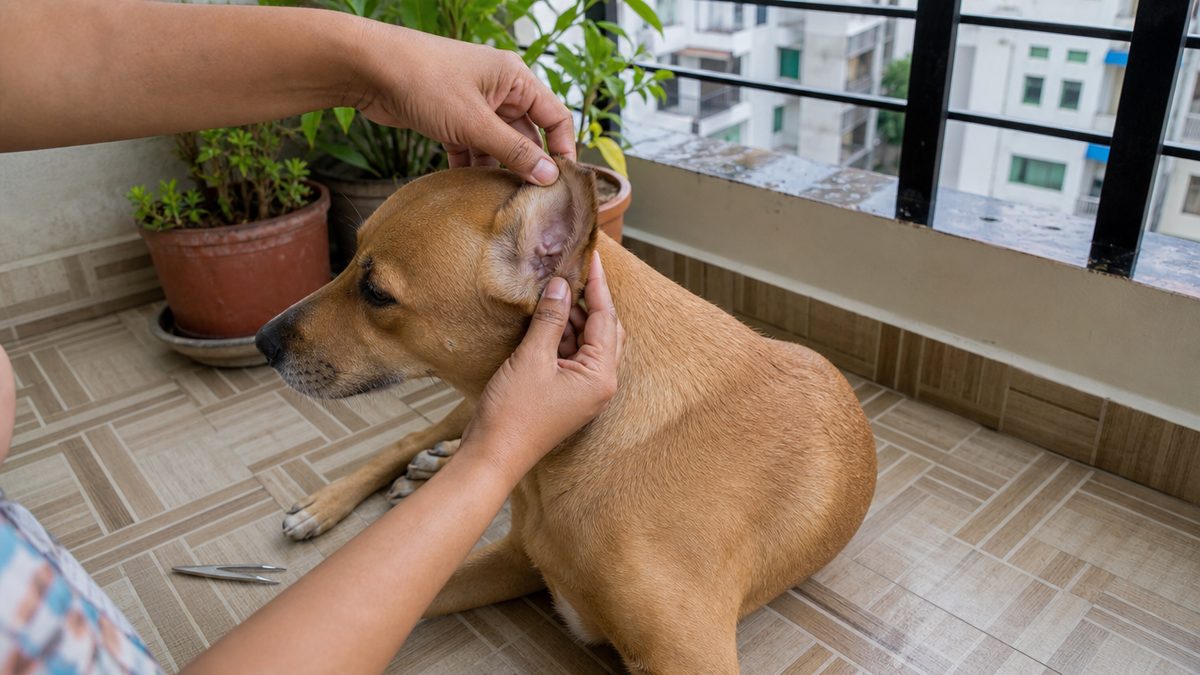
Ticks attach where the skin is thin: ears, armpits, groin, around the eyes and between the toes Dantas-Torres F. Biology and ecology…. An engorged female reaches 1 cm and feels like a bump; larvae and nymphs are pinhead-sized and skin-coloured. On a dense or dark coat, a Labrador Retriever or a Golden Retriever, ticks are hard to spot by eye, so the check is done by hand.
Why India's tick season never ends: a tick that completes its life cycle in your flat
India's tick season never ends because Rhipicephalus sanguineus is endophilic, adapted to indoor living, and completes its whole life cycle inside a house, so a flat in Mumbai, Pune, Bengaluru, Hyderabad, Chennai or Kolkata is its habitat, not a refuge ESCCAP Guideline 03.
How do dog ticks multiply indoors? Larva, nymph and adult each feed once on a dog and drop off. The engorged female lays 1,500 to 4,000 eggs in "cracks and crevices in the walls", the eggs hatch after 6 days to some weeks, the species can complete "three or four generations per year", and "most of the ticks are not on the dog but in the environment";. ESCCAP: where the brown dog tick survives in houses, "treatments may be necessary throughout the year";. TroCCAP: dogs in the tropics "should be protected from ectoparasite infestations throughout the year", and indoor dogs are exposed at parks and pet stores "for grooming, bathing, hair cutting or nail trimming";.
When Indian tick counts peak
Indian tick counts peak in the hot and humid months from March through the monsoon, and never reach zero. The brown dog tick is "prevalent throughout the year" in tropical areas. In a Kerala series of 120 sick dogs, cases peaked in the pre-monsoon months of March to May; in Bhubaneswar, 55 percent of 56 ehrlichiosis cases came in summer; and the four-city survey, sampled in the monsoon, found ticks on 80 percent of Mumbai dogs. The one Indian ranking page says "March to October" with no source. No Indian study has counted ticks on pet dogs month by month, so treat the peak as a shape, not a calendar.
How long a tick stays on a dog
A brown dog tick stays attached "from two days (e.g., larvae) to several weeks (e.g., females)";. ESCCAP gives one to two weeks per stage: 2 to 3 days for larvae, 4 to 6 for nymphs, 5 to 14 for females. Pathogens pass in the saliva during feeding, so a tick comes off the moment it is found.
The year-round routine: check, treat, wash, environment
The year-round routine for a dog in India has four parts: a daily hand check, a licensed acaricide on its label interval with no gap month, a weekly hot wash of bedding, and a treatment of the flat whenever a tick turns up off the dog ESCCAP Guideline 03.
| Task | How often | What exactly | Source |
|---|---|---|---|
| Check the dog | Daily, and after walks, grooming or boarding | Fingers over ears, eyelids, collar line, armpits, groin, toes and tail | CDC, TroCCAP |
| Treat the dog | On the label interval, all year | Monthly chew or spot-on, 12-week chew, or collar; inspect towards the end of each interval | ESCCAP |
| Wash bedding | Weekly; daily in an infestation | Hot wash beds and covers; vacuum where the dog sleeps | ESCCAP |
| Treat the environment | Whenever a tick is found off the dog | Environmental acaricide from a different chemical group, on the night resting place and wall cracks | ESCCAP |
| Treat every animal | Same day | Every dog and cat, each with a product licensed for its species | ESCCAP, TroCCAP |
The daily check costs nothing and catches the most. TroCCAP calls inspection and prompt removal "highly recommended to reduce the risk of tick-borne pathogen transmission";, and CDC's diagram of where to check your dog for ticks marks the ears, eyelids, collar line, front legs, toes, back legs and tail. Six steps take two minutes.
- Start at the head, inside both ear flaps and along the eyelids.
- Part the coat under the collar and along the neck.
- Feel the armpits and groin for a firm bump the size of a rice grain or larger.
- Spread each paw and look between the toes.
- Lift the tail and check its base.
- Note the date of the last dose; a missed month is one of the protocol failures ESCCAP lists.
The interval is set by the label, not the season. ESCCAP takes efficacy "from the relevant product data sheet", tells owners to inspect "towards the end of the protection period", and lists why protocols fail: not treating all animals together, wrong intervals, "not appreciating that shampooing or swimming may decrease the efficacy of topical products", and an untreated environment. Wash-off matters most in the hot months, when dogs are bathed more, so read this beside our guide to heat safety for dogs in India; a systemic chew acts through the blood and is not washed off.
Do not stop treatment after the monsoon or in winter. ESCCAP's scenario for "ongoing reinfestation risk" calls for "constant protection ... throughout the year";. One gap month in December lets a hidden batch of eggs hatch, feed and lay again.
Product classes sold in India: what each one does and does not do
Seven product classes are sold for dog ticks in India: isoxazolines, fipronil, permethrin and other pyrethroids, amitraz, the flumethrin tick collar, carbamate powders and medicated shampoos. The guidelines judge each by one test, repellent or fast-killing residual protection applied as the label says Dryden MW. Ectoparasiticides Used in Small….
This is a class table with one cited Indian example per class, not a ranking; your nearby vet chooses on weight, age, seizure history, other animals and bathing. Prices are the transacted online price on one national seller on 18 September 2026, MRP beside it.
| Class and form | How it works | Indian example and price | Interval | What it does not do |
|---|---|---|---|---|
| Isoxazoline chew | Systemic; kills the tick after it attaches and feeds | NexGard Spectra 15 to 30 kg, 3 chews, Rs 3,308 (MRP Rs 3,375); Bravecto 20 to 40 kg, 1 chew, Rs 1,805 (MRP Rs 2,063); Simparica 20 to 40 kg, 6 chews, Rs 3,702 (MRP Rs 3,938) | Monthly, 35 days, 12 weeks | Does not repel. Not under 8 weeks or 2 kg. FDA class warning on seizures |
| Fipronil spot-on | Stays in the skin oils and sebaceous glands | Fiprofort Plus, 20 to 40 kg, Rs 423 (MRP Rs 431) | Monthly | No repellent effect; shampooing and swimming cut efficacy |
| Fipronil spray | Same molecule over the coat; dogs and cats | Fiprofort spray 0.25 percent, 100 ml, Rs 391 (MRP Rs 398) | As labelled | Slow on a large dog; same wash-off caveat |
| Permethrin combination spot-on | Pyrethroid; repels ticks before they attach | Hester Safeline, 11 to 25 kg, Rs 368 (MRP Rs 375) | Monthly | Never in a house with a cat. Imidacloprid alone kills fleas, not ticks |
| Amitraz dip | Formamidine acaricide, diluted and washed on | Petcare Ridd 12.5 percent, 60 ml, Rs 582 (MRP Rs 600) | As labelled | Never on a cat. A wash, not residual protection |
| Flumethrin + propoxur tick collar | Repellent pyrethroid plus a carbamate, released slowly | Elanco Kiltix, large dogs, Rs 765 (MRP Rs 788) | Replace at 7 months | Needs skin contact; labelled for dogs |
| Propoxur powder | Carbamate; contact kill | Petcare Notix 100 g, Rs 236 (MRP Rs 243) | During an infestation | No residual protection |
| Cypermethrin shampoo | Pyrethroid; contact kill in a 5 to 10 minute lather | Skyec Tick Free 1 percent, 200 ml, Rs 258 (MRP Rs 263) | Bath day only | Nothing after rinsing; dogs only |
Prices and compositions come from each product's own page, opened 18 September 2026 Supertails, MSD Animal Health Bravecto 1000… Supertails, Zoetis Simparica Supertails, Savavet Fiprofort Plus Supertails, Savavet Fiprofort Supertails, Hester Safeline Supertails, Petcare Ridd Supertails, Elanco Kiltix tick collar… Supertails, Petcare Notix Supertails, Skyec Tick Free. Every rupee figure was divided by 84.38 and by 74; no transacted price divides cleanly. One MRP does: NexGard Spectra's Rs 3,375 is USD 40.00 at 84.38, but it is Rs 1,125 a chew with no US equivalent to convert from, so we call it a coincidence and quote the transacted Rs 3,308.
Isoxazolines: the dominant class, with a class warning
Isoxazolines are "currently the dominant parasiticide drug class in small animal veterinary medicine worldwide", GABA-chloride antagonists that cause "rapid ectoparasite death" once the tick feeds. The Indian Bravecto label calls it a "systemic insecticide and acaricide" against Rhipicephalus sanguineus for 3 months, onset within 12 hours of attachment, not for puppies under 8 weeks or 2 kg. The FDA's class warning: "muscle tremors, ataxia, and seizures in some dogs and cats", and "seizures may occur in animals without a prior history", while most animals have no reaction. A dog with a seizure history is the vet's call.
Fipronil, pyrethroids, amitraz and the tick collar
Fipronil "accumulates in the sebaceous glands ... and has prolonged residual activity", as a spray or a spot-on that the Indian ranking page says spreads over the coat in 24 to 48 hours Virbac India, Dog Ticks: tips to identify. Permethrin "can cause ticks to leave the host before dying", so Merck files it as a repellent, and ESCCAP notes that repellent acaricides help against fast-transmitted diseases such as ehrlichiosis. Amitraz survives in India as a dip concentrate and "should not be applied to cats in any formulation"; Supertails, Petcare Ridd. The Kiltix tick collar releases flumethrin 2.25 percent and propoxur 10 percent w/w for up to 7 months. TroCCAP's rule: "Highly concentrated synthetic pyrethroids (with the exception of flumethrin) or amidines are toxic for cats";.
Shampoos and powders
A shampoo or a powder is a same-day knockdown, not prevention. Merck: newer spot-ons and chews "have rendered many of the older delivery systems essentially obsolete";. The cypermethrin shampoo kills "on direct contact during bathing", dogs only; the propoxur powder is a contact kill that can be dusted on bedding. With hundreds of ticks, TroCCAP says manual removal "may not be feasible" and recommends a fast-acting systemic acaricide, meaning the vet that day.
The class decides what a product can do; the vet who knows your dog decides the product within the class. The one rule that is not negotiable is the cat rule below.
Permethrin and amitraz: why a dog product can kill the cat in the same house
A permethrin spot-on made for dogs can kill a cat in the same house. In 286 feline exposures to dog permethrin spot-ons reported to the Veterinary Poisons Information Service in London, 96.9 percent of cats developed signs, 87.8 percent had twitching, tremor or convulsions, and 10.5 percent of cases were fatal.
The route is not only a wrong pipette: "cats are also at risk from secondary exposure through contact with other pets treated", and permethrin is "the main toxicological cause of feline deaths reported to the VPIS";. Merck: permethrin "can be highly toxic to cats, resulting in symptoms such as muscle fasciculations and seizures";. ESCCAP: such preparations "should be avoided in mixed dog/cat households";. CDC: "cats are extremely sensitive to a variety of chemicals";. Four rules follow in a house with a dog and a cat.
- Choose a dog product without permethrin, dog-strength cypermethrin or amitraz, or keep the treated dog and the cat apart, and off shared bedding, for the period the label states.
- Read the pack for "dogs only" before buying any powder, shampoo or pipette.
- Use a product licensed for cats on the cat; the fipronil spray sold in India is labelled for both species, and TroCCAP advises "acaricides licensed for dogs and cats";.
- Treat the cat the same day as the dog, since failing to treat all animals together is ESCCAP's first cause of a failed protocol.
Dettol, vinegar and other home remedies: what the evidence says
Neither Dettol nor vinegar has any evidence as a tick treatment for dogs, neither appears in the TroCCAP or ESCCAP guidelines, and Dettol carries a specific toxicity risk because its active ingredient is a phenolic disinfectant Reckitt, Dettol India. The Hindi search "dog ke ticks kaise hataye gharelu upay", how to remove a dog's ticks with home remedies, gets the same answer.
Can Dettol kill ticks?
No evidence shows Dettol kills a tick attached to a dog, and its label claims nothing against ticks. Dettol Antiseptic Liquid sold in India is chloroxylenol IP 4.8 percent w/v, terpineol 9.0 percent and denatured alcohol 13.1 percent, listed as an antiseptic and disinfectant, with the instruction "if swallowed/ingested seek medical advice immediately". Chloroxylenol is a phenolic compound, and the MSD Veterinary Manual is plain about the family: phenolics "denature and coagulate proteins and are general protoplasmic poisons", "oral ingestion or extensive application to skin can cause systemic toxicosis ... death may result", and they are "highly toxic to cats";. A dog licks what is put on its coat. The guidelines also rule out dabbing anything on an attached tick: ESCCAP, "oil, alcohol or ether should not be used!";, and Dettol is 13.1 percent alcohol; CDC, a substance applied to make a tick detach "may agitate the tick and force infected fluid from the tick into the skin";.
Can I spray vinegar on my dog for ticks?
No guideline lists vinegar and no study tests it, which is the answer. TroCCAP names "products with repellent and fast killing effects" applied "as per label recommendations", and vinegar has no label and no claim. The ASPCA Animal Poison Control Center notes that vinegar "is acidic and can cause stomach upset and irritation";, and on a dog with ticks it lands on bite wounds that ESCCAP says "may become infected";. The two things that work at home are the ones the guidelines name.
- Remove the tick you can see with fine-tipped tweezers or a hook, by the method in the next section.
- Apply a licensed acaricide on its label interval all year, because the larvae and nymphs you cannot see need a product to reach them.
- Treat the flat when ticks are found off the dog, and keep every phenolic disinfectant away from the cat.
How to remove a tick from a dog: the guideline method
To remove a tick from a dog, grasp it with fine-tipped tweezers as close to the skin as possible, pull straight away from the skin with steady, even pressure, and do not twist, jerk, squeeze, burn or coat it with anything. Both guidelines accept tweezers or a purpose-made tick removal tool, used the moment the tick is found ESCCAP Guideline 03.
- Part the coat so the mouthparts are visible, with gloves if you have them.
- Grasp the tick at the skin surface with fine-tipped tweezers, or slide a tick hook under it, never by the swollen body.
- Pull away from the skin with steady, even pressure, no twisting or jerking.
- Leave any fragment that stays in the skin; it is pushed out as the skin heals.
- Dispose of the tick in alcohol, a sealed container or tape, never crushed between the fingers.
- Clean the bite site with the antiseptic your vet recommends, and wash your hands.
- Watch the dog for three weeks, because signs "may not appear for 7-21 days or longer after a tick bite";.
What not to use is the shorter list: ESCCAP bans oil, alcohol and ether, and CDC bans "petroleum jelly, heat, nail polish, or other substances"; US Centers for Disease Control…. After removal, ESCCAP advises a follow-up acaricide, because larvae, nymphs and unengorged adults "may not be detected on the animal", and warns that "a micro-abscess may develop" if a forced removal leaves the mouthparts in.
Twist or pull? Where the ranking pages disagree, and which governs
The ranking pages disagree on twisting, and the difference is the tool. Blue Cross, first on Google India for the removal query, says "Twisting them off your dog is the best removal method" with a twist-type device; NexGard Australia says "twist the tick gently, then pull";; CDC, with tweezers, says "Don't twist or jerk the tick";. TroCCAP accepts "tweezers or any tick removal device"; and ESCCAP any "purpose-designed" tool. Read together: a hook is rotated as its own instructions say, tweezers are pulled straight, neither squeezes the body, nothing goes on the tick. For tweezers, which most Indian homes have, CDC's straight pull governs today.
TroCCAP: with "sometimes hundreds of ticks", manual removal "may not be feasible" and a fast-acting systemic acaricide is recommended. A dog back from boarding or off the street with dozens of engorged ticks sees the vet the same day.
Treating a flat with a tick infestation
To clear a flat with a tick infestation, treat every animal with a licensed acaricide and treat the rooms with an environmental product from a different chemical group, because most of the ticks are in the environment and not on the dog Dantas-Torres F. Biology and ecology….
ESCCAP's household scenario: "regular acaricidal treatment of pet animals coupled with environmental treatment using a compound from a different chemical group" where the brown dog tick "has established within a kennel or household environment";; TroCCAP allows the same where infestation is heavy. Engorged ticks hide in "cracks and crevices in the walls" and adults crawl "on carpets, walls, and furniture", so the dog's night resting place and the wall bases around it hold the most; the Indian ranking page names tile gaps, furniture cracks and carpet fibres. Treating the home environment is the step most Indian owners skip, and it is why the ticks return a month after the dog was treated.
- Treat every dog and cat the same day, each with a product licensed for its species.
- Strip and hot-wash all bedding and the dog's night spot, daily until no ticks are seen for a week.
- Vacuum floors, skirting, sofa seams and under furniture daily, and bag the contents outside the flat.
- Seal cracks in walls and floor tiles where you find eggs or engorged females.
- Apply an environmental acaricide from a different chemical group to the dog's product, on the night resting area and wall bases, animals out until dry, chosen with your vet.
- Keep the hand check daily and the dog's product on schedule, because eggs already laid keep hatching for weeks.
The clean-up takes weeks: eggs incubate for 6 days to some weeks, a female lays for several weeks, and new larvae cannot attach until about a week old. The dog most likely to start an infestation is the one that has just arrived: TroCCAP names boarding and grooming as the exposure for indoor dogs, and a street-rescued Indian Pariah Dog comes from the population where 8 in 10 Mumbai dogs carried ticks. Treat a new arrival before it comes through the door, and check the house as well as the dog for six weeks.
Signs that mean the vet today
A dog that has had ticks and now has a fever, is unusually quiet, has pale gums, a nosebleed, no appetite or swollen hind legs needs a vet the same day, because those are the presenting symptoms of ehrlichiosis and babesiosis in the Indian case series, the diseases owners call tick fever Venugopal V, Deepa PM, Muhasin Asaf VN.
The Bhubaneswar series screened 178 pet dogs and found 56 (31.46 percent) positive for Ehrlichia canis; 79 percent had a history of tick infestation, 25 percent were German Shepherds, the signs were "fever, lethargy, diarrhoea, epistaxis, hind limb edema, and corneal opacity", and 3 of the 56 died despite treatment. The Kerala series took 120 dogs with fever, no appetite and low platelets, found Babesia in 80 (66.7 percent), and recorded fever, pallor and an enlarged spleen. Both are caseloads of sick dogs, not random pets. Signs "may not appear for 7-21 days or longer";, and since 39 percent of infected dogs in the four-city survey carried more than one pathogen, a vet who finds one tests for the others. Go the same day if you see any of these signs.
- Fever, or a dog that is unusually quiet in the three weeks after ticks were found.
- Pale or white gums, the anaemia both series recorded.
- A nosebleed, listed as epistaxis in the Bhubaneswar series.
- Swollen hind legs, or loss of appetite for more than a day.
- Tremors, wobbliness or a seizure within days of a new isoxazoline chew, which the FDA asks owners to take to the vet first.
The tick-borne diseases themselves, ehrlichiosis, babesiosis, anaplasmosis and hepatozoonosis, belong on health pages that are not built yet; tick-borne diseases in dogs will carry diagnosis and treatment when it exists. No vaccine covers any of them, so the dog vaccination schedule for India does not protect against ticks; CDC: "except for Lyme disease in dogs, pets cannot be vaccinated against tickborne diseases";. Your nearby vet decides the test and the treatment for your dog; this guide is about keeping the tick off, which on the four-city evidence cuts the odds of infection by more than two thirds. On a Beagle or any other pendulous-eared breed, the ear check is the one to do every day.
Questions people ask Google India about dog ticks
Are dog ticks harmful for humans?
Yes, the brown dog tick can bite humans, though it prefers dogs. TroCCAP records Rhipicephalus sanguineus as a proven vector of Rickettsia rickettsii to people in parts of the United States and Mexico, and heavy indoor infestations raise human exposure. The human risk in an Indian flat is the infested home, not the single tick on the dog.
Should I worry if I found a tick on my dog?
Yes, enough to remove it now and watch the dog for three weeks. In the four-city Indian survey a dog carrying ticks was 3.3 times more likely to be PCR-positive for a tick-borne pathogen, and 49.7 percent of 525 dogs were positive. Signs can take 7 to 21 days, so note the date and see your nearby vet at the first fever.
How to stop ticks in dogs?
To stop ticks in dogs in India, keep a licensed acaricide on its label interval every month of the year, check the dog by hand daily, wash bedding weekly and treat the flat whenever a tick is found off the dog. ESCCAP's scenario for ongoing reinfestation risk calls for constant protection throughout the year, and every animal in the house is treated the same day.
What to do if dogs have ticks?
If a dog has ticks, remove every visible tick with tweezers or a hook, start or resume a licensed acaricide the same day, treat every other dog and cat in the house, and hot-wash the bedding. TroCCAP says all visible ticks should be promptly removed, and with hundreds of ticks a fast-acting systemic acaricide from the vet replaces manual removal.
How do I easily remove a tick from my dog?
Grasp the tick as close to the skin as possible with clean fine-tipped tweezers, pull straight away with steady, even pressure, and do not twist or jerk it. Drop it into alcohol or a sealed container, clean the bite site and wash your hands. If the mouthparts break off, leave them. Do not put petroleum jelly, heat, nail polish, oil, alcohol or Dettol on the tick.
Can Dettol kill ticks?
No evidence shows Dettol kills a tick attached to a dog, and its label claims nothing against ticks. Dettol Antiseptic Liquid in India is 4.8 percent chloroxylenol, a phenolic disinfectant, with 13.1 percent alcohol. The MSD Veterinary Manual calls phenolics general protoplasmic poisons that can cause systemic toxicosis and death on ingestion or extensive skin application, and highly toxic to cats. Use tweezers and a licensed acaricide instead.
Can I spray vinegar on my dog for ticks?
No. Vinegar has no evidence as a tick repellent or killer, no guideline lists it, and the ASPCA Animal Poison Control Center notes it is acidic and can cause stomach upset and irritation; on a dog with ticks it lands on bite wounds. The Hindi query "dog ke ticks kaise hataye gharelu upay", how to remove a dog's ticks with home remedies, has the same answer: tweezers for the tick you see, a licensed acaricide for the ones you cannot.
What kills ticks immediately?
Nothing kills an attached tick instantly, so the immediate step is to pull it off with tweezers. The fastest products act in hours after the tick bites: the Indian Bravecto label gives an onset of effect within 12 hours of attachment, because isoxazolines are systemic and reach the tick through the blood. Contact shampoos and powders kill what is on the coat that day and protect nothing afterwards.
How to get rid of ticks on dogs fast?
To get rid of ticks on a dog fast, remove the visible ticks with tweezers today, get a fast-acting systemic acaricide from your vet the same day if there are dozens, treat every animal in the house, and start the house treatment the same week, because most of the ticks are in the rooms and not on the dog. TroCCAP recommends the systemic acaricide over manual removal in heavy infestations.
How long will a tick stay on a dog?
A brown dog tick stays attached from about two days to several weeks depending on its stage: two days for larvae, longer for nymphs, several weeks for females. ESCCAP puts each stage of a hard tick at one to two weeks, with 2 to 3 days for larvae, 4 to 6 for nymphs and 5 to 14 for females. A tick found today may have been feeding for a week, so it comes off now.