
Dog health: gastrointestinal
Pancreatitis in dogs in India: the festival meal that starts it, the test that is not on any government rate card, and why starving the dog is out of date
Acute pancreatitis after a fatty meal is the classic Indian presentation, and the only published Indian series says so with numbers. It also says the Western breed list does not describe the Indian caseload, that ultrasound and the SNAP cPL disagreed in five of fourteen dogs, and that homemade food and table scraps sat behind more than three quarters of cases. Meanwhile the advice most Indian pages still print, to starve the dog, was overturned by the veterinary evidence between 2011 and 2017.
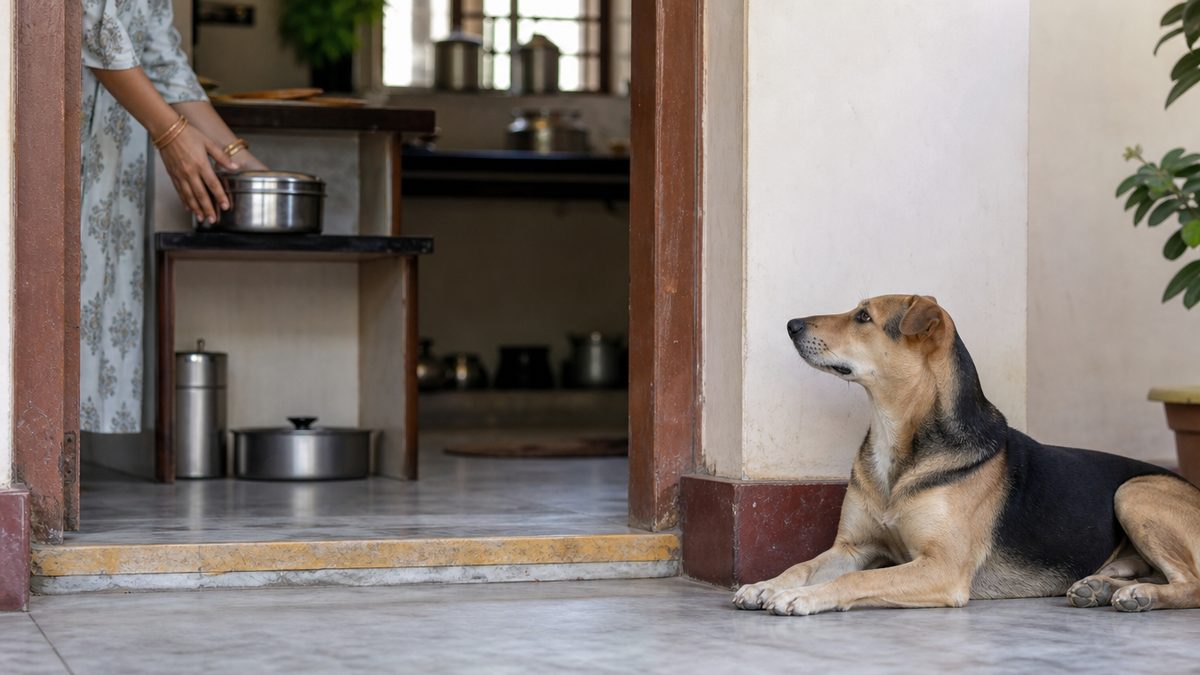
Pancreatitis in dogs is an emergency. Go to a veterinary clinic now, and call ahead, if you see any of these signs.
- Vomiting that will not stop, or retching with nothing coming up
- A hunched back or the praying posture, which both mean belly pain
- Collapse, or gums that are pale, grey, muddy or brick red
- A belly that is tense, swollen, or too painful to let you touch
- Nothing kept down, food or water, for a whole day
- Blood in the vomit, or black tarry stool
- A known fatty meal followed by vomiting in a dog that also seems in pain
Quick answer
Pancreatitis in dogs is inflammation of the pancreas, and in India one large fatty meal is the trigger owners meet most often. At Madras Veterinary College in Chennai, 14 dogs in a year had ultrasound-confirmed acute pancreatitis, 0.375 per cent of gastrointestinal cases, and homemade food or table scraps was the commonest risk factor at 78.57 per cent. Repeated vomiting with a hunched back is a same-day clinic visit. The old advice to starve the dog has been overturned. Your nearby vet decides for your dog.
This guide is general information for Indian pet owners and is not a diagnosis. Always consult a registered veterinarian near you before acting on anything you read here, and treat any sudden change in your pet's condition as urgent.
Signs of Pancreatitis in dogs
The 10 signs to watch for are listed below. Any one of them is a reason to consult your nearby vet; none of them is a diagnosis.
- Vomiting again and again, often within a day or two of a rich meal
- Refusing food completely, the joint commonest finding in the Chennai series
- Pain in the front half of the belly, worse when you press there
- The praying posture, chest and forelegs down with the rump in the air
- Flat, dull and unwilling to get up or walk
- Diarrhoea, sometimes dark or bloody
- Fast breathing and a fast heartbeat
- Dehydration, with tacky gums and skin that stays tented when lifted
- Fever, or in a very sick dog a temperature that is too low
- Yellowing of the gums, the inner eyelids or the whites of the eyes
Breeds on this site that document this condition
Each breed page below carries the figure for this condition with its denominator and its source. The 10 breeds listed are the ones on this site that document it, not a ranking of risk.
The Indian picture is not the Western one, and the difference is measured rather than asserted. The only published Indian prevalence series, run at the Madras Veterinary College Teaching Hospital in Chennai over June 2017 to May 2018, found 14 dogs with ultrasound-confirmed acute pancreatitis, 0.375 per cent of the 3,733 gastrointestinal cases seen among 33,022 dogs. Homemade food or table scraps was the commonest risk factor, in 78.57 per cent of those 14, and a high-meat-protein diet in 64.28 per cent. The breeds were not the breeds Western pages name: 42.86 per cent were non-descript Indian dogs, then German Shepherd, Labrador Retriever, Spitz and Pug, and the authors say in print that their result contradicts the Miniature Schnauzer and Cocker Spaniel literature because those breeds are scarce in Chennai. The test that diagnoses this disease is sold in India but is on neither government veterinary rate card this page opened, both of which price the two older tests that are not diagnostic.
What pancreatitis is, and how often dogs actually get it
Pancreatitis is inflammation of the pancreas, and it is the most common disease of the exocrine pancreas in both dogs and cats. The pancreas makes digestive enzymes and the hormones that control blood sugar, and in pancreatitis those enzymes switch on too early, while they are still inside the organ, and begin to digest it.
Most cases in dogs and cats are considered idiopathic or cryptogenic, which means no cause is ever found. That single sentence reframes the whole disease. An owner looking for the thing they did wrong will often not find it, and a veterinarian will often not find it either.
The disease splits two ways and the split matters more than most pages admit. Acute pancreatitis comes on suddenly and is potentially reversible. Chronic pancreatitis is inflammation that does not resolve clinically or histologically, and over time it destroys working pancreas, which is how exocrine pancreatic insufficiency and diabetes mellitus arrive later. Both forms can be mild or life-threatening.
| Acute pancreatitis | Chronic pancreatitis | |
|---|---|---|
| Onset | Sudden, often hours after a meal | Grumbling, with flare-ups that look acute |
| Reversible | Potentially, yes | No, the fibrosis and atrophy are permanent |
| What the owner sees | Vomiting, belly pain, refusing food | Often nothing, or vague off days |
| Blood test picks it up | Usually, sensitivity is highest here | Often not, false negatives are common |
| Where it leads | Recovery, or systemic complications | Exocrine pancreatic insufficiency, diabetes, or both |
How common it is depends entirely on who you count. The hardest number comes from a British post-mortem study that took three pancreatic sections from 200 unselected canine post-mortem examinations in first-opinion practice. Chronic pancreatitis was present in 34 per cent of them once the autolysed cases were set aside, 57 per cent of those were graded moderate or marked, and 24.5 per cent of all cases were too autolysed to interpret at all. Those were dogs that had died of anything, in a UK first-opinion population, so the figure describes how much pancreatitis is sitting undiagnosed inside ordinary dogs rather than how many get sick from it.
The clinic picture is far smaller, because most of that disease never causes a visit. Dogs with milder forms may be subclinically affected or show only vague signs such as anorexia, lethargy or diarrhoea. Put the two together and the honest statement is that pancreatitis is common in dog pancreases and uncommon in dog consulting rooms.
India has one published clinical prevalence figure and this page is built around it. Over June 2017 to May 2018 the Madras Veterinary College Teaching Hospital in Chennai saw 33,022 dogs, of which 3,733 had gastrointestinal disorders. Forty dogs with sudden vomiting, abdominal pain and anorexia were screened, and 14 had the ultrasound changes of acute pancreatitis, which the authors report as 0.375 per cent of gastrointestinal cases.
That figure sits inside the range other authors give. The same paper records an earlier Chennai thesis finding a 0.5 per cent prevalence at the same hospital, and a conference review putting clinical prevalence of acute pancreatitis at 0.32 to 2 per cent in dogs. Three estimates, one Indian hospital and one international review, all landing under 2 per cent of the caseload.
A number under one per cent is not a reason to relax. It is the rate at which dogs arrive at a hospital already sick enough to be scanned. The post-mortem work says roughly a third of dogs carry chronic pancreatic inflammation nobody ever diagnosed, and the Chennai series says the ones who do arrive have usually been fed something.
The fatty meal, and what that means in an Indian kitchen
A large amount of high-fat food eaten in one sitting is the trigger owners are warned about, and the warning is fair even though the cause of most episodes is never established. Dietary indiscretion is believed to be a common risk factor in dogs. In India that indiscretion has a specific shape, and the Chennai series measured it.
Among the 14 Chennai dogs with acute pancreatitis, homemade food or table scraps was the commonest risk factor at 78.57 per cent, followed by a high-meat-protein or non-vegetarian diet at 64.28 per cent and obesity at 14.28 per cent. Not one of those numbers is about a bag of dog food. All three are about what came off the family plate.
The strongest case-control evidence anywhere agrees. A study of 198 dogs with a clinical diagnosis of pancreatitis against 187 renal-failure controls found that ingesting unusual food items raised the odds of pancreatitis, with an odds ratio of 4.3 from the medical record and 6.1 from the owner telephone questionnaire. Eating table scraps in the week before diagnosis carried an odds ratio of 2.2, eating them throughout life the same 2.2, and getting into the bin carried an odds ratio of 13.2.
Two more findings in that paper get ignored and should not be. Being overweight carried an odds ratio of 1.3 and being neutered 3.6, but previous surgery other than neutering carried an odds ratio of 21.1, the largest single association in the whole analysis. Dogs recovering from surgery are separately described as more prone to pancreatitis. If your dog has just had an operation, the post-operative treat is the worst-timed treat of the year.
- Ghee and ghee-rich leftovers, poured over rice or roti at the end of a meal.
- Fried snacks, samosa, vada, pakora, puri and namkeen, offered a piece at a time.
- Mutton and chicken fat, the trimmings and skin that come off before cooking.
- Diwali and festival sweets, mithai, laddoo and barfi, which are sugar carried in fat.
- Biryani and korma leftovers, where the fat is in the gravy rather than visible.
- Whole cream, paneer and khoya, treated as a harmless dairy treat.
None of that list is exotic. It is an ordinary week in an ordinary Indian home, and it becomes a festival week at Diwali, Eid, Christmas and a wedding. The Chennai paper is the reason to take it seriously in this specific form rather than as generic advice, because it is the only series that counted Indian dogs and found homemade food and table scraps behind more than three quarters of its cases.
Severe hypertriglyceridaemia is a recognised risk factor for pancreatitis in dogs, though not in cats. That is the mechanism behind the breed most associated with this disease, and it is also why a dog with high blood fats is a dog whose diet is a medical matter rather than a preference.
The single thing not to get wrong. Do not treat a dog that has just vomited after a rich meal as having an upset stomach that will settle. In the only Indian series, nine of the 14 cases were secondary to something else, and of those nine, four, or 44.45 per cent, were gastrointestinal foreign bodies. A swallowed object is a surgical problem and it looks exactly like this at home. Waiting to see is the part that costs dogs.
The signs, in the order Indian cases actually showed them
Anorexia and vomiting were the joint commonest findings in the Chennai series, each in 92.85 per cent of the 14 dogs, followed by abdominal pain in 85.71 per cent and lethargy in 78.57 per cent. Those four are what an Indian owner sees first, and they are the reason to go the same day.
The rest of that series reads as a severity ladder. Tachycardia was present in 71.42 per cent, diarrhoea in 57.14 per cent, dehydration in 50.00 per cent, tachypnoea in 42.85 per cent, the praying posture in 28.57 per cent and pyrexia in 21.42 per cent. A fast heart, fast breathing and half the dogs already dehydrated is not a picture of a mild tummy upset.
The praying posture deserves its own paragraph because it is the one sign owners can learn to read. The dog puts its chest and forelegs flat on the floor with its rump in the air, and it holds that position. It is described in the Chennai paper as a position of relief adopted in severe cases, and it appears on the Royal Kennel Club's own sign list as lowering the front legs and head to ease the pain. A dog doing that is telling you where it hurts.
In dogs with the most severe forms, anorexia, vomiting, weakness, abdominal pain, dehydration and diarrhoea are the commonest reported signs, and the manual is explicit that these come from patients who all died or were euthanised, so they do not describe every case in a typical practice. Severity is a spectrum and the top of it is fatal.
How fatal is a question two sources answer differently, and both are printed here. One review cited in the Chennai paper puts mortality at 27 to 42 per cent once systemic complications develop, while another puts acute pancreatitis mortality in dogs at 5 to 15 per cent. A recent multi-institutional study of 504 dogs with acute pancreatitis concluded that any prognostic score above its cut-off for death should be interpreted with caution because of the low case fatality rate in that population. The range is wide because the populations are different, and a referral series of the sickest dogs is not a general practice caseload.
Untreated is the other axis. Dogs not treated may progress to the haemorrhagic form and suffer severe consequences including sudden death, while dogs presenting in shock and depression have a very guarded prognosis. A case-control study of 70 dogs with histologically confirmed fatal acute pancreatitis against 104 trauma controls exists precisely because this disease has a fatal form.
Four hospital cohorts have now published a death rate with its denominator, and they do not agree, which is itself the finding. Among 146 dogs at a university teaching hospital in Thailand, the nearest regional cohort to India this page could find, overall mortality was 39.72 per cent, 58 of 146, and dogs that also had acute kidney injury had a median survival of 4 days. Among 192 dogs hospitalised at a Spanish referral centre, 141, or 73.4 per cent, survived to discharge and 51, or 26.6 per cent, died or were euthanised.
Two more fill the range out. An Italian referral hospital recorded 27 of 71 dogs dying before discharge, an overall mortality of 38 per cent, with 19 of them dying within two days of presentation, an early mortality of 26.8 per cent. A Spanish cohort of 128 dogs split 59.37 per cent survivors against 40.63 per cent non-survivors. Every one of those is a referral population, meaning the sickest dogs in the region, and none of them describes a mild case seen in a neighbourhood clinic, which is why the 504-dog study reports a low case fatality rate in its own population.
| Cohort | Dogs | Died | Population |
|---|---|---|---|
| Mahidol University teaching hospital, Thailand, 2021 to 2023 | 146 | 39.72 per cent, 58 of 146 | Teaching hospital, all pancreatitis, cPL confirmed |
| Referral centre, Spain, 2021 to 2024 | 192 | 26.6 per cent, 51 of 192 | Hospitalised acute pancreatitis at a referral centre |
| Referral hospital, Italy, 2015 to 2019 | 71 | 38 per cent, 27 of 71, with 26.8 per cent inside two days | Referral admissions with acute pancreatitis |
| Referral cohort, Spain | 128 | 40.63 per cent non-survivors | Referral acute pancreatitis against 40 healthy dogs |
| Multi-institutional, 504 dogs | 504 | Described as a low case fatality rate | Several institutions, acute pancreatitis |
What raises the risk inside a case is now measurable too. Acute kidney injury was the major negative prognostic factor in the Thai cohort, cutting survival regardless of what else the dog had, while higher serum creatinine, total bilirubin and alkaline phosphatase at presentation were the three independent predictors of death in the Spanish one. All three sit on an ordinary biochemistry panel, which is an argument for running one on the day rather than waiting.
Go today, not tomorrow. Pancreatitis can be life-threatening and must be treated by your vet. If you cannot tell whether your dog is vomiting from a scrap of mutton fat or from a swallowed toy, that is not a reason to wait, it is the reason to go. The same presentation covers bloat and GDV, which is a surgical emergency measured in hours. Use the find a vet page if you do not already have a clinic.
One Indian trigger will not be on any Western list. Pancreatitis is a recognised complication of canine tick-borne disease, where the mechanism may be partly haemolysis, and in the Chennai series one of the nine secondary cases was haemoprotozoan disease. In a country with the tick pressure India has, a dog with tick fever or babesiosis that starts vomiting is a dog whose pancreas is worth a thought.
How pancreatitis is diagnosed, and why amylase and lipase are not the answer
A diagnosis of pancreatitis is made by integrating clinical findings, imaging findings and a measurement of serum pancreatic lipase, and the manual states that no test should be used in isolation for diagnosis, with all clinical findings used in conjunction. Everything in this section follows from that one rule, and most Indian pages break it.
The two numbers on a routine panel that will not settle it
Findings on a complete blood count and a serum biochemistry profile may suggest inflammation but are non-specific for pancreatitis, and the changes seen mainly reflect systemic effects. Total amylase and total lipase sit on that panel. They come from more than the pancreas, they rise in kidney disease and in other abdominal illness, and a raised value on its own tells a veterinarian that something is wrong rather than what.
This matters in India in a way it does not elsewhere, because amylase and lipase are exactly the two tests the published government rate cards sell. That is set out with the prices in the cost section below.
What the canine pancreatic lipase test does and does not do
The canine pancreatic lipase assays measure lipase of pancreatic origin specifically, and they are the modern basis of diagnosis in the form of the laboratory Spec cPL, the in-clinic SNAP cPL and the newer quantitative point-of-care readers. The in-clinic cPL test can be run quickly and gives a positive or negative result. It is a real advance on amylase and lipase and it is still not a yes-or-no answer.
A prospective study put four of these assays against a clinical suspicion score agreed by five board-certified internists in 50 client-owned dogs with gastrointestinal signs. Sensitivity ranged from 73.9 to 100.0 per cent, while specificity was 71.1 to 77.8 per cent for SNAP cPL, 74.1 to 81.1 per cent for Spec cPL, 76.9 to 83.8 per cent for the VetScan cPL Rapid Test and 64.0 to 74.3 per cent for Precision PSL. The authors conclude that the result of any one of those four assays alone, without supporting clinical findings, is insufficient to establish a diagnosis.
A separate emergency-room cohort of 38 dogs presenting with acute abdominal disease is blunter. SNAP cPL sensitivity was 82 per cent, or 9 of 11 dogs with acute pancreatitis, and specificity 59 per cent, or 16 of 27 without it. Spec cPL sensitivity was 70 per cent, 7 of 10, and specificity 77 per cent, 20 of 26. Overall accuracy was 66 per cent for SNAP and 75 per cent for Spec, and the authors warn the tests may give a false positive diagnosis in up to 40 per cent of dogs presenting with an acute abdomen.
| Test | What it measures | Where it fails | Source |
|---|---|---|---|
| Total amylase and lipase | Enzymes from several organs | Not specific to the pancreas; the panel is non-specific for pancreatitis | MSD Veterinary Manual |
| SNAP cPL, in clinic | Pancreas-specific lipase, positive or negative | Specificity 71.1 to 77.8 per cent in 50 dogs; up to 40 per cent false positives in an acute abdomen | Cridge 2018; Haworth 2014 |
| Spec cPL, laboratory | Pancreas-specific lipase, a number | Specificity 74.1 to 81.1 per cent; needs a bigger sample and a send-out | Cridge 2018 |
| Abdominal ultrasound | Pancreatic size, echogenicity, surrounding fat | One criterion gives 89 per cent sensitivity but 43 per cent specificity in 157 dogs | Cridge 2020 |
| Radiographs | Rules out obstruction and free gas | Specific findings in only 4 of 14 Chennai dogs, 29 per cent | Abhilaasha 2020 |
Abdominal ultrasound has the same problem from the other direction. In 157 dogs, requiring only one of pancreatic enlargement, altered echogenicity or altered mesenteric echogenicity gave a sensitivity of 89 per cent with a specificity of 43 per cent, while requiring all three flipped it to a sensitivity of 43 per cent and a specificity of 92 per cent. The conclusion is that ultrasound should not be used in isolation to diagnose pancreatitis and is a poor indicator of severity.
Now the Indian number that makes the point better than any review. In Chennai, all 14 dogs were diagnosed on typical ultrasonographic changes, but the SNAP cPL confirmed only nine of them, 64 per cent, and radiography gave specific findings in four, 29 per cent. The scan and the test disagreed in five of 14 dogs in a real Indian teaching hospital. That is the practical meaning of using no test in isolation.
Chronic pancreatitis is the form the test misses
Lipase may not leak from the pancreas in chronic disease, so false negative cPL results are commonly observed and assay sensitivity is lower in chronic pancreatitis than in acute pancreatitis; serum cPL can also be raised in dogs with chronic disease and mild or no signs. Some dogs, especially those with chronic pancreatitis, escape detection by many of these tests, so the diagnosis is sometimes tentative or presumptive and based on clinical signs and history alone.
One more thing worth knowing before a clinic quotes you for an in-house test. A repeatability study measured six replicates of each assay on serum from 12 canine patients and found mean coefficients of variation of 5.5 per cent for the laboratory Spec cPL, 17.0 per cent for VetScan cPL and 23.7 per cent for Vcheck cPL, with three of six VetScan samples and five of nine Vcheck samples above an unacceptable 20 per cent. The least square mean concentration also differed between assays, so the same serum can be called pancreatitis by one machine and equivocal by another.
None of this means skip the test. It means the test is one of three inputs, and an owner who understands that will not push a veterinarian to act on a single line of paper.
What the treatment is, in general terms
Treatment of pancreatitis is management of any underlying cause plus supportive care, meaning fluid therapy, pain relief, nutritional support and anti-sickness medication, with fuzapladib sodium as a specific agent in dogs and immunosuppressive drugs in some chronic cases. Your veterinarian sets every one of those, and this page prints no drug amounts.
The treatment options an Indian clinic can offer are supportive rather than curative, and a narrative review of canine acute-onset pancreatitis sets out what those options are. Fluid therapy tailored to the individual dog is the backbone of them, giving enough to correct dehydration without tipping into overhydration. Half the Chennai dogs were already dehydrated on presentation, which is why this is first rather than optional.
Pain relief is described as very important, and anti-sickness drugs are needed both to control vomiting and fluid loss and to make early feeding possible. The order there is the interesting part. Controlling the vomiting is not just comfort, it is what lets the dog eat, and eating is now part of the treatment rather than something that waits for recovery.
- Give intravenous fluids, tailored to the dog, avoiding overhydration.
- Control vomiting with anti-emetics, partly so that feeding can start.
- Treat abdominal pain, which the narrative review calls very important.
- Feed early by the enteral route rather than starving the dog.
- Avoid non-steroidal anti-inflammatory drugs.
- Skip routine antimicrobials, which are of questionable value in pancreatitis.
- Reserve antibiotics for aspiration pneumonia, bacterial translocation or another proven infection.
- Hold proton pump inhibitors and plasma unless there is a specific indication.
Surgery is rarely indicated, and animals with severe pancreatitis are often poor anaesthetic risks, so even a fine-needle aspirate may not be justified. That is worth knowing before anyone suggests an exploratory.
Corticosteroids are the open question. They were once thought to be contraindicated, and a single retrospective study suggests they may have some beneficial effects, but further work is required before routine use can be recommended. Publishing that as unsettled is more useful than picking a side.
The first drug licensed specifically for this disease is fuzapladib sodium, which has a reasonable expectation of effectiveness from a pilot study, is licensed for the clinical signs of acute-onset pancreatitis in dogs in Japan, and holds conditional approval from the United States Food and Drug Administration. It is sold as Panoquell-CA1 and is described as available in the United States but not in Canada. Neither source names India among the countries where it is licensed or sold, so this page makes no claim that an Indian owner can obtain it; ask your own veterinarian what is actually available where you live.
Prognostic scoring is not yet a solved problem either. Across 504 dogs, overall concordance between five published scoring schemes was low, and only two of the five differed significantly between survivors and non-survivors. If a clinic quotes you a score, treat it as one opinion rather than a verdict.
Starving the dog was overturned, and here is the date it happened
Withholding food is now suggested only if the dog vomits uncontrollably, meaning frequently and violently despite proper anti-sickness treatment, and enteral nutritional support is considered superior to feeding through a drip. Most Indian pages still print the old rule. This section gives the evidence and the dates, so you can see for yourself when it changed.
What the veterinary evidence actually showed, in order
The first canine trial was a pilot study of 10 dogs with severe acute pancreatitis in 2011, assigned to either enteral nutrition through an oesophagostomy tube or parenteral nutrition through a drip. Significantly more vomiting or regurgitation happened in the dogs on parenteral nutrition, the fed dogs showed no noticeable pain after eating, and there were more catheter-related complications in the parenteral group. The trial was too small to show a survival difference and calculated that 43 dogs per arm would be needed for that.
By 2012 a review of the disease stated plainly that current recommendations are to feed earlier in the disease than previously thought. In 2014 a dedicated nutrition review concluded that the choice of enteral over parenteral support in dogs and cats appears beneficial and well tolerated, and that the veterinary evidence contradicts previous assumptions about poor tolerance to enteral feeding in these patients.
The numbers arrived in 2017, from a retrospective study of 34 client-owned dogs split into an early feeding group fed within 48 hours of admission and a delayed feeding group. The early group returned to voluntary eating in 2.1 days against 2.7 days, and gastrointestinal intolerance occurred in 26 per cent of the early group against 60 per cent of the delayed group, a significant difference at p equals 0.04. The authors wrote that the traditional protocol of withholding food during hospitalisation may not be necessary nor yield the most benefit, and that early enteral nutrition should be considered.
| Year | Study | Dogs | What it found |
|---|---|---|---|
| 2011 | Mansfield, pilot trial, JVIM | 10 with severe acute pancreatitis | Tube feeding tolerated; more vomiting and more catheter problems on the drip |
| 2012 | Mansfield, review, Top Companion Anim Med | Review | Recommendations are now to feed earlier than previously thought |
| 2014 | Jensen and Chan, review, JVECC | Review | Enteral beats parenteral; contradicts old assumptions about poor tolerance |
| 2017 | Harris, retrospective, JVECC | 34 client-owned dogs | Fed within 48 hours: 26 per cent gut intolerance against 60 per cent, back to eating 2.1 days against 2.7 |
| 2025 | MSD Veterinary Manual, updated September 2025 | Manual | Withhold food only if the dog vomits uncontrollably; enteral is superior to parenteral |
The owner-facing Merck page says the same thing in plainer words, that resting the pancreas by restricting all food or water by mouth for three to four days is only recommended when the dog is vomiting uncontrollably. Read that sentence carefully. The three-to-four day figure is still printed, and it is printed as the exception, not the rule.
The fat question is less settled than the advice sounds
In dogs a ration with under 20 g of fat per 1,000 kcal should be chosen, and feeding a low-fat diet at that level is described as crucial for treatment success in chronic cases. The Royal Kennel Club prints the same threshold to owners as fewer than 20 g of fat per 1,000 kcal. Those two are not independent confirmations of each other, they are one formulation threshold quoted twice, and the Royal Kennel Club page carries a notice that its nutrition content was provided by Royal Canin and James Wellbeloved.
A 2026 narrative review went back through the evidence behind that recommendation and found it thin. The early and frequently cited studies linking dietary fat to pancreatitis onset are limited by experimental models, small sample sizes, variable diagnostic methods, failure to isolate fat-specific effects and diets that do not reflect current formulations, and the recent work has generally failed to confirm a consistent or straightforward association between dietary fat content and disease onset.
An experimental study the same year fed 10 Beagles with cerulein-induced acute pancreatitis either a high-fat or a low-fat tube diet and found no significant difference in clinical, laboratory, ultrasound or histological outcomes, while hepatic lipidosis was present in the low-fat group and completely absent in the high-fat group. That is an induced model in laboratory dogs rather than pet dogs with spontaneous disease, and the authors say clinical research in naturally occurring cases is warranted.
Where fat restriction is on firm ground is in dogs with high blood fats. A prospective trial fed a commercial low-fat diet to 16 Miniature Schnauzers with hypertriglyceridaemia. Before the change, 15 of 16, or 94 per cent, were classified as hyperlipidaemic on their lipoprotein profiles; after it, 7 of 16, or 44 per cent, with an odds ratio of 19.3. Fat restriction demonstrably fixes the blood fats. Whether it prevents the next pancreatitis episode in an average dog is the part that is not proven.
Do not use this section to overrule your vet in either direction. It is here so you recognise the old advice when you meet it, not so you start feeding a vomiting dog at home. Whether your dog eats today, what it eats and by what route are decisions for the veterinarian looking at it, because withholding food is still correct for the dog that vomits uncontrollably.
What this costs in India, and the test that is on no government rate card
Two Indian government veterinary teaching hospitals publish their fees in full, and between them they price almost every part of a pancreatitis work-up except the one test that diagnoses it. Every rupee figure below was divided by 84.38 and by 74 and none resolves to a round dollar amount, so none of this is a converted foreign price list.
What the two published government rate cards charge
The ICAR-Indian Veterinary Research Institute at Izatnagar publishes its Referral Veterinary Polyclinic charges with effect from June 2024, in Pets, Small Animal and Large Animal columns, plus tax as applicable. In the pets column, amylase is Rs 100, ultrasonography Rs 250, a liver function test Rs 400, a kidney function test Rs 300, bilirubin Rs 200, glucose Rs 100 and calcium Rs 100.
The Veterinary Clinical Complex at Bihar Animal Sciences University in Patna prices the same work-up higher and more completely. Outdoor registration for a dog or cat is Rs 200 in the morning clinic and Rs 300 as an emergency, amylase Rs 250, lipase Rs 250, C-reactive protein Rs 400, a liver function test Rs 600, a kidney function test Rs 700, serum amyloid A Rs 1,000, an ultrasound for a dog or cat Rs 500, an ECG Rs 500 and an X-ray for a dog or cat Rs 400.
The Centralised Clinical Laboratory at Madras Veterinary College in Tamil Nadu, which is one of the affiliations on the Chennai acute pancreatitis paper, charges private clinical samples Rs 150 per parameter for serum biochemistry across its 19-parameter panel, Rs 600 per sample for 13-parameter haematology and Rs 200 per sample for coprology.
| Item | ICAR-IVRI Izatnagar, pets, June 2024 | BASU Patna, canine and feline |
|---|---|---|
| Registration or outpatient ticket | Not priced in this table | Rs 200 clinic, Rs 300 emergency |
| Amylase | Rs 100 | Rs 250 |
| Lipase | No line on the card | Rs 250 |
| Canine pancreatic lipase (cPL) | No line on the card | No line on the card |
| Abdominal ultrasound | Rs 250 | Rs 500 |
| X-ray | Rs 150 plain radiography | Rs 400 |
| Liver function test | Rs 400 | Rs 600 |
| Kidney function test | Rs 300 | Rs 700 |
| C-reactive protein | No line on the card | Rs 400 |
What a private clinic charges, and the ten-fold gap
Private clinics are where most urban Indian dogs are actually seen, and one national chain publishes its scan prices. Vetic Pet Clinic, which runs clinics in Gurgaon, Delhi, Noida, Ghaziabad, Faridabad, Hyderabad, Mumbai, Bengaluru, Pune, Kolkata and Chennai, prices a basic single-region ultrasound at Rs 1,500 and a detailed abdominal ultrasound for dogs at Rs 2,500, with a specialist or radiologist review adding Rs 500 to Rs 1,500, sedation where needed Rs 800 to Rs 2,000 and pre-anaesthetic bloodwork Rs 800 to Rs 3,599; the chain states that its ultrasound pricing is largely standardised across cities in India.
Set those beside the government figures and the spread is the most actionable number on this page. The same named test, an abdominal ultrasound for a dog, is Rs 250 in the pets column at ICAR-IVRI Izatnagar, Rs 500 at Bihar Animal Sciences University in Patna and Rs 2,500 at a private chain. That is a ten-fold range between the cheapest and dearest published Indian price for one scan, and it is not a quality claim in either direction, because a government teaching hospital is subsidised and a private clinic is not.
| Where | Abdominal ultrasound for a dog | What else that price includes |
|---|---|---|
| ICAR-IVRI Izatnagar, pets column, w.e.f. June 2024 | Rs 250 | Plus tax as applicable |
| Bihar Animal Sciences University, Patna | Rs 500 | Registration is a separate Rs 200, or Rs 300 as an emergency |
| Vetic Pet Clinic, standardised across its cities | Rs 2,500 detailed, Rs 1,500 basic | Real-time imaging, basic interpretation by the attending vet, image capture |
Read the private list carefully before you budget. Rs 3,599 for pre-anaesthetic bloodwork is not a rounded figure and does not divide to a round dollar amount, which is the check this site runs on every rupee it prints, so none of these is a converted foreign price list. A dog that needs sedation to hold still for the scan can therefore cost several times the headline scan price, and a sick pancreatitis case usually does not need sedation because it is already flat.
The absence, recorded as a controlled absence
Neither card has a canine pancreatic lipase line. That is a claim about something not being there, so here is the positive control that proves the pages were read and searched. On the ICAR-IVRI clinical services page the word amylase appears in the laboratory table and the word ultrasonography appears twice, once in the facilities list and once priced at Rs 250, while the string pancrea appears zero times on the whole page and there is no lipase line at all. On the BASU fee schedule amylase and lipase both appear, adjacent, at Rs 250.00 each, and the string pancrea appears zero times there too.
Put plainly, the two Indian government veterinary hospitals that publish their prices sell you the two tests the international literature says are not specific for this disease, and do not list the test that is.
The cPL test is available in India, just not on those cards
It is sold here. A commercial veterinary diagnostic laboratory in Vijayawada, Andhra Pradesh, lists Canine Pancreatic Lipase as a named service, on a blood sample, for dogs, with a result time of 24 to 48 hours. It is also in use in Indian teaching hospitals: the Chennai series confirmed its cases with the SNAP cPL kit test.
On the trade side, a Chennai supplier lists a canine pancreatic lipase rapid test kit of 10 tests at Rs 4,500 per pack, excluding taxes, as a lateral-flow card giving a qualitative result in 10 to 15 minutes. That works out at Rs 450 a test at the wholesale price, which is what a clinic pays for the strip and not what an owner is charged, because a clinic fee also covers the consultation, the blood draw and the interpretation. Treat it as a floor, not a quote.
The qualitative part matters. A card that reads positive or negative cannot be used to follow a dog through treatment, whereas a quantitative assay can, and in-house readers vary between themselves enough that the same serum can be categorised differently. Ask which cPL your clinic runs and whether it produces a number.
What to ask for at the counter. A work-up that names the disease is a cPL plus an abdominal ultrasound plus the clinical picture, because no one of the three settles it. If a clinic offers only serum amylase and lipase, that is the panel the rate cards sell rather than the test the evidence supports, and it is fair to ask whether a cPL can be sent out.
The Western breed list and the Indian caseload do not agree
Miniature Schnauzers are reported as dramatically overrepresented, with a possible genetic predisposition resembling hereditary pancreatitis in human families, and increased prevalence has also been reported in Yorkshire Terriers, Cocker Spaniels, Dachshunds, Poodles and sled dogs. Every page ranking in India repeats that list. The only Indian series says in print that it does not fit India.
The Chennai breed mix, across all 14 cases, was 42.86 per cent non-descript dogs, six of them, then German Shepherd at 21.43 per cent, three dogs, Labrador Retriever at 14.29 per cent, two dogs, Spitz at 14.29 per cent, two dogs, and Pug at 7.14 per cent, one dog. The authors write that this is contradictory to the findings of the Western literature, which recorded the highest incidence in Border Collies, Cocker Spaniels, Miniature Schnauzers and Yorkshire Terriers, and that the difference may be due to the scarce population of those breeds in Chennai.
That is a fourteen-dog caseload, so it is a description of who walks into one hospital and not a breed risk. It is still the only Indian measurement in existence, and for an owner in Chennai or Coimbatore it is more useful than a list of breeds nobody around them keeps.
The breeds the Western evidence does support, with their denominators
The Miniature Schnauzer case is the strongest and it has just been restated. An owner survey received 4,786 responses and analysed 2,910 of them, and pancreatitis was reported in 220 dogs, 7.6 per cent. That is higher than primary care studies report, and the authors are careful to say owner testimony may not reflect confirmed clinical disease.
Two details in that survey change what the breed's owners should watch. Where an age at diagnosis was given, 17.2 per cent, or 35 of 203, had onset between one and two years of age, which the authors call unexpected and read as a primary rather than secondary origin. And hyperlipidaemia was reported in only 28 dogs, 1.0 per cent, rising to 3.3 per cent in dogs over nine. The breed's pancreatitis was reported far more often than its high blood fats, which is not the relationship the textbook picture implies.
The Schnauzer gene story is weaker than its reputation. A case-control study genotyped 17 Miniature Schnauzers with pancreatitis, 60 mature Miniature Schnauzers with no substantial gastrointestinal history and 31 Standard Schnauzers for the SPINK1 c.74A>C variant. It turned out to be the major allele in both breeds, at 0.77 in Miniatures and 0.55 in Standards, allele and genotype frequencies were similar in affected and unaffected Miniature Schnauzers, and the authors could not confirm any relationship between the variant and clinically detectable pancreatitis. There is no DNA screening scheme worth buying here, in either Schnauzer.
The English Cocker Spaniel has a different disease with a different mechanism. In the 200-dog post-mortem study, Cavalier King Charles Spaniels, collies and boxers carried increased relative risks of chronic pancreatitis, while Cocker Spaniels carried an increased relative risk of acute and chronic pancreatitis combined. A later series of 104 English Cocker Spaniels with chronic pancreatitis against 44 control English Cocker Spaniels found the disease behaves like an immune-mediated condition of several organs at once, with keratoconjunctivitis sicca in 49, proteinuria in 47, anal gland disease in 36, atopy in 21 and other immune-mediated diseases in 16 of the 104. Parti-colour coats, particularly blue roan, were strongly associated with it.
The fatal form has its own breed signal. Among 70 dogs with histologically confirmed fatal acute pancreatitis against 104 trauma controls, Yorkshire Terriers were at increased risk while Labrador Retrievers and Miniature Poodles were at decreased risk, and risk was also raised by overweight body condition, diabetes mellitus, hyperadrenocorticism, hypothyroidism, prior gastrointestinal disease and epilepsy. Males and neutered females appeared to be at higher risk than entire females.
Hold that last finding next to the Indian one. In an American referral necropsy population the Labrador was at decreased risk of dying of acute pancreatitis, and in a Chennai teaching hospital the Labrador was two of the 14 acute pancreatitis cases, the third commonest type of dog in the caseload. Those are not contradictory. One is a risk relative to other breeds, the other is a share of a caseload in a country where Labradors are everywhere. Publishing both, with their populations named, is the honest way to read them.
Several of Hess's risk factors are conditions this site covers separately, including hypothyroidism, obesity and diabetes Hess RS, Kass PH, Shofer FS, Van Winkle TJ. A dog with one of those is a dog whose fatty-food rule should be stricter than average.
One recent cohort argues against reading too much into any of this at the bedside. Among the 192 dogs hospitalised with acute pancreatitis in Spain, breed, age, sex, body weight, comorbidities and treatments were not associated with outcome, and only creatinine, bilirubin and alkaline phosphatase were. Breed tells you who is likelier to get the disease. It did not tell that hospital who was likelier to die of it.
What pancreatitis leads to, and why diabetes is on this page
Chronic pancreatitis progressively destroys working pancreas, and concurrent exocrine pancreatic insufficiency or diabetes mellitus may develop as a result. Those are the two diseases an owner should understand before the second episode, not after it.
Most dogs recover from a single episode without long-term consequences, but with severe or repeated episodes, destruction of enough enzyme-producing cells leads to exocrine pancreatic insufficiency, destruction of enough insulin-producing cells leads to diabetes mellitus, and in rare cases painful adhesions form between abdominal organs. Dogs with chronic pancreatitis are more likely to develop those problems than dogs with a single acute episode.
The diabetes link has a hard number behind it, and it deserves its caveat printed alongside. In a VetCompass study of 480,469 dogs aged three and over at 430 UK primary-care practices, a record of pancreatitis within three months either side of the diagnosis date carried an odds ratio for diabetes of 1085.19, with a 95 per cent confidence interval of 36.36 to 32,390.61. That confidence interval spans nearly three orders of magnitude, which means the size of the effect is very poorly estimated even though its direction is not in doubt, and a window of three months either side will catch dogs whose pancreatitis was found at the same visit as their diabetes.
A cleaner estimate comes from the Miniature Schnauzer survey, where a reported pancreatitis diagnosis was associated with an odds ratio of 4.54 for a diabetes diagnosis, 95 per cent confidence interval 1.7 to 11.6, p equals 0.002. Whether the pancreatic inflammation causes the diabetes or the reverse is contentious in dogs, although the former appears more common and either can occur. Our page on diabetes in dogs and cats sets that disease out on its own terms, and it agrees with this one: pancreatitis is one of the concurrent conditions that raised the odds of a canine diabetes diagnosis in UK primary care.
Exocrine pancreatic insufficiency is the other end. It is treatable with a daily enzyme replacement powder, and the Chennai paper notes, citing the chronic pancreatitis literature, that delayed presentation to hospital is what produces the late complications of chronic relapsing pancreatitis and eventual exocrine pancreatic insufficiency. Going early is not only about surviving the episode.
Local complications of the acute disease include pancreatic necrosis and pancreatic or peripancreatic fluid collections, which may be organised or unorganised, associated with necrosis or not, and infected or sterile. Local complications of the chronic disease are fibrosis and atrophy, which is the scarring that removes function permanently.
One complication is easy to miss because it is in the eye rather than the abdomen. Nearly half the English Cocker Spaniels with chronic pancreatitis in that 104-dog series also had keratoconjunctivitis sicca, 49 of them, which this site covers as dry eye. If your Cocker has had pancreatitis, the tear test is worth asking for.
Preventing the next episode, which is the only prevention that is proven
Nothing prevents a first idiopathic episode, because most cases have no identifiable cause. What the evidence does support is removing the exposures that raised the odds in the case-control work, and every one of them is a decision made in a kitchen.
Start with the one that the numbers make unarguable. Getting into the bin carried an odds ratio of 13.2, eating unusual food items 4.3 to 6.1 depending on how it was recorded, and table scraps in the week before diagnosis or across a lifetime 2.2 each. The bin is the biggest single one and it is also the cheapest to fix.
- Cover the kitchen bin with a lid the dog cannot nose open, because bin raiding carried the highest dietary odds ratio in the case-control study.
- Stop the table scrap habit rather than reducing it, since scraps in the week before and scraps across a lifetime carried the same odds ratio.
- Brief the whole household and any visiting relatives before a festival, because the Chennai cases ran on homemade food and table scraps in 78.57 per cent of dogs.
- Keep the dog lean, since overweight body condition raised the odds of both pancreatitis and the fatal form of it.
- Guard the recovery period after any operation, because previous surgery other than neutering carried an odds ratio of 21.1 and dogs recovering from surgery are described as more prone.
- Treat the endocrine diseases that raise the risk, including diabetes mellitus, hyperadrenocorticism and hypothyroidism.
The Royal Kennel Club's own prevention line is the same one. Dogs should not be given unhealthy table scraps and fatty foods should be kept out of reach, and its other listed risk factors are hypothyroidism, diabetes, certain cancers, some poisons and adverse reactions to some medicines. Two of those five are things a veterinarian manages, which is another reason annual bloodwork in a middle-aged dog earns its fee.
For a household that cooks for its dog on purpose rather than by accident, the fat content is the number that matters, and the guideline threshold for a dog that has had pancreatitis is under 20 g of fat per 1,000 kcal. Our guide to homemade dog food in India works through what an Indian kitchen can actually build to a specification like that.
Be honest about the limits of this advice. The recent reviews have generally failed to confirm a consistent association between dietary fat content and disease onset, so a strict low-fat diet in a healthy dog with no history is prevention with weak evidence behind it. Avoiding a single enormous fatty meal is a different proposition, because that one is supported by the case-control data on unusual food items and bin raiding and by the trigger description in the clinical sources.
The festival rule that actually works. Decide before the festival, not during it, that the dog gets its own measured meal and nothing from the table, and tell every adult in the house. Homemade food or table scraps sat behind 78.57 per cent of the Chennai cases, and no single person can prevent that alone if the rest of the family is feeding the dog mithai in the next room.
Recovery time, survival, and living with a dog that has had it
Many dogs affected by pancreatitis make a full recovery with veterinary treatment, while severe cases are harder to treat and the outcome is less predictable. Recovery time in a straightforward case is measured in days rather than weeks.
A dog with pancreatitis may need monitoring and treatment for several days, and more complicated cases may take a week or longer to recover. The feeding study gives a harder marker of the same thing: dogs fed within 48 hours of admission were back to eating voluntarily at 2.1 days on average, against 2.7 days for dogs whose food was delayed.
Length of stay tracked severity rather than diet. A clinical severity index score of seven or more was associated with prolonged hospitalisation at p equals 0.004, while the timing of feeding and the choice of diet did not affect length of stay. If your dog is in for longer than the dog in the next kennel, that is about how sick it was, not about what it was fed.
Prognosis depends on severity and on the response to initial therapy; most mild forms have a good prognosis with aggressive treatment, and dogs presenting in shock and depression have a very guarded one. Most dogs recover without any long-term consequences.
Chronic pancreatitis is the other outcome and it is permanent. The Royal Kennel Club states that although the disease can be managed it cannot be cured and will be present for life. That is not the same as a poor life. It means a managed diet, a low threshold for investigating an off day, and watching for the endocrine consequences rather than assuming they will not come.
| Watch for | What it may mean | Source |
|---|---|---|
| Another bout of vomiting with belly pain | A relapse, or the chronic form flaring | Royal Kennel Club |
| Drinking and urinating much more | Diabetes mellitus from lost insulin-producing cells | VCA Animal Hospitals |
| Loose, pale, bulky stool with weight loss | Exocrine pancreatic insufficiency | VCA Animal Hospitals |
| Sticky or sore eyes in a Cocker Spaniel | Keratoconjunctivitis sicca, in 49 of 104 affected dogs | Coddou 2024 |
| Slow, vague off-days with no clear cause | Chronic pancreatitis, which the tests often miss | Today's Veterinary Practice |
A recurrent episode is not a failure on your part. Most cases are idiopathic, relapse can happen despite strict adherence to a low-fat or ultra-low-fat diet, and the chronic form can flare in ways that are indistinguishable from a fresh acute attack. What you can control is how fast the dog gets seen the next time.
The last thing worth saying is about the Indian evidence itself, because it shapes everything above. A Europe PMC title-and-abstract search for pancreatitis with dog, dogs or canine and India, run on 27 September 2026, returned zero records, while the same search on author affiliation returned two, of which one is a maropitant review and the other is a 1995 experimental study that induced pancreatitis surgically in 28 laboratory dogs rather than treating pet dogs. The parvovirus control run through the identical route returned 47 and 83, so the instrument was working. The Chennai series that this page is built on is not indexed in either database. Indian small-animal clinical research is published in journals the big indexes do not carry, and a literature search alone will tell you India has no data on this disease when it does.
The other half of that absence is on the search results page. The Bing India organic set for this query on 27 September 2026 was petmd, akc.org, thesprucepets, vcahospitals, msdvetmanual, caninejournal, caninebible, aaha.org and hillspet.co.uk, with no Indian page among them, and the American Kennel Club page that sits in it is written entirely for an American reader. That is the gap this page exists to fill, and your nearby vet, not this page, decides what happens to your dog.
Common questions about pancreatitis in dogs
Can dogs recover from pancreatitis?
Yes. Many dogs affected by pancreatitis make a full recovery with veterinary treatment, and most recover without any long-term consequences. Severe cases are harder to treat and the outcome is less predictable. A straightforward case needs monitoring for several days, while a complicated one may take a week or longer. Chronic pancreatitis can be managed but cannot be cured and stays for life.
What is the main cause of pancreatitis in dogs?
Most cases have no identifiable cause. The veterinary manual classifies the majority of canine and feline pancreatitis as idiopathic or cryptogenic, meaning nothing is ever found to explain it. Where a cause is identified, dietary indiscretion is believed to be the common one in dogs, with severe hypertriglyceridaemia and hyperadrenocorticism also recognised risk factors, and blunt trauma a rarer one.
What foods can trigger pancreatitis in dogs?
Unusual food items raised the odds of pancreatitis by 4.3 to 6.1 times in a study of 198 affected dogs against 187 controls, table scraps by 2.2 times whether fed in the week before or across a lifetime, and raiding the bin by 13.2 times. In an Indian kitchen that means ghee, fried snacks, mutton and chicken fat, biryani leftovers and festival mithai.
What is the life expectancy of a dog with pancreatitis?
Published work reports short-term survival rather than life expectancy. Of 192 dogs hospitalised with acute pancreatitis at a Spanish referral centre, 141, or 73.4 per cent, survived to discharge, while 51, or 26.6 per cent, died or were euthanised. Breed, age, sex, body weight, comorbidities and treatments were not associated with outcome in that cohort.
What is the most effective treatment for pancreatitis in dogs?
There is no single most effective treatment. Management is supportive and combines fluid therapy tailored to the dog, anti-sickness drugs, pain relief and early feeding, with treatment of any underlying cause. Fuzapladib sodium is the first agent licensed specifically for the clinical signs of acute-onset pancreatitis in dogs. Non-steroidal anti-inflammatory drugs are avoided and antibiotics are not given routinely.
What is the best treatment for pancreatitis in India?
The same supportive treatment used everywhere, delivered sooner. Fluids, anti-sickness medication, pain relief and early feeding are the backbone, and half the dogs in the Chennai series were already dehydrated when they arrived. The Indian variable is delay: the same paper notes that late presentation is what produces chronic relapsing pancreatitis and exocrine pancreatic insufficiency later on.
Is the canine pancreatic lipase test available in India?
Yes. A commercial veterinary laboratory in Vijayawada lists canine pancreatic lipase as a named blood test for dogs with a 24 to 48 hour turnaround, and the in-clinic SNAP cPL kit was used to confirm cases at Madras Veterinary College. It is not on either government veterinary rate card this page opened, both of which price amylase and one of which also prices lipase.
Should I starve a dog with pancreatitis?
No, not as a default. Withholding food is now suggested only when a dog vomits uncontrollably despite proper anti-sickness treatment, and feeding by mouth or by tube is considered superior to feeding through a drip. Dogs fed within 48 hours of admission had gut intolerance in 26 per cent of cases against 60 per cent in dogs whose food was delayed. Your veterinarian decides.
Can one meal of ghee or fried food give a dog pancreatitis?
It can be the trigger. Ingestion of a large amount of high-fat food in one sitting is described as a common trigger, although the cause of most episodes is never established. In the only Indian series, homemade food or table scraps was the commonest recorded risk factor at 78.57 per cent of 14 cases, and a high-meat-protein diet came second at 64.28 per cent.
Which dog breeds get pancreatitis in India?
Not the ones Western pages name. The Chennai caseload of 14 dogs was 42.86 per cent non-descript dogs, then German Shepherd at 21.43 per cent, Labrador Retriever and Spitz at 14.29 per cent each and Pug at 7.14 per cent. The authors state this contradicts the Schnauzer and Cocker Spaniel literature because those breeds are scarce in Chennai.