
Breed profile
Polish Lowland Sheepdog Price in India: the Breed Ranked First for rcd4
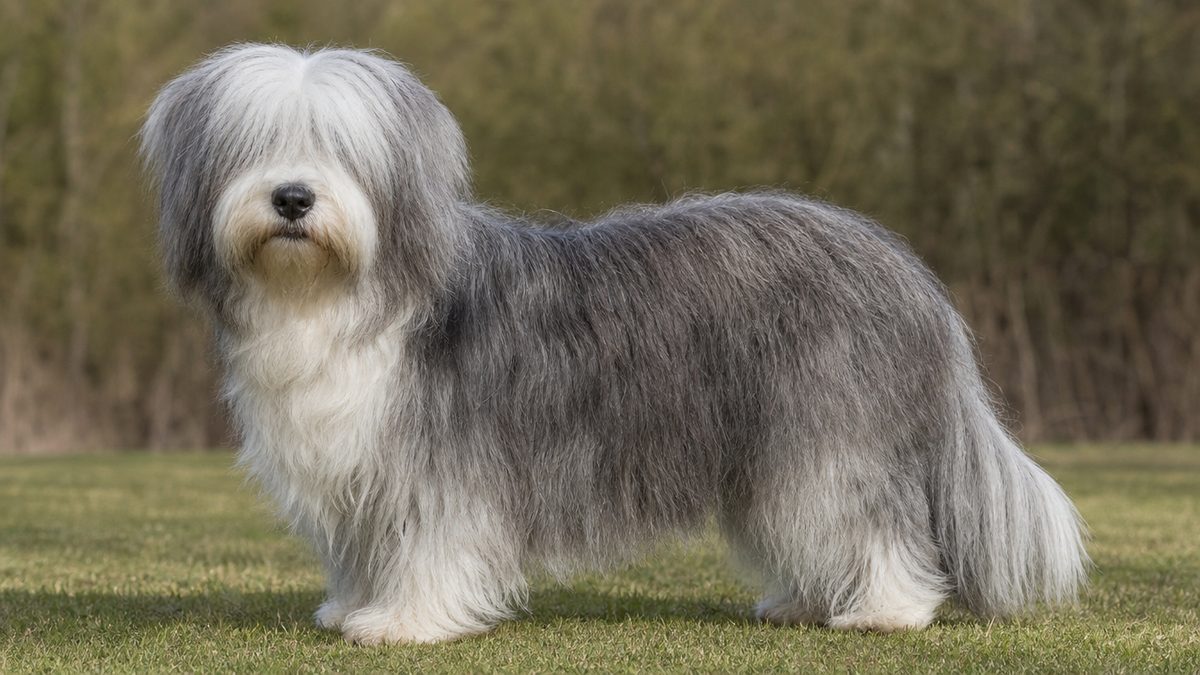
A 42 to 50 cm Polish herding dog under a coat that falls over its eyes. It is the only one of Poland's native breeds with real registry data behind it, and that data says something no breed page mentions.
Quick answer
No Indian seller lists this breed, so there is no verifiable Polish Lowland Sheepdog price in India. What is worth knowing instead is the health data, because this is the one Polish breed with any. Of 395 dogs DNA-tested for rcd4 progressive retinal atrophy, 52.2 percent were carriers and 15.9 percent were genetically affected, which ranks this breed first of every breed in that database.
This page reports peer-reviewed veterinary literature, registry statistics and breed-standard text. It is not veterinary advice and it cannot diagnose your dog. This breed carries two documented inherited eye and neurological diseases with named mutations, and a DNA test result is not a substitute for an eye examination by a veterinary ophthalmologist. Consult your nearby vet before acting on anything here, and take an unwell or visually impaired dog to a registered veterinarian rather than to a web page.
Polish Lowland Sheepdog at a glance
What the Polish Lowland Sheepdog is, and the two clauses that matter in India
The Polish Lowland Sheepdog is a medium, cobby, shaggy Polish herding dog, held by the FCI as breed standard 251 in Group 1, Section 1. Its native name is Polski Owczarek Nizinny, usually shortened to PON, and two clauses in its standard decide whether it can live in India.
Under all that hair is a compact dog. Purina UK describes it as, beneath the thick shaggy coat, a medium-sized dog with a cobby, muscular build and a rectangular outline, and Royal Canin reaches for the same words, strong compact dogs with well-developed muscles and long thick coats. The FCI standard fixes that outline as a proportion, height at withers to length of body of 9 to 10. The first thing to understand is the coat. The FCI standard specifies the whole body covered with coarse hair, dense, thick and profuse, over a soft undercoat, with straight or slightly wavy hair acceptable and the hairs falling from the forehead covering the eyes in a characteristic manner. That is a full double coat on a working dog, and it is the whole of this page's climate argument.
The second is the tail. The standard offers two options: a short tail or stumpy tail, very shortly docked tail; or an undocked, quite long and very hairy tail. Tail docking is prohibited outright in India, so only one of those two options is lawfully producible here, which is a real constraint on any Indian breeding of the breed and is covered in full in the adoption section.
Unusually, FCI Standard 251 carries no BRIEF HISTORICAL SUMMARY. It goes straight from UTILIZATION to FCI-CLASSIFICATION. That is not a defect in Bonbeno's extraction; the section is simply absent from the document. So the standard cannot be cited for anything about this breed's origins, and any page that attributes an origin story to it is citing something that is not there.
Size and weight, and the number the standard does not give
The FCI standard gives height at the withers as 45 to 50 cm for males and 42 to 47 cm for females, and adds that the dog must retain the type of a working dog, so his size must not go below the standard and he must be neither too weak nor too delicate. It states no weight, in the English text or in the authentic French. Google's knowledge panel fills the gap with 18 to 23 kg for males and 14 to 18 kg for females, which is a reasonable figure for the frame and is not in any registry document.
| Feature | What the standard specifies |
|---|---|
| Height, males | 45 to 50 cm at the withers |
| Height, females | 42 to 47 cm at the withers |
| Weight | Not stated, in English or in the authentic French |
| Proportion | Height at withers to length of body, 9 : 10 |
| Muzzle to skull | 1 : 1, though the muzzle may be a little shorter |
| Coat | Coarse, dense, thick and profuse, with a soft undercoat |
| Forelock | Hairs falling from the forehead cover the eyes in a characteristic manner |
| Colour | All colours and patches are acceptable |
| Ears | Hanging, set rather high, medium, heart-shaped, wide at base, very mobile |
| Neck | Medium length, without dewlap, carried rather horizontally |
| Tail | Docked, or undocked and very hairy. Both listed |
| Gait | Easy and ground covering. The dog often ambles when he walks slowly |
The amble, which is a real and underreported thing
Most breed standards describe a walk and a trot. This one specifically says the dog often ambles when he walks slowly. An amble is a lateral gait, both legs on one side moving together, and in most breeds it reads as a fault or a sign of discomfort. Here it is normal breed movement written into the governing document, which is worth knowing before an Indian vet or a show judge unfamiliar with the breed reads it as lameness.
One more clause deserves quoting because it is the closest the standard comes to a climate statement, and it is routinely misread. Under BEHAVIOUR AND TEMPERAMENT it says the breed is of a lively but tempered disposition, vigilant, agile, intelligent, perceptive and gifted with a good memory, and then: resistant to unfavourable climatic conditions. That sentence was written about a lowland Polish winter, which is what the dog's coat is for. It is not a claim about heat, and reading it as one is the commonest error made about this breed in tropical countries.
History and origin, and why the standard is silent on it
The FCI's own standard for this breed contains no history and origin section, so anything published about the PON's ancestry comes from elsewhere and should be attributed elsewhere. What the registry record does establish is the paperwork, and it is unusually clear.
Bonbeno read this breed's FCI number off the FCI's own letter index rather than assembling a URL, because an FCI address built from a guessed number returns a complete and correct page for whichever breed owns that number. The index files it under P as POLSKI OWCZAREK NIZINNY and links it as breed 251, immediately above POLSKI OWCZAREK PODHALANSKI at 252. The FCI accepted the Polski Owczarek Nizinny on a definitive basis on 5 October 1963 and files it in Group 1, Section 1, sheepdogs, without a working trial. The currently valid standard was published on 7 August 1998, and the English, French, German and Spanish texts all carry that same publication date, which is tidier than most FCI breeds manage. The authentic language is French, which for a Polish breed is worth noticing, and the English text names its translator as Mrs Peggy Davis.
The FCI's authentic-language field is a small archaeology of who actually did the work. This breed's authentic FCI text is FRENCH. The Polish Greyhound's is GERMAN. The Polish Hound's is ENGLISH, and was written by the Polish Kennel Club itself. Three native Polish breeds, three different authentic languages, and none of them Polish.
The dates the registry does give
| Field | Value |
|---|---|
| FCI breed number | 251 |
| Group and section | Group 1, Sheepdogs and Cattledogs (except Swiss Cattledogs), Section 1 Sheepdogs |
| Definitive acceptance | 5 October 1963 |
| Provisional acceptance | Not listed on the record |
| Currently valid standard published | 7 August 1998 |
| Authentic language | French |
| Working trial | Not subject to one |
| Country of origin | Poland |
Recognition outside the FCI is what makes this breed different from the rest of Poland's native set, and it is why this page can carry real data. OFA's own breed record, read from the site's markup rather than guessed, files the Polish Lowland Sheepdog under code PON with the group string 'AKC Herding Group; UKC Herding Dog Group (POLISH OWCZAREK NIZINNY); TKC Pastoral Group'. So the breed is held by the American Kennel Club, the United Kennel Club and the Kennel Club in Britain, on top of the FCI.
That matters more than it sounds. Four registries means four decades of American and British owners filing hip radiographs, eye examinations and DNA results, and it is the entire reason the health section of this page runs on hundreds of dogs while Bonbeno's Polish Greyhound page runs on one paper. Recognition breadth is what produces health data, and an Indian buyer benefits from it whether or not they ever see an American dog.
The name is where the literature hides
A striking finding, and it changes how anyone should research this breed. Searching PubMed for 'Polish Lowland Sheepdog'[tiab] returns zero records. Searching for 'Owczarek Nizinny'[tiab] returns nine. In-session controls returned 126 for Labrador retriever hip dysplasia and 1,109 for 'Labrador Retriever'[tiab], so the instrument was working.
The same split shows up in the longevity literature, from the other direction. McMillan and colleagues, analysing 155 purebred breeds in the largest UK companion-dog longevity study published to date, file this breed in their supplementary tables as Polish Lowland Sheepdog with the code POLS, which is the English name that returns nothing in PubMed. Wikipedia's article, likewise, is titled with the English name and lists Polski Owczarek Nizinny only as an alternative. The English name is where the encyclopaedias live and the Polish name is where the clinical papers live. Every clinical paper on this breed was written by Swedish, German and American groups who used the Polish name in their titles: Wrigstad and Narfstrom in 1995, Narfstrom and colleagues in 2007, Drogemuller and colleagues in 2005, Wohlke and colleagues in 2006, Svensson and colleagues in 2016. A reader, a vet or an answer engine searching the English name finds nothing at all and concludes the breed is unstudied. It is studied. It is filed under Owczarek Nizinny.
Polish Lowland Sheepdog price in India: no listing, and no rupee figure worth quoting
There is no verifiable Polish Lowland Sheepdog price in India. India's largest puppy listing site carries a breed selector of roughly three hundred entries and no Polish breed of any kind appears in it. Every page ranking for this breed in India prices in dollars, pounds or not at all.
| Position | Site | Country and what it offers |
|---|---|---|
| 1 | akc.org | United States. Breed information, no price |
| 2 | showsightmagazine.com | United States. Show fancier magazine, no price |
| 3 | en.wikipedia.org | Encyclopaedia, no price |
| 4 | royalcanin.com | Food manufacturer breed page, no price |
| 5 | purina.co.uk | United Kingdom. Food manufacturer, no price |
| 6 | webmd.com | United States. Consumer health, no price |
| 7 | vcahospitals.com | United States. Veterinary chain, no price |
| 8 | pets4homes.co.uk | United Kingdom. Listings site, prices in pounds |
| 9 | reddit.com | Owner discussion thread |
| 10 | youtube.com | Video, including Westminster show footage |
That is an unusually clean result set and it is worth saying so. Unlike the Polish Greyhound query, which returns English Greyhound sellers and Rampur Greyhound videos, this one returns genuine on-breed pages from the AKC, VCA, Purina and Royal Canin. The problem is not contamination. The problem is that none of them is Indian and none of them prices anything an Indian buyer could act on.
Why Bonbeno publishes no converted figure
A British listings site quotes this breed in pounds and an American one in dollars. Converting either into rupees would produce a number that looks like a price and describes nothing: no Indian transaction, no Indian seller, no Indian dog. Bonbeno has caught answer engines doing exactly this on the other two Polish breeds in the same research session, once at a flat 75.00 rupees to the dollar and once as a rounded pounds conversion at two different implied rates. A quotient is not a market.
A quotable Indian price needs a named seller, a dated listing, and a dog you could go and look at. For this breed none of those exists. If somebody offers you a PON puppy in India, the first two questions are the import paperwork and the FCI or KCI pedigree number, and the third is the parents' rcd4 DNA results, because that is the test this breed actually needs.
The import position, which explains the empty listings
Dogs are a Restricted import in India. Entry is permitted for a pet accompanying its owner with a valid pet book in the importer's name, for research with a CPCSEA recommendation, and for defence or police use, while applications for trading or breeding purposes are rejected, with entry limited to a named list of ports. So no Indian breeder can lawfully import foundation stock and start producing PONs here. The absence of listings is a legal fact rather than a demand signal.
A returning resident relocating from Europe or North America with their own registered dog is the case the pet route exists for, and it is the realistic way a PON arrives in India. If that is you, work from the instrument governing the pet route rather than the commercial one and confirm requirements with the Animal Quarantine and Certification Station before booking.
What you can budget accurately
The purchase price is unknowable; the running cost is not. For a heavily coated 18 to 23 kg dog in India the recurring lines are grooming, parasite control and vaccination, and all three have published Indian figures. Vetic lists professional bathing from Rs 934 and a complete bath and styling from Rs 1,869 in Delhi, and for this coat the styling half is not optional the way it is for a smooth breed. The cost of ownership section that follows sets out the rest.
Cost of ownership in India, where grooming is the biggest line
The cost of ownership for a PON in India is dominated by grooming, which is unusual. For most breeds the largest recurring line is parasite control or food. For a dog whose standard requires coarse, dense, thick and profuse hair over a soft undercoat, in Indian humidity, coat care wins.
| Item | Published figure | Source |
|---|---|---|
| Professional bath | from Rs 934 | Vetic, Delhi |
| Complete bath and styling | from Rs 1,869 | Vetic, Delhi |
| Haircut | from Rs 1,359 | Vetic, Delhi |
| Puppy core vaccination course | from Rs 6,499 | Vetic, national page |
| Annual booster | from Rs 3,199 | Vetic, national page |
| Anti-rabies, single dose | Rs 699 | Vetic |
| Consultation | Rs 500 to Rs 1,000 | VOSD, treated as one data point |
| NexGard Spectra, 15 to 30 kg, per month | Rs 1,103 | Supertails, Rs 3,308 for three tablets |
| Boarding, overnight to 24 hours | Rs 899 | PawSpace Bengaluru |
| Delhi MCD pet dog registration | Rs 500 | MCD Delhi, dogs only |
| Chennai GCC pet licence | Rs 50 | Greater Chennai Corporation |
Why the grooming line is different for this breed
A professional bath at Rs 934 assumes a coat that can be washed and dried in a normal appointment. A matted double coat cannot. If the dog has been allowed to felt, the salon either spends hours dematting or clips the coat off, and both cost more than the list price. The controllable variable is home maintenance: two or three line-brushing sessions a week keeps the professional visit inside the published figure.
Ask any Indian groomer two questions before booking a double-coated dog. First, do they force-dry to the skin, because a coat that is dried only on the surface stays damp underneath for hours in a humid city and that is how hot spots start. Second, do they have backup power, because a half-dried double coat in a power cut is worse than an unwashed one.
Parasite control and the Indian tick load
A PON sits inside the 15 to 30 kg NexGard Spectra band, and Supertails lists three tablets at Rs 3,308 against an MRP of Rs 3,375, which is Rs 1,103 a month. A long-coated dog is harder to tick-check by eye than a smooth one, which makes a systemic product more valuable here rather than less.
The Indian literature explains why this is not optional. A West Bengal series of 584 dogs screened at veterinary clinics found *Babesia gibsoni* in 76.54 percent and Anaplasma in 55.75 percent, with 72.9 percent of the 584 dogs screened carrying two or more pathogens. A southern Indian series of 120 dogs found Babesia in 80 of 120, which is 66.7 percent, peaking pre-monsoon from March to May. Both studies sampled clinic caseloads rather than random populations, so read them as a description of what an Indian vet sees, not as a street prevalence. Even read conservatively they make year-round acaricide a fixed cost.
Delhi's Municipal Corporation charges Rs 500 to register a pet dog and publishes its own counters, 18,958 certificates issued since 2021 and 71 of 1,006 applications rejected in FY 2026-27. Greater Chennai Corporation charges Rs 50, issued 9,115 licences in 2024, and runs six municipal clinics providing treatment and anti-rabies vaccination free of cost. For most Indian owners that last fact is worth more than any private rate card.
Boarding needs one breed-specific question. PawSpace Bengaluru publishes overnight care to 24 hours at Rs 899, and VOSD gives a wider Indian range of Rs 500 to Rs 2,000 a day. Before leaving a double-coated dog anywhere in an Indian summer, ask about air conditioning and about generator backup, because a boarding kennel without cooling is a materially different product for this breed than for a short-coated one.
Bonbeno quotes no single monthly total. A headline figure would have to assume a city, a groomer, a food brand and a coat condition, and Indian breed sites that print one are usually reprinting a preset row shared across unrelated breeds. Add the lines above that apply to you and add a grooming contingency.
Heat tolerance: the standard's climate clause is about Polish winter, not Indian summer
A PON's heat tolerance in India is poor, and the most misread sentence about this breed is its own standard's line that it is resistant to unfavourable climatic conditions. That sentence is about cold, wet and wind. The coat it describes is the reason.
Bonbeno queried NASA POWER by explicit latitude and longitude for the homeland, echoing the model cell elevation on every point because a grid cell is not always the town beneath it. Poznan, in the Wielkopolska lowlands the breed is named for, returns a cell elevation of 86.45 m against a real 60 m, an overshoot of 26 m, so the cell describes the place. It gives an annual mean of 9.09 C, a July mean of 20.17 C and a January mean of minus 2.33 C. Warsaw's cell, within 12 m of the real city elevation, returns 8.64 C annual, 20.62 C in July and minus 3.97 C in January, with annual relative humidity of 79.45 percent.
| Place | Cell elevation | Hottest month | Coolest month |
|---|---|---|---|
| Poznan, Poland | 86.45 m | July, 20.17 C | January, minus 2.33 C |
| Warsaw, Poland | 125.44 m | July, 20.62 C | January, minus 3.97 C |
| Delhi | 206.37 m | June, 35.88 C | January, 13.61 C |
| Chennai | 48.95 m | May, 31.51 C | January, 24.09 C |
| Mumbai | 97.15 m | May, 31.19 C | January, 23.19 C |
| Kolkata | 7.35 m | May, 31.53 C | January, 17.31 C |
| Bengaluru | 841.72 m | April, 28.37 C | December, 20.22 C |
| Pune | 635.99 m | April, 28.93 C | December, 19.62 C |
| Kochi | 47.32 m | March, 29.42 C | August, 25.91 C |
Poznan's hottest month averages 20.17 C. Bengaluru is the coolest Indian city on this page and its coldest month averages 20.22 C. The most temperate month in the most temperate Indian metro is warmer than a Polish lowland July. Every other Indian city on the list is further away still, and the dog is required by its standard to wear a dense double coat through all of it.
Humidity is not the whole story, and heat is
It is tempting to blame Indian humidity, and for this coat that is only half right. Warsaw runs at 79.45 percent annual relative humidity, which is higher than Mumbai, Bengaluru, Pune or Delhi. The breed is not meeting damp air for the first time. What it is meeting for the first time is damp air at thirty degrees rather than at nine, and that combination is what a heavy undercoat cannot handle. Frame the risk as heat, or as wet-bulb load, rather than as humidity alone.
On exertion the evidence is specific. Hall and colleagues, working 905,543 UK dogs under primary veterinary care in 2016, recorded 1,259 heat-related illness events from 1,222 dogs, and of the 879 events with a recorded trigger, 652 were exertional, which is 74.2 percent. The companion paper on the same cohort, with a stricter case definition and 395 confirmed events, gives an incidence of 0.04 percent and a fatality rate of 14.18 percent. Name which paper you are reading, because the two share authors, a year and a cohort and are constantly conflated. Neither modelled this breed.
The Indian rule that names this coat
Second Schedule Part IV paragraph 21(1) of the Prevention of Cruelty to Animals (Dog Breeding and Marketing) Rules, 2017 bars keeping dogs in outdoor facilities without the attending veterinary practitioner's written approval where they are not accustomed to local temperatures, or are of breeds that cannot tolerate them, such as long-haired breeds in high temperature locations, or are sick, infirm, aged or young. This is one of the few breeds on Bonbeno where the clause's own worked example, a long-haired breed in a high temperature location, describes the dog exactly.
- Bengaluru and Pune are the only Indian metros where this breed is a reasonable proposition, and both peak in April rather than May and are coolest in December rather than January.
- Delhi is workable from December to February and hostile from April to September, peaking in June at 35.88 C.
- Chennai, Mumbai, Kolkata and Kochi are warm and humid year round with no cool season. Kochi is coolest in August, in the monsoon, and hottest in March.
- Air conditioning is a dependency, not a luxury, and any Indian owner of this coat should plan for power interruption in the hot months.
The working rule is simple and unglamorous. Walk and work this dog at first light and after dark, never between eleven and four in any Indian month, keep the coat dry and mat-free so air can reach the skin, and treat a heat-sensitive double-coated dog that is panting hard on a warm evening as a reason to stop rather than to slow down.
Temperament: vigilant, affectionate, and a herder that will herd your family
The PON's temperament is described by its own standard as lively but tempered, vigilant, agile, intelligent, perceptive and gifted with a good memory. Veterinary and registry sources add the two qualifications an Indian buyer needs: wary of strangers, and stubborn.
VCA's breed profile puts it plainly: good with children, very affectionate to family, but wary of strangers, territorial and brave, and unwilling to back down from people or dogs it considers a threat. The AKC's summary of the breed is clever, confident and a bit stubborn. Purina UK frames it as a good family companion for a family that enjoys training dogs. Those three agree, and the common thread is that this is a thinking dog rather than a compliant one.
The herding instinct in an Indian household
A herding dog gathers and moves things, and in a house with no sheep it uses what is available. That means circling, nudging and occasionally nipping at heels, aimed at running children, at guests moving between rooms, and in Indian homes at the constant traffic of domestic staff, deliveries and extended family. It is not aggression and it responds well to training, but it is a real behaviour and it needs an outlet.
Anyone unwilling to spend several hours a week on coat, anyone whose home has toddlers and no plan for the herding instinct, anyone without air conditioning in a hot Indian city, and anyone who wants a dog that obeys without negotiating. The coat alone rehomes more of these dogs than temperament ever does.
On the vigilance, the FCI standard also assigns the breed a guarding job: under UTILIZATION it says the dog is easy to handle and works as a sheepdog and guard dog, and that moved to urban city life he is a very good companion dog. So alerting is written into the utilization clause, not just into temperament. Expect a dog that announces the lift arriving.
The good memory is not a compliment, exactly
The standard's phrase, gifted with a good memory, is the trait most owners eventually name as the defining one. A PON remembers the route you took, the drawer the treats live in, and the one time barking got it let off the balcony. It also remembers a bad experience at a vet or a groomer for years, which is why the handling and grooming routines in this page's puppy timeline are worth establishing carefully rather than quickly.
With other dogs the honest position is that no behavioural study has ever included this breed, so anything specific would be borrowed. What can be said is structural: a medium, confident, territorial herding dog with a full coat is often read as larger and more forward than it is by street dogs in Indian cities, and controlled introductions matter more than the breed's own disposition does.
Training a PON: reward-based, short, and started before the coat becomes a fight
To train a Polish Lowland Sheepdog, use short reward-based sessions and start grooming handling in the same week you start sit. This is a highly trainable breed that negotiates, and the single most important thing you will ever teach it is to stand still and be brushed.
The standard's own vocabulary is the training brief: lively but tempered, vigilant, agile, intelligent, perceptive and gifted with a good memory. The AKC adds a bit stubborn. Read those together and you get a dog that learns fast, remembers permanently, and will test whether a rule is real. Consistency matters more than firmness.
The order to teach things in, for an Indian household
- Grooming handling first, from week eight. Standing on a table, feet handled, muzzle and ears touched, a brush passed over the body for food. Everything else on this list is easier than the coat.
- Lead manners second, because Indian pavements are shared with traffic, cattle and street dogs and a herding dog that darts is a hazard to itself.
- Settle on a mat third, which is what makes a vigilant breed liveable in a flat where the doorbell rings all day.
- An alternative to alert barking fourth. Teaching the dog to come to you and be rewarded when something happens beats trying to suppress a behaviour written into the utilization clause.
- Recall fifth, which is genuinely achievable in this breed unlike in the sighthounds and scent hounds Bonbeno also covers, because a herding dog's default is to check in.
- An outlet for the herding instinct sixth. Treibball, scent games or structured fetch give the gathering drive somewhere to go that is not your children's ankles.
Do not train in the middle of an Indian day. A double-coated dog that is thermally stressed learns nothing, and short bursts of effort are exactly the exertional pattern behind 652 of the 879 triggered UK heat-illness events. Train at first light and after dark.
Socialisation, in the Indian version
Socialise deliberately and to what the dog will actually meet. In an Indian city that list is autorickshaws, temple bells, firecrackers, cattle, monkeys, building watchmen, lift doors, and street dogs at a controlled distance. A European socialisation checklist covers almost none of it, and a breed the standard calls wary needs the work more than a gregarious one does. The window closes around sixteen weeks.
Plan the first festival season. Diwali and wedding season produce sustained close-range noise in Indian residential areas, and a vigilant breed with a documented good memory is precisely the sort to generalise one bad night into a lasting phobia. Start low-volume desensitisation in the first month and prepare a quiet interior room in advance.
A PON that was taught at ten weeks that a brush means chicken will be brushed for its whole life without a struggle. A PON that first met a slicker at eight months, on a mat, while being held still, will fight it for years. In a breed whose commonest reason for rehoming is coat, this is the highest return on any hour you will spend training.
Exercise needs: a working herder in a medium body
A PON's exercise needs run to about ninety minutes a day of real activity plus mental work, and the breed responds better to varied problem-solving than to distance. The FCI standard describes an easy, ground-covering gait without much vertical displacement, which is an efficient working stride rather than an athletic one.
| When | What | Why |
|---|---|---|
| Daily, first light | 45 to 60 minutes on lead, brisk | The only reliable window in most Indian cities for a double-coated dog |
| Daily, after dark | 30 to 45 minutes on lead | Keeps condition without daytime heat load |
| Daily, indoors | 15 to 20 minutes of training or scent games | A perceptive herding breed needs mental work more than extra kilometres |
| Two or three times a week | Off-lead work in a fenced space, or treibball | Gives the gathering instinct a target that is not the family |
| Never | Exercise between 11am and 4pm, in any Indian month | Exertional heat illness accounted for 652 of 879 triggered UK events |
Why mental work substitutes better here than in the hounds
A scent hound wants to trail and a sighthound wants to sprint, and neither is easy to satisfy indoors. A herding breed wants to solve a problem with a handler, and that is portable. Twenty minutes of shaping a new behaviour, or hiding portions of the daily ration around a room and letting the dog find them, leaves a PON genuinely tired in a way that a hound would shrug off. In an Indian summer, when outdoor exercise is confined to two short windows, that difference is what makes the breed liveable at all.
Under-exercise looks like this
- More alerting, not less. An understimulated vigilant breed barks at more things, and in an Indian housing society that becomes the complaint that ends the arrangement.
- Herding the household, with circling and heel-nipping aimed at whoever is moving fastest, usually children.
- Weight gain hidden under coat, which is why the monthly weigh-in in the feeding section matters more for this breed than for a smooth one.
- Destructive problem-solving, since an intelligent dog with a good memory that is bored will investigate cupboards, and will remember which one opened.
Growth is the exception to all of it. Growth plates in a medium breed close around twelve months, and forced roadwork, stairs and repetitive jumping before then add joint risk to a breed that already carries 15.7 percent dysplastic hips across 732 OFA evaluations. Free play on soft ground in bursts the puppy chooses to end, plus as much scent and training work as you like, is the whole prescription until the first birthday.
Grooming: the reason most PONs are rehomed, and the Indian version is harder
Groom a Polish Lowland Sheepdog by line brushing to the skin two or three times a week, plus daily attention to the forelock. The FCI standard requires the whole body covered with coarse hair, dense, thick and profuse, over a soft undercoat. That is the highest grooming load Bonbeno rates on any Polish breed.
Line brushing, and why surface brushing does not count
The mat that matters forms at the skin, under a topcoat that still looks fine. Line brushing means parting the coat in a horizontal line, brushing out the hair below the parting down to the skin, then moving the parting up a centimetre and repeating. It is slow and it is the only technique that actually works on a double coat. A brush passed over the top of a profuse coat moves the surface and leaves the felt underneath.
- Line brush the whole dog two or three times a week, working systematically rather than wherever the dog will tolerate.
- Check the friction points every time: behind and under the ears, the collar line, the armpits, the groin, the trousers and behind the elbows.
- Deal with the forelock daily. The standard requires the hair from the forehead to cover the eyes, so it collects dust and discharge and it is the one part owners neglect.
- Dry to the skin after every bath, with a force dryer if possible. Surface drying in an Indian coastal city leaves the undercoat damp for hours, and that is how a hot spot starts.
- Check for ticks by hand, not by eye, because a profuse coat hides them completely.
- Trim the hair between the pads, which in Indian conditions collects grit, tar and grass seeds.
Many Indian owners of double-coated breeds eventually clip the coat down, and the advice against it is real but not absolute. Clipping removes a layer that insulates against heat as well as cold and can change the coat's texture permanently, so it is not a cooling strategy. But a coat that has already felted to the skin is a welfare problem, and clipping a matted dog is the correct answer to that. Decide with a vet or a competent groomer, not from a web page, and treat the clip as a reset rather than a routine.
What the coat actually is, and why it mats
Two coat types mat for different reasons. A silky single coat tangles; a coarse double coat felts, because shed undercoat is trapped by the topcoat and then compressed by movement and moisture. The standard's combination, coarse dense profuse topcoat plus soft undercoat, is the felting combination. Indian humidity adds moisture and Indian dust adds grit, and both accelerate it.
The forelock deserves its own paragraph because it is a breed signature with a practical cost. The standard requires the hairs falling from the forehead to cover the eyes in a characteristic manner, and the breed is shown that way. For a pet in India, keeping that hair clean and dry around the eyes is a daily job, and tying it up is a reasonable pet compromise that a show dog cannot make.
On the hypoallergenic question, Google's own knowledge panel labels this breed Hypoallergenic: Yes and the evidence has pointed the other way since 2012. Vredegoor and colleagues measured Can f 1 in hair and homes across 196 dogs of so-called hypoallergenic breeds against 160 control dogs and found the hypoallergenic group came back higher, not lower, on both hair and coat, with no difference in airborne allergen, concluding there is a lack of evidence to describe any dog breed as hypoallergenic. A coat that holds shed hair instead of dropping it is a tidier coat, not a less allergenic dog.
Vetic's Delhi grooming page lists bathing from Rs 934, a complete bath and styling from Rs 1,869 and a haircut from Rs 1,359. For this breed, expect the middle option as the routine and expect it more often than a smooth-coated dog would need.
Health problems: the OFA data every ranking page leaves out
This is the one Polish breed with a real evidence base, and what it shows is not what the ranking pages say. The AKC page describes the breed as generally healthy. The Orthopedic Foundation for Animals publishes 732 hip evaluations at 15.7 percent dysplastic and, in its rcd4 progressive retinal atrophy database, ranks the Polish Lowland Sheepdog first of every breed.
The rcd4 finding, which is the headline
OFA's rcd4 progressive retinal atrophy table lists the Polish Lowland Sheepdog at rank 1, with 395 dogs DNA-tested: 31.9 percent normal, 52.2 percent carrier and 15.9 percent genetically affected. Those three figures sum to exactly 100.0, so the row is internally consistent. The breed ranked second in the same table is the Gordon Setter, at 772 tests, 70.1 percent normal, 28.5 percent carrier and 1.4 percent affected.
| Breed | Rank | Dogs tested | Normal % | Carrier % | Affected % |
|---|---|---|---|---|---|
| Polish Lowland Sheepdog | 1 | 395 | 31.9 | 52.2 | 15.9 |
| Gordon Setter | 2 | 772 | 70.1 | 28.5 | 1.4 |
Set that beside the breed's life expectancy and the picture is not a grim one. McMillan 2024 gives a median survival of 13.2 years, with a 95 percent confidence interval of 12.3 to 14.8, built on 83 dogs and 24 deaths, with a hazard ratio of 0.8 that does not reach significance at p = 0.27. rcd4 progressive retinal atrophy is late-onset and is not a killer; it takes sight, slowly, in a dog that will probably live thirteen years. A buyer who can verify the parents' rcd4 status avoids it entirely, which is why this page keeps returning to that one test. A carrier rate above half the tested population is what a recessive allele looks like when it has been carried unknowingly through a small founder base for decades. It is not a reason to avoid the breed. It is a reason that the rcd4 DNA test is the single most useful thing a buyer of this breed can ask for, because two carriers bred together produce affected puppies and a carrier bred to a clear dog produces none.
The peer-reviewed study behind it, and the test people buy by mistake
Svensson and colleagues examined 82 client-owned PON dogs in Sweden and diagnosed PRA in 16 of the 82. Slight vascular attenuation was first seen at 4.5 years of age, and the earliest electroretinography changes showed markedly diminished rod responses with cone responses barely affected, cones declining later. Retinal morphology in one affected dog showed roughly a 50 percent reduction of photoreceptor nuclei in the outer nuclear layer.
The genetic half is the actionable part. DNA from 34 Swedish and 30 American PONs was tested for the mutations causing the rcd4 and prcd forms of PRA. Fourteen of fifteen PRA-affected Swedish dogs and eighteen of twenty PRA-affected American dogs were positive for the rcd4 mutation, and all tested dogs were negative for the mutation causing prcd-PRA. The authors conclude that PRA in this breed is a late-onset degenerative disease with slow progression.
prcd-PRA is the most widely sold PRA DNA panel in the world, and every PON tested in the published study came back negative for it. A breeder who shows you a clear prcd certificate has shown you nothing about this breed's actual PRA risk. Ask specifically for rcd4, and ask for both parents. Consult your nearby vet or a veterinary ophthalmologist about interpreting the result alongside an eye examination, because a DNA test tells you about one allele and an examination tells you about the eye.
Hips, elbows and the eye examination record
OFA publishes 732 hip evaluations for this breed: 82.1 percent normal, made up of 10.8 percent Excellent, 56.1 percent Good and 15.2 percent Fair, and 15.7 percent dysplastic, made up of 12.3 percent Mild, 3.3 percent Moderate and 0.1 percent Severe. Both halves sum exactly, which is a good sign the row is sound. For a comparator on the same table, the Polish Tatra Sheepdog shows 127 evaluations at 64.6 percent normal and 33.1 percent dysplastic, so within Poland's own sheepdogs the PON is the better placed of the two.
Elbows are lighter: 179 evaluations, 98.9 percent normal and 1.1 percent abnormal, all of it Grade 1. Eyes are where the volume is, with 506 examinations recorded.
| Database | Evaluations | Result |
|---|---|---|
| Hips | 732 | 82.1% normal, 15.7% dysplastic (12.3 mild, 3.3 moderate, 0.1 severe) |
| Elbow | 179 | 98.9% normal, 1.1% abnormal, all Grade 1 |
| Eyes, summary line | 506 | 92.9% normal, 7.1% abnormal |
| rcd4 PRA, DNA | 395 | 31.9% normal, 52.2% carrier, 15.9% affected, ranked 1st |
Hip dysplasia at 15.7 percent is not alarming and it is not nothing. It is the sort of figure that makes parental hip scores a real question rather than a formality, and Indian law happens to agree: Second Schedule Part III paragraph 8(10) of the Dog Breeding and Marketing Rules, 2017 requires breeding dogs to have been tested for genetic defects including hip dysplasia, progressive retinal atrophy, night blindness and hypothyroidism among others. Both of this breed's two documented problems are named in that clause.
The eye record, and the contradiction inside OFA's own tables
Two things need saying about this breed's eyes. The first is that neuronal ceroid lipofuscinosis is documented in it since 1995 and is fatal. The second is that OFA's own eye summary and OFA's own eye detail rows do not agree with each other, and a reader should know which number they are being given.
Neuronal ceroid lipofuscinosis, described in this breed since 1995
Narfstrom and colleagues studied nine affected Swedish PON dogs of both sexes. The dogs showed behavioural abnormalities, motor disturbances and visual impairment or blindness. Pupillary responses were abnormal and fundus changes ranged from normal to severe retinal atrophy. Electroretinography varied from slight alterations in dark adaptation to severely reduced or non-recordable a- and b-wave amplitudes.
Histopathology found intracytoplasmic storage bodies within neurons of the brain and in retinal cells, especially the retinal pigment epithelium, with round to oval granular osmiophilic dense deposits. Immunohistochemistry identified the stored material as sphingolipid activator proteins. The authors conclude that the disease resembles previously recorded cases in the Miniature Schnauzer, and that the closest human equivalent is infantile NCL, CLN1. An earlier retinal study of NCL in this breed was published in 1995.
The genetics have been worked at without a clean answer. Drogemuller and colleagues evaluated the canine TPP1 gene as a candidate for NCL in Tibetan Terrier and Polish Owczarek Nizinny dogs, and Wohlke and colleagues characterised the canine CLCN3 gene and evaluated it as a candidate for late-onset NCL. Bonbeno publishes no causal mutation for NCL in this breed, because the literature it could reach does not establish one.
NCL is rare, fatal and has no commercial DNA test for this breed that Bonbeno can evidence. rcd4 PRA is common, non-fatal and has a DNA test that works. So the screening conversation to have with a breeder is about rcd4 and about an annual eye examination, and the NCL history is context for why this breed's eyes are worth taking seriously rather than a test you can buy.
OFA's eye summary contradicts OFA's eye detail rows
OFA's EYES summary line for this breed reads 506 evaluations, 92.9 percent normal, 7.1 percent abnormal. On the same page, on the same denominator of 506, the per-diagnosis detail rows read as follows.
| Finding | Affected | Percent |
|---|---|---|
| Persistent pupillary membranes, iris to iris (Uvea 93.710) | 47 | 9.3 |
| Cataract, significance unknown (Lens 100.210) | 32 | 6.3 |
| Punctate, anterior cortex (Lens 100.301) | 28 | 5.5 |
| Dystrophy, epithelial or stromal (Cornea 70.700) | 19 | 3.8 |
| Other, suspected as not inherited (Other 900.110) | 16 | 3.2 |
| Distichiasis (Eyelids 25.110) | 13 | 2.6 |
| Retinal atrophy, generalized (Fundus 120.310) | 10 | 2.0 |
| Punctate, posterior cortex (Lens 100.302) | 8 | 1.6 |
| Incipient, nucleus (Lens 100.316) | 6 | 1.2 |
| Incipient, anterior cortex (Lens 100.311) | 6 | 1.2 |
| Retinal detachment (Fundus 120.920) | 1 | 0.2 |
The summary says 7.1 percent of 506 examinations were abnormal. Persistent pupillary membranes alone account for 9.3 percent of the same 506. A single named finding cannot exceed the total abnormal rate it is part of, so the two figures are not measuring the same thing and neither should be quoted as 'the' eye disease rate for this breed. Bonbeno publishes both and shows the arithmetic. This is a known and repeatedly documented behaviour of OFA's eye tables across many breeds rather than anything peculiar to the PON.
There is a further row on the same denominator labelled NORMAL, giving 358 of 506, which is 70.8 percent. Set that against the summary's 92.9 percent normal and the gap is 22.1 percentage points. Bonbeno makes no claim about which figure is right; the honest handling is to print both, name the denominator each time, and say that the detail rows are the ones that name actual diagnoses.
The practical takeaway for an Indian owner is unaffected by the arithmetic. This breed is examined for eyes at volume by people who care about eyes, two inherited eye diseases are documented in it, and the sensible position is an rcd4 DNA test on both parents plus an annual eye examination by a veterinary ophthalmologist. Consult your nearby vet about arranging both, since ophthalmology referral is available in most Indian metros and is the appropriate place for this.
Feeding a coated herding dog in India, by touch rather than by eye
Feed a Polish Lowland Sheepdog to body condition assessed by hand, because a profuse double coat hides two kilograms without any change in outline. Ribs easily felt under a light covering, a waist you can feel rather than see.
This is the practical reason a coated breed gains weight quietly. A smooth-coated dog's outline changes as it gains; a PON's does not, because the coat determines the silhouette. Weigh the dog on the same scale monthly, record the number, and adjust the ration by ten percent at a time when the trend moves. On a breed carrying 15.7 percent dysplastic hips across 732 OFA evaluations, keeping weight off the joints is not cosmetic.
| Stage | Meals per day | What matters most |
|---|---|---|
| 8 to 16 weeks | 4 | A medium-breed puppy formulation with controlled calcium. Do not free-feed |
| 4 to 8 months | 3 | Fastest growth, and the window where overfeeding buys joint problems |
| 8 to 12 months | 2 | Keep visibly lean through growth-plate closure, judged by hand not by coat |
| 12 months to 8 years | 2 | Feed to condition. Use part of the ration for training and scent games |
| 8 years and older | 2 | Watch weight closely, because a slowing coated dog gains invisibly |
The Indian storage problem
Dry food in an Indian coastal city degrades faster than the same bag in Poland. Buy smaller bags more often, decant into an airtight container, keep it off the floor and out of direct sun, and discard anything that smells sharp. In the monsoon, treat an opened bag as a two-to-three-week item rather than a month's supply. That habit does more for a dog's gut than the choice of brand.
Use the food. A perceptive breed with a good memory and ninety minutes of daily exercise still has hours to fill, and scattering part of the daily ration or feeding it out of a puzzle turns a five-minute bowl into twenty minutes of work. It is the cheapest enrichment available and it costs no extra calories, which matters for a breed you cannot assess by eye.
A dull, brittle or greasy coat in this breed is worth a veterinary conversation rather than a supplement purchase, because in a dog with this much hair the coat is the first place a skin, thyroid or parasite problem shows. Consult your nearby vet before adding oils or supplements, especially in a puppy, since fat-soluble additions to a growing large-ish breed are not harmless.
Water needs a line for a double-coated dog working at first light in Chennai or Kolkata. Offer measured amounts over twenty minutes after exercise rather than leaving a full bucket down immediately, and check that the coat around the muzzle and chest dries afterwards, because a permanently damp beard in Indian humidity becomes a skin problem of its own.
The first year, month by month, in Indian conditions
A PON puppy's first year in India runs on four clocks: the vaccination schedule, the socialisation window closing near sixteen weeks, growth plates closing near twelve months, and the coat, which changes from puppy fluff to adult double coat somewhere between eight and eighteen months and catches almost every first-time owner out.
| Age | What happens | The Indian complication |
|---|---|---|
| 8 weeks | Legal minimum age of sale in India under Rule 8(1)(a). Vaccination begins. Grooming handling starts | A puppy offered below eight weeks is being sold unlawfully. Walk away |
| 8 to 12 weeks | Socialisation at full speed. Daily brush for food, not for coat | Carry the puppy in public until the course finishes. Street-dog contact is a real disease risk |
| 12 to 16 weeks | Course completes. First supervised outdoor ground contact | All of it before 8am. A coated 14-week puppy has almost no heat regulation |
| 4 to 8 months | Adult teeth. Herding behaviour appears. Recall foundations | First monsoon. Coat checks move from weekly to twice weekly and stay there |
| 8 to 14 months | Coat change. Puppy coat is shed under an incoming adult coat and mats fast | The single most common point at which an Indian owner gives up. Brush daily through it |
| 12 months | Growth plates close. Structured exercise can begin | Hip screening conversation with your vet starts here |
| 12 to 18 months | Adult coat settles. Grooming load falls back to two or three sessions a week | Ask about the rcd4 result for both parents if you have not already |
The coat change is the crisis point
Every double-coated breed has one and this breed's is severe. For a few months the soft puppy coat is being shed underneath a coarser incoming adult coat, and the shed hair has nowhere to go. A dog that needed brushing twice a week at six months needs it daily at ten months, and an owner who does not step up ends the period with a felted dog and a clip. Knowing it is coming is most of the solution.
The eight-week rule is law
Rule 8(1)(a) of the Prevention of Cruelty to Animals (Dog Breeding and Marketing) Rules, 2017 requires every breeder to ensure that pups less than eight weeks in age are not sold. Rule 8(1)(b) requires that dogs over six months are not sold without first being sterilised unless sold to a registered breeder. Both bind the seller.
What is the rcd4 DNA status of both parents, and can I see the certificates? Note that a prcd certificate is the wrong test for this breed. What are the hip results for both parents, given OFA publishes 15.7 percent dysplastic across 732 evaluations? And is the tail undocked, since a docked tail cannot lawfully be produced in India?
Establish the grooming table habit in the first fortnight. A puppy that learns at nine weeks that standing on a table means food will stand for line brushing at four years. A dog that first meets serious grooming during the coat change at ten months, when it is uncomfortable, learns that grooming is something to escape. In a breed whose commonest reason for rehoming is coat, that fortnight is the highest-value training you will ever do.
PON against the shaggy herders Indian buyers cross-shop
An Indian buyer looking at this breed is realistically choosing between it, the Bearded Collie, the Old English Sheepdog and an Indian dog. On sourced figures the PON is the smallest of the three European options and the only one with a documented rcd4 problem.
| Polish Lowland Sheepdog | Bearded Collie | Old English Sheepdog | Indian pariah dog | |
|---|---|---|---|---|
| FCI standard number | 251 | 271 | 16 | None |
| Height, males | 45 to 50 cm | About 53 to 56 cm | 61 cm and upward | Varies |
| Weight in its FCI standard | Not stated | Not stated | Not stated | No standard |
| Coat | Coarse double, forelock over the eyes | Long flat harsh | Profuse, very heavy | Short single |
| OFA hip evaluations | 732, 15.7% dysplastic | Present | Present | None |
| OFA rcd4 PRA rank | 1st, 15.9% affected | Not in that table | Not in that table | Not applicable |
| McMillan 2024 median | 13.2 years (12.3 to 14.8) | Present in S3 | Present in S3 | No row |
| Suited to Indian plains heat | No | No | No | Yes, by adaptation |
| Available in India | No evidence of any | Occasionally | Yes, listed | Everywhere |
Two rows carry the decision for an Indian reader. The availability row is the practical one: this breed does not appear in India's largest puppy listing site's roughly three-hundred-breed selector at all, while the Old English Sheepdog does. The rcd4 row is the one that matters if you do get one, because it is a specific, testable, actionable risk that no ranking page mentions.
Where the PON genuinely wins
- Size. At 42 to 50 cm and 18 to 23 kg it is by a wide margin the most apartment-manageable of the shaggy herders, and the FCI standard says outright that moved to urban city life he is a very good companion dog.
- Documented lifespan. A McMillan 2024 median of 13.2 years, 12.3 to 14.8, on 83 dogs and 24 deaths is a real breed-specific figure, and every other Polish breed Bonbeno covers is excluded from that study entirely.
- Evidence depth. 732 hip evaluations, 506 eye examinations and 395 DNA tests mean an Indian vet has something to compare a finding against.
- Trainability. A herding breed's default is to check in with a handler, which makes recall genuinely achievable in a way it is not in Poland's sighthound or scent hound.
Against the other Polish breeds on this site
Set the three Polish breeds side by side and the evidence gap is the story. The Polish Greyhound has one paper in the world literature, no OFA statistics row and a McMillan flag of N. The Polish Hound has zero papers, no OFA breed code at all and a McMillan flag of N. The Polish Lowland Sheepdog has nine papers, four OFA databases and a real median lifespan. Same country, same era, three completely different research positions, and the difference is registry breadth rather than anything about the dogs.
For most Indian readers the honest recommendation is an Indian dog. A pariah-type dog of similar size is free, robust, adapted to the climate, immediately available, and carries none of this breed's coat burden. If you specifically want a biddable medium herding dog and can commit several hours a week to coat in a hot country, the PON is a good dog. If the shaggy look is the appeal, that is the worst possible reason to choose it here.
Mistakes Indian owners make with this breed
The commonest mistake with a PON in India is underestimating the coat. The second is buying a prcd DNA test and believing it covers this breed's progressive retinal atrophy. Both are avoidable and both are expensive.
- Accepting a prcd certificate as PRA clearance. Every PON tested in the published study was negative for prcd and 32 of 35 affected dogs were positive for rcd4. Ask for rcd4.
- Reading 'resistant to unfavourable climatic conditions' as heat tolerance. That clause describes a Polish lowland winter, and the coat it refers to is the reason.
- Brushing the surface of the coat. A profuse double coat felts at the skin under a topcoat that still looks fine. Line brush or do not bother.
- Letting the coat air dry after a bath, which in an Indian coastal city leaves the undercoat damp for hours and is how a hot spot starts.
- Believing the hypoallergenic label that Google's own knowledge panel prints for this breed, against evidence settled the other way since 2012.
- Skipping hip screening because a page said 'generally healthy'. OFA publishes 15.7 percent dysplastic across 732 evaluations.
- Buying a docked puppy, which cannot lawfully have been produced in India and should prompt a hard question about where the dog actually came from.
- Searching for research under the English name. PubMed returns zero for 'Polish Lowland Sheepdog' and nine for 'Owczarek Nizinny'.
How to check a claim about this breed in five minutes
| Claim you are told | How to check it | What you will find |
|---|---|---|
| The breed is generally healthy | Open OFA's statistics and read the rcd4 table | Ranked 1st of all breeds, 15.9% genetically affected |
| The parents are PRA clear | Ask which mutation was tested | prcd is the wrong test. rcd4 is the right one |
| A weight quoted as the breed standard | Open FCI Standard 251 and search for kg | No weight in the English or the authentic French |
| The breed is hypoallergenic | Read Vredegoor 2012 | Hypoallergenic breeds measured HIGHER for Can f 1 than controls |
| No research exists on this breed | Search PubMed for 'Owczarek Nizinny'[tiab] | Nine records, including two clinical studies |
An Indian vet who searches the literature for 'Polish Lowland Sheepdog' finds nothing and reasonably concludes the breed is unstudied. The nine papers that exist are all indexed under Owczarek Nizinny. If you own this breed in India, it is worth carrying that phrase written down, because it is the difference between a vet finding the rcd4 and NCL literature and not finding it.
One mistake belongs to the search engines and is worth naming. Google's knowledge panel for this breed prints Hypoallergenic: Yes, and its AI Mode panel, drawing on WebMD, Purina and Reddit, gives a sensible temperament summary that mentions grooming demands but not a single one of the health figures on this page. The engine is not wrong about what the web says. The web simply does not carry this breed's registry data, which is why this page went and got it.
Adoption, sourcing and the tail clause that Indian law settles
The realistic route to a PON in India is to adopt a herding-type dog already here, because Indian import policy does not permit bringing a dog in to buy, sell or breed from. If you do source one, one clause of the breed standard is unlawful to follow in India and it is worth knowing which.
The docking clause, and why it cannot be followed here
FCI Standard 251 lists two tail options for this breed: a short tail or stumpy tail, very shortly docked tail; or an undocked, quite long and very hairy tail. The first of those cannot lawfully be produced in India. Second Schedule Part II paragraph 6(8) of the Prevention of Cruelty to Animals (Dog Breeding and Marketing) Rules, 2017 states that there shall be no tail docking, ear cropping, de-barking, de-clawing, branding, dyeing, injecting substances to enhance visual appeal, performing a surgery or procedure to camouflage or hide any defect or infirmity or any other kind of mutilation of any body part of the pup, and that any change of appearance by artificial means is strictly forbidden.
Docking is a procedure performed in the first days of life. So a docked PON puppy offered in India was either produced abroad, or produced here in breach of paragraph 6(8). Either answer is worth having before money changes hands, and a seller who cannot give one is not a seller to buy from. Note also that a natural bobtail is a different thing from a docked tail, and the standard's wording covers both a short natural tail and a docked one in the same clause.
The import position
Dogs are a Restricted import in India. The lawful routes are a pet accompanying its owner with a valid pet book in the importer's name, research use with a CPCSEA recommendation, and defence or police use, with applications for trading or breeding purposes rejected and entry limited to a named list of ports. So no Indian breeder can lawfully import foundation stock and produce this breed commercially here. A returning resident relocating with their own registered dog is the case the pet route exists for, and it should be worked from that route's own instrument with the Animal Quarantine and Certification Station.
What Indian breeding law would require
- Second Schedule Part II paragraph 6(3) prohibits in breeding, defined as breeding between relatives of the 2nd to 4th grade in straight or side line within the first four generations, and incest breeding, defined as mating between parents and children or between brother and sister. Only out breeding and line breeding are permitted.
- Second Schedule Part III paragraph 8(10) requires breeding dogs to have been tested for genetic defects including hip dysplasia, progressive retinal atrophy, night blindness and hypothyroidism. For this breed both hip dysplasia and PRA are documented, so the clause bites directly.
- Second Schedule Part II paragraph 6(8) forbids docking, cropping, de-barking, de-clawing and any change of appearance by artificial means.
- Rule 8(1)(a) prohibits selling pups under eight weeks, and Rule 8(1)(b) prohibits selling dogs over six months without prior sterilisation unless the buyer is a registered breeder.
The route that is actually open
India has no PON rescue because India has no PONs. It has herding-type and shaggy crossbreeds in quantity, and a reader who wants this kind of dog can have one.
- Indian pariah dogs of herding build, which are common, free, robust and the best-adapted medium dog available in India.
- Shaggy crossbreeds in metro shelters, which turn up regularly and which carry the look without the closed gene pool.
- Rehomed Old English Sheepdogs and Bearded Collies, both of which are surrendered in Indian cities specifically because of coat, and both of which come with an owner's honest account of what the coat took.
- Municipal shelters and NGO drives, several of which cost nothing beyond vaccination. Greater Chennai Corporation's six pet clinics provide treatment and anti-rabies vaccination free of cost.
Register whichever dog you take home. Delhi charges Rs 500 and has issued 18,958 pet dog certificates since 2021; Greater Chennai Corporation charges Rs 50 and issued 9,115 licences in 2024. Both are trivial against the cost of the grooming this breed needs, and both give the dog a paper identity.
Bonbeno does not recommend breeders, link puppy listings or quote live prices as offers. If you decide this is your breed and can source one properly, the questions that matter are the rcd4 result for both parents, hip scores for both parents, whether the tail is natural, and whether the breeder can explain what the coat change at eight to fourteen months will actually require of you in an Indian summer.
Polish Lowland Sheepdog questions Indian buyers actually ask
Are Polish Lowland Sheepdogs good family dogs?
Yes, for an active household with older children. VCA describes a dog that is good with children, very affectionate to family, but wary of strangers, territorial and brave. The FCI standard calls the breed lively but tempered, vigilant, agile, intelligent and gifted with a good memory, and notes that moved to urban city life he makes a very good companion dog. The herding instinct around small children is the real caveat.
What is the rarest dog in India?
No register publishes a ranking, so the honest answer is that nobody can name one from data. What can be said is that several FCI-recognised European breeds have no evidenced presence in India at all, including this one: India's largest puppy listing site carries a selector of roughly three hundred breeds and no Polish breed of any kind appears in it. Indian rarity is usually an import-law fact rather than a popularity fact.
How much is a Polish Lowland Sheepdog?
There is no Indian price, because no Indian seller lists the breed. Overseas guides price it in their own currencies and those figures do not convert into an Indian market rate. What an Indian buyer can budget accurately is the running cost, which for a heavily coated 18 to 23 kg dog is dominated by grooming and by year-round parasite control at about Rs 1,103 a month.
Do Polish Lowland Sheepdogs bark a lot?
They alert readily, which is what the FCI standard means by vigilant and what VCA means by territorial. This is not a scent hound's sustained baying; it is a herding dog announcing arrivals. In an Indian apartment block with constant footfall from deliveries, staff and neighbours, that becomes frequent unless you train an alternative behaviour early.
Are Polish Lowland Sheepdogs hypoallergenic?
No. Google's own knowledge panel labels this breed Hypoallergenic: Yes, and the evidence has pointed the other way since 2012. Vredegoor and colleagues measured Can f 1 across 196 dogs of so-called hypoallergenic breeds against 160 control dogs and found the hypoallergenic group came back higher, concluding there is a lack of evidence to describe any dog breed as hypoallergenic.
What eye tests does a Polish Lowland Sheepdog need?
Ask for the rcd4 DNA test specifically, plus an annual eye examination by a veterinary ophthalmologist. Svensson and colleagues found 14 of 15 affected Swedish dogs and 18 of 20 affected American dogs positive for the rcd4 mutation, and every tested dog negative for the prcd mutation, so a prcd panel is the wrong test for this breed even though it is the one most commonly sold.
How long do Polish Lowland Sheepdogs live?
McMillan 2024 gives a median survival of 13.2 years with a 95 percent confidence interval of 12.3 to 14.8, built on 83 dogs and 24 deaths, with a hazard ratio of 0.8 that is not statistically significant at p = 0.27. That is a real breed-specific figure, which puts this breed well ahead of every other Polish breed Bonbeno covers, all of which are excluded from that study.
Does the Polish Lowland Sheepdog get hip dysplasia?
Yes, at a rate worth planning for. The Orthopedic Foundation for Animals publishes 732 hip evaluations for this breed showing 82.1 percent normal, made up of 10.8 percent Excellent, 56.1 percent Good and 15.2 percent Fair, and 15.7 percent dysplastic, made up of 12.3 percent Mild, 3.3 percent Moderate and 0.1 percent Severe. Ask any breeder for hip results on both parents.
Can a Polish Lowland Sheepdog live in Indian heat?
Only with real management, and not comfortably on the plains. The breed standard requires coarse, dense, thick and profuse hair over a soft undercoat, which is insulation the dog cannot remove. Warsaw's hottest month averages 20.62 C while Chennai's coolest averages 24.09 C, so India is warmer year round than this dog's homeland is at its warmest.
Is it legal to dock a Polish Lowland Sheepdog's tail in India?
No. The FCI standard for this breed lists a short tail, a stumpy tail or a very shortly docked tail as one of two tail options, but Second Schedule Part II paragraph 6(8) of India's Dog Breeding and Marketing Rules, 2017 states that there shall be no tail docking, ear cropping, de-barking or de-clawing, and that any change of appearance by artificial means is strictly forbidden.
How much grooming does a Polish Lowland Sheepdog need?
Several hours a week, and more in Indian humidity than the overseas guides assume. The coat is coarse, dense, thick and profuse over a soft undercoat, and it mats at the collar, behind the ears, in the armpits and along the trousers. Line brushing to the skin two or three times a week is the realistic minimum, plus daily attention to the forelock that falls over the eyes.
What is neuronal ceroid lipofuscinosis in this breed?
It is a fatal inherited storage disease documented in this breed since 1995. Narfstrom and colleagues studied nine affected Swedish PON dogs and found behavioural abnormalities, motor disturbances and visual impairment or blindness, with granular osmiophilic dense deposits in brain and retinal cells and stored material identified as sphingolipid activator proteins. The closest human equivalent is infantile NCL, CLN1.
Compare with similar breeds
Polish Lowland Sheepdog sits in 2 Bonbeno groups. Each one compares it directly against the breeds it is genuinely an alternative to, on the same figures.