
Ancestry
Cat breeds bred to look like a wild cat
Three carry a wild species in the pedigree, six do not, and the Indian legal position differs for each of the three.
Quick answer
A wild-look cat breed is a domestic breed whose registry or creator states the goal was to resemble a wild cat. Three on this page carry a wild species in the pedigree, the Chausie from the jungle cat, the Bengal from the Asian leopard cat and the Savannah from the serval. Six were built from domestic cats alone, including the Toyger and the Serengeti. India lists the jungle cat and the leopard cat in Schedule I of the Wild Life (Protection) Act 1972, names the serval nowhere in it, and has no provision on animal hybrids at all, so each page states the position for its own breed.
The breeds
Every breed here was bred to look like a wild cat, and its own registry or creator says so. What separates them is whether a wild species is actually in the pedigree, and for an Indian buyer that is the whole question.
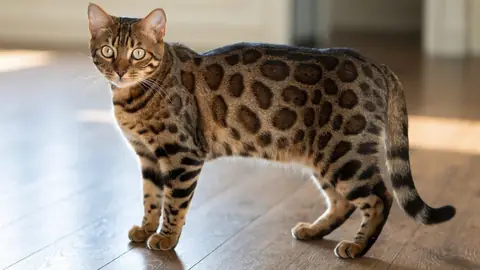 BengalWhat a Bengal cat actually costs in India, why published prices disagree by 25 times, what the law says about a breed descended...
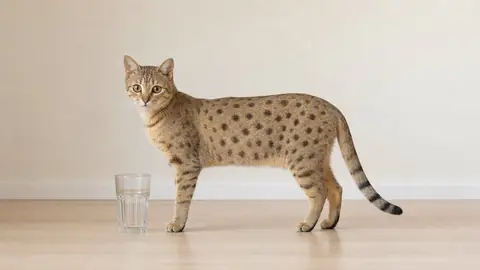 California SpangledA designed spotted cat from 1980s Los Angeles that a department store sold through its Christmas catalogue, and that no registry...
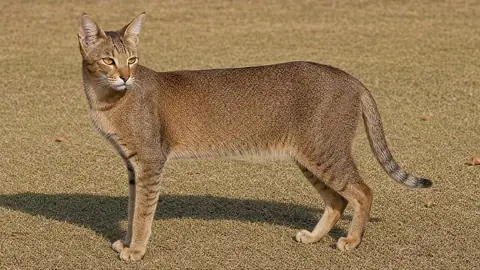 ChausieA domestic cat crossed with a protected Indian wild animal. Read the legal position before you read the price.
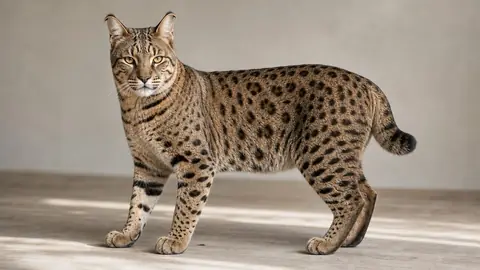 HighlanderA curled-ear, short-tailed cat that TICA has held since 2008 and shows below championship, that the GCCF red-lists by name, and...
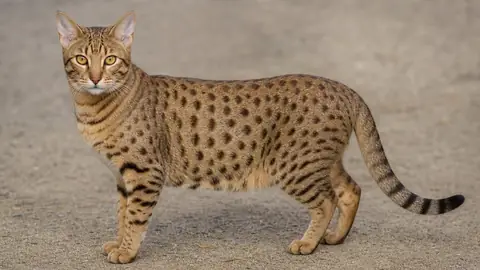 OcicatA spotted cat with no wild ancestry, a short coat that genuinely suits India, one published Indian price, and a urinary stone...
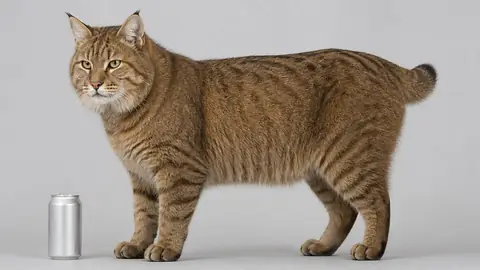 Pixie-bobA large woolly-coated American cat whose defining bobbed tail has been sequenced, and whose one shared allele with the Manx was...
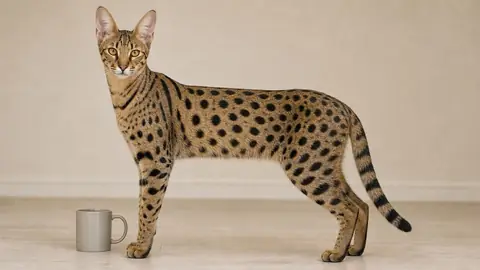 SavannahA serval crossed into a domestic cat, sold worldwide as a domestic breed, banned outright by one national registry and absent...
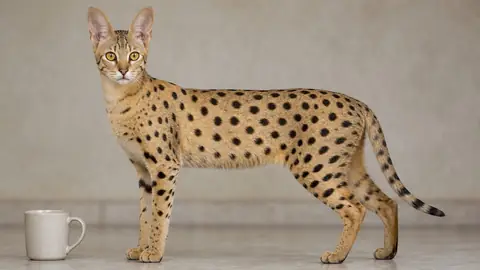 SerengetiA long-legged spotted cat built by a conservation biologist to look like a serval without using one, recognised by exactly one...
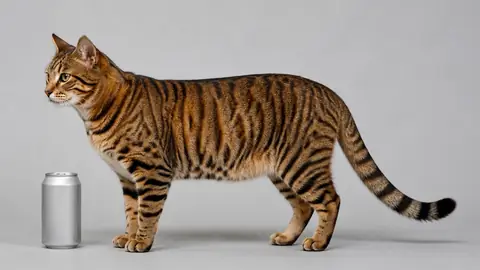 ToygerA designed breed whose own standard calls it a designer cat, whose foundation includes a street cat imported from Kashmir in...
Compare the breeds side by side
To compare these 9 breeds directly, read across the table rather than down the guides. Heat tolerance is a Bonbeno rating out of 5 for Indian conditions, and the reasoning behind each one sits on the breed's own page.
| Breed | Heat tolerance | Published price, India |
|---|---|---|
| Bengal | 3 of 5 | Rs 20,000 to Rs 5,00,000 |
| California Spangled | 2 of 5 | $1,400 each in the Neiman Marcus Christmas Book of 1986, listed as that year's His and Hers gift |
| Chausie | 4 of 5 | See page |
| Highlander | 4 of 5 | 0 of 206,421 characters |
| Ocicat | 4 of 5 | Rs 50,000 to Rs 90,000 pet quality and Rs 1,00,000 to Rs 2,00,000 or more show quality, on a page that also heads a section How to Choose a Healthy Puppy |
| Pixie-bob | 2 of 5 | Not sourceable. The only Indian rupee listing for the name is a children's book at Rs 2,569 |
| Savannah | 4 of 5 | None found. Six Indian commerce pages checked, zero carry the breed, with three control breeds on all six |
| Serengeti | 4 of 5 | None found. Six Indian commerce pages checked, zero carry the breed, with three control breeds on all six |
| Toyger | 4 of 5 | No Indian supply and no reliable figure. The only Indian rupee listing is a children's book at Rs 8,808 |
What matters in this group
The points below are what the evidence on these 9 guides actually supports, not what the category is assumed to mean.
- Bred to look wild and wild-derived are two different facts, and the Toyger and Serengeti pages are where the difference is clearest. The Toyger's own TICA standard calls it a designer cat, a domestic shorthair reminiscent of the big cats in pattern, type, confidence and movement, and no wild cat appears anywhere in its ancestry. Judy Sugden built it from three named cats, one of them Jammu Blu, a street cat imported from Kashmir in 1993 for the spots between his ears. The Serengeti was built specifically to look like an African serval without containing any serval, from Bengal and Oriental Shorthair crosses, and TICA states that unlike the Savannah it has no serval blood. The Pixie-bob, the Ocicat, the Highlander and the California Spangled sit in the same group, wholly domestic cats selected for a wild appearance. The Bengal, the Savannah and the Chausie are the other kind, breeds whose standards name a wild species as the ancestral source. A rosetted coat or a long-legged spotted body tells you nothing about which group a cat is in. The pedigree does, and the Serengeti page adds that its own distant wild ancestry arrives through the Bengal, so the accurate statement for that breed is no serval, not none.
- India's Wild Life (Protection) Act 1972 treats the three wild parents differently, and the Chausie, Bengal and Savannah pages quote the instrument itself. The jungle cat, Felis chaus, is entry 42 under CATS in Part A of Schedule I, and the leopard cat, Prionailurus bengalensis, is entry 44 in the same list. Section 40(2) bars acquiring, keeping, selling or transporting a Schedule I animal without the Chief Wild Life Warden's written permission, and a Schedule I offence carries imprisonment of not less than three years. The serval appears zero times in the Act's 222 pages, so nothing in Schedule I touches the Savannah, though the serval sits inside the Schedule IV entry reading Felidae spp., section 49M requires possession of a Schedule IV living specimen to be reported, and whether a Savannah counts is a question the page says the statute does not answer on its face. The word hybrid appears twelve times in the consolidated Act and not one occurrence concerns an animal, so the Act has no provision on animal hybrids and no filial-generation threshold. Each page draws the same line. The wild parent's position is clear, a Bengal-to-Bengal kitten several generations from any cross is on the sources available an ordinary domestic cat, and an early-generation hybrid is the unresolved case no Indian instrument addresses.
- Registry standing follows the same split. The GCCF refuses the Savannah outright as a breed derived from an outcross to a wild species and files the Serengeti on its green list, the same aesthetic on two different lists. The Chausie is held for championship by TICA and the WCF and by none of CFA, FIFe or the GCCF. The Bengal is the one wild-derived breed India actually sells, at Rs 20,000 to Rs 5,00,000 across published sources that disagree by roughly 25 times, and the CFA will not register one if an Asian leopard cat appears anywhere in the five-generation pedigree. Of the domestic-built breeds, the Toyger holds championship at TICA, the GCCF, the WCF and the French studbook, the Highlander sits below championship at TICA alone and is red-listed by the GCCF as a multi-mutation breed, and the California Spangled is held by none of the six registries checked, so a cat sold under that name in India has nothing to be checked against. The Savannah and the Serengeti were absent from every Indian seller each page checked, the Pixie-bob is absent from India, and the Supertails Bengal at Rs 30,000 to Rs 80,000 is the nearest thing to a Serengeti an Indian buyer can purchase.
- The Pixie-bob is the case where the two groups touch, and its page refuses both the marketing and the refutation. TICA states the breeding programme's goal as a domestic cat with a visual similarity to the North American Bobcat, and its history never says a bobcat sired any founding cat. A 2013 study sequenced the T gene in 15 Pixie-bobs and found c.998delT, the same Brachyury deletion that shortens a Manx tail, in 8 of 14 short-tailed cats, and that allele was not found in eight American bobcats. That is evidence about the tail, not a whole-genome ancestry test, and as late as 2020 no commercial test for bobcat and domestic cat hybrids existed. The Highlander's registry contradicts its most-repeated origin story in as many words, stating that the founding cats were chosen from the domestic gene pool and not from any recognised breed, with the intent of creating a domestic cat with a powerful big cat look. The Ocicat began as an accident, an Abyssinian to Siamese cross meant to produce an Aby-pointed Siamese, and the CFA's own history says there is no wild species involved at any point. The California Spangled was assembled from eight domestic bloodlines printed in 1986, with no serval, no leopard cat and no wild ancestor of any kind.
- For an Indian buyer the decision runs in the reverse of the price ladder. The two breeds whose wild parent is native to India carry a Schedule I species in the pedigree, and the Chausie page notes that a cat bred to look like a protected species creates a risk for its owner that has nothing to do with the cat's behaviour. The Bengal handles Indian heat better than any long-coated purebred because its wild half evolved in the same monsoon forests as Kerala and Karnataka, but UK veterinary records put its life expectancy at 8.51 years, the second shortest of twelve breeds studied. A Toyger needs about 30 to 45 minutes of active play a day at the cool ends of the day and raises no wildlife question at all. The Serengeti and Savannah pages both point the same way, that the Ocicat and the Egyptian Mau give a spotted cat with no wild ancestry, and the Ocicat and California Spangled pages add that spotting is already common in Indian free-ranging cats, available from any shelter for nothing.
Membership is generated from the breed data itself, not typed by hand, so this list cannot drift from the guides it points at and fills in as more publish. The 9 guides here cite 283 sources between them.
This page is a directory of published Bonbeno guides, generated from their data rather than written as clinical guidance, so no veterinarian reviewed this page itself. Each linked guide carries its own veterinary review and its own health sections. Breed level evidence describes populations, and your animal is an individual, so consult your nearby vet before acting on anything you read here.
Common questions
How does Bonbeno decide which breeds belong on this page?
Membership is generated from each breed's own published data rather than chosen by an editor. The group is defined by a shared trait rather than a rating, so its members are named in the site's own cluster definition and each one is checked against the published guide before it appears. A breed appears here the moment its guide publishes and meets that rule, and never before, which is why no link on this page can point at a guide that does not exist.
What is a Bonbeno heat tolerance rating?
It is a 1 to 5 rating of how well a breed copes with Indian conditions, where 5 is best. Almost no international breed reference publishes one, and in a country where summer temperatures pass 45 C it is the most decision-relevant trait there is. It is Bonbeno's own judgement, built from published heat-illness evidence where that exists and stated as inference where it does not.
Are the prices on this page current?
Each price is read from that breed's own guide, where it is compared across published Indian sources and cited. Published Indian breed prices disagree widely between sellers, sometimes by more than a lakh for the same breed, so treat the figure here as the lowest band Bonbeno found and read the guide for the full range.
Does Bonbeno sell or broker any of these cats?
No. Bonbeno does not sell pet food, products or animals and does not broker puppy or kitten sales. Nothing on this page is a listing, and no breeder or seller can pay to appear on it.