
Dog breed profile
Treeing Feist in India: The Word Is a Type, the Dog Is a Breed
The word feist is a type term and its own breed standard says so in the first line. The dog is nevertheless a breed, and it is the only one in this batch whose standard disqualifies the ear conformation that costs Indian owners the most money.
Quick answer
There is no Treeing Feist price in India, and no Indian website carries a page for the breed. On the breed-or-type question the answer is both, in different senses: the word feist is a generic type term for a small noisy dog, which the breed's own UKC standard says in its first line, while the Treeing Feist itself is a breed with a full conformation standard, eleven disqualifications and a register.
This page reports registry documents, Indian statutes and the published veterinary literature, which for this breed is empty. PubMed returns zero records for the phrase Treeing Feist against 52 for a working control in the same session, so there is no breed-specific evidence base and an Indian owner is relying on general small-dog and Indian country data. Any ear discharge, lameness, sudden weakness, weight loss or sign of heat stress needs a registered veterinarian in person. Consult your nearby vet before acting on anything here.
Treeing Feist traits, rated for India
What a Treeing Feist is, and the word its own standard defines
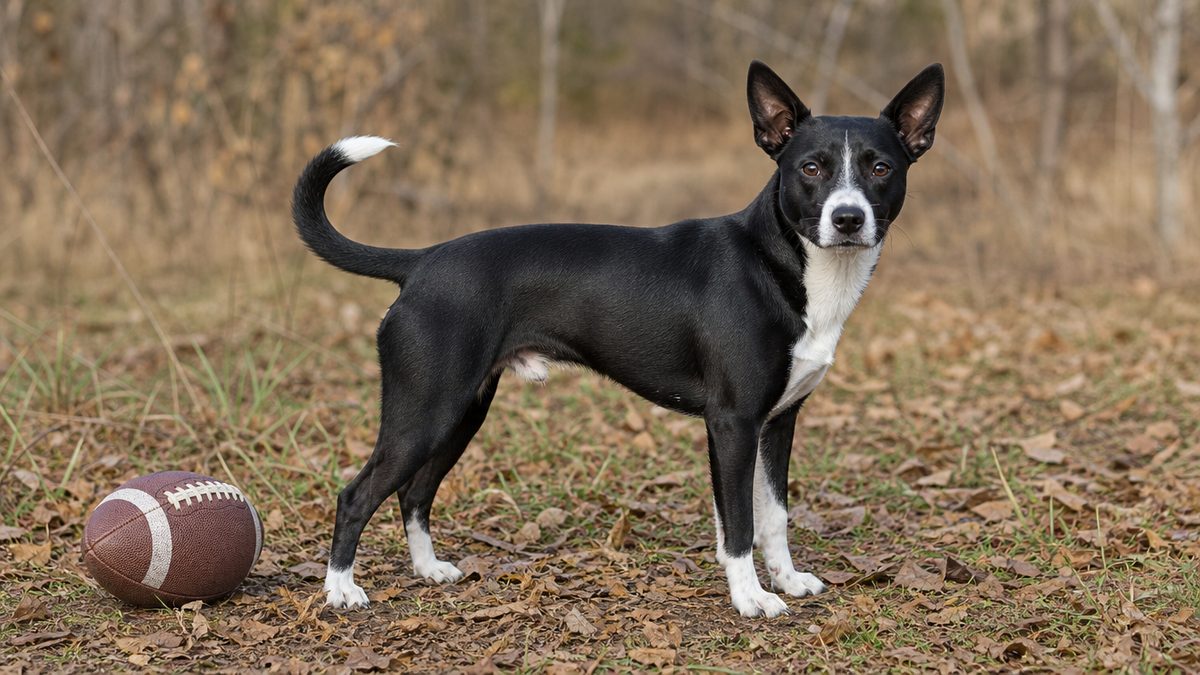
The Treeing Feist is an agile, active, small American tree dog of 12 to 18 inches and 12 to 30 pounds, recognised by the United Kennel Club on 1 November 1998 in the Terrier Group, with a standard revised on 1 September 2022.
The breed history in that standard is unusual because it defines its own name as a type word before describing a breed. *The word "feist" is an ancient one referring to a small, often noisy, dog. Like the Cur breeds, the Feist breeds were developed in the rural South by breeders who needed low-maintenance dogs to hunt small game and to eliminate vermin. Feists were often the result of crosses between hunting hounds and terriers. Today's Treeing Feist is the result of generations of breeding for performance and it is still primarily used to hunt squirrel, although they are also used to hunt raccoon, rabbits and flushing game birds*.
Wikipedia agrees about the word and files its article as *Feist (dog type)* rather than as a breed. So the honest answer to what most people are asking is that feist names a type and Treeing Feist names a breed inside it, and the registry document is where the two meet.
The ear rule, which is the most consequential line in the document
*Short to Medium length, wide at base, and set high. Erect, button, rose and cocked ears acceptable. Disqualification: Pendulous (hound like) and drop ears*. The disqualification list at the end repeats it and widens it: pendulous ears, hound-like, and *drop or any ear that lays flat against the head*.
Hold onto that, because it is the reverse of its own sibling. The Treeing Cur, recognised on the same day, requires drop ears of short to medium length set high and disqualifies erect ears. Two UKC breeds, one day, mutually exclusive ear rules, and it is the single feature that tells them apart at a glance.
The rest of the standard, in brief
| Feature | What the standard says |
|---|---|
| Size | 12 to 18 inches at the withers. Dogs outside that range are an eliminating fault |
| Weight | Ideal working weight not under 12 pounds nor over 30, dependent on the dog's height |
| Head | Blocky, with a broad flat skull tapering slightly toward the muzzle, a definite stop and parallel planes |
| Nose | Black or self-coloured. A pink nose is a disqualification |
| Eyes | Brown, ranging from dark to amber, with eye rims matching nose pigment |
| Ears | Short to medium, wide at base, set high. Erect, button, rose and cocked acceptable |
| Feet | Round, well arched and tight, with hard tough well-cushioned pads |
| Tail | Thick at the base and tapering, or a natural bob, carried in an upward curve when alert |
| Coat | Short, dense and smooth. A long or shaggy coat is a disqualification |
| Colour | Any color or color pattern. Albinism is a disqualification |
| Gait | Smooth and effortless, capable of great bursts of speed when needed |
The build behind those measurements is compact rather than light, and the standard says so four separate times. *Cheeks are muscular, but not over-developed*. The neck is *clean, muscular, and of moderate length*. The back *blends into a muscular, slightly arched loin with slight to moderate tuck-up*. The hindquarters are *strong and muscular*, with well bent stifles and hocks well let down. A 12 to 30 pound dog built to that description is a working animal at a small size, which is the practical warning hidden inside the weight figure.
One quiet line in the forequarters is worth noticing because it tells you what kind of document this is: ***Bench legs* are acceptable but not preferred**. A show standard would fault a bowed front outright. A working standard tolerates it and says so.
Two rules about the register, inside the standard itself
The standard closes with two sentences that belong to registration rather than conformation. Any dog registered in another registry as anything other than a Feist breed is not eligible to be registered as a Treeing Feist. And: Any dog registered prior to the September 1, 2022 changes is not to be penalized.
The first is a boundary rule, policing exactly the type-versus-breed confusion this page opens with. The second is a grandfather clause, and it tells you the 2022 revision tightened something. Dogs already on the register keep their standing, which is how a young breed's standard hardens without disqualifying its own founding population.
Cryptorchidism, viciousness or extreme shyness, a long or shaggy coat, albinism, deafness, blindness, an overshot bite, an undershot bite, a pink nose, pendulous hound-like ears, and drop or any ear that lays flat against the head. For comparison, the Treeing Cur's standard carries eight. A longer list is a tighter standard rather than a stricter dog, and three of these eleven are about the ear and the nose alone.
Breed or type? The word is a type, the dog is a breed, and one document says both
The Treeing Feist is a breed, because the United Kennel Club publishes a written breed standard for it with eleven disqualifications and operates a register, and the word feist is separately a generic type term, which the same standard says in its first line.
Both statements are true at once and neither cancels the other. This site applies one test to every animal it writes about, and the Treeing Feist is the case where the answer has to be given in two halves.
| Verdict | What it requires | The word feist | The Treeing Feist |
|---|---|---|---|
| Breed | A published written standard and a register recording individuals | No | Yes. UKC standard since 1 November 1998, revised 1 September 2022 |
| Breed in formation | A standard and a register, with no national body having admitted it | No | No. A national body holds it and shows it |
| Type | Neither a standard nor a register | Yes. The standard itself defines the word as an ancient one for a small, often noisy, dog | No |
| Register without standard | A body records the animals and publishes no standard | No | No. That is the UKC Bloodlines Listing Service, and no feist is in it |
| Brand | The name is a trademark applied to selected animals | No | No |
The type half, in the registry's own words
*The word "feist" is an ancient one referring to a small, often noisy, dog*. Wikipedia files its article as Feist (dog type) rather than as a breed. Both are right about the word. Anybody in the rural South describing a small hunting dog as a feist is using a category, not naming a pedigree.
The breed half, in the same document
A conformation standard, eleven disqualifications, an eliminating fault on height, a defined ear list, a defined bite, a defined coat, and two registration rules printed at the end of the standard itself. The strongest of those, and the one that answers this whole section, is a boundary rule: *Any dog registered in another registry as anything other than a Feist breed is not eligible to be registered as a Treeing Feist.*
Read that as the registry doing exactly what a breed register does. It refuses to let the type word do the work of a pedigree. A dog can be a feist in the ordinary sense and still be ineligible for the breed register if another registry has already called it something else.
The fourth verdict, and why it does not apply here
It is worth naming the register-without-standard state properly, because the UKC operates one. Its ninth group is the UKC Bloodlines Listing Service, holding ten breeds the registry records while publishing no conformation standard for them: the Alapaha Blue Blood Bulldog, American Exhibition Bully, Armenian Gampr, Duitsch Herder, Hollandse Herder, Mechelse Herder, Phu Quoc Ridgeback, Russian Salon Dog, Russian Tsvetnaya Bolonka and Yakutian Laika. No feist is in that group. The Treeing Feist sits in the Terrier group with a full standard.
The listing service is nevertheless worth an Indian buyer knowing about, because it is also an outcome rather than only a group. The UKC's Cur registration application, the nearest comparable document we could retrieve, authorises the registry to substitute *UKC Bloodlines Listing Services credentials* where a dog is denied entry to the full registry, and states that such paperwork *does not convey the same rights and privileges as the full UKC/FDSB registry*. Ask which kind of paperwork any dog comes with.
Two feist breeds or three? The UKC does not reconcile it
Its Breed Standards index lists three breeds carrying the name, all in the Terrier group: American Feist, Mountain Feist and Treeing Feist. Its Cur and Feist programme page states that *there are five Cur breeds and two Feist breeds*, and that Feist hunts are for squirrel only.
The cur half of that sentence reconciles and the feist half does not. The Cur single-registration form carries five checkboxes and the fifth is the Treeing Tennessee Brindle, which explains the five. No equivalent Feist form could be retrieved this session, so the difference between two and three is recorded here as unresolved rather than explained. A likely reading is that the programme counts hunting classes and the index counts names, but that is a hypothesis and it is labelled one.
Everywhere else, the answer is zero
| Body | Treeing Feist entry? | Control that passed in the same document |
|---|---|---|
| UKC Terrier Group | Full standard and register | The standard itself, recognised 1 November 1998, revised 1 September 2022 |
| UKC Bloodlines Listing Service | Not a member | The group holds ten breeds and none is American |
| American Kennel Club | No entry | Not compared here |
| FCI Group 6 definitive register | Zero occurrences of Feist | American Foxhound 303, Black and Tan Coonhound 300, Beagle 161, Basset Hound 163, English Foxhound 159 |
| FCI provisional register | Zero occurrences | Dated rows from 11 February 2026 back to 2019, so the list rendered |
| Kennel Club of India | No route exists | The KCI works to FCI nomenclature and the FCI holds no feist |
India inherits that directly. The KCI issues pedigrees against FCI nomenclature and the FCI holds no feist at allFederation Cynologique Internationale. There is no Indian pedigree route for this breed, and a seller offering KCI papers for one is offering something that cannot exist.
This cluster checks every small breed body it cites for the link-injection pattern. The relevant worked example sits in this breed's own UKC group: the club that the UKC's Rat Terrier standard names as that breed's national parent club returns HTTP 200 with a genuine club identity and a genuine breed description, and it also declares WordPress 4.7.21 in its generator meta tag while carrying 29 of its 42 outbound hosts pointing at Indonesian lottery and slot-gambling destinations under labels such as DATA HK, TOGEL SINGAPORE and KELUARAN HK. An official endorsement is not a security guarantee. Look at what else is on a club page before you follow a link from it.
Indian import law, read from the notice itself
Indian import rules permit a dog to enter the country for three purposes and no others, and a commercial trade in feists is not one of them.
The governing document is Trade Notice No. 22/2022-23, issued by the Directorate General of Foreign Trade on 19 December 2022 and addressed to all international airlines, all Indian embassies and consulates abroad, and pet owners concerned. Five pages with a real text layer, downloaded and extracted for this page rather than summarised.
It sets the policy for ITC (HS) code 01061900, Mammals: Other, which covers pet cats and dogs. The policy is one word: Restricted, subject to Policy Condition 6, which prohibits import of wild animals as defined in the Wild Life (Protection) Act, 1972 and subjects CITES-listed species to CITES.
Policy Condition 7, the only three permitted purposes
- Pet dog with valid pet book and relevant records or documents in the name of importer.
- Dogs imported by the R and D Organisations for conducting research with the recommendation of CPCSEA.
- For the internal security by the Defence and Police Force.
Policy Condition 8 closes the rest: *Import of commercial dogs for breeding or any other commercial activities other than the purposes mentioned above is not permitted*, and paragraph 6 repeats it operationally: *any applications for trading/breeding purposes, or applications made on behalf of some another person/entity shall be duly rejected*.
| Situation | Up to two pets | More than two pets |
|---|---|---|
| Permanent import | Allowed as passenger baggage without DGFT authorisation, only to a person transferring residence to India after two years of continuous stay abroad, and only for cats and dogs | DGFT import authorisation required, examined on justification by DAH and D |
| Stay abroad under two years | DGFT import authorisation required | DGFT import authorisation required |
| Pet not carried as passenger baggage | DGFT import authorisation required | DGFT import authorisation required |
| Temporary import | DGFT import authorisation required | DGFT import authorisation required |
Three operational details. Applicants are advised to start at least two months before travel. Import is allowed only through the airports and seaports of Delhi, Mumbai, Chennai, Hyderabad, Bengaluru and Kolkata and, since October 2024, Kochi airport, with quarantine at the government quarantine station of those ports where required. And an advance No Objection Certificate must be obtained from the Regional or Quarantine Officer of those ports seven days before travel, relaxable up to three days, after submitting the DGFT import licence and a health certificate from a veterinarian in the exporting country. The full route is set out in how to import a dog to India.
A small dog is easier to fly and no easier to import
It is worth saying, because it is the one place where this breed's size might be assumed to help. A 5 to 14 kg dog travels in cabin on many carriers where a 30 kg coonhound cannot. That changes the logistics of moving your own pet and it changes nothing about the law: the same Policy Condition 7 applies, the same seven ports apply, and the same paragraph 6 rejects any application made for trading or breeding.
Put that beside the registry position. The FCI holds no feist, so no KCI route exists, and no lawful commercial import channel exists for any dog. There is therefore no legal path by which Indian Treeing Feist litters could come into being, which is what the empty result set in the price section shows from the other direction.
It covers somebody who flew into India holding their own dog's pet book in their own name. It does not describe a breeder importing founding stock, and a seller claiming to have done so is describing an application the notice says shall be duly rejected.
Treeing Feist price in India: no market, and no page has invented one
There is no Treeing Feist price in india, and no Indian website carries a page for the breed on which to publish one: three return HTTP 404 and poodles.in returns HTTP 200 under the title *Dog Breed Not Found* with no breed content behind it.
One instrument caveat belongs at the top. No India-located search-engine result page could be captured on 9 September 2026: Google served a JavaScript shell on every route tried and through two independent network paths, and Bing India served a fully substituted result set of ten NCERT textbook pages in English and Hindi, while a Labrador control passed twice through the same Bing endpoint in the same session. The absence below was established by fetching each Indian site's own URL for this breed and recording what came back.
| Site | Treeing Feist | Redbone or Treeing Walker, same day | What that shows |
|---|---|---|---|
| happypet.care | HTTP 404 | Full page with a rupee buying price and a monthly cost row | The site generates Indian pages and did not generate one here |
| puppiezo.com | HTTP 404, title Page not found | Listing carousel with eight puppies and prices | Same |
| dogbreedslist.info | HTTP 404 | Full entry with a US price band | Same |
| poodles.in | HTTP 200, title Dog Breed Not Found, no breed content | Full care guide with four preset cost lines | A soft 404 that an automated status check would pass |
The absence is specific to this breed rather than a site outage, which is what makes it a measurement rather than a failed search. And it is worth naming what those same sites publish for the breeds they do carry: an identical Rs 3,550 to Rs 5,400 monthly cost row shared between a coonhound and a Whippet, with no source on either page. Nothing of that kind exists here to correct.
Why no Indian market can form
Two facts close it. There is no name to register under: the FCI holds no feist, and the Kennel Club of India works to FCI nomenclature. And no lawful commercial import route exists for any dog: Trade Notice 22/2022-23 makes dogs a Restricted import and states that applications for trading or breeding purposes shall be duly rejected. A domestic breeding population cannot form here through any legal channel.
The one thing worth checking if a small treeing dog is offered to you
The breed's own standard contains the test. A Treeing Feist has erect, button, rose or cocked ears, set high and wide at the base, and pendulous ears, drop ears and any ear that lays flat against the head are disqualifications. A small hunting dog with hanging ears offered under this name is not this breed, whatever the paperwork says, and the difference matters in India for a reason the grooming section spells out.
Ask three more questions. Which registry, and is the paperwork full registration or listing-service credentials? Was the dog registered elsewhere as anything other than a feist, which the standard makes disqualifying for the register? And where did the parents enter India, under what DGFT authorisation?
This page publishes no rupee figure for the animal, because converting a foreign asking price into rupees and presenting it as Indian is the fabrication mechanism the rest of this site documents. What an Indian owner would actually spend on a dog this size is in the next section, from named rate cards, and it is the lowest figure in this cluster.
A breed with no Indian market is unavailable rather than affordable. What is genuinely affordable, and genuinely available, is the running cost of a 5 to 14 kg short-coated dog in India, which comes to roughly Rs 3,500 to Rs 6,500 a month from the sources below. That is the only price on this page describing a transaction anyone here can make.
What a 5 to 14 kg dog actually costs in India
Budget roughly Rs 3,500 to Rs 6,500 a month for a Treeing Feist-sized dog in an Indian metro, the lowest cost of ownership figure on any page in this cluster, and note that it is assembled entirely from clinics and retailers you can open because no Indian page for this breed exists to copy from.
Two of the three big lines fall with body weight, which is why this figure is lower than its neighbours. Food scales directly. Parasite control is priced in weight bands, so a 5 to 14 kg dog sits below the 15 to 30 kg band the coonhound pages use. Vaccination and municipal fees do not move with size at all.
| Item | Figure | Source and scope |
|---|---|---|
| Puppy core vaccination course | From Rs 6,499 | Vetic national page. A promotional floor from one chain, not a market average. Does not vary with size |
| Annual booster | From Rs 3,199 | Vetic, same caveat |
| Anti-rabies, single dose | Rs 699 | Vetic |
| Puppy DP | Rs 849 | Vetic |
| 9-in-1 DHPPiL | Rs 899 | Vetic |
| Kennel cough | Rs 1,349 | Vetic. Worth pricing for a dog that will board |
| Tick, flea and worm control | Below Rs 1,103 per month | The Rs 1,103 figure is the 15 to 30 kg NexGard Spectra band at Rs 3,308 for three tablets. A 5 to 14 kg dog sits in a cheaper band, so price the band your dog is actually in |
| Bathing, if used at all | From Rs 934 | Vetic Delhi. A short dense smooth coat does not need a salon |
| Complete bath and styling | From Rs 1,869 | Vetic Delhi. Money this breed does not need spent |
| Delhi pet dog registration | Rs 500 new, Rs 500 renewal, Rs 100 per month late fee | Municipal Corporation of Delhi, dogs only, certificate valid one year. Does not vary with size |
| Chennai pet licence | Rs 50 | Greater Chennai Corporation, pet animals generally, 9,115 issued in 2024 |
Where the money goes, and where it does not
- Food, and it is genuinely small. A 5 to 14 kg working dog eats a fraction of what a 30 kg coonhound does, and a monthly figure is arithmetic from grams per day against the price of the bag you buy.
- Parasite control, still the highest-value line. Cheaper here than on a large dog because the product is weight-banded, and still cheaper than one course of treatment for tick fever.
- Ears, which is the line this breed does not pay. The standard disqualifies pendulous ears, drop ears and any ear that lays flat against the head, so the weekly monsoon ear routine that dominates every coonhound page here does not apply.
- Grooming, close to nothing. Short, dense and smooth, with no clipping for the dog's life.
- Municipal registration, which does not shrink. Rs 500 in Delhi renewed annually against the anti-rabies certificate date, Rs 50 in Chennai, where the corporation also names six pet clinics whose stated function is all treatment and anti-rabies vaccination free of costGreater Chennai Corporation veterinary….
The first-year figure, built rather than quoted
Add a vaccination course at Rs 6,499, twelve months of weight-banded parasite control, a municipal registration at Rs 500, and food arithmetic for a 5 to 14 kg dog. The fixed veterinary and civic cost lands close to Rs 15,000 in year one before a single bag of food, against roughly Rs 20,000 for the larger breeds in this cluster.
Retail veterinary and grooming prices move within days, and one chain quotes different course prices on different city pages on the same day, so re-price every Vetic and Supertails row before relying on it, and price the parasite band your own dog falls into rather than the one quoted here. The Delhi Rs 500 and the Chennai Rs 50 have not moved. Note that the Chennai corporation's page states its Pet Clinics function as providing all the treatment and Anti-Rabies Vaccination free of cost for pet animals, which beats every private rate card quoted in this section.
Heat tolerance in India: the best case in this batch, on two separate grounds
The Treeing Feist's heat tolerance rates 4 of 5 for India, the highest rating in this batch, because the rural South it comes from reaches a 24.00 C wet bulb in July, a load Bengaluru, Pune and Hyderabad never reach in any month, and because at 5 to 14 kg it is the smallest dog in the clusterUnited Kennel Club.
The standard places the breed's development in *the rural South*, which is a region rather than a town, so the honest instrument is a band. We queried NASA POWER by explicit latitude and longitude at three points across it, echoing the grid-cell elevation back each time.
| Point | Cell elevation | Annual mean T2M | Annual mean RH2M | Hottest month | Peak wet bulb |
|---|---|---|---|---|---|
| Jackson, Mississippi | 103.65 m against a real 85 m | 18.00 C | 77.79 percent | July, 27.66 C | 24.00 C in July |
| Little Rock, Arkansas | 108.48 m against a real 102 m | 16.76 C | 76.03 percent | July, 28.33 C | 23.76 C in July |
| Nashville, Tennessee | 209.36 m against a real 182 m | 14.86 C | 77.77 percent | July, 26.08 C | 22.54 C in July |
All three cells sit within 30 m of their towns, so none needs a lapse-rate correction, and Little Rock's cell is 6.48 m out, the closest match on this site. Little Rock's July mean of 28.33 C is the hottest single month of any homeland in this cluster.
Against Indian cities, counted in months
| Place | Annual mean T2M | Annual mean RH2M | Hottest month | Peak wet bulb | Months above 24.00 C wet bulb |
|---|---|---|---|---|---|
| Jackson, Mississippi | 18.00 C | 77.79 percent | July, 27.66 C | 24.00 C in July | 0, its own peak |
| Bengaluru | 23.74 C | 67.94 percent | April, 28.37 C | 21.86 C in May | 0 |
| Pune | 23.86 C | 66.80 percent | April, 28.93 C | 22.97 C in June | 0 |
| Hyderabad | 26.10 C | 60.30 percent | May, 33.30 C | 23.35 C in June | 0 |
| Delhi | 25.60 C | 45.56 percent | June, 35.88 C | 26.50 C in July | 3, June to August |
| Mumbai | 26.77 C | 67.39 percent | May, 31.19 C | 25.77 C in June | 5, May to September |
| Kolkata | 25.81 C | 73.93 percent | May, 31.53 C | 27.09 C in June | 6, April to September |
| Chennai | 27.95 C | 72.39 percent | May, 31.51 C | 26.11 C in May | 7, April to October |
The wet-bulb column is computed from mean temperature and mean relative humidity with the Stull approximation, never from a period maximum, and every value sits far below the roughly 35 C physical ceiling, which is the check that says the arithmetic is sound.
Three Indian metros never reach the load a Mississippi July delivers, and Jackson's annual relative humidity of 77.79 percent is higher than every Indian city in the table. Calling this dog heat-sensitive the way a northern breed is heat-sensitive misdescribes it at the source.
The second ground, which is body size
No feist appears among the breed categories modelled in the largest UK heat-illness study, so there is no odds ratio for this breed and this page borrows none. What that study does give is a transferable factor with a number on it: a bodyweight at or above the breed and sex mean carried 1.42 times the odds of heat-related illness, 95 percent confidence interval 1.12 to 1.80, and dogs over 50 kg carried 3.42 times the odds, 1.54 to 7.57.
A 5 to 14 kg dog sits nowhere near the upper band and has a favourable surface-area-to-mass ratio for shedding heat. That is not a licence, because of 879 heat-illness events with a recorded trigger, 652, or 74.2 percent, were exertional rather than environmental, and a small dog chasing a squirrel in a Chennai May is exerting itself just as hard as a large one. It is a reason this breed starts from a better place than its neighbours.
What India still removes
The winter. Jackson's January mean is 6.78 C, so the animal gets a genuinely cool season, and only Delhi among the Indian cities here has anything comparable at a January wet bulb of 7.58 C. What changes in India is not the peak, it is the absence of a recovery period.
- Treat Bengaluru, Pune and Hyderabad as genuinely workable, which is a stronger statement than this site makes for any other dog in this batch.
- Move work to before 07:00 and after 20:00 from April to October in Mumbai, Kolkata and Chennai, and in Delhi from June to August.
- Stop the dog yourself, because exertional cases outnumber every other trigger three to one and a small dog gives you less warning.
- Do not assume small means unaffected. A dog at ground level in an Indian city absorbs radiant heat off tarmac that a taller dog does not.
- Never shave the coat, which is short and dense already and is the dog's sun protection.
Indian law provides the clause that fits an imported working dog. Second Schedule Part IV paragraph 21(1) of the Prevention of Cruelty to Animals (Dog Breeding and Marketing) Rules 2017 bars keeping dogs in outdoor facilities, without the attending veterinary practitioner's written approval, where they are not accustomed to the temperatures prevalent in the area, or belong to breeds that cannot tolerate them, or are sick, infirm, aged or young.
The wet-bulb table above measures air at two metres. A 12-inch dog walks with its chest a hand's width above the road surface, which in an Indian May can be far hotter than the air. The practical test costs nothing: put the back of your hand on the tarmac for five seconds before you set off. If you cannot hold it there, neither can the dog's feet.
Temperament, and a standard that contradicts itself about noise
The Treeing Feist's temperament is described in two sentences of the UKC standard, and they disagree with each other about the most decision-relevant trait an Indian buyer has: *the word feist is an ancient one referring to a small, often noisy, dog*, and *on track, they are virtually silent*.
Both are in the same document and both are true of different things. The first is about the word and about the type of dog it names. The second is about tracking behaviour, and it is genuinely unusual: a treeing dog that works silently and speaks at the tree rather than on the trail. Neither sentence is a claim about how much a bored dog barks in a Mumbai flat, and this page will not pretend otherwise.
The working description is short. *Treeing Feists are used most frequently to hunt squirrel, raccoon, and opossum. They hunt using both sight and scent and are extremely alert dogs*. That sight element is worth holding onto, because it means the dog breaks for movement it has not smelled, which changes how training and lead work have to be built.
What the standard rules out
Viciousness or extreme shyness is a disqualification, which means an aggressive Treeing Feist is a disqualified Treeing Feist and must be reported to the registry. Deafness and blindness are also disqualifications, which is worth knowing because Indian law mentions neither: the strings deaf and BAER return zero occurrences across the whole Dog Breeding and Marketing Rules gazette.
Who this dog suits in India
- Households in Bengaluru, Pune or Hyderabad, the three Indian metros that never reach this breed's homeland peak wet bulb.
- Owners who want a small working dog rather than a small companion dog. At 5 to 14 kg this is the most physically manageable animal in the batch, and the least biddable per kilogram.
- People with a fenced garden or terrace. A dog that hunts by sight and scent needs a boundary that accounts for both.
- Anyone who has read the ear rule and understands why it matters here, because it is the reason this breed costs less to keep in an Indian monsoon than any other in this cluster.
- Owners who can give it a job. Squirrel hunting does not exist as a sport in India, so scent games, search work and terrier-style activities are the substitute.
Who should not
- Anyone buying it as a lapdog because it is small. Twelve to eighteen inches of extremely alert treeing dog is not a companion breed with a shorter coat.
- Owners who exercise off-lead in a park with squirrels, cats or monkeys. This is the highest prey drive rating on the page and the dog hunts by sight.
- Anyone in Chennai or Kolkata without a plan for seven and six months above the homeland peak.
- Buyers expecting a quiet dog because the standard says silent on track. That sentence is about trailing, and the same standard's first line calls a feist a small, often noisy, dog.
- Buyers who want documentation. No parent-club health-test recommendation exists and no literature names the breed.
An honest note on how much is known
There is no parent-club temperament survey for this breed, no behavioural study, and no peer-reviewed literature naming it. What exists is a standard from 1998 revised in 2022, and what generalises from small independent sight-and-scent treeing dogs as a class. This section reports those two things and the contradiction inside the document, and stops.
The UKC files this breed in the Terrier group rather than with the hounds, and the history says feists were often the result of crosses between hunting hounds and terriers. Read the filing as a hint about the dog you will live with: quicker to react than a hound, more persistent than a companion breed, and more interested in small moving things than either.
Training a small sight-and-scent hunter
To train a Treeing Feist in India, build the recall against movement rather than against smell, because the standard says the breed hunts using both sight and scent and is extremely alert.
That is a genuine difference from every coonhound in this cluster and it changes the training plan. A scent hound commits after it finds a line, which gives a handler a moment. A dog that also hunts by sight commits the instant something moves, which does not. In an Indian park with squirrels, cats, monkeys and crows, the trigger is present constantly.
A four-week recall plan, built for movement
- Week one, indoors only. Pay the recall word every time, with food, in a room with nothing moving, and never use it to end something the dog enjoys.
- Week two, a long line in a walled space. Ten metres of line, with one rule kept for life: say the word once, then go and collect the dog.
- Week three, movement from the start. A rolled ball, then a person walking past, then a bird at a distance, then a dog moving. On this breed, movement belongs in week three rather than being added later.
- Week four, outdoors on the line, and hold the ceiling. With squirrels in nearly every Indian park, recall on a sight-and-scent treeing dog is a management tool. The lead is correct equipment for this animal's whole life.
Frictions to expect
| What the dog does | Why | What works |
|---|---|---|
| Breaks for movement with no warning | The standard says it hunts using both sight and scent | Movement distractions from week three. Long line in any open space |
| Fixates upward at a tree and will not disengage | It is a treeing breed, and the tree is where the job ends | Redirect early. A dog treeing a squirrel in a Bengaluru park will not stop on request |
| Goes quiet on a trail and is assumed to have lost interest | The standard says that on track they are virtually silent | Do not read silence as disengagement. A silent trailer is still working |
| Escapes a small gap | 12 to 18 inches, agile, and capable of great bursts of speed | Check the fence for gaps a small dog fits through, which are not the gaps a coonhound owner looks for |
| Barks at the flat door | The word feist names a small, often noisy, dog | Manage arousal and give the dog a job. This is the trait most likely to end an Indian apartment placement |
| Is underestimated because it is small | Twelve inches of extremely alert working dog | Train it like a working breed, not like a companion breed |
Socialisation on an Indian timetable
Socialise deliberately and early, because the sensitive window closes near sixteen weeks while Indian vaccination schedules can keep a puppy indoors through most of it. Second Schedule Part III paragraph 8(9) of the Dog Breeding and Marketing Rules 2017 records that pups can start vaccination at seven to eight weeks and are usually completed at eighteen weeks. That leaves a real gap, and the answer is carried exposure, controlled visitors and clean surfaces rather than a locked room. Ask your vet how much ground contact is safe at each stage in your city.
Two India-specific pieces of work matter more on a small dog than on a large one. Free-roaming dogs are part of the street in most Indian cities, and a 5 to 14 kg dog is at real physical risk in a confrontation it starts, so calm passing behaviour on lead is a safety measure rather than a courtesy. And being picked up should be trained deliberately, because small dogs get lifted by strangers and a dog that has never practised it learns to snap.
A 30 kg coonhound that ignores a recall is obvious and alarming. A 7 kg feist that does the same is easy to dismiss, easy to carry home, and just as likely to be under a vehicle. The training standard should be the same, and on this breed the movement trigger makes it harder rather than easier.
How much exercise a Treeing Feist needs, and where India allows it
Plan 45 to 75 minutes of real work every day for an adult, and note that no breed-specific published figure exists, so that range is drawn from what the standard describes rather than quoted from anyone who measured it.
Being straight about the provenance matters, because every aggregator page for this breed states a number and none of them cites anything. The standard describes an agile, active small tree dog whose legs must be long enough to allow it to move quickly and with agility in rough terrain regardless of the size of the individual dog, with a smooth effortless gait, strong driving power behind, and *great bursts of speed when needed*, to be presented in hard working condition. A dog built to that and given a courtyard is not a settled dog.
It is less than the coonhounds need and it is not a small amount. The difference between 45 minutes and the Treeing Walker's 120 is real and it is the strongest practical argument for this breed in an Indian city.
Where the window is, city by city
| City | Months above the homeland peak | Practical window | Verdict |
|---|---|---|---|
| Bengaluru | 0 | Morning and evening, year round | The best Indian city for this breed |
| Pune | 0 | Morning and evening, year round | Genuinely workable |
| Hyderabad | 0 | Morning and evening, with care in May and June | Workable |
| Delhi | 3, June to August | Before 07:00 and after 20:00 in summer, generous November to February | Workable, with a hard three months |
| Mumbai | 5, May to September | Before 06:30 through the monsoon | Demanding |
| Kolkata | 6, April to September | Before 06:30 for half the year | Hard |
| Chennai | 7, April to October | Before 06:30 for most of the year | The hardest of the seven |
Three zeros on that table is the best result any breed in this batch gets, and it comes from the comparison point being a Mississippi July rather than a Kentucky one. Pavement heat is the qualifier that applies to a twelve-inch dog and not to a coonhound, and it is covered in the climate section above.
What the session should contain
- Scent and movement games together. This breed hunts by both, so hidden-food searches and chase-and-retrieve games each use half of what it is built around.
- Thirty to forty-five minutes of brisk lead walking, on a harness rather than a collar on a small dog.
- Terrier-style activity where you can find it. Earth-scent games, controlled digging boxes and puzzle work suit a dog the UKC files in the Terrier group better than distance running does.
- Never off-lead in public, because a sight-and-scent hunter breaks with no warning and a small dog is hard to see in traffic.
- Nothing intense in daylight in the hard months, because exertional heat illness accounted for 652 of the 879 UK events with a recorded trigger.
What happens without it
An under-exercised feist becomes vocal, and the standard's own history warns you which way this breed goes: the word names a small, often noisy, dog. Barking at the door, at the lift, at the corridor and at nothing is the predictable output of an athletic, energetic working terrier with an empty day, and in an Indian apartment block that is what generates the complaint rather than any amount of chewing.
Squirrel hunting is not a sport in India and there is no lawful quarry here that resembles what this dog was made for. That is not fatal and it does mean the exercise plan is a substitute rather than a supplement. A dog getting 45 minutes of physical work plus twenty minutes of scent or puzzle work is being given the job. A dog getting two lead walks is being given the walk.
Grooming: the lowest workload in this batch, and the ear rule is why
To groom a Treeing Feist in India, spend ten minutes a week on the coat and almost nothing on the ears, because the standard requires a short, dense, smooth coat and disqualifies pendulous ears, drop ears, and any ear that lays flat against the head.
That disqualification is the single most valuable line in this breed's standard for an Indian owner, and it is worth putting the number beside it. Otitis externa is inflammation of the external ear canal, which is the complaint an owner books in as an ear infection. In a study of 22,333 dogs sampled from 905,554 under UK primary veterinary care in 2016, its one-year period prevalence was 7.30 percent, 95 percent confidence interval 6.97 to 7.65. Compared with erect-eared breeds, breeds with pendulous ears carried 1.76 times the odds, 95 percent CI 1.48 to 2.10, and breeds with a V-shaped drop ear carried 1.84 times the odds, 1.53 to 2.21.
This is the only breed in this batch whose standard actively excludes that conformation. The Treeing Cur, recognised on the same day, requires drop ears and disqualifies erect ones. Every coonhound in the cluster asks for an ear reaching to or near the tip of the nose. In a country where Mumbai runs 90.4 percent relative humidity in August and Pune 90.8, that difference is money rather than aesthetics.
The full routine, which is short
| Task | Frequency | Note |
|---|---|---|
| Rubber curry or hound glove | Weekly | Ten minutes. Short, dense and smooth, with a long or shaggy coat a disqualification |
| Ear check | Weekly, and it is a look rather than a routine | Erect, button, rose or cocked ears all admit air, which is the whole point |
| Bath | Every 4 to 6 weeks | From Rs 934 at a Delhi chain, or free at home, and a small dog fits in a sink |
| Nails | Every 3 to 4 weeks | The standard asks for round, well-arched, tight feet with hard tough pads, which long nails flatten |
| Teeth | Two or three times a week | Indian law mandates no dental screening, so this is entirely on the owner, and small dogs accumulate tartar faster than large ones |
| Tick check after every walk | Daily in tick season | A small dog is easier to check completely than a coonhound, which is a real advantage |
| Dewclaws and tail | Leave both alone | The standard permits removal and a docked tail; Indian law does not |
The two lines where the standard and Indian law disagree
This breed's standard permits two things Indian law forbids, and an Indian owner should know both before a breeder offers to do either. Under Tail, the general appearance section says the tail *may be natural or docked*. Under Feet, it says *Dewclaws may be removed*.
Second Schedule Part II paragraph 6(8) of the Prevention of Cruelty to Animals (Dog Breeding and Marketing) Rules 2017 states that *there shall be no tail docking, ear cropping, de-barking, de-clawing, branding, dyeing, injecting substances to enhance visual appeal, performing a surgery or procedure to camouflage or hide any defect or infirmity or any other kind of mutilation of any body part of the pup and any change of appearance by artificial means is strictly forbidden*. A show convention this registry permits is prohibited by Indian statute. The standard also accepts a natural bob, so an undocked dog loses nothing.
What to watch instead of ears
Two things, both small-dog problems rather than feist problems. Teeth, because a compact jaw crowds and Indian law mandates no dental requirement at all, with the strings dental and tooth returning zero occurrences in the gazette. And coat sunburn on thin-coated areas, because a short dense coat is protection and a shaved one is not, so this dog should never be clipped for the summer.
A complete bath and styling runs from Rs 1,869 and a haircut from Rs 1,359 at a Delhi chain, and this dog needs neither for its whole life. Add the weekly monsoon ear routine a coonhound needs and this breed does not, and grooming is the clearest practical advantage the Treeing Feist has over every other dog in this batch for an Indian household.
Health issues and lifespan: an empty literature and one structural advantage
There are no documented Treeing Feist health issues at breed level, and there is one structural advantage the standard creates: PubMed returns zero records for the phrase against 52 for a working control, and the breed's ear disqualification places it outside the conformation group carrying 1.76 times the odds of otitis externaO'Neill DG, Volk AV, Soares T, Church DB.
The PubMed audit, with its control and its trap
| Query | Records | What PubMed did with it |
|---|---|---|
| "Treeing Feist" | 0 | Reported the exact phrase as not found and decomposed it into Treeing AND Feist, which still returned nothing |
| "Mountain Feist" | 4 | Exact phrase not found; mountain expanded to mountaineering, mountainous and mountains, so these are not phrase matches |
| feist[tiab] | 45 | A trap. Feist is a common personal surname, so this count is authors rather than dogs |
| "Treeing Cur" | 0 | Same pattern on the sibling breed |
| "Labrador Retriever" AND "hip dysplasia" | 52 | Control, sane query translation, so the instrument works |
That third row is worth naming because it is exactly how a false positive gets published. A 45-record count for feist[tiab] looks like a literature and is not one, since the surname Feist appears on papers in every field. The phrase search is the honest instrument and it returns zero, with the control passing in the same session.
Lifespan: no measured figure exists
McMillan 2024 measures median survival across 155 UK breeds and lists its whole considered breed universe in a 345-row supplementary table, parsed for this page on 9 September 2026McMillan 2024 Supplementary Table S5.
| Breed | In Table S5? | Included? | What that means |
|---|---|---|---|
| Treeing Feist | No | Not applicable | Never considered. No row contains Feist, Cur or Treeing |
| Treeing Cur | No | Not applicable | Never considered |
| Redbone Coonhound | No | Not applicable | Never considered |
| Black and Tan Coonhound | Yes | N | Considered and excluded. KC group Hound, body size Large |
| American Foxhound | Yes | N | Considered and excluded. KC group NA, body size Medium |
| Labrador Retriever, Beagle, Bloodhound, Whippet | Yes | Y | Controls, all present, so the search works |
Absent from the table and excluded by the table are different statements, and this breed is in the first category. Any lifespan figure you find for it is an estimate with nothing behind it, and this page prints none.
The one American study that names this cluster does not name any feist
An 857-case study of canine blastomycosis, drawn from 22 North American veterinary teaching hospitals against a control group of 417,079 dogs, found sporting dogs and hounds at increased risk and named Bluetick Coonhounds, Treeing-walker Coonhounds, Pointers and Weimaraners at highest risk against mixed-breed dogs. No feist appears. The highest-risk profile it identifies is a sexually intact male of 22.7 to 34.1 kg, a weight band no Treeing Feist reaches at all.
The conformational advantage, stated precisely
This is the only genuinely breed-specific health observation available, and it comes from the standard rather than a study. Pendulous ears, drop ears and any ear that lays flat against the head are disqualifications, and pendulous ear carriage carried 1.76 times the odds of otitis externa in a study of 22,333 UK dogs against erect-eared breeds, with V-shaped drop ears at 1.84. The same study found four breeds with reduced odds, all of them small and erect or semi-erect eared: Chihuahua 0.20, Border Collie 0.34, Yorkshire Terrier 0.49 and Jack Russell Terrier 0.52.
Say what that does and does not establish. It does not give this breed an odds ratio, because no study has measured it. It establishes that the conformation its standard requires sits in the protected group and the conformation its standard disqualifies sits in the raised one. For an Indian owner facing four months above 80 percent relative humidity, that is the most useful health fact on this page.
What Indian law requires anyway
No breed screening protocol exists to follow. Indian law imposes one regardless. Second Schedule Part III paragraph 8(10) of the Dog Breeding and Marketing Rules 2017 requires that breeding dogs *shall have been tested for genetic defects, including hip dysplasia, progressive retinal atrophy, night blindness, hypothyroidism, entropion, ectropion, overshot, undershot jaw (when incisors do not touch or mesh), wry mouth, two or more missing teeth, unilateral cryptorchid or full cryptorchid males*.
Two collisions are worth putting to a seller. The standard disqualifies deafness and blindness outright, and the strings deaf, BAER and patella return zero occurrences across the whole 51,953-character gazettePrevention of Cruelty to Animals. So Indian law mandates no hearing test on a breed whose registry disqualifies deafness, and mandates no patella grade on a small dog, which is the size class where patellar luxation is most often discussed. Never write that Indian law requires either.
Two risks with Indian numbers
| Risk | Figure | Population | What it means here |
|---|---|---|---|
| Canine babesiosis | 51 of 330, or 15.45 percent, by nested PCR | Dogs suspected of babesiosis at organised kennels across Indian agro-climatic zones, 2012 to 2014 | A working dog in India joins the population this study sampled |
| Detection method | 5.15 percent by microscopy against 15.45 percent by nested PCR | The same 330 dogs | A negative blood smear does not rule out tick-borne disease |
| Species split | Babesia gibsoni 47, Babesia vogeli 4 | The 51 positives | The small form dominates and carries the poorer prognosis |
| Acute polyradiculoneuritis | Cases 9.4 times more likely to be shedding Campylobacter than controls | 27 affected dogs, 47 healthy controls | 96 percent of cases had eaten raw chicken against 26 percent of controls |
Read the babesiosis figures as a caseload picture rather than a population prevalence, because the study screened dogs already suspected of the disease. And take the polyradiculoneuritis finding seriously if you feed raw, because raw chicken is the strongest identified risk factor. A 5 to 14 kg dog also loses proportionally more blood to a heavy tick burden than a coonhound does, which makes the parasite line on the cost table matter more here rather than less.
There is no health survey, no screening scheme, no published case series and no OFA row we could reach for this breed. What this page can do is separate what the standard structurally avoids, which is the pendulous-ear otitis risk, from what nobody has measured, which is everything else. Consult your nearby vet about screening for your individual dog, and treat any confident breed-specific health list you find elsewhere as unsourced until it shows you where it came from.
Feeding a small working dog in India
To feed an adult Treeing Feist in India, set the ration from body condition and workload rather than from a published figure, because no calorie figure exists for this breed and no Indian page for it exists to invent one.
The standard gives you the target instead of a number: *The Treeing Feist should always be presented in hard, working condition*, at an ideal working weight not under 12 pounds nor over 30 and dependent on the dog's height. That is a body-condition instruction rather than a chart, and on a dog this small it is the only sensible one, because a 6 kg dog and a 13 kg dog are different animals inside one standard.
The arithmetic, and why small dogs go wrong faster
- Start from the dog's own weight, not the breed range. The standard spans 12 to 30 pounds, so the top of it needs more than twice the bottom.
- Read the kcal per kilogram off the bag. Indian dry foods run roughly 3,400 to 3,900 kcal per kg, and that spread matters more on a small ration than a large one.
- Weigh the food with a kitchen scale. On a 7 kg dog, a heaped scoop instead of a level one is a much larger proportional error than on a 30 kg dog.
- Count the treats. Two biscuits are a rounding error for a coonhound and a meaningful share of a small dog's daily intake.
- Re-check body condition every four weeks against hard working condition: ribs easily felt under a thin fat cover, a waist visible from above, a tuck from the side.
Life stages
| Stage | Meals per day | What matters most |
|---|---|---|
| 8 to 16 weeks | 4 | Small-breed puppy food, and small breeds are more prone to low blood sugar between meals than large ones, so do not stretch the gaps |
| 4 to 12 months | 3 | Steady growth. Indian statute names hip dysplasia among the defects a breeding dog must be tested for, and growth weight is the part an owner controls |
| 12 months to adult | 2 | Adult food, ration set from body condition rather than a bag chart |
| Adult, working days | 2 | Never a large meal immediately before or after hard work |
| 7 years and older | 2 | Activity falls before appetite does, and on a small frame a kilogram of extra weight is a large proportional load |
Two Indian specifics
Heat suppresses appetite, so summer feeding is an evening job. In Chennai, Kolkata and Mumbai, where this breed spends five to seven months above its homeland's peak wet bulb, a dog that skips breakfast in May is usually responding to temperature rather than illness. Move the larger meal after the evening work. On a small dog, a full day of refusing food is more urgent than on a large one and needs a vet the same day.
Raw chicken deserves a specific conversation with your veterinarian. The strongest identified risk factor for acute polyradiculoneuritis in dogs is raw chicken consumption, present in 96 percent of cases against 26 percent of controls, with affected dogs 9.4 times more likely to be shedding *Campylobacter* where the sample was taken within a week of onset. Raw feeding is growing among Indian owners of working breeds.
Food and weight-banded parasite control both scale down with the dog, which is why this page's monthly range is roughly Rs 3,500 to Rs 6,500 against Rs 6,000 to Rs 11,000 for the coonhounds in this cluster. Vaccination and municipal fees do not scale at all, so the saving is real but smaller than the weight difference suggests.
The first year, month by month
A Treeing Feist puppy's first year in India runs on three clocks that do not align, plus one identification check this breed makes easy and no other in the cluster does: the earsUnited Kennel Club.
| Age | What is happening | What you do |
|---|---|---|
| Before purchase | There is no Indian breeding population and no lawful commercial import route, so any genuine dog of this breed arrived as somebody's own imported pet under Policy Condition 7(i) | Ask for the DGFT paperwork, the pet book in a named importer's name and the quarantine NOC |
| Before purchase | The standard bars registration for a dog recorded elsewhere as anything other than a Feist breed | Ask what any prior registry called the dog, because that answer can make it ineligible |
| Before 8 weeks | Legally unsaleable. Rule 8(1)(a) requires that pups less than eight weeks in age are not sold | Refuse any earlier collection, and treat an offer of a six-week puppy as disqualifying the seller |
| 8 weeks | Collection age | Confirm the micro-chip Rule 8(1)(e) requires, and take the written feeding, inoculation and de-worming record Rule 8(2) obliges the breeder to hand over |
| 8 to 10 weeks | Settling, house training, crate introduction | Four meals a day, and do not stretch the gaps on a small puppy. Build absence in two-minute pieces from day one |
| 10 to 16 weeks | The socialisation window, closing fast | Carried exposure to traffic, lifts, tile, stairs and calm adult dogs, plus deliberate practice at being picked up. Ask your vet how much ground contact is safe at each stage in your city |
| Around 16 weeks | Ear carriage established, and this is the identification check | Ears should be short to medium, wide at the base and set high, carried erect, button, rose or cocked. Anything pendulous, drop, or laying flat against the head is a disqualification in this breed |
| Around 18 weeks | Vaccination course usually complete, per Second Schedule Part III paragraph 8(9) | Full public exposure. Begin long-line recall work, with movement distractions from the start |
| 4 to 6 months | Growth peak, teething | Three meals. Steady low-impact exercise only, and start weekly tooth brushing now because a compact jaw crowds |
| 6 months | Rule 8(1)(b) bars the sale of dogs over six months without prior sterilisation, except between licensed breeders | Discuss timing of neutering with your vet |
| 6 to 9 months | Adolescence, and the point at which the sight drive arrives | Back to the long line. Expect the trained puppy to appear to forget everything |
| 9 to 12 months | Adult height reached, filling out continues | Two meals. Build to the full 45 to 75 minutes, in the cool hours |
| 12 months | Adult food and adult routine | Set the ration from body condition against hard working condition. Book the first adult booster at Rs 3,199 |
The sixteen-week ear check, which settles the breed
This is the easiest identification check of any breed in this batch and it costs nothing. A Treeing Feist's ears are short to medium, wide at the base and set high, carried erect, button, rose or cocked. Any ear that is pendulous, hound-like, drop, or lays flat against the head is a disqualification. A small treeing puppy whose ears are dropping long and low at sixteen weeks is not this breed, whatever the paperwork says, and the difference matters in an Indian monsoon rather than only in a show ring.
Two things to insist on before the puppy leaves
Nothing docked and nothing removed. The standard permits a docked tail and dewclaw removal; Indian law prohibits both, along with any change of appearance by artificial means, at Second Schedule Part II paragraph 6(8) Prevention of Cruelty to Animals. The standard also accepts a natural bob, so an undocked dog is not disadvantaged.
The micro-chip and the written record. Rule 8(1)(e) requires each pup sold to be micro-chipped and Rule 8(2) requires the breeder to furnish, in writing, details of feeding, dates of inoculations and de-worming, and the name and address of the attending veterinary practitioner.
On the coonhound pages in this cluster the advice is to collect in the cool season, because a puppy collected in April in Delhi spends its socialisation window indoors avoiding a 35.88 C June. That still holds in Delhi, Mumbai, Kolkata and Chennai. In Bengaluru, Pune and Hyderabad it barely applies, because none of those three reaches this breed's homeland peak wet bulb in any month of the year.
Treeing Feist against the rest of the cluster, and against its own sibling
Against the five other American treeing breeds on this site, the Treeing Feist is the smallest, the only one whose standard disqualifies the hound ear, and the one with the strongest Indian climate caseNASA POWER monthly climatology API.
| Breed | Weight | Ears in its own standard | Homeland peak wet bulb | Indian metros never above it | Bonbeno heat rating |
|---|---|---|---|---|---|
| Treeing Feist | 12 to 30 lb | Erect, button, rose or cocked; drop and pendulous disqualified | Jackson, Mississippi, 24.00 C | Bengaluru, Pune, Hyderabad | 4 of 5 |
| Treeing Cur | 30 to 60 lb | Drop, short to medium, set high; erect disqualified | Jackson, Mississippi, 24.00 C | Bengaluru, Pune, Hyderabad | 3 of 5 |
| Treeing Tennessee Brindle | 30 to 50 lb | Short or medium, set high | Nashville, Tennessee, 22.54 C | Bengaluru | 3 of 5 |
| Redbone Coonhound | 45 to 70 lb | Set moderately low, reaching near the end of the nose when stretched out | Macon, Georgia, 23.41 C | Bengaluru, Pune | 3 of 5 |
| Treeing Walker Coonhound | 50 to 70 lb | Set moderately low, medium length, reaching or nearly reaching the tip of the nose | Richmond, Kentucky, 21.32 C | None | 2 of 5 |
| Trigg Hound, an American Foxhound strain | Not compared here | Not compared here | Glasgow, Kentucky, 22.00 C | Bengaluru | 2 of 5 |
Two columns decide the Indian answer and this breed wins both. It is the only one whose standard disqualifies the ear conformation carrying 1.76 times the odds of otitis externa, and it shares the warmest homeland in the cluster with the Treeing Cur while weighing a third as muchNASA POWER monthly climatology API.
Against the Treeing Cur, which is the sibling contradiction
These two were recognised by the UKC on the same day, 1 November 1998, and their standards disqualify each other's ears. The Treeing Feist accepts erect, button, rose and cocked ears and disqualifies pendulous or drop ones. The Treeing Cur requires drop ears and disqualifies erect ones. One sits in the Terrier group at 12 to 18 inches, the other in the Scenthound group at 18 to 24, and they hunt the same quarry in the same country.
There is a second difference that matters to a careful buyer. The Treeing Cur's register openly permits a dog up to 50 percent coonhound in the first three generations. The Treeing Feist's standard instead bars any dog registered elsewhere as anything other than a Feist breed. One register is deliberately open at the edges and one is deliberately closed at them, which is a real difference in what the name on a certificate tells you.
Against the coonhounds, which is the practical Indian comparison
Coat is a wash, since every breed here is short-coated and none needs clipping. The differences are ear, size and voice. The coonhounds carry an ear reaching to or near the tip of the nose, weigh 45 to 70 pounds, and have a voice specified as a graded requirement in their standards. This breed carries a high-set erect or semi-erect ear, weighs 12 to 30 pounds, and is described as virtually silent on track. For a flat in Bengaluru, those three differences are the whole argument, and they all run one way.
Where the Treeing Feist genuinely wins
- The ear rule. The only standard in this batch that disqualifies the conformation carrying the raised otitis odds, which is the commonest avoidable veterinary cost in an Indian monsoon.
- Size. 5 to 14 kg, physically manageable in a lift, a car, a rickshaw and a rented flat, and cheaper to feed and to dose.
- Climate. Three Indian metros never reach its homeland's peak wet-bulb load.
- Exercise. 45 to 75 minutes against the Treeing Walker's 60 to 120, which is the difference between a routine most Indian owners can hold and one most cannot.
- A closed registry boundary. The rule barring dogs registered elsewhere as anything other than a Feist breed makes the certificate mean more, not less.
Where it loses
- Availability. No Indian page, no Indian litter, no FCI standard and therefore no KCI route, and no lawful commercial import channel.
- Evidence. Zero published literature, no parent-club screening list and no measured lifespan.
- Noise, unresolved. Its own standard calls a feist a small, often noisy, dog in the same document that calls it virtually silent on track.
- Prey drive. Rated 5 of 5, and a dog hunting by sight breaks with less warning than a scent hound.
If the ear rule is what attracted you, the study behind it found four breeds with genuinely reduced odds of otitis externa against crossbreds: Chihuahua 0.20, Border Collie 0.34, Yorkshire Terrier 0.49 and Jack Russell Terrier 0.52. Three of those four are small, erect or semi-erect eared, and available in India today. That is a more useful shortlist than a breed nobody here can supply.
Eight mistakes people make about the Treeing Feist
The commonest mistake is deciding the Treeing Feist is only a type because the word feist is a type word, when the United Kennel Club published a conformation standard for it with eleven disqualifications on 1 November 1998 and revised it on 1 September 2022.
- Reading the type word as the whole answer. The standard's own history calls feist an ancient word for a small, often noisy, dog, and the same document is a breed standard with a register behind it. Both halves are true.
- Assuming a small hunting dog with hanging ears is one. Pendulous ears, drop ears and any ear that lays flat against the head are disqualifications. This is the fastest identification check in the whole cluster.
- Confusing it with the Treeing Cur. They were recognised on the same day and their standards disqualify each other's ears, at 12 to 18 inches against 18 to 24.
- Reading silent on track as a quiet dog. That sentence is about trailing behaviour, in a document whose first line calls a feist noisy.
- Buying it as a small companion breed. Twelve to eighteen inches of extremely alert sight-and-scent treeing dog needs 45 to 75 minutes of real work a day.
- Reading feist[tiab] returning 45 PubMed records as a literature. Feist is a common personal surname. The phrase search returns zero against a passing control.
- Trusting an Indian page because it returns HTTP 200. poodles.in serves this breed's URL under the title Dog Breed Not Found with no content behind it.
- Letting anyone dock the tail or remove the dewclaws. The standard permits both and Indian law forbids both, along with any change of appearance by artificial means, at Second Schedule Part II paragraph 6(8).
The five questions to put to anyone offering you one
- Can I see the ears at sixteen weeks? Erect, button, rose or cocked, set high and wide at the base. Anything hanging is a disqualification in this breed.
- Was the dog registered elsewhere as anything other than a Feist breed? The standard makes that disqualifying for the register, so the answer matters.
- Is the paperwork full UKC registration or listing-service credentials? The registry's own application forms authorise the substitution and say the two do not convey the same rights.
- Where did the parents enter India, and under what DGFT authorisation?
- Is the pup micro-chipped, and can I see the written feeding, inoculation and de-worming record? Rule 8(1)(e) and Rule 8(2) require both from a registered breeder.
One line in one standard tells an Indian buyer three things at once: how to identify the breed in a photograph, why it costs less to keep through a monsoon than any coonhound, and why a dog offered under this name with hanging ears is not this breed. Very few breed standards give a reader that much in a single clause.
Adoption, sourcing and the honest Indian answer
To adopt a Treeing Feist in India, accept first that you cannot, and then notice that the shortlist this page points you at instead is genuinely close: a small, short-coated, erect-eared, alert dog with an hour a day in it, which is the commonest animal on an Indian street.
There is no Indian rescue for this breed, no Indian club, no KCI stud-book entry, no verified Indian litter and no Indian web page. Three of the Indian sites that publish priced pages for the American coonhounds return HTTP 404 for it, and poodles.in returns HTTP 200 under the title *Dog Breed Not Found*. Any genuine dog of this breed here arrived as somebody's own imported pet under Policy Condition 7(i) of Trade Notice 22/2022-23.
What is genuinely available, and why it is closer than usual
On most pages in this cluster the alternatives section is a consolation. Here it is a genuine match, because the three features that make this breed suit India are features Indian dogs already have.
- Indian pariah and community dogs. Small to medium, short-coated, erect-eared, climate-native, alert, and free in every Indian city. On ear conformation, coat and heat adaptation they match or beat this breed on every count that matters here.
- Rescued small terrier crosses. Indian shelters hold 6 to 12 kg dogs with the alert, busy, prey-driven profile the standard describes, at none of the verification risk.
- A Jack Russell Terrier or a Chihuahua from a documented Indian source, if you want a small erect-eared dog with paperwork. Both showed reduced odds of otitis externa in the study this page relies on, at 0.52 and 0.20 against crossbreds.
- Nothing at all, for now. A working terrier-type needing 45 to 75 minutes a day for over a decade is a decision to make with a clear head rather than from a search result that does not exist.
If somebody offers you one, the checklist
| Check | What a real answer looks like | What it means if it is missing |
|---|---|---|
| Ears at sixteen weeks | Short to medium, wide at the base, set high, carried erect, button, rose or cocked | Pendulous, drop, or lying flat against the head are disqualifications in this breed |
| Prior registration elsewhere | None, or a Feist breed | A dog registered elsewhere as anything other than a Feist breed cannot be registered as a Treeing Feist |
| Type of UKC paperwork | Full UKC or Field Dog Stud Book registration rather than listing-service credentials | The registry's own forms authorise the substitution and say the two differ in rights |
| Import paperwork for the parents | DGFT authorisation or a pet book in a named importer's name, plus the quarantine NOC | No lawful commercial import route exists for breeding stock |
| Tail and dewclaws | Natural, whether full length or a natural bob | The standard permits docking and dewclaw removal; Indian law prohibits both |
| Micro-chip | A chip number on the sale receipt, per Rule 8(1)(e) | A registered Indian breeder is not complying |
| Written health record | Feeding, inoculation and de-worming dates plus the attending vet's name and address, per Rule 8(2) | You cannot verify the vaccination history you are being told |
| Age at sale | Eight weeks or older, per Rule 8(1)(a) | Any earlier offer is unlawful |
| Sight of the dam and the premises | You visit, you meet the mother, you see where the litter lives | A seller who meets you at a car park is showing you a dog, not a breeding programme |
What a rehomed adult would need from you
Assume any adult arrives with a working prey drive, an untested recall, and the sight trigger that makes this breed harder to hold than a scent hound. Give it four to six weeks on a long line before trusting it in any unfenced space, practise being picked up deliberately because small dogs get lifted by strangers, screen for tick-borne infection if it came from a kennel or the street, and vaccinate and microchip it into the local municipal system: Rs 500 in Delhi with an annual renewal keyed to the anti-rabies certificate date, Rs 50 in ChennaiGreater Chennai Corporation veterinary….
Budget for the first eight weeks rather than the first month. A booster at Rs 3,199, a rabies dose at Rs 699, a first month of weight-banded parasite control and a municipal registration at Rs 500 is a realistic settling-in figure before a single bag of foodSupertails product page for NexGard Spectra….
The Treeing Feist is the best-suited dog in this six-breed batch for an Indian household, on ear conformation, on size, on exercise need and on homeland climate. It is also completely unavailable here, with no FCI route, no Indian litter and no lawful import channel for breeding stock. The useful conclusion is not to hunt for one. It is to take the four features that make it suitable, and look for them in a dog you can actually meet this week.
Treeing Feist questions people actually ask
Is the Treeing Feist a breed or a type?
Both, in different senses, and one document contains both halves. The UKC standard's own history says the word feist is an ancient one referring to a small, often noisy, dog, which is a type definition. The same document is a full conformation standard with eleven disqualifications and a registry eligibility rule, which makes the Treeing Feist itself a breed.
What is the Treeing Feist price in India?
There is none, and no Indian page for the breed exists to invent one. Three of the Indian sites that publish a rupee price for the American coonhounds return HTTP 404 for this breed, and poodles.in returns HTTP 200 under the title Dog Breed Not Found with nothing behind it.
Why does the Treeing Feist standard disqualify drop ears?
Because it is a terrier-type working dog rather than a hound, and the standard is explicit. It accepts erect, button, rose and cocked ears, all set high and wide at the base, and disqualifies pendulous or hound-like ears, drop ears, and any ear that lays flat against the head. Its sibling the Treeing Cur, recognised the same day, requires the opposite.
Is the Treeing Feist a good dog for Indian humidity?
Better than any other dog in this cluster, and the ear rule is why. In a study of 22,333 UK dogs, breeds with pendulous ear carriage carried 1.76 times the odds of otitis externa compared with erect-eared breeds. This is the only breed here whose standard disqualifies that conformation, so the monsoon ear routine every coonhound needs does not apply.
Can a Treeing Feist handle Indian heat?
It has the best case in this batch, on two grounds. The breed was developed in the rural South, where Jackson, Mississippi reaches a 24.00 C wet bulb in July, a load Bengaluru, Pune and Hyderabad never reach in any month. And at 5 to 14 kg it is the smallest dog here, which matters because bodyweight at or above the breed mean carried 1.42 times the odds of heat-related illness.
Do Treeing Feists bark a lot?
The standard says two different things and this page prints both. Its history states that the word feist refers to a small, often noisy, dog. Its characteristics section states that on track, they are virtually silent. Trailing silence is not household silence, so the honest answer is a range rather than a promise.
How big is a Treeing Feist?
12 to 18 inches at the withers, with an ideal working weight of 12 to 30 pounds, which is roughly 5 to 14 kg. Dogs outside that height range are an eliminating fault at a bench show. That makes it the smallest dog in its cluster by a wide margin, against 30 to 60 pounds for the Treeing Cur and 45 to 70 for the Redbone Coonhound.
Can a Treeing Feist live in an Indian apartment?
We rate apartment suitability 3 out of 5, the highest score any dog in this batch gets, and it is still not a recommendation. A 5 to 14 kg short-coated dog is physically manageable in a flat. An agile, active tree dog bred to hunt squirrel by sight and scent, with no work to do, is a different problem entirely.
How long do Treeing Feists live?
Nobody has measured it. The largest breed-level longevity study lists its whole considered breed universe in a 345-row table and no row contains the word Feist, so the breed was never considered rather than considered and excluded. Any lifespan figure you find is an estimate with nothing behind it, and this page prints none.
What health problems does the Treeing Feist have?
Nothing is documented at breed level. PubMed returns zero records for the phrase Treeing Feist against 52 for a working control in the same session. No parent club health-test recommendation is published, and the breed is not named in the American blastomycosis study that names two of its cluster neighbours.
What is the difference between a Treeing Feist and a Treeing Cur?
Ears, size and group, and the two standards contradict each other deliberately. The Treeing Feist is 12 to 18 inches and 12 to 30 pounds, sits in the UKC Terrier group, and disqualifies drop ears. The Treeing Cur is 18 to 24 inches and 30 to 60 pounds, sits in the Scenthound group, and disqualifies erect ears. Both were recognised on 1 November 1998.
How much does it cost to keep a small dog like this in India each month?
Budget roughly Rs 3,500 to Rs 6,500 a month for a 5 to 14 kg dog in an Indian metro, which is the lowest figure on any page in this cluster. An annual booster starts at Rs 3,199, a Delhi registration is Rs 500 a year, a Chennai licence is Rs 50, and both food and parasite control cost less on a small dog than on a coonhound.
Can I import a Treeing Feist into India?
Only as your own pet. Trade Notice 22/2022-23 makes dogs a Restricted import under ITC (HS) 01061900, allows entry only for a pet dog with a valid pet book in the importer's name, for R and D with CPCSEA recommendation, or for the Defence and Police Force, and states that applications for trading or breeding purposes shall be duly rejected.
What is a Treeing Feist dog?
A Treeing Feist is a small United Kennel Club treeing breed of 12 to 18 inches and 12 to 30 pounds, filed in the Terrier group, with a standard from 1998 revised in 2022 that carries eleven disqualifications. Feists were often crosses between hunting hounds and terriers, and the breed is used most frequently to hunt squirrel, raccoon and opossum by both sight and scent; the standard accepts erect, button, rose and cocked ears and disqualifies drop ears.
Are feist dogs good pets?
Only for an owner who wants a small working dog rather than a small companion dog. The standard describes an extremely alert treeing dog that hunts by sight and scent, disqualifies viciousness or extreme shyness, and calls a feist a small, often noisy, dog while also virtually silent on track. At 5 to 14 kg it is the most physically manageable dog in its cluster and the least biddable per kilogram, so it suits a household with a fenced garden or terrace and a job for the dog, not anyone buying a lapdog because it is small.
What dog breed is feist?
Feist is both a type word and a breed name, and one UKC document contains both halves. Its history says the word feist is an ancient one referring to a small, often noisy, dog, which is a type definition covering small hound-and-terrier crosses from the rural American South. The same document is a full conformation standard with eleven disqualifications and a registry eligibility rule, which makes the Treeing Feist itself a breed, filed by the UKC in its Terrier group.
Compare with similar breeds
Treeing Feist sits in 2 Bonbeno groups. Each one compares it directly against the breeds it is genuinely an alternative to, on the same figures.