
Group
American curs, feists and treeing hounds
Working dogs of the rural South written into United Kennel Club standards around one job, finding game and holding it at the tree.
Quick answer
An American cur is a working dog of the rural South whose United Kennel Club standard, written from 1998, describes one job, finding game by eye, ear and nose, running the track head-up rather than nose-down like a hound, and holding the quarry at the tree by voice. The feists are the small squirrel-treeing version, the Catahoula is the bay-and-herding version, and the five coonhound-family breeds do the treeing job nose-down and open-mouthed. Only the Black and Tan Coonhound holds an FCI number, so no Indian pedigree route exists for the rest, and none has a verified Indian seller.
The breeds
These dogs were bred for a job, written down late, and never entered in the register India uses. Every page here reads the standard that defines the dog and then reports what an Indian buyer can actually check, which is almost nothing.
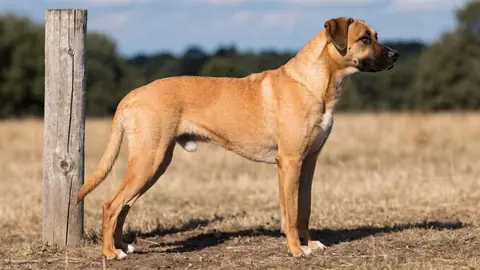 Black Mouth CurFive registries define this breed and contradict each other, OFA holds zero records across all 1,287 of its tables, PubMed holds...
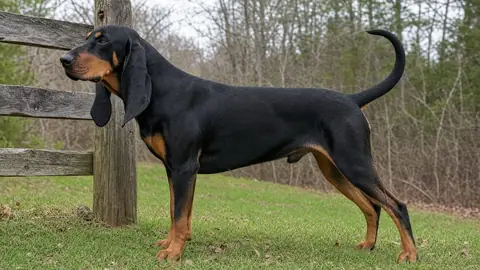 Black and Tan CoonhoundA trailing and treeing hound built to work at a distance and tell you where it is by giving voice. What the three registries that...
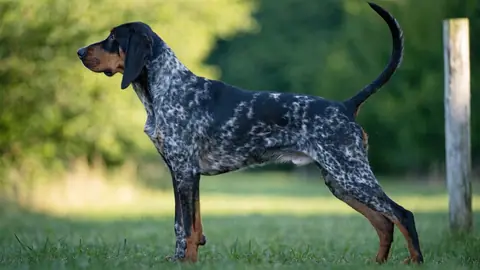 Bluetick CoonhoundA cold-nosed American scenthound whose registries cannot agree how big it should be. What five breed standards actually say, what...
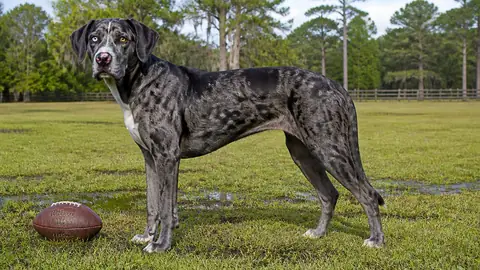 Catahoula Leopard DogLouisiana's state dog by statute, and the only breed whose enabling law names a private registry: a merle-patterned working dog...
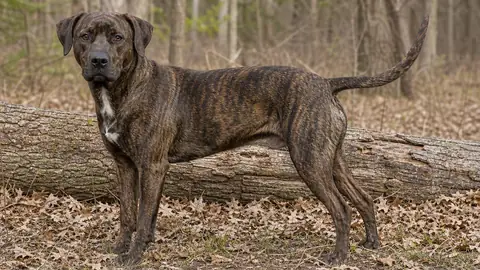 Mountain CurAn American treeing dog with four written standards that contradict each other, a 1957 studbook kept in Tennessee, zero rows in...
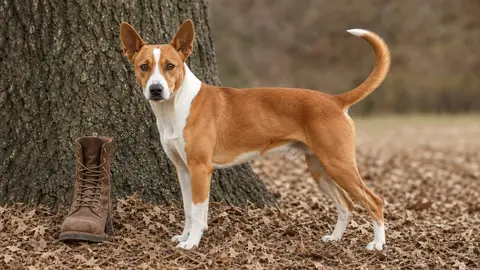 Mountain FeistA 5 to 14 kilogram American squirrel dog with two written standards that disqualify each other's dogs on ears, no Indian seller...
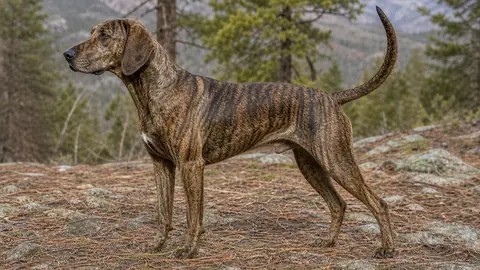 Plott HoundNorth Carolina's state dog, one of the very few American hounds with a documented German origin. Six sources tell that story and...
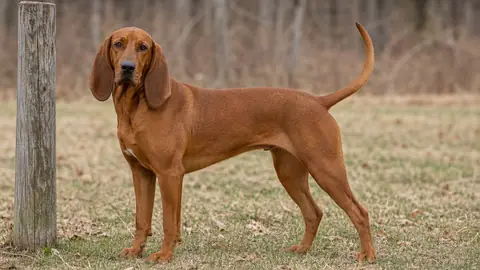 Redbone CoonhoundA solid red American coonhound with a documented Georgia foundation, one PubMed paper to its name, and an Indian price that two...
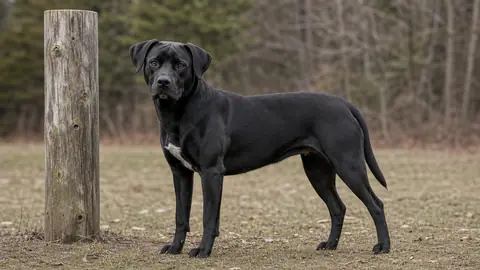 Stephens StockA little black Kentucky tree dog that three American registries call a breed, its own parent association ignores, and whose...
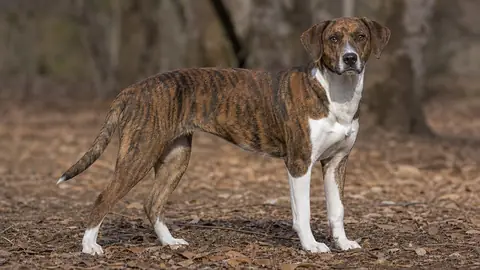 Treeing CurA breed by both conditions of the test, with a written standard from 1998 and a register that will admit a dog up to half...
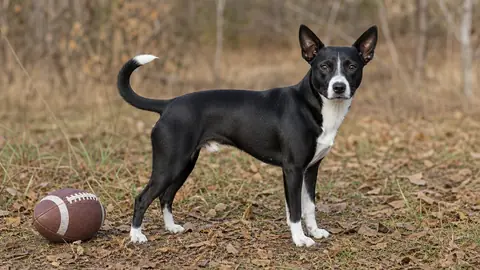 Treeing FeistThe word feist is a type term and its own breed standard says so in the first line. The dog is nevertheless a breed, and it is...
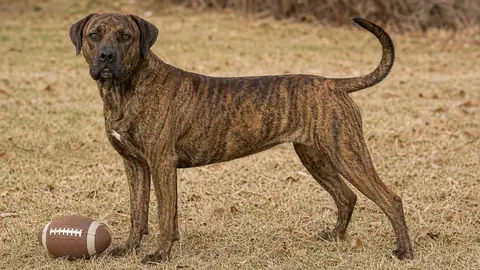 Treeing Tennessee BrindleA brindle American treeing cur with a UKC standard from 2017, an AKC register with no AKC standard since 1995, and the rarest...
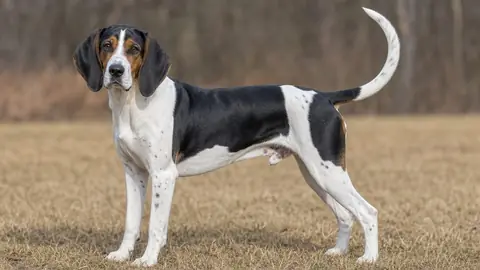 Treeing Walker CoonhoundThe coonhound the AKC standard itself calls the people's choice, with three recommended health tests, one named disease risk, a...
Compare the breeds side by side
To compare these 13 breeds directly, read across the table rather than down the guides. Heat tolerance is a Bonbeno rating out of 5 for Indian conditions, and the reasoning behind each one sits on the breed's own page.
| Breed | Heat tolerance | Published price, India |
|---|---|---|
| Black Mouth Cur | 4 of 5 | None. The only published band sits beside its own 'Listings 0' counter |
| Black and Tan Coonhound | 2 of 5 | None found |
| Bluetick Coonhound | 3 of 5 | No published rupee figure found |
| Catahoula Leopard Dog | 3 of 5 | Rs 20,000 to Rs 60,000, matching no source at 84.38, 74 or 80 |
| Mountain Cur | 3 of 5 | None. The one Indian site with a band prints it beside its own Listings 0 counter |
| Mountain Feist | 3 of 5 | None. Two Indian breed sites return 404 and Dog Breed Not Found |
| Plott Hound | 2 of 5 | Rs 30,000 to Rs 60,000, published without a source |
| Redbone Coonhound | 3 of 5 | Rs 60,000 to Rs 1,00,000, with no source on either page |
| Stephens Stock | 3 of 5 | See page |
| Treeing Cur | 3 of 5 | Rs 50, with 9,115 issued during 2024 |
| Treeing Feist | 4 of 5 | See page |
| Treeing Tennessee Brindle | 3 of 5 | Rs 50, with 9,115 issued during 2024 |
| Treeing Walker Coonhound | 2 of 5 | Rs 30,000 to Rs 50,000, with no source on either page |
What matters in this group
The points below are what the evidence on these 13 guides actually supports, not what the category is assumed to mean.
- The standards in this group were written around performance, and they say so. The Mountain Cur was declared a breed in 1957 when the Original Mountain Cur Breeders Association gathered the McConnell, Stephens, Ledbetter, Arline and York strains, and the United Kennel Club recognised it on 1 November 1998 alongside the Black Mouth Cur, the Stephens' Cur and the Treeing Cur, adding the Treeing Tennessee Brindle on 1 July 2017. The Treeing Cur standard states that cur breeders had little interest in standardizing the looks of their dogs, they were only interested in performance, accepts any colour, and its register admits a dog up to 50 percent coonhound in the first three generations. The UKC registers a Mountain Cur whose three-generation pedigree falls short as a Treeing Cur instead, which is a register drawing its line in public. The feists are the same tradition at a quarter of the size. Their UKC standards open by defining feist as an ancient word for a small, often noisy dog, and the Continental Kennel Club will register an undocumented dog as a Feist on five photographs but not as a Mountain Feist. Every dog here has a written standard and a gatekept register behind it, which is Bonbeno's two-condition test, so none belongs on the types page.
- The working style is the line between a cur and a hound, and the standards draw it in their own words. The UKC Mountain Cur standard describes a fast, hard hunter that runs the track with its head in the air rather than nose-down like a hound, open, semi-open or silent on track, with a clear bark heard a long distance; the National Kennel Club calls the tracking style much different than hounds but faster. The Stephens' Stock Cur carries its head high on track, the Treeing Cur finds game using its eyes, ears and nose, and the Black Mouth Cur standard prefers silent trailers and forbids a dog to be open like a hound. Both feists hunt by sight, sound and scent and are virtually silent until the game is treed. The five coonhound-family breeds here do the other half of the job. The Black and Tan runs his game entirely by scent, the Bluetick was kept for patient, nose-down work, and the Treeing Walker, Redbone and Plott standards make an open bugle, bawl or chop the working voice. What every one shares is the tree. The Catahoula's standard describes a dog capable of scenting, trailing and treeing game or baying and herding feral hogs and cattle, so it sits here and on the herding page at once.
- The paperwork reality is the same for all but one breed here, and the pages establish it with controls. The FCI's letter M index carries eleven breeds and no cur; its Group 6 register holds exactly two American scenthounds, the American Foxhound at 303 and the Black and Tan Coonhound at 300, with zero occurrences of Treeing, Cur or Feist. The Kennel Club of India issues pedigrees against FCI nomenclature, so a KCI-registered Mountain Cur or Redbone is a document for a different dog, and only the Black and Tan has a route. OFA holds zero statistics rows for any UKC cur across 13,976 rows and 770 breed labels; every hit on the string CUR sits inside a curly-coat entry, FEIST appears zero times, and the codes MCR, BMC and TBC exist without a published row because OFA needs 100 hip evaluations, or 50 elsewhere, before printing one. The Catahoula is the one cur landrace with numbers, at 972 hips and 18.1 percent dysplastic, beside the Black and Tan's 985 at 16.0 percent and the Bluetick's 146 at 17.1 percent. PubMed cannot count the curs at all. The exact phrase Mountain Cur returns seven curcumin papers, a bare search for cur returns 5,446 records because CUR abbreviates curcumin, and four clean spellings of Black Mouth Cur return zero.
- No Indian market exists for any breed here, and the pages show the shapes an absent market takes. PetBuy prints Rs 8,000 to Rs 35,000 for the Mountain Cur and the Black Mouth Cur beside its own counter reading Listings 0. The top Indian result for the Black Mouth Cur advertises KCI-certified puppies and renders a Bernese Mountain Dog, a Border Collie and a French Bulldog. Google's AI answer for the Mountain Cur states that no local price exists and then converts a dollar band at 84.00 in one sentence and 83.33 in the next. For the Treeing Cur, the Treeing Tennessee Brindle and both feists, the Indian template sites have no page at all, returning HTTP 404 or a soft 404 titled Dog Breed Not Found. The coonhounds get the other treatment, a monthly cost row of Rs 3,550 to Rs 5,400 printed identically for the Plott, the Treeing Walker, the Redbone and a Whippet on one site, on dogs it says eat 1,600 and 800 calories a day. Behind it is one instrument. DGFT Trade Notice 22/2022-23 makes dogs a Restricted import and states that applications for trading or breeding purposes shall be duly rejected, and the Mountain Feist breeder ranking for the breed states that it does not ship pups and places only into hunting homes.
- What the job leaves behind in an Indian home is the buying decision. The Mountain Cur's Cumberland Plateau homeland averages 13.67 C with no month at or above 28 C against seven in Chennai, and the Plott's Waynesville runs 12.08 C, earning a heat rating of 2. The southern range sits closer to home. Kentucky's July wet bulb of 21.71 C is 0.15 C below Bengaluru's May peak, Jackson, Mississippi reaches 24.00 C, and South Mississippi runs 81.6 percent humidity all year, damper than any Indian metro. The instinct does not switch off. Two standards name a strong treeing instinct on all game, which in an Indian city means macaques, palm squirrels, cats and other people's small dogs, with a voice built to carry a valley. The Continental Kennel Club recommends the Mountain Cur be reserved for working and hunting homes. Several standards prefer a bobbed tail or permit dewclaw removal, and Second Schedule Part II paragraph 6(8) of the 2017 Rules forbids both. Deafness is a disqualification in the Mountain Cur, Black Mouth Cur, Stephens and Treeing Feist standards with no prevalence figure anywhere, while 38.8 percent of 214 BAER-tested Catahoulas were deaf in one ear or both. The Indian Pariah Dog does the same work in the same shape, already adapted, for nothing.
Membership is generated from the breed data itself, not typed by hand, so this list cannot drift from the guides it points at and fills in as more publish. The 13 guides here cite 492 sources between them.
This page is a directory of published Bonbeno guides, generated from their data rather than written as clinical guidance, so no veterinarian reviewed this page itself. Each linked guide carries its own veterinary review and its own health sections. Breed level evidence describes populations, and your animal is an individual, so consult your nearby vet before acting on anything you read here.
Common questions
How does Bonbeno decide which breeds belong on this page?
Membership is generated from each breed's own published data rather than chosen by an editor. The group is defined by a shared trait rather than a rating, so its members are named in the site's own cluster definition and each one is checked against the published guide before it appears. A breed appears here the moment its guide publishes and meets that rule, and never before, which is why no link on this page can point at a guide that does not exist.
What is a Bonbeno heat tolerance rating?
It is a 1 to 5 rating of how well a breed copes with Indian conditions, where 5 is best. Almost no international breed reference publishes one, and in a country where summer temperatures pass 45 C it is the most decision-relevant trait there is. It is Bonbeno's own judgement, built from published heat-illness evidence where that exists and stated as inference where it does not.
Are the prices on this page current?
Each price is read from that breed's own guide, where it is compared across published Indian sources and cited. Published Indian breed prices disagree widely between sellers, sometimes by more than a lakh for the same breed, so treat the figure here as the lowest band Bonbeno found and read the guide for the full range.
Does Bonbeno sell or broker any of these dogs?
No. Bonbeno does not sell pet food, products or animals and does not broker puppy or kitten sales. Nothing on this page is a listing, and no breeder or seller can pay to appear on it.