
Breed profile
Volpino Italiano: Price in India, Climate Fit and Health
A small Italian spitz that nearly died out in the 1960s, ranked among Italy's longest-lived breeds, and unavailable in India.
Quick answer
The Volpino Italiano has no established price in India and no lawful commercial supply route, because India's dog import policy is restricted and DGFT states that dogs for breeding or as a gift are not allowed to be imported. It is a 27 to 30 cm Italian spitz that nearly died out in the 1960s, and an Italian mortality study of 4,957 dogs ranks it among the five longest-lived breeds recorded there.
This page reports published veterinary research, registry documents and Indian price data. It is not a diagnosis and it is not a treatment plan. Heat collapse, a limping hind leg and a coughing small dog all need professional assessment. Consult your nearby vet before acting on anything here, and treat collapse or laboured breathing in heat as a same-day emergency.
Volpino Italiano at a glance
What the Volpino Italiano is, and what the standard says
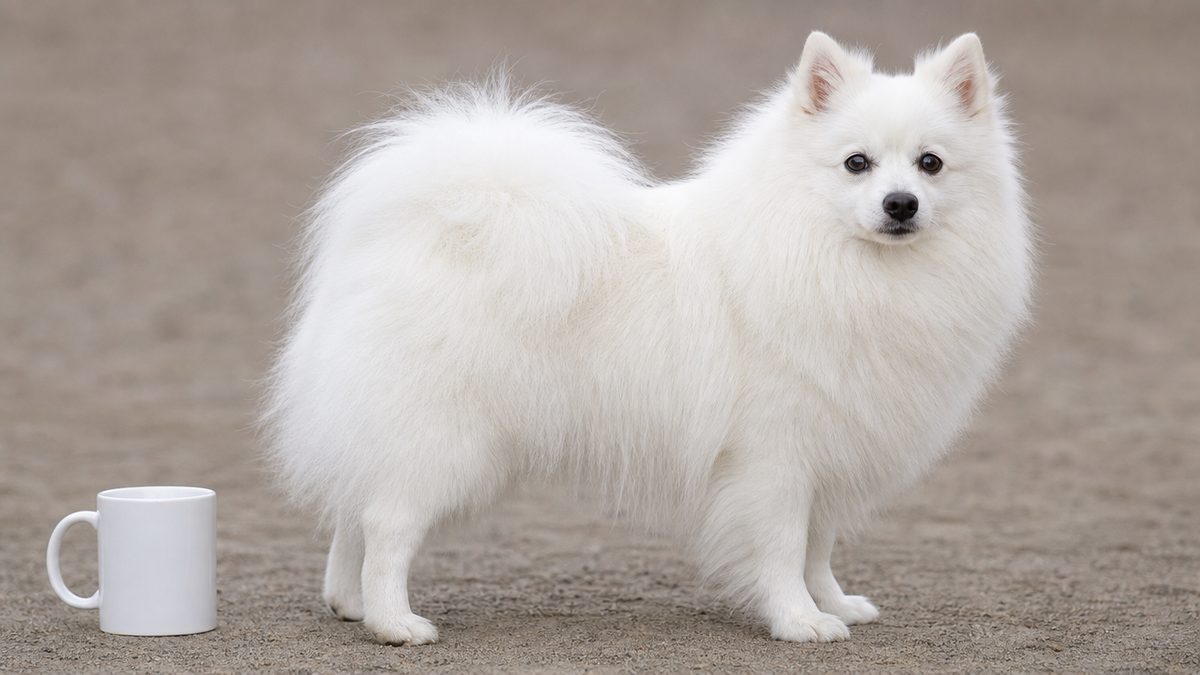
The Volpino Italiano is a small Italian dog of spitz type, registered by the Federation Cynologique Internationale as standard 195 in Group 5 and accepted on a definitive basis on 25 February 1956.
The breed standard describes a small sized dog of spitz type, compact, harmonious, with a long stand-off coat. It is square: the length of the body from the point of shoulder to the point of buttock equals the height at the withers, the muzzle is 4/10 of the total head length, and the depth of chest is slightly less than half the height at the withers. Its stated purpose is short and worth quoting, because it explains the temperament: guard and companion dog.
Size
All four language editions agree on the measurements. Males stand 27 to 30 cm at the withers and females 25 to 28 cm, and the weight clause gives no figure at all, saying only that weight is in proportion to the height at the withers FCI Standard N 195 Volpino Italiano FCI Standard N 195 Volpino Italiano. Any published Volpino weight range is therefore somebody's estimate rather than the standard's, and pages that print one as if it were the standard are adding a number the document does not contain.
ENCI adds a detail the FCI does not. Its record states that the small dog has been preserved since the first ENCI standard of 1913, which required an ideal height at the withers of a maximum 30 cm, and that later editions distinguished slightly smaller females at a maximum of 28 cm and granted 3 cm more to both sexes, but only as a tolerance. That is a century of deliberate size control, documented by the register that did it.
History, and a near extinction
The FCI's history says the Volpino descends from the European Spitz that already existed in central Europe in the Bronze Age, and that it goes back to the same ancestors as the German Spitz, of which it is not a descendant but a relative. It records that the breed was idolized in the palaces of noblemen and in the hovels of common people, where it was especially appreciated for its instinct of guard and vigilance, that it was the dog of Michelangelo, and that in the eighteenth century it was the tireless companion of the carters of Tuscany and Latium.
Then the collapse. The standard says the breed was fairly popular during the first part of the twentieth century but then it disappeared, that some white specimens appeared again in 1968, and that Volpini were registered again in 1972. ENCI puts it more bluntly: in the 1960s the breed fell into oblivion and risked extinction, and was faithfully reconstituted from the 1970s. A modern Volpino descends from a very small recovered population, which is the single most important fact about the breed's genetics and one that no ranking page states.
The oldest evidence, and where it hangs
ENCI dates the oldest testimony of the native Volpino to 1502, in Vittore Carpaccio's oil on canvas The Vision of Saint Augustine, held at the Scuola di San Giorgio in Venice, and says the dog in it shows four features matching the current standard: a short head, roundish eyes, long ears and small size. The FCI's English edition names the same painting under the title The vision of St Austin. Two registries, one painting, two spellings of the saint's name.
The FCI recognises this breed definitively as 195 and ENCI holds it in the Italian Libro genealogico. It is absent from the Royal Kennel Club's complete Breeds A to Z, checked with the Italian Spinone present on the same page as a control.
Volpino Italiano price in India, and why there is not one
There is no Volpino Italiano price in India, because the law that would have to permit a commercial supply chain forbids exactly that, and no Indian breeding population exists.
The DGFT import FAQ is the document that settles it. India's import policy for pet dogs and cats is restricted, filed under ITC(HS) code 01061900, and needs an authorisation from DGFT. The permitted purposes are narrow: research organisations with a CPCSEA recommendation, internal security by defence and police forces, a therapy or emotional support dog with medical documentation, and a dog that has been with the applicant as a pet for at least two years where the owner is transferring residence to India. The FAQ then states that dogs for commercial purposes like breeding, as a gift or other purposes are not allowed to be imported, and that new born puppies are not allowed.
Read those two sentences together and the conclusion is structural rather than anecdotal. Nobody can lawfully bring breeding stock in, so nobody can lawfully found an Indian population, so there is no Indian price to report.
What the search results did
The Indian search evidence for this breed is unusable, and saying so is more honest than quoting it. Bing India was tested with a control in the same session: the query for Labrador retriever price in India returned ten genuine Indian price pages under an About 16,200 results count, so the engine was working. The query for this breed's price then returned ten results about installing Microsoft WordPad and formatting Word documents, and the informational query returned ten pages about a Japanese actor. A substituted result set is evidence about the engine, not about the breed, so no absence is claimed from it.
What can be said from the ranking set that does load is that coverage is thin. DogTime returns HTTP 404 for this breed, so one of the largest breed directories has no page at all. Wikipedia carries four headings. PetGuide carries one. The only page attempting a price is a template directory whose figures are not sourced to anything.
- Verify the dog before the price. Ask which DGFT permitted purpose it or its parents arrived under.
- Verify the pedigree. A genuine Volpino would carry an FCI-nomenclature pedigree, since the Kennel Club of India is India's FCI member body.
- Verify the size against the standard. A 27 to 30 cm square dog is not a 20 cm Pomeranian.
- Walk away from any quoted rupee figure nobody will evidence.
Turning a European asking price into rupees would produce a number that reads like an Indian market observation and is not one. Where this page gives a rupee figure it is an Indian care cost with a live source, never a converted purchase price.
Monthly cost of ownership for a small dog in India
Keeping a dog of this size in an Indian metro costs roughly Rs 3,000 to Rs 6,000 a month once food, parasite control and routine veterinary care are counted, which is about half what a large breed costs.
Small size is the one place where this breed is genuinely easier than the others in its group, and the saving is real rather than notional. Deworming is dosed by weight, food is dosed by weight, and boarding is priced by weight. Every figure below was read live from the seller's or the municipality's own page on 9 September 2026.
| Item | Published price | Source |
|---|---|---|
| Puppy core vaccination course | From Rs 6,499 (list Rs 8,111) | Vetic national page |
| Annual booster | From Rs 3,199 (list Rs 3,806) | Vetic national page |
| Anti-rabies, single dose | Rs 699 | Vetic |
| 9-in-1 DHPPiL | Rs 899 | Vetic |
| Kennel cough | Rs 1,349 | Vetic |
| Drontal Plus, 6 tablets | Rs 813 (MRP Rs 838) | Supertails |
| Deworming dose for a 5 kg dog | About Rs 68, half a tablet | Derived from the above |
| Consultation | Rs 500 to Rs 1,000 | VOSD |
| Boarding, small dog, Bengaluru | From Rs 499 | PawSpace |
| Delhi pet dog registration, new | Rs 500 | MCD Delhi |
| Chennai pet licence | Rs 50 | Greater Chennai Corporation |
| Microchipping, Chennai | Rs 1,250 | SKS Veterinary Hospital |
Where the small-dog saving actually lands
Deworming is the clearest case. Drontal Plus costs Rs 813 for six tablets, which is Rs 135.50 a tablet, and it is dosed at one tablet per 10 kg. A 5 kg Volpino needs half a tablet, about Rs 68 a treatment, against Rs 474 to Rs 542 for a 35 to 40 kg gundog. Food follows the same arithmetic: a 5 kg dog eating roughly 100 to 130 g a day of a small-breed kibble at Indian retail prices lands near Rs 1,800 to Rs 2,700 a month, against seven to ten thousand for a large breed.
Vaccination does not scale with weight, so it is the line where a small dog saves nothing. A puppy core course starts at Rs 6,499 and an annual booster at Rs 3,199 on one national chain's own page, with anti-rabies at Rs 699 and the 9-in-1 at Rs 899 as individual doses. Greater Chennai Corporation's six municipal pet clinics provide treatment and anti-rabies vaccination free of cost, which is the largest single saving available to an Indian owner and is almost never mentioned on breed pages.
- Register the dog. Delhi charges Rs 500 new and Rs 500 to renew, with a Rs 100 per month late fee and a one-month grace period after the anti-rabies certificate expires.
- Licence it in Chennai for Rs 50.
- Microchip it. A Chennai hospital's own transacted price is Rs 1,250.
- Budget boarding from Rs 499 a day for a small dog in Bengaluru.
- Cross-check a routine consultation against the Rs 500 to Rs 1,000 range a dog sanctuary publishes.
Grooming is the line that goes the other way. A dense double coat on a small dog still needs professional attention in Indian humidity, and a groom is priced by time and coat rather than by weight, so do not assume a small breed is cheap to maintain.
Heat tolerance in India, measured against Tuscany
Heat tolerance is limited despite the small body, because the Volpino's coat is a dense insulated double coat by design and its Tuscan homeland is 14.15 C cooler than Chennai across the year.
Establishing the homeland baseline took three attempts, and reporting that is part of the answer. NASA POWER returns a grid cell rather than a point, so the cell elevation has to be checked against the real one before any figure is used. Florence returned a cell at 571.22 m against a real 50 m, an error of 521 m, and an implausibly cold annual mean of 11.88 C. Rome returned 198.41 m against a real 21 m. Both cells have averaged in surrounding high ground and neither describes its city. Siena returned 324.03 m against a real 322 m, an error of 2.0 m, so Siena is the one usable central-Italian point and it sits inside the breed's own Tuscan homeland.
| Place | Annual mean C | Annual RH % | Hottest month | Peak wet bulb C | Cell vs real elevation |
|---|---|---|---|---|---|
| Siena, Tuscany (homeland) | 13.80 | 74.58 | July 24.85 | 18.56 | 324 m vs 322 m, +2 |
| Florence, Tuscany | not usable | not usable | not usable | not usable | 571 m vs 50 m, +521 |
| Rome, Latium | not usable | not usable | not usable | not usable | 198 m vs 21 m, +177 |
| Delhi | 25.60 | 45.56 | June 35.88 | 26.50 | 206 m vs 216 m, -10 |
| Kolkata | 25.81 | 73.93 | May 31.53 | 27.09 | 7 m vs 9 m, -2 |
| Chennai | 27.95 | 72.39 | May 31.51 | 26.11 | 49 m vs 6 m, +43 |
| Bengaluru | 23.74 | 67.94 | April 28.37 | 21.86 | 842 m vs 920 m, -78 |
| Pune | 23.86 | 66.80 | April 28.93 | 22.97 | 636 m vs 560 m, +76 |
Humidity is not the shock; temperature is
Siena runs 74.58 percent annual relative humidity, which is higher than Chennai's 72.39 percent, higher than Kolkata's 73.93 percent and far higher than Delhi's 45.56 percent NASA POWER climatology 2001-2020 for Delhi. Tuscany is a humid place. What separates it from India is heat: 13.80 C against Chennai's 27.95 C annually, and a July peak of 24.85 C against a Chennai May of 31.51 C. The peak wet bulb gap tells the same story, 18.56 C in Tuscany against 26.11 C in Chennai and 27.09 C in Kolkata.
The coat is not an accident
This breed is insulated on purpose, and the standard enforces it. Absence of undercoat is listed as a severe fault, and a woolly guard coat is a severe fault too, so the standard requires a dense undercoat beneath a harsh stand-off outer coat. The hair is dense, very long, exceptionally straight and standing off, and must never fall flat, giving the impression of a body wrapped in a muff with an abundant collar at the neck. That is a cold-weather construction on a dog being asked to live in the tropics.
The mitigating factor is real, though, and it is size. A 5 kg dog needing two short walks is far easier to keep out of the midday heat than a 35 kg gundog needing two hours. Exertion is the recorded trigger in 74.2 percent of the heat-illness events with a known cause in Hall 2020, against 12.9 percent environmental and 5.2 percent from vehicular confinement. A breed with a low exercise requirement simply generates less of the risk factor that matters most.
A stand-off double coat insulates against heat as well as cold and shields pale skin from sun. Clipping it also breaches the standard's own fault list, since a guard coat falling flat and a woolly guard coat are both faults. The Indian answer is shade, water, air movement and timing, not clippers.
Temperament, and the barking problem in an Indian flat
The Volpino Italiano is lively, happy, playful and very attached to its family, and it was bred to announce strangers noisily, which is the trait that decides whether it works in an Indian apartment.
The standard's temperament clause is short: very attached to his environment and his family, with exuberant temperament, lively, happy and playful. Its utilisation clause is equally short and equally important: guard and companion dog. Those two lines describe a small dog that bonds hard and speaks up.
The history clause is where the practical warning sits. The FCI records that the breed was especially appreciated because of his instinct of guard and vigilance, and that as the companion of eighteenth-century Tuscan and Latian carters it was always ready to noisily announce any strangers met on the roads. A breed selected for two centuries to bark at passers-by will bark at passers-by.
Who this suits in India
- A household in an independent house or a low-density building, where a vocal small dog is not a neighbour dispute.
- An owner at home much of the day, since the breed is described as very attached to its family.
- A Bengaluru or Pune household rather than a coastal one, on the wet-bulb evidence above.
- Somebody prepared to brush a dense coat several times a week for a decade or more.
Who it does not suit
- A high-density apartment block with shared walls and a strict association.
- A household out all day. Separation and a guarding instinct combine badly.
- Anyone wanting a quiet dog. This is not that breed and no amount of training makes it one.
- Anyone who will clip the coat down in summer.
Train the barking rather than trying to eliminate it. A dog bred to alert can be taught to alert once and then settle, which is a realistic goal; teaching it never to alert is not. Pair a marker word with quiet, reward the settle rather than the silence, and manage the triggers by keeping the dog away from the door and the balcony rail when the building is busy.
If anybody suggests a surgical fix for the noise, the answer is no. The Prevention of Cruelty to Animals (Dog Breeding and Marketing) Rules 2017, Second Schedule Part II paragraph 6(8), lists de-barking alongside tail docking and ear cropping as strictly forbidden.
Training a Volpino, and what this breed resists
Train a Volpino with short, upbeat, food-led sessions, and put most of the effort into noise control and handling tolerance, because those are the two things this breed resists rather than obedience itself.
A lively, playful dog that is very attached to its family is easy to motivate. The difficulty is not compliance, it is arousal. A small guarding spitz gets loud and stays loud, and an owner who reacts to the noise reinforces it.
The three jobs that matter
- Handling tolerance. A dog that will be brushed several times a week for fifteen years must learn to enjoy being handled in the first four months.
- Alert-then-settle. Reward the second behaviour, never the first, and never the silence alone.
- Recall. A small confident dog on an Indian street needs a recall that works around traffic, cattle and other dogs.
Socialisation, done properly
Socialise deliberately between eight and sixteen weeks. An Indian street is louder and more crowded than the Tuscan hill town this breed was shaped in, and a guarding breed that meets that environment late becomes reactive rather than confident. Keep the sessions short, keep them positive, and stop before the dog is overwhelmed. Sale below eight weeks is prohibited under Rule 8(1)(a) of the 2017 Rules, so a lawful puppy arrives with part of that window already gone.
| Age | Priority | Indian-specific note |
|---|---|---|
| 8 to 16 weeks | Handling, brushing, socialisation | Lawful minimum sale age is eight weeks under Rule 8(1)(a) |
| 4 to 6 months | Alert-then-settle, crate rest | Establish the pattern before adolescence |
| 6 to 12 months | Recall, loose-lead walking | Move walks outside daylight from March |
| 12 months on | Maintenance and grooming stamina | A full groom takes longer than a walk |
Do not use aversives for barking. A guarding breed that is punished for alerting often stops warning and starts reacting without warning, which is a worse outcome and a genuine bite risk in a building with children. Manage the environment, reward the settle, and accept that some noise is the price of the breed.
Five minutes of scent work or a food puzzle tires a small spitz more than a walk in the heat, which matters when the outdoor window is an hour before sunrise.
Daily exercise requirement
A Volpino Italiano needs two short daily walks plus indoor play, which is roughly thirty to sixty minutes in total, and that modest requirement is the main reason the breed copes with Indian cities better than its coat suggests.
The standard gives no exercise figure, because breed standards describe conformation rather than management. What it does give is a body: a compact, square, 27 to 30 cm companion and guard dog. That is a dog whose exercise needs are met by walking and play, not by distance work.
How to schedule it in an Indian summer
Delhi's mean June temperature is 35.88 C and Chennai's May mean is 31.51 C NASA POWER climatology 2001-2020…. Neither is a temperature to walk a double-coated dog in. Split the day into a pre-sunrise walk and a post-sunset walk, and fill the middle with indoor games. Because the total requirement is small, this is genuinely achievable, which is not true of the large breeds on this site.
- Morning walk of 20 to 30 minutes before 6.30 am from March to June.
- Evening walk of 20 to 30 minutes after 8 pm, once surfaces have cooled.
- Indoor scent games and a food puzzle on the hottest days.
- Test the pavement with the back of your hand before setting off; a small dog's body sits close to a hot surface.
The risk that actually applies
Hall 2020 found that bodyweight at or above the breed and sex mean carried 1.42 times the odds of heat-related illness, and that dogs over 50 kg carried 3.42 times the odds. The second figure does not apply to a 5 kg dog and must not be borrowed for one. The first does, and it is the one to act on: an overweight Volpino is at materially greater risk in an Indian summer than a lean one, and a small dog gains weight on very few extra calories. Watch the body condition score monthly.
Under-exercise in this breed shows up as noise rather than destruction. A bored guarding spitz patrols and announces. If the barking is getting worse, look at the exercise and enrichment before looking at the training.
Grooming a stand-off double coat in Indian humidity
Groom a Volpino by brushing the whole coat right down to the skin two or three times a week, and never clip it, because the standard requires a coat that stands off the body and treats both a flattened guard coat and a missing undercoat as faults.
The standard describes the coat precisely. The hair is dense, very long and exceptionally straight and standing off, of harsh texture with straight stiff guard hairs, and must never fall flat but be upstanding even when there is not a lot of coat. The body gives the impression of being wrapped up in a muff, particularly on the neck where the coat forms an abundant collar but not a mane, the skull carries semi-long hair that hides the base of the ears, the hair is short on the muzzle and very fine and smooth on the ears, the tail is covered with very long hair, and the coat forms trousers on the back of the hindquarters.
Two fault entries turn that description into an instruction. Absence of undercoat is a severe fault and a woolly guard coat is a severe fault. So the correct coat is a harsh outer layer over a genuine undercoat, and both clipping and neglect move it away from the standard in opposite directions.
The Indian routine
- Brush two or three times a week with a slicker and then a comb, working in layers to the skin. Surface brushing on a double coat leaves mats underneath.
- Pay attention to the neck collar, behind the ears, the trousers and the tail, which are where the coat is longest and mats first.
- Bathe sparingly and dry thoroughly. A dense undercoat that stays damp in monsoon humidity is how hot spots start.
- Never clip or shave. The coat shields pale skin from Indian sun and a clipped double coat regrows soft, which the standard treats as a fault.
- Expect a heavy seasonal moult. Increase brushing rather than reaching for clippers.
Coat care through the monsoon
Overseas grooming advice for northern double-coated breeds routinely says to towel and air dry. In a Mumbai or Kolkata August that leaves a dense undercoat damp for hours. Use a stand dryer or a cool blow dryer and finish the job, check the skin under the coat weekly during the rains, and go over the dog by hand for ticks every time you brush. Tick-borne disease is the practical risk here: an Indian study of 584 dogs found Babesia gibsoni in 76.54 percent and reported that 72.9 percent of the 584 dogs screened carried two or more pathogens, among dogs tested at veterinary clinics rather than a random population.
The standard asks for a clear white with a depth like milk. In an Indian city that shade needs work. Rinse the feet and belly after walks rather than bathing the whole dog more often.
Health, life span and the evidence that actually exists
No clinical veterinary literature exists for the Volpino Italiano, but an Italian mortality study of 4,957 dogs names it among the five breeds with the highest median age at death, which is the strongest evidence available for the breed's longevity.
Start with what is not there, because it is unusual. A PubMed search for the exact phrase Volpino Italiano in title or abstract returns zero, as do Italian Volpino, Italian Spitz, Florentine Spitz and Cane de Quirinale. The unrestricted term Volpino returns 49 records, but those are the Italian surname on author lines rather than the breed. Controls run in the same session returned 47 for Labrador retriever with hip dysplasia, 16 for German Spitz and 187 for Pomeranian with dog, so the instrument was working. The breed has essentially no clinical literature of its own.
The one paper that names it
Exactly one PubMed record names this breed, and it is a good one. Roccaro and colleagues collected anonymised medical records from nine veterinary teaching hospitals and two public health institutions in Italy, covering 4,957 dogs that died between 2004 and 2020. Of those, 2,920 or 59.0 percent were purebred, 2,293 or 46.2 percent were female, 3,005 or 60.6 percent were intact, and 2,883 or 58.2 percent were euthanised. The overall median longevity was 10.0 years, and median longevity was significantly longer for crossbreds, females, neutered dogs and small-sized breeds.
The sentence that matters for this page reads: the breeds with the highest median age at death were the Yorkshire terrier, English cocker spaniel, West Highland white terrier, Italian volpino and Shih Tzu. The paper does not publish a per-breed median for the Volpino, so no figure can be quoted, and this page quotes none. What can be said is the ranking, in an Italian dataset, of an Italian breed.
The same paper names the other end of the list, and one of those breeds is also Italian: the lowest median ages at death were the American bulldog, English bulldog, American pit bull terrier, Bernese mountain dog, and the Maremma and the Abruzzes sheepdog. Two Italian breeds, opposite ends of the same national dataset.
Causes of death, and what applies to a small dog
The most frequent cause of death by pathophysiologic process was neoplasia at 34.0 percent, which occurred more frequently in large breeds, namely the German shepherd, Labrador retriever and Boxer. Degenerative diseases mostly affected small-sized dogs like the Miniature pinscher and Dachshund. By organ system, diseases of the renal and urinary system were most frequently responsible for cause of death at 15.0 percent, predominantly degenerative and inflammatory or infectious. For a small breed, the transferable reading is that degenerative and renal disease matter more than cancer.
Why there is no McMillan figure
The Volpino appears in McMillan 2024's Table S5, the 345-row list of every breed the study considered, and is flagged N for inclusion in the survival analysis, with no reclassification and no phylogeny group. That is the decisive answer to a question the ranking pages do not ask: the breed was considered and excluded, rather than being absent from the study. So no McMillan median exists for it, and any page quoting one has taken it from somewhere else.
The founder-population question
The health fact most relevant to a buyer is one no study has measured. The FCI's own history records that the breed disappeared, that some white specimens appeared again in 1968 and that Volpini were registered again in 1972, and ENCI states that the breed fell into oblivion in the 1960s and risked extinction before being reconstituted from the 1970s. Every modern Volpino descends from that recovered group. No published figure for the founder population or for the breed's current inbreeding coefficient was found for this page, so none is given, and a buyer should ask a breeder for pedigree depth rather than assume a wide gene pool.
Indian risks that are about the place, not the breed
Tick-borne disease is what an imported small dog is most likely to meet here. A Kerala study of 120 dogs found Babesia in 66.7 percent, Ehrlichia canis in 5.0 percent and a pre-monsoon peak between March and May, and the West Bengal series found Babesia gibsoni in 76.54 percent of 584 dogs. Both sampled clinic caseloads rather than random populations, so read them as the burden among dogs tested at veterinary clinics. Year-round tick control is the practical response.
Collapse or laboured breathing in heat, a small dog that suddenly skips on a hind leg, blood in the urine or straining to pass it, or a persistent cough. Consult your nearby vet rather than waiting, and say plainly that the dog is a dense-coated northern breed if heat is involved.
Feeding a small dog in India
Feed an adult Volpino Italiano roughly 100 to 130 g of a small-breed dry food a day across two meals, and weigh it, because a 5 kg dog reaches obesity on a quantity of food that looks trivial.
The standard gives no weight, saying only that weight is in proportion to the height at the withers, so feeding has to be driven by body condition rather than by a published target. A dog of 27 to 30 cm typically sits in the region of 4 to 6 kg, and at that size a single biscuit is a meaningful fraction of the daily calorie budget.
Life-stage feeding
- Eight to sixteen weeks: four small meals a day of a small-breed puppy food. Tiny puppies hypoglycaemia easily if meals are spaced too far apart.
- Four to twelve months: three meals, moving to two by the end of the first year.
- Adult: two measured meals a day. Free-feeding a small guarding dog produces a fat one.
- Senior, from about nine years: keep protein up, cut calories, and monitor for the degenerative and renal problems the Italian study found most common.
The Indian complications
Two things go wrong in Indian households with small dogs. The first is table food. A shared roti or a piece of paneer is a rounding error for a Labrador and a substantial meal for a 5 kg dog, and this is the commonest route to obesity in Indian small breeds. The second is heat appetite suppression: a dense-coated dog eats less in May, then makes it up in the monsoon. Weigh the food, feed to body condition, and move the main meal to the cool end of the day.
Keep the beard and chest fur clean if you feed wet food. A long coat around the muzzle collects food, and in humid weather that becomes a skin problem rather than a cosmetic one.
What it costs
A small-breed kibble at Indian retail runs broadly Rs 600 to Rs 900 a kilogram, so 100 to 130 g a day lands near Rs 1,800 to Rs 2,700 a month. That makes food a smaller line than vaccination for this breed, which is unusual and is the main reason a small dog is cheaper to keep: the puppy vaccination course alone starts at Rs 6,499 on one national chain's page. Buy the bag size your household can store sealed, because Indian humidity spoils opened kibble faster than most owners expect.
A kitchen scale costs a few hundred rupees and is the single most effective health intervention available to the owner of a small dog. Bodyweight at or above the breed mean carried 1.42 times the odds of heat-related illness in Hall 2020, and in India that arithmetic is not academic.
Month by month through the first year
Plan a Volpino puppy's first year around three things: the eight-week legal minimum for sale, the socialisation window that closes at about sixteen weeks, and building tolerance for the grooming this coat will need for fifteen years.
| Age | What matters | What to do |
|---|---|---|
| 8 to 10 weeks | Lawful minimum age, settling, first vaccinations | Rule 8(1)(a) of the 2017 Rules bars sale of pups under eight weeks |
| 10 to 16 weeks | Socialisation window and handling | Brush daily for thirty seconds. Meet traffic, lifts, servants, other dogs on lead |
| 4 to 6 months | Alert-then-settle, crate rest, teething | Establish noise habits now; they harden fast in a guarding breed |
| 6 to 9 months | First Indian summer | Move both walks outside daylight from March |
| 9 to 12 months | Adolescence, coat change | Expect the puppy coat to blow; brush more, clip nothing |
| 12 months on | Adult routine | Two measured meals, two short walks, brushing two or three times a week |
Grooming tolerance is a first-year job
The single best predictor of whether a double-coated small dog is comfortable at ten years old is whether it learned to enjoy being handled at ten weeks. Start with thirty seconds of brushing and a reward, twice a day, and build. A Volpino that fights the comb will be groomed less, will mat, and will eventually be clipped, which the standard's own fault list treats as the wrong outcome.
Vaccination, parasites and paperwork
Start the core vaccination course on the clinic's schedule; a puppy course begins from Rs 6,499 at one national chain, with anti-rabies at Rs 699 and the 9-in-1 at Rs 899 individually. Begin tick and flea cover as soon as the product's weight band allows, because tick-borne disease is the practical Indian risk. Register the dog once eligible: Rs 500 in Delhi, Rs 50 in Chennai, and microchipping at about Rs 1,250 from a Chennai hospital's own price.
Sellers of small spitz breeds in India routinely market undersized dogs as premium. The standard's floor is 27 cm for males and 25 cm for females, and ENCI records that the size ceiling has been held deliberately since 1913. A dog well under the floor is not a better Volpino, it is a fault.
Volpino Italiano against the small breeds Indian buyers cross-shop
Compare the Volpino Italiano against the Pomeranian, the Indian Spitz and the Shih Tzu on three axes: whether you can lawfully buy one here, how the coat behaves in Indian humidity, and what published evidence exists on longevity.
| Breed | Indian supply | Coat | Published longevity evidence |
|---|---|---|---|
| Volpino Italiano | None lawful for breeding or sale | Long stand-off double coat, undercoat required by the standard | Named among the 5 longest-lived breeds in an Italian study of 4,957 dogs |
| Pomeranian | Widely available in India | Dense double coat, similar management burden | 187 PubMed records naming the breed; extensive clinical literature |
| Indian Spitz | Widely available and locally bred | Double coat, acclimatised over generations | No comparable published longevity study located |
| Shih Tzu | Widely available in India | Long single-textured coat, high grooming burden | Also named among the 5 longest-lived in the same Italian study |
Against the Pomeranian
This is the comparison most Indian buyers are actually making, usually without realising the two breeds are different. The FCI standard is explicit that the Volpino shares ancestors with the German Spitz but is not its descendant, and the Volpino is bigger, at 27 to 30 cm against a Pomeranian's typical 18 to 22 cm, and squarer. In India the practical difference is availability: Pomeranians are everywhere, and a Volpino cannot lawfully be imported for sale.
Against the Indian Spitz
The honest recommendation for most Indian households wanting this look is the Indian Spitz. It is locally bred, locally available, generations into acclimatisation to Indian heat, and supported by veterinary familiarity that no imported European spitz has here. A Volpino offers nothing the Indian Spitz does not, except a European pedigree that Indian conditions do not reward.
The longevity comparison, carefully
The Italian study names both the Volpino and the Shih Tzu among the five breeds with the highest median age at death in its dataset, which is a genuine point in the breed's favour. Two cautions belong with it. The study reports a ranking rather than a per-breed median, so no number can be attached to the Volpino. And it found that small-sized breeds lived significantly longer as a class, so part of the result is size rather than breed. Neither caution cancels the finding; both stop it being overstated.
Mistakes Indian owners actually make with this breed
Five mistakes account for most poor outcomes with a small double-coated spitz in India, and the most damaging one is reaching for clippers in April.
- Clipping or shaving the coat for summer. The standard requires an upstanding coat and treats a flattened or woolly guard coat as a fault; a clipped double coat regrows soft, stops shielding pale skin from Indian sun, and does not cool the dog.
- Buying an undersized dog as a premium one. The standard's floor is 27 cm for males and 25 cm for females, and ENCI records that the ceiling has been deliberately held since 1913.
- Assuming it is a Pomeranian. The FCI says the Volpino is a relative of the German Spitz rather than a descendant, and the two breeds differ in size and outline.
- Underestimating the barking. The breed was selected for guard and vigilance and to noisily announce strangers, and that is not trainable away.
- Free-feeding. A 5 kg dog gains weight on scraps that would not register on a large breed, and excess weight raises heat risk.
A sixth, about imported care advice
European grooming guidance for northern double-coated breeds says to towel and air dry after a bath. That is sound in Tuscany and poor in a Kolkata August, where a dense undercoat can stay damp for hours against the skin. Read every piece of imported care advice and ask what climate it assumes before following it. This page's own homeland baseline shows why the assumption matters: Siena is more humid than Chennai but fourteen degrees cooler NASA POWER climatology 2001-2020….
And one about the standard itself
Do not treat a single language edition of FCI 195 as the whole standard. The German and Spanish editions carry four faults that the authentic English and the French editions do not, including a disqualifying fault covering all colours except white, red and an undesired champagne shade FCI Standard N 195 Volpino Italiano. The English edition's own colour clause says the opposite, that any other colour is tolerated or accepted. A breeder or judge quoting one edition at you is quoting one of four documents that do not agree.
De-barking is listed alongside tail docking and ear cropping as strictly forbidden under the Second Schedule Part II paragraph 6(8) of the 2017 Rules, and the standard independently disqualifies a missing or very short tail whether congenital or acquired.
Adoption and responsible sourcing
Adopt an Indian small dog rather than importing a Volpino, because no Indian rescue pipeline for this breed exists and none can form while commercial import is prohibited.
A breed with no lawful commercial import route and no Indian breeding population has no surrender pipeline either. Nobody in India is going to adopt a purebred Volpino Italiano, and a page that implies otherwise is being kind rather than useful. What Indian shelters do have, in every metro, is small, alert, coated companion dogs that will give a household the same thing.
If you are set on this breed
- Contact the Italian breed club and ENCI about rehoming rather than puppies.
- Establish which DGFT permitted purpose your import would fall under before committing money.
- Ask for pedigree depth, because every modern Volpino descends from a population recovered after the 1960s.
- Plan the ports. Pet import is allowed through the airports and seaports of Delhi, Mumbai, Chennai, Hyderabad, Bengaluru and Kolkata and, since October 2024, Kochi airport Department of Animal Husbandry…. The full route is set out in how to import a dog to India.
- Budget the twelve to fifteen years of grooming and care in the table above before the purchase price.
Four questions for any Indian seller
Which DGFT permitted purpose did this dog or its parents arrive under. What is the FCI-nomenclature pedigree number, given that the Kennel Club of India is India's FCI member body. What is the dog's height at the withers, measured, against the standard's 27 to 30 cm. And may I see the dam. A seller who cannot answer the first two is not selling what they say.
The better Indian option
An Indian household that wants a small, bright, vocal, coated companion has excellent shelter options and one very good breed option in the Indian Spitz, which is locally bred and already acclimatised. Greater Chennai Corporation runs six municipal pet clinics providing treatment and anti-rabies vaccination free of cost, which removes a real barrier for a first-time adopter, and a routine consultation elsewhere runs Rs 500 to Rs 1,000.
This page reports published price, registry and care data as editorial content. It does not recommend breeders, link puppy listings or quote a live price as an offer.
Volpino Italiano questions Indian buyers actually ask
What is the Volpino Italiano price in India?
No reliable Volpino Italiano price in India exists. India's import policy for dogs is restricted under ITC(HS) 01061900, and the DGFT import FAQ states that dogs for commercial purposes like breeding or as a gift are not allowed to be imported, so no lawful supply chain into India can form and no domestic market price follows.
How big is a Volpino Italiano?
The FCI standard gives 27 to 30 cm at the withers for males and 25 to 28 cm for females, with weight simply stated as being in proportion to the height rather than as a figure. All four language editions agree on those heights.
Is the Volpino Italiano the same as a Pomeranian?
No. The FCI standard says the Volpino descends from the same European Spitz ancestors as the German Spitz, of which it is not a descendant but a relative. It is also bigger than a Pomeranian at 27 to 30 cm and squarer in build, with a longer muzzle.
How long does a Volpino Italiano live?
No breed-specific median exists, but an Italian study of 4,957 dogs that died between 2004 and 2020 named the Italian volpino among the five breeds with the highest median age at death, against an overall median of 10.0 years across all breeds in that dataset.
Did the Volpino Italiano nearly go extinct?
Yes. The FCI standard records that the breed was fairly popular in the first part of the twentieth century and then disappeared, that some white specimens appeared again in 1968, and that Volpini were registered again in 1972. ENCI says the breed fell into oblivion in the 1960s and risked extinction.
Does the Volpino Italiano bark a lot?
Yes, and the standard's own history explains why. The FCI records that the breed was especially appreciated for its instinct of guard and vigilance, and that in the eighteenth century it was the tireless companion of the carters of Tuscany and Latium, always ready to noisily announce any strangers met on the roads.
Can a Volpino Italiano handle Indian heat?
Poorly on the plains, despite its small size. Its Tuscan homeland at Siena averages 13.80 C across the year and 24.85 C in July, while Chennai averages 27.95 C and reaches 31.51 C in May. The standard also makes absence of undercoat a severe fault, so this is a deliberately insulated dog.
Is the Volpino Italiano recognised by the Kennel Club?
Not by the Royal Kennel Club in Britain. The club's complete Breeds A to Z index contains no Volpino entry, with the Italian Spinone present on the same page as a control. The FCI does recognise the breed definitively as standard 195, accepted on 25 February 1956.
What colour is a Volpino Italiano?
The English standard gives self-colour white, red or black, and says any other colour is tolerated or accepted. The German and Spanish editions contradict that by disqualifying all colours except white, red and an undesired champagne shade, which omits black entirely.
How much does it cost to keep a small dog in India each month?
Budget roughly Rs 3,000 to Rs 6,000 a month for a dog of this size in a metro. Deworming runs about Rs 135 per tablet dosed at one per 10 kg, a single anti-rabies dose is Rs 699 at a clinic chain, and boarding starts near Rs 499 a day in Bengaluru.
Does the Volpino Italiano need a lot of grooming?
Yes. The coat is dense, very long, exceptionally straight and standing off from the body, and the standard says it must never fall flat. Brush it several times a week, do not clip it, and expect the neck collar and the trousers on the hindquarters to mat if neglected.
Can I import a Volpino Italiano into India?
Only as your own pet under the DGFT route, not to breed or sell. Import is allowed through the airports and seaports of Delhi, Mumbai, Chennai, Hyderabad, Bangalore and Kolkata, and the FAQ states that new born puppies are not allowed and that dogs for breeding or as a gift are not allowed. DAHD added a seventh port, Cochin International Airport at Kochi, for pets arriving under the baggage rules in October 2024.
How rare is a Volpino Italiano?
Rare enough to have nearly vanished within living memory. The FCI standard records that the breed was fairly popular in the first part of the twentieth century and then disappeared, that some white specimens appeared again in 1968, and that Volpini were registered again in 1972; ENCI says it fell into oblivion in the 1960s, risked extinction and was reconstituted from the 1970s. Every modern Volpino descends from that small recovered population, it is absent from the Royal Kennel Club's Breeds A to Z, and no reliable Indian price or listing exists.
What are the main differences between a Pomeranian and a Volpino Italiano?
Ancestry, size and build. The FCI standard says the Volpino descends from the same European Spitz ancestors as the German Spitz, of which it is a relative rather than a descendant, so it is not a Pomeranian variant. It is bigger, at 27 to 30 cm at the withers for males and 25 to 28 cm for females against a Pomeranian's toy size, squarer, with body length equal to height, and it carries a longer muzzle set at 4/10 of the head length, with self-colour white, red or black coats.
What is a Volpino dog breed?
The Volpino Italiano is a small Italian dog of spitz type, FCI standard 195 in Group 5, accepted definitively on 25 February 1956 and held in ENCI's Italian studbook. The standard describes a compact, square, harmonious dog with a long stand-off coat whose purpose is guard and companion, records it as the dog of Michelangelo and the companion of eighteenth-century Tuscan carters, and ENCI dates its oldest testimony to a 1502 Carpaccio painting in Venice.
What is the temperament of a Volpino Italiano?
Very attached to his environment and his family, with exuberant temperament, lively, happy and playful, in the FCI standard's own words, and bred as a guard and companion dog. The standard's history records that the breed was appreciated for its instinct of guard and vigilance and was always ready to noisily announce any strangers met on the roads, so a Volpino bonds hard and speaks up, which suits an independent house or low-density building with someone home most of the day and not a strict apartment block.
Compare with similar breeds
Volpino Italiano sits in 2 Bonbeno groups. Each one compares it directly against the breeds it is genuinely an alternative to, on the same figures.