
Cat breed profile
American Wirehair: Price in India, Rarity and Full Breed Guide
Why no Indian source publishes a price for this cat, what the crimped coat mutation actually is sixty years after it appeared, why nobody has ever sequenced it, and what an Indian seller is really offering when a listing says American Wirehair.
Quick answer
No American Wirehair cat price in India exists to quote, and Bonbeno will not invent one. India's two main cat price guides, Supertails and Vetscan, both omit the breed, and the word American appears nowhere on Supertails' 2026 all-breeds guide. CFA's breeder directory listed zero catteries worldwide, France's national registry has issued two pedigrees for the breed since 2003, and India has no commercial import route for cats.
This guide is general information for Indian pet owners and is not a diagnosis. Always consult a registered veterinarian near you before acting on anything you read here, and treat laboured breathing, collapse or any sudden change in your cat's condition as an emergency.
American Wirehair traits, rated for Indian conditions
What an American Wirehair actually is
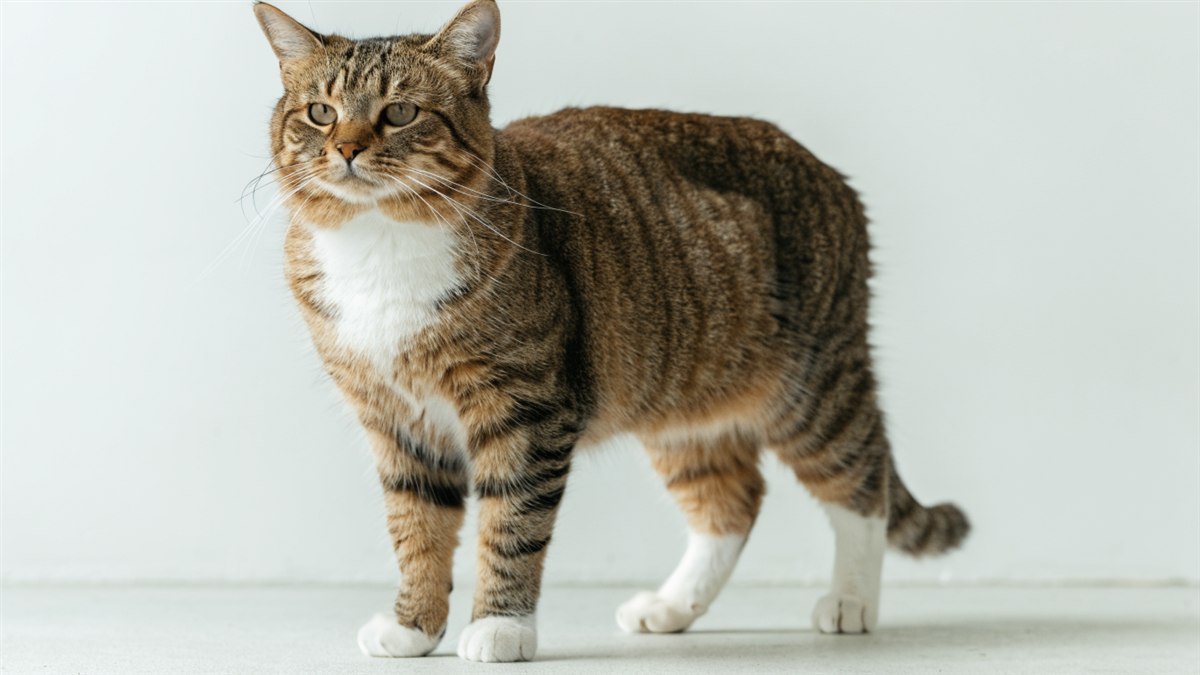
An American Wirehair is an American Shorthair carrying one coat mutation, and both registries that recognise it say so in their own documents. The Cat Fanciers' Association opens the breed standard with the sentence 'the American Wirehair is a spontaneous mutation', and describes a wired coat that is springy, dense, resilient, coarse and hard to the touch. The International Cat Association goes further and publishes one standard for both breeds, stating that the head and body type are the same in both, with the distinguishing feature being the unique coarse crimped coat of the Wirehair.
Everything difficult about this breed follows from that one sentence. Strip the coat mutation away and you have an American Shorthair, a breed whose own Bonbeno guide is built around the problem that an ordinary shorthaired cat is not one. Add the mutation back and you have a cat that fewer than a handful of catteries anywhere are breeding, that no French registry has issued a pedigree for since 2004, and that CFA's own committees discussed folding back into the American Shorthair in 2024 The Cat Fanciers' Association.
One barn litter in 1966, and three versions of what happened
The breed descends from a single kitten. TICA records that the first American Wirehair was found in a litter of six kittens born on Council Rock Farm in Verona, New York, that the kitten was a red-and-white male with a sparse, wiry coat in which every hair including the whiskers was crimped and springy, and that his parents Bootsie and Fluffy were normal-coated domestic shorthairs living on a farm owned by Nathan Mosher. A local breeder named Joan O'Shea acquired him and registered him as Council Rock Farm Adam of Hi-Fi.
CFA's own breed article, written by breed council member Kitty Dieterich, tells it differently. In that version the litter contained five kittens, only two survived a weasel attack, and the original male was bred to his sister. TICA instead says Adam was bred to a female belonging to O'Shea's neighbour, that the female had also come from Mosher's farm and so could have carried the wirehair gene, and that a second mating to an unrelated female also produced wire-haired kittens, which is what established the variant as dominant.
Guinness World Records, which holds a standing record for this breed, gives a third account, describing the mutation as arising 'within a litter of American Shorthair cats in 1966 in Verona, New York';. Both registries say the parents were ordinary farm cats rather than registered American Shorthairs The International Cat Association. Bonbeno prints all three accounts rather than picking the tidiest, because the difference matters: a mutation that appeared in random-bred barn cats and a mutation that appeared inside an established pedigree are different founding stories, and only the registries were there.
| Source | Litter size | What the parents were | The first mating |
|---|---|---|---|
| CFA breed article | Five kittens, two survived a weasel attack | A barn litter in upstate New York | The original male bred to his sister |
| TICA breed profile | Six kittens | Bootsie and Fluffy, normal-coated domestic shorthairs on Nathan Mosher's farm | Bred to a neighbour's female that also came from Mosher's farm, then to an unrelated female |
| Guinness World Records | Not stated | A litter of American Shorthair cats | Not stated |
The breed standard, and the 45 points that define it
CFA weights this breed more heavily on coat than almost any other cat it recognises. Its point score gives 25 to the head, 20 to type, 45 to the coat and 10 to coat colour and eye colour together. Forty-five points out of a hundred for a single feature is unusual, and it tells you exactly what a judge is being asked to reward.
TICA scores the same animal on a different sheet entirely. Its American Shorthair Breed Group standard covers AS and AW jointly and allocates 40 points to the head, 35 to the body, 15 to coat, colour and pattern combined, and 10 to balance and condition. The only Wirehair-specific line is the coat texture clause, which asks for a very dense, resilient, coarse coat with crimped hair, adding that the overall springy appearance matters more than the crimping of each hair.
| Section | CFA points | TICA points |
|---|---|---|
| Head | 25 | 40 |
| Type or body | 20 | 35 |
| Coat | 45 | 15 (with colour and pattern) |
| Coat colour and eye colour | 10 | included above |
| Balance and condition | not scored separately | 10 |
CFA scores the coat at 45 of 100 points and treats the wired coat as the thing that 'distinguishes the American Wirehair from all other breeds'. TICA scores coat, colour and pattern together at 15 of 100 and judges the cat on the American Shorthair sheet. They also disagree about breeding: CFA's registration rules name the American Shorthair as the allowable outcross, while TICA's standard prints 'PERMISSIBLE OUTCROSSES: None.'; The International Cat Association. When two registries weight the defining feature at 45 and 15, a buyer should understand that the breed is not one settled thing.
What the wired coat is supposed to feel like
The wired coat is springy, tight and medium in length, with individual hairs crimped, hooked or bent, including the hair inside the ears. CFA adds that the density of the wired coat leads to ringlet formation rather than waves, and that curly whiskers are desirable. TICA describes the finished effect as a wiry coat like steel wool, relatively soft to the touch but springing back into place when stroked.
In practice the coat varies enormously. CFA's breed article says the look ranges from spiky to curly, that some cats carry the ideal medium-length coarse crimped coat over the whole body while others carry a hard, completely wired but very thin coat, and that the hardest coats seem to break easily. A wonderful show coat can drop because of weather or the stress of cycling, and a sparse-coated cat can, in the breed council's own words, look like a molting bird.
Since March 2025 the breed has had a second official coat. CFA's registration rules record that straight-coated American Wirehairs were accepted for championship competition in colour classes 9980 and 9981, and the published standard now describes a straight coat variation that is dense and thick, medium in length, with some slight crimping possibly visible at the base of the tail and inside the ears along with curly whiskers. The point allocation is the same for both coat versions.
Registration facts a buyer can check
| Rule | What CFA records | What it means |
|---|---|---|
| Allowable outcross breeds | American Shorthair | The only breed a registered American Wirehair may lawfully be bred to and stay registrable |
| Breed code | 21 | The internal code used on CFA paperwork for this breed |
| Pedigree requirement | 4 generations, effective 2/90 | Four generations of recorded ancestry, a rule that has stood since February 1990 |
| Do not accept | Pointed, chocolate, lilac or lavender, pointed-white, lilac or chocolate with white | A pointed or chocolate cat sold under this name is not registrable, in the cat or in its background |
| Registration | Effective 9/67 | CFA has accepted the breed for registration since September 1967 |
| Provisional status | 10/76, effective 5/77 | Nine years from discovery to provisional showing |
| Championship status | 10/77, effective 1 May 1978 | Twelve years from the barn litter to full championship |
| Straight-coated cats | Accepted for championship competition March 2025, classes 9980 and 9981 | A change made specifically to give straight-coated offspring a way to earn titles |
Two of those lines are worth pausing on. The four-generation pedigree requirement is the shortest ancestry CFA will accept for this breed, and it is the document a buyer should ask to see, because four generations of named cats is a claim that can be checked and a one-page certificate is not. And the March 2025 straight-coat change was not cosmetic. It came out of a breed council ballot whose stated rationale was to 'encourage growth in the breed and the breed council', with a second item hoping to 'revitalize the breed';.
Size, colour and the three-year clock
CFA calls the body medium to large, with a level back, shoulders and hips the same width, a well-rounded torso in proportion, and males larger than females. Legs are medium in length and bone, well-muscled and proportionate, and the paw count is five in front and four behind. Neither registry publishes a kilogram range. TICA's breed page carries fields for adult female weight, adult male weight and life expectancy, and all three are blank.
TICA does supply the timing detail that matters to anyone judging a young cat. Americans do not mature until they are around three or four years old, and the features of the breed are then at their best. It also warns that the necessity for line breeding means quite a few small cats appear, which is CFA's own observation as well.
Colour is wide open. TICA says the breed is found in all traditional colours, with tabby and tabby with white the most common. CFA's standard runs through white, black, blue, red, cream, the chinchilla and shaded silvers, the cameos, the smokes, the four tabby patterns, tortoiseshell, calico, dilute calico, blue-cream, bi-colour and a catch-all class of Other Wirehair Colors. What CFA disqualifies is short and specific: an incorrect coat, a kinked or abnormal tail, long or fluffy fur, an incorrect number of toes, and any evidence of hybridisation producing chocolate, lavender or the Himalayan pattern. All Wirehairs are judged in a single colour class, so the market has no colour premium to sell.
The wirehair mutation, and why it is not a rex
The wirehair mutation curls all three feline hair types at once, and it has never been identified at the DNA level. CFA states the position plainly: the Cornish Rex gene causes the guard hair to be absent, the Devon Rex gene allows all three hairs to be present, and the gene allied with the American Wirehair allows all three hairs but curls every one of them abnormally in a shepherd's crook fashion, making the coat texture stiffer and less soft. That is a description of a phenotype, not of a variant, and sixty years on it is still the best description available.
Bonbeno's Cornish Rex and Devon Rex guides set out the molecular story for the two rex coats, and it is worth knowing how much more is known there. The Cornish curl is a four-base-pair deletion in LPAR6, the Devon curl is a recessive allele of KRT71, and the Selkirk curl is a separate KRT71 splice variant. All three appear as named rows with named genes and named mutations in the standard review of feline coat genetics.
The American Wirehair appears in that review only once, in a table of breed families, where it is listed as a natural mutation derived from the American Shorthair. It has no row in the table of phenotypic traits conferred by DNA variants, which lists 26 feline loci including three separate rexing loci, the hairless allele, the LaPerm curl, the Peterbald coat and the long-hair gene.
| Breed | Effect on the three hair types | Gene | Mode of inheritance |
|---|---|---|---|
| Cornish Rex | Guard hair absent | LPAR6, a four-base-pair deletion | Autosomal recessive |
| Devon Rex | All three hairs present, all curled | KRT71 | Autosomal recessive |
| Selkirk Rex | All three hairs present | KRT71, a splice variant | Autosomal dominant |
| American Wirehair | All three hairs present, all curled in a shepherd's crook, awn hairs hooked at the tip The International Cat Association | Not identified. No entry in OMIA's Felis catus phene list and no row in the Lyons trait table Lyons LA. DNA mutations of the cat | Dominant per TICA, incomplete dominant per the CFA breed council Kitty Dieterich, The American Wirehair |
The evidence that it is a different gene is a 1960s hair sample
The proof that the wirehair coat is not a rex coat rests on microscopy, not molecular biology. TICA records that Joan O'Shea sent hair samples for analysis to the British cat geneticists A. G. Searle and Roy Robinson, and that Robinson replied that the samples of Adam's hair showed the coat was unique and not related to the Cornish or Devon Rexes, with all three hair types twisted and the awn hairs also hooked at the tip.
Compare that with how the Cornish and Devon coats were separated from each other. Breeders settled the question in 1961 with a test mating, and the molecular work in the 2010s confirmed it by naming two different genes on two different chromosomes. Bonbeno's Cornish Rex guide sets out both steps in full. For the American Wirehair, the equivalent evidence has never been produced, and the primary claim is a letter from a geneticist about a hair sample from one cat.
Nothing here suggests Robinson was wrong. The hair morphology he described, all three hair types present but every one bent, is a genuinely different phenotype from a coat missing its guard hairs, and it is what both registries still describe today The International Cat Association. The honest statement is narrower. Nobody has mapped the variant, nobody has published it, and no laboratory can test for it, so nobody can tell you which gene a kitten carries.
Three places the variant should appear, and does not
- The Online Mendelian Inheritance in Animals catalogue. OMIA, curated at the University of Sydney, lists every published single-gene trait in the domestic cat. Its Felis catus records include Curly coat (the Cornish and German rex 'r' locus), Curly coat Devon rex (KRT71), Curly coat Selkirk rex (KRT71), Curly coat Ural Rex (LIPH), Curly coat Oregon rex, Curly or woolly coat LPAR6-related, Hair long (FGF5), Hair morphology glitter and Hypotrichosis with whiskers short and curled. OMIA held 472 phene records for Felis catus when Bonbeno read it, and there is no phene record for the wirehair coat among them.
- The standard review of feline DNA variants. Lyons's 2015 review carries a table headed 'Phenotypic traits of the domestic cat conferred by DNA variants', and it lists 26 loci by name, symbol, mode of inheritance, gene and mutation. Several of those rows carry 'unknown' in the gene column, including the LaPerm curl and the Peterbald coat, so the table is not a list of traits that have been mapped. It is a list of traits the field recognises, mapped or not. The American Wirehair is not one of the 26.
- The commercial test menu. The UC Davis Veterinary Genetics Laboratory publishes a page of DNA tests available for each breed. Its American Wirehair page runs to two paginated pages listing eleven tests: parent verification, progressive retinal atrophy rdAc, long hair, dilute, colourpoint restriction, brown, the cat coat colour panel, agouti, AB blood group, dominant white with white spotting, and albino. Ten of the eleven are colour or coat-length tests. None of them is a wirehair coat test.
Dominant, or incomplete dominant, and why breeders care
TICA states that a second mating to an unrelated female also produced wire-haired kittens, thereby establishing it as a dominant gene. CFA's breed council describes it differently, writing that it has been determined that the gene causing this very special coat is an incomplete dominant, which means that even when breeding wire to wire, not all kittens will be wired.
The practical consequence is the same either way, and it is the single most useful thing on this page for anyone who has been offered a wirehair kitten. Wire-to-wire matings routinely produce straight-coated kittens, so most of a litter looks like an American Shorthair. CFA's breed council writes that with the incomplete dominant at work they see many straight coats, that usually each litter will have some of each, and that if there is even the smallest evidence of wiring, such as the whiskers alone or a rough base of the tail, the cat does carry the wire factor and can be useful in a breeding program.
Read that as a buyer rather than a breeder. If a litter produces a mix, the seller has a strong commercial incentive to describe the straight-coated kittens as American Wirehairs anyway, and until March 2025 those cats could not even be shown in championship. There is no DNA test to settle it, and the physical tell on a lightly wired cat can be as small as a set of curly whiskers.
How rare the American Wirehair actually is, with numbers
The American Wirehair is rare enough that Guinness World Records maintains a standing record for it. Its entry, Rarest CFA-recognized cat breed, names the American Wirehair, gives the year as 2003, and states that by 2003 only 22 specimens were registered and that although numbers have since increased the breed remains uncommon and is currently the rarest breed recognised by CFA. That is a real number attached to a real year, and it is the only registration count in wide circulation.
It is also a twenty-three-year-old number from a records organisation rather than from CFA itself, and the same entry says CFA recognises 41 breeds, a figure that no longer matches the registry's current list. So it should be read as one data point, not as a census. Four other sources, all of them checkable on the day you read this page, say the same thing in different currencies.
| Measure | Figure | Date read |
|---|---|---|
| CFA registrations, via Guinness World Records | 22 specimens registered; named the rarest CFA-recognised breed | Record year 2003 |
| LOOF pedigrees issued in France, all years 2003 to 2022 | 2 in total, both in 2004, and zero in each of the other 19 years. 0.00 percent of French pedigrees | Re-checked 20 August 2026 |
| LOOF pedigrees issued in France, 2023 and 2024 | The breed does not appear on the table at all, while the American Shorthair shows 18 and 14 | Re-checked 20 August 2026 |
| CFA Find a Breeder directory, American Wirehair | 0 Catteries Found, against 4 Catteries Found for the American Shorthair | Re-checked 20 August 2026 |
| TICA American Shorthair and Wirehair breed committee | 3 named members in total, covering both breeds | 19 August 2026, not re-checked |
The French figures are the most useful because LOOF publishes the whole table rather than a top ten. Across the twenty years from 2003 to 2022, LOOF issued 177,349 Maine Coon pedigrees, 159 American Shorthair pedigrees and 2 American Wirehair pedigrees, both of them in 2004. The 2023 versus 2024 comparison is the sharper test, because LOOF prints rows for breeds that issued nothing. The European Shorthair shows zero in both years, and the Cymric and the longhair Japanese Bobtail show zero in 2023. A breed that issued no pedigrees still gets a row. The American Wirehair does not get a row at all.
That matters because CFA's own breed article states the breed is now being successfully bred and shown in Japan and France. The French national registry's published pedigree count for the breed over the last two years is nothing at all. Bonbeno cannot see Japanese registry data and does not speculate about it. On France, the registry's own numbers do not support the claim.
CFA's own committees wrote the rarity down in 2024
The strongest evidence is not a count. In November 2024 CFA published breed council ballots for both the American Wirehair and the American Shorthair, and the rationale printed on the American Shorthair ballot states, word for word, that 'The American Wirehair breed is rapidly becoming a rare breed with American Wirehair breeders highly concerned that the breed might be lost';.
The same paragraph explains the mechanism. 'One of the difficulties are that there are too few breeders to allow breeding wire-hair to wire-hair, so an effective breeding program includes outcrossing to the American Shorthair breed (the only allowable outcross).' It then concludes that 'Since the only allowable outcross is to American Shorthair, American Wirehairs are nearly identical to American Shorthairs except for the wire-hair gene' and that 'Inclusion of the American Wirehair into the American Shorthair breed may help save it from dying out';.
Item 3 on the 2024 American Wirehair breed council ballot, marked as requested by the Breeds and Standards Committee, reads: 'Should the American Wirehair breed consider becoming a division of the American Shorthair breed, with straight-coated cats being "shown as" American Shorthair?';. The same question went to the American Shorthair council. Both were advisory only, and the American Shorthair ballot says so in terms, recording that responses are info or advisory to the affected breed councils, the Breeds and Standards Committee and the CFA Board of Directors. The outcome is legible in CFA's own paperwork. Its registration rules for this breed, revised March 2025, still head the document AMERICAN WIREHAIR, still give breed code 21, still name the American Shorthair as the allowable outcross, and now carry the line '3/2025 - Straight Coated accepted for Championship competition (9980-9981)';. The colour class went in. The merger did not. What is now on the public record is that its own registry's standards committee asked whether it should be.
One more structural detail says as much as any number. The 2024 American Wirehair breed council secretary ballot listed exactly one candidate, Jan Rogers of Stephenville, Texas, with abstain as the only alternative. TICA's American Shorthair and Wirehair breed committee has three named members covering both breeds between them.
Which registries recognise it, and which do not
Recognition is narrow. Britain's Governing Council of the Cat Fancy lists the American Wirehair on its Unrecognised Breeds page with the genetics committee note 'Not applied, probable acceptance', an acceptance grade of A, and the recognising bodies given as CFA, TICA and SACC. GCCF also states that cats of breeds without its recognition are not eligible to be present at GCCF-licensed shows at all.
The Federation Internationale Feline does not recognise it either. FIFe's published breed list runs to four fully recognised categories plus preliminary recognised breeds, and the American Wirehair appears in none of them, even though FIFe recognises the Cornish Rex, Devon Rex, German Rex, Selkirk Rex in two coat lengths, Don Sphynx, Peterbald, Sphynx, LaPerm in two coat lengths and the American Curl in two coat lengths. Seven coat-mutation breeds are in. This one is not.
GCCF sorts unrecognised breeds by colour code. Red status is for breeds where scientific evidence links them to serious health problems, and it contains the Scottish Fold, the Munchkin and the hairless breeds. Amber is for breeds based on a physical anomaly that may harm some members. The American Wirehair sits in the green group with the note 'Not applied, probable acceptance' and no health objection recorded. Nobody has raised a welfare case against the wire coat. The breed is scarce because too few people breed it, not because a registry pushed back.
American Wirehair cat price in India, and why no honest range exists
There is no published American Wirehair cat price in india, and Bonbeno will not manufacture one. We read fifteen organic results for that exact query with the search location set to India on 19 August 2026, and exactly two of them are about the breed: Royal Canin India's breed page, which carries no price, and a printed paperback about the breed on Amazon.in. Every other result prices a different cat.
Bonbeno's standing rule on Indian prices is to compare at least three published sources and print the disagreement between them. For this breed there are not three. There are none. What follows is the evidence for that statement, because on a page like this the absence is the finding and it has to be demonstrated rather than asserted.
The two Indian price authorities both omit the breed
Supertails is India's largest online pet retailer and its 2026 guide is the position-one result for this query. The page is titled 'Cat Price in India 2026: Complete Guide on Cat Costs (All Breeds, Monthly Budget and Buying Tips)' and its breed-wise list prices twelve cats: Persian, Ragdoll, Bengal, Himalayan, Maine Coon, Siamese, Scottish Fold, Siberian, Munchkin, Bombay, British Shorthair and the Indian domestic cat. Search the page for the word 'American' and it does not appear once, so neither the Wirehair nor the American Shorthair is in a guide that calls itself all breeds.
Vetscan Diagnostics publishes the other widely cited Indian breed table, covering twenty breeds each with a rupee price, a lifespan and a climate-suitability rating. The American Shorthair is number twelve on that list at Rs 25,000 to Rs 45,000, with a lifespan of 15 to 18 years and climate suitability for India rated Excellent. The American Wirehair is not one of the twenty.
| Indian source | Does it cover the breed | Price published |
|---|---|---|
| Supertails, Cat Price in India 2026 | No. The string 'American' does not appear on the page | None |
| Vetscan Diagnostics, 20 Best Cat Breeds in India | No. Lists the American Shorthair at number 12, not the Wirehair | None |
| Royal Canin India breed page | Yes, a short profile sourced from the World Cat Congress | None |
| PatMyPets lifespan chart | Only as a row in a lifespan table | None |
| Justdial, Pet Shops For American Wirehair Cat in Delhi | A category shell with ten businesses, none of which mentions the breed | None |
A price range is a claim about a market. Zero published Indian figures is not a range you can average, convert or estimate, and a number invented from United States retail prices would look authoritative while describing a transaction that has never happened in this country. The reader who arrived here typing a price query is better served by knowing that the correct question is not how much but whether. Bonbeno does not broker sales, does not recommend sellers and does not publish a suggested price for any breed.
What the Indian listings actually resolve to
One Indian result claims to connect a buyer to the breed. Justdial publishes a category page headed 'Popular Pet Shops For American Wirehair Cat in Delhi' under category id 12049732, and it lists ten businesses. The first is Parsian CAT Kitten of Gali Kumharan, Darya Ganj, whose own Justdial categories are Pet Persian Cat Importers and Pet Shops For Cat. The second is Pets World Shop in Wazirabad, Delhi.
The remaining eight are not in Delhi. They are in Saharanpur, Ambala, Dehradun, Ludhiana, Bikaner, Jhansi, Jammu and Raebareli, and their listed categories are the generic Pets Available, Pet Grooming and Pet Boarding. Not one listing on the page mentions an American Wirehair. The page carries an aggregate rating of 4.4 from 987 ratings and reviews, which is a rating of the pet shops, not of any cat.
This is a category shell, generated from a breed name and populated with whatever pet shops the directory holds. The tell is that Parsian CAT Kitten in Darya Ganj is also the top business Justdial serves for other rare cat breeds, so the same Persian importer is presented as the answer to several different breed queries. A second Indian classifieds site carries an American Wirehair category link in its sidebar, but the category page itself returned HTTP 403 behind a CAPTCHA when we tried to read it on 19 August 2026, so Bonbeno cannot verify what is on it and does not describe its contents.
There is no lawful commercial route to create a market
India regulates the import of live animals under the Livestock Importation Act, 1898, and the Department of Animal Husbandry and Dairying publishes standard operating procedures for each species. The index to those procedures lists a process for importing a PET DOG, a separate process for importing a COMMERCIAL DOG, and then a single process for importing a PET CAT. There is no commercial cat procedure in the document at all.
The pet route is built for an owner moving house, not for a buyer. An advance No Objection Certificate must be applied for at least seven working days before embarkation, the airline will not lift the animal until it is issued, a quarantine officer examines the animal at the port, and an animal showing clinical signs of disease is held for fifteen days with the applicant bearing the testing charges. If test reports come back positive, deportation or post-mortem and incineration are carried out at the owner's cost. Quarantine stations exist at Delhi, Mumbai, Bengaluru, Chennai, Kolkata and Hyderabad, and nowhere else.
For a dog, the department sets out three named routes: transfer of residence, which requires proof of two years of overseas stay plus visa cancellation or relocation proof; re-import, which requires a copy of an earlier veterinary health certificate for export issued by AQCS India; and short stay under a Directorate General of Foreign Trade licence. The commercial dog route exists only for research and development with a CPCSEA recommendation, or for security purposes, under a DGFT licence. Nothing in the document creates a channel through which a cattery could import breeding stock of a rare cat and sell kittens.
CFA's Find a Breeder directory listed zero American Wirehair catteries anywhere in the world on 19 August 2026, against four for the American Shorthair. France's national registry has issued two pedigrees for the breed in twenty-two years Livre Officiel des Origines Felines. India has no commercial import procedure for cats and no domestic breeding base for this one. Between them, those facts mean no supply chain can form. That, and not a price, is what an Indian buyer needs to know.
What you can price instead
If the wire coat was the appeal, nothing in India will substitute for it, and you should say no rather than accept something adjacent. If what you actually wanted was a hardy, muscular, easy-going shorthaired cat with a low grooming load, three options do have published Indian prices and real availability.
| Breed | Published Indian price | Indian climate suitability as published |
|---|---|---|
| American Shorthair | Rs 25,000 to Rs 45,000 | Excellent |
| British Shorthair Supertails, Cat Price in India 2026 | Rs 30,000 to Rs 50,000 on one source, Rs 20,000 to Rs 60,000 on the other | Good |
| Bombay | Rs 10,000 to Rs 20,000 | Excellent |
| Indian domestic shorthair, the desi cat Supertails, Cat Price in India 2026 | Rs 0 to Rs 3,000 on one source, Rs 0 to Rs 2,000 on the other | Excellent |
Notice that the two Indian sources disagree with each other by Rs 10,000 to Rs 20,000 on the British Shorthair while agreeing almost exactly on the desi cat. That spread is normal for Indian pedigree pricing and is worth seeing, because it is the kind of disagreement a real market produces. The American Wirehair produces none, because there is nothing to disagree about.
Monthly cost of keeping an American Wirehair in India
The monthly cost of keeping an American Wirehair in India would sit at the low end of the Indian cat budget, roughly Rs 2,300 to Rs 4,600 on the published budget tier, because the one line item this breed removes is professional grooming. Supertails puts the monthly cost of owning a cat in India at Rs 2,000 to Rs 8,000 overall, with a budget tier totalling Rs 2,300 to Rs 4,600, a mid tier at Rs 4,600 to Rs 9,000 and a premium tier at Rs 9,000 to Rs 21,700.
No Indian source publishes a cost breakdown for this breed specifically, so what follows applies the general Indian cat budget and then adjusts it for what the registries say about this coat. Every adjustment is labelled, and none of it is presented as a breed-specific Indian figure, because none exists.
| Cost line | Budget tier | Mid tier | Adjustment for a wire coat |
|---|---|---|---|
| Cat food, dry plus wet | Rs 800 to Rs 1,500 | Rs 1,500 to Rs 3,000 | No change. A medium to large muscular cat sits mid-range on portion size |
| Litter and litter box | Rs 300 to Rs 600 | Rs 600 to Rs 1,200 | No change. Clumping bentonite runs Rs 400 to Rs 800 a month |
| Routine vet visits | Rs 300 to Rs 600 | Rs 600 to Rs 1,000 | Budget upward. Skin and ear checks are the recurring item for this coat |
| Professional grooming | Rs 500 to Rs 1,000 | Rs 1,000 to Rs 2,000 | Remove it. TICA states brushing or combing can damage the coat, so resist unless the cat is shedding heavily |
| Treats and snacks | Rs 150 to Rs 300 | Rs 300 to Rs 600 | No change |
| Toys and enrichment | Rs 100 to Rs 300 | Rs 300 to Rs 600 | No change. An active, agile cat with a keen interest in its surroundings needs this line funded |
| Flea and tick prevention | Rs 150 to Rs 300 | Rs 300 to Rs 600 | No change |
| Monthly total | Rs 2,300 to Rs 4,600 | Rs 4,600 to Rs 9,000 | Roughly Rs 500 to Rs 2,000 lower than the tier, once grooming comes out |
The grooming saving is real and it is the strongest ownership argument the breed has. TICA's guidance is that with the American Wirehair coat, the less grooming the better, because brushing or combing can damage it, so an owner should resist unless the cat is shedding heavily. CFA's breed page says much the same, calling Wirehairs one of the easiest of all breeds to groom. An Indian grooming package at Rs 500 to Rs 2,000 a month is buying something this cat is better off without.
Both registries pair the low grooming load with a bathing routine. CFA's breed council writes that the coat is often greasy due to the oily skin, that the skin seems to be sensitive to outside influences and should be kept thoroughly clean through regular bathing, and that the breed can produce a great deal of dark earwax that must be cleaned constantly. TICA repeats the advice and adds gently cleaning earwax out with a cotton swab at bath time. In an Indian monsoon that is not a saving, it is a risk, and the grooming section of this page explains why.
Setting up in the first year
First-year costs in India are dominated by one-time setup and by the animal itself. Supertails puts the initial vet checkup at Rs 500 to Rs 1,500, the full year-one vaccination schedule at Rs 1,500 to Rs 3,000, initial deworming courses at Rs 300 to Rs 600, spay or neuter surgery at Rs 3,000 to Rs 8,000, a litter box with initial litter at Rs 600 to Rs 2,500, a carrier at Rs 800 to Rs 3,000 and a scratching post or cat tree at Rs 800 to Rs 4,000. Its first-year total, including twelve months of running costs, comes to Rs 35,000 to over Rs 2,40,000.
Strip the purchase price out of that and an Indian first year for a shorthaired adopted cat lands near the bottom of the band. Since there is no American Wirehair to buy in India at any price, the honest first-year number for this breed is the adopted-cat number: setup plus vaccination plus neutering plus twelve months of the budget tier.
Where you would actually spend money on this coat
- A cat-safe shampoo and a bathing routine you can sustain. Both registries prescribe regular bathing for the oily skin, and both note the cats take readily to it. Buy the shampoo, not the grooming package.
- Ear cleaner and a vet who will look at the ears. Dark earwax is a documented feature of the coat, and roughly half of healthy Indian cats already carry a lipophilic yeast in the ear canal.
- A reliably cool room from March to June. The India Meteorological Department declares a heat wave when a plains station reaches 40 degrees Celsius, and heat waves run March to June with May the peak month.
- Window netting. TICA records that many American Wirehairs retain their hunting instincts and like to watch birds from a windowsill, which in an Indian high-rise flat is a fall risk rather than a hobby.
- Echocardiography if you ever breed. CFA states that most breeders today rely on genetic testing and may also screen breeding cats by echocardiogram to help prevent hypertrophic cardiomyopathy.
Can an American Wirehair handle the Indian climate
An American Wirehair would cope with Indian heat about as well as any short-coated cat and worse than a desi shorthair, which is why Bonbeno rates its heat tolerance 3 out of 5. The reasoning is not about coat length. It is about loft. CFA requires a coat that is springy, dense and resilient, says the density leads to ringlet formation rather than waves, and penalises a close lying coat outright. A standard that penalises the coat for lying flat is a standard that rewards a coat standing off the skin.
Insulation in a mammal coat comes from trapped still air, and the volume of trapped air depends far more on how far the coat stands away from the skin than on how long the hairs are. Put the two registries' texture clauses side by side and the difference is explicit. TICA asks the American Shorthair for a coat that is hard, of natural protective appearance, lustrous but close-lying, and asks the American Wirehair for one that is very dense, resilient and coarse with crimped hair, where the overall springy appearance matters most. One sibling breed is required to have a coat that lies against the skin. The other is required to have a coat that springs back off it.
What that means in an Indian summer
The India Meteorological Department declares a heat wave when a plains station reaches at least 40 degrees Celsius, or 30 degrees in hilly regions, with a departure from normal of 4.5 to 6.4 degrees, and a severe heat wave above 6.4 degrees. Heat waves typically occur from March to June and in rare cases extend into July, an average of five to six events happen every year over the northern parts of the country, and May is the peak month. Coastal stations get their own criterion: a departure of 4.5 degrees or more with an actual maximum of 37 degrees or more.
Against that, three things work in the breed's favour and three against.
| Factor | Direction | Evidence |
|---|---|---|
| Coat length is short to medium, not long | Helps | CFA describes the wired coat as medium in length, far short of a Maine Coon or Persian |
| Muzzle is medium-short, not flat | Helps | TICA describes a medium-short muzzle with a squarish appearance and no foreshortening, so evaporative cooling by panting is unimpaired |
| Build is muscular rather than heavy-boned | Helps | TICA states firm, hard muscle tone, not soft or flabby, and that this is not a large heavy boned cat as is the British The International Cat Association |
| The coat is required to be springy and dense, not close-lying | Hurts | CFA penalises a close lying coat and rewards ringlet formation and resilience |
| The coat cannot be groomed thinner in summer | Hurts | TICA states that brushing or combing can damage the coat, so an owner should resist unless the cat is shedding heavily |
| The skin is oily and the prescribed remedy is more bathing | Hurts, in humidity | CFA's breed council records greasy coat and oily skin, and prescribes regular bathing |
This is not a heat-sensitive breed in the sense a Persian is. There is no flat face, no heavy double coat and no bulk. What stops it scoring 4 is that the one summer intervention Indian owners rely on, thinning a dense coat out with a comb, is contraindicated here by the registry that judges the breed. You cannot groom this coat down for the season, and no registry recommends clipping a wire coat. So you manage the room instead of the cat.
Humidity is the bigger problem, not temperature
For this particular coat, an Indian coastal city is a harder posting than a hot dry one. The reason is the skin, not the thermometer. CFA's breed council writes that the coat requires proper attention and is often greasy due to the oily skin, that it appears the coat makes the skin more sensitive to outside influence, and that a number of allergies have been found in some of the cats. TICA gives the same account and prescribes regular bathing to keep the skin and coat clean.
Now add the Indian evidence. A study at the West Bengal University of Animal and Fishery Sciences collected 236 cerumen samples from both ear canals of 118 adult cats in Darjeeling and Kolkata, all of them healthy and none with otitis externa, and recovered Malassezia pachydermatis from 41.1 percent of samples by culture and confirmed 117 of 236, or 49.58 percent, by nested PCR. The authors attributed the high prevalence to the hot and humid weather of the study region. Malassezia is a lipophilic yeast whose growth is enhanced by lipid substrates.
Put a cat with documented oily skin into a climate where roughly half of healthy cats already carry a lipid-loving yeast in the ear canal, and the risk you are managing in Chennai or Kochi is dermatological, not thermal. Bonbeno cannot cite a study of Malassezia in American Wirehairs, because none exists. What it can do is set the two facts next to each other and tell you which question to raise with your vet.
City by city, if the breed ever reached India
| City group | Main stress | Practical implication |
|---|---|---|
| Bengaluru, Pune, Shillong, hill stations | Least. Mild temperature range, moderate humidity | One shaded room and a fan would cover most of the year |
| Delhi, Jaipur, Lucknow, Nagpur | Dry extreme heat from March to June, with heat waves declared at 40 degrees | Air conditioning or one reliably cool tiled room through the afternoon peak |
| Mumbai, Chennai, Kochi, Kolkata | Sustained humidity plus the coastal 37 degree heat criterion | Hardest posting for this coat. Skin and ear checks matter more than cooling |
| Monsoon months anywhere | Damp coat that cannot be brushed out | Towel dry thoroughly and keep bathing frequency under veterinary advice |
The practical heat measures for any cat apply here without modification. International Cat Care advises fresh water replaced several times a day, multiple bowls, cool and shady retreats, tiles and porcelain that cats will find themselves, an opened window for a breeze or a supervised fan, and pet-specific cool mats or a frozen water bowl wrapped in a towel. It lists the signs of heatstroke as excessive panting, lethargy, drooling, fever, vomiting and collapse or unconsciousness, and says to contact your veterinary team immediately if you suspect it.
Temperament and household fit, including the Indian apartment question
An American Wirehair is a quiet, independent, people-tolerant cat that suits an Indian apartment on temperament alone. CFA describes cats that may have a favourite person but nevertheless make time for everyone in the home, that are independent and self-sufficient enough to be left alone during the day, and that are gentle with children and easily adapt to the company of other pets. Royal Canin India summarises the same animal as calm, sociable, quiet, affectionate, playful, intelligent and independent, and says it is best suited to indoor life.
For a working household in Mumbai or Bengaluru, the self-sufficiency line is the one that matters. CFA states the cats are independent and self-sufficient enough to be left alone during the day, which is not true of every pedigree breed and is emphatically not true of the Ragdoll or the Devon Rex The Cat Fanciers' Association. TICA adds that many are lap cats while some prefer just to be nearby, and that they enjoy the company of their people but retain their independence.
What both registries agree on
- Gentle with children. CFA states they are gentle with children, TICA calls them very tolerant of children, and Royal Canin India says patient with children and other animals Royal Canin India.
- Quiet. CFA says they are not particularly vocal, and may greet you with a questioning mew after a significant absence or purr to remind you it is playtime. In a flat with shared walls that is worth more than it sounds.
- Observers rather than participants. CFA notes Wirehairs take great interest in whatever their humans are doing but are more likely to supervise or observe than to become actively involved.
- Playful into old age. TICA describes them as calm but able to be playful even into old age, and CFA says they can become quite enthusiastic once an interactive game with a toy has begun, and you might not get the toy back.
- Sex differences. TICA records that female cats tend to be busier than the males, and that males are more easygoing.
CFA's breed page says these cats may have a favourite person and are more likely to supervise than join in. CFA's own breed article, written by a breed council member, says they are extremely people-oriented, that they know no strangers, and that they have happy paws for everyone they meet. Both are published by the same registry. The reasonable reading is that a breed with a founding population this small will show real variation between lines, and that neither description should be treated as a guarantee.
Two habits that need managing in an Indian flat
The first is mechanical. CFA warns that some Wirehairs are mechanically gifted and can learn to open cabinets or drawers, especially those which might contain food. In an Indian kitchen that means childproof latches on the atta and biscuit cupboards, not because the cat is naughty but because free feeding is the single biggest driver of the body condition problem discussed in the health section.
The second is predatory. TICA records that many American Wirehairs retain their hunting instincts with any insects that venture into the house, and that they like to watch birds and other activity from a windowsill. Combine window-watching with a fifteenth-floor Indian apartment balcony and netting stops being optional. Royal Canin India is unambiguous that the breed is best suited to indoor life.
Who should not want one
Anyone who wants a cat they can show, in India, should look elsewhere, because no widely used cat registry runs shows in India and the breed is unrecognised by both FIFe and Britain's GCCF in any case Governing Council of the Cat Fancy. Anyone who wants a demonstrative, constantly-in-your-lap companion will be better served by a breed bred for it. And anyone who is buying primarily for the coat should read the genetics section again, because most kittens in a wirehair litter are straight-coated and there is no test that can tell you which gene a kitten carries Veterinary Genetics Laboratory.
Training an American Wirehair, and the three lessons that matter most
To train an American Wirehair, work with food rather than praise and put handling first, because the routine this breed's own registries prescribe involves regular bathing and regular ear cleaning. TICA states plainly that American Wirehairs are easy to train and like to be active and play fetch. CFA notes that some are mechanically gifted enough to open cabinets and drawers, especially food ones, which tells you the learning capacity is there and will be used with or without your input.
There is no published training curriculum for this breed anywhere, in India or elsewhere, so what follows is built from what the registries say the cat will need to tolerate over its life. Three lessons carry almost all the value.
Lesson one: bathing, taught before it is needed
This is the unusual one. Most cat guides say a bath is rarely necessary. Both registries that recognise this breed say the opposite. CFA's breed council writes that the skin should be kept thoroughly clean through regular bathing, adds that these cats are easy to bathe and take readily to any grooming procedures you initiate, and notes that the coat is often greasy due to the oily skin. TICA repeats the instruction, describing regular bathing to remove loose dead hooked hairs that could initiate irritation and to remove the grease.
Teach it from twelve weeks, with lukewarm water, in short sessions, with food afterwards. A cat that will stand in six inches of water at eight months will still do it at eight years, and a cat that will not is a cat whose skin care plan collapses the first time it matters. Bonbeno flags one Indian caveat here that neither registry addresses: how often you bathe in a humid climate is a question for your vet, not a fixed schedule copied from a temperate one.
Lesson two: handling the head and ears
TICA's grooming instruction includes gently cleaning earwax out with a cotton swab when bathing the cat, and CFA's breed council writes that the coat sometimes carries over to the production of a great deal of dark earwax that must be cleaned constantly Kitty Dieterich, The American Wirehair. Whether or not you follow that routine at home, and the grooming section argues you should modify it for India, your cat needs to accept its head being held and its ears being lifted, because a vet will need to do exactly that.
Train it as a two-second exercise repeated daily. Touch the ear, treat, stop. Build to lifting the pinna, then to a light wipe with a damp pad. Never chase the wax down the canal at home; that is a job for a veterinarian with an otoscope who can see what is at the bottom of it.
Lesson three: the carrier
Carrier training earns its place because of one specific fact. There is no DNA test for hypertrophic cardiomyopathy in this breed, and CFA notes that breeders may screen breeding cats via echocardiogram Veterinary Genetics Laboratory. An echocardiogram in a cat is done conscious, on a table, with a clipped patch and a person holding the animal still for several minutes. A cat that arrives already frightened by the journey does not give a usable study.
Leave the carrier out permanently with a blanket in it, feed in it, and never let it appear only on vet days. In Indian summers the carrier also matters for a second reason: a cat in a hot car or an unventilated auto is at real heatstroke risk, and International Cat Care lists panting, lethargy, drooling and collapse as the signs to act on immediately.
| Age | What to teach | Why it matters for this breed |
|---|---|---|
| 8 to 12 weeks | Handling all over, scratching post, litter routine | The socialisation window closes early and never reopens |
| 12 to 16 weeks | First baths, towel drying, food afterwards | The registries' own care plan depends on the cat accepting water |
| 4 to 6 months | Ear handling, carrier as furniture, nail trims | Both registries prescribe routine ear cleaning |
| 6 to 12 months | Fetch and interactive play on a schedule, harness only if you must | TICA records that they like to play fetch and are easy to train |
| 12 months onward | Weighing on a kitchen scale, monthly | Body condition is the modifiable risk factor with the clearest evidence behind it |
Brushing. TICA is explicit that with this coat the less grooming the better, that brushing or combing can damage it, and that an owner should resist unless the cat is shedding heavily. Do not train a daily brushing habit into a wirehair kitten the way you would into a Persian. You will be training a habit that harms the thing you paid for.
Daily exercise: two owner-led sessions, because nothing else will happen indoors
An American Wirehair needs two structured play sessions a day, started by you, because it is an indoor cat that will otherwise sleep. No registry publishes a minutes-per-day figure for this breed and Bonbeno will not invent one. What the registries do publish is a description: CFA's standard opens the general section by calling the breed active, agile and keenly interested in its surroundings, and Royal Canin India lists playful among its traits while stating the cat is best suited to indoor life Royal Canin India.
Two things make the exercise question sharper in India than elsewhere. First, an Indian flat is smaller than the American house these descriptions were written in, and vertical space usually has to be bought rather than found. Second, from March to June a cat that would happily chase a wand toy at four in the afternoon in a temperate climate will not do it at all when the room is at 38 degrees.
What the breed actually enjoys
TICA reports that American Wirehairs like to be active and play fetch but are happiest when cuddling with their families, and that many retain their hunting instincts with any insects that venture into the house and like to watch birds from a windowsill. CFA adds that they can become quite enthusiastic once an interactive game with a toy has begun, though you might not get the toy back.
That points at a specific kind of play. Fetch with a light crumpled toy, wand toys that mimic flight, and a window perch that gives the cat something legitimate to watch. It does not point at a cat that will run laps on its own.
- Two sessions a day, morning and evening, in the cooler hours. In an Indian summer, shift both sessions outside the 11am to 5pm window and keep them short.
- Finish each session with a kill and a meal. A wand toy that is caught and then followed by food completes the hunting sequence and settles the cat, which matters for a breed that is quiet and easily left alone.
- Give the flat height, not floor area. A cat tree, a cleared shelf run or a window perch converts a small Indian apartment into a usable territory.
- Net every window and balcony first. TICA's note about bird-watching from a windowsill is charming at ground level and dangerous on the fifteenth floor.
- Weigh the cat monthly. In the largest UK primary-care life-table study, non-ideal body weight was significantly linked to a decreased lifespan, and increased body condition score was one of the factors associated with a diagnosis of hypertrophic cardiomyopathy in a screening study of apparently healthy cats.
Nobody has measured activity budgets in American Wirehairs. There is no study, no breed-club figure, and no Indian source. The advice above is generic indoor-cat husbandry adjusted for two published breed descriptions and for the Indian heat calendar, and it is offered as that rather than as breed-specific evidence. Where this page has real breed data, it cites it. Where it does not, it says so.
Grooming a wire coat in Indian humidity, and where the overseas advice stops working
To groom an American Wirehair, do less brushing than you think and more skin monitoring than the breed clubs describe. TICA's instruction is direct: with the American Wirehair coat, the less grooming the better, because brushing or combing can damage it, so resist unless the cat is shedding heavily. CFA calls the breed one of the easiest of all breeds to groom. The complication is not the brush. It is the bath.
Both registries prescribe regular bathing, and both prescribe it for the same reason. CFA's breed council writes that the coat requires proper attention and is often greasy due to the oily skin, that this is something found in most of the rexed breeds, and that it sometimes carries over to the production of a great deal of dark earwax that must be cleaned constantly. It also records that the coat appears to make the skin more sensitive to outside influence, and that a number of allergies have been found in some of the cats.
TICA gives the same instruction in almost the same words. Some American Wirehairs have sensitive skin susceptible to outside influences resulting in an allergic reaction, so the skin and coat should be kept clean with regular bathing to remove loose dead hooked hairs that could initiate irritation, the coat can be a little greasy from the oil secreted by the skin and regular bathing removes this grease too, and earwax should be gently cleaned out with a cotton swab when bathing the cat.
This is the seam. A care plan built on frequent bathing and routine ear-canal cleaning assumes a coat that dries quickly and an ear canal that stays dry between cleanings. In a Kolkata or Kochi monsoon, neither assumption holds. A study of 236 cerumen samples from 118 healthy adult cats without otitis externa in Darjeeling and Kolkata recovered Malassezia pachydermatis, a lipophilic yeast whose growth is enhanced by lipid substrates, from 41.1 percent of samples by culture and from 49.58 percent by nested PCR, and the authors attributed the high prevalence to the hot and humid weather of the region. Roughly half of healthy Indian cats already carry it before anyone adds water and grease to the equation.
Bonbeno is not telling you to ignore the registries. It is telling you that the frequency, the drying and the ear routine are the three variables to settle with an Indian veterinarian rather than copy from a North American breed page. Ask specifically about how often to bathe in your city and season, how to dry a dense springy coat thoroughly rather than letting it air dry in humidity, and whether at-home swabbing is appropriate for your cat at all or whether the ears should simply be examined at each visit.
The registries also disagree with each other about bathing
CFA's public breed page and CFA's own breed article do not say the same thing. The breed page states that Wirehairs do shed but that an occasional bath can help reduce the incidence of shedding. The breed article, written by a breed council member, prescribes regular bathing for oily skin and constant earwax cleaning. TICA sides with the article. Occasional and regular are not the same instruction, and a first-time owner reading only the breed page would come away with a materially lighter routine than the breeders describe.
| Source | Brushing | Bathing | Ears |
|---|---|---|---|
| CFA breed page | Not addressed. Calls the breed one of the easiest of all to groom | An occasional bath can help reduce shedding | Not addressed |
| CFA breed article | Not addressed | Regular bathing, because the coat is often greasy from oily skin | A great deal of dark earwax that must be cleaned constantly |
| TICA breed profile | The less the better. Brushing or combing can damage the coat | Regular bathing, to remove dead hooked hairs and grease | Gently clean earwax out with a cotton swab when bathing |
| Royal Canin India | Summarised only as needs moderate grooming | Not addressed | Not addressed |
A coat that changes, and why that is normal
Indian owners should expect the coat to look different at different times of year and not treat every change as illness. CFA's breed council records that a wonderful show coat will often drop due to various problems including weather and the stress of cycling, that a sparse-coated cat can on occasion look like a molting bird, and that the hardest coats seem to break easily with breeders still looking for the best way to hold them.
The wiring itself also varies from cat to cat. It runs the gamut from the ideal medium-length coarse crimped coat covering the whole body, through hard but very thin coats, to everything in between, and the individual hairs may be crimped, hooked or bent so the look ranges from spiky to curly The Cat Fanciers' Association. Curly whiskers are part of the package and are specifically desirable in the standard.
A monsoon routine that fits the evidence
- Do not brush on a schedule. Follow TICA and leave the coat alone unless the cat is shedding heavily.
- Agree a bathing frequency with your vet, in writing, per season. The registries say regular; only a vet who has seen your cat's skin in your city's humidity can turn that into a number.
- Dry properly, every time. Towel first, then a cool blow-dryer at a distance the cat tolerates. A dense springy coat holds water at the base where you cannot see it.
- Keep water out of the ear canal. Plug the ears with cotton wool during a bath and remove it immediately afterwards.
- Have the ears examined at every vet visit, not cleaned at every bath. Roughly half of healthy Indian cats carry Malassezia in the ear canal already, and a lipid-rich canal is a growth medium.
- Watch the skin, not just the coat. Both registries record sensitive skin and allergies in some cats, and neither offers an Indian frame of reference for what that looks like in a humid climate.
- Never shave a wire coat. No registry recommends clipping it, the standard disqualifies an incorrect coat, and you cannot know how it will regrow.
American Wirehair health issues, screening and life expectancy
Both registries state that the American Wirehair has no known inherited disease, and the breed's own council records skin sensitivity, allergies and small cats from line breeding in the same body of published material. CFA's breed page says that despite the close line breeding used to create their unique look, there is no record of any health problems being characteristic to the breed. TICA says the breed is not known to be prone to any genetic or hereditary illnesses, and advises regular veterinary visits. Bonbeno prints both positions and the qualifications alongside them.
This guide is general information for Indian pet owners and is not a diagnosis. Consult your nearby vet, a veterinarian registered under the Indian Veterinary Council Act, before acting on anything in this section, and treat laboured breathing, collapse or any sudden change in your cat's condition as an emergency.
What the breed's own council reports, in its own words
CFA's breed article is more granular than either registry's summary, and four of its observations belong in any honest health picture. It records that establishing the breed was a long and arduous process involving a great deal of close line breeding. It records that with the necessity for line breeding, breeders do unfortunately see quite a few small cats. It records that all breeders are working to learn anything they can about the coat, that it appears the coat makes the skin more sensitive to outside influence, and that a number of allergies have been found in some of the cats. And it records that females very often have silent seasons, which makes the breed harder to work with and due dates speculative.
None of that contradicts the registries' headline claim, because a headline claim about characteristic inherited disease is a narrow statement. Skin sensitivity in some cats and small size from line breeding are not named inherited disorders with a mode of inheritance. They are, however, exactly the kind of thing a buyer wants to know, and only the breed council prints them.
Hypertrophic cardiomyopathy, and what can and cannot be said
CFA's Breed Future statement says most breeders today rely on genetic testing and may also test breeding cats via echocardiogram in order to help prevent hypertrophic cardiomyopathy, adding that this reflects breeder diligence rather than an indication of health issues. That is the only mention of the disease in either registry's breed material.
There is no breed-specific hypertrophic cardiomyopathy figure for the American Wirehair, and there is no DNA test for it. The UC Davis Veterinary Genetics Laboratory lists eleven tests across the two pages of its American Wirehair menu and none of them is a cardiac test. Its Ragdoll hypertrophic cardiomyopathy test page names the breeds appropriate for testing as Ragamuffin, Ragdoll and related outcrosses, adding that the variant has also been detected in the American Bobtail Longhair, Highlander and Munchkin. The American Wirehair is not on that list, and applying a test designed for another breed's variant would tell an owner nothing.
What can be said is what applies to cats generally. In the CatScan study, 1,007 apparently healthy cats aged six months or older from two rehoming centres were screened over 17 months, complete data were obtained in 780, and the prevalence of hypertrophic cardiomyopathy was 14.7 percent with a 95 percent confidence interval of 12.3 to 17.4 percent. Heart murmur prevalence was 40.8 percent, of which 70.4 percent were considered functional, and the positive predictive value of a murmur for indicating the disease ranged from 17.9 to 42.6 percent. The factors associated with a diagnosis were male sex, increased age, increased body condition score and a murmur, particularly grade III of VI or louder.
It is quoted here because it is the best available number for an unscreened cat of unknown breed background, which describes almost every cat an Indian reader will actually meet. Do not read it as an American Wirehair prevalence. No such prevalence has been published, and the ACVIM consensus statement on feline cardiomyopathies exists precisely because these disorders are heterogeneous and mostly of unknown cause Payne JR, Brodbelt DC.
Practically, screening this breed means an echocardiogram by a veterinary cardiologist, not a cheek swab. The ACVIM consensus statement sets out a classification system based on cardiac structure and function and a staging system that separates cats with subclinical cardiomyopathy into lower and higher risk of life-threatening complications, with recommendations for diagnosis and management at each stage. In India, cardiologist-level echocardiography exists in the metros and thins out quickly beyond them, which is a real constraint on any screening plan.
Life expectancy: two Indian sources, eight years apart
No life-table study has published a life expectancy for the American Wirehair. The largest UK primary-care study built life tables from 7,936 confirmed deaths in cats under veterinary care in 2019, and analysed twelve breeds including crossbred. Life expectancy at age 0 for UK companion cats overall was 11.74 years with a 95 percent confidence interval of 11.61 to 11.87 years, female cats reached 12.51 years against 11.18 for males, the Burmese and Birman were longest lived at 14.42 and 14.39 years, and the Sphynx was shortest at 6.68 years. The American Wirehair was not one of the twelve.
Indian pages fill that gap with numbers that do not agree. Royal Canin India publishes an average life expectancy of 15 to 16 years, sourced from the World Cat Congress. PatMyPets publishes 7 to 12 years in a breed-by-breed chart. That is an eight-year gap between two Indian-facing sources for a breed neither of them has any Indian data on.
| Source | Figure | What it is based on |
|---|---|---|
| Royal Canin India | 15 to 16 years | Key facts sourced from the World Cat Congress |
| PatMyPets, India | 7 to 12 years | Not stated. The same table gives the American Shorthair 15 to 20 years |
| TICA breed profile | Field present, left blank | No figure published |
| CFA breed page | No figure | No figure published |
| UK life tables, all cats | 11.74 years at age 0 for cats overall, 95% CI 11.61 to 11.87 | 7,936 confirmed deaths, VetCompass 2019. Breed not analysed |
The PatMyPets figure deserves a moment. Its own table gives the American Shorthair 15 to 20 years and the American Wirehair 7 to 12 years, in the same chart, on the same day. CFA's registration rules make the American Shorthair the only allowable outcross for the Wirehair, and CFA's own breed council wrote in 2024 that the two are nearly identical except for the wire-hair gene The Cat Fanciers' Association. An eight-year lifespan gap between two populations that share a gene pool would be an extraordinary finding, and nothing published supports it.
The one modifiable risk with real evidence behind it
Body condition is the lever. The UK life-table study found that being entire, being purebred and having a non-ideal body weight were each significantly linked to a decreased lifespan. The CatScan screening study found increased body condition score among the factors associated with a diagnosis of hypertrophic cardiomyopathy in apparently healthy cats. For an indoor, quiet, self-sufficient cat in an Indian flat, that is the single most useful thing an owner controls.
A realistic screening plan
- Twice-yearly physical examination including auscultation. Murmurs are common in cats and most are functional, so a murmur is a reason to investigate rather than to panic.
- Skin and ear examination at every visit. Both registries record sensitive skin in some cats, and Indian humidity adds a yeast burden that overseas guidance does not contemplate.
- Echocardiography by a cardiologist if a murmur, a gallop or an arrhythmia is heard, and before any breeding. CFA notes breeders may screen by echocardiogram, and the ACVIM staging system depends on echocardiographic findings.
- Monthly weighing at home. Non-ideal body weight is the risk factor with the clearest published link to a shorter life.
- No breed-specific DNA panel, because none exists. Ask any breeder who claims one which laboratory issues it, then check that laboratory's own breed page.
Feeding an American Wirehair in India, and the one instruction to ignore
Feed an American Wirehair measured meals rather than a permanently full bowl, and treat the registry's free-feeding advice as written for a different context. TICA's nutrition guidance is that a small portion of wet food is good once daily, that they like to have a variety of food, that a bowl of dry food can be left out as they like to eat a little at a time, and that food can depend on their activity level and whether they are fully mature. The first, second and fourth of those transfer to India. The third does not.
Why the free-feeding line does not survive contact with an Indian flat
Three published facts pull against it. CFA warns that some Wirehairs are mechanically gifted and can learn to open cabinets or drawers, especially those which might contain food. The UK life-table study found non-ideal body weight significantly linked to a decreased lifespan. And the CatScan study found increased body condition score among the factors associated with a hypertrophic cardiomyopathy diagnosis in apparently healthy cats.
Add the Indian variable neither registry considers. A bowl of dry food left out from March to June in Chennai or Ahmedabad is a bowl of dry food sitting in heat and humidity, attracting ants and going stale. Measure the day's ration in the morning, split it across the day, and let the bowl empty between meals.
| Life stage | What to feed | Published Indian monthly cost |
|---|---|---|
| Kitten, under 12 months | Kitten diet, measured, three to four meals a day, higher protein | Rs 1,000 to Rs 2,000 budget tier, Rs 2,000 to Rs 3,500 mid tier |
| Young adult, 1 to 3 years | Adult maintenance, measured, two to three meals, with wet food daily | Rs 800 to Rs 1,500 budget tier, Rs 1,500 to Rs 3,000 mid tier |
| Mature adult, 3 years and over | Adult maintenance adjusted to body condition, weighed monthly | As above, adjusted downward if the cat gains |
| Treats | A few, and preferred over table scraps, per TICA | Rs 150 to Rs 300 budget tier |
One nuance about maturity is worth carrying. TICA says food can depend on whether the cat is fully mature, and separately records that Americans do not really mature until around three or four years old. Those two statements together do not mean feeding a kitten diet for four years, and Bonbeno is not suggesting that. They mean the twelve-month birthday is not the reliable switch point it is treated as, and the timing is a conversation with your vet based on the cat in front of you.
Water matters more here than in the country the advice came from
TICA advises fresh, clean water daily, notes that cats hesitate to drink water that smells of food, and suggests placing the water bowl at least three feet away from any food, with filtered drinking fountains as an alternative. International Cat Care adds the hot-weather layer: replace water several times through the day, use fountains, and place multiple bowls around the home so water is within easy reach wherever the cat is resting.
In an Indian summer that is not optional advice. A cat that drinks poorly in a 40 degree month is a cat whose kidneys and urinary tract are working with less margin, and the India Meteorological Department declares a plains heat wave at exactly that temperature.
No published study has examined nutrition in American Wirehairs, no Indian retailer stocks a breed-specific formula for them, and nothing about the coat mutation is known to change nutritional requirements. What you are feeding is a medium to large, muscular, moderately active indoor cat. Feed it as one, weigh it monthly, and spend the money you saved on grooming packages on better food instead.
American Wirehair kitten timeline, month by month through the first year
An American Wirehair kitten should not leave its mother before eight weeks, and Indian law says so. The Prevention of Cruelty to Animals (Pet Shop) Rules, 2018 define an un-weaned animal to include kittens and pups below eight weeks, and state that no pet shop shall sell un-weaned or underage animals or birds. Everything after that date is the same first year any kitten has, with two differences: the coat will change more than you expect, and the bathing habit has to be built early.
| Age | What happens | What it costs in India |
|---|---|---|
| 0 to 8 weeks | With the mother and litter. Indian rules class kittens below eight weeks as un-weaned and bar their sale | Nothing to the buyer |
| 8 to 12 weeks | Home, first veterinary examination, first vaccinations, initial deworming, litter routine established | First check Rs 500 to Rs 1,500, year-one vaccination schedule Rs 1,500 to Rs 3,000, deworming Rs 300 to Rs 600 |
| 12 to 16 weeks | First short baths with lukewarm water and food afterwards. Both registries build the care plan on a cat that accepts water The International Cat Association | Shampoo and towels, not a grooming package |
| 4 to 6 months | Ear handling, carrier as everyday furniture, nail trims, scratching post established | Carrier Rs 800 to Rs 3,000, scratching post or cat tree Rs 800 to Rs 4,000 |
| 6 to 9 months | Neutering, discussed with your vet on timing. Being entire was significantly linked to a decreased lifespan in the UK life tables | Spay or neuter Rs 3,000 to Rs 8,000 |
| 9 to 12 months | Two structured play sessions daily, monthly weighing, transition to adult feeding on veterinary advice | Adult food Rs 800 to Rs 1,500 a month on the budget tier |
| 1 to 4 years | Slow physical maturing. TICA states Americans do not really mature until around three or four years old, when the features of the breed are at their best | Routine vet visits Rs 300 to Rs 1,000 per visit, roughly one every two to three months |
The coat in year one, and why it will confuse you
A wirehair kitten's coat is not a finished thing. CFA's breed council records that the wiring runs from spiky to curly, that some coats are completely wired but very hard and sparse, that the hardest coats break easily, and that a coat can drop because of weather or the stress of cycling. It also records that if there is even the smallest evidence of wiring, such as the whiskers alone or a rough base of the tail, the cat carries the wire factor.
So a lightly wired kitten may look almost straight-coated at twelve weeks and read as clearly wired at a year, or the reverse. There is no DNA test to settle it at any age, because the variant has never been identified Veterinary Genetics Laboratory. Curly whiskers are the tell most often available, and CFA's standard lists them as desirable in both the wired and the straight-coat versions.
Wire-to-wire matings routinely produce straight-coated kittens, and CFA's breed council writes that usually each litter will have some of each. Since March 2025 those cats can be shown in championship in their own colour classes, 9980 and 9981, a change CFA made specifically to give straight-coated offspring a way to earn titles. A straight-coated American Wirehair is a registered cat of the breed. It is not a wire coat, and it should not be sold as one.
The identity-document gap Indian buyers should know about
The Pet Shop Rules, 2018 require that every puppy be micro-chipped by a veterinary practitioner, that each pet shop hold a functional micro-chip reader on the premises, and that only micro-chipped puppies may be sold. The word used throughout that clause is puppy. There is no equivalent requirement for kittens, so an Indian kitten leaves a shop carrying no mandated identity document at all.
Microchip your kitten anyway, at the first or second vet visit. It costs little, it is the only way a lost indoor cat comes home in an Indian city, and it is the only thing that ties a specific animal to a specific pedigree certificate if one ever exists.
American Wirehair versus the breeds an Indian buyer can actually get
Against every breed an Indian buyer can realistically obtain, the American Wirehair loses on availability and wins on nothing measurable. The comparison worth running is not looks. It is which of these cats has a published Indian price, a registry that will issue paperwork, a DNA test for its defining coat, and a supply chain that legally exists.
| Breed | Coat gene identified | Published Indian price | FIFe recognition | Catteries in CFA's directory, 19 Aug 2026 |
|---|---|---|---|---|
| American Wirehair | No. No OMIA phene record, no row in the Lyons trait table, no UC Davis test Lyons LA. DNA mutations of the cat Veterinary Genetics Laboratory | None found Vetscan Diagnostics | Not recognised | 0 |
| American Shorthair | Not applicable, no coat mutation | Rs 25,000 to Rs 45,000 | Not recognised | 4 |
| Devon Rex | Yes. KRT71 | Rs 35,000 to Rs 55,000 | Recognised, category 4 | Not counted here |
| Cornish Rex | Yes. LPAR6, a four-base-pair deletion | Not in either Indian breed table Supertails, Cat Price in India 2026 | Recognised, category 4 | Not counted here |
| Indian domestic shorthair, the desi cat | Not applicable | Rs 0 to Rs 3,000, and Rs 0 to Rs 2,000 on the other source Supertails, Cat Price in India 2026 | Not applicable | Not applicable |
Against the American Shorthair, its own outcross
This is the comparison that matters, and CFA's own breed council has already made it. Its 2024 rationale states that since the only allowable outcross is to American Shorthair, American Wirehairs are nearly identical to American Shorthairs except for the wire-hair gene. TICA prints one standard covering both, describing the head and body type as the same in both breeds with the coat as the distinguishing feature.
So the practical difference for an Indian household is a coat you cannot brush, skin that is oilier, ears that need more attention, and a supply of exactly zero. Bonbeno's American Shorthair guide sets out how to tell a genuine one from an ordinary shorthaired cat, and that page's whole argument applies here with an extra layer on top.
Against the rex breeds, which look similar and are not
Buyers group the American Wirehair with the rex breeds because all four coats are curly. CFA's own explanation of the genes separates them cleanly. The Cornish Rex gene causes the guard hair to be absent. The Devon Rex gene allows all three hairs to be present. The Selkirk Rex gene allows all three as well and is dominant while the others are recessive. The gene allied with the American Wirehair allows all three hairs but curls every one of them in a shepherd's crook, making the coat texture stiffer and less soft.
Feel the difference and it is obvious. A Cornish Rex coat is soft and wavy with no guard hairs. A Devon Rex coat is soft and loosely curled. TICA describes the wirehair coat as wiry like steel wool, relatively soft to the touch but springing back into place when stroked. Two of those three have a named gene and a commercial DNA test. The third has neither Veterinary Genetics Laboratory.
If the appeal is a hardy, quiet, low-grooming, child-tolerant shorthaired cat, the Indian domestic shorthair delivers all of it for an adoption fee, and Vetscan rates its climate suitability for India as Excellent against no rating at all for the Wirehair, which is absent from the table. The UK life tables also found purebred status significantly linked to a decreased lifespan. The desi cat is not a consolation prize here. On every measure a buyer can actually check, it is the better answer.
Mistakes Indian buyers make with the American Wirehair
The commonest mistake is believing the cat is available in India at all. Every other error on this list follows from a listing, a directory shell or a breed page that implies a market exists, when the registries' own numbers say it does not Livre Officiel des Origines Felines.
- Treating a directory category page as proof of supply. Justdial's Delhi page for this breed lists ten businesses, eight of them outside Delhi, and not one mentions an American Wirehair. It is a shell generated from a breed name.
- Reading Royal Canin India's phrase 'popular family pets' as a statement about India. That page describes the breed's temperament and gives a life expectancy sourced from the World Cat Congress. It publishes no Indian price, no Indian availability and no Indian care guidance.
- Brushing the coat daily. TICA states that brushing or combing can damage this coat and that an owner should resist unless the cat is shedding heavily. Indian grooming habits built around Persians actively harm a wire coat.
- Copying the overseas bathing and ear routine without adapting it. Both registries prescribe regular bathing and routine earwax cleaning for a temperate climate. In India, roughly half of healthy cats already carry a lipophilic yeast in the ear canal, and the study authors put the high prevalence down to hot, humid weather.
- Leaving a bowl of dry food out all day. TICA's nutrition note allows it, but non-ideal body weight is significantly linked to a decreased lifespan and increased body condition score is associated with a hypertrophic cardiomyopathy diagnosis Payne JR, Brodbelt DC.
- Believing any lifespan figure you are quoted. Two Indian-facing sources give 15 to 16 years and 7 to 12 years for the same breed, TICA's own life expectancy field is blank, and no life-table study has analysed it The International Cat Association Teng KTY, Brodbelt DC, Church DB.
- Asking for a DNA test that confirms the wire coat. There is none. The variant has no OMIA phene record, no row in the standard review table of feline DNA variants, and no test on the UC Davis American Wirehair page Veterinary Genetics Laboratory. A seller offering one is selling a document that cannot exist.
- Accepting paperwork from a body that does not register this breed. Britain's GCCF names the recognising bodies as CFA, TICA and SACC. FIFe's published breed list does not contain the breed in any category.
- Assuming the straight-coated kitten in the litter is a fault or a fake. Wire-to-wire matings routinely produce straight coats, CFA accepted them for championship competition in March 2025, and each litter usually has some of each The Cat Fanciers' Association.
- Shaving the coat for an Indian summer. No registry recommends clipping a wire coat, the standard disqualifies an incorrect coat, and there is no published account of how a wire coat regrows after clipping.
- Leaving windows unnetted. TICA records that many retain their hunting instincts and like to watch birds from a windowsill, and Royal Canin India says the breed is best suited to indoor life.
- Treating rarity as prestige. CFA's own breed councils described a breed that might be lost, with too few breeders to allow wire-to-wire matings, and its standards committee asked whether it should become a division of the American Shorthair. That is a conservation problem, not a luxury signal.
Paying a premium for a cat described as an American Wirehair on the strength of a coat that feels rough. Coat texture varies enormously in ordinary Indian cats, kittens change coat through the first year, and there is no test that can settle the question Veterinary Genetics Laboratory. In a country with zero listed catteries, zero registry presence and no commercial import route for cats, the base rate for any Indian cat offered under this name being a registered American Wirehair is close to zero Government of India.
Adoption, legal position in India and how to verify what you are being offered
Adopt an Indian shorthair rather than chase this breed, because the American Wirehair has no Indian supply chain and the desi cat delivers the same practical package. Published Indian adoption figures put the desi cat at Rs 0 to Rs 3,000, and both major Indian breed tables rate its climate suitability for India as Excellent. The UK life tables found purebred status significantly linked to a decreased lifespan, which is one more reason the honest recommendation here is not a compromise.
That said, some readers will still be offered a cat under this name, and they deserve a checklist rather than a lecture. Everything below can be checked before money changes hands.
The five questions that settle it
- Which registry issued the pedigree certificate, and what is the number? Only three bodies recognise this breed according to Britain's GCCF: CFA, TICA and SACC. If the answer is any other organisation, the document is not a pedigree for this breed.
- How many generations does the pedigree show? CFA's registration rules require four generations for this breed. A single-page certificate with no ancestry behind it does not meet the registry's own bar.
- What is the breed code on the paperwork? CFA uses breed code 21 for the American Wirehair, and colour classes 9900 and 9901 for wire-coated cats, 9980 and 9981 for straight-coated cats and 9998 and 9999 for AOV The Cat Fanciers' Association.
- Which gene does the cat carry? Nobody can answer this. There is no test. A seller who claims a DNA-confirmed wire coat has told you something that is not possible, and that single answer ends the conversation.
- How did the parents enter India? India's import procedures cover a pet cat moving with its owner, not a commercial consignment, and the department's own SOP index has no commercial cat process at all. Ask for the AQCS No Objection Certificate by number. A seller who cannot produce one for a breed with no Indian breeding base has not answered the question.
What Indian law requires of anyone selling you a cat
The Prevention of Cruelty to Animals (Pet Shop) Rules, 2018 were notified as G.S.R.844(E) on 6 September 2018 and apply to any shop, place or premises where pet animals are sold, and expressly include online platforms over which the sale and purchase of pet animals is carried out. Bonbeno read this language in the gazette text of the rules. It is worth knowing that the Department of Animal Husbandry and Dairying publishes the notified version as a scanned image with no machine-readable text, so a buyer who wants to quote a clause at a seller has to read it off a photograph of a page.
| Requirement | What the rule text says |
|---|---|
| Registration | No person shall carry on the business of sale or trade in pet animals, retail or wholesale, without a certificate of registration, and every pet shop shall prominently display that certificate in the shop |
| Prices and breeder on display | The species and numbers of pet animals, and the prices for which they are offered for sale, shall be prominently displayed at the pet shop, with the name of the breeder and his address on the enclosures of all pet animals |
| Receipt | Receipts shall be issued for every pet animal sold, and a copy of each receipt shall be retained at the pet shop |
| Health certification | Only healthy pet animals, certified in writing by a veterinary practitioner as being so, are offered for sale at the pet shop |
| Minimum age | An un-weaned animal includes kittens and pups below eight weeks, and no pet shop shall sell un-weaned or underage animals or birds |
| Veterinary contact | Every pet shop owner shall make provision for veterinary care and display the emergency contact information of the veterinary practitioner at a conspicuous place, so employees and customers can raise health concerns |
| Mutilated or declawed animals | No pet shop shall sell pups or dogs with mutilated ears or tails, or declawed cats, or pet animals subjected to any other alteration, or painted or dyed to enhance their visual appeal |
| Microchipping | Every puppy shall be micro-chipped by a veterinary practitioner and each pet shop shall hold a functional micro-chip reader on the premises. There is no equivalent requirement for kittens |
| Breeding on the premises | A pet shop shall not breed animals, and shall not display or house pregnant animals or mothers caring for un-weaned young for sale |
Two of those lines are unusually useful in practice. A seller who cannot show a registration certificate is operating outside the rules, and where registration is not applied for in time or is refused, the State Board or the Society for Prevention of Cruelty to Animals shall seal the shop and confiscate the pet animals displayed or housed for sale. And a seller who will not display prices is breaching a specific clause, which is worth knowing in a market where the same kitten can be quoted three different figures.
The adoption route, and why it is the honest recommendation
Animal shelters operated by or on behalf of a local authority, and Animal Welfare Organisations registered with the Board, are exempt from pet shop licensing precisely because they are not commercial. That is the route Bonbeno points readers toward. Supertails puts the one-time cat purchase or adoption fee across the whole Indian market at Rs 500 to Rs 1,20,000, and the bottom of that band is a shelter.
What an adopted Indian shorthair gives you is the thing the American Wirehair is admired for and cannot supply here: a hardy, muscular, independent, quiet, low-grooming cat adapted to the climate it will live in. Vetscan describes the desi cat as incredibly adaptable, intelligent and hardy, and arguably the best-suited cat for Indian conditions, with very low grooming needs and a lifespan of 12 to 16 years or more.
The American Wirehair's problem is a shortage of breeders, not a shortage of buyers. CFA's 2024 rationale says there are too few breeders to allow wire-to-wire matings, and its Find a Breeder directory listed no catteries at all on 19 August 2026 The Cat Fanciers' Association. Buying a mislabelled Indian cat under the name does nothing for it. Following CFA's breed council work, and understanding why straight-coated cats were admitted to championship in March 2025, tells you more about the breed's future than any listing will.
American Wirehair questions Indian buyers actually ask
How much do American wirehair cats cost?
No published American Wirehair cat price in India exists. Supertails' 2026 all-breeds cat price guide prices twelve cats and the word American does not appear on the page once, and Vetscan's twenty-breed table carries the American Shorthair at Rs 25,000 to Rs 45,000 but not the Wirehair. Bonbeno will not average a foreign retail figure into a rupee range for a transaction that has never happened here.
Is the American Wirehair the same as an American Shorthair?
Almost, and CFA's own breed council wrote it down. Its 2024 American Shorthair ballot states that since the only allowable outcross is to American Shorthair, American Wirehairs are nearly identical to American Shorthairs except for the wire-hair gene. TICA prints a single standard covering both breeds. The coat is the difference, and most kittens in a wirehair litter are straight-coated anyway.
Has the gene for the American Wirehair coat been identified?
No. Sixty years after the mutation appeared, the wirehair coat is described only by phenotype. OMIA holds 472 phene records for the domestic cat and none is the wirehair coat, Lyons's review table of 26 feline loci does not list it even among the traits whose gene is unknown, and UC Davis offers no test for it. Nobody can tell you which gene a kitten carries.
Is the American Wirehair a rex cat?
No, and CFA separates them explicitly. The Cornish Rex gene causes the guard hair to be absent, the Devon Rex gene leaves all three hair types present, and the gene allied with the American Wirehair leaves all three present but curls every one of them in a shepherd's crook, which is why the coat feels stiffer and coarser rather than soft.
Can an American Wirehair handle Indian heat and humidity?
Reasonably, and Bonbeno rates its heat tolerance 3 out of 5. The muzzle is medium-short so panting works normally and the coat is only medium in length, but CFA penalises a close lying coat and rewards a springy dense one, so it insulates by design and cannot be combed thinner for the season. Humidity matters more than temperature here, because the skin is oily.
Do American Wirehairs shed, and do they need brushing?
They shed, and they need less brushing than almost any other pedigree cat. CFA calls the breed one of the easiest of all to groom and says an occasional bath helps reduce shedding. The complication in India is the bathing routine both registries prescribe for oily skin and heavy dark earwax, which is a monsoon risk rather than a saving. Settle frequency with your nearby vet.
How long do American Wirehairs live?
Nobody has measured it. Royal Canin India publishes 15 to 16 years from the World Cat Congress while an Indian lifespan chart gives 7 to 12 years, an eight-year gap between two Indian-facing sources. TICA's own life expectancy field is blank. The largest UK life-table study puts cats overall at 11.74 years at age 0 and did not analyse this breed at all.
Which is the cheapest cat breed in India?
The Indian domestic shorthair, the desi cat, at Rs 0 to Rs 3,000 on one published Indian source and Rs 0 to Rs 2,000 on the other, and often free from a shelter. It is also the only cat both sources rate Excellent for Indian climate suitability, with very low grooming needs and a published lifespan of 12 to 16 years or more.
Which cat breed is best for Indian apartments?
On temperament the American Wirehair would suit one well, because CFA describes cats independent and self-sufficient enough to be left alone during the day and not particularly vocal. On availability it is the worst possible choice in India. The desi cat and the Bombay both carry published Indian prices and an Excellent climate rating, which is the honest answer for a flat.
What is the monthly cost of owning a cat in India?
Roughly Rs 2,000 to Rs 8,000 overall, split into a budget tier at Rs 2,300 to Rs 4,600, a mid tier at Rs 4,600 to Rs 9,000 and a premium tier at Rs 9,000 to Rs 21,700. A wire coat sits at the low end because the Rs 500 to Rs 2,000 professional grooming line comes out, though the skin and ear checks that replace it push routine vet spend up.
What vaccinations does a cat need in India, and what do they cost?
Published Indian figures put the full first-year vaccination schedule at Rs 1,500 to Rs 3,000, on top of an initial vet checkup at Rs 500 to Rs 1,500, deworming courses at Rs 300 to Rs 600 and spay or neuter surgery at Rs 3,000 to Rs 8,000. Which vaccines and on what schedule is a decision for your nearby vet, not a price list.
How do I know if a cat breeder is trustworthy in India?
Ask for the certificate of registration, which the rules require every pet shop to display prominently, and note that prices and the breeder's name and address must also be displayed. Only healthy animals certified in writing by a veterinary practitioner may be offered, kittens below eight weeks count as un-weaned and cannot be sold, and online platforms are covered by the same rules.
Should I adopt or buy a cat in India?
Adopt, and for this breed the question does not arise, because there is nothing lawful to buy. Animal shelters run by or for a local authority and registered Animal Welfare Organisations are exempt from pet shop registration precisely because they are not commercial. The UK life tables also found purebred status significantly linked to a decreased lifespan.
Can I import an American Wirehair into India?
Not to buy one. India's standard operating procedures for importing live animals set out a process for a PET CAT moving with its owner and no commercial cat process at all. The pet route needs an advance No Objection Certificate applied for at least seven working days before embarkation, quarantine examination at one of seven ports, and a fifteen-day hold if the animal shows clinical signs. The full route, which covers cats too, is set out in how to import a dog to India.
Does the American Wirehair get hypertrophic cardiomyopathy?
No breed-specific figure has been published and no DNA test exists for it. The Ragdoll test names Ragamuffin, Ragdoll and related outcrosses, adding the American Bobtail Longhair, Highlander and Munchkin, and the Wirehair is not on that list. Screening here means an echocardiogram, not a cheek swab. Consult your nearby vet before acting on any of this.
Is an American Wirehair cat rare?
Yes, rare enough that Guinness World Records keeps a standing entry for it as the rarest CFA-recognised cat breed, recording only 22 registered specimens by 2003. The newer figures point the same way: LOOF in France issued 2 American Wirehair pedigrees across the twenty years from 2003 to 2022, both in 2004, against 177,349 Maine Coon pedigrees, the breed is absent from LOOF's 2023 and 2024 tables entirely, and CFA's Find a Breeder directory returned 0 catteries for the breed against 4 for the American Shorthair when re-checked on 20 August 2026.
Are American wirehair cats cuddly?
Some are, and the registries are careful about it. TICA says many are lap cats while some prefer just to be nearby, and that they enjoy the company of their people but retain their independence. CFA describes cats that may have a favourite person but make time for everyone in the home, and that are more likely to supervise or observe what their humans are doing than to become actively involved. TICA adds that females tend to be busier and males more easygoing, so an easygoing male is the likelier lap cat.
Are American wirehairs good pets?
On temperament, yes, and unusually well suited to an Indian apartment. CFA describes cats that are independent and self-sufficient enough to be left alone during the day, gentle with children, easily adapted to the company of other pets and not particularly vocal, and Royal Canin India summarises the breed as calm, sociable, quiet, affectionate, playful, intelligent and independent, best suited to indoor life. The obstacle is supply rather than character: no published Indian price exists, no lawful purchase route exists, and the breed is the rarest CFA recognises.
Compare with similar breeds
American Wirehair sits in 1 Bonbeno group. Each one compares it directly against the breeds it is genuinely an alternative to, on the same figures.