
Cat breed profile
American Curl Cat Price in India and the Full Breed Guide
One Indian source publishes a price for this cat, the mutation behind the curled ear has never been found, and in 2026 the Scottish Fold's disease variant turned up in cats registered as American Curls. Here is what the record actually says.
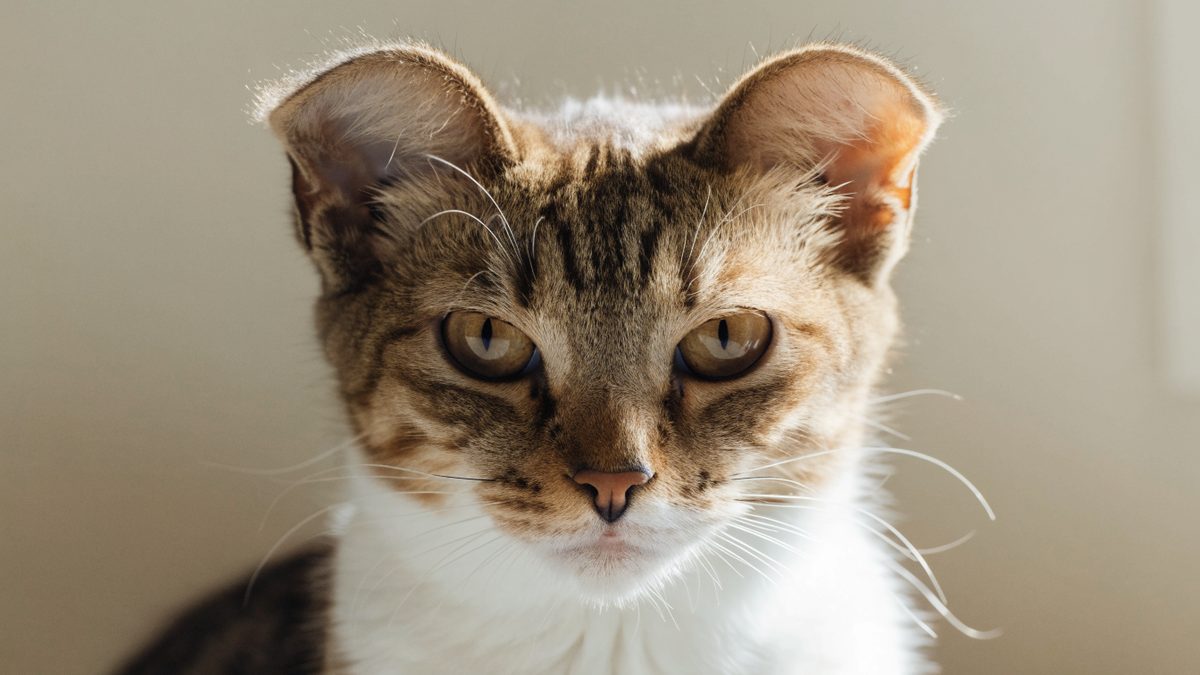
Quick answer
American Curl cat price in India cannot be stated honestly as a range, because exactly one Indian source publishes a figure for the breed. Happy Pet quotes Rs 75,000 to Rs 2,00,000, and Google's AI Overview repeats it. Supertails and Vetscan both publish Indian cat price tables covering fourteen and twenty breeds and neither lists this cat. There is no Indian market to price.
This guide is general information for Indian pet owners and is not a diagnosis. Consult your nearby vet, a registered veterinarian you can actually reach, before acting on anything you read here, and treat any sudden change in your cat's condition as urgent.
American Curl at a glance
What an American Curl actually is
An American Curl is a medium-sized domestic cat whose ear cartilage curls backward instead of standing upright, produced by a spontaneous dominant mutation that appeared in one stray cat in California in 1981. Everything else about the breed is ordinary domestic cat, deliberately so, because the breed was built by crossing back to random-bred cats for its first three decades.
Every American Curl alive descends from one cat. In June 1981, Joe and Grace Ruga found two stray kittens on their doorstep in Lakewood, California, both with ears that curled back from their heads in an unusual way. One, a black semi-long-haired female, was named Shulamith. The other, Panda, disappeared about two weeks later, leaving Shulamith as the foundation cat of the entire breed. In December 1981 Shulamith had her first litter of four kittens and two carried the same curled ears. Selective breeding programmes began in 1983, and the first public presentation was at a CFA show in Palm Springs on 23 October 1983.
The genetics were settled early and then never advanced. Roy Robinson, the English feline geneticist, analysed data on 383 kittens from 81 litters and confirmed that the ear-curling gene was a single autosomal dominant, meaning any cat with even one copy shows the trait. His paper appeared in the Journal of Heredity in 1989, and its abstract is two sentences long: the novel pinnate shape is inherited as a monogenic autosomal dominant trait, and the mutant gene is designated curl and symbolised Cu.
The mutation that curls the ear has never been found. OMIA, the Online Mendelian Inheritance in Animals catalogue maintained by the University of Sydney, records the trait as a single-gene autosomal dominant, disease-related no, and key variant known no, with exactly one supporting reference, Robinson 1989. Takanosu and Hattori put it more bluntly in a 2020 veterinary paper: the ear pinnae of American Curl cats are curled backward, the mechanism of which is unknown so far. That is not a small gap. It means there is no DNA test for this breed and no molecular explanation of what the mutation does to cartilage anywhere else in the body.
What the breed looks like against the written standards
Two registries publish an American Curl breed standard and they agree almost word for word. The CFA describes an elegant, well balanced, moderately muscled cat, slender rather than massive, with females at 5 to 8 pounds and males at 7 to 10 pounds, alert and active with gentle even dispositions. FIFe uses the same language in three languages and calls the size simply medium. The head is a modified wedge without flat planes, moderately longer than wide, with a straight nose of moderate length and no deep nose break. The body is a semi-foreign rectangle, length one and a half times the height at the shoulder.
The ear is where the standards get specific, and every word of it matters to a buyer. Both registries require a minimum 90 degree arc of curl, not exceeding 180 degrees, with firm cartilage from the base of the ear to at least one third of its height, and rounded flexible tips. Ears must be moderately large, wide and open at the base, set erect and equally on the top and side of the head, and when the cat is alert with ears swivelled forward the lines following the curve of the ears through the tips should point to the centre of the base of the skull.
| Attribute | What the record shows | Source |
|---|---|---|
| Origin | One stray cat, Shulamith, found in Lakewood, California, June 1981 | CFA / TICA The International Cat Association. American… |
| Cause of the curl | A spontaneous autosomal dominant mutation, gene symbol Cu | Robinson |
| Causal variant identified | No. OMIA records key variant known: no | OMIA |
| Disease-related | OMIA records: no | OMIA |
| When the ears curl | Straight at birth, curling starts at 3 to 5 days, sets at about 16 weeks | TICA |
| Required arc of curl | Minimum 90 degrees, maximum 180 degrees | CFA / FIFe Federation Internationale Feline. Breed… |
| Adult weight | Females 5 to 8 lb, males 7 to 10 lb | CFA |
| Adult weight, Indian-facing figure | Males 3 to 4.5 kg, females 2 to 3.5 kg | Purina India |
| Coat | Longhair and shorthair divisions, both with minimal undercoat | CFA / FIFe Federation Internationale Feline. Breed… |
| Life expectancy claimed | 10 to 20 years (TICA), 12 to 16 (PetMD), 15 to 20 (Royal Canin India) | TICA / PetMD / Royal Canin Leeson J, reviewed by Morrison BJ DVM Royal Canin India. American Curl breed… |
| Recognised by CFA | Yes. Registration 1986, Provisional 1991, Championship 1993 | CFA |
| Recognised by TICA | Yes, from 1987 | PetMD |
| Recognised by FIFe | Yes. Fully recognised, Category 2, as ACL and ACS | FIFe |
| Recognised by GCCF (UK) | No, and no curled-ear variety is recognised | GCCF |
| Allowable outcross, CFA | Domestic longhair or shorthair, for litters born before 1 January 2015 | CFA |
The outcross history, and why it is the breed's best argument
The American Curl was built on the widest gene pool of any pedigree cat, and that is not marketing. From the beginning the only allowable outcross was the non-pedigreed domestic cat, chosen specifically to ensure a large genetic pool and optimum health while preserving the curled ear. The CFA kept that door open until litters born on 1 January 2015, and states on its own breed page that because the breed allowed outcrossing to domestic random-bred cats until 2015 their gene pool is one of the most diverse available, and that to date no breed-linked health issues have come to light. TICA makes the same claim in one line, that Curls have no known genetic health issues because of the wide gene pools from their domestic outcross background.
Read those two sentences carefully, because they are the strongest thing anyone says in favour of this breed and they are also breeder-reported rather than measured. Neither registry cites a health survey, a radiographic series or a mortality study. The claim is that nothing has been reported, which is a different claim from nothing being there. This page treats that distinction as the main event, and the health section below sets out exactly who has looked, who has not, and what each of them found.
The four coat and ear combinations you will meet
Four labels describe this one gene pool and Indian listings use all of them loosely. An American Curl Shorthair carries at least one copy of the curl gene and has a short, soft, silky flat-lying coat with minimal undercoat. An American Curl Longhair is the same cat with a semi-long coat and a plumed tail, judged in the same colour groups. A straight-eared American Curl is a littermate that did not inherit the gene, and both registries say these cats make equally delightful pets and are valuable in a planned breeding programme. A cat sold as an American Curl in India may be none of the above, and the price and health sections explain why.
- Check the direction of the curl first, in daylight, in person. American Curl ears curl backward and away from the face in a smooth arc. Forward-and-down is a Scottish Fold, a different breed with a documented skeletal disease.
- Check the kitten's age against the ear. Kittens are born with straight ears, curl into a tight rosebud at three to five days, unfold through a transition phase at about six weeks, and reach final shape at about 16 weeks. A ten-week kitten's ear is not final.
- Feel the base of the ear, gently. Firm cartilage should run from the base to at least a third of the height, commonly to two thirds, with the remaining tip flexible. Lack of firm cartilage at the base is a disqualifying fault in both standards Federation Internationale Feline. Breed….
- Reject an extreme curl rather than paying more for it. Both CFA and FIFe disqualify an adult whose ear tip touches the back of the ear or the head, and FIFe also disqualifies thick or calcified ears. The tightest ear in the litter is not the best cat.
- Look at the tail. It should be flexible, wide at base, tapering, and equal to body length. A short, thick or rigid tail is the classic sign of the Scottish Fold's skeletal disorder, not of this breed.
- Ask what the parents were, and get it in writing. There is no DNA test that confirms a cat is an American Curl, because no causal variant has been found. Takanosu and Hattori said the same in 2020: molecular biological markers for the Munchkin and American Curl cat are not available at present, therefore external appearance is the only genetic marker for both breeds.
One framing fact belongs here rather than in the price section, because it changes how you read every Indian listing. TICA lists the Scottish Fold under Opposite Breeds on its American Curl page. The two are not variants of one another. They are the two ends of a comparison, and in India the seller who ranks for this query is usually selling the other one.
American Curl cat price in India
American Curl cat price in India has one published figure and no market behind it. Happy Pet quotes Rs 75,000 to Rs 2,00,000, and that single number is what Google's AI Overview repeats when you ask. Every other Indian price source that covers the breed is either a listing shell that sells something else, a US figure converted for you, or an Amazon listing for a paperback book about the breed.
Start with what the search results themselves prove. Google reported about 172 results in total for 'american curl cat price in india' and about 200 for 'american curl cat india' on 16 August 2026. Corrected on 2 September 2026: that number is not evidence of a thin market. The control query for the thickest breed market in India, the exact phrase for a Labrador Retriever price, returns a dense commercial result set and still offers only two pages of results. An exact-phrase count in the low hundreds is a property of how Google indexes quoted phrases, not a measure of demand, so the count is reported here as an observation only. Position one is Happy Pet's breed page with its Rs 75,000 to Rs 2,00,000 figure. Position two is a printed book on Amazon.in. Position three is a four-year-old Quora thread quoting USD 1,200 to USD 3,000. Position four is a Facebook group post. Positions six, eight, nine and ten are kitten marketplaces and catteries.
Now check the two Indian sources a buyer would actually trust on price, and notice what is missing from both. Supertails, India's largest online pet retailer, publishes a 2026 cat price guide reviewed by a named senior veterinarian, with a quick-reference table of fourteen breeds and their Indian price ranges. The American Curl is not in it. Vetscan Diagnostics publishes a twenty-breed guide to cat breeds in India, each with a price in rupees and a climate-suitability note. The American Curl is not in that one either. Both tables include the Scottish Fold.
| Source | What it publishes for the American Curl | What that figure actually is |
|---|---|---|
| Happy Pet | Rs 75,000 to Rs 2,00,000, cost of buying | The only Indian price for this breed anywhere in the ranking set |
| Supertails, 14-breed Indian price table | Breed not listed | India's largest pet retailer does not price it |
| Vetscan, 20-breed Indian guide with prices | Breed not listed | An Indian veterinary diagnostics company does not price it |
| Purina India breed library | No price published | Care information only, on a .in domain |
| Royal Canin India breed page | No price published | Care information only, sourced from the World Cat Congress |
| Justdial, Pet Shops For American Curl Cat in Delhi | No price published | An auto-generated category page, examined below |
| Heroics Exotic Cattery, Bangalore | Breed not offered | Ranked ninth for this query and sells ten other breeds |
| Spot Pet Insurance, United States | USD 1,200 to USD 3,000 from a breeder | A US figure, quoted in the Indian results because no Indian figure exists |
| PetMD, United States | USD 1,000 to USD 2,500 | A second US figure, from a vet-reviewed page |
A price range is a claim about a market. One published figure from one source is not a market, it is a number. Averaging it with converted US dollars would produce a range that looks authoritative and describes nothing that exists. Bonbeno's rule on Indian prices is to compare at least three published sources and show where they conflict. For the American Curl there are not three. There is one. Printing that plainly is the most useful thing this page can do, because the reader who arrived expecting a range now knows the correct question is not how much but whether.
What the Indian listings are actually selling you
Three ranked results in the Indian SERP claim to connect you to an American Curl. Open each one and it resolves to something else. Justdial's page, titled Top Pet Shops For American Curl Cat in Delhi, lists ten businesses. The top listing is Parsian CAT Kitten in Darya Ganj, whose own Justdial categories are Pet Persian Cat Importers and Pet Shops For Cat. Of the ten businesses on a page about Delhi, six are in Saharanpur, Ambala, Rishikesh, Dehradun, Bikaner, Ludhiana and Jhansi. It is a category shell that exists identically for every breed name, populated by whatever pet shops are nearby.
Heroics Exotic Cattery in Bangalore ranks ninth for this query and describes itself as World Cat Federation and Feline Club of India registered. Its own breed list is Persian, Himalayan, Exotic Shorthair, British Shorthair, Scottish Fold, Maine Coon, Siamese, Ragdoll, Exotic Longhair, Bengal and Siberian. The American Curl is not among them, and one of its published customer reviews describes buying a Highland Fold, which is the long-coated Scottish Fold. Search for a curled-ear cat in India and the market answers with a folded-ear cat.
There is no lawful commercial import route, and that is the whole explanation
India's own procedure for importing a pet cat allows exactly three routes and none of them is a purchase. The Animal Quarantine and Certification Services standard operating procedure sets out Case 1, transfer of residence, which requires proof of two years overseas stay and visa cancellation or relocation proof; Case 2, re-import, which requires a copy of an earlier export certificate issued by AQCS India; and Case 3, import under a Directorate General of Foreign Trade licence. An advance No Objection Certificate must be applied for at least seven working days before embarkation, a quarantine officer examines the cat at the port, and a cat showing clinical signs is held in quarantine for 15 days at the owner's cost. USDA APHIS confirms the same structure from the exporting side and notes the DGFT licence takes about a month to process, with AQCS stations at Delhi, Mumbai, Kolkata, Chennai, Bangalore and Hyderabad.
Put those two facts side by side. The breed is genuinely rare worldwide, and PetMD reports there are currently no TICA-registered American Curl breeders in the United States, its country of origin. India has no commercial import channel for pet cats and no domestic breeding base for this breed. Between them, those two facts mean no supply chain can form. That is why one Indian page has a price and thirteen other Indian pages do not.
The US comparison, and what it tells an Indian buyer
Two American sources price the breed and they agree closely. Spot Pet Insurance puts a breeder kitten at USD 1,200 to USD 3,000, adoption at USD 50 to USD 200, and the lifetime cost of ownership at roughly USD 16,000 to USD 20,000. PetMD gives USD 1,000 to USD 2,500. At Rs 90 to the dollar, the US breeder band is roughly Rs 90,000 to Rs 2,70,000, which brackets Happy Pet's Indian figure of Rs 75,000 to Rs 2,00,000 almost exactly.
That correspondence deserves suspicion rather than reassurance. When the only Indian price for a breed with no Indian supply lands neatly on top of the US retail band, the most economical explanation is that it was derived from the US band rather than observed in an Indian transaction. Bonbeno cannot prove that, and says so. What can be said is that no Indian source publishes a city-wise breakdown, a pet-versus-show split, or a straight-eared littermate price for this breed, all of which exist in abundance for the Persian, the Scottish Fold and the Munchkin.
| Breed | Published Indian price range | Source |
|---|---|---|
| Indian domestic, desi cat | Rs 0 to Rs 2,000 | Supertails |
| Persian | Rs 12,000 to Rs 50,000 | Supertails |
| Siamese | Rs 15,000 to Rs 40,000 | Supertails |
| British Shorthair | Rs 20,000 to Rs 60,000 | Supertails |
| Scottish Fold | Rs 30,000 to Rs 70,000 | Supertails |
| Munchkin | Rs 30,000 to Rs 60,000 | Supertails |
| Maine Coon | Rs 40,000 to Rs 1,00,000 | Supertails |
| American Curl | Not listed by Supertails or Vetscan | Hiregange S, reviewed by Dr Anees Ibrahim… Vetscan Diagnostics. 20 Best Cat Breeds… |
One more number gives the whole section its shape. The Scottish Fold, a breed the GCCF refuses to register on health grounds and the Netherlands has banned people from keeping Rijksoverheid, Ministerie van Landbouw, has a clear, repeatedly published Indian price of Rs 30,000 to Rs 70,000 and appears in both Indian breed tables. The American Curl, which no registry has raised a health objection to except on precautionary grounds, has neither. Indian availability tracks demand and supply chains, not welfare. Nobody should read the absence of an American Curl market as a warning about the breed, and nobody should read the presence of a Scottish Fold market as reassurance about that one.
Monthly cost of keeping an American Curl in India
Budget Rs 2,300 to Rs 9,000 a month to keep an American Curl in India, which is the ordinary Indian cat budget, because this breed adds no routine cost of its own. Two line items behave differently from other breeds and both are small: ear checks are more frequent, and there is no DNA panel to buy because no test for this breed exists.
No Indian source publishes a monthly cost specific to the American Curl except one. Happy Pet gives average monthly expenses of Rs 2,800 on a basic lifestyle and Rs 4,200 on a premium one, split as food Rs 1,500 to Rs 2,000, veterinary Rs 500 to Rs 700, and grooming Rs 800 to Rs 1,500. That is a single source, so read it against the general Indian cat baseline rather than as a breed figure.
Supertails' 2026 guide, reviewed by a named senior veterinarian, gives the fuller picture with a line-item table. Its budget tier totals Rs 2,300 to Rs 4,600 a month, mid range Rs 4,600 to Rs 9,000, and premium Rs 9,000 to Rs 21,700. An American Curl sits in the budget-to-mid band on grooming because the coat is low maintenance, and in the ordinary band on everything else.
| Line item | Budget | Mid range | Premium | American Curl note |
|---|---|---|---|---|
| Cat food, dry plus wet | Rs 800 to 1,500 | Rs 1,500 to 3,000 | Rs 3,000 to 6,000 | No breed-specific diet exists |
| Kitten food, under 1 year | Rs 1,000 to 2,000 | Rs 2,000 to 3,500 | Rs 3,500 to 5,000 | Higher protein need, same as any kitten |
| Litter and litter box | Rs 300 to 600 | Rs 600 to 1,200 | Rs 1,200 to 2,500 | Ordinary |
| Routine vet visits | Rs 300 to 600 | Rs 600 to 1,000 | Rs 1,000 to 2,000 | Add an ear check to each visit |
| Professional grooming | Rs 500 to 1,000 | Rs 1,000 to 2,000 | Rs 2,000 to 4,000 | Rarely needed for the shorthair |
| Treats and snacks | Rs 150 to 300 | Rs 300 to 600 | Rs 600 to 1,500 | Useful as handling-training currency |
| Toys and enrichment | Rs 100 to 300 | Rs 300 to 600 | Rs 600 to 1,500 | Budget at the top of the band, this cat plays |
| Flea and tick prevention | Rs 150 to 300 | Rs 300 to 600 | Rs 600 to 1,200 | Ordinary |
| Monthly total | Rs 2,300 to 4,600 | Rs 4,600 to 9,000 | Rs 9,000 to 21,700 | No breed premium applies |
The three costs this breed changes, and one it removes
- Ear cleaner and more frequent ear examinations. PetMD's veterinary contributor states that Curls are particularly susceptible to ear infections because their unique ear shape tends to trap more wax, and recommends regular cleaning with a vet-recommended solution. A bottle of veterinary ear cleaner is a small recurring cost. The vet demonstration you should ask for on the first visit is free.
- A first consultation that is longer than usual. PetMD is explicit that the ears of American Curls are more delicate than those of other cats, and advises asking your veterinarian for an ear-cleaning demonstration. In India, where most vets will never have handled this breed, budget an unhurried first appointment rather than a five-minute vaccination stop.
- Enrichment, at the top of the band rather than the bottom. TICA describes a cat that keeps kitten-like playfulness into later years and recommends cat trees and indoor perches for climbing and jumping. Under-stimulation in this breed shows up as furniture damage, which is a real cost.
- The cost this breed removes: a genetic test panel. For a Scottish Fold, a responsible buyer pays for a TRPV4 test. For an American Curl there is no equivalent, because no causal variant has been identified. That saves money and removes a tool, which the health section treats as a warning rather than a saving.
The first-year arithmetic, using the only Indian purchase figure that exists, runs from roughly Rs 1,02,600 to roughly Rs 3,08,000. That is Happy Pet's Rs 75,000 floor plus twelve months at Rs 2,300, up to its Rs 2,00,000 ceiling plus twelve months at Rs 9,000 Hiregange S, reviewed by Dr Anees Ibrahim…. Add the FVRCP and rabies vaccination course, which Happy Pet's schedule sets at 6 to 8 weeks, 10 to 12 weeks and 14 to 16 weeks with annual boosters. Anyone quoting you a single confident first-year number for this breed in India is extrapolating, and so is this paragraph, which is why both ends are shown.
Can an American Curl handle the Indian climate
An American Curl copes with Indian heat better than most pedigree cats, and its heat tolerance is a four out of five. Two structural facts earn that rating. The coat is fine, silky and flat-lying with minimal undercoat in both varieties, and the muzzle is a normal length with no brachycephalic penalty. The coat length you choose still matters, and the ear needs more attention in a Mumbai monsoon than in a Californian summer.
Start with what an Indian summer now measures. During the April to May 2026 season, Banda in Uttar Pradesh recorded the season's highest observed temperature at 47.6 degrees Celsius on 27 April, roughly 8 degrees above the climatological norm, with Akola in Maharashtra at 46.9 degrees the same day. Maximum temperature departures ran 1.6 to 3.5 degrees above normal across Odisha, Chhattisgarh, Vidarbha and Madhya Pradesh in early April before migrating north-west. Even the hills were affected, with Mussoorie and Nainital reaching 30 degrees and Shimla 27.
One honest qualification belongs with those numbers. The India Meteorological Department described heat wave conditions throughout that season as occurring in isolated pockets or isolated to scattered locations, never as a nationwide event, and parts of Assam, Meghalaya and West Bengal recorded normal or below-normal maximum temperatures on the same days. Your city's summer, not India's summer, is what decides whether this cat is comfortable.
Why the coat works, and where the two varieties diverge
The reason this breed does relatively well in Indian heat is written into both breed standards. The shorthair coat is short, soft, silky and flat-lying, resilient without a plush dense feel, with minimal undercoat. The longhair is semi-long, fine, silky and flat-lying, also with minimal undercoat. Undercoat is the insulating layer, and a coat with minimal undercoat sheds heat far more readily than the dense plush double coat of a British Shorthair or the long dense coat of a Persian. TICA makes the practical consequence explicit: less undercoat means less shedding and less maintenance.
| Coat | Standard description | Best suited to |
|---|---|---|
| American Curl Shorthair | Short, soft, silky, laying flat, minimal undercoat | Chennai, Mumbai, Kochi, Ahmedabad, Hyderabad, any humid or high-heat city |
| American Curl Longhair | Semi-long, fine, silky, laying flat, minimal undercoat, plumed tail | Bengaluru, Pune, Delhi winters, hill stations, air-conditioned flats |
| Either variety | Both are the same breed with the same ear and temperament | The choice is a climate decision, not a quality decision |
Never shave either variety to cool the cat down. A flat-lying silky coat with minimal undercoat is already an efficient heat-shedding surface, and removing it exposes skin to sunburn and removes the air layer that helps regulate temperature. If your longhair is struggling in May, the answer is a cooler room and more brushing, not a clipper.
This is the one climate-specific care point for the breed, and it comes from the veterinary side rather than the registries. PetMD's contributing veterinarian states that Curls are particularly susceptible to ear infections because their unique ear shape tends to trap more wax, creating a welcoming environment for excess bacteria and yeast. A Mumbai or Kochi monsoon supplies exactly the warm humid conditions that favour yeast. Check the ear weekly all year, twice weekly through the monsoon, and look for odour, discharge, redness or head shaking. Clean only when your vet says it needs it, because over-cleaning a healthy feline ear canal causes more problems than it prevents.
Where the sources disagree about the ear, and how to read it
The registries and the veterinary press take opposite positions on ear infection risk in this breed, and this page prints both rather than picking. TICA says Curls are known to have a black ear wax that is normal for the breed and that the inside of their ears should be cleaned periodically, which describes maintenance rather than disease. CFA states that to date no breed-linked health issues have come to light. Against that, PetMD says the breed is prone to more ear infections than other cats and that their ears are more delicate, and Spot Pet Insurance goes further, attributing to International Cat Care a claim that the mutation can also lead to narrowing of the ear canal.
That last claim is worth checking before you act on it, and checking it produces a finding. The International Cat Care page Spot cites, at icatcare.org/advice/american-curl/, no longer resolves and redirects to the charity's general advice index. International Cat Care's live position on curled-ear breeds is now a single sentence in its Scottish Fold article: more information is needed about other breeds of cats with folded or curly ears before we can be certain that they, too, do not have defects that may cause other problems. No published study establishes an ear infection rate in American Curls. The practical instruction is the same either way, so a buyer loses nothing by adopting the cautious version: look at the ears every week.
The Indian household adjustments that actually matter
- Give the cat a cool hard surface and a soft one, in the same room. Stone, tile and kota floors are the coolest surface in an Indian flat in May, and a thin cotton dhurrie over one corner of it gives a healthy, active cat both options.
- Move water away from food and keep it moving. Cats drink less when water sits beside food. A fountain is a genuine hydration tool in an Indian summer, and this breed's curiosity makes running water an attraction rather than a novelty.
- Watch the ear after any bath or wet weather. Water in a curled pinna dries more slowly than in an upright one. Dry the outer ear gently with cotton wool, never push anything into the canal.
- Keep the cat indoors, which both Indian brand pages already recommend. Purina India classifies the breed as an indoor cat, and Royal Canin India as best suited to indoor life. In India that also removes tick, dog-attack and traffic risk.
- Air conditioning is a comfort, not a requirement, for the shorthair. With minimal undercoat and a normal muzzle, a shorthair Curl in a well-ventilated shaded flat with fresh water manages an Indian summer. A longhair in a top-floor Chennai flat in May is a different proposition and should have a cooled room available.
- Nights matter more than afternoons. IMD data for the 2026 season showed above-normal minimum temperatures alongside the maxima. A cat that cannot cool down overnight never recovers from the day.
On cold, this breed needs nothing special. A flat-lying silky coat is thinner than a double coat, so a Shimla or Srinagar winter warrants a warm insulated bed and a draught-free sleeping spot, which is ordinary sensible cat keeping rather than a breed requirement.
Temperament, household fit and the Peter Pan problem
American Curls are described identically by every source that has met them: people-oriented, playful into old age, quiet, and adaptable. The registries call the breed the Peter Pan of the cat world because the kitten personality never switches off. That is the selling point and it is also the constraint, because a cat that stays a kitten needs a household that stays engaged.
The descriptions converge to an unusual degree. The CFA calls the Curl exceptionally people-oriented, affectionate, easygoing and adaptable, an acknowledged expert in making itself at home in any environment, intelligent and curious, expressing itself with chirping little comments. TICA describes curious, exuberant, loving companions that are exceedingly people-oriented, adore children, adapt well to other pets and follow their people around to be part of everything. Purina India, on a .in domain, calls the breed playful, curious, friendly but independent, quiet, and a great family cat. Royal Canin India calls them gentle, easy-going and loving cats who settle into any household.
The voice is worth its own line for anyone in an Indian flat with shared walls. Purina India rates vocalisation as quiet. TICA says Curls have quiet voices and are not overly talkative, making their wants known with gentle trilling and cooing sounds, and greeting their families with a soft bump to the head. PetMD agrees they are not particularly needy or vocal. If you have been put off cats by a Siamese, this is the opposite end of that scale.
Purina India states that this breed requires a lot of attention and does not enjoy being left out of the activity of the household, and that it is important the owner has time to give them attention. Royal Canin India lists 'requires a lot of attention' as a key fact. TICA describes a cat that wants to be with you all the time. For a two-income Indian household where the flat is empty from nine to seven, that is the single most important line on this page. A second cat or a cat-friendly dog is the standard answer, and TICA says Curls enjoy the company of other cats or cat-friendly dogs.
The one house rule, and why it is not optional
This breed has exactly one handling rule and it is written into TICA's own breed description. The gene to curl the ear affects the cartilage of the ear which remains firm to the touch, it should never be stiff or floppy, and care should be taken with the ears so as not to break the cartilage, and the ears should never be forced into unnatural positions. That is not a show-ring nicety. It is an instruction about a physical structure that can be damaged by rough handling.
Both show standards confirm what damage looks like, which is useful because it tells you what you are protecting against. Lack of firm cartilage in the base of the ear disqualifies a cat in both CFA and FIFe judging, as do ears whose tips have become inflexible, and FIFe adds thick or calcified ears to the list Federation Internationale Feline. Breed…. So the household rule is simple and absolute: nobody grabs, folds, straightens or plays with this cat's ears. In an Indian home with visiting relatives and curious children, say it out loud on day one rather than assuming it.
Who this cat suits, and who it does not
| Situation | Fit | Why |
|---|---|---|
| Someone home much of the day | Excellent | Both Indian brand pages say the breed requires a lot of attention Royal Canin India. American Curl breed… |
| Families with children | Excellent, with the ear rule enforced | CFA and TICA both describe a cat that does well with children of all ages The International Cat Association. American… |
| Apartment living | Excellent | Indoor-oriented, quiet, and satisfied by play rather than territory |
| Multi-pet household | Good | TICA notes an inherent respect for other pets and compatibility with cat-friendly dogs |
| Empty flat nine to seven, single cat | Poor | Purina India warns the breed does not enjoy being left out of household activity |
| Buyer who wants a calm, low-engagement lap cat | Poor | The kitten-like activity level persists for life |
| Buyer who wants a very quiet home | Excellent | Vocalisation rated quiet by Purina India |
| Buyer who cannot verify the parents | Not suitable | No DNA test confirms this breed, so provenance is the only check |
One difference from the Scottish Fold is worth stating plainly, because it is the emotional core of the comparison. Welfare bodies warn that a Scottish Fold's calmness may be a sign of pain rather than temperament, and that its permanently folded ears impair the ear signalling cats use to communicate. No equivalent warning exists for the American Curl. Its ears are curled backward but they remain mobile and swivel forward when the cat is alert, which is precisely what the breed standards use to judge the angle of curl. A cat that can still move its ears can still say what it means.
Training an American Curl, and the one lesson that matters most
To train an American Curl, use food-reward positive reinforcement from week one and put ear handling at the top of the list. This is a genuinely teachable cat that learns its name, fetch and tricks, and the single most valuable thing you can teach it is to sit still while you look inside its ears.
The trainability is well attested. PetMD states that these intelligent and social cats can learn various tricks with positive reinforcement using treats or praise, from responding to their names to fetching. TICA notes Curls have a tendency to open doors, including turning doorknobs, and cabinets, which is trainability pointed in an inconvenient direction. Purina India calls the breed playful, curious and intelligent. None of that changes in India. What changes is what you use it for.
Ear-handling training, week by week
This is the training goal that separates a well-managed American Curl from an owner who finds out about an infection late. PetMD recommends asking your veterinarian for an ear-cleaning demonstration precisely because these ears are more delicate than other cats';. You cannot run a weekly check on a cat that objects to having its head touched, and you cannot start when the ear already hurts.
- Week one, touch and treat. Touch the base of the ear for one second, give a treat, stop. Ten seconds a day. The goal is a cat that offers its head rather than tolerating your hand.
- Week two, look and treat. Tip the head very slightly, look into the pinna for two seconds, treat. Never fold, straighten or press the ear, because TICA warns the cartilage can be broken and must never be forced into unnatural positions.
- Week three, learn what normal looks like on your own cat. TICA notes a black ear wax that is normal for this breed, so calibrate to your cat rather than to a photo. Take a phone picture of a healthy ear and keep it.
- Week four, add the carrier. Leave it open in the room with a blanket inside. A cat that walks into its own carrier turns an emergency vet trip into a five-minute job in Indian traffic.
- Ongoing, weigh the cat monthly on a kitchen scale. Weight trend is the cheapest objective health signal you will ever get, and it lets your vet read a line rather than a dot.
- Never use a cotton bud in the canal. Clean the outer ear only, with a vet-recommended solution, and only when your vet says it is needed.
Litter training and the ordinary work
Litter training an American Curl kitten is ordinary cat work with no breed adjustment. PetMD notes that like most cats, Curls are naturally drawn to the litter box thanks to their instincts, and advises consulting a vet to rule out medical causes if litter box issues appear. Confine the kitten to one quiet room for the first few days with the tray, food and water in it, keep the tray at least a couple of metres from the food, scoop daily, and run one more tray than you have cats.
Two Indian specifics apply. Scoop before you leave for work rather than after you get back, because in Indian heat a tray degrades within hours and a cat that finds it unusable at noon has chosen a new spot by evening. And change litter brands slowly, because cats reject substrate changes far more readily than food changes, and a rejected substrate looks exactly like a training failure when it is a preference failure.
What this breed resists
Very little, which is the honest answer, and one thing consistently. American Curls resist being ignored. Purina India warns the breed does not enjoy being left out of the activity of the household. PetMD frames the same trait as a training risk: without proper outlets for play and exploration, their natural tendencies to climb, perch, scratch and pounce could easily be mistaken as mischief. A Curl that shreds your sofa has not developed a behaviour problem. It has been under-employed, and the fix is scheduled play rather than correction.
Daily exercise: two proper sessions, for life
An American Curl needs two structured play sessions a day, of roughly fifteen minutes each, for its whole life rather than only as a kitten. That requirement is higher than most pedigree cats because the breed's defining behavioural trait is that the kitten energy never fully switches off.
The activity level is documented consistently. TICA calls Curls the Peter Pan of the cat world because they retain kitten-like playfulness into their later years, says they enjoy daily exercise and can entertain themselves with just about anything left on the floor, and recommends cat trees and indoor perches for climbing and jumping. CFA describes an activity level energetic enough to make the Curl an amusing and engaging companion but never an annoying one, with regular play sessions expected. Happy Pet's Indian breed page puts the exercise routine at 30 to 60 minutes a day and rates the energy level medium.
PetMD gives the most concrete instruction, in the context of obesity prevention: about two 15-minute play sessions daily, in addition to a well-balanced diet. That is the number to plan around, because it is the only one attached to a stated purpose.
This is one place where the American Curl and the Scottish Fold need opposite advice, and getting it backward would matter. A Scottish Fold with distal-limb arthritis should be given steps rather than jumps. An American Curl has no documented skeletal disorder, and TICA actively recommends cat trees and indoor perches for climbing and jumping. Build up rather than out, which is exactly what a small Indian flat can afford.
What a day looks like in an Indian flat
- Morning session, before you leave. Fifteen minutes with a wand toy or feather teaser. PetMD lists batting teaser wands, chasing small balls or plastic springs, and playing fetch as suitable activities. A tired cat is a quiet cat for the working day.
- Daytime, self-service enrichment. A window perch with a view of birds, a crinkle tunnel, and rotating toys so the same three objects do not become invisible. TICA notes puzzle toys suit this breed's intelligence.
- Evening session, the long one. Fifteen to twenty minutes of active chase ending in a food reward, so the hunt sequence completes. A hunt that never ends in a catch leaves a frustrated cat.
- Vertical route through the room. Shelf, chair back, cupboard top. A Curl will use all of it, and in a two-bedroom flat vertical space is the only space you can add.
- Play in the cool part of the Indian day. In May, run the long session after sunset rather than at 4 pm. Heat plus hard play is how a cat overheats indoors.
- Shoulder rides count. PetMD lists taking shoulder rides among the breed's fun activities, and it is genuinely how many Curls prefer to supervise the household.
What happens without it is predictable and is the most common Indian owner complaint about this breed. PetMD is direct that without proper outlets for play and exploration, a Curl's tendencies to climb, perch, scratch and pounce could easily be mistaken as mischief, and lists obesity as a common breed health concern despite the playful nature. An under-exercised Curl becomes an overweight, destructive cat, and both of those are the owner's schedule showing up in the animal.
Grooming an American Curl in Indian humidity
Grooming an American Curl takes one weekly brushing for the shorthair and two or three for the longhair, which makes this one of the lowest-maintenance coats among pedigree cats. The ear is the part that needs a routine, and the routine is inspection rather than cleaning.
The coat is easy by design. PetMD describes a single silky coat that is less prone to matting and tangles compared to other breeds, and says a weekly brush or comb session is all it takes. TICA recommends brushing the shorthair regularly with a grooming glove or soft brush and says longhaired Curls do not have much undercoat and should be brushed occasionally, adding that less undercoat means less shedding and less maintenance. Purina India rates grooming as weekly and shedding as minimal. Happy Pet, the Indian page, rates shedding as moderate and budgets Rs 800 to Rs 1,500 a month for grooming, which is higher than the breed needs for a shorthair.
| Task | Shorthair | Longhair | Monsoon adjustment |
|---|---|---|---|
| Brushing | Once a week, soft brush or glove | Two to three times a week, metal comb | Add one session; damp coats mat faster |
| Ear inspection | Weekly look | Weekly look | Twice weekly through the monsoon |
| Ear cleaning | Only when the vet says so | Only when the vet says so | Dry the outer ear after any wetting |
| Nail trim | Every two to three weeks, clipper not scissors | Same | Unchanged |
| Teeth | Brush daily to every other day | Same | Unchanged |
| Bathing | Rarely, only if genuinely dirty | Rarely | Keep water out of the ear |
The ear routine, in the order a vet would teach it
Three sources describe the ear and they do not fully agree, so here is the version that is safe under all of them. TICA's position is maintenance: Curls are known to have a black ear wax that is normal for the breed, therefore the inside of their ears should be cleaned periodically. PetMD's position is prevention: Curls have delicate ears that are prone to infections, head shaking, scratching of the ears and discharge can all be signs of an infection, and gentle cleaning with a veterinarian-approved cleaner can help reduce the chances. Neither position supports daily cleaning, and neither supports ignoring the ear.
- Look weekly, in daylight, at both ears. You are checking for odour, discharge, redness and irritation, which are PetMD's listed signs of a feline ear infection.
- Learn your cat's normal wax. A black wax may be normal for this breed, so the change matters more than the colour.
- Never straighten the ear to see inside. Tip the head, do not unfold the pinna. TICA is explicit that the ears should never be forced into unnatural positions.
- Clean the outer ear only, with a veterinary solution, on your vet's instruction. Ask for the demonstration at the first appointment rather than learning from a video.
- Escalate on head shaking or scratching rather than waiting a week. Those are behavioural signs, and they usually precede visible discharge.
- Keep the ear dry after baths and monsoon exposure. A curled pinna holds moisture longer than an upright one, and Indian humidity does the rest.
There is no cosmetic intervention on this ear, and anyone offering one should be refused. The degree of curl is set genetically and finalises at about 16 weeks. Both registries disqualify ears that have become thick, calcified or inflexible, or that have lost firm cartilage at the base Federation Internationale Feline. Breed…, which is the show ring's way of describing a damaged ear. If a seller in India tells you a kitten's curl will 'improve' with taping, handling or any product, walk away from the whole transaction.
Two Indian humidity notes finish the section. First, brush more often through the monsoon in Mumbai, Kochi or Kolkata, because a damp silky coat mats faster than a dry one even with minimal undercoat. Second, this is not a hypoallergenic cat. Purina India lists the breed as non-hypoallergenic, and low shedding is not the same thing as low allergen, because the Fel d 1 protein is in saliva and skin rather than in hair volume.
American Curl health issues, the curl mutation, and what nobody has measured
No breed-linked disease has been reported in the American Curl, and no one has run the study that would find one. Those are two different statements, and the ranking pages collapse them into the first. This section keeps them apart, prints what each body actually measured, and ends with the 2026 genetic finding that changes what an Indian buyer should ask a seller for.
The entire published genetic evidence base for this breed is one paper from 1989. Roy Robinson analysed 383 kittens from 81 litters and concluded that the ear curl is a single autosomal dominant gene, and his two-sentence abstract designates the mutant gene curl, symbolised Cu. Thirty-seven years later, OMIA still records exactly that: single-gene autosomal dominant, disease-related no, key variant known no, one supporting reference. No causal variant, no molecular mechanism, and therefore no genetic test that can confirm a cat is an American Curl or rule anything in or out.
Someone did go looking, which makes the silence more informative than it first appears. Cornell's CatWatch reported in 2017 that the Morris Animal Foundation was supporting research at the University of Sydney to identify the genes responsible for the ear traits in both the Scottish Fold and the American Curl. The Scottish Fold half of that question was answered in 2016 with the identification of TRPV4 c.1024G>T. The American Curl half has produced no published variant, and OMIA, which is maintained at the same university, still carries key variant known: no Nicholas FW, Tammen I. A funded search that has not published a result is weak evidence about anything, and it is not nothing either.
What each body actually says about whether the curl stops at the ear
| Source | What it says | What lies behind it |
|---|---|---|
| Cornell Feline Health Center, CatWatch, 2017 | Only the ear cartilage is malformed in American Curls, while Scottish Folds can suffer additional bone malformations and crippling osteoarthritis | One sentence in a newsletter item announcing a research grant. No sample size, no radiographs, no study cited |
| Robinson, Journal of Heredity, 1989, as reported by Takanosu and Hattori Robinson R. The American curl cat. Journal… | American Curl cats do not develop any abnormalities within two years of follow-up after birth, and the dominant homozygote is not embryonically lethal | A breeding study designed to establish the mode of inheritance, with follow-up to two years of age. Not a disease survey, and not a lifetime |
| Takanosu and Hattori, Journal of Veterinary Medical Science, 2020 | Skeletal abnormalities in this breed have not been reported to date, and the mechanism of the curl is unknown so far | A statement of the literature as of 2020, written by clinicians who had just radiographed a cat registered as an American Curl and found severe exostosis |
| Cat Fanciers' Association, 2025 | To date no breed-linked health issues have come to light | Breeder-reported experience across a registry. No health survey, radiographic series or mortality study is cited |
| The International Cat Association, 2025 | Curls have no known genetic health issues because of the wide gene pools from their domestic outcross background | The same reporting, with a mechanism offered rather than measured |
| International Cat Care, 2025 | More information is needed about other breeds of cats with folded or curly ears before we can be certain that they, too, do not have defects that may cause other problems | An explicit statement from a feline charity that the question is open |
| Governing Council of the Cat Fancy, 2023 | Does not recognise the American Curl, and recognises no curled-ear variety | Precautionary. The welfare statement takes a stance against random mutations altering natural physical morphology in any way that could impair welfare |
| Science for Animal Welfare, formerly UFAW, 2026 | No American Curl entry in its Genetic Welfare Problems of Companion Animals cat index | The index covers breeds it has assessed. Non-inclusion records that nobody has written the assessment, not that the assessment came back clear |
| CFA and FIFe show standards Federation Internationale Feline. Breed… | Disqualify an ear that has become thick, calcified or inflexible, or that has lost firm cartilage at the base | Judged by hand on live cats every show weekend. It is the only routine physical examination of this cartilage anyone performs at scale |
Nobody has radiographed a series of American Curls and published it. The strongest reassuring claim, Cornell's, is one sentence in a grant announcement rather than a finding. The strongest supporting claim, Robinson's, covers two years of life in a study built to work out inheritance. Two registries report that nothing has been reported The International Cat Association. American…, which is true and is a statement about the literature rather than about the cats. The clinicians closest to the question left the door open: Takanosu and Hattori wrote that any mutation responsible for the curl may be related to the conformation or function of cartilage, and that the curl could be related to chondrogenesis of the ear cartilage. So the accurate position in 2026 is that no skeletal disease has been found in this breed and no one has looked properly. That is absence of evidence. It is not evidence of absence, and a page that tells you otherwise is selling you certainty that does not exist.
The distinction from the Scottish Fold, done properly
The Scottish Fold's mutation is dangerous in a way the American Curl's has never been shown to be, and the difference is in what has been proven rather than in what is safe. The Scottish Fold carries a missense variant, TRPV4 c.1024G>T, that causes Scottish Fold osteochondrodysplasia, characterised by bone deformities and periarticular bone formation in the distal limb bones and the caudal vertebrae. OMIA catalogues that one as ears folded combined with osteochondrodysplasia, with the causal variant recorded and a breed list attached to it, which is exactly the entry the American Curl does not have Nicholas FW, Tammen I. That is a whole-skeleton disorder with a named gene, a commercial DNA test, a measurable radiographic signature and high penetrance in homozygous cats. The American Curl mutation has a named gene symbol and nothing else on that list.
| Breed | Visible trait | Causal variant identified | Homozygote | DNA test available | Documented skeletal disease |
|---|---|---|---|---|---|
| American Curl | Ear cartilage curls backward, final shape at about 16 weeks | No Nicholas FW, Tammen I | Viable. A dominant homozygous cat is not embryonically lethal | None exists. External appearance is the only marker | None reported to date |
| Scottish Fold | Ear folds forward and down | Yes, TRPV4 c.1024G>T | Viable and consistently severely affected | Yes, sold commercially in several countries | Osteochondrodysplasia of the distal limbs and caudal vertebrae |
| Munchkin | Shortened fore and hind limbs | Yes, a UGDH variant | Never observed. Presumed embryonically lethal, which is a presumption rather than a finding Takanosu M, Hattori Y.… | Yes | The limb deformity is the trait itself |
The Munchkin row deserves one extra line, because the lethal-homozygote claim is repeated everywhere as settled fact. LABOGEN records the inheritance as autosomal dominant with the homozygote presumably embryonically lethal, and states its reasoning plainly: no cat with two copies has been observed to date, so embryos with two copies are assumed not to be viable, which would explain the smaller litters seen when two short-legged Munchkins are bred together. Takanosu and Hattori called the same claim an anecdote with no report based on genetic examination behind it. Both are in the record. The American Curl homozygote sits at the opposite end of that comparison, because Robinson's breeding data established that it survives.
The 2026 finding that changes what to ask an Indian seller for
In 2026 the Scottish Fold's disease variant was detected in cats registered as American Curls. Ukawa and colleagues genotyped 8,610 cats across 14 breeds in Japan, born between 2017 and 2024, using buccal swabs collected through breeders and pet stores. Nine of the 14 breeds showed only the wild type. Heterozygous carriers of TRPV4 c.1024G>T turned up in four others: American Curls at 1.7 percent, or 2 of 115; Munchkins at 2.8 percent, or 28 of 999; Minuets at 0.89 percent, or 5 of 556; and Norwegian Forest Cats at 0.29 percent, or 1 of 340. Homozygotes outside the Scottish Fold appeared only in Munchkins, at 0.33 percent or 3 of 999. Within the Scottish Fold itself the homozygote rate fell from 14.2 percent, or 30 of 211, in 2017 to 1.9 percent, or 14 of 730, in 2024, while the heterozygote rate did not move.
Both directions of caution apply to that number, and a page that gives you only one of them is arguing rather than reporting.
- Reasons not to overread it. Two cats out of 115 is a detection, not a prevalence. The samples came from breeders and pet stores rather than from a random draw of pet cats, so they describe the breeding population that was submitted for testing. The study covers Japanese cats only, and the authors state that breed genetics differ between countries so surveys elsewhere may show different outcomes. Every author is employed by Anicom Pafe Inc or its sister company, a DNA testing business that sells the commercial test for this variant, which the paper discloses in its conflict of interest statement.
- Reasons not to underread it. The breeding population is exactly where a cryptic variant matters, because that is where it gets passed on. A positive genotype needs no sample size to establish existence, and two positives establish that cats registered as American Curls can carry the Scottish Fold variant. The finding was predicted rather than fished for, because a 2020 case report had already documented a cat registered as an American Curl that was dominant homozygous for it. And the authors' own conclusion is that genetic screening should be expanded to these breeds, particularly where curled or folded ear phenotypes are observed.
A cat presented at the Tokyo Feline Medical Center at 13 months of age for contraceptive surgery, an intact female weighing 2.4 kg, registered as an American Curl on its pedigree certificate. At first glance the ear pinnae were curled backward like an American Curl. On closer inspection the base of the pinna was folded only slightly forward. A large exostosis on the hind legs was palpable, and Sanger sequencing showed dominant homozygosity for TRPV4 c.1024G>T. Radiographs found osteochondrodysplasia with severe exostosis at the distal hind limbs, with the forelimbs spared. The authors wrote that at this point it was impossible to recognise that the cat was mixed with the Scottish Fold. Their instruction is the one to take to your vet, and it is the single most practical sentence on this page: if no exostoses are palpable, radiographic examination or TRPV4 genotyping are necessary to identify a Scottish Fold strain in a cross-breed cat. In India, where no seller can produce a curl-gene certificate because no such test exists, that is the only check available to you.
A companion 2026 paper adds a caution, and its scope has to be stated exactly rather than borrowed. Matsumoto and colleagues followed 114 cats with longitudinal photographs and found seven whose ears transitioned from folded to straight during maturation. All seven were heterozygous TRPV4 carriers, amounting to 12.7 percent of the heterozygous cats in the set, and morphometry on the 14 best-photographed cats showed the straightened ones had smaller pinnae than genetically wild-type straight-eared cats. Those were Scottish Folds, not American Curls, so the finding does not describe your cat. What it establishes is narrower and still relevant here: a folded-ear genotype can grow into an ear that does not look folded, so visual inspection for breeding selection is insufficient. The Curl case report showed the same failure from the other side. Between them, the ear has stopped being evidence.
Ear infection risk, where the sources genuinely disagree
No published study establishes an ear infection rate in American Curls, and four sources take three different positions on whether there is one. PetMD's contributing veterinarian states the breed is particularly susceptible because the ear shape traps more wax, creating a welcoming environment for excess bacteria and yeast, and calls the ears more delicate than those of other cats. TICA describes a black ear wax that is normal for the breed and recommends periodic cleaning, which is maintenance rather than pathology. The CFA reports no breed-linked health issues at all. Spot Pet Insurance goes furthest, attributing to International Cat Care a claim that the mutation can lead to narrowing of the ear canal, and the International Cat Care page it cites no longer resolves, while that charity's live position on curled-ear breeds is the open question quoted above.
The useful thing about that disagreement is that it does not change what you do. Weekly inspection costs nothing and is correct under every one of those positions, so adopt the cautious version and stop worrying about which source is right. What matters is knowing your own cat's normal, since a black wax may be normal here and the change is the signal rather than the colour.
- Head shaking or repeated scratching at one ear. PetMD lists these among the signs of a feline ear infection, and they usually appear before anything is visible.
- Odour, discharge, redness or visible irritation inside the pinna. The same source's checklist, and the reason the weekly look happens in daylight.
- A change in the wax rather than the presence of wax. Photograph a healthy ear once and compare against it.
- An ear that has become thick, hard or inflexible at the tip. Both show standards treat this as a fault precisely because it describes damaged cartilage.
- Palpable lumps behind the hocks, a stiff gait, or reluctance to jump. These are the Scottish Fold osteochondrodysplasia signs, not American Curl signs, and they are on this list only because the 2026 genotyping shows the variant can sit inside a curled-ear cat Takanosu M, Hattori Y.….
Life expectancy, claimed and measured
No measured life expectancy exists for the American Curl, and the figures in circulation are breed-community estimates rather than findings. TICA gives 10 to 20 years, PetMD gives 12 to 16, and Royal Canin India gives 15 to 20 Leeson J, reviewed by Morrison BJ DVM Royal Canin India. American Curl breed…. A ten-year spread between three sources is the tell. None of them cites a life table.
Set that against the largest study that has built one. Teng and colleagues constructed life tables from 7,936 confirmed feline deaths recorded in UK primary practice through VetCompass, and found a life expectancy at age zero of 11.74 years for companion cats overall, with a 95 percent confidence interval of 11.61 to 11.87. Crossbred cats reached 11.89 years against 10.41 for purebred cats, and purebred cats had 1.83 times the odds of dying before three years of age. Only 12 categories had enough recorded deaths to analyse, crossbred cats included, running from Burmese at 14.42 years down to Sphynx at 6.68. The American Curl is not among them, because too few of them live and die under UK veterinary care to build a table from. Royal Canin India's 15 to 20 years sits above the measured figure for every breed in that study, which does not make it wrong and does mean it is not a measurement.
Body condition is the one longevity input an Indian owner sets daily, and it has real numbers behind it. Teng and colleagues followed 2,609 cats at a cat-focused practice in Sydney and recorded a median lifespan of 15.8 years, with an interquartile range of 13.5 to 17.6. Against a maximum nine-point body condition score of 6, cats reaching a score of 9 carried 1.80 times the hazard of death, and cats reaching 3 carried 4.67 times. Both ends of the scale cost the cat years. PetMD lists obesity among this breed's common health concerns despite its playful nature, and the feeding section below turns that into a routine. A kitchen scale and a monthly weight are cheaper than any supplement sold to you for this breed.
Two claims to refuse, and one thing to actually do
Refuse a DNA certificate for the curl, because no such test exists. There is no validated variant, so any laboratory report offered as proof that a kitten is a genuine American Curl is a document about something else Takanosu M, Hattori Y.…. Refuse an HCM-clear claim too. The 2025 review of feline hypertrophic cardiomyopathy lists the predisposed breeds as Maine Coon, Ragdoll, Persian, Sphynx, Birman, American and British Shorthair, Scottish Fold, Cornish Rex, Himalayan, Chartreux and Bengal, and the American Curl is not on that list. The variants with genetic evidence behind them are breed-linked elsewhere, with MYBPC3 R820W reported in 27 percent of Ragdolls and described as exclusive to that breed, and MYBPC3 A31P associated with the Maine Coon Gaia de Sousa F, Mendes ACR, Carvalho LP. None of them is an American Curl test, and the same review notes that a negative genetic result does not exclude HCM in any cat.
What to do instead is short. Verify the parents by sight and in writing, since appearance is the only marker this breed has. Ask the seller to confirm no Scottish Fold appears anywhere in the pedigree, and treat an evasive answer as an answer. Have your vet palpate the hocks and the tail at the first visit, which costs nothing and is the check the 2020 case report recommends. Then run the weekly ear look, keep the cat lean, and stop reading breed health lists.
Consult your nearby vet before acting on anything in this section, particularly before starting any ear treatment or cleaning routine, because an inflamed ear canal and a normal waxy one need opposite handling and only an examination tells them apart. Nothing here is a diagnosis, and a cat that is shaking its head, limping or off its food needs an appointment rather than a web page.
Feeding an American Curl in India
Feed an American Curl on a complete life-stage cat food and set the portion by body condition rather than by the number printed on the bag. No breed-specific diet exists for this cat, no Indian or international source publishes one, and the only feeding decision that has published evidence behind it is keeping the animal lean.
Start with what the sources actually say, because it is short. Happy Pet, the one Indian page that covers this breed, budgets Rs 1,500 to Rs 2,000 a month for food on a basic lifestyle and describes no breed-specific requirement. PetMD names obesity among the breed's common health concerns despite its playful nature, and prescribes a well-balanced diet plus about two 15-minute play sessions daily as the answer. Neither Purina India nor Royal Canin India publishes an American Curl feeding formula, and both treat the breed as an ordinary indoor cat on diet Royal Canin India. American Curl breed…. That is the whole evidence base, and it points at portion control rather than at any product.
Body condition is the instruction, not the bag
Score the cat, then adjust. Teng and colleagues followed 2,609 cats at a cat-focused practice in Sydney and found strong associations between a nine-point body condition score and how long cats lived, with a median lifespan of 15.8 years across the group. Measured against cats whose maximum score was 6, cats that reached 9 carried 1.80 times the hazard of death and cats that reached 3 carried 4.67 times. Underfeeding is not the safe error, and a score of 5 was also associated with increased hazard in that study. Ask your vet to score your cat at every visit and to show you how, because the check takes ten seconds with your hands and no equipment.
Two Indian habits push cats to the wrong end of that scale. Free-feeding a bowl of dry kibble that is topped up whenever it looks low removes any idea of a portion, and it is the default in most Indian households. Feeding a very active, food-motivated cat by appetite compounds it, because this breed keeps kitten-like playfulness into later years and will work an owner for food with the same enthusiasm it brings to a wand toy. Weigh the day's food once in the morning and serve it in measured meals.
| Stage | What to feed | Indian monthly cost band | What to watch |
|---|---|---|---|
| Kitten, 8 weeks to 12 months | A complete kitten food, split across three or four small meals a day | Rs 1,000 to 5,000 | Growth is the priority. Do not restrict a growing kitten to control weight |
| Young adult, 1 to 6 years | Complete adult food, two measured meals, portion set by body condition | Rs 800 to 6,000 | The years when weight creeps on unnoticed. Weigh monthly |
| Mature adult, 7 to 10 years | Same, with the portion reviewed as activity falls | Rs 800 to 6,000 | Activity stays high in this breed longer than most, so a sudden drop is a symptom rather than ageing |
| Senior, 11 years and over | Whatever your vet recommends after bloodwork, not a bag labelled senior | Rs 800 to 6,000 | Weight loss in an older cat is a reason to book an appointment, not to add food |
Water, wet food and the Indian summer
Wet food is a hydration tool in an Indian climate, not a luxury. Cats drink less readily than they need to, and a diet that is entirely dry gives the animal less water in the summer months, when the heat itself raises demand. During the April to May 2026 season Banda in Uttar Pradesh recorded 47.6 degrees Celsius and Akola in Maharashtra 46.9 degrees on the same day, and a cat in a top-floor flat in either place is losing water it will not voluntarily replace from a bowl beside its dinner. Move the water away from the food, keep more than one bowl in the flat, and use a fountain if the cat prefers moving water, which this curious breed usually does.
Supertails' 2026 Indian guide, reviewed by a named senior veterinarian, splits cat food costs into dry plus wet at Rs 800 to Rs 1,500 a month on a budget tier, Rs 1,500 to Rs 3,000 mid range and Rs 3,000 to Rs 6,000 premium. A sensible Indian compromise is a mid-range dry food as the base with one wet meal a day, which lands in the middle band and buys the hydration without the premium price.
Turn mealtimes into the ear routine
Use food as the currency that makes ear handling normal, because this breed's one genuine handling constraint is its ear. TICA warns that care should be taken with the ears so as not to break the cartilage and that they should never be forced into unnatural positions, and PetMD advises asking your veterinarian for an ear-cleaning demonstration because these ears are more delicate than other cats';. A cat that gets its dinner immediately after a two-second look at each ear will offer its head within a fortnight. Doing it the other way round, cornering an unwilling cat when something already hurts, is how owners find out about an infection late.
First, any food sold as formulated for the American Curl. No registry, veterinary source or manufacturer publishes a breed-specific nutritional requirement for this cat, and the two Indian brand pages that cover it do not either Royal Canin India. American Curl breed…. Second, a joint supplement bought because the breed has a cartilage mutation. The mutation affects ear cartilage as far as anyone has established, no skeletal disease has been reported in the breed, and no study has tested any supplement in it Nicholas FW, Tammen I. Third, an ear-health supplement. The published advice on these ears is inspection and, when a vet says so, cleaning with a veterinary solution. Consult your nearby vet before adding any supplement to this cat's diet, because in a breed with no measured baseline you have no way to tell benefit from harm on your own.
American Curl kitten timeline, month by month through the first year
An American Curl kitten is born with straight ears, curls them into a tight rosebud within a week, unfolds through a transition phase at about six weeks, and reaches its final degree of curl at about 16 weeks. That single fact reorders the whole first year for a buyer, because the ear you are being shown at ten weeks is not the ear the cat will have.
TICA sets out the sequence precisely. Kittens are born with straight ears, the curl begins at three to five days of age, the ear passes through a transition period at around six weeks, and the final shape is set at approximately 16 weeks. The degree of curl is genetic and cannot be changed afterwards, which is why both show standards disqualify an ear that has been damaged into thickness, calcification or inflexibility rather than grown that way Federation Internationale Feline. Breed….
| Age | What is happening | What you do |
|---|---|---|
| Birth to 5 days | Ears are straight at birth, then curl into a tight rosebud from three to five days | Nothing. If you are buying, this is the window a breeder photographs, and a photograph of it proves nothing about the adult ear |
| 6 weeks | The ear passes through a transition phase and may look loose or half-formed | Do not judge a kitten's curl here, and do not accept a discount or a premium based on it |
| 6 to 8 weeks | First FVRCP vaccination is due on the Indian schedule | Ask for the vaccination card, with dates, batch numbers and the clinic's stamp |
| 8 to 10 weeks | Weaning is complete and the kitten is on three or four small meals of complete kitten food a day | Litter habits, socialisation and confidence are all still forming, so a kitten placed at this age arrives less settled |
| 10 to 12 weeks | Second vaccination is due | Start touch-and-treat ear handling for one second a day, exactly as the training section sets out |
| 12 to 14 weeks | The kitten is usually placed with its new family, and the curl is nearly final | Book the first vet visit for the week the cat arrives. Ask for a body condition score and an ear-cleaning demonstration Teng KT, McGreevy PD, Toribio JALML |
| 14 to 16 weeks | Third vaccination plus rabies is due, and the ear reaches its final shape at about 16 weeks | Now assess the ear. Firm cartilage from the base to at least a third of the height, a smooth arc between 90 and 180 degrees, a flexible rounded tip |
| 4 to 6 months | Rapid growth, high play drive, and the destructive phase if play is under-supplied | Two 15-minute play sessions a day become the routine, not the exception. Introduce the carrier as furniture |
| 5 to 7 months | The usual window your vet will discuss neutering or spaying | Discuss timing with your vet. Weigh monthly from here and keep the numbers |
| 7 to 10 months | Adult coat texture settles, flat-lying and silky with minimal undercoat in both varieties | Move to adult food on your vet's timing. Increase brushing for a longhair through the monsoon |
| 10 to 12 months | Adult weight arrives: CFA gives 5 to 8 lb for females and 7 to 10 lb for males, and Purina India gives 2 to 3.5 kg and 3 to 4.5 kg Purina India. American Curl Cat Breed… | Set the maintenance portion here and hold it. This is where the weight problem starts if it is going to |
| 12 months and beyond | Annual vaccination boosters. The playfulness does not stop, which is the breed's whole point | Keep the weekly ear look and the monthly weigh. Neither ever becomes optional |
The four checks that only work at the right age
- Judge the curl at 16 weeks or later, never earlier. The final shape sets at about 16 weeks, so a seller pricing a ten-week kitten on the tightness of its ear is pricing a guess. If you want to see the adult ear, ask to see the parents.
- Feel the cartilage once, gently, when the kitten is calm. Firm cartilage should run from the base to at least a third of the ear's height, commonly two thirds, with the remaining tip flexible. Lack of firm cartilage at the base disqualifies a cat in both standards Federation Internationale Feline. Breed….
- Reject the tightest ear in the litter rather than paying extra for it. Both registries disqualify an adult whose ear tip touches the back of the ear or the head, and FIFe adds thick or calcified ears. Extreme is a fault in the ring and a risk in the cat.
- Have the hocks and tail palpated at the first vet visit, whatever the kitten's age. A cat registered as an American Curl was found dominant homozygous for the Scottish Fold TRPV4 variant with severe exostosis at 13 months, and the authors' instruction is that radiographic examination or genotyping is needed where no exostosis is palpable. Two minutes of palpation is the version of that check available in an Indian clinic.
First-year spending runs from roughly Rs 1,02,600 to roughly Rs 3,08,000 using the only Indian purchase figure that exists, which is Happy Pet's Rs 75,000 to Rs 2,00,000 plus twelve months at the Indian cat budget of Rs 2,300 to Rs 9,000 Hiregange S, reviewed by Dr Anees Ibrahim…. Both ends are shown because both are extrapolations from thin data, and anyone quoting a single confident number for this breed in India is guessing with more confidence than the evidence supports. The recurring half of that, the Rs 27,600 to Rs 1,08,000 of actual keeping costs, is the part you can plan. The purchase half rests on one published figure from one source.
One socialisation note is specific to this breed and belongs in the first year rather than later. Purina India states the American Curl requires a lot of attention and does not enjoy being left out of household activity, and Royal Canin India lists the same requirement as a key fact Royal Canin India. American Curl breed…. A kitten that spends its first year alone in an empty flat from nine to seven learns that pattern as normal, and TICA's recommendation of a second cat or a cat-friendly dog is far easier to act on in month three than in year three.
American Curl vs Scottish Fold, Munchkin and the Indian domestic shorthair
The American Curl's real competitor in India is the Scottish Fold, because that is the cat an Indian search for a curled-ear kitten actually returns. The comparison matters more here than on most breed pages: one of these two has a documented, painful, lifelong skeletal disease and the other has no reported disease and no study that looked, and the Indian market stocks the first one.
TICA lists the Scottish Fold under Opposite Breeds on its own American Curl page, which is the registry's way of saying these are the two ends of a comparison rather than variants of one thing. Indian supply runs the other way. Supertails publishes an Indian price for the Scottish Fold and not for the American Curl, Vetscan's twenty-breed Indian guide includes the Fold and not the Curl, and the Bangalore cattery ranking ninth for this query lists eleven breeds including the Scottish Fold while offering no American Curl at all Vetscan Diagnostics. 20 Best Cat Breeds… Heroics Exotic Cattery.
| Breed | Published Indian price | In the Indian price tables | Causal variant known | Main breed-specific health issue | Indian heat |
|---|---|---|---|---|---|
| American Curl | Rs 75,000 to Rs 2,00,000, from one source only | No, absent from both Vetscan Diagnostics. 20 Best Cat Breeds… | No Nicholas FW, Tammen I | None reported. No radiographic survey has ever been published | Good. Flat-lying silky coat, minimal undercoat, normal muzzle |
| Scottish Fold | Rs 30,000 to Rs 70,000 | Yes, in both Indian tables | Yes, TRPV4 c.1024G>T | Osteochondrodysplasia of the distal limbs and tail vertebrae in carriers | Moderate. Dense coat, no structural cooling penalty |
| Munchkin | Rs 30,000 to Rs 60,000 | Yes, Supertails | Yes, a UGDH variant | The short limb is the trait. Homozygotes have never been observed and are presumed non-viable | Moderate |
| British Shorthair | Rs 20,000 to Rs 60,000 | Yes, Supertails | Not for a conformation trait | Listed among the breeds predisposed to HCM | Moderate. Dense plush double coat holds heat |
| Persian | Rs 12,000 to Rs 50,000 | Yes, Supertails | Not for a conformation trait | Listed among the breeds predisposed to HCM | Poor. A long dense coat plus a flat face is the worst Indian combination |
| Maine Coon | Rs 40,000 to Rs 1,00,000 | Yes, Supertails | Yes for HCM, MYBPC3 A31P | Hypertrophic cardiomyopathy, with a validated breed DNA test | Moderate to poor. Large frame, semi-long dense coat |
| Indian domestic shorthair | Rs 0 to Rs 2,000 | Yes, Supertails | None. Not a conformation breed | No breed-linked inherited disease. Ordinary feline risks only | Best of the set. Already adapted to your city |
American Curl vs Scottish Fold, the comparison the Indian market forces on you
These two cats are opposites that look adjacent, and the difference sits in the direction of the ear and in what the mutation reaches. Both breeds began as a spontaneous mutation in a single cat, and both were turned into a pedigree because somebody liked the way the ear looked. An American Curl's ears curl backward and away from the face in a smooth arc, they stay mobile, and they swivel forward when the cat is alert, which is exactly what the show standards measure when they judge the angle Federation Internationale Feline. Breed…. A Scottish Fold's ears fold forward and down and stay folded. The Fold's variant disrupts cartilage and bone across the skeleton and produces bone deformities and periarticular bone formation in the distal limbs and caudal vertebrae. The Curl's mutation has never been identified, and no skeletal abnormality has been reported in the breed Takanosu M, Hattori Y.….
State the asymmetry honestly, because it is not a clean win. The Scottish Fold has been proven dangerous. The American Curl has not been proven safe. Several studies have examined osteochondrodysplasia in the Fold and none has examined the skeleton of the Curl, so the two breeds do not sit at opposite ends of a measured scale. They sit at opposite ends of an evidence scale, and the Curl's end is empty. International Cat Care says as much, that more information is needed about other breeds with folded or curly ears before anyone can be certain they do not have defects that cause other problems. The GCCF recognises neither breed and states its objection in terms of random mutations that alter natural physical morphology rather than in terms of any specific curl finding.
Search for a curled-ear cat in India and the market answers with a folded-ear cat. Justdial's page titled Top Pet Shops For American Curl Cat in Delhi lists ten businesses whose own categories are Persian cat importers and general pet shops, six of them outside Delhi entirely. The cattery that ranks ninth for this query lists eleven breeds and the American Curl is not among them, while one of its published reviews describes a customer buying a Highland Fold, which is the long-coated Scottish Fold. If a seller offers you an American Curl in India, look at the direction of the ear in daylight, in person, before anything else. Forward and down is a different cat with a different prognosis, and the price gap runs the wrong way: the Fold has a published Indian price of Rs 30,000 to Rs 70,000 and the Curl has one unverifiable figure starting at Rs 75,000 Happy Pet. American Curl Cat Breed.
American Curl vs Munchkin, the other dominant mutation with an Indian market
The Munchkin is the closer commercial comparison, because it is the other cat sold in India on a single dominant mutation and it has a real Indian price of Rs 30,000 to Rs 60,000. Three differences decide between them. The Munchkin's causal variant has been identified in the UGDH gene and can be tested for, so a Munchkin buyer can verify what they are getting and an American Curl buyer cannot Takanosu M, Hattori Y.…. The Munchkin's trait is the disease, since the shortened limb is the deformity rather than a marker for one, while the Curl's trait is confined to the ear as far as anyone has established LABOGEN (Laboklin). Chondrodysplasia. And the homozygotes differ: no Munchkin with two copies has ever been observed, which LABOGEN takes as presumed embryonic lethality, whereas Robinson's breeding data established that a dominant homozygous American Curl is not embryonically lethal.
One finding cuts across both breeds and is the strongest argument for buying neither from an unverifiable Indian seller. The 2026 Japanese survey found the Scottish Fold variant in 2.8 percent of Munchkins and 1.7 percent of American Curls, and found three homozygous Munchkins. Both breeds are being crossed with Scottish Folds somewhere in the supply chain, and in both breeds the visible trait can hide it.
American Curl vs the Indian domestic shorthair, the comparison nobody sells you
If what attracts you to this breed is the temperament rather than the ear, the Indian domestic shorthair delivers most of it for Rs 0 to Rs 2,000. That is not a moral argument, it is a specification. The American Curl was deliberately built on random-bred domestic cats, with the non-pedigreed domestic as its only allowable outcross until litters born on 1 January 2015, chosen specifically to keep the gene pool wide. The temperament both registries describe, people-oriented, playful into old age, quiet, adaptable, came out of that pool rather than out of the curl gene The International Cat Association. American….
The measured evidence supports the same conclusion from a different direction. In the largest UK feline life table study, crossbred cats reached a life expectancy at age zero of 11.89 years against 10.41 for purebred cats, and purebred cats had 1.83 times the odds of dying before three years of age. An Indian domestic shorthair also arrives already adapted to the climate you live in, with no import route to arrange, no pedigree to verify and no risk that the ear you are looking at belongs to a different breed. What you give up is the curl, which is the one thing the money actually buys.
Common mistakes Indian owners make with an American Curl
The most expensive mistake with this breed in India is buying the ear rather than the cat, and it has three versions: paying a premium for a curl that has not finished forming, paying a premium for a curl so tight both registries would disqualify it, and paying a premium for a cat whose ears fold the wrong way entirely. The rest of the list is shorter and cheaper to fix.
Mistakes made before the money changes hands
- Judging the curl before 16 weeks. The ear is straight at birth, curls into a tight rosebud at three to five days, passes through a transition phase at about six weeks and reaches its final shape at approximately 16 weeks. A price set on a ten-week kitten's ear is a price set on a guess, and it always moves in the seller's favour.
- Paying more for the tightest ear in the litter. Both the CFA and FIFe disqualify an adult whose ear tip touches the back of the ear or the head, and FIFe also disqualifies thick or calcified ears. The standards ask for a smooth arc of at least 90 degrees and no more than 180, with firm cartilage from the base to at least a third of the height and a flexible rounded tip. Extreme is a fault, not a grade.
- Accepting a DNA certificate for the curl. No causal variant has been identified, OMIA records key variant known as no, and Takanosu and Hattori state that external appearance is the only genetic marker available for this breed. Any laboratory report sold as proof of the curl gene is a document about something else.
- Reading no reported health issues as proven healthy. The CFA and TICA both report that nothing has come to light, which is a statement about the literature. No radiographic survey of American Curls has been published, Science for Animal Welfare has no entry for the breed, and International Cat Care says more information is needed about curly-eared breeds before anyone can be certain International Cat Care. Scottish Fold….
- Paying an imported-bloodline premium you cannot verify. India's pet cat import procedure allows transfer of residence, re-import against an earlier AQCS certificate, or import under a DGFT licence, and nothing else. A seller quoting an import premium should be able to name the case, the port and the No Objection Certificate. USDA APHIS confirms the same structure and notes AQCS stations exist only at Delhi, Mumbai, Kolkata, Chennai, Bangalore and Hyderabad.
Mistakes made after the cat is home
- Letting anybody handle the ears. TICA states that care should be taken with the ears so as not to break the cartilage, and that they should never be forced into unnatural positions. In an Indian home with visiting relatives and curious children, this rule has to be said out loud on day one rather than assumed. Nobody folds, straightens, pulls or plays with this cat's ears, ever.
- Cleaning the ear canal weekly because the internet said so. The published instruction is to inspect weekly and to clean only with a veterinary solution when your vet says it is needed. TICA notes a black ear wax that is normal for this breed, so the change matters more than the presence. Never put a cotton bud into the canal. Over-cleaning a healthy feline ear causes the problem it was meant to prevent.
- Shaving a longhair to cool it down in May. Both varieties have a fine, silky, flat-lying coat with minimal undercoat, which is already an efficient heat-shedding surface. Removing it exposes skin and removes the air layer. A cooler room and more brushing are the answer, and TICA's note that less undercoat means less shedding and less maintenance applies year round.
- Leaving the cat alone in an empty flat from nine to seven. Purina India states the breed requires a lot of attention and does not enjoy being left out of household activity, and Royal Canin India lists the same as a key fact. TICA's answer is a second cat or a cat-friendly dog. This is the single most common mismatch between the breed and a two-income Indian household, and no amount of toys substitutes for company.
- Free-feeding and calling the result contentment. PetMD lists obesity among the breed's common health concerns despite the playful nature, and prescribes a well-balanced diet plus about two 15-minute play sessions daily. Body condition has measured consequences: against a maximum nine-point score of 6, cats reaching 9 carried 1.80 times the hazard of death in a 2,609-cat study.
- Treating destructiveness as a behaviour problem. PetMD is direct that without proper outlets for play and exploration, a Curl's tendencies to climb, perch, scratch and pounce can easily be mistaken for mischief. A shredded sofa in this breed is an under-employed cat, and the fix is scheduled play rather than correction.
- Skipping the first-visit palpation. Ask your vet to feel the hocks and the tail at the first appointment. A cat registered as an American Curl was found dominant homozygous for the Scottish Fold TRPV4 variant with severe exostosis palpable on the hind legs at 13 months, and the paper's own instruction is that radiography or genotyping is needed where no exostosis can be felt.
Buying a folded-ear cat believing it is a curled-ear cat is the characteristic Indian error with this breed, and the market makes it easy. The one Indian cattery ranking on page one for this query lists eleven breeds including the Scottish Fold and no American Curl, and one of its published reviews describes a customer buying a Highland Fold, which is the long-coated Scottish Fold, Justdial's American Curl page in Delhi resolves to Persian cat importers and general pet shops, six of them in other states, and neither Supertails nor Vetscan prices the breed at all Vetscan Diagnostics. 20 Best Cat Breeds…. The consequence is not cosmetic. Every folded-ear Scottish Fold carries a variant that produces bone deformities and periarticular bone formation in the distal limbs and caudal vertebrae. Check the direction of the curl in daylight, in person, before any deposit. Backward and away from the face is the American Curl. Forward and down is a different cat with a different life. Consult your nearby vet if you are unsure which one you are looking at, because an examination settles it in a minute and a photograph does not.
One mistake belongs to writers rather than owners, and it is worth naming because it will reach you as advice. Sources routinely transfer other breeds' health data onto this one. The hypertrophic cardiomyopathy variants with genetic evidence behind them are breed-linked elsewhere, with MYBPC3 R820W reported in 27 percent of Ragdolls and described as exclusive to that breed, and the American Curl appears nowhere in that 2025 review's list of predisposed breeds, which names the Maine Coon, Ragdoll, Persian, Sphynx, Birman, American and British Shorthair, Scottish Fold, Cornish Rex, Himalayan, Chartreux and Bengal. The breed's only allowable outcross was the non-pedigreed domestic cat until litters born on 1 January 2015 O'Brien K. The American Curl, so a disease list borrowed from the pedigree breeds is borrowed from a different gene pool. When an Indian page names inherited diseases for the American Curl, check whether any of them is attached to a study of American Curls. So far, none is.
Adoption, legal status in India and how to verify what you are being sold
You will not adopt an American Curl in India, and the reason is the same one that makes buying one difficult. There is no Indian breeding base, no lawful commercial import route for pet cats, and no rescue population of a breed that was never here. What you can do is adopt the temperament rather than the ear, verify hard if you are determined to buy, and know that owning one is entirely legal.
Take the legal question first, because it is the shortest. No Indian statute, notification or rule that Bonbeno could find names the American Curl, restricts curled-ear cats or attaches any breed-specific condition to keeping one. India also has no cat registry equivalent to the Kennel Club of India, so cat breeding here operates in an unregulated space and no Indian body issues or verifies a pedigree for this breed. Registry recognition for the American Curl therefore comes entirely from abroad, from the CFA, TICA and FIFe, and an Indian seller who quotes a registry is quoting a foreign one you have to check yourself. The foreign measures that exist elsewhere have no force here and are evidence rather than restriction: the GCCF declines to recognise the breed on precautionary welfare grounds, and the Dutch keeping ban taking effect on 1 January 2026 is written for folded-ear and hairless cats. Nothing on this page is legal advice.
Why there is no adoption route, stated with the evidence
Three facts between them explain the absence, and none of them is about the breed's welfare. India's own procedure for importing a pet cat permits exactly three routes, and none is a purchase: transfer of residence with proof of a two-year overseas stay, re-import against an earlier AQCS export certificate, or import under a Directorate General of Foreign Trade licence. The breed is genuinely scarce at source, and PetMD reports there are currently no TICA-registered American Curl breeders in the United States, its country of origin. And the Indian search results themselves show no supply. Google reported about 172 results in total for the target query on 16 August 2026, the cattery ranking ninth lists eleven breeds and none of them is this one, and Justdial's American Curl page for Delhi resolves to Persian cat importers and general pet shops, six of them in other states.
So the honest adoption advice for this breed in India is not a list of shelters that might have one. It is a redirection, and it is a good one.
- Adopt an Indian domestic shorthair and get most of what you wanted. The American Curl's only allowable outcross was the non-pedigreed domestic cat until litters born on 1 January 2015, chosen deliberately to keep the gene pool wide. The people-oriented, playful, quiet temperament the registries describe came out of that pool The International Cat Association. American…. Supertails prices the Indian domestic cat at Rs 0 to Rs 2,000, and every Indian city has shelters full of them.
- Take the straight-eared littermate if a genuine litter ever comes up. A littermate that did not inherit the gene is the same cat without the curl, and both registries say these cats make equally delightful pets and are valuable in a planned breeding programme. It also removes the one anatomical structure this breed asks you to protect.
- Ask feline-focused clinics and breed owner groups to flag a rehoming. Adult cats come up when families move or a household changes, and an adult is the only version of this breed whose ear is already final, since the curl sets at about 16 weeks.
- Consider an adult over a kitten in every case. Body condition, ear condition and temperament are all observable in an adult rather than pending, and the hock and tail palpation that rules out a hidden Scottish Fold cross is more informative on a grown cat.
If you are buying anyway, verify these five things
| Ask for | A good answer | Why it matters |
|---|---|---|
| The direction of the curl, seen in daylight, in person | Ears curling backward and away from the face in a smooth arc, still mobile and swivelling forward when the cat is alert | Forward and down is a Scottish Fold, whose variant produces bone deformities and periarticular bone formation in the distal limbs and caudal vertebrae The International Cat Association. American… |
| Photographs of both parents' heads, and their ear status in writing | Two curled-ear or one curled and one straight-eared parent, with no folded ear anywhere in the pedigree | There is no DNA test for this breed, so appearance is the only marker. A cat registered as an American Curl proved dominant homozygous for the fold variant |
| Which registry issued the pedigree, by full name and number | CFA, TICA or FIFe, with a number you can check. All three recognise the breed Leeson J, reviewed by Morrison BJ DVM Federation Internationale Feline. Breeds… | The GCCF recognises no curled-ear variety, so a GCCF pedigree for this breed cannot exist. An acronym on its own is not an answer |
| The kitten's age against the ear, and the vaccination card | 16 weeks or older, with FVRCP at 6 to 8, 10 to 12 and 14 to 16 weeks plus rabies recorded | The curl finalises at about 16 weeks, so anything earlier is being sold on a shape that has not settled |
| The import case, port and No Objection Certificate, if an imported line is claimed | One of the three AQCS cases named, one of seven ports, and an advance NOC applied for at least seven working days before embarkation Department of Animal Husbandry… | The DGFT licence takes about a month and AQCS stations exist only at Delhi, Mumbai, Kolkata, Chennai, Bangalore and Hyderabad. A vague import story is the easiest premium in this market to charge and the easiest to check |
Bonbeno does not recommend breeders, link kitten listings or broker sales, and the price figures on this page are reported from published sources rather than offered to you. That matters more than usual here, because the commercial answer to this query in India is currently a different breed. If you cannot verify the parents, the registry and the direction of the ear, the correct decision is to walk away from the transaction rather than to negotiate the price down. A cat you cannot verify is a cat whose skeleton you cannot predict.
If you already own one
Nothing above is aimed at you, and none of the open science changes what a good week looks like. Run the weekly ear look in daylight and learn your own cat's normal wax rather than a photograph's Leeson J, reviewed by Morrison BJ DVM. Weigh the cat monthly and keep it lean, because body condition is the one longevity input with measured numbers behind it. Keep two proper play sessions a day for life, since the kitten-like activity level does not switch off Leeson J, reviewed by Morrison BJ DVM. Ask your vet to palpate the hocks and tail once, so the one genuinely open question about this breed's skeleton is settled for your animal rather than left to a literature that has not looked. And enforce the ear rule with every visitor, because TICA's warning that the cartilage can be broken and must never be forced into unnatural positions is the only handling instruction this breed actually needs.
Consult your nearby vet before changing anything in that routine, and treat head shaking, a new limp, a reluctance to jump or any sudden change in appetite as a reason to book an appointment this week rather than to search again.
American Curl questions Indians actually search
Are American Curl cats rare?
Yes, and in India they are effectively absent rather than merely rare. PetMD reports there are currently no TICA-registered American Curl breeders in the United States, the breed's own country of origin. Google returned about 172 total results for the Indian price query, neither Supertails' fourteen-breed Indian price table nor Vetscan's twenty-breed guide lists the breed, and the Bangalore cattery ranking on page one for the query sells eleven other breeds and not this one.
Are curly cats expensive?
The curled-ear cat has one published Indian price and no market behind it, so the honest answer is that nobody can tell you. Happy Pet quotes Rs 75,000 to Rs 2,00,000 for an American Curl, which is the only Indian figure anywhere in the ranking set, and it sits almost exactly on top of the United States breeder band of USD 1,200 to USD 3,000. One number from one source is not a price range, and averaging it with converted dollars would produce a figure describing nothing that exists.
Which cat is most expensive in India?
In Supertails' fourteen-breed 2026 Indian price table, the highest published ceilings belong to the Sphynx at Rs 50,000 to Rs 1,50,000 and the Turkish Angora at Rs 20,000 to Rs 1,50,000, followed by the Himalayan at Rs 30,000 to Rs 1,20,000. The American Curl is not in that table at all. The one Indian figure published for it, Rs 75,000 to Rs 2,00,000, would top the list if it were, which is exactly why a single unverified number should not be read as a market price.
What is the 3 most expensive cat?
No authoritative body publishes a ranking of the world's three most expensive cat breeds, so Bonbeno will not invent one. What an Indian buyer can actually check is the published Indian bands, where the Sphynx and Turkish Angora both reach Rs 1,50,000 and the Himalayan reaches Rs 1,20,000 in Supertails' 2026 table. Any global top-three list you find online is a magazine exercise rather than a dataset.
What is the American Curl cat price in India?
American Curl cat price in India rests on a single published figure of Rs 75,000 to Rs 2,00,000 from Happy Pet, and Google's AI Overview repeats that same number because there is nothing else to repeat. Supertails and Vetscan both publish Indian cat price tables covering fourteen and twenty breeds respectively, and neither includes this breed. Bonbeno will not print a rupee range for it, because one figure from one source is a number rather than a market.
Is the American Curl the same as a Scottish Fold?
No, they are opposites, and TICA lists the Scottish Fold under Opposite Breeds on its own American Curl page. An American Curl's ears curl backward and away from the face in a smooth arc and stay mobile, swivelling forward when the cat is alert. A Scottish Fold's ears fold forward and down and stay folded. The Fold's TRPV4 variant produces bone deformities and periarticular bone formation in the distal limbs and caudal vertebrae, and no equivalent has been found in the American Curl.
Do American Curl cats have health problems?
No breed-linked disease has been reported in the American Curl, and no study has looked hard enough to say there is none, which are two different statements. The CFA and TICA both report that nothing has come to light, no radiographic survey of the breed has ever been published, and International Cat Care states that more information is needed about breeds with folded or curly ears before anyone can be certain they do not have defects causing other problems. PetMD adds that the ear shape traps wax and predisposes to ear infections. Consult your nearby vet rather than a breed list.
Is there a DNA test for the American Curl?
No. OMIA records the curl trait as autosomal dominant with the key variant known as no, resting on a single 1989 paper, so no causal mutation has ever been identified. Takanosu and Hattori state plainly that molecular biological markers for the American Curl are not available and that external appearance is the only genetic marker for the breed. Any laboratory certificate sold in India as proof of the curl gene is a document about something else.
Can an American Curl handle the Indian climate?
Yes, better than most pedigree cats, and Bonbeno rates its heat tolerance four out of five. Both the shorthair and the longhair have a fine, silky, flat-lying coat with minimal undercoat, so neither carries the dense insulating layer that punishes a Persian in a Chennai May, and the muzzle is a normal length with no brachycephalic airway penalty. Choose the shorthair for Chennai, Mumbai, Kochi or Ahmedabad, and never shave either variety to cool it down.
How long do American Curl cats live?
No measured life expectancy exists for this breed, and the published claims disagree by ten years. TICA gives 10 to 20 years, PetMD gives 12 to 16, and Royal Canin India gives 15 to 20, and none of them cites a life table. The largest UK feline life table study, built on 7,936 confirmed deaths, found an overall life expectancy at age zero of 11.74 years and had enough recorded deaths to analyse only 12 categories, crossbred cats included, none of which is the American Curl.
Are American Curl cats good for apartments in India?
Yes, and Bonbeno rates apartment suitability five out of five. Purina India and Royal Canin India both classify the breed as best suited to indoor life, Purina rates the vocalisation as quiet, and the exercise requirement is met by two structured play sessions a day rather than by territory. The one condition is company, because both registries warn the breed requires a lot of attention and does badly when left out of household activity all day.
Compare with similar breeds
American Curl sits in 1 Bonbeno group. Each one compares it directly against the breeds it is genuinely an alternative to, on the same figures.