
Cat breed profile
Persian Cat Price in India, Care and Full Breed Guide
What a Persian cat actually costs in India, why published prices disagree by more than Rs 2,90,000, and why a flat face plus a dense double coat is the hardest combination to keep alive in an Indian summer.
Quick answer
The Persian cat price in India runs Rs 8,000 to Rs 3,00,000 in 2026, and published sources disagree so widely that no single figure is trustworthy. Doll-face kittens are quoted from Rs 12,000, flat-faced punch-face kittens from Rs 20,000, and imported championship lines above Rs 1,00,000. The more expensive flat face is the less healthy one, so the price premium buys a documented breathing, eye and dental risk rather than a better cat.
This guide is general information for Indian pet owners and is not a diagnosis. Always consult a registered veterinarian near you before acting on anything you read here, and treat any sudden change in your cat's condition as urgent.
Persian cat at a glance
What a Persian cat is
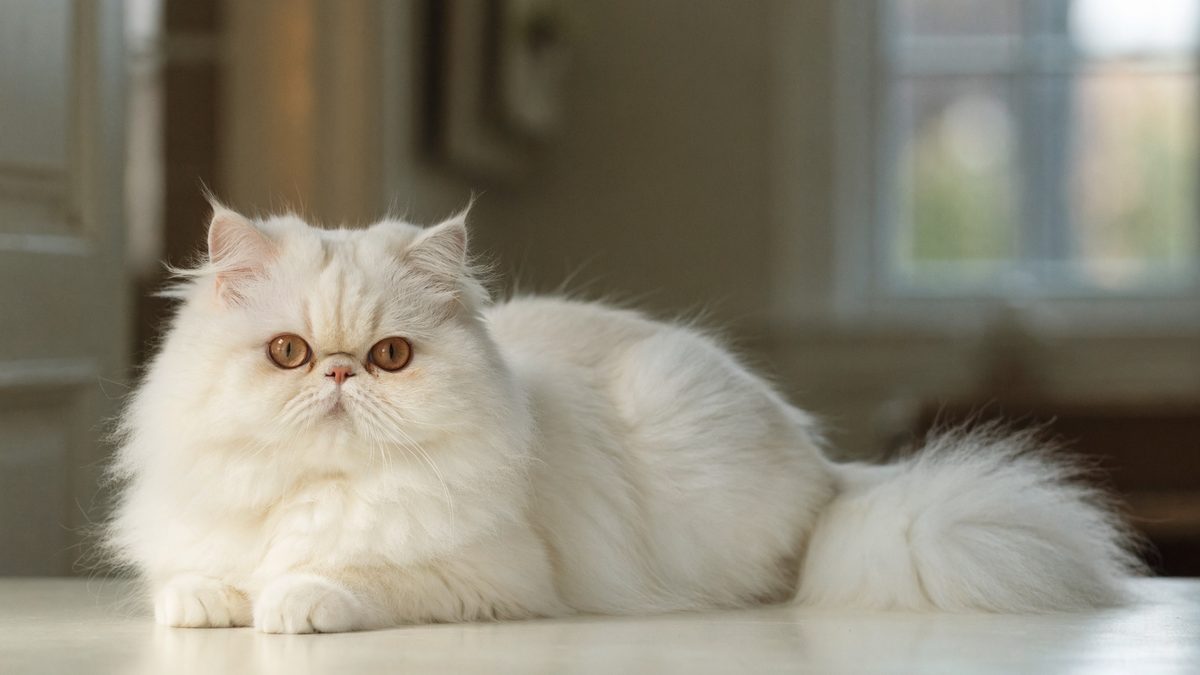
The Persian is a long-haired, cobby-bodied cat bred for a round, massive head and an extremely short nose, and that skull shape explains almost every practical thing about owning one. The coat drives the grooming load, the flattened face drives the breathing, eye and dental risk, and together they drive why this breed struggles more than any other popular cat in Indian heat.
The Cat Fanciers' Association describes the Persian as a cobby type, solidly built with a broad chest, a muscular body and short, heavily-boned legs. The head is round and massive with great breadth of skull, carrying a short snub nose and large round eyes set wide apart. The coat is long and thick, standing away from the body, fine in texture and glossy, with an immense ruff, a deep frill between the front legs, long ear and toe tufts and a very full brush tail.
The breed reached Western Europe around 1626, when an Italian trader returned from Persia with heavily coated long-haired cats. Those cats were selectively bred toward the sturdy, short-nosed animal recognised today, and the Persian was one of six foundation breeds when the CFA was established in 1906. Modern show Persians compete across seven colour divisions, which are Solid, Silver and Golden, Shaded and Smoke, Tabby, Parti-Color, Calico and Bi-Color, and Himalayan.
| Attribute | What the record shows | Source |
|---|---|---|
| Body type | Cobby, broad chest, short heavily-boned legs | CFA standard |
| Head | Round and massive, great breadth of skull, short snub nose | CFA standard |
| Coat | Long, thick, standing off the body, immense ruff, full brush tail | CFA standard |
| Colour divisions | Seven, including Himalayan pointed pattern | CFA standard |
| Mean adult bodyweight | 3.9 kg (SD 0.9) | 3,235 cats, UK |
| Median longevity | 13.5 years (IQR 9.9 to 16.0) | UK primary care |
| Temperament | Playful yet placid, easygoing, devoted, ground-level | CFA standard |
Doll face, punch face and what the difference actually means
Indian sellers split Persians into doll-face and punch-face, and the split is real even though neither term appears in the CFA standard. A doll-face Persian retains a visible nose and a shallower stop. A punch-face or peke-face Persian carries the extreme flattening, with the nose leather set high between the eyes. Indian price guides consistently charge more for the flatter face, quoting punch-face kittens at Rs 20,000 to Rs 35,000 against Rs 12,000 to Rs 25,000 for doll-face, and another guide at Rs 35,000 to Rs 50,000 against Rs 20,000 to Rs 40,000.
Every rupee of the punch-face premium buys measurably worse health. Research grading brachycephaly in 69 Persians found that increasing grades of flattening produced larger extra-orbital parts of the eyeballs, smaller airway areas and more displaced teeth. Indian buyers are paying more for the version of the cat that breathes worse, sees worse and eats worse. That is the single most important sentence on this page.
The Persian is not a rare cat in India. It is the default purebred cat in most Indian metros, which means the market is deep, informal and almost entirely unregistered. Understanding what you are looking at matters more here than it would in a market with real registry coverage.
Persian cat price in India
A Persian cat costs Rs 8,000 to Rs 3,00,000 in India in 2026 depending on which published source you read, and the sources disagree by more than Rs 2,90,000 at the extremes. No single quoted figure is reliable on its own, so the useful thing is to see the spread and understand what drives it.
Bonbeno compared the price bands published by six Indian sources currently visible for this query. They do not agree with each other, and several do not agree with themselves across their own pages.
| Source | Doll face or pet quality | Punch face or flat face | Pedigree, show or imported |
|---|---|---|---|
| Supertails, breed guide | Rs 15,000 to Rs 35,000 | Rs 25,000 to Rs 50,000+ | Rare colours Rs 60,000+ |
| Supertails, cat price guide | Rs 15,000 to Rs 35,000 | Rs 25,000 to Rs 50,000 | Not stated |
| HankPets | Rs 12,000 to Rs 25,000 | Rs 20,000 to Rs 35,000 | Show quality Rs 40,000+ |
| MyKitten | Rs 20,000 to Rs 40,000 | Rs 35,000 to Rs 50,000 | Show quality Rs 50,000+ |
| BARF India | Rs 8,000 to Rs 20,000 | Not split by face type | Registered pedigree Rs 25,000 to Rs 80,000, championship or imported Rs 1,00,000 to Rs 3,00,000+ |
| Mr n Mrs Pet | Rs 20,000 to Rs 90,000+ overall, no face-type split | Not stated | Not stated |
Read the table across rather than down. The floor for a doll-face kitten moves from Rs 8,000 to Rs 20,000 depending purely on who is publishing, a 2.5x difference for what is described as the same animal. The ceiling moves from Rs 40,000 to Rs 3,00,000. Four things drive that spread.
- Face type. Every source that splits by face charges more for the flatter one, and the gap runs Rs 8,000 to Rs 15,000 MyKitten, Persian Cats For Sale in India.
- Pedigree documentation. Registered pedigree kittens are quoted at Rs 25,000 to Rs 80,000 against Rs 8,000 to Rs 20,000 for pet quality with no papers.
- Colour. Rare colours including golden and odd-eyed carry quoted premiums above Rs 60,000, and Chinchilla and Himalayan lines are quoted at Rs 30,000 to Rs 1,00,000+ BARF India, Persian Cat Breed in India.
- Who is publishing. Sites that also sell or broker kittens have a commercial reason to publish a wide band with a high ceiling. Sites publishing an editorial guide tend to quote lower and narrower. Both appear in the table above and you can see which is which.
City variation is claimed but barely evidenced
Indian price pages routinely assert that Delhi and Mumbai run highest while Bengaluru and Kerala run lower. Bonbeno could not find any source that publishes an actual city-by-city Persian price table with a stated method, sample size or collection date. The honest position is that city variation almost certainly exists, driven by cattery running costs and demand, but no reliable published figure quantifies it. We are not going to invent one.
A Persian kitten advertised below Rs 8,000 in an Indian metro is a warning sign rather than an affordable find. Google's own autocomplete shows Indian searchers looking for Persian cats under Rs 2,000, under Rs 1,000 and under Rs 500. Those animals exist in listings, and they come from unscreened, undocumented, often unweaned litters. The saving disappears at the first corneal ulcer or the first kidney scan.
Bonbeno does not broker kitten sales and does not publish breeder listings. The figures above are reported from third-party sources so buyers can see the disagreement themselves rather than trusting whichever page they happened to land on first.
Monthly cost of owning a Persian cat in India
Recurring cost dominates Persian ownership, because a cat with a median longevity of 13.5 years and a coat that needs daily attention costs more every month than almost any other cat in India. Published Indian monthly estimates run from Rs 2,300 to Rs 21,700, which tells you how little agreement there is.
Three Indian sources publish a monthly figure and none of them states a sample size or a collection method. Bonbeno is publishing all three rather than averaging them into a false precision.
| Line item | Supertails, all breeds | BARF India, Persian specific |
|---|---|---|
| Food | Rs 800 to Rs 3,000 | Rs 3,000 to Rs 8,000 (fresh food) |
| Litter and litter box | Rs 300 to Rs 1,200 | Rs 500 to Rs 1,000 (with accessories) |
| Grooming, professional | Rs 500 to Rs 4,000 | Rs 500 to Rs 1,500 per session |
| Routine veterinary | Rs 300 to Rs 2,000 | Rs 3,000 to Rs 6,000 per year |
| Eye and ear care | Not itemised | Rs 300 to Rs 600 |
| Flea and tick prevention | Rs 150 to Rs 1,200 | Monthly, not costed separately |
| Stated monthly total | Rs 2,300 to Rs 21,700 | Rs 5,000 to Rs 12,000 |
A third source puts monthly upkeep at Rs 3,500 to Rs 7,000 without itemising it. Set against the same publisher's own all-breed table, that is a narrower band for a more demanding cat, which is a good illustration of why you should not trust a single monthly number from anyone, including us.
The three Persian-specific lines nobody budgets for
- Daily eye cleaning supplies. BARF India costs this at Rs 300 to Rs 600 a month and calls it non-negotiable for the Persian's facial structure. It is a real recurring line because the tear overflow is anatomical, not occasional.
- Cooling, meaning electricity. A brachycephalic cat under a dense double coat in a city that hit 43.6 C in May needs a cooled room, not a fan. Nobody publishes this cost because it lands on your electricity bill rather than a pet invoice, and it is probably the largest hidden line item in Indian Persian ownership.
- Clip-outs after matting. A skipped week in monsoon humidity turns a groom into a de-matting session or a full clip. Professional grooming is quoted at Rs 500 to Rs 1,500 a session and a de-mat costs more than a routine groom.
- Dental work. Periodontal disease was recorded in 11.3 percent of Persians in a single year of primary care, and 72 percent of purebred brachycephalic Persian and Exotic cats had malocclusions. Scale-and-polish under general anaesthetic is a four-figure cost in every Indian metro.
When we publish cost figures we state the sample size, the cities covered and the collection date. Where we cannot verify a number we say so rather than repeating an unsourced estimate. The monthly totals above are other people's figures, reproduced so you can see how far apart they sit.
Can a Persian cat handle the Indian climate
A Persian cat handles the Indian climate worse than any other popular cat breed in the country, and the reason is structural rather than fixable. Rate its heat tolerance the lowest on the scale. The breed pairs a flattened airway that cannot move air efficiently with a dense double coat built to trap warmth, in a country where May 2026 saw 47.6 C at Banda in Uttar Pradesh and 43.6 C at Delhi's Safdarjung.
Why the flat face is the heat problem
Cats cool themselves mainly by evaporation from the respiratory tract and by grooming saliva onto the coat, not by sweating. A brachycephalic cat is working that system through a compromised airway. Research measuring 69 Persians against domestic shorthairs found that all measured relative areas of the airways were significantly lower in the Persians. Persians usually have small nostrils and a soft palate which is too long, which can lead to severe breathing problems, and brachycephalic obstructive airway syndrome is common in the breed.
That matters in heat because open-mouth breathing is a cat's main emergency cooling route, and a flat-faced cat is the one least able to use it. Veterinary guidance for brachycephalic cats explicitly includes avoiding hot temperatures as part of managing the condition. In a UK context that is advice. In an Indian April it is a survival instruction.
A cat panting is not the same as a dog panting. Signs of brachycephalic airway syndrome include breathing through the mouth, increased noise when breathing, tiring easily, coughing, gagging, retching and vomiting. If your Persian is open-mouth breathing on a hot day, move it to a cooled room and call a veterinarian. Do not wait to see whether it settles.
Then add the coat
The second half of the problem is the double coat. The Persian carries a very long coat with a very thick undercoat, standing away from the body with an immense ruff. That is insulation, and it works in both directions. A cat that cannot breathe efficiently, wearing insulation, in a room at 40 C, has almost nothing left to work with.
| Condition | Where and when | What it does to a Persian |
|---|---|---|
| Dry extreme heat | Delhi, Rajasthan, UP, MP, March to June | Direct heat-stress risk through a compromised airway. Cooled room required, not optional. |
| Humid heat | Mumbai, Chennai, Kolkata, Kerala coast | Evaporative cooling works worse in humid air, so the same temperature is more dangerous than inland. |
| Monsoon humidity | Most of India, June to September | Coat holds moisture at skin level. Matting accelerates and skin infection risk rises. |
| Dust and particulates | Delhi NCR winter, most metros year round | Compromised nasal passages plus airborne particulates. Indoor housing recommended. |
| Hill cold | Himachal, Uttarakhand, Northeast winter | The one climate the coat is actually built for. The face is still a problem, the coat is not. |
The monsoon skin problem is documented, not folklore
Dermatological disorders were the most common disorder group in Persians under UK primary care, affecting 17.9 percent of 3,235 cats, with haircoat disorder the single most common specific diagnosis at 12.7 percent. An Indian climate guide reports that long-haired cats carry substantially higher dermatophyte prevalence than short-haired cats and that prevalence is markedly higher in humid subtropical climates than drier ones. Bonbeno notes those specific comparative figures come from a commercial pet site rather than a study we could open directly, so treat them as directional. The underlying pattern, that a dense coat plus Indian humidity equals more skin disease, is supported by the primary-care data above.
What actually reduces the risk
- Keep the cat in a cooled room through the hot months. Not a fan. A fan moves hot air past a cat that cannot use evaporative cooling well.
- Keep it indoors during peak heat hours. Persians are strictly indoor cats and staying in a cool, clean environment minimises exposure to heat and pollutants. RSPCA guidance for brachycephalic cats is to be extra cautious during warm weather and to encourage them to stay indoors, or somewhere cool, during the hottest parts of the day.
- Comb daily so air can reach the skin. Dead undercoat packed against skin is the opposite of ventilation.
- Watch weight. Symptoms of brachycephalic airway syndrome get far worse in obese cats. An overweight Persian in an Indian summer is two risk factors stacked.
- Keep water available in more than one place. Multiple bowls raise intake, which matters in a breed whose commonest cause of death is renal disease.
The lion cut question
Shaving a Persian for summer is the most argued-about topic in Indian cat groups and the honest answer is that it trades one problem for another. Clipping removes the insulating layer, which does help a heat-stressed cat in the short term, and it removes matted coat that is already causing skin problems. It also removes the coat's protection against direct sun and takes a long time to return, with regrowth reported at anywhere from six months to two years. Bonbeno's position is that a clip is a legitimate veterinary-supported intervention for a badly matted or heat-distressed cat and a poor substitute for daily combing and a cooled room. If you are clipping annually because you cannot keep up with the coat, the coat is not the problem.
Temperament and household fit
The Persian suits quiet indoor households that want a calm, undemanding companion and can commit to daily grooming. The CFA describes the breed as playful yet placid, easygoing and mellow, preferring ground-level activities and combining a calm, even-tempered personality with enduring devotion to its people.
That temperament is genuinely why Indian families choose this cat, and it is genuinely delivered. A Persian is not a climber, not a door-dasher and not a vocal cat. In a fourth-floor flat in Pune with no balcony access, that combination is close to ideal. Owner research on flat-faced cats found character was the top reason for choosing the breed, cited by 92.4 percent of 278 owners, with aesthetic appearance close behind at 87 percent.
Who should buy one
- Good fit. Households with someone home much of the day, a cooled room available through summer, and ten minutes a day free for combing.
- Good fit. Quiet homes, older children, first-time cat owners who want a placid animal and have read the health section below.
- Poor fit. Homes with no reliable cooling in a 45 C city. This is not a lifestyle preference, it is the deciding factor.
- Poor fit. Households that travel often, because grooming cannot be paused and a matted coat compounds fast.
- Poor fit. Anyone buying primarily on appearance who has not budgeted for the eye, dental and kidney work this breed statistically needs.
The behaviour problems that actually show up
Persians are quiet cats, so behavioural complaints tend to be about elimination and grooming rather than noise or destruction. A Persian that stops using the litter box is usually telling you about a urinary problem, a dirty tray or a coat problem around the rear. International Cat Care notes that the bottom area and underside of the tail are prone to becoming stained with faeces, and that care is needed to keep the area clean. A cat with a soiled, matted rear will avoid the tray. That is a grooming failure presenting as a behaviour problem.
A Persian that has become very still, sleeps more than usual and avoids play is often read as the breed being placid. In a brachycephalic cat, reduced activity is also a documented correlate of respiratory difficulty. In a survey of 1,000 cats, sedentary cats had higher respiratory scores. If your calm cat has become calmer, get the breathing checked rather than congratulating yourself on the temperament.
Litter training, carrier training and handling a Persian
To train a Persian, start with the litter box, then carrier training, then daily handling for grooming, in that order. Litter training is usually the easiest part and handling is the part that decides whether the next fifteen years are manageable, because this is a breed that will need its face, mouth and coat touched every single day.
Litter training
Litter training a Persian is normally a matter of setting up correctly rather than teaching anything. Cats arrive with the instinct. Place one more tray than the number of cats, keep the trays away from food and from the noisiest corner of the flat, use an unscented clumping litter, and scoop twice a day. A Persian's coat is the one complication, because long hair around the rear picks up litter and faeces and a cat that finds the tray unpleasant will look for somewhere else. Keeping the rear trimmed and clean is part of litter training in this breed.
Carrier training, and why it matters more here
Carrier train a Persian deliberately, because this breed sees a veterinarian more than most. Persians in UK primary care had at least one disorder recorded in 64.9 percent of cases in a single year, and International Cat Care recommends regular veterinary check-ups at least once a year for purebred cats specifically because they are more likely to suffer physical health problems. A cat that fights the carrier turns every one of those visits into a stress event, and stress is a poor idea in an animal with a compromised airway.
- Leave the carrier out permanently with the door off and bedding inside, so it becomes furniture rather than an event.
- Feed meals in it for two weeks before you ever close the door.
- Close the door for ten seconds, open it, and feed. Build up from there rather than jumping to a car journey.
- Practise short car trips that end at home, not only trips that end at a clinic.
- Cover the carrier with a towel in transit, which reduces visual stress for most cats.
Handling training is the one that pays
Teach a Persian kitten to accept face cleaning, combing and mouth handling in the first weeks home, because the sensitive socialisation period for new experiences, people and other animals begins as early as 2 to 3 weeks and may be closing by 9 to 10 weeks. Most Indian buyers receive a kitten at or after 8 weeks, so part of that window has already passed with the breeder. What is still available to you is quality of experience, which the same guidance identifies as what actually matters.
| Skill | Start | Why it matters in this breed |
|---|---|---|
| Face and eye wiping | Week 1 home | Tear overflow is anatomical and daily |
| Full-body combing | Week 1 home | Many Persians cannot keep their own coat mat-free |
| Mouth and tooth handling | Week 2 home | 72 percent malocclusion rate in the breed |
| Nail handling | Week 2 home | Overgrown nails were the third commonest disorder at 7.2 percent |
| Carrier entry | Week 2 home | This cat will see a vet more than most |
| Bath tolerance | Month 2 | Long coats need periodic bathing that short-coated cats do not |
Physical restraint of a fighting cat is a bad idea in any breed and a worse idea in one with a narrow airway and eyes that protrude beyond the orbital rim. Persian eyeballs sit an average 39.9 percent outside the orbit against 9.9 percent in domestic shorthairs. Scruffing and pinning a struggling flat-faced cat risks both breathing distress and eye trauma. Stop the session, shorten it, and rebuild.
How much exercise a Persian cat actually needs
A Persian needs short, low-intensity, ground-level play two or three times a day rather than sustained activity, and the goal is weight control rather than fitness. The CFA describes the breed as preferring ground-level activities, and pushing a brachycephalic cat into hard exercise is counterproductive.
The reason to bother is obesity, and obesity in this breed is not cosmetic. Symptoms of brachycephalic airway syndrome get far worse in obese cats. A Persian carries a mean adult bodyweight of 3.9 kg, so a cat at 5.5 kg is not slightly heavy, it is roughly 40 percent above the breed mean and it is loading a compromised airway.
- Two or three sessions of five to ten minutes. Wand toys at floor level, not vertical chase.
- Stop before the cat is breathing hard. In a normal cat, panting after play is unusual. In a Persian it is a signal to stop and reassess.
- Use food puzzles instead of a bowl. They deliver activity without exertion and slow down eating, which matters given the mouth conformation.
- Play in the cooled room during summer. A play session in a 38 C living room is a heat-stress event, not enrichment.
- Skip climbing furniture as the main outlet. A cobby cat on short heavy-boned legs is not built for repeated jumping, and hip dysplasia is seen more commonly in Persians than in many other cat breeds.
Tiring easily, and in extreme cases collapsing after exercise, is a listed sign of brachycephalic airway syndrome in cats. If your Persian used to manage five minutes of play and now stops after one, that is a veterinary appointment, not a fitness problem. Respiratory difficulty after activity was reported by 15.8 percent of flat-faced cat owners in one survey of 278 owners.
Grooming a Persian coat in Indian humidity
Groom a Persian every single day, without exception, using a steel comb through to the skin. This is the one non-negotiable in the breed. International Cat Care states plainly that Persians require commitment from their caregiver to help them with grooming and that many cannot keep their coat mat-free on their own.
The CFA specifies the tool. A steel or Teflon-coated comb with long, coarse and fine teeth is essential for keeping the coat free of mats and tangles. A slicker brush alone skims the surface and leaves the packed undercoat that actually mats. In Indian humidity that distinction decides whether you own a groomed cat or a matted one.
What actually happens when Indian owners skip grooming
Skipping is not a cosmetic failure, it is a cascade, and it runs faster in Indian conditions than in the temperate climates most breed advice is written for.
- Day one to three. Loose undercoat starts to knit at the friction points, which are the armpits, behind the ears, the ruff and the rear trousers. Nothing is visible from the top of the coat.
- Week one. Mats form and tighten. A mat pulls skin, so the cat starts avoiding being touched there, which makes the next session harder.
- Week two. The mat traps moisture at skin level. Dermatological disorders are already the most common disorder group in this breed at 17.9 percent, and a warm damp pocket against skin in a Chennai June is the ideal setup for one.
- Week three onward. The cat over-grooms the irritated area, ingests more hair, and hairballs become a problem. Regular grooming is necessary specifically to remove fur so it is not ingested by the cat.
- The endpoint. A clip-out under sedation, which costs more than a year of combs and resets the coat for six months to two years.
Daily face cleaning is a separate job
Clean a Persian's face every day, separately from combing the coat, because the tear overflow is a structural consequence of the skull. Computed tomography of 31 brachycephalic and 15 mesocephalic cats showed that the more pronounced the brachycephaly, the more the facial bones and upper canine teeth are displaced upward, and in severe cases the nasolacrimal drainage system is forced to pass below the canine tooth in a V-shaped course, with drainage function that seems to be inefficient.
In plain terms, the tear duct that should carry tears into the nose is bent out of shape, so the tears run down the face instead. International Cat Care describes the consequence directly, that their eyes run constantly causing tear-staining on the face and sometimes sores due to the skin being always wet. The rust-coloured tear staining that runs from the inner eye corner down either side of the nose is the visible result, and it returns within a day of being cleaned because the cause is anatomical rather than hygienic. Epiphora, meaning tear overflow, was reported in 69.4 percent of 278 flat-faced cats by their owners, and ocular discharge was the fourth commonest specific disorder in UK primary care at 5.8 percent of Persians.
| Task | Frequency | Note |
|---|---|---|
| Comb to the skin | Daily | Steel comb, coarse then fine |
| Face and eye corners | Daily | Damp cotton, one wipe per eye, never reuse |
| Check and clean the rear | Daily | Faecal staining is a known problem area |
| Bath | Periodic, more often in monsoon | Indian guides suggest roughly monthly, weekly to ten-daily in monsoon |
| Dry thoroughly after bathing | Every bath | A damp undercoat in humid weather is the main matting driver |
| Nail check | Weekly | Overgrown nails affected 7.2 percent of Persians |
| Professional groom | As needed | Rs 500 to Rs 1,500 per session in India |
The failure mode Indian owners fall into is the weekend groom. A Persian coat mats on a daily clock, not a weekly one, so a long Sunday grooming session is always a de-matting fight rather than maintenance. Ten quiet minutes each evening, with the cat on your lap and a steel comb, is less total time and a completely different experience for the cat. Bathe on a schedule rather than in response to a smell, and always dry the undercoat fully before the cat is allowed to settle.
Persian cat health risks and lifespan
The Persian carries the heaviest documented health burden of any common cat breed, and the evidence is unusually good because a large UK study examined 3,235 Persians under first-opinion veterinary care. At least one disorder was recorded in 64.9 percent of them in a single year. Read this section before comparing prices.
Lifespan
Persians in UK primary care had a median age at death of 13.5 years, with an interquartile range of 9.9 to 16.0 years, measured across 575 recorded Persian deaths. That is a respectable figure and it is the number Indian pages usually quote when they say Persians live 12 to 17 years. What those pages leave out is the disease load carried across those years, and what causes the end of them.
A second UK study puts a lower number on the same breed, and both numbers are correct. VetCompass life tables built from 7,936 confirmed cat deaths give the Persian a life expectancy at age 0 of 10.93 years, with a 95 percent confidence interval of 9.63 to 12.23 years, on 80 recorded Persian deaths and an observed lifespan range of 0.01 to 21.68 years. No Indian page carries either figure, and none explains why the two differ.
| Figure | What it measures | Study |
|---|---|---|
| 13.5 years (IQR 9.9 to 16.0) | Median age at death. Half the Persians that died were older than this and half were younger. It describes cats that already reached the end of their lives, so it cannot tell you how many Persians never got that far. | O'Neill 2019, 575 Persian deaths |
| 10.93 years (95% CI 9.63 to 12.23) | Life expectancy at age 0. A life-table average of how long a Persian kitten can expect to live, calculated across the whole population, so every cat lost young is counted in it. | Teng 2024, 80 Persian deaths |
The distance between the two is information rather than a contradiction. A median only counts positions in a queue, so it barely moves when the cats below it die very young. A life expectancy from birth is an average, so every kitten lost in its first year pulls it down hard. The Persian figures sit about two and a half years apart, and that distance is the early-death tail made visible Teng KTY, Brodbelt DC, Church DB.
Two cautions before leaning on either number. The studies cover different cats in different years, so the measure is not the only thing separating them. And the life-table estimate rests on 80 Persian deaths against 575 in the breed-specific study, which is why its confidence interval is more than two and a half years wide. Use the 13.5 years when the question is how long a Persian that reaches old age tends to last. Use the 10.93 years when the question is what a kitten bought today is worth planning for. Averaging the two produces a number that measures nothing.
What Persians are actually treated for
| Disorder | Cats affected | Prevalence |
|---|---|---|
| Haircoat disorder | 411 | 12.7% |
| Periodontal disease | 365 | 11.3% |
| Overgrown nails | 233 | 7.2% |
| Ocular discharge | 188 | 5.8% |
| Dermatological group, all | 578 | 17.9% |
| Ophthalmological group, all | 496 | 15.3% |
| Dental group, all | 397 | 12.3% |
The pattern is the point. The three biggest categories are skin, eyes and teeth, and all three trace directly to the two things buyers select for, which are the coat and the flat face.
Brachycephalic obstructive airway syndrome
Brachycephalic obstructive airway syndrome is common in Persians, and it means difficulty breathing caused by a very narrow external opening of the nose, narrow nasal passages or nasopharynx, or a relatively long soft palate, with breathing difficulties that can be severe in some cases. A survey of 1,000 cat owners with 494 valid conformational photographs found that reductions in nose position ratio and muzzle ratio were significantly associated with respiratory difficulty score, with a strong negative correlation of r = -0.56. Flatter face, worse breathing, measured rather than asserted.
The RSPCA puts the mechanism in one sentence. Cats with brachycephaly have the normal amount of soft tissue in the mouth and throat, but in a much smaller space due to their shortened skulls, which restricts movement of air when breathing. Nothing was removed to make the face flat. The same tissue was packed into a shorter skull, and specific physical features include narrow nostrils, a long soft palate and a narrow windpipe.
The Sieslack study measured what that flattening does structurally in 69 Persians against 10 domestic shorthairs. All measured relative areas of the airways were significantly lower in the Persians. Diagnosis is partly visual, since stenotic nares can be assessed by looking, while an elongated soft palate or everted laryngeal saccules may require sedation to examine.
The signs to watch for, because cats hide them
Learn the subtle signs, because a cat in respiratory or dental discomfort will not tell you. The RSPCA states directly that cats often hide their pain and discomfort, so noticing they are suffering can be difficult, and that brachycephalic cats experience chronic pain and behavioural inhibition. No Indian page currently publishes this checklist, so here it is.
- Noisy breathing such as snorting, snoring, wheezing or rasping.
- Disrupted sleep or difficulty sleeping, which is easy to miss in a breed that sleeps a lot anyway.
- Exercise intolerance, or collapse and fainting after playing.
- Open-mouth breathing, gagging, retching or vomiting.
- Dropping food when eating, chewing on one side only, drooling, bad breath or jaw chattering, all of which point at the mouth.
- Pawing at the mouth or rubbing the eyes, plus brown stained fur in the corner of the eye.
- Changes in eating habits, including avoiding a food the cat previously ate happily.
Eyes
An extremely flat face causes large protruding eyes with reduced ability to close the eyelids, increasing exposure of the cornea and contributing to keratitis and corneal sequestrum. The Sieslack measurements quantify the protrusion. The mean extra-orbital part of the eyeball was 39.9 percent on the right and 40.22 percent on the left in Persians, against 9.90 percent and 8.81 percent in domestic shorthairs, and individual Persians ranged as high as 65.72 percent. Roughly two-fifths of the eyeball sitting outside the bony socket is not a cosmetic quirk.
Teeth
A prospective multicentre study examined 50 purebred brachycephalic cats, 42 Persian and 8 Exotic. Malocclusions were observed in 36 of them, which is 72 percent, crowding of the teeth was evident in 28 cats at 56 percent with the incisors most commonly affected, and malpositioned teeth were noted in 32 cats at 64 percent. International Cat Care explains the mechanism, that skull abnormalities mean the jaws and teeth are affected as well as the nose, so the teeth do not align properly and the cat cannot bite and chew properly, and that jaw deformities can lead to dental disease and to problems with eating, drinking and grooming. Dental disease in this breed is therefore a conformation problem before it is a hygiene problem, which is why brushing alone does not solve it. The RSPCA describes the same overcrowding, that brachycephalic cats have the same number of teeth but a much smaller jaw, so the teeth overlap or do not erupt, causing periodontal disease.
Polycystic kidney disease, and the test to demand
Polycystic kidney disease is the inherited condition every Indian Persian buyer should ask about by name, because it is common, it is testable, and almost no Indian listing mentions it. PKD is an autosomal dominant condition with variable penetrance caused by a variant in the PKD1 gene, and only one copy of the gene, from either parent, is needed to cause cysts to develop. It is an inherited autosomal kidney disease most commonly identified in Persian and Persian-related cats, in which positive cats develop multiple cysts of various sizes in the renal cortex and medulla, and occasionally in other abdominal organs.
Reported prevalence has been high wherever Persians have been screened. An ultrasound screening study of 76 Persian and Persian-related cats found 36.8 percent positive, with 38 percent among the Persians specifically and 33 percent among Persian-related cats. Across the published literature, around 36 to 49 percent of all Persians have been reported to have the condition. International Cat Care records that it was found in more than a third of all Persian and Exotic shorthaired cats in the 1990s when screening tests became available.
| Population | Reported prevalence | Method |
|---|---|---|
| Persian and Persian-related cats, Tehran, 76 cats | 36.8% | Ultrasound screening |
| Persians specifically within that group | 38% | Ultrasound screening |
| Persians across the published literature | Around 36% to 49% | Multiple studies, mostly ultrasound |
| Persian and Exotic shorthairs, 1990s | More than a third | Early screening |
| Insured and genetically tested cats, 14 breeds | 2.08% overall PKD1 variant frequency | Genetic testing, 62,304 cats |
The last row is the good news and it is worth understanding. A large study using 110,325 insured and 61,968 genetically tested cats across 14 breeds found the PKD1 variant frequency decreased by 42.6 percent between cats born before 2019 and those born after 2022, and the Persian was one of three breeds showing a statistically significant decline. Genetic testing works. It is reducing the disease in populations where breeders use it.
International Cat Care's advice to prospective Persian buyers is explicit. Always ask the breeder to show proof that they have tested negative for PKD, for example the queen's PKD certificate. A genetic test detects the PKD1 mutation at any age or stage of disease, while ultrasound is most sensitive only once the cat is over 10 months old. A seller who cannot produce a PKD result for the parents has not screened. In India that is most of them, which is exactly why asking is worth doing.
The other inherited conditions
Beyond PKD, International Cat Care lists hypertrophic cardiomyopathy, progressive retinal atrophy, hip dysplasia seen more commonly than in many other cat breeds, alpha-mannosidosis, Chediak-Higashi syndrome in blue-smoke Persians with yellow eyes, and suspected inherited cryptorchidism. Studies have also shown increased predisposition in Persians to feline idiopathic cystitis, calcium oxalate urinary stones, dystocia, pyometra, stillborn kittens, pulmonary carcinoma, aspergillosis, intervertebral disease and entropion. An Indian veterinary chain names hypertrophic cardiomyopathy and polycystic kidney disease as the two conditions Persian owners in India should watch for, alongside chronic tearing, dental problems, breathing difficulties and facial dermatitis.
Breeding a Persian is a separate and worse decision
Do not breed a Persian casually, because the same skull and pelvis conformation that causes the breathing problems also causes birthing problems. A study of dystocia in cats under UK primary emergency veterinary care found brachycephalic queens had 3.27 times the odds of dystocia compared to non-brachycephalic queens, and purebred queens had 2.53 times the odds compared with crossbred queens. Caesarean section was performed in 394 of 1,102 dystocic queens, which is 35.8 percent, and 72.6 percent of those caesareans included an ovariohysterectomy. An earlier UK breeding survey reported higher dystocia odds in Persian, Siamese-type and Devon Rex cats compared to other breeds. The mechanical reason is pelvic. Brachycephalic cats are reported to be less able to give birth naturally because the pelvis may be too small to accommodate the larger head sizes of their kittens, so the kittens cannot pass through without medical or surgical treatment.
What actually kills Persians
Renal disease was the commonest grouped cause of death at 23.4 percent of 435 recorded deaths, followed by neoplasia at 8.5 percent and mass-associated disorder at 8.0 percent. Nearly a quarter of Persian deaths being kidney-related, in a breed with a documented inherited kidney disease and a genetic test for it, is the strongest possible argument for demanding that test.
Feeding a Persian cat in India
Feed a Persian for two things its face makes difficult, which are picking food up and drinking enough water. The flattened jaw changes how the cat eats, and the breed's commonest cause of death is renal disease, so hydration is not a side issue.
The mechanical problem nobody mentions
A Persian struggles to pick food up. In short-nosed Persian cats the teeth do not align properly, so they cannot bite and chew properly, and jaw deformities can lead to potential problems with eating, drinking and grooming. With 72 percent malocclusion and 56 percent dental crowding documented in purebred brachycephalic Persians and Exotics, the cat scooping at kibble with the underside of its tongue is normal for the breed and worth designing around.
- Use a shallow, wide bowl. A deep narrow bowl pushes a flat face into the sides and the whiskers into the rim.
- Raise the bowl slightly. A small elevation reduces the neck angle for a cat that cannot extend its muzzle into the dish.
- Choose kibble the cat can actually pick up. Some brands make a shape intended for flat-faced cats. It is not marketing, it is a real mechanical fix.
- Feed wet food as a meaningful share of intake. Water taken with food is the easiest hydration win in a breed whose commonest cause of death is renal.
- Split intake across two or three meals rather than free-feeding, because free-feeding a low-activity cat produces the obesity that worsens airway signs.
Body condition, not the number on the pack
Keep a Persian lean and use body condition rather than a feeding chart. Mean adult bodyweight in the UK primary-care population was 3.9 kg with a standard deviation of 0.9 kg. That is a small cat under a large coat, which is exactly why owners miss weight gain until it is substantial. You cannot see a Persian's waist. You have to feel for the ribs through the coat, weekly, with your hands.
Indian availability and the fresh-food question
Commercial complete cat diets are widely available across Indian metros and online, and Indian fresh-feeding advocates argue for raw or cooked diets built around a high animal-protein share, with one Indian supplier specifying 70 to 85 percent animal protein and a maximum of 10 to 15 percent organ meat. Bonbeno's position is that a fresh diet can be appropriate when it is formulated by someone qualified to balance it, that home-mixed diets are the commonest route to a nutritional deficiency, and that the decision belongs with a veterinarian who has examined your cat rather than with a supplier selling the diet.
A Persian bringing up hairballs regularly is telling you the coat is not being combed enough. Regular grooming is necessary to remove fur so it is not ingested Vetic, How to Take Care of Your Persian Cat…. Fibre supplements and hairball pastes manage the symptom. A daily comb removes the cause. Persistent vomiting is also a listed sign of brachycephalic airway syndrome, so do not assume every episode is a hairball.
Feeding quantities depend on the individual cat's age, weight, body condition and health status. Set them with a registered veterinarian who has examined your cat, particularly in a breed with documented renal, dental and airway disease.
Persian kitten: month by month through the first year
A Persian kitten's first year has three jobs, which are building handling tolerance, completing the vaccination course, and getting the inherited-disease picture confirmed. Get those three right and the remaining twelve years are mostly maintenance.
| Age | What is happening | What you do |
|---|---|---|
| 8 to 12 weeks | Kitten comes home. Sensitive socialisation period is closing | Daily gentle handling, face wiping, comb introduction. Litter tray set up. Core vaccination underway. |
| 3 to 4 months | Vaccination course completing | Core kitten vaccines repeat every 2 to 4 weeks until 16 weeks of age or older. Rabies from 12 weeks. |
| 4 to 6 months | Adult coat starting to come in | Grooming load rises sharply. Establish the daily ten minutes now, before the full coat arrives. |
| 6 to 9 months | Sexual maturity approaching | Discuss neutering timing with your vet. Do not breed, given the dystocia odds. |
| 10 to 12 months | PKD becomes reliably visible on ultrasound | Ultrasound is most sensitive once the cat is over 10 months of age. Genetic testing works at any age. |
| 12 months | First adult health check | Booster vaccine at 12 months or 12 months after the last kitten dose. Baseline dental and eye assessment. |
Vaccination, in Indian conditions
Core vaccines for the cat protect against feline panleukopenia, feline herpesvirus 1 and feline calicivirus, with rabies core in areas where the disease is endemic. India is such an area, so rabies is not optional here. Global guidance recommends beginning the core course at 6 to 8 weeks of age and repeating every 2 to 4 weeks until 16 weeks of age or older, because up to a third of kittens may fail to respond to a final core vaccine given at 16 weeks and some still carry blocking maternal antibody at 20 weeks. Rabies is given as a single dose as early as 12 weeks with revaccination one year later.
Indian sellers frequently release Persian kittens at 5 to 6 weeks, before weaning is complete and before the core vaccination course has started. A kitten sold that young has missed part of the sensitive socialisation window with its mother and littermates, which the AAHA and AAFP guidelines place as early as 2 to 3 weeks and closing by 9 to 10 weeks. Do not accept a kitten under 8 weeks, and treat an offer to hand one over at 5 weeks as disqualifying information about the seller.
The two health questions to settle in year one
- PKD status. If you did not get a parental PKD certificate at purchase, get the cat itself tested. The genetic test detects the PKD1 mutation at any age or stage of disease. Knowing early changes how you monitor kidney function for the next decade.
- Airway grade. Ask your vet to note, at the 12-month check, how the nostrils look and whether there is audible upper airway noise at rest. Stenotic nares are diagnosed visually. A written baseline is what lets you tell, three years later, whether things have got worse.
Persian cat vs the Indian domestic shorthair
Choose an Indian domestic shorthair over a Persian if heat, health cost or grooming time is a real constraint in your household, and choose a Persian only if you can commit to daily grooming and year-round cooling. The comparison is not close on health, and it is not close on cost either.
The Indian domestic shorthair, the cat most Indian households call the billi, is not a breed. It is a landrace, shaped by generations of survival in the exact climate you live in, with a short coat, a normal muzzle and no selected conformational defect. That last point is the whole comparison.
| Factor | Persian | Indian domestic shorthair |
|---|---|---|
| Purchase price | Rs 8,000 to Rs 3,00,000 | Free to nominal adoption fee |
| Skull conformation | Brachycephalic, airway areas significantly reduced | Mesocephalic, normal airway |
| Heat tolerance | Lowest of any common cat in India | Adapted to the local climate by generations of selection |
| Coat | Long dense double coat, immense ruff | Short single coat, self-maintaining |
| Daily grooming | Mandatory. Many cannot keep the coat mat-free alone | Essentially none required |
| Documented inherited disease | PKD around 36% to 49% reported, plus HCM, PRA and more | No breed-specific inherited disease burden |
| Disorder rate in one year | 64.9% had at least one recorded | Not separately studied in India |
| Eye protrusion beyond orbit | Mean 39.9% | Mean 9.9% in domestic shorthairs |
| Dystocia risk if bred | 3.27x odds for brachycephalic queens | Baseline; crossbred queens had lower odds than purebred |
| Monthly running cost | Rs 3,500 to Rs 12,000 by published estimates BARF India, Persian Cat Breed in India | Food, litter, vaccination and parasite control only |
| Temperament | Placid, ground-level, quiet | Variable by individual, generally more active and independent |
Be fair to the Persian on the two points where it genuinely wins. It is more predictable in temperament, because a breed selected for placidity delivers placidity more reliably than a landrace does, and that matters if you have small children or a very quiet home. It is also better suited to strict indoor life, since a cat that prefers ground-level activity is easier to keep happy in a small flat than a cat that wants to patrol.
If you want a calm indoor cat in an Indian city and you are choosing on merit rather than appearance, the Indian domestic shorthair is the better animal for the climate, the budget and the odds. If you want a Persian specifically, want it enough to comb it daily for fifteen years, and can keep a room cooled through summer, it can be done well. What does not work is buying a Persian for the look and discovering the maintenance afterwards, which is the pattern behind the abandonment cases Indian rescues describe.
The Himalayan and Exotic Shorthair footnote
Two related cats come up in the same search. The Himalayan is a pointed Persian and sits inside the CFA's Persian colour divisions, so everything on this page applies to it, and Indian sources quote it at Rs 18,000 to Rs 55,000+. The Exotic Shorthair is the short-coated version of the same skull, which removes the grooming load and keeps the brachycephaly. Both were included alongside Persians in the dental study that found 72 percent malocclusion. An Exotic is a reasonable answer to the coat problem and no answer at all to the face problem.
Mistakes Indian Persian cat owners actually make
The failure modes for this breed in India are predictable, and most of them come from treating a Persian like a normal cat with a nicer coat. These are the ones that do the most damage, in order.
- Buying without asking about PKD. Around 36 to 49 percent of Persians have been reported to carry polycystic kidney disease, renal disease is the commonest cause of death in the breed at 23.4 percent, and a genetic test exists that works at any age. Not asking is the single most expensive omission an Indian buyer makes.
- Paying extra for the flatter face. Indian sellers charge Rs 8,000 to Rs 15,000 more for punch-face kittens, and higher brachycephaly grades produce reduced airway areas, greater eye protrusion and more dental displacement. The premium buys the problem.
- Assuming a fan is enough in summer. A brachycephalic cat cannot use evaporative cooling efficiently, veterinary guidance tells brachycephalic cats to avoid hot temperatures, and Indian May temperatures reached 47.6 C in 2026. Moving hot air across a cat that cannot pant well does very little.
- Grooming weekly instead of daily. Many Persians cannot keep their coat mat-free on their own, and dermatological disorders are already the commonest disorder group in the breed at 17.9 percent. The weekend groom is a de-matting fight that both of you learn to dread.
- Treating constant eye discharge as normal and ignoring it. The overflow is anatomical, caused by a deformed nasolacrimal drainage system, but the sores that develop on permanently wet skin are not something to accept. Clean daily and get any change in the discharge examined.
- Never opening the cat's mouth. Periodontal disease affected 11.3 percent of Persians in a single year and 72 percent of purebred brachycephalic Persians and Exotics had malocclusions. A cat that has never had its mouth handled will not let you check, and by the time it stops eating the problem is advanced.
- Letting the cat get fat because it is calm. Symptoms of brachycephalic airway syndrome get far worse in obese cats, and a Persian's coat hides a mean bodyweight of only 3.9 kg.
- Breeding the family Persian once, for kittens. Brachycephalic queens carry 3.27 times the odds of dystocia and 35.8 percent of dystocic queens in one study needed a caesarean. This is not a casual decision and it is not a way to recover the purchase price.
- Buying a 5-week-old kitten because it is available. The sensitive socialisation period runs as early as 2 to 3 weeks and may be closing by 9 to 10 weeks, and the core vaccination course starts at 6 to 8 weeks. A kitten separated too early arrives with problems you cannot undo.
This is not a failure of intelligence, it is a failure of information. In a survey of 278 owners of flat-faced cats, 75.1 percent were not aware of breathing disorders before acquiring their cat, and 43.1 percent were unaware of other breed-related health disorders. Meanwhile 69.4 percent went on to report tear overflow and 40.6 percent reported snoring. Three quarters of buyers found out afterwards. That is what this page exists to change.
Adopting a Persian, and buying responsibly if you do buy
Adopt a Persian rather than buying one, because Indian shelters and rescues now regularly take in surrendered Persians, and an adopted adult removes the two largest unknowns in a kitten purchase. If you do buy, verify the PKD status of both parents before any money moves.
Persians end up in Indian rescue, and increasingly so
The adoption route for this breed is real, not a token gesture. Indian rescue organisations publicly describe a shift, noting that there was a time when Persian cats were rarely seen in animal shelters and that this is no longer the case. The pattern behind it is straightforward and follows directly from everything above. A cat is bought for its appearance, the daily grooming turns out to be daily, the summer turns out to need a cooled room, the eye discharge turns out to be permanent, and the household gives up.
That is genuinely good news for a prospective owner. An adopted adult Persian comes with a known temperament, a visible coat condition, an observable breathing pattern and, often, an existing veterinary history. Every one of those is an unknown when you buy a kitten. You are also not paying Rs 20,000 to Rs 50,000 to a market that produces the surrenders.
Where to look
- Metro rescue organisations and shelters. Most Indian metros have cat-specific rescue groups that rehome via foster networks rather than kennels.
- Breed-surrender posts in local pet communities. Persian rehoming appeals circulate constantly in Indian pet groups, usually from owners rather than rescues.
- Veterinary clinics. Clinics often know about surrendered or abandoned cats before any listing appears.
- Ask the rescue what it knows. A foster who has lived with the cat for six weeks can tell you about breathing at night, litter box habits and grooming tolerance. That is worth more than any pedigree document.
If you buy, the verification checklist
India has no meaningful regulatory coverage of cat breeding, and no registry with the reach that the Kennel Club of India has on the dog side. That means verification falls entirely on you.
- Ask to see the queen's PKD certificate. This is International Cat Care's explicit advice to prospective Persian buyers. Ask for the sire's too, and treat a verified laboratory result naming the cat as the only acceptable form of proof. A seller who does not know what PKD is has not screened for it.
- Ask about hypertrophic cardiomyopathy screening, which is the other major inherited condition listed for the breed.
- See the mother with the litter, in the place the kittens were raised, and watch her breathe.
- Listen to the kittens breathe at rest. Audible noise at rest in a kitten is a serious sign, since a very narrow nasal opening or long soft palate can cause severe breathing problems.
- Look at every kitten's eyes and rear. Persistent discharge and faecal staining tell you how the litter has been kept.
- Refuse any kitten under 8 weeks, and refuse any seller who offers to meet you somewhere other than where the cats live.
- Get a written veterinary health certificate dated close to handover, separate from any claim about pedigree.
A breeder worth buying from will bring up PKD before you do, will show you a certificate rather than describe one, will tell you honestly that the flatter faces in their line breathe less well, and will ask you what your summer cooling arrangements are. A seller who tells you Persians are low-maintenance because they are lazy has told you everything you need to know.
Bonbeno does not broker kitten sales, does not recommend individual breeders and does not publish listings. If the honest conclusion of this page is that you should adopt an adult Indian domestic shorthair instead, that is a conclusion we are comfortable with.
Persian cat questions Indians actually search
Do Persian cats need AC?
Yes, in most of India a Persian needs a genuinely cooled room through the hot months rather than a fan. The breed pairs a brachycephalic airway with reduced airway areas against a dense double coat, and veterinary guidance for brachycephalic cats includes avoiding hot temperatures. Indian May 2026 temperatures reached 47.6 C at Banda and 43.6 C at Delhi Safdarjung.
persian cat price in india under 5000
No responsibly bred Persian cat sells under Rs 5,000 in India. The lowest published pet-quality band starts at Rs 8,000 and most editorial guides start at Rs 12,000 to Rs 15,000. A Persian advertised under Rs 5,000 typically means an unweaned kitten, no PKD screening, no vaccination and no veterinary history, and the saving disappears at the first eye or kidney problem.
persian cat price in india doll face
Doll-face Persian prices in India are quoted from Rs 12,000 to Rs 40,000 depending on the source, against Rs 20,000 to Rs 50,000 for punch-face. HankPets quotes Rs 12,000 to Rs 25,000, Supertails quotes Rs 15,000 to Rs 35,000 and MyKitten quotes Rs 20,000 to Rs 40,000. The doll face is both cheaper and healthier, because higher brachycephaly grades reduce airway area and increase eye protrusion.
persian cat lifespan
Persian cats had a median age at death of 13.5 years, with an interquartile range of 9.9 to 16.0 years, in a UK study of 3,235 Persians under first-opinion veterinary care. A later UK life-table study reports a lower figure for a different measure, giving Persians a life expectancy at age 0 of 10.93 years with a 95 percent confidence interval of 9.63 to 12.23 years. The first counts only cats that had already died, while the second averages across every Persian from birth including those lost young, so both are true at once. Indian breed pages commonly quote 12 to 17 years. The more useful figure is that 64.9 percent of those Persians had at least one disorder recorded in a single year.
are persian cats expensive
Yes, and the purchase price is the smaller half. Published Indian purchase prices run Rs 8,000 to Rs 3,00,000 and published monthly running costs run Rs 2,300 to Rs 21,700 across sources, driven by daily grooming, daily eye care, dental work and summer cooling. Over a 13.5 year median lifespan the recurring cost dominates the total by a wide margin.
are persian cats friendly
Yes. The Cat Fanciers' Association describes Persians as playful yet placid, easygoing and mellow, combining a calm even-tempered personality with enduring devotion to their human companions, and compatible with children and other pets. Owner research found character was the top reason for choosing a flat-faced cat, cited by 92.4 percent of 278 owners.
What are common health issues in Persian cats?
Skin, eye and dental disorders dominate. In 3,235 UK Persians the commonest specific disorders were haircoat disorder at 12.7 percent, periodontal disease at 11.3 percent, overgrown nails at 7.2 percent and ocular discharge at 5.8 percent. Brachycephalic obstructive airway syndrome is common, and polycystic kidney disease has been reported in around 36 to 49 percent of Persians.
How can I keep my Persian cat healthy in India's climate?
Keep it strictly indoors in a cooled room through summer, comb the coat to the skin daily so air reaches the skin, clean the face every day, keep it lean because obesity worsens airway signs, and provide water in several places. Persians should stay indoors in a cool clean environment to minimise exposure to heat and pollutants.
How often should I groom my Persian cat?
Every day, using a steel comb that reaches the skin. The CFA specifies a steel or Teflon-coated comb with long, coarse and fine teeth as essential for keeping the coat free of mats. Many Persians cannot keep their coat mat-free on their own, and in Indian monsoon humidity a skipped week produces mats that trap moisture against the skin.
Is it cruel to give a Persian cat a lion cut?
No, but it is a poor substitute for daily combing. A clip legitimately helps a badly matted or heat-distressed cat, and it also removes sun protection and takes six months to two years to regrow according to Indian grooming guides. If you are clipping annually because the coat is unmanageable, the underlying problem is the grooming routine rather than the coat.
Why do Persian cats' eyes water constantly?
Because the tear drainage duct is physically deformed by the flattened skull. CT imaging of 31 brachycephalic and 15 mesocephalic cats showed that greater brachycephaly displaces the facial bones and upper canines upward, forcing the nasolacrimal drainage system into a V-shaped course below the canine tooth with drainage that appears inefficient. Tear overflow was reported in 69.4 percent of 278 flat-faced cats.
Should I ask for a PKD test before buying a Persian in India?
Yes, and ask for it by name. Polycystic kidney disease is autosomal dominant, so one copy from either parent causes cysts, and around 36 to 49 percent of Persians have been reported affected. International Cat Care advises always asking the breeder for proof of a negative PKD test, such as the queen's PKD certificate. The genetic test works at any age, while ultrasound is most sensitive after 10 months.
Are Persian cats good for first-time cat owners in India?
Only if the owner has read the health and grooming sections first. The temperament suits a beginner, since Persians are placid, quiet and ground-level. The maintenance does not, because daily combing, daily face cleaning and year-round cooling are not optional. An Indian domestic shorthair is the easier first cat by a wide margin.
Can I breed my Persian cat at home in India?
No, this is not a casual decision. Brachycephalic queens had 3.27 times the odds of dystocia compared with non-brachycephalic queens, and purebred queens had 2.53 times the odds compared with crossbred queens, in a study of cats under UK primary emergency veterinary care. Caesarean section was performed in 35.8 percent of dystocic queens overall.
Compare with similar breeds
Persian Cat sits in 1 Bonbeno group. Each one compares it directly against the breeds it is genuinely an alternative to, on the same figures.