
Cat breed profile
British Shorthair Price in India, Health and Full Breed Guide
What a British Shorthair actually costs in India, why published prices disagree by 34 times, the two DNA tests the British registry has required since March 2025, and the life expectancy figure no Indian seller publishes.
Quick answer
The British Shorthair price in India runs Rs 20,000 to Rs 2,06,999 in 2026, with published sources disagreeing by roughly 34 times. Two facts change the decision and no ranking Indian page carries either. UK primary-care records put life expectancy for British cats at 9.58 years, not the 12 to 20 years sellers publish, and Britain's cat registry has required a Normal PKD DNA result for active registration since 1 March 2025.
This guide is general information for Indian pet owners and is not a diagnosis. Always consult a registered veterinarian near you before acting on anything you read here, and treat any sudden change in your cat's condition as urgent.
British Shorthair at a glance
What a British Shorthair actually is
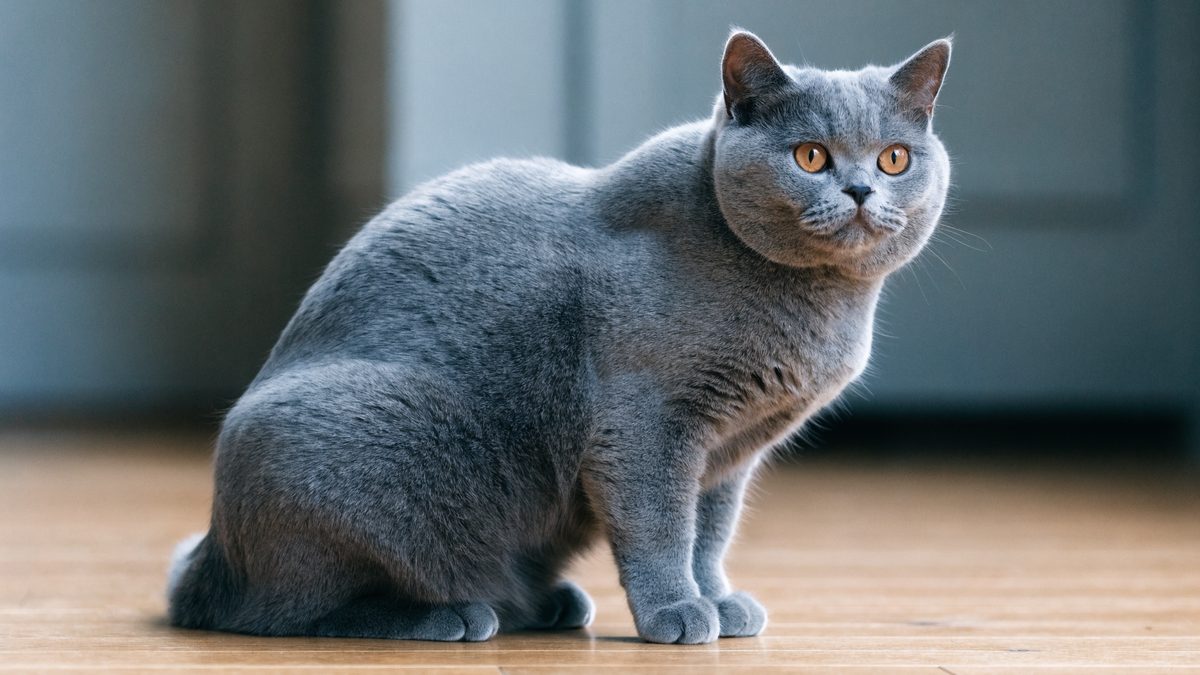
A British Shorthair is a medium to large, compact, heavily boned pedigree cat with a round head, large round eyes, short strong legs and a short, very dense coat that is firm and crisp rather than soft Governing Council of the Cat Fancy. British…. It is the most popular pedigree cat in Britain, where half of all kittens registered with the Governing Council of the Cat Fancy each year are British Shorthairs. In India it is sold under a dozen different price bands and at least one registration claim that cannot be true, which is why this page starts with what the breed is before it touches what it costs.
The breed is old and it is deliberately unexaggerated. The CFA standard opens by saying individuals should convey an overall impression of balance and proportion in which no feature is exaggerated to foster weakness or extremes, and it disqualifies a definite nose stop or nose break, a foreshortened head structure that results in narrowed nares, and any evidence of hybridisation producing the Himalayan pattern. Read that list twice if you have been shown a flat-faced grey kitten and told it is a British Shorthair. A flat face is not a premium feature in this breed. It is a disqualification.
The breed standard, in the three registries that matter
Three registries publish a British Shorthair breed standard and they agree on the important things. Where they differ is in how they weight the parts of the cat, which tells you what each body considers the defining feature.
| Section | CFA points | TICA points |
|---|---|---|
| Head (skull, muzzle, chin, ears, eye shape, neck) | 25 | 35 |
| Body (torso, legs and paws, tail) | 35 | 35 |
| Coat (texture, length, density) | 20 | 24 (length 12, texture 12) |
| Colour and eye colour | 20 | 6 (pattern and colour) |
CFA gives 35 of 100 points to the body and 20 to the coat, with texture, length and density scored as one block. TICA gives 35 to the head and splits the coat into length and texture at 12 points each, leaving only 6 points for pattern and colour. Neither registry treats colour as the main event. Every Indian seller page you will read treats coat colour as the primary price driver Wrapinfur. British Shorthair Price in India… Fluffyn. British Shorthair Price in India…. That gap between what the standard rewards and what the market charges for is the first thing worth knowing.
The double coat question, where the registries genuinely disagree
Four registries describe this coat and they do not use the same words, so Bonbeno prints all four rather than picking the convenient one.
| Registry | Published wording |
|---|---|
| CFA | "Short, very dense, well bodied, firm to the touch, with a crisp, resilient texture. Not double coated or woolly." |
| FIFe | "Short, dense, not lying flat and with a good undercoat. Texture should be crisp to touch." |
| GCCF | "Short, dense and of a firm crisp texture. The coat should not be flat lying. A soft coat that lacks density and texture is undesirable." |
| TICA | "Straight, dense, standing away from the body... So dense that it is difficult to see the skin when parting the hair... Firm, crisp, plush." |
Read the first two rows together. CFA states in terms that the coat is not double coated. FIFe requires a good undercoat, which is the definition of a double coat. Those two positions cannot both be complete descriptions of the same ideal cat, and no Indian page ranking for this query notices that the registries disagree. What all four do agree on is the operative property: very dense, crisp, standing away from the body, and never soft, woolly or flat lying. Wikipedia's summary captures the consensus, describing the texture as plush rather than woolly or fluffy, with a firm crisp pile that breaks noticeably over the cat as it moves.
That distinction matters commercially, because Indian pages use the phrase "dense plush double coat" to sell a grooming schedule, including professional grooming every two to three months Supertails. Cat Price in India 2026 GoodPaws. British Shorthair, breed info. Density is real under every standard. Matting is not, because TICA states the coat does not tangle and that a quick comb through easily removes loose dead hair. One ranking seller page goes further and tells buyers the breed has "long, silky coats" that require more maintenance, which is a description of a different animal entirely, and GCCF lists an over-long or fluffy coat in an adult as a withholding fault Governing Council of the Cat Fancy. British….
Size, weight and the three to five year clock
A British Shorthair takes a full three to five years to reach full maturity and development, a sentence that appears in the CFA general standard itself. That single fact reframes almost every buying decision on this page. The kitten you pay for at twelve weeks is not a small version of the adult. Its head, jowls and bone will keep filling out through its third, fourth and sometimes fifth year, and a male will develop larger jowls than a female. Anyone telling you a nine-month-old cat is "fully grown, show quality" is describing a cat that is roughly a third of the way through its development.
| Source | Adult weight | Other figures given |
|---|---|---|
| TICA | 9 to 18 pounds (roughly 4.1 to 8.2 kg) | Described as a heavy, solid cat |
| GoodPaws | 3.5 to 7.5 kg | Height 30 to 36 cm |
| Mr n Mrs Pet | 3.5 to 8.5 kg | Height 11 to 14 inches |
| CFA standard | No weight stated | Females less massive in all respects, males with larger jowls |
Notice that the registry with the actual breed standard publishes no weight at all. CFA describes proportion, balance and bone, not kilograms. The kilogram figures on Indian pages come from breed-guide convention rather than from a standard, and they matter less than they look, because a British Shorthair at 7 kg can be a correctly built muscular adult or an overweight cat carrying two kilos of fat. TICA states the distinction plainly: the weight should come from massive muscular bodies, not from an excess of food. The feeding section of this page turns that into a check you can run at home.
Where the breed came from, and why it matters medically
The British Shorthair was built twice, and the second build is the reason two inherited diseases sit in the breed today. Harrison Weir developed the cat from the ordinary British street cat by selective breeding, and the forerunners were shown as "English Shorthair cats" at the earliest cat shows. Between 1914 and 1918 breeders crossed the developing breed with the Persian, which introduced the longhair gene.
The second rebuild is the important one. Numbers were badly depleted after the Second World War, so breeders outcrossed to maintain genetic diversity, using the Russian Blue, the Burmese and the Chartreux, and then, in the GCCF's own words, "In order to try and restore type and boning, breeders found it necessary to use Persians";. TICA records the same reconstruction, listing domestic shorthairs, Russian Blues and Persians among the outcrosses used after the war.
Polycystic kidney disease is caused in cats by an autosomal dominant mutation in exon 29 of the polycystin-1 gene, found mostly in Persian and Persian-related breeds. A 2015 case series described polycystic kidney disease in four British Shorthair cats, two of them carrying that exact Persian mutation, and stated the cause directly: "This likely reflects introduction of this mutation into the British shorthair breeding line because of previous outcrossing with Persian cats";. The post-war Persian rescue of the breed's type is the same event that put a kidney disease into its gene pool. That is why the DNA test in the health section is not optional.
The longhair gene from the Persian crosses never left either. Longhair kittens still appear occasionally in British Shorthair litters, and it is now possible to gene test whether a cat carries longhair or breeds true for shorthair. Those longhaired cats were sold as pets for decades before enthusiasts pushed for separate recognition. The GCCF Council recognised the name British Longhair on 15 February 2017 and granted the breed Championship status in November 2021. TICA had already granted the British Longhair championship status in May 2009, and the British Shorthair itself in June 1979. Under the current GCCF registration policy the British Longhair is an allowable outcross as a parent for British Shorthair kittens.
Six checks that separate a pedigree British Shorthair from a grey street cat
India's price gap between a Rs 6,000 kitten and a Rs 2,00,000 kitten is mostly a gap in documents, and the physical checks below cost nothing and take ninety seconds. Run them before you discuss money. Each one comes straight from a published breed standard.
- Check the nose in profile. CFA calls for a gentle dip with no stop or break, and disqualifies a definite nose stop or nose break. GCCF withholds certificates for a pronounced nose stop, a snub nose, a narrow nose leather or a reduced nasal aperture. A flat face means Persian or Exotic influence, not a better British Shorthair.
- Part the coat over the shoulder. TICA's test is that the coat should be so dense it is difficult to see the skin when you part the hair. A coat that parts easily to bare skin, or that lies flat along the spine, is a GCCF fault.
- Feel the coat texture. It should feel crisp and resilient, not soft. GCCF lists a soft coat that lacks density and texture as undesirable, and an over-long or fluffy coat in an adult as a withholding fault.
- Look at the chest and toes for white. CFA disqualifies a locket or button on any solid-colour British Shorthair, and disqualifies white anywhere on tabby and tortoiseshell patterns. TICA withholds all awards for lockets. A single white chest patch on a blue kitten is not a charming marking. It is a registry-level fault.
- Count the toes and check the tail. Five in front and four behind, and any tail defect is a CFA disqualification. Run your hand down the whole tail to the tip. A kink you can feel is disqualifying.
- Check the eye set and colour. Eyes should be large, round, well opened, set wide apart and level. CFA disqualifies eyes set on the bias, incorrect eye colour, and green rims in adults where gold or copper is required. TICA disqualifies crossed eyes.
None of these six checks proves a cat is registered. They only prove it is not obviously outside the standard. The paperwork checks in the price and adoption sections are what settle registration, and in India that is where the real money is being made and lost.
British Shorthair price in India
A British Shorthair costs between Rs 6,000 and Rs 2,06,999 in India in 2026 depending entirely on which published source you open, a spread of roughly 34 times for an animal every source describes in the same words. Bonbeno compared eight sources visible for this query on the same day. They do not agree with each other, and two of the highest-ranking pages do not agree with themselves.
Read the table across, not down. The disagreement is the finding. No number in it is Bonbeno's own estimate, and none of them is an offer.
| Source and SERP position | Pet or basic quality | Registered, show or premium | Imported or top of range |
|---|---|---|---|
| Supertails, position 1 | Rs 20,000 to Rs 60,000 overall, no quality split | Not stated | Not stated |
| Mr n Mrs Pet, position 2 | Rs 70,000 to Rs 90,000 in the text, Rs 40,000 to Rs 80,000 on its own product card | Rs 80,000 to Rs 1,30,000 in the text, Rs 70,000 to Rs 1,10,000 on the card | Rs 90,000 to Rs 1,50,000+ champion bloodline |
| Wrapinfur, position 3 | Rs 40,000 to Rs 70,000 pet quality | Rs 80,000 to Rs 1,20,000 show quality, Rs 90,000 to Rs 1,50,000+ golden shaded | Rs 1,20,000+ imported bloodline |
| Fluffyn, position 5 | Rs 20,000 to Rs 45,000 from a verified breeder, Rs 6,000 to Rs 15,000 from an unverified source | Not stated | Not stated |
| Khan Kittens, position 6 | No price published, WhatsApp for a quote | Not stated | Not stated |
| GoodPaws, position 9 | Rs 20,000 to Rs 30,000 basic in its price panel, Rs 60,000 to Rs 80,000 in its own FAQ | Rs 35,000 to Rs 80,000 verified with registration, Rs 70,000 to Rs 90,000 in the FAQ | Not stated |
| HappyPet | Rs 30,000 to Rs 1,00,000 overall, no quality split | Not stated | Not stated |
| Pet India Online | Rs 30,000 to Rs 70,000 pet quality | Rs 70,000 to Rs 1,20,000+ show quality | Rs 1,20,000 to Rs 2,50,000+ foreign bloodlines |
| Puppiezo, live listings | Rs 76,499 for the cheapest named kitten listed | Not stated | Rs 2,06,999 for the most expensive named kitten listed |
The floor for a pet-quality kitten moves from Rs 20,000 to Rs 70,000 depending purely on who is publishing, and the ceiling moves from Rs 60,000 to Rs 2,50,000 Mr n Mrs Pet. British Shorthair Kittens… Pet India Online. British Shorthair India. Bonbeno will not average those into a consensus, because an average would produce a number no seller in India has ever quoted anyone. Four forces drive the spread and only two of them are real.
- Whether the publisher also brokers the sale. The narrowest, lowest band comes from the pet pharmacy that sells food rather than cats. The widest, highest bands come from marketplaces that take a cut of the transaction Puppiezo. British Shorthair Cat Price. A high published ceiling makes a mid-price listing feel like a bargain, which is exactly what a wide published band is for.
- Coat colour and pattern. Sellers name coat colour first among price factors, listing golden shaded at Rs 90,000 to Rs 1,50,000+ against pet quality at Rs 40,000 to Rs 70,000 from the same seller on the same page. Colour is genuinely in the standard, but it carries only 6 of 100 points at TICA and 20 at CFA, and eye colour is a further 5 The Cat Fanciers' Association. British…. You are being asked to pay a doubling for the least heavily weighted section of the breed standard.
- Registration paperwork. This is where the money is, and where the largest single error on the Indian SERP lives. See the next subsection before you pay a registration premium.
- Import claims. Foreign bloodlines are quoted at Rs 1,20,000 to Rs 2,50,000+. An import claim is a documentable claim. Ask to see the import paperwork, the health certificate and the pedigree issued by the exporting registry, and check that the registry named on it actually registers cats.
The FCI registration premium is being charged for a document that cannot exist
The page holding position two on this query sells three tiers of British Shorthair. Its middle tier is the "FCI-Registered British Shorthair", quoted at Rs 80,000 to Rs 1,30,000 in the page text and Rs 70,000 to Rs 1,10,000 on its own product card, against a basic tier from the same seller. The same page carries a heading reading "Best Organisations for Registering a British Shorthair Cats in India";. Depending on which of that page's own numbers you use, the FCI badge is being sold for a premium of roughly Rs 10,000 to Rs 40,000.
The Federation Cynologique Internationale states on its own website, in its own words, that it is the World Canine Organisation, that it has 101 members and contract partners each issuing their own pedigrees, and that it recognises 364 breeds. Canine means dog. FCI recognises no cat breeds and issues no cat pedigrees. There is no such document as an FCI-registered cat.
If a seller quotes you a higher price for an FCI-registered British Shorthair, ask to photograph the FCI pedigree and to be given the FCI registration number so you can check it. There is nothing to check. The cat registries that actually issue British Shorthair pedigrees are the GCCF in Britain, CFA, TICA, FIFe and the WCF. One Indian seller does claim WCF-lineage certification, which is at least a real cat federation, though that seller publishes no price at all and asks buyers to request a quote on WhatsApp.
What registration should actually buy you in 2026
A pedigree is only worth paying for if the registry behind it enforces something. The GCCF's British Shorthair registration policy, revised on 27 June 2026, enforces two specific things and both of them are health tests.
- PKD. With effect from 1 March 2025, a British Shorthair may be registered on the Active Register only if it has itself been tested normal for polycystic kidney disease, or both its parents have been tested normal, with the test certificate supplied alongside the registration application.
- ALPS. With effect from 1 March 2025, all British Shorthair imports from another registry to be registered active must be accompanied by evidence of a valid negative autoimmune lymphoproliferative syndrome test.
- Both, for imports. All applications to register an imported British Shorthair on the active register must be accompanied by proof of Normal results from PKD and ALPS tests taken in accordance with the breed's genetic testing method.
- Outcross parents. Any British Longhair used as a parent must be tested negative in accordance with the same genetic health testing policy.
That is what a registration policy looks like when it means something. Not one Indian page ranking for this query names PKD testing, ALPS testing or the GCCF registration policy at all. If you are paying a registration premium and the certificate does not come with a PKD result on it, you are paying for stationery.
British Shorthair price by city, where the sources contradict each other outright
Three Indian sources publish a British Shorthair price by city. They disagree on every city, in the same direction, by up to four times. None of them states a sample size, a collection method or a date of collection.
| City | Mr n Mrs Pet | Wrapinfur | Fluffyn, verified breeder |
|---|---|---|---|
| Delhi | Rs 70,000 to Rs 1,25,000 | Rs 50,000 to Rs 1,20,000 | Rs 20,000 to Rs 38,000 |
| Mumbai | Rs 75,000 to Rs 1,35,000 | Rs 60,000 to Rs 1,30,000 | Rs 28,000 to Rs 45,000 |
| Bangalore | Rs 75,000 to Rs 1,25,000 | Rs 45,000 to Rs 90,000 | Rs 25,000 to Rs 42,000 |
| Chennai | Rs 75,000 to Rs 1,35,000 | Rs 40,000 to Rs 80,000 | Rs 22,000 to Rs 38,000 |
| Hyderabad | Rs 70,000 to Rs 1,30,000 | Rs 45,000 to Rs 85,000 | Rs 20,000 to Rs 35,000 |
| Pune | Rs 75,000 to Rs 1,25,000 | Rs 45,000 to Rs 90,000 | Rs 22,000 to Rs 38,000 |
| Kolkata | Not stated | Rs 40,000 to Rs 75,000 | Not stated |
| Ahmedabad | Not stated | Rs 40,000 to Rs 80,000 | Not stated |
| Jaipur | Rs 75,000 to Rs 1,25,000 | Not stated | Not stated |
| Lucknow | Rs 70,000 to Rs 1,20,000 | Not stated | Not stated |
Look at Hyderabad. One source puts the floor at Rs 70,000, another at Rs 45,000 and a third at Rs 20,000 Wrapinfur. British Shorthair Price in India… Fluffyn. British Shorthair Price in India…. That is a 3.5 times difference in the same city in the same year. City variation almost certainly exists, driven by breeder availability and transport, but no published Indian source states a method that would let you trust its city numbers. Treat a city table as a negotiating anchor set by the seller, not as market data.
The one honest thing on the Indian SERP, and what it implies
Fluffyn is the only ranking page that splits its price table into a verified breeder column and an unverified source column, and the gap it publishes is large. It quotes Mumbai at Rs 28,000 to Rs 45,000 from a verified breeder against Rs 8,000 to Rs 15,000 from an unverified one, and Hyderabad at Rs 20,000 to Rs 35,000 against Rs 6,000 to Rs 11,000. That Rs 6,000 figure is the real floor of this market and it deserves a sentence of its own.
A blue British Shorthair and a well-fed grey Indian domestic shorthair look similar in a phone photograph and completely different under the six checks in the overview section. At Rs 6,000 to Rs 15,000, nobody has paid the 47 US dollars for a PKD1 DNA test on the parents, nobody has paid for an echocardiogram, and there is no registry file to check. You may still get a healthy, lovely cat. You are not buying a pedigree, and you should not pay a pedigree price for one.
One live listing page is worth reading closely for what it shows about the top of the market. Puppiezo lists individually named British Shorthair kittens at Rs 76,499, Rs 92,599, Rs 94,999, Rs 98,999, Rs 1,70,299, Rs 1,74,999, Rs 1,99,999, Rs 2,05,999 and Rs 2,06,999. Every one of those top-end prices sits above the highest published guide ceiling on the same SERP except one. Bonbeno does not broker kitten sales and does not publish breeder listings. We report published figures so buyers can see the disagreement for themselves and budget against the truth rather than against a marketing band.
What a British Shorthair costs to keep, month after month
Published Indian monthly cost figures for a British Shorthair range from Rs 2,800 to Rs 15,000, a spread of more than five times, and the highest figure comes from the source that also quotes the widest purchase price. Budget on the honest structure rather than on a single headline number, because the recurring spend is predictable and the one-off spend is not.
Here is every published Indian maintenance cost figure Bonbeno could find for this breed, in one place.
| Source | Stated monthly cost | What it says the money covers |
|---|---|---|
| HappyPet | Rs 2,800 basic lifestyle, Rs 4,200 premium | Food Rs 1,500 to Rs 2,000, healthcare Rs 500 to Rs 700, grooming Rs 800 to Rs 1,500 |
| GoodPaws | Rs 3,000 to Rs 7,000 | Not itemised |
| Fluffyn | Rs 3,500 to Rs 7,000 | Food Rs 2,000 to Rs 4,000, vet Rs 700 to Rs 2,000, grooming Rs 500 to Rs 1,000 |
| Mr n Mrs Pet | Rs 3,000 to Rs 8,000 | Food, routine veterinary visits, vaccinations, grooming |
| Wrapinfur | Rs 5,000 to Rs 15,000 | Food Rs 2,500 to Rs 6,000, litter Rs 1,000 to Rs 2,500, grooming Rs 500 to Rs 2,000, toys Rs 500 to Rs 2,000, vet and supplements Rs 500 to Rs 2,500 |
| Pet India Online | Rs 6,000 to Rs 12,000+ | Includes vet care at Rs 1,500 to Rs 4,000 |
Notice what the itemisations have in common. Every source loads the largest line onto food, and every source that itemises grooming puts it between Rs 500 and Rs 2,000 a month Fluffyn. British Shorthair Price in India… Wrapinfur. British Shorthair Price in India…. That grooming line is the softest number on the list, because it is priced against a coat description the breed standards contradict. CFA says the coat is not double coated or woolly, TICA says it does not tangle and that a quick comb through easily removes loose dead hair The International Cat Association. British…. A cat whose coat does not mat does not need a salon every two months.
The first-year cost, built from the bottom up
Bonbeno does not have Indian invoice data, so the table below is a structure, not a quote. The purchase price is taken from the published bands in the price section, the veterinary items are the ones the published guidelines actually call for, and the genetic test prices are the laboratory's own published prices converted at an approximate rate. Every row names its source or is marked as unpriced.
| Item | Published figure | Where the figure comes from |
|---|---|---|
| Kitten purchase, verified breeder | Rs 20,000 to Rs 45,000 | Fluffyn verified-breeder column |
| Kitten purchase, marketplace listing | Rs 76,499 to Rs 2,06,999 | Puppiezo live named listings |
| Adoption instead of purchase | Rs 0 to Rs 1,500 | Certified Indian shelters, city-wise |
| Core kitten vaccine course | Not published in rupees by any source read | Three or more doses every 3 to 4 weeks from 6 to 8 weeks, final dose no earlier than 16 weeks |
| Rabies vaccine | Not published in rupees by any source read | Single dose at 12 to 16 weeks, revaccinate one year later |
| PKD1 DNA test on the kitten or its parents | 47 US dollars per animal | UC Davis Veterinary Genetics Laboratory published price |
| Monthly food, litter and routine care | Rs 2,800 to Rs 15,000 per month | Range across five Indian sources Wrapinfur. British Shorthair Price in India… |
| Cardiac screening echocardiogram | Not published in rupees by any source read | The screening test used in the only British Shorthair prevalence study |
Two rows in that table are the point of it. The PKD1 test is 47 US dollars for one animal, submitted as a cheek swab taped to a barcoded form. Against a Rs 1,00,000 kitten that is a rounding error, and it tests for the single most common inherited disorder in cats. Yet no Indian page ranking for this query mentions it. Meanwhile the same pages will confidently quote you Rs 1,000 a month for grooming a coat that does not mat.
Where the unbudgeted money actually goes
The recurring costs are boring and small. The costs that break an Indian household budget are the ones nobody quotes, and for this breed they are cardiac and renal. Hypertrophic cardiomyopathy was diagnosed in 8.5 percent of 329 British Shorthairs screened in Denmark, at a median age of just 2.7 years. Polycystic kidney disease produces cysts that often appear before 12 months of age and renal failure at a later age. Neither is a one-consultation problem. Both mean repeat imaging, medication and, for arterial thromboembolism, an emergency with a poor prognosis: in a Tehran referral series, thromboembolism occurred in 36 cats and only three survived after surgical intervention.
Spend the cost of one month's premium food on paperwork instead. Ask for the PKD Normal certificate on the kitten or both parents, the ALPS Normal certificate if the line was imported, and the date and result of the parents' most recent echocardiogram Granstrom S, Godiksen MT, Christiansen M. A breeder who has those three documents has already spent the money that protects you. A breeder who has none of them has not, and the difference will show up on your veterinary bills rather than on the invoice.
Insurance is worth a line because most Indian buyers of this breed do not consider it. Pet insurance exists in India but is not universal, terms differ sharply on congenital and hereditary conditions, and a diagnosis that arrives before you buy a policy is a pre-existing condition. If you intend to insure, do it before the first cardiac screen rather than after it.
British Shorthair in Indian weather, heat and monsoon
A British Shorthair copes with Indian weather better than any long-coated breed and worse than an Indian domestic shorthair, and the honest position is that no study has ever measured heat tolerance in this breed specifically. What is measurable is the coat, the climate and the behaviour, and all three point the same way: this is an indoor cat in India, in a room you can cool, for eight months of the year.
Start with the climate you are actually keeping the cat in. The India Meteorological Department declares a heatwave when the maximum temperature reaches at least 40 degrees Celsius in the plains and 30 degrees in hilly regions and is 4.5 to 6.4 degrees above normal, or when it touches 45 degrees. In 2026 the highest maximum reported was 48 degrees at Banda in Uttar Pradesh, and Andhra Pradesh alone recorded 325 suspected heatstroke cases in humans between 1 March and 19 May. That is the environment. A cat bred for the British climate did not evolve for it.
The coat question, settled by the standards rather than by sellers
Indian pages consistently tell you the British Shorthair has a dense plush double coat that makes Indian summers uncomfortable and requires air conditioning. The heat conclusion is sound. The coat claim is contested at registry level, as the overview section sets out: CFA states "Not double coated or woolly" while FIFe requires "a good undercoat", and GCCF and TICA describe extreme density without using either term Federation Internationale Feline. British… Governing Council of the Cat Fancy. British… The International Cat Association. British….
For heat purposes the argument does not matter, because insulation comes from trapped air and every standard agrees the coat is dense enough that you cannot easily see the skin through it. What does change is the grooming implication. A very dense coat needs the dead hair combed out so air can move through it. It does not need clipping, and no registry standard read for this page recommends a salon appointment.
Why the breed's temperament makes heat more dangerous, not less
The British Shorthair is a low-activity cat. TICA calls it not very active, says it does not engage in high-flying acrobatics, and notes that it is quite content with its own company. GCCF describes the personality as strong, stable and, when mature, prone to laziness, and states plainly that the British cat has a slow metabolism.
A slow metabolism generates less internal heat, which helps. A sedentary cat that is content to lie still in one spot for hours is the risk, because it will settle in a room and stay there. International Cat Care makes the specific point that although most cats can look after themselves, a cat confined to a room or conservatory that gets very hot is at risk of heatstroke. In an Indian flat, the room that gets very hot is usually the one with the west-facing window and the closed door, and this is exactly the breed that will not bother to move out of it.
- Excessive panting. Cats do not normally pant. Panting in a resting cat is an emergency signal, not a warm-day quirk.
- Lethargy or tiredness beyond this breed's already considerable baseline for lying still.
- Drooling.
- Fever or a high temperature.
- Vomiting.
- Collapse or unconsciousness, at which point you are already past the point of home management.
The practical measures International Cat Care recommends translate directly to Indian homes. Replace the water several times a day, because refreshed water encourages a cat to drink. Provide several cool and shady spots rather than assuming the cat will find one. Open windows for a breeze, or run a fan under supervision. Expect the cat to lie on tiles or in the bath, because porcelain and tile stay cool and cats gravitate to them. Cool mats and a frozen water bowl wrapped in a towel work as well for a British Shorthair as for any other cat.
City by city, where this breed is easier and harder to keep
| City type | The specific problem | What it changes in practice |
|---|---|---|
| Delhi, Jaipur, Lucknow, Chandigarh | Dry extreme heat, with 48 degrees recorded in Uttar Pradesh in 2026 | Cooling is not optional from April to June. Plan for power cuts, because a sealed flat without a fan heats fast |
| Mumbai, Chennai, Kolkata, Kochi | High humidity year round, which reduces evaporative cooling | Airflow matters more than raw temperature. A ceiling fan plus cross ventilation beats a closed air-conditioned room the cat cannot reach |
| Bangalore, Pune, Hyderabad | Milder, but with a sharp March to May peak | Manageable without permanent cooling in most months. Do not assume a mild average means a safe afternoon |
| Monsoon, everywhere | Persistent damp in a very dense coat | Comb more often, dry the cat properly after any soaking, and check between the toes and under the chin for damp skin problems |
| Shimla, Dehradun, Gangtok, Darjeeling | The closest Indian match to the breed's native climate | The easiest Indian conditions for this breed by a wide margin |
No peer-reviewed study has measured thermal tolerance, panting threshold or heat-related mortality in British Shorthairs specifically, in India or anywhere else. Every heat claim on every Indian British Shorthair page, including the confident ones about air conditioning being essential in Mumbai and Chennai, is an inference from coat description rather than a measurement. Bonbeno's inference is the same one, drawn from the same coat description plus the IMD temperature record and general feline heatstroke guidance International Cat Care. Hazardous weather…. We are telling you it is an inference. They are not.
One more Indian reality belongs here. Because this cat is quiet, unobtrusive and unlikely to roam far from home, Indian owners are tempted to let it out onto a balcony or terrace. GCCF advises that the British should be supervised outside because its trusting nature leaves it vulnerable to mishap. On an Indian terrace in May, add heat to that list. Grille your balconies, and treat an unsupervised sunny terrace in summer the same way you would treat a parked car.
Temperament, and who should not buy this cat
The British Shorthair temperament is calm, quiet, undemanding and physically undemonstrative, and the single most common Indian buying mistake is expecting a cuddly teddy bear because the cat looks like one. TICA's own description is blunt: these are loyal and devoted companions that are not lap cats, and they do not like to be carried around, preferring to keep their feet firmly on the floor.
GCCF describes the personality as being just like the appearance, strong and stable, and, when mature, prone to laziness. It is not a talkative breed. The British form strong bonds with their people and are patient and tolerant companions. TICA adds the detail that matters in a busy Indian household: these cats are quiet and unobtrusive, they look before they leap, and they are quite content with their own company, quietly amusing themselves in your absence and waiting patiently for your return.
Put those two registry descriptions side by side with what the Indian marketplaces promise and the mismatch is obvious. One ranking page sells the breed on "Teddy Bear Looks" and "Affectionate Yet Reserved" in the same list of headings. The looks are real. The reserve is real. The teddy bear is a photograph, not a behaviour.
What the cat will and will not do
| What buyers expect | What the breed bodies describe | Source |
|---|---|---|
| A lap cat that wants to be held | Not lap cats. Want to be where you are, snuggling beside you on the sofa. Do not like to be carried around | TICA |
| A vocal, chatty companion | Not a talkative breed | GCCF |
| An energetic playmate | Not very active. Mad moments as kittens, but no high-flying acrobatics | TICA |
| A cat that pines when left alone | Quite content with its own company, quietly amusing itself in your absence | TICA |
| A cat that needs constant supervision with kids | Tolerant with children and dogs, patient and tolerant companions | TICA, GCCF |
| A cat that will keep itself trim | Loves food, sedentary ways, can quickly gain weight | TICA |
TICA also notes a sex difference worth knowing before you choose a kitten. The happy-go-lucky males command respect but welcome attention from everyone, while the more serious females expect proper form and etiquette from those whose attentions they accept. That is registry language for a real pattern: in this breed, a male is usually the more openly sociable choice for a family with children. It is also the sex at far higher cardiac risk, which the health section covers, so the choice is not free.
British Shorthairs in Indian apartments
This breed suits Indian apartments better than almost any other pedigree cat, and the reasons are structural rather than sentimental. It is quiet, so a shared wall in a Mumbai building is not a problem. It does not require outdoor access, which matters when the alternative is a road or an unrailed terrace. It is content alone, which matters when both adults in the household commute. And it does not climb your curtains, because it does not leap much at all Governing Council of the Cat Fancy.…. Ranking Indian pages agree, calling apartment suitability outstanding and excellent Fluffyn. British Shorthair Price in India…, and on this point they are right.
The catch is that apartment suitability and welfare are not the same thing. GCCF states that the British is suitable as an indoor-only companion but that this intelligent animal will need suitable stimulus, and that care must be taken to ensure any tendency to weight gain is managed. An apartment cat that is calm, independent and never bored-looking can be quietly under-stimulated and steadily gaining weight for two years before anyone notices. The exercise and feeding sections turn that warning into a routine.
Who should not buy a British Shorthair
- Anyone who wants a cat to carry around. This breed dislikes it, and the registry says so in plain words. If your picture of cat ownership involves being followed around with a cat draped over your shoulder, buy a different breed.
- Anyone buying for a small child who wants to hold the pet. Tolerant is not the same as willing. The breed will accept a household with children calmly, but a cat that prefers its feet on the floor and a five-year-old who wants to pick it up is a mismatch you have to manage, not one the cat will solve.
- Anyone who will free-feed. TICA's warning is explicit and this is the breed's defining health risk, not a footnote.
- Anyone who cannot cool a room reliably. A dense coat plus an Indian April plus a cat that will not move out of a hot room is a combination worth taking seriously.
- Anyone unwilling to ask for health-test paperwork. Buying this breed without a PKD result is the single largest avoidable risk in the transaction.
Who should buy one: a working household that is out for nine hours, lives in a flat, wants a companion rather than an entertainer, can keep one room cool, and will weigh the cat every month. That is a large share of urban India, which is exactly why this breed is selling here.
Litter training, handling and enrichment
To train a British Shorthair, work with its intelligence and against its inertia, because this is a clever cat that sees no reason to hurry. Litter training is usually trivial. The training that actually matters in this breed is handling, because you are going to need a cat that tolerates a veterinary examination table, a carrier and eventually an ultrasound probe on its chest.
The litter box, and the one Indian-specific problem
Set up the litter box before the kitten arrives, in a quiet corner away from the food bowl, and the rest usually takes care of itself. Cats are naturally inclined to bury waste in a loose substrate, and a confident, unhurried breed adapts quickly. The standard rule is one box per cat plus one spare, so a single British Shorthair gets two boxes.
The Indian complication is heat and smell rather than behaviour. In a Chennai or Delhi summer, an uncovered litter box in a closed flat becomes unpleasant fast, and the common fix is a hooded box, which traps heat and ammonia around a cat that is already dealing with a warm room. If you use a hood, scoop twice a day rather than once. A cat that starts avoiding a hot, smelly hooded box will find somewhere cooler to go, and you will be told the cat has a behaviour problem when it has a ventilation problem.
A British Shorthair that stops using its litter box, strains, or produces small frequent urinations needs a veterinary examination the same week, not a training plan. Urinary problems are common in indoor cats and can become an obstruction, which is a genuine emergency in a male cat. Rule out disease first, then look at the box.
Handling training, the part that is not optional in this breed
TICA states that British Shorthairs do not like to be carried around and prefer to keep their feet firmly on the floor. Now read the health section and note that the only screening test for hypertrophic cardiomyopathy in this breed is a conventional echocardiogram, performed on a conscious cat lying on its side while a stranger holds a probe against its ribs. Those two facts collide at about the two-year mark unless you train for it from twelve weeks.
- Start carrier work in week one. Leave the carrier open in the room with a blanket in it and feed the kitten inside it. A carrier that is only produced for vet visits becomes a predictor of bad days.
- Handle the chest and belly daily. Thirty seconds, with the cat on a towel on a table, while it eats something it likes. You are teaching the position an echocardiogram uses, months before anyone needs it.
- Touch the paws and part the coat weekly. This is grooming practice and a body check at the same time, and it gets the cat used to being examined rather than only being stroked.
- Weigh the cat on a home scale monthly. Teach the kitten to sit on a bathroom scale in its carrier for a treat. Weight is the single most useful number you will track in this breed, and a cat that fights the scale never gets weighed.
- Practise mouth handling. Lift the lip, look at the gums, put the lip back, reward. Dental disease is on every published health list for this breed, and a cat that lets you look at its mouth gets diagnosed earlier.
Enrichment for a cat that will not ask for it
GCCF states that the British is suitable as an indoor-only companion but that this intelligent animal will need suitable stimulus, and that any tendency to weight gain must be managed. That is one sentence carrying two instructions, and Indian owners typically follow neither, because the cat never complains.
TICA gives the specific remedy: encouraging them to play burns calories off while toning muscle, with teaser toys providing gymnastic entertainment, training your cat to fetch adding running to their day, and chasing a laser light pen giving their muscles a real workout. Two things follow from that. First, fetch is explicitly on the list, so this breed can be trained to retrieve. Second, the responsibility for starting a play session is yours, every day, because the cat will not initiate it.
- Two short sessions beat one long one. Ten minutes morning and ten minutes evening fits an Indian working day and matches a cat that plays in bursts.
- Feed part of the ration from a puzzle feeder. It slows eating, adds activity and directly attacks the breed's central health problem.
- Use a wand toy rather than your hands. A heavy, powerfully built cat playing with hands teaches a bite you will regret at 7 kg.
- Finish a laser session with a physical catch. End on a toy the cat can actually hold, so the hunt sequence completes.
- Add vertical space at low height. This breed looks before it leaps and does not do acrobatics, so a tall precarious tower is wasted. Two or three broad, stable steps to a window ledge get used.
Clicker training works well here for the same reason obedience is slow: the cat is intelligent and food-motivated but not eager to please. Pay it, and it will learn to sit, come, target a stick and enter its carrier on cue. Ask it for enthusiasm, and it will look at you and go back to sleep.
Exercise, and what happens to a British Shorthair without it
A British Shorthair needs two structured play sessions a day, roughly ten to fifteen minutes each, initiated by you, because the cat will not ask. This is the lowest exercise requirement of any popular pedigree cat in India and also the one with the highest cost of ignoring it, because the consequence in this breed is not boredom. It is a heart risk.
TICA states the case directly: these cats love food and, with their sedentary ways, can quickly gain weight, so it is important to keep a careful eye on portions to make sure they do not get fat. Their weight should come from massive muscular bodies, not from an excess of food, and encouraging them to play burns calories off while toning muscles. GCCF adds the physiological reason: the British cat has a slow metabolism, and while a healthy mature British will have a well-padded muscular body, that padding must not be allowed to turn from muscle to excess fat.
The number that should change how you read this section
A retrospective study of 7,013 cats referred to seven veterinary hospitals in Tehran between 2020 and 2024 found hypertrophic cardiomyopathy in 638 of them, a clinical prevalence of 9.1 percent within that referral population. Logistic regression identified two significant predictors of an HCM diagnosis: adult age, with an odds ratio of 5.70, and high body condition score, with an odds ratio of 4.05. The same study reported the third highest within-breed prevalence in British Shorthairs at 45.0 percent, behind Persians at 54.8 percent and Sphynx at 46.9 percent.
That 45.0 percent figure describes British Shorthairs referred to a hospital because a cardiac problem was already suspected. It is not the prevalence in the general British Shorthair population, and anyone quoting it as such is misusing it. The general-population figure for this breed comes from Denmark, where 28 of 329 cats screened prospectively, or 8.5 percent, were classified HCM-positive. Bonbeno prints both because they answer different questions. The Danish number tells you the risk of buying a kitten. The Tehran number tells you what a fat, middle-aged British Shorthair walking into a cardiology clinic is likely to have, and it puts a number on why weight matters.
How common overweight actually is, and when it starts
A study of approximately 1.3 million cats seen at primary-care practices across the USA reported overweight and obese prevalence by life stage: 0.8 percent and under 0.1 percent in early growth, 10.7 percent and 0.4 percent in late growth, 36.2 percent and 3.6 percent in young adults, 47.2 percent and 13.9 percent in adults, 44.8 percent and 21.7 percent in mature cats, and 32.0 percent and 12.6 percent in seniors. In other words, roughly 61 percent of adult cats in that dataset were overweight or obese.
The shape of that curve is the useful part. The jump happens between late growth and young adulthood, which is between roughly six months and two years of age. That is precisely the window in which an Indian owner of a calm, quiet, undemanding cat stops thinking about exercise because the cat has stopped being a kitten and started being easy.
The routine that works in an Indian flat
- Two sessions, morning and evening, ten to fifteen minutes each. Schedule them around the heat, not around your convenience. In April, play before 8am and after 8pm.
- Use a wand toy that makes the cat change direction. Straight-line chasing is easy. Turns, stops and pounces are where a heavy cat actually works.
- Move the food. Put half the daily ration in a puzzle feeder and the other half on a shelf the cat must climb to. You have converted eating into exercise without adding a single minute to your day.
- Teach fetch. TICA lists it as a real option for this breed and it adds running to the cat's day without requiring you to move.
- Weigh monthly and write it down. A 5 kg cat that gains 100 grams a month is 6.2 kg in a year, and you will not see it in a dense coat.
- Reassess after neutering. Energy requirements drop sharply after neutering and the food bowl usually does not.
One warning about the inverse error. The UK life-table study found that increasing body weight deviance from the median adult body weight within breed and sex strata was negatively associated with lifespan, but the same paper notes that studies from Australia and the USA found cats with a mildly overweight body condition score had the longest life expectancy, and calls for a reassessment of current healthy-weight ranges for cats. So the target is not a thin cat. The target is a cat whose weight is stable, whose ribs you can feel under a thin fat cover, and whose number you have actually written down every month.
Grooming a dense coat in Indian humidity
To groom a British Shorthair, comb it through once a week with a wide-toothed metal comb and comb it more often during the spring and autumn coat changes. That is the whole routine, and it comes from TICA, which states that maintaining the coat in top condition is easy because the coat does not tangle, and that a quick comb through easily removes any loose dead hair. Everything an Indian grooming package adds beyond that is optional.
The reason the routine is short is the coat's structure. It is short-coated, dense and crisp, described by CFA as firm to the touch with a crisp resilient texture, by GCCF as a coat that should not be flat lying with a soft coat lacking density and texture being undesirable, and by TICA as firm, crisp and plush and so dense that it is difficult to see the skin when parting the hair Governing Council of the Cat Fancy. British… The International Cat Association. British…. FIFe adds a good undercoat to that description, which CFA excludes The Cat Fanciers' Association. British…, but the grooming consequence is the same either way. A coat with this structure does not form mats the way a Persian's does, which is why it does not need clipping, bathing on a schedule, or a salon appointment.
The Indian grooming package, priced against the wrong problem
Ranking Indian pages quote grooming at Rs 500 to Rs 2,000 a month and recommend professional grooming every two to three months for a coat they say needs weekly brushing to prevent matting during seasonal shedding HappyPet. British Shorthair Cat Breed…. One position-two seller page tells buyers this breed's "long, silky coats require more maintenance";, which describes a long-haired cat and not this one.
Weekly brushing is correct advice. Preventing matting is not the reason for it, because this coat does not mat. The reason to comb weekly in India is that a very dense coat holds dead hair, and dead hair packed against the skin in 35-degree humidity is a heat and skin problem, not a cosmetic one. Comb to open the coat and let air through it. That is a five-minute job you do at home for the price of a comb.
| Task | Frequency | Why |
|---|---|---|
| Comb through with a wide-toothed metal comb | Weekly, more in spring and autumn coat changes | Removes loose dead hair, which the coat holds because of its density |
| Extra combing during the seasonal shed | Two to three times a week for four to six weeks | TICA advises a little extra combing in spring and autumn so seasonal coat changes leave no dead hair behind |
| Nail trim | Every three to four weeks | A heavy, low-activity indoor cat wears its claws down less than an active one |
| Tooth brushing or dental check | Daily brushing where possible, and a veterinary dental check at least yearly | Dental disease appears on every published Indian health list for this breed Pet India Online. British Shorthair India |
| Ear and eye check | Weekly, while you comb | Catches problems early, and doubles as handling practice |
| Full-body lump and weight check | Monthly | A very dense coat hides both a lump and two kilos of fat |
| Professional salon grooming | Not required by any breed standard or registry advice read for this page | The coat does not tangle. Pay for it if you want to, not because a page told you the cat needs it |
| Clipping or shaving the coat | Never, as a heat measure | A dense coat also insulates against heat and protects skin. Removing it is not a cooling strategy |
Shedding, honestly
Shedding is moderate year round with a heavier seasonal shed twice a year, which is what Indian pages report and what TICA's advice on extra spring and autumn combing implies The International Cat Association. British…. A dense coat sheds a lot of hair by volume even though each hair is short. Expect grey hair on dark upholstery. This is not a low-shedding breed and no Indian page should sell it as one.
Indian seasonal timing does not match the British pattern the registries describe. In much of India the heaviest coat turnover follows the temperature swing into and out of summer rather than a European spring and autumn, so watch the cat rather than the calendar. When you start finding hair on the comb after two strokes instead of ten, move to three combings a week until it settles.
Monsoon and humidity
A dense coat that stays damp is the specific monsoon risk. Dry the cat thoroughly if it gets wet, pay attention to the areas that stay damp longest, which are under the chin, between the toes and in the armpits, and comb after drying rather than before. Damp, packed undercoat against skin in a humid Mumbai July is how skin problems start.
Comb the whole cat with a wide-toothed metal comb, following the lie of the coat, then against it briefly over the flanks. Part the coat over the shoulder and look at the skin. Check both ears and both eyes. Run your hands down each leg and along the tail. Lift the lip and look at the gums. Once a month, add the scale. That is the entire grooming and health-monitoring programme for this breed, and it costs nothing after the comb.
British Shorthair health problems, screening and life expectancy
The British Shorthair carries four documented breed-specific health problems and two of them have a DNA test you can demand before you pay. The headline number nobody in India publishes is life expectancy: UK primary-care records put British cats at 9.58 years at age 0, against 11.74 years for UK cats overall. Every Indian page ranking for this query publishes 12 to 20 years HappyPet. British Shorthair Cat Breed… Wrapinfur. British Shorthair Price in India….
Life expectancy, where the sources disagree by more than ten years
Two credible bodies publish very different numbers for this breed and Bonbeno prints both rather than averaging them, because the difference is informative rather than accidental.
| Source | Figure | What the figure is based on |
|---|---|---|
| VetCompass UK life tables | 9.58 years at age 0 (95% CI 8.73 to 10.43), lifespan range 0.01 to 22.32 years, 194 deaths | Actual confirmed deaths recorded in UK primary-care practices in 2019, from a dataset of 7,936 cat deaths. The breed group is labelled 'British cats' and defined as British Blue and British Longhair |
| GCCF | 14 to 20 years | The breed body's own published estimate, stated as 'considered to be a long-lived cat' |
| GoodPaws | 12 to 17 years | Not sourced |
| HappyPet and Wrapinfur | 12 to 20 years | Not sourced |
The VetCompass figure is the only one derived from counted deaths. VetCompass is a Royal Veterinary College programme that shares and analyses veterinary clinical information to understand disorders and improve the welfare of companion animals, and the life-table study drew on 7,936 confirmed cat deaths recorded in participating UK primary-care practices. It puts British cats third from the bottom of the twelve breed groups analysed. For context in the same table, Burmese reached 14.42 years, Birman 14.39, crossbred cats 11.89, Siamese 11.69, Persian 10.93, Ragdoll 10.31, Maine Coon 9.71, British cats 9.58, Bengal 8.51 and Sphynx 6.68.
First, the study's breed category is 'British cats', footnoted as British Blue and British Longhair, so it is a British-type grouping rather than a pure British Shorthair cohort. Second, it is UK data, and Indian veterinary access, vaccination coverage and infectious disease pressure differ. Third, primary-care mortality data captures every cat that dies, including kittens and cats euthanased early, which a breeder-facing estimate does not. None of those caveats gets you from 9.58 to 20. If an Indian seller tells you this breed lives 20 years, ask which counted population that number came from.
Hypertrophic cardiomyopathy, the one that has no DNA test
Start with what the disease is. Cornell's Feline Health Center describes hypertrophic cardiomyopathy as the most common heart disease of cats, a condition that causes the muscular walls of the heart to thicken and decrease the heart's efficiency, and it names the British Shorthair explicitly in its list of predisposed breeds alongside the Maine Coon, Ragdoll, American Shorthair, Sphynx, Bengal, Chartreux, Norwegian Forest, Siberian and Persian. Its most serious consequence is the formation of blood clots in the heart, which can travel and obstruct blood flow elsewhere, most commonly blocking the hind limbs and causing acute hind limb pain or, in extreme cases, paralysis. Diagnosis is by echocardiography, which reveals the thickened walls and constricted volume of the left ventricle.
Hypertrophic cardiomyopathy is the most serious documented health problem in this breed and the only breed prevalence study of it is Danish. Researchers screened 329 British Shorthairs presented for routine HCM screening over four years by conventional echocardiography. Twenty-eight cats, 8.5 percent, were classified HCM-positive, 14 more, 4.3 percent, were equivocal, 282 were negative and 5 had other cardiac disease.
Two findings from that study should change how an Indian buyer chooses a kitten.
- It starts young. The median age at diagnosis was 2.7 years, with a range of 0.9 to 14.1 years. This is not an old-cat disease in this breed. A cat that looks healthy at eighteen months has told you very little.
- Males are at far higher risk. Male cats had an HCM occurrence of 20.4 percent against 2.1 percent in females, an odds ratio of 7.89 (95% CI 2.54 to 28.08) adjusted for age and weight, with P less than 0.001. That is close to a tenfold difference, and it is the single most useful sex-linked risk number available for any cat breed commonly sold in India.
The study's own conclusion is that the cohort had a high prevalence of HCM, often of early onset, with a significant male sex predisposition, and it strongly recommends echocardiographic screening in this breed, especially for cats used for breeding.
Screening for breeding purposes is now standard practice in this breed internationally, and the specialist review of the subject makes the difficulty explicit. Cats screened for breeding are usually purebred cats of breeding age with no clinical signs, mild disease may be difficult to differentiate from a normal phenotype, and the margin for error is small with potentially major consequences for the breeder. That is why a screening result is only as good as the clinician who performed it, and why you should ask which clinic did the parents' scan rather than accepting a tick on a form.
GCCF confirms the practical problem: hypertrophic cardiomyopathy can be a problem in the breed, and there are no DNA tests yet available for HCM in the British breed. There is no cheek swab that settles this. The only screening tool is an echocardiogram performed by a veterinarian competent in cardiac ultrasound, which is why the handling training in the training section matters and why you should ask a breeder for the date and result of the parents' most recent echocardiogram rather than for a vague assurance of healthy lines.
The obesity link closes the loop. In the Tehran referral study, a high body condition score carried an odds ratio of 4.05 for an HCM diagnosis, and arterial thromboembolism, the catastrophic complication, occurred in 36 cats of which only three survived after surgical intervention. Keeping this cat lean is cardiac management, not vanity.
Polycystic kidney disease, and the Persian in the family tree
Feline polycystic kidney disease is caused by an autosomal dominant mutation in exon 29 of the polycystin-1 gene, commonly seen in Persians and cats with Persian ancestry, and affected cats develop kidney cysts that often lead to renal failure at a later stage. The cysts present early, often before 12 months of age, while renal failure usually occurs at a later age.
British Shorthairs carry it because of the post-war Persian outcross described in the overview. A 2015 case series reported polycystic kidney disease in four British Shorthair cats, two of which carried the same genetic mutation reported in Persian and Persian-related cats, and concluded that this likely reflects introduction of the mutation into the British Shorthair breeding line because of previous outcrossing with Persian cats. That paper also reported an infected renal cyst diagnosed and successfully treated in one of the cats, a complication commonly reported in human polycystic kidney disease and, to the authors' knowledge, not previously reported in cats with the disease.
The good news is that this one is completely testable. The UC Davis Veterinary Genetics Laboratory lists PKD1 among the tests appropriate for the British Shorthair, alongside British Longhair, Persian and a list of other Persian-derived breeds, at 47 US dollars per animal on a cheek swab Veterinary Genetics Laboratory. GCCF states that PKD, once a problem within the breed, is now under control thanks to the common use of available DNA tests by responsible breeders, and since 1 March 2025 its registration policy has required a Normal PKD result on the cat itself or on both parents for active registration.
ALPS, the newest requirement and the one no Indian page has heard of
Feline autoimmune lymphoproliferative syndrome is a recessive genetic disease of British Shorthairs, and as of 2025 it is the subject of a mandatory GCCF test on imports. It was first characterised in a 2015 veterinary pathology case series describing an unusual lymphoproliferative disease in multiple closely related British Shorthair kittens. Affected kittens typically developed rapidly progressive and marked generalised lymphadenopathy, moderate splenomegaly, and regenerative and likely haemolytic anaemia from six weeks of age, with a polyclonal population of double-negative T cells rather than true lymphoma.
A follow-up study tested every cat in three British Shorthair breeding catteries in New Zealand. Of 32 cats successfully tested for the FAS-ligand variant, one kitten, 3 percent, was homozygous and therefore affected, seven cats, 22 percent, were heterozygous carriers, and 24, 75 percent, were homozygous for the wild-type allele. The overall variant allele frequency was 0.14, and cats carrying the variant were found in all three catteries sampled, including two that had never reported a case. The authors recommended that all British Shorthair and British Shorthair-cross cats be tested before mating.
The test itself is a straightforward three-result assay. A Normal result means the cat does not have the FASL mutation. A Carrier result means one copy, and that cat will not develop the disease but can pass the mutation on. An Affected result means two copies and the cat will be affected. Two carriers bred together have a 25 percent probability of producing affected kittens, and breeding a carrier to a normal cat produces roughly 50 percent normal and 50 percent carrier kittens.
With effect from 1 March 2025, all British Shorthair imports from another registry to be registered active with the GCCF must be accompanied by evidence of a valid negative ALPS test, and all applications to register an imported British Shorthair on the active register must carry proof of Normal results from both PKD and ALPS tests. If an Indian seller is charging you Rs 1,20,000 or more for an imported bloodline Pet India Online. British Shorthair India, ask for those two certificates by name. A genuinely imported, actively registered British line has them, because the registry would not have accepted the cat otherwise.
Haemophilia B, and why it shows up after routine surgery
Factor IX deficiency, haemophilia B, has been documented in a family of British Shorthair cats and published in the Journal of the American Veterinary Medical Association. The report described the clinical findings in an affected British Shorthair, the family pedigree around the case, and how such a disorder can be perpetuated in rare breeds of cats that may be inbred by necessity.
The clinically useful part is when to suspect it. The authors state that young cats with histories of bleeding episodes following elective or other surgical procedures, periodic shifting lamenesses, or the development of subcutaneous haematomas should be suspected of having an inherited coagulation disorder, with haemophilia A or haemophilia B the most likely causes. In India, the elective surgical procedure a young British Shorthair is most likely to have is neutering. If your kitten bleeds unusually after a routine spay or neuter, that is a specific finding worth investigating rather than shrugging off.
Blood type B, the risk that only matters if you breed or transfuse
Cats have one blood group system, the AB system, with type A most common and type B next, inherited as a simple autosomal Mendelian trait with A dominant over B. All type B cats over three months old possess high-titre naturally occurring anti-A alloantibodies. British Shorthairs sit high on the type B list. A published breed table records British Shorthairs at 64 percent type A and 36 percent type B, and a review notes that British Shorthairs, Devon Rex, Persians, Abyssinians, Turkish Angoras and Turkish Vans show type B frequencies varying between 10 and 60 percent.
That matters in exactly two situations. First, transfusion: giving type A blood to a type B cat is dangerous, so a blood type should be established before any transfusion. Second, breeding: feline neonatal isoerythrolysis occurs when a type B queen is mated to a type A tom, and although it is rare, the associated mortality rate is high. UC Davis lists the AB blood group test among the tests it offers for the British Shorthair. If you are buying a queen to breed from in India, this is a test worth doing before the first mating, not after the first dead litter.
The screening schedule to ask for and to follow
| Condition | Test available | When |
|---|---|---|
| Polycystic kidney disease | PKD1 DNA test, cheek swab, 47 US dollars at UC Davis | Before purchase, on the kitten or both parents. GCCF requires it for active registration since 1 March 2025 |
| Autoimmune lymphoproliferative syndrome | BSH ALPS genetic assay, Normal, Carrier or Affected result | Before purchase for any imported or import-descended line. GCCF requires it on imports since 1 March 2025 |
| Hypertrophic cardiomyopathy | Echocardiogram. No DNA test exists for this breed | Parents screened before the mating. Then screen the cat itself, with particular attention if male, from about 2 years given a median diagnosis age of 2.7 years |
| Blood type | AB blood group DNA test | Before breeding, and before any transfusion |
| Haemophilia B | Coagulation testing on clinical suspicion | Investigate any abnormal bleeding after neutering or any unexplained subcutaneous haematoma |
| Obesity | Monthly weight and a body condition score assessment by your vet | From 6 months onward, because prevalence jumps between late growth and young adulthood |
| Dental disease | Oral examination | Yearly from the first adult check, and it is on every Indian health list for this breed Pet India Online. British Shorthair India |
Read that table as a shopping list. Two of the seven rows are settled forever by a cheek swab that costs less than one month of premium food, and no page currently ranking in India for this query mentions either of them. Verify the certificates yourself rather than accepting a verbal assurance: a genuine laboratory report names the cat, the microchip or registration number, the laboratory, the test and the date, and you can verify any of those by contacting the laboratory directly.
Feeding a British Shorthair in India, by life stage
Feed a British Shorthair measured meals rather than a full bowl, from the day it arrives, for its entire life. This is the one breed where free-feeding is not a matter of preference. TICA states that these cats love food and, with their sedentary ways, can quickly gain weight, and GCCF states that the British cat has a slow metabolism and that its well-padded muscular body must not be allowed to turn from muscle to excess fat.
Life stages, and what changes at each one
The 2021 AAHA and AAFP feline life stage guidelines divide a cat's life into four stages, and each one shifts the feeding priority.
| Life stage | Guideline priority | What it means for this breed in India |
|---|---|---|
| Kittenhood, 0 to 1 year | Preventive care, including vaccinations, parasite control and nutritional support | Feed a kitten diet in three or four measured meals a day. Do not restrict a growing kitten, but do weigh it every fortnight so you learn its normal curve |
| Young adult, 1 to 6 years | Maintaining ideal body weight through proper nutrition and regular exercise | This is the decisive stage. Overweight prevalence in cats jumps from 10.7 percent in late growth to 36.2 percent in young adults, and the breed is still filling out until 3 to 5 years, which makes real growth easy to confuse with fat |
| Mature, 7 to 10 years | Regular screening for age-related conditions such as kidney disease and dental problems | Kidney screening is not generic advice in this breed, because PKD leads to renal failure at a later age. Overweight and obese prevalence peaks in mature cats at 44.8 and 21.7 percent |
| Senior, over 10 years | Early detection of age-related disease through regular health screening | Weight loss now matters more than weight gain. A senior British Shorthair that starts losing weight without a diet change needs bloodwork, not congratulations |
How to measure, in a house where nobody measures
The Indian norm is a bowl topped up through the day by whoever passes it, which is the precise failure mode this breed cannot afford. Replace it with a routine that survives a real household.
- Weigh the day's food once, in the morning. Use a kitchen scale, not a cup. Put the whole day's ration into one container and feed from that container only. When it is empty, the cat has eaten.
- Split it into two or three meals. Measured meals also let you notice the day the cat stops eating, which a permanently full bowl hides for a week.
- Send half of it through a puzzle feeder. It slows intake, adds movement, and needs no extra time from you.
- Include wet food for water. Indian pages consistently recommend wet food for hydration and this is sound for an indoor cat in a hot climate. Cats fed only dry food drink less total water than cats fed wet food.
- Count treats as food. Treats are the line item nobody writes down, and in a household of four adults a cat can receive twelve treats a day while each person believes they gave one.
- Weigh the cat monthly and write the number down. Not an impression of the cat. The number.
Run both hands along the ribs with light pressure. You should feel the ribs distinctly under a thin covering of fat, in the way you feel the knuckles on the back of your own hand. If you have to press to find them, the cat is overweight. If they are sharp and prominent with no cover, the cat is underweight. Then look at the cat from above for a visible waist behind the ribs, and from the side for an abdominal tuck. In a very dense-coated breed the visual checks are unreliable, so the hands matter more than the eyes. Ask your vet to give you a formal body condition score at every visit and record it alongside the weight.
What the food should actually contain
Cats are obligate carnivores, so protein should be the primary ingredient, and fresh water must always be available. Beyond that, the specific brand matters far less than the portion. One ranking Indian page names Royal Canin's British Shorthair formula, Farmina N&D and Orijen and quotes premium kibble at Rs 2,000 to Rs 4,000 a month. Those are real products at real Indian prices, and a breed-specific formula is a reasonable convenience rather than a medical requirement. A measured portion of an ordinary complete adult cat food beats an unmeasured bowl of a breed-branded one every time.
Two Indian practicalities are worth naming. First, storage: a large bag of kibble in a Chennai kitchen in May goes stale and can grow mould, so buy smaller bags more often and keep them sealed and cool. Second, milk: cow's milk is a standing Indian habit with cats and most adult cats are lactose intolerant, so it causes diarrhoea rather than delivering nutrition. Water, not milk.
The nuance on ideal weight, stated honestly
Do not read this section as an instruction to keep the cat thin. The UK life-table study found that increasing body weight deviance from the median adult body weight within breed and sex strata was negatively associated with lifespan, and in the same discussion noted that Australian and American datasets found cats with a mildly overweight body condition score had the longest life expectancy, leading the authors to recommend a reassessment of the current validity of body condition scoring systems and healthy weight ranges for cats. The evidence supports stability and moderation, not restriction. Feed the cat to a steady weight, review it with your vet twice a year, and change the ration in small steps rather than large ones.
The British Shorthair kitten timeline, month by month
A British Shorthair kitten should not leave its mother before it is weaned, should complete its core vaccine course no earlier than 16 weeks, and will not be a finished adult until it is three to five years old UC Davis School of Veterinary Medicine.… The Cat Fanciers' Association. British…. That last figure is the one Indian buyers are never told, and it changes what you should expect at every stage below.
| Age | What is happening | What you do |
|---|---|---|
| 6 to 8 weeks | Weaning. The ALPS-affected kittens described in the literature developed generalised lymphadenopathy, splenomegaly and anaemia from six weeks of age | Do not accept a kitten now. Indian law prohibits a pet shop from selling un-weaned or underage animals, and from displaying mothers caring for un-weaned young. Ask to see the kitten with its mother |
| 8 to 9 weeks | First core vaccine dose is due. The recommended schedule is a modified live FHV-1, FCV and FPV vaccine every 3 to 4 weeks from 6 to 8 weeks of age | Ask for the vaccination card with product names, batch numbers and dates, not a verbal assurance |
| 12 weeks | Second or third core dose. Rabies is due between 12 and 16 weeks as a single dose | This is the earliest sensible collection age. Get the PKD certificate on the kitten or both parents in writing before money changes hands |
| 16 weeks | Final core vaccine dose, which must be given no sooner than 16 weeks of age | Do not let anyone tell you the course is complete at 12 weeks. It is not |
| 4 to 6 months | Rapid growth, high energy requirement, and the last easy window for handling training | Carrier training, chest handling, monthly weighing. Book the neutering conversation |
| 6 months | Overweight prevalence begins climbing steeply after late growth | Switch from kitten portions deliberately rather than by drift. Start the monthly weight log |
| Before 12 months | PKD cysts, if present, usually appear before 12 months of age even though renal failure comes much later | If you did not get a DNA result at purchase, test now. A negative DNA test settles the question permanently |
| 12 months | Next vaccine dose, given at 6 months to catch cats that still had maternal antibody at 16 weeks, and no later than one year after the 16-week vaccination. Rabies revaccinated one year later | First proper adult health check. Ask for a body condition score and record it |
| 1 to 6 years | The young adult stage, where the guidelines prioritise maintaining ideal body weight through proper nutrition and regular exercise | Two play sessions a day, measured food, monthly weight |
| About 2 years | The median age at HCM diagnosis in the Danish cohort was 2.7 years, with male occurrence at 20.4 percent against 2.1 percent in females | Discuss a baseline echocardiogram with your vet, particularly for a male cat |
| 3 to 5 years | The breed reaches full maturity and development, with males developing larger jowls | Distinguish real filling out from fat. Bone and jowl are development. A soft belly is not |
| 7 years onward | Mature stage, where screening for kidney disease and dental problems begins | Yearly bloodwork and urine testing, and a dental examination |
The 3-3-3 rule, and how it applies to this breed
The 3-3-3 rule is a widely used rescue and shelter rule of thumb, not a veterinary guideline, and it describes settling in three phases: roughly three days to decompress, three weeks to start learning the routine, and three months to feel at home. Indian searchers ask about it constantly for kittens, and it is one of the four questions Google's People Also Ask block returns for this exact query.
For a British Shorthair the rule needs one adjustment, because this breed hides its stress by doing nothing rather than by acting out. A shelter or breeder-sourced kitten of a demonstrative breed tells you it is unsettled. A calm, quiet, independent cat that sits under the bed for a week looks like a cat that is simply being itself. Do not read stillness as settlement.
- First three days. One quiet room, a litter box, water, food, a hiding spot and a closed door. Do not force interaction and do not introduce other pets. Adoption guidance for Indian households says the same thing: set up a quiet room and let the cat come out on its own schedule.
- First seven days. Schedule the independent veterinary check. Indian adoption guidance recommends a vet check within the first seven days for an independent health assessment, and the same logic applies to a purchased kitten, where the seller's health claim is exactly the claim you want verified.
- First three weeks. Introduce the rest of the flat one room at a time. Start carrier and handling training. Begin the fortnightly weight log.
- First three months. Most cats settle within one to two weeks, while shy cats may take a month. If a British Shorthair is still hiding at six weeks, that is a veterinary and behavioural conversation, not a personality trait.
What to collect from the seller, in order
Ask for these in writing, before payment, in this order. A registered Indian pet shop is legally required to hold most of them, and you are legally entitled to inspect the records.
- The vaccination card, with product names, batch numbers, dates and the veterinarian's details.
- A veterinary health certificate. The Pet Shop Rules require that only healthy pet animals, certified in writing by a veterinary practitioner as being so, are offered for sale.
- The PKD test result, on the kitten or on both parents.
- The ALPS test result, for any imported or import-descended line.
- The parents' echocardiogram dates and results, because there is no DNA test for HCM in this breed.
- The pedigree, naming a registry that registers cats. GCCF, CFA, TICA, FIFe and WCF do. FCI does not, because it is the World Canine Organisation.
- A receipt. A registered pet shop must issue a receipt in Form IV for every pet animal sold and retain a copy.
Under the Prevention of Cruelty to Animals (Pet Shop) Rules, 2018, every registered pet shop must maintain a record book naming the breeders and suppliers of the animals it sells, with names, addresses, contact details and transaction dates, plus a customer record and a record of every animal that died on the premises with the cause certified by a veterinary practitioner. The rules state that these records shall be available at the pet shop for inspection by the State Board or any intending purchaser. You are an intending purchaser. Ask to see the supplier record and the mortality record. A shop that refuses has told you something useful.
British Shorthair compared with the breeds Indian buyers cross-shop
Indian buyers comparing a British Shorthair almost always have a Persian, a Scottish Fold, a Ragdoll or an Indian domestic shorthair in the same tab, and Google's own related searches for this query confirm it by returning Persian cat price in India and American Shorthair price in India. The table below compares them on the only measure that comes from counted data rather than from seller copy.
| Breed group | Life expectancy at age 0 | Recorded lifespan range | Deaths in dataset |
|---|---|---|---|
| Burmese | 14.42 years (95% CI 12.91 to 15.93) | 0.74 to 21.29 years | 45 |
| Birman | 14.39 years (95% CI 12.87 to 15.91) | 0.94 to 22.25 years | 38 |
| Crossbred, including Indian-type domestic cats | 11.89 years (95% CI 11.75 to 12.03) | 0.00 to 26.69 years | 7,117 |
| Siamese | 11.69 years (95% CI 10.56 to 12.82) | 0.66 to 21.48 years | 88 |
| Persian | 10.93 years (95% CI 9.63 to 12.23) | 0.01 to 21.68 years | 80 |
| Ragdoll | 10.31 years (95% CI 8.86 to 11.76) | 0.36 to 21.34 years | 69 |
| Maine Coon | 9.71 years (95% CI 8.42 to 11.00) | 0.03 to 21.61 years | 69 |
| British cats (British Blue, British Longhair) | 9.58 years (95% CI 8.73 to 10.43) | 0.01 to 22.32 years | 194 |
| Bengal | 8.51 years (95% CI 7.12 to 9.90) | 0.14 to 21.22 years | 73 |
| Sphynx | 6.68 years (95% CI 4.53 to 8.83) | 0.13 to 14.67 years | 18 |
One row in that table costs nothing to acquire in India. Crossbred cats, the group an Indian domestic shorthair belongs to, recorded a life expectancy of 11.89 years, more than two years longer than British cats, from a sample of 7,117 deaths rather than 194. That is the largest and most reliable figure in the dataset, and it belongs to the cat you can adopt for between nothing and Rs 1,500.
British Shorthair against Persian
These two breeds are related by the post-war outcross, which is exactly why the comparison is not straightforward. The Persian gave the British Shorthair its bone and type, and its PKD1 mutation Nivy R, Lyons LA, Aroch I. On life expectancy, the Persian actually did better in UK primary care, at 10.93 years against 9.58.
Where the British Shorthair wins decisively is the face and the coat. CFA disqualifies a definite nose stop or break and a foreshortened head structure that results in narrowed nares in a British Shorthair, which is to say the breed standard actively excludes the brachycephalic conformation that defines a modern Persian. In an Indian summer that is a real welfare advantage, because flat-faced cats are recognised as being at higher heatstroke risk on any warm day. The grooming difference is just as large. A British Shorthair coat does not tangle and needs a weekly comb. A Persian coat is a daily obligation.
British Shorthair against Scottish Fold
This is the comparison Indian buyers get most wrong, because the two look similar in photographs and the same Indian catteries advertise both. One ranking Indian page states the difference correctly, noting that the Scottish Fold's ear mutation is associated with joint issues while the British Shorthair has better overall health documentation.
The evidence is more nuanced than either the enthusiasts or the critics allow, and Bonbeno will print it as it stands. A VetCompass Australia study of 34,926 consultation events from 1,131 Scottish Fold and 117 Scottish Shorthair cats between 1992 and 2018 found a clinical diagnosis of osteochondrodysplasia in 12 of the 1,131 Scottish Folds, a prevalence of 1.1 percent, with a further 69 cats identified as suspected cases, and it noted that diagnosis was generally made at 30 months of age or younger. The authors describe this as a relatively low prevalence of clinical diagnosis, while also stating in the same paper's framing that all Scottish Fold cats are believed to be affected by osteochondrodysplasia, a painful degenerative joint disorder. The honest summary is that the skeletal change is believed to be universal in fold-eared cats while the rate of clinical diagnosis in a primary-care dataset was low. The British Shorthair carries no equivalent structural mutation. Its ears are straight and unfolded, and folded ears in a cat sold to you as a British Shorthair mean it is not one.
British Shorthair against Ragdoll and Maine Coon
All three are large, calm, indoor-suited breeds sold at similar Indian prices, and all three are expensive to keep well. On UK life expectancy, Ragdoll leads at 10.31 years, Maine Coon follows at 9.71 and British cats at 9.58, with overlapping confidence intervals across all three. Treat them as roughly equivalent on longevity rather than ranking them.
The real differences are coat and heat. The British Shorthair has the shortest coat of the three by a wide margin, which in Indian conditions is the single most practical advantage available. Set against that, the Ragdoll and Maine Coon are both more openly affectionate, and the Maine Coon is considerably more active. If you want a cat that will play with you, the British Shorthair is the wrong choice among these three.
| Breed | UK life expectancy at age 0 | Coat load in Indian humidity | Activity level | Named DNA tests available |
|---|---|---|---|---|
| British Shorthair | 9.58 years | Low. Short, dense, does not tangle | Low | PKD1 and ALPS, both mandated by GCCF since March 2025 |
| Persian | 10.93 years | Very high, daily | Low | PKD1 and PRA-pd |
| Ragdoll | 10.31 years | Moderate to high | Low to moderate | PKD1 among Persian-derived breeds listed |
| Maine Coon | 9.71 years | High | High | PKD1 among the breeds listed for testing |
| Bengal | 8.51 years | Very low | Very high | Breed-specific panel available |
| Indian domestic shorthair | 11.89 years as crossbred | Very low, adapted to the climate | Variable | Not applicable, and not needed |
Bonbeno's position on that last row is not sentimental. The crossbred figure is the best-evidenced number in the whole life table, drawn from 7,117 deaths, and it is more than two years better than the breed on this page. If your reason for buying a British Shorthair is that you want a healthy, low-maintenance cat for an Indian flat, the data does not support the premium. If your reason is that you specifically want this cat's build, coat and temperament, that is a legitimate reason, and this page exists to help you buy one properly.
Common mistakes Indian British Shorthair owners make
The ten common mistakes below are drawn from the gap between what the Indian SERP tells buyers and what the breed standards, the registration policies and the veterinary literature actually say. Every one of them costs either money at purchase or health later, and every one is avoidable in a single conversation.
- Paying a premium for FCI registration. The Federation Cynologique Internationale describes itself as the World Canine Organisation and recognises 364 breeds, all canine. A ranking Indian seller nonetheless prices an FCI-Registered British Shorthair tier above its basic tier. Ask for the FCI registration number. There will not be one.
- Buying without a PKD result. Polycystic kidney disease is the most common inherited disorder in cats and entered this breed through the post-war Persian outcross. The DNA test is a cheek swab at 47 US dollars, and the GCCF has required a Normal result for active registration since 1 March 2025. Not one Indian page ranking for this query mentions it.
- Accepting an import claim without the two certificates. Imported bloodlines are quoted at Rs 1,20,000 to Rs 2,50,000 and above Wrapinfur. British Shorthair Price in India…. Every British Shorthair import registered active with the GCCF must carry proof of Normal PKD and ALPS results. Ask for both by name and watch what happens.
- Free-feeding a cat with a slow metabolism. GCCF states the British cat has a slow metabolism and warns that muscle padding must not be allowed to turn to fat. TICA warns that these cats love food and with their sedentary ways can quickly gain weight. Adult overweight and obese prevalence in a 1.3 million cat dataset reached 47.2 and 13.9 percent, and high body condition score carried an odds ratio of 4.05 for a hypertrophic cardiomyopathy diagnosis in a 7,013 cat referral study.
- Booking salon grooming for a coat that does not mat. Indian pages price professional grooming every two to three months against matting risk. TICA states the coat does not tangle and that a quick comb through easily removes loose dead hair, and the registries themselves disagree about whether there is even an undercoat, with CFA saying not double coated or woolly and FIFe requiring a good undercoat Federation Internationale Feline. British…. Buy a wide-toothed metal comb instead.
- Confusing three-to-five-year development with fat. The CFA standard states the breed takes a full three to five years to reach full maturity, with males developing larger jowls. Owners see the cat filling out at two and three and assume it is normal breed development, when a soft abdomen is not development at all. Track the number, not the impression.
- Assuming the cat is fine because it never complains. This breed is quiet, unobtrusive and content with its own company. A cat that hides pain, boredom and heat stress by lying still is a cat whose owner finds out late. GCCF's warning that an indoor British needs suitable stimulus sits in the same sentence as its weight-gain warning for a reason.
- Leaving the cat in a room that gets very hot. International Cat Care specifically warns that a cat confined to a room or conservatory that gets very hot is at risk of heatstroke, and the IMD declares a heatwave at 40 degrees in the plains, with 48 degrees recorded in Uttar Pradesh in 2026. A sedentary breed will not relocate itself out of danger.
- Choosing a male for temperament without pricing the cardiac risk. TICA describes the males as the more openly sociable sex, and the Danish screening study found male HCM occurrence of 20.4 percent against 2.1 percent in females, an odds ratio of 7.89. Choose the male if you want the temperament. Budget for the echocardiogram if you do.
- Not asking to see the pet shop's records. The Pet Shop Rules, 2018 require registered shops to maintain breeder and supplier records, customer records and a mortality record with causes of death certified by a veterinary practitioner, and state that these records shall be available for inspection by any intending purchaser. Almost nobody asks.
The three claims on the Indian SERP that this page contradicts outright
| Claim on a ranking page | What the primary source says |
|---|---|
| "Their long, silky coats require more maintenance"; | The coat is short, very dense, firm to the touch and crisp under every registry standard read for this page Federation Internationale Feline. British… The International Cat Association. British…. GCCF lists an over-long or fluffy coat in an adult as a withholding fault |
| Life expectancy of 12 to 20 years Wrapinfur. British Shorthair Price in India… | UK primary-care life tables put British cats at 9.58 years at age 0, from 194 confirmed deaths, against 11.74 years for UK cats overall. GCCF's own estimate is 14 to 20 years, so print both and ask which was counted |
| An FCI-registered tier priced above basic quality | FCI is the World Canine Organisation and recognises 364 breeds. It does not register cats |
How to identify a genuine breeder in India
Every ranking Indian page tells buyers to choose a genuine breeder and not one of them defines the term. Define it yourself with a checklist that can be answered yes or no, because that is a test a seller either passes or fails.
- Can you meet the kitten with its mother, in the place it was born? The Pet Shop Rules forbid a shop from displaying mothers caring for un-weaned young for sale, so a mother-and-litter viewing means you are at a breeder's home rather than a retail floor.
- Is there a written veterinary health certificate? Required before any animal is offered for sale by a registered shop.
- Is there a PKD Normal result on paper, for the kitten or both parents? Veterinary Genetics Laboratory
- Is there an ALPS Normal result if the line is imported or import-descended? Langford Vets Diagnostic Laboratories
- Can they name the date, the clinic and the result of the parents' most recent echocardiogram?
- Does the pedigree name a registry that registers cats? GCCF, CFA, TICA, FIFe and WCF do The International Cat Association. British… Khan Kittens. Buy Cats and Kittens Online…. FCI does not.
- Will they take the cat back at any point in its life? This is not a legal requirement, but the Pet Shop Rules do require a shop to make efforts to rehome any animal unsold after three months, and a breeder who will not take a cat back has no stake in where it ends up.
India regulates dog breeding under a dedicated rule and regulates pet shops under the Prevention of Cruelty to Animals (Pet Shop) Rules, 2018 Government of India. There is no equivalent rule regulating cat breeding. The Pet Shop Rules also make microchipping mandatory for puppies only, stating that every puppy shall be micro-chipped and that only micro-chipped puppies shall be sold. A kitten sold in India therefore carries no legally required permanent identifier. If you want your British Shorthair to be traceable and recoverable, arrange the microchip yourself and register it. Nobody else is required to.
Adoption, rehoming and responsible sourcing in India
Cat adoption in India costs between nothing and Rs 1,500 at a certified shelter, takes one to two weeks from enquiry to bringing the cat home, and delivers, on the best available mortality data, a cat with a longer life expectancy than the breed on this page Teng KTY, Brodbelt DC, Church DB. This section is here because adoption is a real route, not a disclaimer at the bottom of a sales page.
What adoption actually costs, city by city
| City | Typical adoption fee | Named organisations |
|---|---|---|
| Mumbai | Rs 0 to Rs 1,500 | PAWS Mumbai, RAWW, Cat Cafe Studio |
| Bangalore | Rs 500 to Rs 1,500 | CUPA, Cessna Lifeline, Cat Haven |
| Delhi | Rs 500 to Rs 1,200 | Friendicoes, PFA Delhi, Cat Welfare Society |
| Chennai | Rs 500 to Rs 1,500 | Blue Cross of India, Madras SPCA, CARE |
| Hyderabad | Rs 500 to Rs 1,200 | PFA Hyderabad, Prani Animal Welfare |
| Pune | Rs 500 to Rs 1,500 | PAWS Pune, Vihar Animal Welfare |
Those fees cover vaccinations, deworming and shelter care costs, and a cat already spayed or neutered may carry a slightly higher fee reflecting that veterinary work. Set that against the purchase price section of this page, where the same guide sources quote Rs 20,000 to Rs 2,06,999 for a kitten Puppiezo. British Shorthair Cat Price.
The five-step adoption process, and why the home check is a good sign
- Find a certified shelter in your city rather than an individual with a litter. Named organisations run adoption programmes in every major Indian metro.
- Submit an adoption application. You will be asked about your home type, other pets, daily routine and experience with cats. Shelters use this to match, not to reject.
- Complete the home check. Most reputable Indian shelters conduct one, in person or virtually, looking for a safe escape-proof environment, no exposed wiring, no accessible balconies without grilles, and a stable household. A shelter that inspects your balcony grilles is a shelter that cares where its cats go.
- Pay the fee and sign the agreement, which typically commits you not to abandon or rehome the cat without contacting the shelter. You receive the vaccination records and health certificate.
- Take the cat home and allow an adjustment period. A quiet room with a litter box, food, water and a hiding spot, and no forced interaction. Most cats settle within one to two weeks, shy cats within a month, and a vet check within the first seven days gives you an independent health assessment.
Can you adopt a British Shorthair specifically in India?
Rarely, and you should be sceptical when you are offered one. India has no British Shorthair breed rescue, no national pedigree cat registry with a rehoming register, and no cat-breeding regulation that would generate a paper trail for surrendered breeding cats. What does exist is a rehoming band on one commercial page, quoted as British Shorthair adoption at Rs 5,000 to Rs 15,000, which describes an adult cat being passed on rather than a shelter placement. A second ranking seller uses the word adoption for what is plainly a sale, describing high-quality kittens for adoption delivered anywhere in India.
If money is changing hands at Rs 15,000 or above, and there is no shelter, no application, no home check and no adoption agreement, you are buying a cat, not adopting one. The word is being used to soften the transaction. Apply the purchase checks from the price and health sections: PKD result, ALPS result for imported lines, parents' echocardiogram, a pedigree from a registry that registers cats, and a receipt Government of India Federation Cynologique Internationale.….
Adopting an adult or retired British Shorthair, if one is genuinely available
An adult British Shorthair being rehomed is often a better proposition than a kitten, and the reasons are specific to this breed. Its temperament is already fully expressed, so you are not guessing. It is past the median HCM diagnosis age of 2.7 years, which means a clear echocardiogram carries more information than the same test on a kitten. And a retired breeding cat from a serious cattery will already have a PKD result on file, because a serious cattery needed one to register its litters.
- Ask for the reason for rehoming, and listen for a health answer. A cat rehomed for a cardiac diagnosis is still adoptable, but you should know before you commit, not after.
- Get an independent veterinary examination within seven days, including a cardiac auscultation and a discussion about whether an echocardiogram is warranted.
- Ask for the PKD certificate. An adult from a registered line should have one, and if not, a 47 US dollar swab settles it.
- Weigh the cat on day one and record it. An adult arriving overweight can be brought back to a stable weight, but only against a starting number.
- Ask whether the cat is neutered, and if it is not, discuss timing with your vet before it settles rather than after.
The case for the Indian domestic shorthair, stated plainly
Bonbeno is not going to end a British Shorthair page by telling you not to buy a British Shorthair. We will tell you what the numbers say. Crossbred cats, the group that includes the Indian domestic shorthair, recorded a life expectancy at age 0 of 11.89 years in UK primary care, from 7,117 confirmed deaths, against 9.58 years for British cats from 194 deaths. Adoption costs Rs 0 to Rs 1,500 against a kitten price starting at Rs 20,000 and reaching Rs 2,06,999 Puppiezo. British Shorthair Cat Price. And an Indian domestic shorthair carries neither the Persian-derived PKD1 mutation nor the FAS-ligand variant behind ALPS, because it was never bred through the bottlenecks that concentrated them Aberdein D, Munday JS, Dittmer KE.
If you want this specific cat, its specific build, its specific coat and its specific unhurried temperament, buy one properly using the checks on this page. If what you actually want is a calm, quiet, low-maintenance cat for an Indian flat, walk into a shelter first. Both are good decisions. Only one of them is being sold to you.
British Shorthair questions Indians actually search
What is the price of a British Shorthair cat in India?
A British Shorthair costs Rs 20,000 to Rs 2,06,999 in India in 2026 depending on the source. Published guides quote Rs 20,000 to Rs 60,000, Rs 40,000 to Rs 1,20,000 and Rs 70,000 to Rs 1,50,000 and above, while live marketplace listings for named kittens run from Rs 76,499 to Rs 2,06,999. One source publishes an unverified-seller floor of Rs 6,000.
What is the 3 most expensive cat?
Bonbeno cannot rank the three most expensive cat breeds from verified data, because no source read for this page publishes a methodology behind such a ranking. What is documented is that Indian cat prices span roughly Rs 500 for an adoption to over Rs 1,00,000 for exotic breeds, and that individual British Shorthair kittens are listed in India at up to Rs 2,06,999.
What is the 3-3-3 rule for kittens?
The 3-3-3 rule is a shelter rule of thumb, not a veterinary guideline, describing roughly three days to decompress, three weeks to learn the routine and three months to feel at home. Indian adoption guidance says most cats settle within one to two weeks while shy cats take a month, and recommends a vet check within the first seven days.
Can British Shorthair live in India?
Yes, a British Shorthair can live in India as an indoor cat in a room you can keep cool. Its short coat handles heat better than any long-coated breed, but it is dense, and this sedentary cat will not move itself out of a hot room. India records heatwave temperatures of 40 degrees and above, with 48 degrees reported at Banda in 2026.
How long do British Shorthairs live?
UK primary-care records put life expectancy at age 0 for British cats at 9.58 years, from 194 confirmed deaths in a dataset of 7,936 cat deaths, against 11.74 years for UK cats overall. The GCCF's own published estimate is 14 to 20 years, and Indian pages publish 12 to 20. Only the 9.58 year figure comes from counted deaths.
What is the difference between British Shorthair and Scottish Fold?
The British Shorthair has straight upright ears and the Scottish Fold has forward-folded ears caused by a cartilage mutation associated with osteochondrodysplasia. A VetCompass Australia study found a clinical diagnosis of osteochondrodysplasia in 12 of 1,131 Scottish Folds, or 1.1 percent, usually by 30 months of age, while stating that all fold-eared cats are believed to be affected to some degree.
Do British Shorthairs shed a lot?
Yes, moderately year round with a heavier seasonal shed twice a year. The coat is short but extremely dense, so it sheds a lot of hair by volume. TICA recommends combing with a wide-toothed metal comb once a week, with extra combing during spring and autumn coat changes so dead hair does not stay in the coat.
Do British Shorthair Cats require professional grooming?
No registry standard or registry care advice read for this page requires professional grooming for a British Shorthair. TICA states the coat does not tangle and that a quick comb through easily removes loose dead hair. Indian pages nonetheless quote Rs 500 to Rs 2,000 a month and recommend a salon visit every two to three months.
How much does it cost to maintain a British Shorthair Cat in India monthly?
Published Indian monthly costs range from Rs 2,800 to Rs 15,000. HappyPet quotes Rs 2,800 basic and Rs 4,200 premium, Fluffyn quotes Rs 3,500 to Rs 7,000, Mr n Mrs Pet quotes Rs 3,000 to Rs 8,000, and Wrapinfur quotes Rs 5,000 to Rs 15,000. Food is the largest line in every itemisation.
What should I check before buying a British Shorthair Cat in India?
Check five documents before paying. The vaccination card with batch numbers and dates, a written veterinary health certificate, a PKD Normal DNA result on the kitten or both parents, an ALPS Normal result for any imported line, and the date and result of the parents' most recent echocardiogram. The GCCF has required the first two DNA results for active registration since 1 March 2025.
Is an FCI-registered British Shorthair worth the extra money?
No, because the document does not exist. The Federation Cynologique Internationale states on its own website that it is the World Canine Organisation and that it recognises 364 breeds, all of them dog breeds. FCI does not register cats. Cat pedigrees are issued by the GCCF, CFA, TICA, FIFe and WCF, and an Indian seller charging an FCI premium cannot produce an FCI registration number.
Are British Shorthairs prone to heart disease?
Yes. Cornell names the British Shorthair among the breeds predisposed to hypertrophic cardiomyopathy. A Danish study screened 329 British Shorthairs and classified 8.5 percent as HCM-positive at a median diagnosis age of 2.7 years, with male occurrence at 20.4 percent against 2.1 percent in females, an odds ratio of 7.89. There is no DNA test for HCM in this breed, only echocardiography.
Why do British Shorthairs get polycystic kidney disease?
Because Persians were used to rebuild the breed after the Second World War. Feline polycystic kidney disease is caused by an autosomal dominant mutation in exon 29 of the polycystin-1 gene, and a case series of four British Shorthairs found two carrying that exact Persian mutation, concluding it likely reflects introduction of the mutation through previous outcrossing with Persian cats.
What is ALPS in British Shorthair cats?
Feline autoimmune lymphoproliferative syndrome is a recessive disease caused by a FAS-ligand gene variant, in which affected kittens develop rapidly progressive generalised lymphadenopathy, moderate splenomegaly and haemolytic anaemia from six weeks of age. In one New Zealand survey of 32 British Shorthairs, 22 percent were carriers and 3 percent affected. The GCCF has required a negative ALPS test on imports since 1 March 2025.
Are British Shorthairs good for apartments in India?
Yes, they are among the best pedigree cats for Indian flats. They are quiet and unobtrusive, need no outdoor access, and are content with their own company through a working day. The catch is that the GCCF states an indoor British needs suitable stimulus and that any tendency to weight gain must be managed, so you supply the exercise the cat will not ask for.
Should I buy or adopt a British Shorthair Cat?
Adopt if what you want is a calm, low-maintenance cat for an Indian flat, because crossbred cats recorded a life expectancy of 11.89 years against 9.58 years for British cats, and Indian shelter adoption costs Rs 0 to Rs 1,500 against a kitten price starting at Rs 20,000. Buy only if you specifically want this breed's build, coat and temperament, and then buy with the test certificates in hand.
Does a British Shorthair kitten need a microchip in India?
No law requires it. The Prevention of Cruelty to Animals (Pet Shop) Rules, 2018 mandate microchipping for puppies only, stating that every puppy shall be micro-chipped and that only micro-chipped puppies shall be sold. A kitten sold in India therefore carries no legally required permanent identifier, so arrange and register the microchip yourself.
How big does a British Shorthair get?
TICA describes a heavy, solid cat ranging from 9 to 18 pounds, roughly 4.1 to 8.2 kg, and Indian pages quote 3.5 to 8.5 kg. The CFA standard publishes no weight at all, describing proportion and bone instead, and states the breed takes a full three to five years to reach full maturity, with males developing larger jowls than females.
Compare with similar breeds
British Shorthair sits in 1 Bonbeno group. Each one compares it directly against the breeds it is genuinely an alternative to, on the same figures.