
Cat breed profile
Chartreux Cat Price in India, Health and Full Breed Guide
What a Chartreux actually costs in India, why the one Indian figure describes a market that does not exist, which four registries recognise the breed and on what evidence, and the health facts a French research cohort supplies that no Indian page carries.
Quick answer
The Chartreux cat price in India is quoted at Rs 30,000 to Rs 80,000 by the one Indian breed page that carries a figure, and Bonbeno could not find a single Chartreux actually offered for sale in India. India's own cat registry records zero Chartreux in its 2023-24 show scoreboard, against 64 Persians and 53 Bengals on the same document. Treat that rupee range as editorial, not as a market.
This guide is general information for Indian pet owners and is not a diagnosis. Breed-specific evidence for the Chartreux is thin, so several figures here come from feline population studies and are labelled as such. Always consult a registered veterinarian near you before acting on anything you read, and treat heat stress, hind-limb lameness, laboured breathing or any sudden change in appetite, drinking or litter habits as a same-day veterinary emergency.
Chartreux at a glance
What a Chartreux actually is
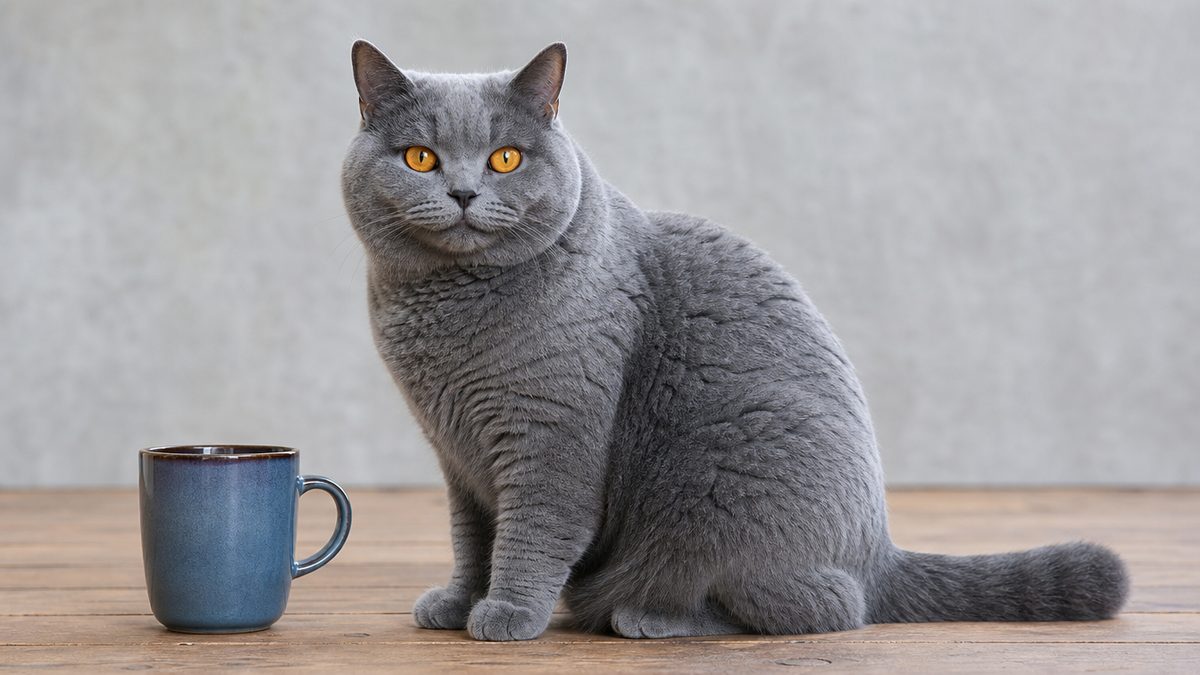
The Chartreux is a French shorthair cat breed that comes in one colour only, blue, and is built around a dense double coat, deep copper eyes and a broad trapezoidal head with heavy jowls in mature males.
Six registries publish a written breed standard for it, and all six agree on the essentials. FIFe files it in Category 3 and dates its recognition line 'Rec. 1949 / 1977';. The Cat Fanciers' Association gives it breed code 22, a closed studbook and a four-generation pedigree requirement. The Governing Council of the Cat Fancy carries it at Section 3 Group B, page 160 of a 315-page Standard of Points. France's own national register, the Livre Officiel des Origines Felines, holds it at record 18.
The cat those documents describe is compact and heavy for its height. CFA calls the type husky and robust, sometimes termed primitive, neither cobby nor classic, and notes that males are much larger than females and slower to mature. TICA puts adult weight at 12 to 16 pounds and repeats the nickname the breed cannot shake, a potato on toothpicks, because a solid muscular body sits on comparatively short fine-boned legs. GCCF prints a wider band of 11 to 18 pounds.
The coat is the breed, and it is not a plush coat
Everything decision-relevant about keeping a Chartreux in India follows from one sentence in the standards. FIFe specifies a glossy dense coat, slightly woolly at the base, luxurious in growth, and a double coat that makes the hair stand out. CFA is more vivid and says the coat should break like a sheepskin at neck and flanks, over a resilient undercoat and under a longer protective topcoat. GCCF calls the coat a distinctive feature of the breed and describes a breaking look with an abundant undercoat.
That is a working insulation layer, not a short slick coat. LOOF adds that the dense undercoat makes the coat almost water repellent. A woolly coat with a heavy undercoat behaves in Chennai the way a quilted jacket behaves in Chennai, and the section on climate below prices that out properly.
One colour, and the eye colour that goes with it
The muzzle is comparatively small, narrow and tapered with full whisker pads and a firm chin, which is what produces the sweet, smiling expression every standard asks for Governing Council of the Cat Fancy.…. Blue is the only permitted colour in every standard checked. FIFe permits all shades from pale blue-grey to deeper blue-grey and prefers the paler tone, insisting on uniformity. CFA allows any shade from ash to slate with tips lightly brushed with silver, and puts the emphasis on clarity and uniformity rather than on shade. WCF asks for brilliant uniform blue and prefers a lighter blue. CFA's colour class carries exactly two numbers, 0550 and 0551, with no All Other Variety class at all.
Eye colour is where the standards get strict, and it is the single most useful thing a buyer can check. FIFe asks for a vivid colour from deep yellow to deep copper with no traces of green and no watery or faded tone. CFA prefers a clear deep brilliant orange within a copper to gold range and disqualifies green eyes outright. GCCF withholds all awards for green eyes or eyes with a green circle. LOOF gives the range as yellow to orange.
| Section of the standard | CFA | FIFe | GCCF | WCF |
|---|---|---|---|---|
| Head and ears | 35 | 25 | 30 | 25 |
| Eyes or eye colour | included in head | 10 | 10 | 10 |
| Body, legs and tail | 30 | 25 body plus 10 tail | 30 | 35 |
| Coat texture and length | 20 | 25 coat total | 30 coat and colour | 15 |
| Colour | 15 coat and eye colour | included in coat | included above | 10 |
| Condition | not scored | 5 | not scored | 5 |
Read that table sideways and the disagreement is real rather than cosmetic. WCF gives the body 35 points and the head 25; CFA reverses it with 35 to the head and 30 to the body The Cat Fanciers' Association. Chartreux…. A cat that wins under one register is not automatically the winning type under another, which matters if you ever buy an imported kitten sold on the strength of a foreign title.
Searching the literature for this breed returns 14 PubMed records, and three of them are about the Poudre des Chartreux, an 18th-century pharmaceutical also called Carthusian Powder or mineral kermes. A fourth is a survey of Crohn's disease associations. Read the titles before counting anything as breed literature.
One more naming point matters in India, where buyers meet the acronym FCI in two completely different senses. Internationally the Federation Cynologique Internationale is a dog federation and registers no cats at all, while in India FCI is the Feline Club of India, a cat register. A seller waving an FCI certificate is not showing you an international pedigree.
Which registries recognise the Chartreux, checked one by one
Six of six bodies checked recognise the Chartreux, and each satisfies both halves of the test Bonbeno applies: a written breed standard exists, and a register exists that individual cats are entered in.
The test matters because recognition claims are cheap and easy to repeat. A single registry can be wrong, out of date or simply describing its own filing habits, so this page opens each register itself and names a control breed found on the same document. If the control is missing, the instrument is broken and the result is discarded rather than published.
| Body | Written standard | Register or studbook | Control on the same document |
|---|---|---|---|
| CFA (United States) | Yes, full show standard with point score and disqualifications | Yes, Rules of Registration, breed code 22, four-generation pedigree | British Shorthair and American Shorthair on the recognised-breeds index |
| TICA (international) | Yes, standard extract and downloadable standard | Yes, listed in the A to Z breed index with breeder listings | British Shorthair and Russian Blue in the same index |
| FIFe (international) | Yes, CHA standard, Category 3, dated 01.01.2026 | Yes, member national registers issue FIFe pedigrees | British Shorthair BSH and Russian Blue RUS in the same category list |
| GCCF (United Kingdom) | Yes, Standard of Points June 2026, Section 3 Group B, page 160 | Yes, the Active Register and Stud Book service | British Shorthair standard on page 103 of the same PDF |
| WCF (international) | Yes, CHA standard, update 01.01.2010 | Yes, WCF cattery and pedigree registration through affiliated clubs | British Shorthair BRI and Russian Blue RUS on the same shorthair index |
| LOOF (France) | Yes, breed standard linked from record 18 | Yes, the official French feline studbook since 1996 | BRITISH at record 11 and RUSSIAN at record 45 on the same index |
What the FIFe date line actually says
FIFe's own breeds page names the Chartreux among the eight breeds it has recognised since its foundation year of 1949, alongside the Abyssinian, European, Manx, Persian, Russian Blue, Sacred Birman and Siamese. The current standard prints the line 'CHARTREUX / CHA Rec. / Anerk. 1949 / 1977';. Two dates on one line look like a typographical oddity until you read the history, and then they are the whole story: FIFe recognised the breed in 1949, folded it into the British standard in 1970, and separated the two again in 1977.
The Indian half of the question, and its limits
India has a working cat register and it is not an international one. The Feline Club of India issues microchips, ownership certificates and breed authentication certificates, records ancestry to seven generations, runs 45 regional clubs and reports a register of 400-plus cats. That is a genuine register, and it is small.
It is also the wrong instrument for a recognition question, for the same reason the Kennel Club of India is the wrong instrument for dogs. FCI states that it issues breed certificates to all cat breeds and publishes no breed list and no written standard for any of them, so a query there returns nothing for the Chartreux and nothing for a control breed either. Reporting that as non-recognition in India would be a claim about a broken instrument rather than about the cat.
What FCI does publish is a show record, and that is measurable. Its General Score Board for the 2023-24 season runs to 14 pages, identifies every cat by an FCI registration number and a 15-digit microchip, and contains the word Chartreux zero times. The same document returns Persian 64 times, Bengal 53, Maine Coon 39, British Shorthair 16, Exotic Shorthair 16, Siamese 6 and Sphynx once. Seven controls pass on the document that returns zero for this breed, so the absence is real and it is an absence from the Indian show circuit rather than from any standard.
A closed studbook is the reason a Chartreux pedigree means something. CFA permits no outcross breeds at all for this breed and requires four generations of pedigree. That is what you are paying for when you buy a registered cat, and it is exactly what a photograph-based breed certificate cannot give you.
One warning comes from CFA itself and applies directly to anyone importing. CFA notes that other independent registries in France and Europe may still allow hybrid crosses to be registered as Chartreux, so an import needs the proper pedigree rather than a certificate of any kind. Verify which register issued the document before you value it.
Documented history, and the monk story that four bodies now reject
The documented history of the Chartreux begins in print in the 18th century and as a breeding programme in about 1928, while the famous Carthusian monk origin is rejected by France's national studbook, denied by the monastery itself and described by CFA as a legend with no supporting evidence.
Keep the two apart, because Indian breed pages routinely present the legend as fact and then attach a price to it. What follows separates what a document records from what a story asserts.
What the documents record
The name enters commercial print in 1723. Jean Simonnet, the breed's historian, traced the first reference to the Chartreux cat to that year's edition of the Universal Dictionary of Commerce, Natural History and Arts and Trades by Savarry des Bruslon, where Chartreux is a common name for a type of cat whose fur was blue and whose pelts fur traders dealt in. LOOF gives the same account in one sentence, dating the word to the 18th century and attaching it to grey-blue cats' pelts appreciated by furriers.
Literary references follow. Diderot mentions the cat in Les bijoux indiscrets in 1748, Buffon lists the Chartreux as one of four common varieties of cats in his Natural History in 1756, and Colette, who kept the breed herself, wrote of her blue pigeon and pearl grey devil in La Chatte in 1933.
The same CFA article credits Linnaeus in 1789 with describing a Chartreux with a woolly coat of ash blue. Carl Linnaeus died in January 1778, so he cannot have written anything in 1789. The claim probably belongs to a posthumous edition. Bonbeno reports it as the source states it and flags that it does not stand as written.
The breeding history is much shorter and much better evidenced. The first recorded breedings began around 1928 on Belle-Ile-en-Mer, an island off the north-west tip of France, where two sisters started from a local colony of cats living around the church-run hospital in Le Palais, known locally as the Hospital Cats. LOOF names them: Christine and Suzanne Leger. Mlle Leger wrote in 1935 that first-generation breedings gave remarkable results and that all the kittens were blue and typey.
The reconstruction, on which three registries disagree
What happened after the Second World War is genuinely unsettled, and the three official accounts point in different directions. Publish the disagreement rather than picking one.
- TICA states that the breed suffered through the war and that other breeds were introduced afterwards to preserve a solid genetic base, naming blue British Shorthairs and Persians.
- LOOF states the opposite direction of travel, recording that a confusion arose between the Chartreux and the blue British Shorthair and that passionate breeders then looked for blood lines free of any British cat.
- CFA's own breed article names no outcrossing at all and asserts that the breed has remained unchanged for hundreds of years, adding that the foundation cats look the same in photographs as the champions of the 1930s.
All three are registry statements about the same decades. A reader deciding whether this is an ancient breed or a mid-century reconstruction should know that the bodies who register it do not agree, and that the PKD1 mutation later found in a Chartreux is a Persian mutation, which is at least consistent with TICA's version.
The monk story, and who has rejected it
Four bodies have now addressed the Carthusian origin and three reject it. LOOF states flatly that, contrary to what legend tells, the cat was never bred by the Chartreux monks. Wikipedia records that in 1972 the Prior of the Grande Chartreuse denied that the monastery's archives held any record of the monks using any breed of cat resembling the Chartreux. CFA introduces the story as a famous legend that has no supporting evidence, in which monks brought the cats to Le Grande Chartreuse in the 17th century from the Cape of Good Hope.
TICA is the outlier and its reasoning is worth reading, because it is not unreasonable. TICA agrees there are no records in the monastery referring to the cats, then argues that the term Chartreux was in use for these cats as early as the 17th century, which predates the competing 18th-century Spanish wool explanation and therefore points back to the monastery. LOOF dates the word to the 18th century, so the two disagree on the century on which TICA's argument turns.
TICA's history tab offers the wool as an origin for the cat's name, while its Did You Know box says the luxurious wool Pile de Chartreux may have taken its name from the soft woolly coated cats. Those are opposite causal directions on one page. A third legend, that the ancestors were feral Syrian mountain cats brought back by Crusaders, appears on Wikipedia carrying a citation-needed tag and is endorsed as probable by LOOF.
Chartreux price in India, and why the one figure you will find is not a market
No verifiable Chartreux price in India exists, because no verifiable Chartreux supply exists. One Indian page quotes Rs 30,000 to Rs 80,000, and that figure fails every test Bonbeno can apply to it.
The Chartreux is a rare breed everywhere outside France, and in India it is closer to absent than to rare. Start with what is measurable. India's own cat registry ran a show season in 2023-24 and published a 14-page scoreboard identifying every cat by registration number and microchip. Chartreux appears zero times on it. Persian appears 64 times, Bengal 53, Maine Coon 39, British Shorthair 16, Exotic Shorthair 16, Siamese 6 and Sphynx once. Seven controls pass on the document that returns nothing for this breed, so this is a measured absence rather than a failed search.
Supertails, the page that ranks first in India for cat pricing generally, publishes a 14-breed price table running from the Indian domestic cat at Rs 0 to Rs 2,000 up to the Sphynx at Rs 50,000 to Rs 1,50,000. The Chartreux is not in it.
The one Indian figure, and the four tests it fails
happypet.care prints Rs 30,000 to Rs 80,000 for the Chartreux, alongside monthly expenses of Rs 2,800 to Rs 4,200. Bonbeno pulled four unrelated cat pages from the same site and compared the rows to the rupee.
| Line | Chartreux | Korat | Persian | Maine Coon | Russian Blue |
|---|---|---|---|---|---|
| Size label | Medium Breed | Medium Breed | Medium Breed | Large Breed | Medium Breed |
| Monthly food | Rs 1,500-2,000 | Rs 1,500-2,000 | Rs 1,500-2,000 | Rs 1,500-2,000 | Rs 6,500-10,500 |
| Monthly healthcare | Rs 500-700 | Rs 500-700 | Rs 500-700 | Rs 500-700 | Rs 500-700 |
| Monthly grooming | Rs 800-1,500 | Rs 800-1,500 | Rs 800-1,500 | Rs 800-1,500 | Rs 800-1,500 |
| Monthly total | Rs 2,800-4,200 | Rs 2,800-4,200 | Rs 2,800-4,200 | Rs 2,800-4,200 | Rs 7,800-12,700 |
| Cost of buying | Rs 30,000-80,000 | Rs 25,000-60,000 | Rs 15,000-50,000 | Rs 40,000-1,00,000 | Rs 50,000-1,50,000 |
Two lines are identical to the rupee on all four control breeds, and two more are identical on three of four Happy Pet (India). Persian Cat breed guide Happy Pet (India). Maine Coon Cat breed… Happy Pet (India). Russian Blue Cat breed…. The tell that settles it is the grooming line. A Persian is the highest-maintenance coat in the cat fancy and needs daily work, while a Chartreux needs a comb twice a week, and the site gives both an identical Rs 800 to Rs 1,500. It also gives a Maine Coon labelled Large Breed the same monthly total as a Medium Breed Chartreux, so the rows are not even a size band.
- Divided by 84.38, the figures give 355.5 and 948.1 dollars. Neither is a price a seller would print, so this is not a conversion at the current rate.
- Divided by 74, they give 405.4 and 1,081.1. Again neither is a round seller price.
- Divided by 80 they give 375 and 1,000, but any rupee figure ending in three zeros divides cleanly at 80 by construction, so that proves nothing on its own.
- Divided by 40 they give exactly 750 and 2,000, which is precisely the dollar band Hepper publishes for a Chartreux from a breeder. The rupee has not traded near 40 to the dollar since about 2008, so Bonbeno reports the arithmetic and draws no conclusion about copying.
Whatever produced them, the numbers are not observations of Indian transactions. At the current rate Hepper's floor of 750 dollars is about Rs 63,285, so the Indian page's entire range sits below the international entry point.
What the ranking results actually contain
Two of the top ten results for this query sell books rather than cats. Flipkart lists Chartreux Cats by Kristin Petrie and Amazon.in lists a Chartreux care title at Rs 1,988. A scraper reading rupee figures off that page collects the price of a paperback.
The second result is a Justdial category for pet shops selling Chartreux cats in Delhi. Of the ten businesses in its comparison table, one is in Delhi. The rest are in Saharanpur, Ambala, Rishikesh, Dehradun, Pauri, Ludhiana, Jhansi, Jammu and Raebareli. No listed business is categorised under Chartreux at all, no review on the page mentions any cat breed, and four of the ten are dog kennels by name. Opening the equivalent Oriental Shorthair category returns two of the same records with word-for-word identical review text, which is what an auto-generated shell looks like from the inside.
France's national studbook publishes a live count. In the last 365 days, 574 Chartreux kittens were born and registered in France. That is the breed's actual production, in the one country where it is genuinely established, and it is why an Indian buyer will wait rather than shop.
What a Chartreux costs to keep in India, month after month
Budget Rs 2,300 to Rs 9,000 a month for a shorthaired cat in India depending on food tier and city, and treat any breed-specific monthly figure with suspicion, because the Indian breed pages share their cost lines across unrelated cats.
Cost of ownership for this breed is a climate question wearing a shopping question's clothes. The honest way to cost a Chartreux is to cost a medium shorthaired cat in your own city, then adjust for the two things this breed genuinely changes: a heavier seasonal coat drop, and a stronger case for reliable cooling. Nothing else about the breed moves the bill.
| Line | Budget | Mid-range | Premium |
|---|---|---|---|
| Cat food, dry plus wet | Rs 800-1,500 | Rs 1,500-3,000 | Rs 3,000-6,000 |
| Kitten food, under one year | Rs 1,000-2,000 | Rs 2,000-3,500 | Rs 3,500-5,000 |
| Litter and litter box | Rs 300-600 | Rs 600-1,200 | Rs 1,200-2,500 |
| Routine vet visits | Rs 300-600 | Rs 600-1,000 | Rs 1,000-2,000 |
| Professional grooming | Rs 500-1,000 | Rs 1,000-2,000 | Rs 2,000-4,000 |
| Flea and tick prevention | Rs 150-300 | Rs 300-600 | Rs 600-1,200 |
| Monthly total | Rs 2,300-4,600 | Rs 4,600-9,000 | Rs 9,000-21,700 |
Those are the numbers an Indian retailer publishes for any cat. A Chartreux sits in the budget to mid-range band on food, because it is a medium cat with an ordinary appetite, and it can sit at zero on professional grooming, because the coat needs combing rather than styling.
Vaccination, where two Indian sources disagree by more than double
Read live in September 2026, a national clinic chain prices a kitten course from Rs 3,999 across three visits at days 60, 90 and 120, an adult annual package from Rs 1,899, anti-rabies from Rs 699 and the CRP combination from Rs 1,249. The Supertails guide puts a full first-year vaccination schedule at Rs 1,500 to Rs 3,000 and annual boosters at Rs 800 to Rs 1,500.
Those ranges do not overlap at the top. The clinic's kitten course starts above the retailer's ceiling for the whole first year. Bonbeno publishes both rather than averaging them, and notes that the clinic figure is a live rate card while the retailer figure is a guide. Ring two clinics in your own city before you budget, because delivery model drives this cost far more than breed does.
- Expect a first-year total between Rs 35,000 and Rs 2,40,000 including purchase, setup and twelve months of running costs.
- Expect spay or neuter surgery at Rs 3,000 to Rs 8,000, a one-time cost worth doing on time.
- Expect professional grooming in Bengaluru at Rs 800 to Rs 2,500 a session, and expect to skip most of them with this coat.
- Expect litter to surprise you, at Rs 300 to Rs 1,200 a month, which most first-time owners underestimate.
Cooling is the real Chartreux line item in India and no Indian cost table contains it. One room that stays reliably cool from March to June, whether by air conditioner or by a well-shaded fan-and-ventilation setup, is not optional for a double-coated cat, and its running cost will exceed the grooming line it replaces.
One more Indian reality belongs in a cost section. Neutering is not only an ethical question but a survival one. In the UK primary-care data, entire cats had 4.29 times the odds of dying before three years of age compared with neutered cats. Whatever you paid for the cat, that is the cheapest intervention on this page.
Chartreux in Indian weather, heat and monsoon
A Chartreux is built for a cool damp Atlantic island and India's problem for it is heat, not humidity. The distinction matters because the usual warning gets it backwards.
Bonbeno queried NASA POWER by explicit latitude and longitude and echoed the elevation the model returned for every point, because POWER answers with a grid cell rather than with a town.
Belle-Ile-en-Mer, where the Leger sisters rebuilt the breed, returns an annual mean of 13.07 degrees C at 82.62 percent relative humidity, from a cell at 8.29 m against a real elevation near 20 m. Its warmest month is August at 18.56 degrees C.
The humidity warning is the wrong warning
Belle-Ile is more humid than every Indian city in this comparison. Its 82.62 percent annual relative humidity sits above Chennai at 72.39, Kolkata at 73.93, Bengaluru at 67.94, Mumbai at 67.39, Pune at 66.80 and Delhi at 45.56. A cat whose ancestors lived in Atlantic sea fog is not going to be undone by damp air. It is going to be undone by damp air at thirty degrees.
Wet-bulb temperature captures that combination, because it is the limit on evaporative cooling and evaporation is how a cat sheds heat once panting starts.
| Place | Cell elevation | Warmest month | Mean temperature | Relative humidity | Wet-bulb |
|---|---|---|---|---|---|
| Belle-Ile-en-Mer, France | 8.29 m | August | 18.56 C | 78.5% | 16.0 C |
| Bengaluru | 841.72 m | April | 28.37 C | 48.7% | 20.7 C |
| Pune | 635.99 m | April | 28.93 C | 42.1% | 20.0 C |
| Delhi | 206.37 m | June | 35.88 C | 36.4% | 24.4 C |
| Mumbai | 97.15 m | May | 31.19 C | 60.2% | 25.1 C |
| Chennai | 48.95 m | May | 31.51 C | 64.5% | 26.1 C |
| Kolkata | 7.35 m | May | 31.53 C | 67.5% | 26.6 C |
The gap between the breed's summer and Kolkata's is 10.6 degrees of wet-bulb. Kolkata's June figure is higher still at 27.1 degrees C, and Delhi's July reaches 26.5 despite a dry May, because the monsoon converts dry heat into wet heat. Bengaluru and Pune are the two cities on this list where a double-coated cat has a realistic year, and even they run above the breed's homeland summer.
The single Indian listing that prints an ideal weather range gives 18 to 24 degrees C for this cat. Chennai's coolest month averages 24.09 degrees C and Kolkata's warmest averages 31.53. By the seller's own number, Chennai is at the ceiling in January and far past it for the rest of the year. Only Bengaluru, at 20.22 in December and 21.1 in January, sits inside the band at all.
A correction worth publishing
The Grande Chartreuse monastery point is the one place where the model and the map disagree badly. POWER returns a cell at 606.25 m for a monastery sitting near 950 m, an error of about 344 m. At the standard lapse rate of roughly 6.5 degrees C per 1,000 m, the returned figures run about 2.2 degrees C warm for that site. Bonbeno publishes the correction as an estimate rather than quietly using the cell, and notes that the monastery is in any case not where this breed was rebuilt.
Practically, three things follow for an Indian household. Keep one room reliably cool through the pre-monsoon months rather than trusting the cat to relocate itself. Watch the coat rather than the thermometer through the monsoon, because a dense undercoat holds moisture against the skin. And never shave a double coat to cool the cat down, because the topcoat is what reflects heat and it does not always grow back correctly.
Temperament, and who should not buy this cat
The Chartreux is a quiet, calm, ground-based cat that bonds closely and asks for very little, which makes it one of the better pedigree choices for an Indian flat and a poor choice for anyone who wants a conversational pet.
Registry descriptions of temperament are usually marketing, so it is worth noting how consistent these four are. CFA describes intelligent cats with lightning-fast reflexes and dog-like behaviour, some walking on a leash or retrieving toys, many learning to respond to their names, and calls them polite and not demanding. GCCF describes a gentle but seldom used voice and a calm affectionate cat. TICA calls them calm and placid, devoted to their owners, and somewhat reserved. LOOF warns that despite the teddy bear look this is not a fluffy toy but a lively, sturdy, agile cat.
The voice, which is the decisive trait in a flat
CFA records that many Chartreux have a tiny voice they use only rarely, while others are mute altogether, and that they communicate instead through murmurs and chirps, expressive eyes and subtle body language, including a paw touch as a request to be picked up. In a Mumbai or Bengaluru apartment with shared walls, a near-silent cat is a genuine practical advantage, and it is the clearest way this breed differs from a Siamese or an Oriental.
The trade-off is that a quiet cat is easy to under-read. A Chartreux in pain, overheating or unhappy will not tell you loudly. Owners of vocal breeds get an early warning system for free; owners of this one have to look.
Ground-based, and why that suits Indian homes
TICA describes cats that want their feet firmly on the ground and are not given to hijinks or flying through the air. That is unusually useful in Indian flats, where open kitchen shelving, drying racks and puja spaces are the things a leaping cat destroys. The breed still climbs and still hunts, so it needs vertical options, but it is not an acrobat.
The hunting drive is real and documented rather than decorative. GCCF's standard opens by calling the breed renowned since antiquity for its hunting prowess, and TICA repeats the reputation as great hunters The International Cat Association.…. In a ground-floor Indian home with a garden, a balcony or open windows, that matters both for the cat's safety and for the birds and squirrels around it.
- Buy one if you want a calm, quiet, undemanding companion that follows you room to room and tolerates a working day alone.
- Buy one if you have children or other pets and want a placid cat, since TICA rates the breed good with young children, other pets, people living alone and the elderly.
- Do not buy one if you want an interactive, vocal cat that tells you what it thinks.
- Do not buy one if you cannot guarantee a cool room through the Indian summer, because a double coat and a stoic temperament are a dangerous combination in heat.
- Do not buy one if the plan depends on finding a Chartreux in India, because on the available evidence you will not.
CFA and GCCF both note that males are much larger than females and slower to mature, and CFA adds that coat texture, coat colour and eye colour are all affected by sex, age and natural factors and should not be penalised. A Chartreux often looks its best at four to five years old, so judge a young cat gently and expect the woolly break in the coat to arrive late.
Training a Chartreux, and what this breed resists
Train a Chartreux with routine and reward rather than repetition, because this is a ritual-driven cat that learns quickly and then expects the pattern to hold. It resists being rushed and it resists being ignored.
CFA describes creatures of habit that develop rituals and routines with their human family members, and notes that many will learn to respond to their names while some walk on a leash or retrieve toys. That is an unusually trainable cat by feline standards, and the mechanism is the routine rather than the treat.
Litter training in an Indian flat
Litter training is rarely the problem with this breed and litter maintenance often is. Budget Rs 300 to Rs 1,200 a month for litter and expect to underestimate it, which is the single most common Indian first-timer error. Place the tray away from the kitchen and away from the food bowl, keep it scooped daily through the humid months when odour builds fastest, and change the whole tray on a schedule rather than when it smells.
- Establish one feeding time and hold it, because a ritual-driven cat settles faster on a fixed clock than on free feeding.
- Reward with play rather than food, since weight gain is a documented problem in mature Chartreux.
- Teach carrier tolerance early, because a quiet cat that hides pain will need unstressed vet visits.
- Socialise the kitten to household noise deliberately, since a reserved breed left unexposed becomes a cat that vanishes when guests arrive.
- Keep sessions short, because this is a placid cat rather than a driven one and it disengages rather than protests.
What it will not do
It will not perform on demand and it will not be nagged. TICA describes a somewhat reserved cat that is calm and placid and devoted to its owner, and LOOF adds that the breed still carries a determined behaviour from a history of having to survive. Push a Chartreux and it withdraws rather than fights, which reads as success to an inattentive owner and is not.
The hardest training problem in India is not obedience at all. It is teaching an owner to check a stoic cat. Build a weekly hands-on routine into the grooming session, running your hands over both hind legs and watching the cat rise from a sit, because the two things this breed is most likely to hide are heat stress and hind-limb discomfort.
CFA records that a Chartreux may use a paw touch as a request to get into your lap, or ask for play by bringing you a toy. Answer those signals consistently for the first few months and you build the communication channel that replaces the voice this breed does not use.
Daily exercise, and what happens to a Chartreux without it
Give a Chartreux 30 to 60 minutes of active play a day, split into short sessions, because this is a moderately active hunting cat in a body that gains weight easily.
The Indian listing that carries an exercise figure puts it at 30 to 60 minutes with a medium energy level, and that matches what the registries describe. TICA notes the breed loves to climb and has been known to perform acrobatic acts chasing a fishing pole toy, while also being playful and intelligent and liking to be challenged with new tricks and puzzle toys that reward them.
The counterweight is that the same registry describes cats that want their feet firmly on the ground and are not one for hijinks or flying through the air. So the exercise a Chartreux takes is horizontal and short-burst rather than vertical and sustained. A wand toy dragged along the floor works better than a tall cat tree.
The failure mode is weight, not destruction
Most breeds punish an under-exercised owner by wrecking the house. This one does not. CFA states plainly that weight gain can be a problem for some mature Chartreux and that although the breed is naturally massive, a Chartreux should have a solid and muscular body feel. An under-exercised Chartreux gets quietly heavier, and the consequence is measurable rather than cosmetic: in UK primary-care data, a non-ideal body weight was significantly linked to a decreased lifespan.
- Run two sessions of 15 to 20 minutes rather than one long one, since a placid cat disengages before it tires.
- Finish each session with a food reward so the hunt sequence completes, which is what settles a hunting breed.
- Move play to early morning and late evening from March to June, because exercising a double-coated cat in Indian afternoon heat is the fastest route to heat stress.
- Use puzzle feeders on hot afternoons, so the cat works for calories without generating heat.
- Weigh the cat monthly on a kitchen scale and record it, because a stoic breed gives you no other early signal.
A cat sheds heat by evaporation, and evaporation fails as humidity rises. In Chennai in May the wet-bulb load reaches 26.1 degrees C and in Kolkata in June it reaches 27.1. Play indoors in a cooled room during those months, and stop the session at the first sign of open-mouth breathing rather than waiting for distress.
Grooming a double coat in Indian humidity
Comb a Chartreux to the skin twice a week with a wide-toothed metal comb, and more often through the seasonal drop, because the risk in India is packed undercoat against the skin rather than hair on the furniture.
The coat is not a short coat with extra shine. FIFe specifies a double coat that makes the hair stand out and is slightly woolly at the base, GCCF describes a medium-short dense coat with a breaking look and an abundant undercoat, and CFA asks for a resilient undercoat under a longer protective topcoat that should break like a sheepskin at neck and flanks. LOOF adds that the dense undercoat makes the coat almost water repellent.
Water-repellent is exactly the property that causes trouble in an Indian monsoon. A coat designed to keep Atlantic rain off the skin is also a coat that keeps air off the skin, and a damp undercoat that cannot dry is where humid-weather skin problems start.
Comb, do not brush
A slicker brush skates across the topcoat and leaves the woolly layer untouched, which is the commonest grooming error with this breed. Use a wide-toothed metal comb, work in sections, and go in until you feel the comb reach skin. TICA describes a thick woolly coat that requires regular combing to avoid knots, especially when seasons change, and notes that the undercoat is shed a couple of times a year.
- Comb twice weekly as a baseline, rising to daily during the seasonal drop.
- Part the coat over the shoulder and rump each week and look at the skin for redness, scurf or damp matting.
- Bathe rarely, and dry to the skin with a towel and a cool fan if you do, because a water-repellent double coat holds moisture long after the surface feels dry.
- Trim claws every two to three weeks and check ears, since an indoor cat in a humid climate needs both watched.
- Skip the salon. Professional grooming at Rs 800 to Rs 2,500 a session buys this coat nothing that a Rs 300 comb does not.
Shaving a double coat to cool a cat removes the topcoat that reflects heat and exposes skin that has never seen sun. It can also grow back with altered texture, which on a breed judged 20 to 30 points on coat texture is a permanent loss. If the cat is too hot, cool the room instead of the cat.
What the show ring is checking, and why it helps you
GCCF withholds all awards for green eyes, eyes with a green circle or a white locket, and faults tipping, a nose break, a snubbed or upturned nose and almond-shaped eyes. CFA additionally disqualifies a visible tail kink. None of that is grooming advice, but it is a useful buyer's checklist, because a seller offering a green-eyed or locketed blue cat as a show-quality Chartreux is either mistaken or selling something else.
One allowance is worth knowing so you do not reject a good kitten. Both GCCF and CFA make allowances for ghost barring in kittens and for tail rings in cats under two years of age, and both permit a silkier, thinner coat on females and on cats under two The Cat Fanciers' Association. Chartreux…. The woolly break arrives late.
Chartreux health problems, screening and life expectancy
The Chartreux has one registry-named orthopaedic concern, patellar luxation, and no published study reporting it in the breed. What the literature does contain is a French cardiology cohort, a kidney case report and a set of breed-specific blood reference intervals, and all three are more useful than the warnings usually repeated.
Fourteen PubMed records name this breed, and three of them are about an 18th-century pharmaceutical called Poudre des Chartreux rather than a cat. That is the size of the evidence base, and it is why several answers on this page are that nobody knows.
Patellar luxation, the concern the registry names
CFA states in its Breed Future note that patellar luxation, a heritable condition that can affect mobility, has been seen in some Chartreux, that kittens and cats can be screened by a vet, and that cats with mild patellar luxation are unlikely to develop mobility issues but should not be used for breeding. The same registry's show standard disqualifies any signs of lameness in the hindquarters, so the clinical sign of the condition is written into the breed's own judging rules.
No feline patellar luxation study Bonbeno could find reports a single Chartreux. What the literature supports is species-level. Medial patellar luxation is described as the most common developmental cause of hind-limb lameness in cats, and a computed-tomography comparison found that cats with high-grade disease had significantly less tibial torsion, tibial tuberosity displacement and trochlear depth to patellar thickness ratio. That study recruited 16 cats, eight with and eight without the condition, carries a published erratum, and its authors say the results should be interpreted with caution because inter-observer agreement was high in only a third of measurements. Treat it as a direction rather than a number.
Surgical outcome data is stronger. Across 85 surgeries in 71 cats at four referral centres, post-operative complications occurred in 26 percent of cases, of which 20 percent were major and required revision surgery and 6 percent were minor, with patellar reluxation in 5 percent. Grade 4 disease raised the odds of minor complications 8.5 times, tibial tuberosity transposition raised major complications 5.57 times, and a previous fracture of the same femur raised reluxation odds 19.25 times.
Ask for a stifle examination on both parents and on the kitten, and ask what the vet graded. CFA's own position is that a mildly affected cat can live normally but should not be bred, so a breeder who has never had the joint checked is not following the registry's guidance for their own breed.
The heart data, which is genuinely reassuring
The Chartreux is one of only five breeds in a 344-cat French referral study of hypertrophic cardiomyopathy, and it comes out well. Median age at diagnosis was 8.0 years for Chartreux, against 2.5 years for Maine Coons and 3.5 for Sphynx. Sudden death, which accounted for 24 percent of all cardiac deaths in that cohort, was observed in only three breeds, and the Chartreux was not one of them. Every cat in the study that survived beyond 15 years of age was a Domestic Shorthair, a Persian or a Chartreux.
That is a late-onset, comparatively survivable pattern rather than the early catastrophic disease seen in some breeds. It is still a reason to ask for an echocardiogram rather than a heart-murmur check, because hypertrophic cardiomyopathy is not reliably audible.
Kidneys, lungs and one very practical laboratory finding
Polycystic kidney disease has been reported in the breed once, in a 12-year-old female Chartreux with polyuria and polydipsia and enlarged irregular kidneys, confirmed by a PCR and restriction fragment length polymorphism genetic test. The authors conclude that Chartreux cats should be included in PKD screening programmes and that the disease should always be considered as a cause of chronic renal failure in this breed. The mutation is a Persian mutation, which is consistent with TICA's account of Persian outcrosses after the war.
A single case report also describes a one-year-old male Chartreux with developmental lung disease and a high probability of severe pulmonary hypertension, which progressed to right-sided congestive heart failure and death twelve months after diagnosis. The candidate gene FOXF1 was sequenced and no causal variant was found. One cat is not a breed risk, and the honest reading is that the genetic basis is unknown.
The most immediately useful finding is the least discussed. A French study of 536 healthy client-owned cats, of which 129 were Chartreux, found a significant breed effect on 9 of 13 plasma biochemistry variables, with differences large enough to be clinically relevant for creatinine, glucose and total protein, and concluded that breed-specific reference intervals should be considered for cats. If an Indian vet reads a Chartreux's creatinine against a generic feline range, the interpretation can be wrong in either direction.
Life expectancy, where no honest breed figure exists
The UK VetCompass life tables, built on 7,936 confirmed deaths, contain no Chartreux row, because the breed did not reach the 15-death threshold needed to be modelled. Bonbeno does not substitute a related breed's number for it. The registries themselves disagree, with GCCF publishing 12 to 15 years and TICA publishing 8 to 13 plus.
What can be said honestly comes from the general feline data. Crossbred cats reached a life expectancy at age 0 of 11.89 years across 7,117 deaths, against 10.41 years for purebred cats, and purebred cats had 1.83 times the odds of dying before three years of age. For anaesthesia, a 14,964-cat multicentre study found overall anaesthetic-related mortality of 0.63 percent, and after adjustment for physical status most breeds did not differ from European and Domestic Shorthair cats, with the elevated risk confined to Persians and the brachycephalic breeds. The Chartreux is not brachycephalic, and its standards specifically penalise a snubbed or upturned nose.
Feeding a Chartreux in India, by life stage
Feed a Chartreux to a body condition score rather than to a bowl size, because weight gain is the breed's named nutritional problem and a non-ideal weight is one of the few things measurably linked to a shorter feline life.
CFA puts it directly: weight gain can be a problem for some mature Chartreux, and although this is naturally a massive breed, the cat should have a solid and muscular body feel. Massive and fat are different things, and on a heavy-boned cat with a thick coat the difference is easy to miss by eye and easy to catch by hand.
What to spend, and where it goes
Indian food costs for a cat run Rs 800 to Rs 1,500 a month at the budget tier, Rs 1,500 to Rs 3,000 mid-range and Rs 3,000 to Rs 6,000 premium, with kitten food a tier higher because of the protein requirement. A Chartreux is a medium cat and sits in the ordinary band. The Indian breed listing that prints a food line gives Rs 1,500 to Rs 2,000 a month with 350 kcal a day for kittens and 300 kcal for adults, and that same food line appears unchanged on its Korat, Persian and Maine Coon pages, so treat it as a template rather than a calculation.
- Feed a kitten growth diet to about twelve months, since the breed matures slowly and males keep filling out well past a year.
- Split adult food into two or three measured meals rather than free feeding, because a ritual-driven cat handles a fixed clock well.
- Combine dry and wet food for hydration, which is the standard Indian veterinary recommendation and matters more in a hot climate.
- Weigh the food rather than scooping it, because a dense coat hides two hundred grams comfortably.
- Reassess portions in March, when activity drops as the heat rises, and again in October.
Water, which matters more in India than anywhere the standards were written
TICA gives one concrete piece of advice worth repeating: place the water bowl at least three feet away from any food, because a cat's nose is sensitive and an overwhelming smell of food can cause it to drink less. In a climate where evaporative cooling is the animal's main heat defence, and where dehydration itself reduces that defence, water intake is not a minor detail.
Put out more water points than you think you need, refresh them twice daily in summer, and consider a fountain if the cat drinks poorly. Track litter clumps as a rough intake proxy, and treat a sudden change in drinking as a same-day veterinary question rather than a curiosity, particularly given the kidney case reported in this breed.
Two feeding-adjacent findings from UK primary care are worth more than any premium diet. A non-ideal body weight was significantly linked to a decreased lifespan, and entire cats had 4.29 times the odds of dying before three years compared with neutered cats. Portion control and timely neutering outrank brand choice.
The Chartreux kitten timeline, month by month
Plan a Chartreux kitten's first year around three fixed points: the vaccination course from day 60, the neutering decision before the first birthday, and the slow arrival of the adult coat, which does not finish until well after the cat looks grown.
This breed matures more slowly than most, which distorts every visual judgement an owner makes in the first year. CFA notes that males are much larger than females and slower to mature, and that coat texture, coat colour and eye colour are all affected by sex, age and natural factors.
| Age | What is happening | What you do |
|---|---|---|
| Weeks 0-8 | With the mother and litter. Indian guidance treats a kitten sold under eight weeks as a red flag | Do not take the kitten home. Visit, and see the mother |
| Day 60, about 2 months | First core vaccination due | First CRP, from Rs 1,249, or a package from Rs 3,999 covering three visits |
| Day 90, about 3 months | Second visit | Anti-rabies plus CRP. Rabies from Rs 699 |
| Day 120, about 4 months | Third visit completes the course | CRP plus anti-rabies. Only now widen social exposure |
| Months 4-6 | Growth is fast, ghost barring may show on the coat | Start twice-weekly combing as a habit, not a task. Ghost barring in kittens is allowed for |
| Months 6-9 | Neutering window | Discuss timing with your vet. Entire cats carry 4.29 times the odds of death before three years |
| Months 9-12 | Females near adult size, males far from it | Switch from kitten to adult food around twelve months. Weigh monthly |
| Year 2 | Tail rings and a silkier thin coat are still permitted at this age | Do not judge coat quality yet. Book the first stifle and heart check |
| Years 3-5 | The woolly break and full jowls arrive. CFA notes cats often look their best at four to five | Annual booster from Rs 1,899. Recheck weight, which is when gain starts |
The vaccination schedule above is a live Indian clinic schedule read in September 2026. Note that it starts at day 60 rather than the six to eight weeks quoted in general guidance, and that the same clinic's own FAQ says kittens should begin within the first 60 days of life. Ask your own vet which schedule they run before you plan travel or a house move around it.
The clinic's own note is blunt: do not socialise your kitten before all three vaccines and boosters are complete. In an Indian building with free-roaming cats on the stairwell, that instruction is doing more work than it does in a European suburb.
One thing not to expect in year one is the coat the standards describe. The breaking, woolly adult coat is a mature-cat feature, heaviest on males, and both GCCF and CFA explicitly permit a silkier, thinner coat on females and on cats under two years of age The Cat Fanciers' Association. Chartreux…. A kitten that does not look like the show photographs is not a fault, and a seller pressing that point is selling on the wrong thing.
Chartreux compared with the cats Indian buyers actually choose between
Against the three cats it is cross-shopped with, the Chartreux loses on availability and wins on temperament, and the Indian domestic shorthair beats all four of them on the one measure with a real dataset behind it.
Google's own related-searches block for this breed names the Korat, the British Shorthair, the Oriental Shorthair and the American Bobtail. In India the practical shortlist is shorter, and it is dominated by two other blue cats plus the cat already on the street outside.
| Chartreux | Russian Blue | British Shorthair | Indian domestic shorthair | |
|---|---|---|---|---|
| UK life expectancy at age 0 | No row. Fewer than 15 deaths in the dataset | 9.65 years (7.20-12.10), 19 deaths | 9.58 years (8.73-10.43), 194 deaths | 11.89 years (11.75-12.03), 7,117 deaths |
| Eye colour required | Deep yellow to copper. Green disqualifies | Green | Copper to gold in the blue | Any |
| Coat | Dense double coat, slightly woolly, breaks like sheepskin | Short, dense, fine, silver-tipped | Short and very dense, plush | Short, varies |
| Appearances in India's 2023-24 registry scoreboard | 0 | 0 | 16 | 0 |
| Published Indian price | Rs 30,000-80,000, from one page with shared cost lines | Rs 50,000-1,50,000 | Rs 20,000-60,000 | Rs 0-2,000 |
| Kittens born in France in 365 days | 574 | Not compared here | Not compared here | Not applicable |
| Heat suitability in India | Poor. Double coat | Moderate. Single-appearing coat | Poor. Very dense coat | Adapted to the climate you live in |
Read the first row carefully, because it is the row that decides most Indian purchases and almost no Indian page carries it. The Indian domestic shorthair, coded crossbred in that dataset, outlives every pedigree in the table by more than two years, on a sample of 7,117 deaths rather than 19. Purebred cats overall reached 10.41 years against 11.89 for crossbreds, and carried 1.83 times the odds of dying before three.
Chartreux against Russian Blue, the confusion that generates the search
One of the four questions Google shows for this breed is whether a cat is a Russian Blue or a Chartreux, and FIFe's Chartreux standard opens by demanding that a clear distinction be drawn between the Chartreux, the Russian Blue and the British Blue, adding that crossing the Chartreux with those two is undesirable.
Eye colour separates them fastest. The Russian Blue is a green-eyed breed and green eyes are a disqualification in the CFA Chartreux standard and a withhold-all-awards fault at GCCF Governing Council of the Cat Fancy.…. Coat separates them second: a Russian Blue coat is fine and silver-tipped and lies close, while a Chartreux coat stands away from the body and breaks. Build separates them third, since the Russian Blue is a fine-boned elegant cat and the Chartreux is a heavy body on comparatively short fine legs.
Chartreux against British Shorthair, the pair FIFe once merged
These two were the same registry entry between 1970 and 1977, which is why they still confuse buyers. The differences that survive are real. The British head is round and the Chartreux head is a trapezium, wider at the base than at the top because of the jowls. The British coat is dense and plush without a woolly break. And in India only one of them is actually available, with the British Shorthair appearing 16 times in the national show scoreboard against zero Chartreux.
CFA permits no outcross breeds for the Chartreux at all and requires a four-generation pedigree. Ask which register issued a kitten's papers and what that register permits, because CFA itself warns that some independent European registries still allow hybrid crosses to be registered as Chartreux.
Mistakes Indian owners actually make with this breed
The commonest Chartreux mistake in India is buying one at all, because what is sold under the name is almost never the breed. The rest follow from treating a double-coated stoic cat like an ordinary shorthair.
Paying a pedigree price for a blue domestic cat
A grey or blue shorthaired cat is common in India and the dilute gene that produces it is common everywhere. Nothing about a blue coat makes a cat a Chartreux, because the breed is defined by ancestry recorded in a register rather than by colour. With zero Chartreux in India's own show record and no verifiable Indian seller, the base rate says a blue cat offered locally as a Chartreux is something else.
Check the eyes first. Green eyes rule the breed out under two separate standards Governing Council of the Cat Fancy.…. Then ask for the pedigree and the issuing register by name.
Treating an Indian breed certificate as a pedigree
The Feline Club of India issues breed authentication certificates, ownership certificates and microchips, and it does so for all cat breeds without publishing a breed list or a written standard for any of them. That is a useful identity and ownership record. It is not the same document as a four-generation pedigree from a register with a closed studbook, and the acronym FCI does not connect it to any international body.
- Brushing the topcoat instead of combing to the skin, which leaves the woolly underlayer packed and damp through the monsoon.
- Shaving the coat in summer, which removes the heat-reflecting topcoat and can permanently change the texture.
- Waiting for the cat to complain about heat, when this is a breed CFA describes as having a tiny voice used rarely and sometimes none at all.
- Free feeding a breed whose own registry names weight gain as a problem in mature cats.
- Buying on a foreign show title without asking which register awarded it, given that four registries score the same cat on four different point scales.
Believing the price you find
The single Indian rupee range for this breed sits on a page whose healthcare and grooming lines are identical to the rupee across four unrelated cat breeds, including a Persian that cannot possibly share a grooming bill with a shorthair Happy Pet (India). Persian Cat breed guide. Two of the ten ranking results for the price query are books rather than cats, and the second-ranked result is a directory category in which only one of ten listed shops is in the city its own title names.
Buying a Chartreux abroad and having it flown to India is not a route. The baggage rule requires documented proof of two years of continuous stay abroad plus proof of transferring residence, caps the movement at two animals, and requires the owner to declare the animal is a bona fide pet with no commercial interest, gift or breeding purpose. Anyone offering to import one on your behalf is describing a transaction that declaration forbids.
One last Indian-specific trap concerns paperwork you may want to verify yourself. The government's own published copy of the Prevention of Cruelty to Animals (Pet Shop) Rules, 2018 is a fifteen-page image scan that yields fourteen characters of extractable text. If a seller quotes a rule number at you from it, they did not read it there either.
Adoption, rehoming and responsible sourcing in India
Adopt rather than hunt for this breed in India, because the cat that best matches what people want from a Chartreux is already available here, costs almost nothing and has the better dataset behind it.
What buyers describe wanting from a Chartreux is a quiet, calm, undemanding, ground-based cat that suits a flat. That is a temperament description, not a pedigree requirement, and Indian shelters are full of cats that meet it. The difference is that the shelter cat is adapted to the climate it will live in and the imported ideal is not.
The numbers favour adoption, and they are not close
Crossbred cats in UK primary care reached a life expectancy at age 0 of 11.89 years across 7,117 deaths, against 10.41 years for purebred cats, and purebred cats had 1.83 times the odds of dying before three years of age. In India, adoption costs Rs 500 to Rs 5,000 and usually includes basic vaccination, against Rs 10,000 to Rs 1,20,000 or more from a breeder.
- Contact established shelters directly, since Indian guidance names CUPA in Bengaluru, Friendicoes in Delhi and Blue Cross in Chennai as starting points.
- Ask for the vaccination and deworming record and check it against the schedule your own vet runs.
- Take an adult rather than a kitten if you want temperament certainty, because with an adult what you see is what you get.
- Budget the same monthly running cost either way, because Rs 2,300 to Rs 9,000 a month does not care where the cat came from.
- Neuter on schedule, which is the single change with the largest measured effect on survival.
If you are determined to buy the breed
Then buy it properly, and expect to wait. France registered 574 Chartreux kittens in the last 365 days, which is the breed's real global production concentrated in one country. Three French breed clubs are listed against the breed in the national studbook, which is three more than the European Shorthair has Livre Officiel des Origines Felines.….
- Verify the register that issued the pedigree, and prefer one whose rules you can read, since CFA permits no outcrosses at all for this breed.
- Ask for a stifle examination result, an echocardiogram and a PKD DNA result, which are the three things this page's evidence actually supports asking for.
- Refuse any kitten under eight weeks, which Indian buying guidance lists among its red flags.
- Never pay in advance for a cat you have not seen, and never accept a photograph-based breed certificate as a pedigree.
- Read the import conditions yourself before committing money, because the lawful pet route depends on your own residence history rather than on the seller's promises.
Go to the register and the breed clubs before a classifieds site. A breed with 574 kittens a year worldwide has a small, connected community, and a cat with papers is far more traceable through it than through a listing. Bonbeno links no listings and brokers no sales.
The honest close is this. The Chartreux is a genuinely recognised breed with six registers behind it, a documented rebuilding on a French island and a better cardiac profile than most pedigree cats. It is also, in India, close to unobtainable, poorly suited to the climate of most of the country, and represented online by a price that describes nothing. If you want the cat that behaves like the description, look in a shelter in your own city.
Chartreux questions Indians actually search
Are Chartreux cats expensive?
Outside India, yes. Published guides put a Chartreux kitten from a breeder at roughly 750 to 2,000 US dollars, with adoption at 50 to 300 dollars. Inside India the question does not really apply, because Bonbeno found no verifiable Chartreux for sale at any price. The one Indian page carrying a figure quotes Rs 30,000 to Rs 80,000, and Rs 30,000 converts to about 356 dollars at 84.38, less than half the international floor.
What is the current price of Chartreux cat in India?
There is no current Indian price, because there is no observable Indian supply. One Indian breed page prints Rs 30,000 to Rs 80,000, and that page shares its healthcare and grooming cost lines to the rupee with four unrelated breeds, including a Persian. India's own registry recorded zero Chartreux across its 2023-24 show scoreboard while seven other breeds appeared on the same document. Treat any quoted rupee figure as editorial rather than as a market rate.
How can I tell if my cat is a Chartreux?
Strictly, you cannot tell without a pedigree from a register, because the Chartreux is defined by ancestry rather than by looks. What the standards ask for is a uniform blue-grey coat in any shade with no white marking and no tabby barring, deep yellow to copper eyes, a dense slightly woolly double coat that breaks at the neck and flanks, a head wider at the base than at the top, and comparatively short fine-boned legs. Green eyes alone are enough for GCCF judges to withhold all awards.
Is my cat a Russian blue or a Chartreux?
In India, most likely neither. Both breeds are close to absent here, and a blue or grey shorthair you already own is overwhelmingly likely to be an Indian domestic cat carrying the dilute gene. If you are comparing two pedigree cats, eye colour separates them fastest: the Russian Blue is a green-eyed breed, while green eyes are a disqualification in the CFA Chartreux standard. Coat is the second tell, since the Chartreux carries a woolly double coat that stands away from the body.
How long do Chartreux cats live?
No reliable breed-specific figure exists, and that is the honest answer. The UK VetCompass life tables, built on 7,936 confirmed deaths, contain no Chartreux row because the breed did not reach the 15-death threshold. Registries publish estimates that disagree with each other: GCCF says 12 to 15 years while TICA says 8 to 13 plus. Use the general feline figures instead, which give 11.89 years for crossbred cats and 10.41 for purebred cats.
Did Carthusian monks really breed the Chartreux?
Almost certainly not. France's own national studbook states plainly that the cat was never bred by the Chartreux monks, and in 1972 the Prior of the Grande Chartreuse said the monastery archives held no record of the monks keeping any cat resembling the breed. The Cat Fanciers' Association calls the monk story a legend with no supporting evidence. Only TICA still leans toward the monastery, on the argument that the name predates the competing wool explanation.
Can I import a Chartreux into India?
Only in narrow circumstances, and not as a purchase. The baggage route under Custom Circular 15/2013 requires documented proof of two years of continuous stay abroad plus proof of transferring residence to India, caps the movement at two cats, and requires the owner to declare that the animal is a bona fide pet with no commercial interest, gift or breeding purpose. Rabies vaccination must be more than one month and less than twelve months before embarkation.
Does a Chartreux cope with Indian heat?
Poorly, and the coat is the reason rather than the colour. The standards describe a double coat that stands away from the body with an abundant undercoat, which is insulation built for an Atlantic island averaging 13.07 degrees C. The one Indian listing that prints an ideal weather band gives 18 to 24 degrees C for this cat, and Chennai's coolest month already averages 24.09 degrees C. Plan a reliably cool room from March to June rather than assuming the cat will move itself.
What health tests should a Chartreux breeder have done?
Ask for an echocardiogram screening record for hypertrophic cardiomyopathy and a PKD DNA result. The PKD1 mutation is a Persian mutation, and the Chartreux was rebuilt after the war with Persian outcrosses according to TICA, which is exactly why a case report exists describing polycystic kidney disease in a 12-year-old Chartreux confirmed by genetic test. That paper's authors recommend including Chartreux cats in PKD screening programmes.
Is patellar luxation common in Chartreux cats?
Nobody knows, and the honest position is that the concern is registry advice rather than measured prevalence. The Cat Fanciers' Association names patellar luxation in its Breed Future note and its show standard disqualifies any sign of hind-quarter lameness, but no published feline patellar luxation study Bonbeno could find reports a single Chartreux. Across cats generally, medial patellar luxation is described as the commonest developmental cause of hind-limb lameness.
How much does a Chartreux cost to keep each month in India?
Budget on Indian care costs rather than on a breed figure, because the breed figure is boilerplate. Real published Indian numbers give a kitten vaccination course from Rs 3,999 across three visits, anti-rabies from Rs 699 and the CRP combination from Rs 1,249, with an annual adult booster package from Rs 1,899. Food, litter and routine consultation sit on top of that and vary far more by city than by breed.
Do Chartreux cats shed a lot?
Yes, seasonally, and the undercoat is what you will notice. TICA describes a thick woolly coat that needs regular combing to avoid knots, especially as seasons change, with the undercoat dropped a couple of times a year. In Indian conditions the practical risk is not hair on the sofa but packed undercoat against the skin, so comb to the skin twice a week rather than brushing the surface.
Compare with similar breeds
Chartreux sits in 1 Bonbeno group. Each one compares it directly against the breeds it is genuinely an alternative to, on the same figures.