
Cat breed profile
Oriental Shorthair Cat Price in India, Registry Status and Full Breed Guide
What an Oriental Shorthair actually costs in India, why four registries disagree about whether it is a Siamese, why no Indian marketplace stocks one, and the inherited liver disease that has no DNA test.
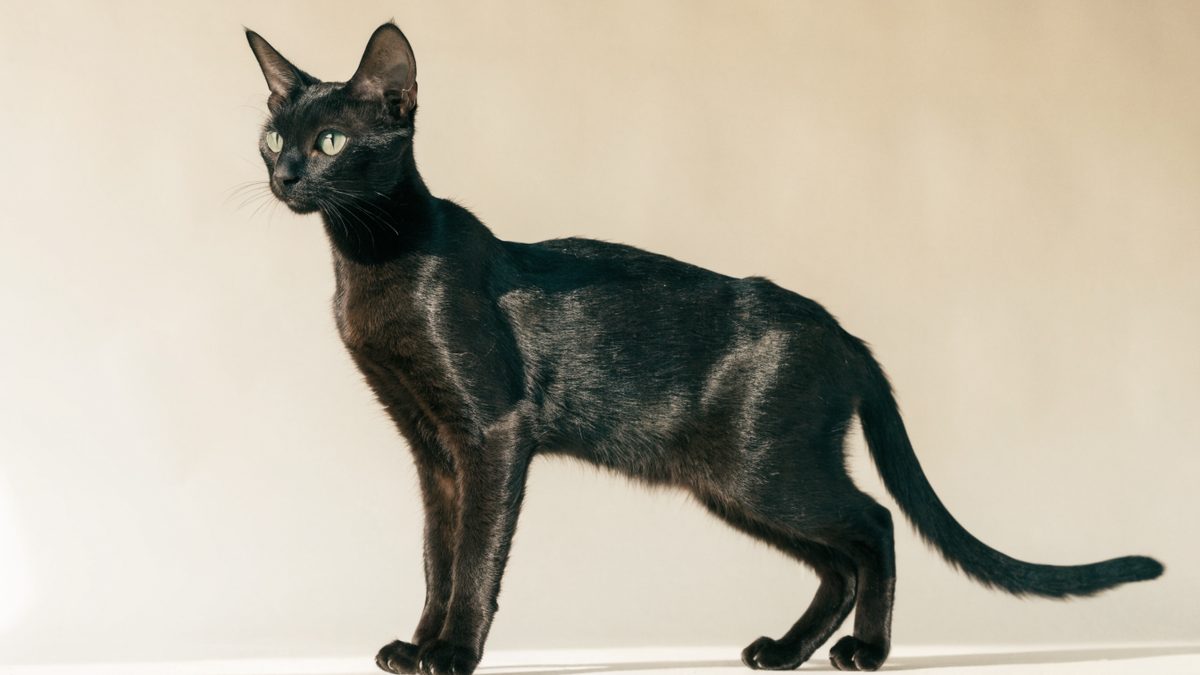
Quick answer
The Oriental Shorthair cat price in India runs Rs 20,000 to Rs 60,000, but only two Indian sources publish a figure at all and both quote the identical band, so treat it as one estimate rather than a market. The breed is genetically a Siamese in non-pointed colours. FIFe calls it a Siamese cat without the colourpoint gene, and TICA judges it against the Siamese standard document.
This guide is general information for Indian pet owners and is not a diagnosis. Always consult a registered veterinarian near you before acting on anything you read here, and treat any sudden change in your cat's condition as urgent.
Oriental Shorthair at a glance
What an Oriental Shorthair actually is
An Oriental Shorthair is a Siamese in non-pointed colours. FIFe states it in one line, calling the breed the sister breed of the Siamese, basically a Siamese cat without the colourpoint gene. TICA files it inside a four-breed Siamese Breed Group alongside the Siamese, Balinese and Oriental Longhair. That single fact drives everything else on this page, including the health risks and the reason the breed is nearly absent from India.
Start with the registries, because they are free, public, dated, and they settle an argument that Indian seller pages settle with adjectives. Four major registries publish a position on whether the Oriental Shorthair and the Siamese are one breed or two, and they do not agree. Registry recognition is not a technicality here, because the answer decides which health risks the cat inherits and which certificate is worth paying for.
| Registry | Position | The document that proves it | Date |
|---|---|---|---|
| TICA | One breed group, four breeds. The Oriental Shorthair is judged against a document titled Siamese Breed Group Standard (SI/BA/OS/OL), shared with the Siamese, Balinese and Oriental Longhair | Siamese Breed Group Standard, one point score for all four | Revised 05/01/2009 |
| TICA, governance | One committee. The breeds share a single Siamese/Balinese/Oriental (SH/LH) Breed Committee of six people | TICA Oriental Shorthair breed page | Page updated 2026 |
| FIFe | Separate breeds, identical standard. The standard text reads that Balinese, Oriental Longhair, Oriental Shorthair and Siamese have the same standard | FIFe Category 4 standards | OSH recognised 1959, Siamese 1949 |
| CFA | Separate breeds. The Oriental has its own standard, its own point score and its own rules of registration | CFA Oriental breed standard | Registration 11/1/74, championship effective 5/1/77 |
| CFA, in practice | Siamese is an allowable outcross for the Oriental, alongside Balinese, Colorpoint and Javanese | CFA Registration Rules, Oriental | Revised October 2025 |
| GCCF | Separate registration policies, shared gene pool. Siamese are accepted in the pedigrees of Oriental Shorthairs | GCCF Registration Policy for Oriental Shorthair Cats | Ruling from 26 April 1989, amended February 2020 |
Read that table as one finding rather than six. No registry treats the Oriental Shorthair as a genetically separate animal from the Siamese. They differ only on the paperwork question of whether one breed name or two should sit on the certificate. TICA answers with one standard document and one committee The International Cat Association. Oriental…. FIFe answers with two breed names and one standard. CFA answers with two breeds that may legally be bred to each other. GCCF answers with two policies that accept each other's cats.
The three lines where the standards actually differ
Only three attributes separate an Oriental Shorthair from a Siamese in the written standards, and coat length is not one of them for the shorthair. FIFe's Category 4 standard runs one shared description of head shape, ears, eye shape, neck, body, legs, paws and tail across all four breeds, then splits into per-breed rows for exactly two things.
| Attribute | Siamese | Oriental Shorthair | Source |
|---|---|---|---|
| Eye colour | Intense deep blue | Vivid, luminous green | FIFe |
| Eye colour, second registry | Deep vivid blue, eyes other than blue disqualify | Green, with blue only for pointed and white | CFA |
| Coat texture and length | Very short, fine, glossy, silky, lying close to the body, almost no undercoat | Identical wording, same row of the standard | FIFe |
| Coat colour | Points on mask, ears, legs and tail, with clear contrast to body colour | Even in colour, no point restriction, over 280 colours | FIFe, TICA |
| Head | Wedge created by straight lines from nose to ear tips, flat forehead, no muzzle break | Same text, same standard document | TICA |
| Body | Long and tubular, equal width at shoulders and hips, fine-boned | Same text, same standard document | TICA |
| Permissible outcrosses | None | None | TICA |
| Category | Pointed | Traditional | TICA |
The eye colour row is the one that matters at the point of sale in India. A Siamese has blue eyes because the same colourpoint gene that restricts pigment to the cool extremities also removes pigment from the iris. Remove that gene and you get a fully coloured cat with green eyes, which is the Oriental Shorthair. So a green-eyed, fully coloured, slender, large-eared cat is not a failed Siamese. It is the same animal with one recessive gene absent.
CFA's Oriental breed standard disqualifies eight specific colours: seal point, seal smoke point, chocolate point, chocolate smoke point, blue point, blue smoke point, lilac point and lilac smoke point. Those are precisely the four Siamese point colour varieties and their smoke versions. CFA's registration rules say the same thing from the other side, adding 16 Colorpoint colours plus 46 further pointed colours to the Oriental, with the note that the 4 Siamese colors including smoke are excluded. A pointed Oriental in a Siamese colour is not disqualified for being a poor Oriental. It is disqualified for being a Siamese.
Where the breed came from, and why that history is the health warning
The Oriental Shorthair is a rare, deliberately constructed breed from 1950s England, not an ancient landrace. TICA's own history states that after the Second World War the number of breeders and breeding cats was reduced, and remaining breeders crossed Russian Blues, British Shorthairs, Abyssinians and regular domestic cats to Siamese. The resulting cats were not pointed and were crossed back to Siamese, and in surprisingly few generations there were cats indistinguishable from Siamese in all ways except colour. Because the pointed colour is genetically recessive, pointed kittens appeared in those same litters, and the best of them went back into the Siamese breed and enlarged the Siamese gene pool.
Three of those four founding breeds have Bonbeno pages of their own, and the cross explains traits Indian buyers notice. The Russian Blue and the British Shorthair contributed solid colour. The Abyssinian contributed the ticked tabby pattern that TICA still lists as an Oriental colour class. The Siamese contributed everything else, including the body, the voice, the temperament and, as the health issues section below shows, the inherited disease that kills this breed young.
- Register first, then show. CFA accepted the Oriental Shorthair for registration on 1 November 1974, granted provisional status effective 1 May 1976, and voted championship in October 1976 effective 1 May 1977.
- Recognise earlier in Europe. FIFe recognised the Oriental Shorthair in 1959, ten years after the Siamese in 1949 Federation Internationale Feline. Oriental….
- Split the coat lengths later. CFA registration for the longhair followed in February 1988, and the Oriental Bi-Color became effective 1 May 1995.
- Separate the chocolates. Havanas imported into America early on evolved into a distinct breed called the Havana Brown, which TICA notes is quite different from a solid chocolate Oriental.
The colour range, and the number nobody checks
TICA puts the count at 281 different colours of Oriental, each of which comes in either Shorthair or Longhair. Indian and global consumer pages round that up. Supertails describes the breed as a Siamese with a volume dial in 300-plus colour combinations, and Cats.com states that there are over 300 different colour combinations listed in Oriental Shorthair breed standards. GCCF's list is far shorter, naming 17 recognised base colours plus the silver versions of all of them, arranged into a Standard Division, a Silver Division and a Shaded Division.
That is a real disagreement worth stating plainly. The 281 and 300-plus figures count theoretical colour-by-pattern combinations. GCCF's shorter list counts what a UK judge will actually award a certificate to. Neither is wrong and neither is the number a buyer should pay a premium against, because a rare colour on a cat with no pedigree is just a colour. The nickname TICA records for the breed, Ornamentals, and its other nickname, Siamese in designer genes, both describe the colour range rather than any change to the animal underneath.
Size, weight and the numbers that disagree
Published weights for this breed disagree by roughly two times at the top, and Indian pages do not flag it. TICA gives adult females at approximately 5 to 8 pounds and adult males at approximately 8 to 12 pounds, and adds that kittens mature slowly and do not fully develop until 18 to 24 months. Purina's UK breed page gives a weight range of 2.3 to 4.5 kg, roughly 5 to 10 pounds. Cats.com gives 6 to 12 pounds and a height of 8 to 10 inches. HappyPet, the page ranking first in India for this query, gives no weight at all, only the label Medium Breed.
Take the 18 to 24 month maturity figure seriously if you are buying in India, because it is the one number on this list with a practical consequence. A ten-month-old Oriental Shorthair is not a finished cat, and a seller describing a thin adolescent as underweight or as a runt is describing normal development for the breed.
Oriental Shorthair cat price in India
An Oriental Shorthair cat costs Rs 20,000 to Rs 60,000 in India according to the three sources that agree, and Rs 25,000 to Rs 1,00,000-plus once you include the two that do not. Treat every one of those numbers with suspicion, because Bonbeno could not find a single Indian marketplace with an Oriental Shorthair actually for sale. There is a published price in india for this breed. There is no evidence of a market behind it.
Say the weakness out loud before the table, because it is the most useful thing on this page for anyone about to pay a deposit. Five Indian or India-focused content pages publish a rupee figure. None of them cites a transaction, a breeder invoice or a survey. Three of the five quote the identical Rs 20,000 to Rs 60,000 band, which is a sign of a figure being copied rather than five independent observations.
| Source | Quoted price | What sits behind the number |
|---|---|---|
| HappyPet | Rs 20,000 to Rs 60,000 | Breed database entry. Ranks first in India for this query |
| Supertails, climate guide | Rs 20,000 to Rs 60,000 | Stated as a 2026 breeder estimate for metro cities, with the breed marked Rare |
| Conbun | Rs 20,000 to Rs 60,000 | Breed list entry, reviewed by a named veterinarian |
| VetScan | Rs 25,000 to Rs 40,000 | Delhi veterinary laboratory blog, narrower band than the other four |
| Zifurs | Rs 40,000 to Rs 1,00,000+ | Breed guide. Its floor sits above three sources' ceiling |
| Supertails, cat price guide | Not published | India's largest cat-price reference lists 14 breeds and this is not one of them |
| Heads Up For Tails | Not published | Lists the breed among 50 Indian cat breeds and gives no price for it |
Two rows in that table matter more than the five prices. Supertails publishes the most detailed cat-price guide in the Indian market, covering 14 breeds from the Indian Domestic and Persian through to the Sphynx and Turkish Angora, and the Oriental Shorthair does not appear in it. Heads Up For Tails lists 50 popular cat breeds in India, includes the Oriental Shorthair at entry 12, and gives it no price. When the two biggest Indian cat references decline to price a breed, that is information.
The supply check, which is the finding
No major Indian kitten marketplace stocks the Oriental Shorthair. Bonbeno checked the three that dominate the Indian cat SERP and found the breed absent from all three.
- Search Puppiezo for the breed and the site returns nothing matched your search terms. Its live cat offering is Persian, British Shorthair and Scottish Fold.
- Read Khan Kittens' own list and it names Maine Coon, Persian, British Shorthair, Siamese, Bengal, Ragdoll and Scottish Fold as the breeds it specialises in, with no Oriental Shorthair.
- Open Mr n Mrs Pet's Siamese listing and the breed group row reads Shorthair / Oriental, which is a taxonomy label on a Siamese page rather than an Oriental Shorthair for sale. That row is worth seeing, because a marketplace filing the Siamese under an Oriental breed group is quietly agreeing with the registries.
- Take Supertails at its word. Its own entry says the breed is very rare in India, specialist breeders only.
The published range runs from Rs 20,000 at the bottom to Rs 1,00,000-plus at the top, a fivefold spread. On a common breed a spread like that reflects real segments, from pet quality up to show quality. On a breed with no visible Indian supply it reflects something else, because none of these pages is describing kittens it has seen. If someone quotes you a price inside this range, they are not confirming the range. They are the first data point in it.
What the breed costs where it is actually sold
Overseas price guides give a firmer picture, and they are the closest thing to a reality check an Indian buyer has. A 2026 US guide puts adoption at 50 to 350 dollars and a breeder kitten at 600 to 3,000 dollars. That five-times spread from the same market suggests the wide Indian range may be inherited from foreign sources rather than observed locally.
| Line | Figure |
|---|---|
| Adoption | USD 50 to 350 |
| Breeder purchase | USD 600 to 3,000 |
| One-time setup costs | USD 580 to 1,400 |
| Food, monthly | USD 20 to 40 |
| Veterinary, monthly | USD 0 to 450 |
| Grooming | USD 0 to 50 |
| Pet insurance, monthly | USD 25 to 80 |
| Total monthly | USD 125 to 545 |
What Indian law says about whoever quotes you a price
Anyone selling you a kitten online in India is running a pet shop in law. The Prevention of Cruelty to Animals (Pet Shop) Rules, 2018 define a pet shop to include online platforms over which the sale and purchase of pet animals is carried out wherever the context permits. For a breed with no established Indian supply chain, these checks are the difference between a breeder and a stranger.
- Ask for the registration certificate. No person may trade in pet animals without a certificate of registration in Form II, the application carries a non-refundable fee of five thousand rupees, the certificate is valid for five years, and it must be prominently displayed.
- Check the kitten's age against the rule. The rules define un-weaned animals to include kittens and pups below eight weeks, and no pet shop shall sell un-weaned or underage animals. Eight weeks is the legal floor, and the research says later is better.
- Expect the price on display. The species and numbers of pet animals, and the prices for which they are offered for sale, shall be prominently displayed at the pet shop. A price revealed only after you share a phone number sits awkwardly with that.
- Demand the receipt by name. Receipts shall be issued for every pet animal sold in Form IV, and Form IV records breed, age, vaccination details and sale amount, with the original given to the purchaser.
- Note the microchip gap. The rules require microchipping of every puppy. Bonbeno found no equivalent kitten requirement in the same rules, so a kitten's identity in India rests on paperwork rather than an implanted chip. Ask for a chip anyway and get the number written on the Form IV receipt.
The honest summary is short. A Rs 20,000 to Rs 60,000 band is what Indian content pages publish, a Rs 40,000 to Rs 1,00,000-plus band is what one of them publishes instead, and neither is backed by an Indian kitten you can go and look at Hiregange S. Cat Breeds In India. The adoption section covers the route that does not depend on any of this.
What an Oriental Shorthair costs to keep in India each month
Budget Rs 2,300 to Rs 4,600 a month for an Oriental Shorthair on a budget setup and Rs 4,600 to Rs 9,000 mid-range, then cut the grooming line to near zero because this is a short-coated cat. Two Indian sources publish a monthly cost for the breed specifically, quoting Rs 2,800 to Rs 4,200 and Rs 3,000 to Rs 7,000, and the gap between them is larger than the entire grooming budget they are arguing about.
HappyPet splits its monthly figure into food at Rs 1,500 to Rs 2,000, veterinary at Rs 500 to Rs 700 and grooming at Rs 800 to Rs 1,500, giving a basic lifestyle of Rs 2,800 and a premium lifestyle of Rs 4,200. Zifurs puts monthly maintenance at Rs 3,000 to Rs 7,000 or more. Neither figure is unreasonable. The grooming line in the first one is, and the grooming section below explains why a cat whose coat FIFe describes as very short, fine, glossy, silky and lying close to the body with almost no undercoat does not need Rs 1,500 a month of professional attention.
The most detailed Indian cost table is not breed-specific but it is the best available, so use it as the base and adjust.
| Line item | Budget | Mid-range | Premium |
|---|---|---|---|
| Cat food, dry plus wet | Rs 800 to Rs 1,500 | Rs 1,500 to Rs 3,000 | Rs 3,000 to Rs 6,000 |
| Kitten food, under 1 year | Rs 1,000 to Rs 2,000 | Rs 2,000 to Rs 3,500 | Rs 3,500 to Rs 5,000 |
| Litter and litter box | Rs 300 to Rs 600 | Rs 600 to Rs 1,200 | Rs 1,200 to Rs 2,500 |
| Routine vet visits | Rs 300 to Rs 600 | Rs 600 to Rs 1,000 | Rs 1,000 to Rs 2,000 |
| Professional grooming | Rs 500 to Rs 1,000 | Rs 1,000 to Rs 2,000 | Rs 2,000 to Rs 4,000 |
| Treats | Rs 150 to Rs 300 | Rs 300 to Rs 600 | Rs 600 to Rs 1,500 |
| Toys and enrichment | Rs 100 to Rs 300 | Rs 300 to Rs 600 | Rs 600 to Rs 1,500 |
| Flea and tick prevention | Rs 150 to Rs 300 | Rs 300 to Rs 600 | Rs 600 to Rs 1,200 |
| Total | Rs 2,300 to Rs 4,600 | Rs 4,600 to Rs 9,000 | Rs 9,000 to Rs 21,700 |
The same Supertails guide gives three different monthly figures. Its prose says Rs 2,000 to Rs 8,000, its table total says Rs 2,300 to Rs 21,700, and its FAQ says an average of Rs 2,500 to Rs 6,000. Bonbeno quotes the table above because it is itemised and therefore checkable. Read the other two as the same author estimating rather than as three findings.
Four adjustments that turn a generic table into an Oriental Shorthair budget
- Cut professional grooming to near zero. TICA's care guidance is to comb the coat every couple of weeks with a stainless steel comb, or to dampen your hands and stroke down the body from head to tail. That is a Rs 300 comb, once, not a monthly salon line.
- Raise toys and enrichment to the premium column. This breed's failure mode is boredom, not coat neglect. TICA states the breed demands a lot of attention and tends to get into mischief if left alone for long periods, and Cats.com notes they can become depressed if left alone too often.
- Keep flea and tick prevention at full value all twelve months. Indian conditions do not give you a winter off, and the standing line runs Rs 150 to Rs 1,200 a month.
- Add a cooling line from March to June. Fan or air-conditioning running cost does not appear on any published Indian cat budget, and the climate section explains why it belongs on this one.
First-year cost, kitten included
The first year runs Rs 35,000 to Rs 2,40,000-plus including the kitten. On this breed the purchase price is the volatile half, because the published band spans Rs 20,000 to Rs 1,00,000-plus and no marketplace stocks it Puppiezo. On-site search results….
| Expense | Type | Estimated cost |
|---|---|---|
| Purchase or adoption fee | One-time | Rs 500 to Rs 1,20,000 |
| Initial vet checkup | One-time | Rs 500 to Rs 1,500 |
| Vaccination, full year 1 schedule | Annual | Rs 1,500 to Rs 3,000 |
| Deworming, initial courses | One-time | Rs 300 to Rs 600 |
| Spay or neuter surgery | One-time | Rs 3,000 to Rs 8,000 |
| Litter box plus initial litter | One-time | Rs 600 to Rs 2,500 |
| Bowls and water dispenser | One-time | Rs 400 to Rs 2,000 |
| Carrier | One-time | Rs 800 to Rs 3,000 |
| Scratching post or cat tree | One-time | Rs 800 to Rs 4,000 |
| Initial toy kit | One-time | Rs 300 to Rs 1,500 |
| Monthly running costs, twelve months | Annual | Rs 24,000 to Rs 96,000 |
| First year total | Rs 35,000 to Rs 2,40,000+ |
Spend the Rs 3,000 to Rs 8,000 on neutering early. Entire cats had 4.29 times the odds of dying before three years of age compared with neutered cats, with a 95 percent confidence interval of 3.72 to 4.95. Warn the surgeon about this breed group's anaesthetic sensitivity when you book it.
Two costs specific to this breed sit on no Indian table. A PRA rdAc DNA test is not routinely bundled into Indian kitten pricing, so either budget for it or demand the breeder's result. And a second cat is close to a requirement rather than a luxury here, because TICA states plainly that in general an Oriental Shorthair does not do well as an only cat. Doubling the food and litter lines is cheaper than the behaviour problem you get instead.
Heat, humidity and the Indian monsoon
An Oriental Shorthair handles Indian heat as well as any pedigree cat sold here, because the coat is very short with almost no undercoat and the muzzle is long and normal rather than flattened. Every Indian source that rates it agrees. Supertails rates its climate fit Excellent, Heads Up For Tails calls it suitable for Indian climate, and Conbun credits it with excellent heat tolerance.
Set the scale first, because Indian heat is not a metaphor. In the April to May 2026 season, India Meteorological Department bulletins recorded above-normal maximum temperature departures of 1.6 to 3.5 degrees Celsius across Odisha, Chhattisgarh, Vidarbha and Madhya Pradesh in early to mid April. At the peak on 27 April 2026, Banda in Uttar Pradesh registered the season's highest observed temperature at 47.6 degrees Celsius, roughly 8 degrees above its climatological norm, while Akola in Maharashtra recorded 46.9 degrees the same day.
The Down To Earth analysis makes a second point that is easy to miss and worth repeating. IMD described those extremes as isolated pockets, and parts of the Northeast, the South and coastal India sat at or below normal on the same days, while Shimla reached 27 degrees and Mussoorie and Nainital reached 30 degrees. Your city matters more than the national headline. An Oriental Shorthair in Kochi and one in Banda face different problems.
Why one Indian source's ideal weather figure is misleading
HappyPet lists the breed's ideal weather as 18 to 25 degrees Celsius. Read as a comfort optimum that is defensible. Read as a requirement it would rule out most of India for most of the year, which contradicts the same page's own recommendation of the breed and every other Indian source's Excellent climate rating Sen A, reviewed by Dr Virendra Pratap… Heads Up For Tails. 50 Popular Cat Breeds…. TICA settles it from the other direction, noting that Oriental Shorthairs love warm places and are typically found sitting on their humans' laps during the day and snuggling under the covers at night. This is a warmth-seeking cat, not a cold-climate one.
The practical Indian rules are short. Keep one genuinely cool room available through April and May. Keep water in more than one place, because TICA's own nutrition guidance suggests placing the water bowl at least three feet away from any food, since an overwhelming smell of food may cause a cat to drink less. And never shave the coat, because a short close-lying coat is the cooling system rather than an obstacle to it.
The real Indian climate risk is what your cat breathes
The Siamese line is repeatedly named as over-represented in feline lower airway disease, and this breed sits inside that line by design. In a Greek referral series of 22 affected cats, 12 were Siamese, 55 percent of the sample, and statistical analysis showed that only the Siamese breed were at increased risk, with P equal to 0.018. In 9 of the 22 cats, 41 percent, thoracic auscultation revealed no abnormalities, and the thoracic radiographs appeared normal in 5 of 22 cats, 23 percent. Cats.com lists asthma among the conditions this breed is at elevated risk for.
That matters in India more than in Greece, because the Indian indoor air a cat breathes contains things a European cattery does not. Mosquito coils, incense, cooking smoke, construction dust and dusty clumping litter are all close-range respirable particulate sources, and they sit in the same rooms as the cat all day.
- Stop burning things in the cat's rooms. Mosquito coils and incense produce respirable particulate at close range, and this is the breed group with a documented airway predisposition.
- Switch to a low-dust litter. Environmental avoidance and an alternate litter were among the management steps used in that case series.
- Treat a persistent cough as a veterinary sign. A normal-sounding chest clears nothing, given that 41 percent of affected cats auscultated normally.
- Suspect the room as well as the cat. Consult your nearby vet, and mention what burns, cooks and gets swept in the rooms your cat lives in.
Monsoon, humidity and apartment living
Humidity is easier on this breed than on any long-coated one, because FIFe's standard specifies almost no undercoat and there is no dense layer to hold moisture against the skin. Keep the fortnightly comb going through the monsoon anyway, because that is when a damp patch or an ear problem gets caught early, and TICA's guidance already includes cleaning the eyes and the inside of the ears weekly with a warm damp washcloth or cotton square.
Apartment living suits this cat well on floor space and badly on empty hours. HappyPet's own ideal space entry for the breed is Apartment, and a medium cat of 5 to 12 pounds does not need a house. The constraint is different. TICA describes long, lean natural athletes built like runners or dancers, notes that no cupboard or high shelf is safe from these inquisitive high-jumping cats, and states that they get into mischief if left alone for long periods. A small flat with vertical space and a second cat beats a large flat that is empty for ten hours.
Temperament, vocal behaviour and who should not buy one
An Oriental Shorthair is a social, affectionate, intelligent cat that talks constantly and does not cope with being alone. TICA states that they are talkative cats that enjoy talking with their family, that they demand a lot of attention, and that in general an Oriental does not do well as an only cat. Read the last clause as a requirement rather than a preference.
Every source agrees on the voice and frames it as charm. HappyPet answers the question are Oriental Shorthairs talkative with yes, adding that in addition to their distinctive honk they make a range of vocalizations including meowing, trilling and chirping. Heads Up For Tails calls them very vocal about their wants and needs. Cats.com says they vocalise frequently, expressing themselves with an impressive vocabulary. Purina is the only one that ranks it, describing the breed as slightly less chaotic and loud than the Siamese while still very talkative.
That last comparison is the single most useful sentence for an Indian buyer choosing between the two. If you read the Siamese page and decided the voice was the deal-breaker, the Oriental Shorthair is the same cat with the volume slightly lower, not a quiet alternative. Supertails puts it the same way, describing the breed as a Siamese with a volume dial.
What the largest breed-behaviour study found
A Finnish survey of 5,726 cats analysed 19 breeds and breed groups and found significant breed differences in behaviour. The Oriental Shorthair was analysed inside a group labelled ORI, which consisted of Balinese, Oriental Shorthair and Longhair, Seychellois Shorthair and Longhair, and Siamese, so the results describe the Siamese family rather than the Oriental Shorthair alone. Two findings from it are directly relevant. Burmese and Oriental cats had the highest probability for excessive grooming, and Oriental and Persian cats were the most likely to have an owner-evaluated behaviour problem.
State the second finding carefully, because it is easy to misread as a warning about temperament. It is a finding about owners reporting problems. The mechanism the wider literature points at is understimulation and isolation rather than a defect in the cat, which is consistent with TICA describing a breed that wilts when ignored and with Cats.com noting that they can become depressed if left alone too often.
Excessive grooming and owner-reported behaviour problems are the two measures where this breed group scores highest. Both show up as things an Indian household reads as the cat not working out, such as bald patches on the belly, constant noise, and destruction of furnishings. The breed is sold in India as elegant and low-maintenance, and the coat genuinely is. The cat is not.
Who should buy one, and who should not
| Household | Verdict | Why |
|---|---|---|
| Someone at home most of the day | Good fit | The breed thrives within the company of other people and wilts when ignored |
| Household that already has a cat | Best fit | TICA states an Oriental does not do well as an only cat |
| Household with children | Good fit | Bonds closely with people of all ages including children, cat-friendly dogs and other cats |
| Household with a cat-friendly dog | Good fit | They hold their own against much larger cats and dogs, often ruling the roost |
| Someone wanting a quiet, ornamental cat | Poor fit | Not cats for people who want a quiet life, undisturbed knick-knacks, and a cat content to sit still and look pretty |
| Empty flat 10 hours a day | Poor fit | They get into mischief if left alone for long periods and can become depressed |
| First-time owner in a shared rental | Poor fit | The voice is the breed's defining trait and neighbours are part of the decision Heads Up For Tails. 50 Popular Cat Breeds… |
Purina puts the workload in one line worth quoting to anyone romanticising the breed, describing it as a lot of cat to handle, and not one to leave unsupervised for very long. In an Indian metro where both adults commute, that is the whole decision.
Training an Oriental Shorthair, and what it resists
To train an Oriental Shorthair, use short daily sessions built on food and play, because this is among the most trainable cats there is. TICA states that the breed excels at the feline sport of agility and is very receptive to training. FIFe describes them as highly trainable and intelligent. What the breed resists is not commands. It is being ignored.
Start with what the registries actually claim, because it is unusually specific for a cat. TICA records that many Oriental Shorthairs are fetchers, returning their favourite fetch toy tirelessly to the hands of their human, and that cat trees, teaser toys and games of fetch keep them on their toes. That is a trainable retrieve described by the registry itself, not a marketing claim from a seller.
The four things worth training first in an Indian home
- Train the carrier before you need it. A cat that enters its carrier voluntarily turns every vet visit and every move between Indian cities into a routine event. Feed meals in the open carrier for two weeks, then close the door for ten seconds at a time.
- Train a recall to a sound. A high-jumping cat that treats no shelf as safe needs a reliable way to be called down. Pair a specific sound with food, every time, for a month.
- Train fetch deliberately. The retrieve is already there, and turning it into a nightly ten-minute routine covers a large share of the breed's exercise and enrichment need at once.
- Train tolerance of handling. Weekly ear and eye cleaning is part of TICA's own care routine, and a cat that accepts its ears being touched at twelve weeks does not need restraining at three years.
What this breed genuinely resists
The Oriental Shorthair resists solitude, silence and boredom, and every published problem in the breed traces to one of those three. TICA states that they demand a lot of attention and tend to get into mischief if left alone for long periods. The largest behaviour survey found this breed group most likely to show excessive grooming and most likely to have an owner-evaluated behaviour problem. Those are not training failures in the ordinary sense. They are what an untrained, unoccupied cat of this breed does with its day.
There is a second thing it resists, and it is worth naming because Indian buyers meet it early. This cat will not be trained out of talking. The voice is in every registry and consumer description of the breed Federation Internationale Feline. Oriental… Purina UK. Oriental Short Hair cat breed… Heads Up For Tails. 50 Popular Cat Breeds…, and attempting to suppress it by ignoring the cat runs directly into the trait that makes it wilt when ignored. Redirect the noise into an activity rather than trying to switch it off.
This breed is naturally fastidious and a litter box is rarely the problem. When it becomes one, treat it as a medical or emotional sign rather than disobedience. Cats.com lists feline lower urinary tract disease among this breed's elevated risks, so a cat suddenly urinating outside the tray needs a vet before it needs correction. Consult your nearby vet the same week, not after a month of scolding.
Weaning age changes what you are training
Buy a kitten weaned late and you are training a different animal. In the Finnish cohort of 5,726 cats across 40 breeds, cats weaned before 8 weeks of age were significantly more likely to behave aggressively towards strangers than cats weaned at 12 to 13 weeks, cats weaned at 14 to 15 weeks were significantly less likely to display that aggression, and cats weaned as adults were less likely to perform stereotypic wool sucking. Indian law permits sale at eight weeks. The evidence favours twelve to fourteen, and a breeder who insists on holding kittens that long is giving you a better cat, not stalling.
Daily exercise and enrichment requirement
An Oriental Shorthair needs 30 to 60 minutes of active daily play split across at least two sessions, plus vertical climbing space available all day. HappyPet's own exercise entry for the breed is 30 to 89 minutes at a high energy level. Without it, the energy comes out as noise, climbing on things you own, and the overgrooming this breed group leads the field on.
TICA describes the physical reality behind that number, calling them long, lean natural athletes built like runners or dancers, and noting that they do not grow out of their love of play, remaining kitten-like all their lives. Cats.com calls them extreme athletes. Purina describes high levels of energy and curiosity requiring significant enrichment. Three independent sources, one conclusion, and it does not stop at eighteen months.
A workable Indian daily routine
| Time | Activity | Duration | Why it works here |
|---|---|---|---|
| Early morning | Wand toy session before the day heats up | 15 minutes | Coolest part of an Indian day in April and May |
| Mid morning | Puzzle feeder with part of the daily ration | Self-paced | Turns feeding into work and slows a fast eater |
| Afternoon | Free access to a cat tree and high shelves | All day | No cupboard or high shelf is safe anyway, so give it a legal one |
| Evening | Fetch, which most of this breed already does | 15 to 20 minutes | The retrieve is native to the breed |
| Night | Second cat, or a final wand session | 10 minutes | An Oriental does not do well as an only cat |
The afternoon row carries more weight in India than it looks. In a flat where April afternoons pass 45 degrees outdoors, the cat is indoors and awake, and vertical space is the only exercise available. A tall cat tree is not a luxury purchase for this breed. It is the substitute for the outdoor range the breed would otherwise use.
TICA runs a feline agility programme and names this breed as one that excels at it and is very receptive to training. Formal competition is not realistic in most Indian cities, but the equipment is trivial to improvise from cartons and a broom handle, and twenty minutes of it exhausts a cat that a laser pointer only frustrates.
One caution on intensity. Because the breed is fine-boned with long slim legs and Purina gives an adult weight range of only 2.3 to 4.5 kg, a very lean, very active cat can slip into being genuinely underweight if the food does not keep pace. The feeding section covers the body-condition check that catches it.
Grooming and coat care in Indian humidity
An Oriental Shorthair needs a comb every couple of weeks, weekly nail trimming and weekly ear and eye cleaning, and no professional grooming at any point in its life. TICA's care guidance is exactly that, describing the short fine coat as easily cared for and recommending a stainless steel comb every couple of weeks. This is the lowest-maintenance coat of any pedigree cat commonly discussed in India.
The standards explain why. FIFe specifies the coat as very short, fine, glossy, silky and lying close to the body, with almost no undercoat. CFA's shorthair division wording is short, fine textured, glossy or satin-like, lying close to body. There is no dense undercoat to mat, no ruff to tangle, and nothing that needs clipping.
| Task | Frequency | Tool | Source |
|---|---|---|---|
| Comb the coat | Every couple of weeks | Stainless steel comb, or damp hands stroked head to tail | TICA |
| Brush to reduce shedding | Once or twice a week | Soft brush | Cats.com |
| Trim nails | Weekly | Human nail clipper, tipping the white area only | TICA |
| Clean ears | Weekly | Warm damp washcloth or cotton square | TICA |
| Clean eyes | Weekly | Warm damp cloth, checking for discharge | TICA, HappyPet |
| Brush teeth | Regularly, plus vet dental cleanings | Vet-approved pet toothpaste | TICA |
| Professional grooming | Never | Not required | TICA, Purina |
HappyPet's monthly budget for this breed carries a grooming line of Rs 800 to Rs 1,500, which is between a quarter and a third of its own total monthly estimate. Its own written grooming advice on the same page says the silky short coat requires very little maintenance and recommends a weekly brush. Purina's grooming guidance is weekly brushing and nothing more. Delete that line and the breed's monthly cost drops by roughly a third.
What changes in the monsoon
Humidity is easier on this coat than on almost any other, but three Indian-specific checks are worth adding through the monsoon months. Comb weekly rather than fortnightly, because that is the cheapest health inspection available and it catches a damp patch or a tick before it becomes a vet visit. Dry the cat properly if it gets wet, since a coat with almost no undercoat dries fast but the skin underneath stays damp against furniture. And keep ear cleaning to schedule, because warm humid conditions favour ear problems and TICA already puts ear cleaning in the weekly routine.
Overgrooming is a grooming problem you cannot brush away
The one coat problem this breed genuinely has is self-inflicted. Burmese and Oriental cats had the highest probability for excessive grooming in a survey of 5,726 cats. HappyPet lists overgrooming among the signs of stress to watch for in this breed. A bald strip on the belly or the inner thighs of an Oriental Shorthair is usually a behaviour or a skin signal, not a coat defect, and brushing it more does nothing.
Work through the causes in order. Rule out fleas and skin disease with your nearby vet first, since flea prevention is a standing monthly line in India for good reason. Then look at the hours the cat spends alone, given that this is the breed group most likely to have an owner-evaluated behaviour problem and the one TICA says does not do well as an only cat. Adding a companion and twenty minutes of daily play fixes more overgrooming in this breed than any shampoo.
Health risks, screening and life expectancy
The Oriental Shorthair carries one serious inherited disease that is named after this breed in the veterinary literature, and it has no DNA test. AA-amyloidosis in Siamese and Oriental shorthair cats is a lethal condition in which amyloid deposits accumulate systemically, especially in the liver and the thyroid gland, and the age at death of affected cats varies between one and seven years. Every other health claim on the ranking pages sits below that one in importance.
This section reports published veterinary research, not a diagnosis for your cat. Amyloidosis presents with vague signs that look like a dozen ordinary illnesses, so consult your nearby vet rather than self-diagnosing from a web page, and treat sudden abdominal swelling, collapse or pale gums in an Oriental Shorthair as an emergency.
Amyloidosis, the one that actually kills this breed
Amyloidosis kills Oriental Shorthairs by rupturing the liver. The main cause of death of affected cats is rupture of the liver with subsequent blood loss in the abdominal cavity and hypovolemic shock. That mechanism explains why the disease looks like an accident. A cat that seemed well collapses, and the abdomen fills with blood. The predisposed breeds for hereditary AA-amyloidosis are Abyssinian and Somali along with Siamese and Oriental, and in the Siamese and Oriental line the organs mostly affected are the liver and the thyroid gland rather than the kidneys.
The inheritance has been measured, which matters because it tells you what a breeder can and cannot promise. A segregation analysis using pedigree data from 17 cats with clinical signs consistent with amyloidosis found the heritability for amyloidosis was 0.56 plus or minus 0.09, and concluded that a mixed model with a Mendelian and polygenic component provided the best fit, with all other models of inheritance rejected. Necropsy and histopathological data were available for 10 of the 17 cats, Congo red staining with birefringence confirmed systemic amyloidosis mostly involving the liver and thyroid gland, and in four of those 10 cases the deposits were classified as amyloid A protein. The same work records that clinical signs usually become apparent by 1 to 7 years of age and that there is no sex predisposition.
A follow-up genome-wide association study genotyped 20 affected mixed Siamese and Oriental cats from a cattery and 48 healthy controls from the same breeds, and found eight significantly associated single nucleotide polymorphisms on feline chromosomes A1, D1, D2 and D3. The genomic regions harbouring those SNPs contain 55 genes, of which three are associated with amyloidosis in humans or mice, one being SAA1, which encodes the precursor protein of Amyloid A.
A heritability of 0.56 with a polygenic component means the disease does not follow a single gene you can test for. Three independent bodies say so in their own words. TICA states that much research is being done to find a test for this disease but to date there is no test available to detect amyloids. GCCF writes the condition into its registration policy as a future contingency, saying that if practical and reliable genetic tests become available for hepatic or renal amyloidosis, cats should be screened for this before being used for breeding Oriental Shorthairs. CFA calls amyloidosis more challenging than progressive retinal atrophy because it can be both genetic and acquired, and says research is ongoing to search for potential genetic markers. What a breeder can honestly give you is family history, and CFA's own advice is to inquire whether there is any history of it in your kitten's lines.
What UC Davis will actually test for, and what it will not
The University of California Davis Veterinary Genetics Laboratory lists nine tests under the Oriental Shorthair, and amyloidosis is not among them. Reading that list is the fastest way to separate real breed screening from marketing.
| Test | What it detects | Why it matters to a buyer |
|---|---|---|
| Progressive Retinal Atrophy (PRA rdAc) | Inherited late-onset blindness. Affected cats have normal vision at birth that slowly degenerates to blindness | The only sight-threatening condition on the list with a definitive test. Ask for the result by name |
| Mucopolysaccharidosis VI (MPS VI) | Inherited lysosomal storage disease with mild and severe forms, including retarded growth and degenerative joint disease | A Siamese-line condition. A carrier-to-carrier mating is the risk, so both parents matter |
| Colorpoint Restriction | The temperature-sensitive pigment variant that makes a cat pointed | This is the gene whose absence defines the breed. It tells you whether a cat carries Siamese pointing |
| Long Hair | The FGF5 variants producing a long coat | GCCF requires exactly this test before certain Oriental Longhair ancestry is allowed in a shorthair pedigree |
| Dilute, Brown, Agouti, Cat Coat Color Panel | Coat colour genetics | Cosmetic. Useful to a breeder planning colours, of no health value to a pet buyer |
| AB Blood Group | Blood type A, B or the rare AB | Genuinely useful before any surgery or transfusion, and cheap |
| Parentage / Genetic Marker Report | Microsatellite comparison of a kitten's DNA against the claimed parents | The one test that can verify a pedigree claim rather than trust it |
Two absences from that table are the finding. There is no amyloidosis test, matching what TICA, GCCF and CFA all say in prose The Governing Council of the Cat Fancy.… The Cat Fanciers' Association. Oriental…. And there is no hypertrophic cardiomyopathy test, because the two feline HCM mutations with commercial DNA tests were identified in the Maine Coon and the Ragdoll and are not breed-appropriate here.
HappyPet's Oriental Shorthair page lists Hypertrophic Cardiomyopathy (HCM) inside its Common Health Issues block for this breed. That block appears to be a generic feline list rather than breed-specific screening guidance, because the same page's own written health section correctly names amyloidosis, pica and progressive retinal atrophy instead and never mentions HCM again. Cats of any breed can develop HCM. What does not exist is an Oriental Shorthair HCM gene test, and UC Davis does not offer one for this breed. Do not pay for a Maine Coon or Ragdoll HCM panel on an Oriental Shorthair and believe you have screened it.
Progressive retinal atrophy, the testable one
Progressive retinal atrophy is the one blindness risk on this breed that a DNA test settles before you pay. CFA describes it as a recessive gene, detectable via genetic testing, and notes that carriers can be removed from the gene pool or bred only to non-carriers. UC Davis describes the rdAc form as an inherited late-onset condition in which affected cats have normal vision at birth that slowly degenerates to blindness. Purina's UK breed page also names progressive retinal atrophy for the Oriental Short Hair and notes that DNA testing is available.
Two practical points follow. Recessive means a carrier looks completely normal, so an eye examination on a kitten proves nothing about the gene. And late-onset means a two-year-old cat can pass the exam and still go blind later. The certificate is the evidence, not the kitten's eyes.
The Siamese-line conditions this breed inherits
Because the Oriental Shorthair shares the Siamese gene pool by design, it shares Siamese-line disease risk. State that as shared rather than proven for this breed specifically, because most of the published series recruited Siamese.
| Condition | What the published data shows | How to read it for an Oriental Shorthair |
|---|---|---|
| AA-amyloidosis | Named for Siamese and Oriental shorthair cats together. Heritability 0.56, death between 1 and 7 years Struck AK, Braun M, Detering KA | Direct. The segregation study was done in Oriental shorthairs |
| Feline lower airway disease | 12 of 22 cases in a Greek referral series were Siamese, 55 percent, and only the Siamese breed was at increased risk, P = 0.018 | Shared line. Cats.com also lists asthma for the Oriental Shorthair |
| Mediastinal lymphoma | Of 55 cases, 12 were Siamese (21.8 percent) and two were Orientals (4 percent), median age at diagnosis 3 years | Orientals counted separately and did appear. Young age at diagnosis is the signal |
| Progressive retinal atrophy | Recessive, DNA test available, carriers removable from the gene pool Veterinary Genetics Laboratory | Direct and testable. No excuse for an untested breeding cat |
| Flat-chested kitten syndrome | Named by Purina for this breed. TICA disqualifies visible protrusion of the sternal cartilage and CFA penalises it The Cat Fanciers' Association. Oriental… | The registries police chest conformation in this group, which is consistent with a real structural risk |
| Anaesthetic sensitivity | TICA states the breed has a tendency to be sensitive to anaesthesia and that the vet should be told before any surgery | Registry guidance, not a controlled study. Still worth telling your vet before a routine neuter |
The anaesthesia note deserves emphasis in India, because it costs nothing to act on. TICA states plainly that the breed tends to be sensitive to anaesthesia, that it is important to make the veterinarian aware of this before any type of surgery, and that this includes routine surgeries such as neutering, spaying and dental cleanings. Say it at the reception desk, not in the recovery room.
Life expectancy, and the number that does not exist
No published life table gives an Oriental Shorthair life expectancy. The largest veterinary life-table study of UK companion cats names 12 breeds, and Oriental is not one of them. Bonbeno will not borrow a figure from a neighbouring breed and present it as this one. What the record does support is a comparison, because the study's Siamese figure describes the closest relative there is.
| Breed | Life expectancy at age 0 | 95% confidence interval |
|---|---|---|
| Burmese | 14.42 years | 12.91 to 15.93 |
| Birman | 14.39 years | 12.87 to 15.91 |
| Crossbred | 11.89 years | 11.75 to 12.03 |
| All cats | 11.74 years | 11.61 to 11.87 |
| Siamese | 11.69 years | 10.56 to 12.82 |
| Persian | 10.93 years | 9.63 to 12.23 |
| Ragdoll | 10.31 years | 8.86 to 11.76 |
| Maine Coon | 9.71 years | 8.42 to 11.00 |
| British Shorthair | 9.58 years | 8.73 to 10.43 |
| Bengal | 8.51 years | 7.12 to 9.90 |
| Sphynx | 6.68 years | 4.53 to 8.83 |
| Oriental Shorthair | Not measured | Breed absent from the study |
Compare that last row against what the ranking pages publish. HappyPet gives 12 to 18 years. Supertails gives 12 to 15 years. Cats.com gives 12 to 15 years. Purina gives 10 to 15 years. TICA gives 10-plus years and adds that Oriental Shorthairs and those within the Siamese Breed Group can live longer than other cat breeds and have been known to live 20-plus years. Those are breeder and editorial estimates of what a well-kept individual reaches. A population figure that includes the cats which die young does not exist for this breed, and a page that quotes one has invented it.
Neuter early. In the UK life-table study, entire cats had 4.29 times the odds of death before 3 years compared with neutered cats, with a 95 percent confidence interval of 3.72 to 4.95. No supplement, premium food or imported bloodline on any Indian seller page buys a healthy cat that much. Tell the surgeon about the breed's anaesthetic sensitivity first.
The pica claim, corrected
The widely repeated claim that Oriental cats are more likely to engage in pica does not come from the study usually cited for it. The case-control study of pica and chewing behaviours in privately owned cats compared 91 cats with pica against 35 controls and reported that there were no significant differences in mean age, mean age at weaning, sex, pre-existing medical conditions and breed distribution between the groups. Cats for which the breed was known were mostly domestic, 55 of 90 in the pica group and 24 of 32 in the control group.
That paper's own introduction is where the Oriental claim lives, referring to an earlier UK study reporting oriental cats over-represented for pica with wool the preferred item, and then immediately cautioning that a selection bias toward oriental cats was possible because the authors had intentionally advertised their study in specialised feline magazines targeting the breeds thought more inclined to perform pica. HappyPet cites the pica finding for this breed without that caveat. The honest position is that fabric eating is a documented risk in this breed group worth watching for, and that the evidence behind the breed attribution is weaker than the internet suggests.
One finding does hold, and it is actionable at purchase. In a Finnish survey of 5,726 cats across 40 breeds, cats weaned before 8 weeks of age were significantly more likely to behave aggressively towards strangers than cats weaned at 12 to 13 weeks, cats weaned at 14 to 15 weeks were significantly less likely to display that aggression than early weaned cats, and cats weaned as adults were less likely to perform stereotypic wool sucking. Indian law sets 8 weeks as the floor for selling a kitten. The research says later is better, and the kitten timeline section below sets out what to ask for.
Feeding an Oriental Shorthair in India
Feed an adult Oriental Shorthair at least twice a day and a kitten three or four times a day, at roughly 250 kcal and 200 kcal daily respectively. TICA's own nutrition guidance sets the meal frequency, noting that kittens burn off calories more quickly, and HappyPet publishes the calorie figures for the breed at 200 kcal for kittens and 250 kcal for adults.
This is a lean, fine-boned cat that runs hot on energy, so the feeding risk cuts both ways. Purina gives an adult weight of 2.3 to 4.5 kg and TICA gives 5 to 8 pounds for females and 8 to 12 pounds for males, which is a small animal with a high activity level. HappyPet warns that Oriental Shorthairs are prone to weight gain and that it can lead to other health issues, while also describing them as lean cats that benefit from small meals throughout the day rather than free feeding.
Wet food matters more here than the marketing suggests
TICA takes an unusually clear position for a registry, stating that canned foods are often the preferred method for feedings because they are higher protein and lower carbohydrate than dry food, and that the higher water content increases the cat's overall fluid intake, which keeps the kidneys and bladder healthy. It adds that due to easily digested ingredients, canned foods produce less solid waste in the litter box.
That guidance is worth more in India than elsewhere for two reasons. Cats.com lists feline lower urinary tract disease among this breed's elevated risks, and urinary problems respond to water intake. And in a country where a cat spends April and May in 40-degree heat, hydration is not a theoretical benefit.
- Split the ration into three or four meals rather than leaving a bowl down, which suits a lean cat prone to weight gain.
- Mix wet food into the daily ration for the protein, the lower carbohydrate load and the water.
- Move the water bowl at least three feet from the food, because an overwhelming smell of food may cause a cat to drink less.
- Run part of the ration through a puzzle feeder, which converts a meal into the enrichment this breed needs anyway.
The body-condition check that beats a weighing scale
Run your hands along the ribs weekly. On a correctly conditioned Oriental Shorthair you feel the ribs easily under a thin covering, with a visible waist from above and a tucked abdomen from the side. Because CFA's standard calls for a distinctive combination of fine bones and firm muscles, an abdomen that is tight, and a cat that is neither bony nor flabby and not fat, the breed standard itself describes the target you are feeling for. A cat you cannot feel the ribs on is overweight regardless of what the scale says for a breed this small.
HappyPet's feeding section for the Oriental Shorthair instructs readers to make sure the diet you choose for your Radoll complies with AAFCO recommendations. Radoll is a leftover from a Ragdoll template, on the page currently ranking first in India for this breed. The AAFCO advice itself is sound. Treat it as a signal about how much of that page was written for this breed specifically, and cross-check any figure on it against a second source.
One genuinely breed-relevant feeding note closes this section. Because fabric eating is documented in this breed group, with an earlier UK study reporting oriental cats over-represented for pica and wool the preferred item, even though a later case-control study found no breed difference, keep wool, cotton and plastic bags out of reach in the first year and watch what leaves the room with the cat. Intestinal obstruction is a surgical emergency, and the anaesthetic sensitivity TICA describes for this breed makes emergency surgery the worst place to discover it.
Kitten timeline, month by month through the first year
An Oriental Shorthair kitten is legally sellable at 8 weeks in India, behaviourally better at 12 to 14 weeks, and not physically finished until 18 to 24 months. TICA states that kittens mature slowly and do not fully develop until 18 to 24 months, which is the single figure that reframes the whole first year.
| Age | What happens | What you do |
|---|---|---|
| 8 weeks | The legal floor for sale in India. Kittens and pups below eight weeks are un-weaned animals and no pet shop shall sell them. First FVRCP vaccination is due | Verify the Form II registration certificate and get the Form IV receipt |
| 12 to 13 weeks | The weaning window the research favours. Cats weaned before 8 weeks were significantly more aggressive towards strangers than cats weaned at 12 to 13 weeks. FVRCP and FeLV due | Collect the kitten if the breeder held it this long. Begin carrier training immediately |
| 14 to 15 weeks | Cats weaned at this age were significantly less likely to display aggression towards strangers than early weaned cats. Third FVRCP and FeLV | Start daily fetch and wand sessions. Introduce the second cat if you are getting one |
| 20 weeks | FVRCP, FeLV and rabies complete the core schedule | Ask for the PRA rdAc result if the breeder has not already provided it |
| 5 to 8 months | Neutering window. Entire cats had 4.29 times the odds of death before three years compared with neutered cats | Book the surgery and warn the vet about the breed's anaesthetic sensitivity first |
| 12 months | Kitten food ends. Progressive retinal atrophy symptoms typically begin around one to two years of age | Switch to adult food and note any night-time clumsiness or bumping into objects |
| 18 to 24 months | Physical maturity. The cat finally fills out | Stop worrying that a lean adolescent is underweight. Re-check body condition by feel |
| 1 to 7 years | The window in which amyloidosis becomes apparent, if it is going to Esders SL, Hulskotter K, Schreiner T | Annual vet checks. Treat sudden abdominal swelling or collapse as an emergency |
Read the last row against the second. The disease that shortens this breed's life declares itself years after the purchase decision, and there is no genetic test to bring that forward. Family history from the breeder is the only early signal available, which is why CFA advises asking whether there is any history of it in your kitten's lines.
Ask what age the kittens leave, and ask for the parents' PRA rdAc results. A breeder holding kittens to twelve or fourteen weeks is following the published evidence on weaning rather than turning stock over. A breeder who can name the rdAc test and produce the result is engaging with the one inherited condition in this breed that DNA actually settles. Someone who can answer neither is not breeding Oriental Shorthairs. They are selling cats.
Oriental Shorthair against the breeds Indian buyers cross-shop
Indian buyers considering an Oriental Shorthair are usually choosing between it, the Siamese and one of the other short-coated heat-tolerant breeds. The comparison is unusually easy to make, because published Indian prices, UK life-expectancy data and registry climate logic all point the same way for four of the five candidates.
| Breed | India price band | UK life expectancy at age 0 | Indian availability | Climate fit |
|---|---|---|---|---|
| Oriental Shorthair | Rs 20,000 to Rs 60,000, up to Rs 1,00,000+ on one source Zifurs. Oriental Shorthair Cat Breed: Care | Not measured | Very rare, specialist breeders only | Excellent |
| Siamese | Rs 15,000 to Rs 50,000 | 11.69 years | Widely available | Excellent |
| Burmese | Rs 15,000 to Rs 25,000 | 14.42 years, the longest of any measured breed | Rare | Excellent |
| Abyssinian | Rs 15,000 to Rs 50,000 | Not measured | Rare | Excellent |
| Bengal | Rs 25,000 to Rs 1,50,000 | 8.51 years, among the shortest measured | Select breeders | Excellent |
Oriental Shorthair against the Siamese, the only comparison that really matters
The Siamese wins on every practical axis except colour. It costs less, at Rs 15,000 to Rs 50,000 against Rs 20,000 to Rs 60,000. It is widely available in India while the Oriental Shorthair is very rare. It has a measured population life expectancy of 11.69 years where the Oriental Shorthair has none. And it is the same cat, judged against the same standard document at TICA and the same standard text at FIFe.
So the honest recommendation is narrow. Choose an Oriental Shorthair over a Siamese if you specifically want a non-pointed colour, green eyes, and a slightly quieter voice, and you have found a breeder you can verify. Choose the Siamese if you want the same temperament with better Indian availability, more published Indian price data to negotiate against, and a real lifespan figure to plan around.
Swapping an Oriental Shorthair for a Siamese does not avoid amyloidosis. The condition is described in the literature as affecting Siamese and Oriental shorthair cats together, because the two share a gene pool by registry design The Cat Fanciers' Association. Registration…. If amyloidosis is your reason for reconsidering, the breed to move to is outside this group entirely.
If heat tolerance is what you came for
Five short-coated breeds share the Excellent climate rating in the Indian guide, so heat tolerance alone does not select the Oriental Shorthair. The Burmese is the standout on the numbers, combining the same Excellent rating, a lower price band of Rs 15,000 to Rs 25,000, and the longest measured life expectancy of any breed in the UK life table at 14.42 years Teng KTY, Brodbelt DC, Church DB. Weigh that against the fact that the Oriental Shorthair offers a colour range no other breed can match, at 281 recognised colours by TICA's count.
Mistakes Indian owners make with this breed
Seven common mistakes account for most of what goes wrong with an Oriental Shorthair in India, and five of them are made before the cat arrives. Each one below traces to something published on a page currently ranking for this breed.
- Paying a rarity premium on an unverifiable price. The published Indian range spans Rs 20,000 to Rs 1,00,000-plus with no marketplace supply behind it Puppiezo. On-site search results…. Ask what comparable the seller is pricing against, and expect a real answer.
- Buying an Oriental Shorthair to avoid Siamese noise. It is the same breed group with a slightly lower volume, not a quiet cat. Anyone in a shared Indian apartment should hear one before committing.
- Keeping it as an only cat in an empty flat. TICA states that in general an Oriental does not do well as an only cat and gets into mischief if left alone for long periods. This is the single largest predictor of the breed not working out in a two-income Indian household.
- Budgeting for professional grooming. One Indian page carries Rs 800 to Rs 1,500 a month for it, on a coat TICA says needs a comb every couple of weeks. That money belongs in the enrichment and second-cat budget instead.
- Screening for the wrong disease. Paying for a cardiomyopathy panel proves nothing here, because UC Davis lists no such test for this breed, while the PRA rdAc test that does exist often goes unrequested.
- Treating a cough as a hairball. In the Siamese-line airway series, 41 percent of affected cats auscultated normally and 23 percent had normal radiographs. Burning mosquito coils in the same room compounds it. Consult your nearby vet rather than waiting it out.
- Mistaking a lean adolescent for a sick cat. The breed does not fully develop until 18 to 24 months and adult weight tops out around 4.5 kg. Overfeeding a growing Oriental Shorthair to make it look substantial produces an overweight cat, and the breed is already noted as prone to weight gain.
Accepting a pedigree without asking which registry issued it. The four registries in the overview section disagree about whether this cat is one breed or two, and they use different names, codes and colour lists Federation Internationale Feline. FIFe… The Governing Council of the Cat Fancy.…. GCCF, for one, registers the Foreign White under a Siamese code rather than an Oriental one. A certificate saying Oriental Shorthair means different things depending on who wrote it, so ask for the registry's full name, the registration number, and the sire and dam names.
One further note on breeder verification that applies to rare breeds specifically. Because no Indian marketplace stocks this breed, almost any Oriental Shorthair offered in India is either imported, bred by a very small specialist operation, or not actually an Oriental Shorthair. A registered parentage test from UC Davis compares a kitten's DNA against the claimed parents, and on a breed this scarce it is the only check that cannot be talked around.
Adoption and responsible sourcing in India
You will almost certainly not find an Oriental Shorthair in an Indian shelter, and saying otherwise would be dishonest. The breed is very rare in India with specialist breeders only, and a breed with no visible supply chain does not produce a surrender population. Adopt anyway, because what a shelter can give you is the temperament rather than the pedigree.
Start with what adoption actually costs in India, since it reframes the whole price section. Shelter adoption runs Rs 500 to Rs 5,000 including basic vaccination, against Rs 10,000 to Rs 1,20,000-plus from a breeder, and named shelters include CUPA in Bengaluru and Friendicoes in Delhi. HappyPet's own first tip on its Oriental Shorthair page is adoption priority, prioritise adopting, as you will be giving a loving home to a cat in need.
What to look for instead, and why it is a better match than it sounds
The traits Indian buyers want from this breed are not exclusive to it. A social, talkative, athletic, short-coated cat that plays fetch describes a large share of Indian domestic shorthairs, and the Indian domestic cat carries a life expectancy that the Supertails climate guide puts at 14 to 18 years, longer than any pedigree in its table. It also costs free to Rs 3,000 by adoption.
- Look for the body type, not the pedigree. An oriental-type Indian shorthair with large ears, a wedge-shaped head and long legs is common, because that build is native to hot climates rather than exclusive to a registry.
- Adopt in pairs. This is the strongest single piece of advice for anyone drawn to this breed group, given TICA's statement that an Oriental does not do well as an only cat and the survey finding on behaviour problems in the group.
- Ask the shelter about vocalisation. A cat that vocalises constantly is often returned by adopters and is exactly what an Oriental Shorthair buyer wants.
- Take the vaccination record. Adoption fees in India commonly include basic vaccination, and the record tells you what remains due against the standard schedule.
If you are buying rather than adopting
Verify the seller against Indian law before verifying the cat. The Prevention of Cruelty to Animals (Pet Shop) Rules, 2018 cover online sellers, require a Form II registration certificate obtained with a non-refundable fee of five thousand rupees and valid for five years, require prices to be prominently displayed, bar the sale of kittens below eight weeks, and require a Form IV receipt recording breed, age, vaccination details and sale amount. Those five checks cost nothing and they filter out most of what goes wrong.
| Route | Realistic cost | What you actually get |
|---|---|---|
| Shelter adoption of an oriental-type Indian shorthair | Rs 500 to Rs 5,000 | The temperament and the climate fit, no pedigree, the longest life expectancy in the Indian table |
| Adopting a rehomed Siamese | Rs 500 to Rs 5,000 | The same breed group, widely available in India, with a measured 11.69 year life expectancy Teng KTY, Brodbelt DC, Church DB |
| Registered specialist breeder | Rs 20,000 to Rs 1,00,000+ Zifurs. Oriental Shorthair Cat Breed: Care | A pedigree, a PRA rdAc result if you insist on one, and no amyloidosis guarantee because none exists The International Cat Association. Oriental… |
| Online marketplace | Not applicable | No Indian marketplace checked stocks the breed Khan Kittens. Buy Cats and Kittens Online… |
Bonbeno does not recommend breeders, link kitten listings or broker sales. The price figures on this page are reported from published sources and are not offers. On this breed specifically, the strongest advice the evidence supports is to consider the Siamese or an oriental-type Indian shorthair first, because they deliver the same temperament with better availability, lower cost and, in the Siamese case, an actual measured lifespan Hiregange S. Cat Breeds In India.
Oriental Shorthair questions Indian buyers actually ask
How expensive is an Oriental cat?
Published Indian figures run Rs 20,000 to Rs 60,000 on three sources, Rs 25,000 to Rs 40,000 on a fourth and Rs 40,000 to Rs 1,00,000 or more on a fifth. Treat all of them cautiously, because none cites a transaction and no major Indian marketplace stocks the breed.
Are Oriental Shorthairs talkative?
Yes, Oriental Shorthairs are among the most talkative cats kept as pets. Alongside a distinctive honk they meow, trill and chirp, and TICA describes them as talkative cats that enjoy talking with their family and demand a lot of attention.
Are Oriental Shorthairs hypoallergenic?
No, Oriental Shorthairs are not hypoallergenic, because no cat is completely hypoallergenic. The coat is very short with almost no undercoat, which reduces visible shedding around an Indian home, but the allergen itself is in saliva and skin rather than coat length.
Is the Oriental Shorthair the same breed as the Siamese?
Registries disagree. FIFe calls the Oriental Shorthair the sister breed of the Siamese, basically a Siamese cat without the colourpoint gene, and publishes one standard for both. TICA judges both against a single Siamese Breed Group Standard. CFA registers them as two breeds that may legally be bred to each other.
Do Oriental Shorthair cats have blue eyes?
Usually no. FIFe requires vivid, luminous green eyes for the Oriental Shorthair and intense deep blue for the Siamese, and CFA gives green as the Oriental eye colour. Blue eyes are permitted only for white and pointed Orientals, and white cats may also be odd-eyed.
Can Oriental Shorthairs handle Indian heat?
Yes. The very short coat with almost no undercoat and a long normal muzzle give the breed no structural cooling problem, and every Indian source rates its climate fit as excellent or suitable. TICA adds that the breed actively loves warm places rather than merely tolerating them.
Why are Oriental Shorthair cats so rare in India?
Supertails describes the breed as very rare in India with specialist breeders only. Bonbeno checked three major Indian kitten marketplaces and none lists the breed, while India's largest cat price guide covers 14 breeds and omits it entirely. There is published demand but almost no visible supply.
What health problems do Oriental Shorthair cats have?
The serious one is AA-amyloidosis, a lethal condition in Siamese and Oriental shorthair cats where deposits build up in the liver and thyroid and death typically falls between one and seven years. Progressive retinal atrophy is the main testable risk. Asthma, mediastinal lymphoma and flat-chested kitten syndrome are also reported.
Is there a DNA test for amyloidosis in Oriental Shorthairs?
No. TICA states no test is available to detect amyloids, CFA says research is ongoing to find genetic markers, and GCCF writes screening into its policy only as a future contingency. Heritability is 0.56 with a polygenic component, so a single-gene test is unlikely soon.
What is the lifespan of an Oriental cat?
No population life table measures this breed. The largest UK veterinary study names 12 breeds and the Oriental is not one of them. Consumer sources estimate 9 to 18 years, and the closest measured relative, the Siamese, reached 11.69 years at age 0.
Do Oriental Shorthair cats need a companion?
Effectively yes. TICA states that in general an Oriental Shorthair does not do well as an only cat and gets into mischief if left alone for long periods. In an Indian household where both adults commute, budget for two cats rather than one.
How much does it cost to maintain an Oriental Shorthair in India monthly?
Budget Rs 2,300 to Rs 4,600 a month on a basic setup and Rs 4,600 to Rs 9,000 mid-range. Two Indian sources quote Rs 2,800 to Rs 4,200 and Rs 3,000 to Rs 7,000 for this breed specifically. Cut any professional grooming line, because this coat needs none.
How many colours does an Oriental Shorthair come in?
TICA counts 281 different colours of Oriental, each available in shorthair or longhair. Consumer sources round that to over 300 combinations. GCCF recognises a shorter working list of 17 base colours plus silver versions, arranged into standard, silver and shaded divisions.
Do Oriental Shorthair cats make good pets?
Yes, for a household where someone is home most of the day and ideally one that already has a cat. TICA describes a social, affectionate, intelligent breed that bonds closely with people of all ages, including children, cat-friendly dogs and other cats, and that thrives within the company of other people and wilts when ignored. It is a poor fit for an empty flat ten hours a day, for anyone wanting a quiet ornamental cat, and for a first-time owner in a shared rental, because the voice is the breed's defining trait and the neighbours are part of the decision.
Do oriental cats like to cuddle?
Yes, and they ask for it out loud. TICA notes that Oriental Shorthairs love warm places and are typically found sitting on their humans' laps during the day and snuggling under the covers at night, and that they demand a lot of attention and enjoy talking with their family. This is a warmth-seeking, contact-seeking cat rather than one that tolerates handling, which is why it does badly as an only cat in a home where both adults commute.
Compare with similar breeds
Oriental Shorthair sits in 1 Bonbeno group. Each one compares it directly against the breeds it is genuinely an alternative to, on the same figures.