
Dog breed profile
Aksaray Malaklisi: The Turkish Mastiff the FCI Does Not Recognise
Why the largest of the Anatolian guardians sits in its own kennel club's group for breeds the FCI does not recognise, how four measured datasets describe a dog its only published standard does not, what a Turkish eye study of 50 of them found, and why a 62 kg brachycephalic-leaning guardian rates 1 of 5 for Indian heat.
Quick answer
The Aksaray Malaklisi, or Turkish Mastiff, is the largest Anatolian livestock guardian, averaging 62.29 kg in males, and it holds no international recognition. It is absent from the FCI nomenclature, and Turkey's own kennel club lists it only in Grup 11, the group it labels breeds not recognised by the FCI, under breed code AKM and with no standard attached. It is unavailable in India, where no verified price exists. Bonbeno rates heat tolerance 1 of 5.
This guide is general information for Indian pet owners and is not a diagnosis. Always consult a registered veterinarian near you before acting on anything you read here, and treat any sudden change in your dog's condition as urgent.
Aksaray Malaklisi at a glance
What an Aksaray Malaklisi actually is
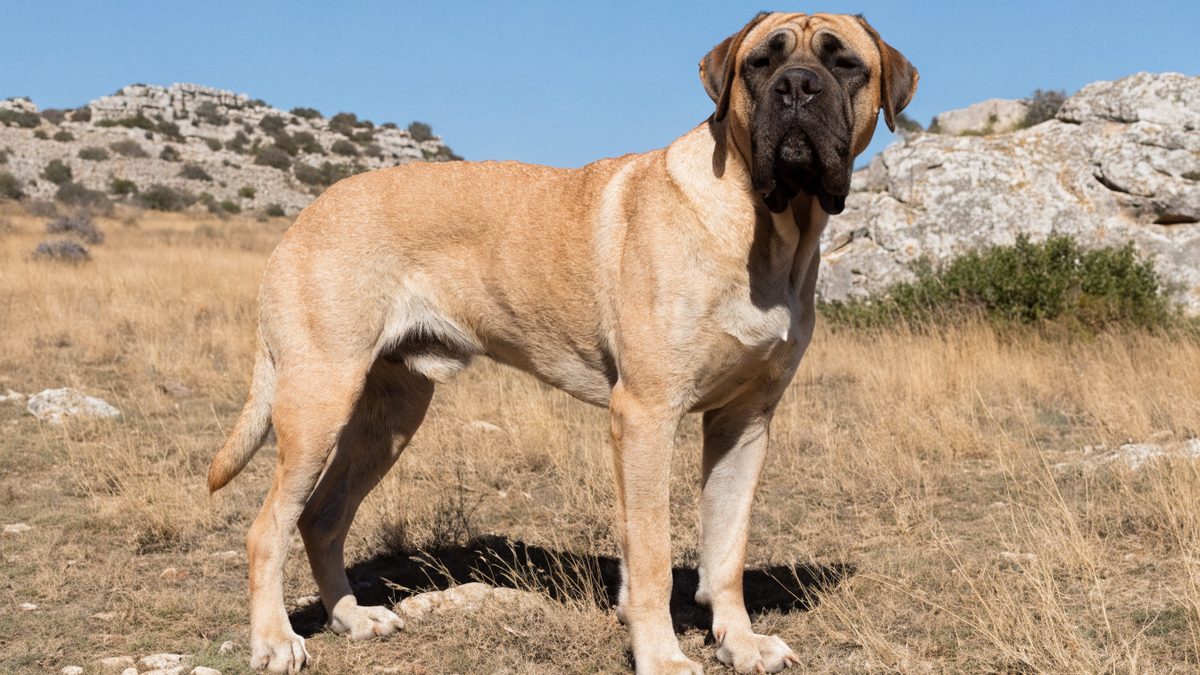
An Aksaray Malaklisi is a very large short-coated livestock guardian dog from Aksaray Province in central Anatolia, bred to hold a flock of sheep against wolves. Its name is anatomical rather than geographic in the second half: malak is a word for lips in the local dialect, and a malaklı is a dog with sagging cheeks and pendulous jowls. English sources call it the Turkish Mastiff or the Anatolian Lion.
Aksaray sits in the Konya section of Central Anatolia across 7,821 square kilometres, at the junction of the Niğde, Nevşehir, Kayseri, Konya and Adana highways, and the breed is accepted as native to that province. The first systematic study of how it is actually bred there was published only in 2017, by two Turkish veterinary historians who interviewed 50 named breeders and owners across the province using a 54-question form. That paper is the single best document on this dog in any language, and no page ranking for the breed cites it.
The head is the breed, and the head is the problem
Breeders in Aksaray describe an ideal Malaklı in a specific order: big-headed, black-masked, broad-browed, short and blunt in the muzzle, with drooping lips, large ears and a long broad chest they call at döş, a horse chest. The body should be long, the wrists thick, the hair short, and the tail not too tightly curled. The eyes are described as loose and sagging from below, with visible redness. That last detail is not cosmetic, and the health section returns to it with a published study behind it.
The only breed standard published for this dog anywhere says the same things in show language. It specifies a very distinct stop, a face that runs straight from the eye arches to the nose and is noticeably shorter and blunter than the skull, rounded eyes set close together, an upper lip that covers the lower lip and dangles downwards, and a neck that is drooping and folded. It adds that the coat is not attached to the body tightly.
Read those two descriptions together and you have a giant guardian selected for loose skin, heavy flews and a shortening muzzle. Every one of those features has a cost that shows up later on this page.
Four measured datasets, and the standard that does not match them
The most useful thing anyone can tell you about this dog's size is that the published standard and the measured population disagree, and they disagree in the same direction every time. The table below sets the only standard against every measured dataset we could open.
| Source | Sample | Height at withers, males | Weight, males |
|---|---|---|---|
| Turkish Dog Federation standard | Not stated | 75 to 85 cm, 97 cm also seen | 65 to 85 kg, 100 kg also seen |
| Atasoy et al, Ankara University | 277 dogs aged 18 months and over | Mean 78.36 cm, SE 0.31 | Mean 62.29 kg, SE 0.68 |
| Urošević et al, measured in Cappadocia | 44 dogs aged 1 to 9 years | Whole-sample mean 77.34 cm, SD 2.74 | Not measured |
| Oğrak et al, Aksaray province | 10 dogs aged 2 to 5 years | Significantly greater than Kangal | Not reported |
| Aslım and Sinmez, cited comparison | Atasoy dataset | 77.00 cm, SE 0.32 | 59.96 kg, SE 0.83 |
The standard's weight floor for a male, 65 kg, sits above the measured population mean of 62.29 kg Atasoy, F., Erdoğan, M., Özarslan, B.. In other words, the average correctly bred male Aksaray Malaklısı, measured across 277 dogs by a university veterinary faculty, is too light to meet the only standard written for him. The height figures behave the same way: the standard starts at 75 cm and the measured mean is 77.34 to 78.36 cm, which fits, but the standard's upper claims of 97 cm and 100 kg have no measured support in any dataset we could retrieve.
The 110 kg dog exists as a single reported animal, described by his breeder to a news agency, not as a measurement in a study. Treat the very large numbers you will see quoted for this breed the same way.
The body proportions, from the only full morphometric study
One team has measured this breed properly. Urošević and colleagues took 20 exterior parameters on 44 dogs, 22 male and 22 female, all bred in Turkey and all measured in the Cappadocia region in 2016. Their findings are the closest thing the Aksaray Malaklısı has to an evidence-based standard.
- Body format is rectangular, not square. The format index, body length divided by withers height, ranged from 98.72 to 113.75, and only 2.3 percent of the sample fell below 100.
- The croup usually stands higher than the withers. The croup index ranged from 96.53 to 106.58, with 11.4 percent of dogs below 100 and the difference more pronounced in females.
- Sexual dimorphism is strong and statistically significant. Males were taller and longer with a larger chest circumference and a longer, wider head and stronger muzzle, with significant differences on 15 of the 20 traits.
- Chest circumference varies most. It had the greatest variability of any measured trait, at a mean of 94.30 cm with a standard deviation of 5.55.
- Head type is splitting by sex. Females came out mesaticephalic and males came out more brachycephalic, a statistically significant difference, with 65.9 percent of the whole sample sitting in the mesaticephalic band of 50 to 60 on the skull length index and the remainder above it.
That last finding is the most important sentence in the scientific literature on this breed, and the authors said so themselves. They wrote that it matters whether the breeding aim will be for dogs with a mesaticephalic or a brachycephalic head type, bearing in mind the breathing problems that could occur. Hold that thought until the climate section.
Colour, coat and tail, as Aksaray actually classifies them
Aksaray breeders do not use a single colour name for this dog. They sort Malaklı by coat into boz karabaş, ala malaklı, çapar malaklı, sarı malaklı and göğ malaklı, and by tail shape into sadar or upright, kamçı or whip, L-shaped and toka or curled, the last of which splits again into full and half. A breeder interviewed separately described three sub-types, gök karabaş, ala malaklı and boz karabaş.
The published standard flattens all of that into three words, giving the colour as pinto, grizzly and brindle, while general reference pages describe the breed simply as grey with a black mask. The coat itself is short in every description Turkish Dog Federation Inc.
One more anatomical quirk matters. Many Malaklı carry extra rear toes, called soya or mahmuz locally, and double-dewclawed dogs are considered more valuable and treated as a mark of purity. A comparative study of Aksaray Malaklı against Kangal listed the presence of a sixth nail as one of three descriptive differences between the two. The veterinary historians who recorded the belief rejected the reasoning behind it, noting that polydactyly is a genetic anomaly, is not required by the breed, can create problems for the dog, and is a worthless criterion in selecting breeding stock.
The Aksaray Malaklisi is the heaviest of the Anatolian livestock guardian breeds, averaging 62.29 kg and 78.36 cm in males across 277 measured dogs, with a short coat, a shortening muzzle, heavy jowls and loose skin. Nearly everything contested about it concerns paperwork rather than the animal, and the paperwork is thinner than any ranking page admits.
Registry recognition: Turkey's kennel club files this breed among those the FCI does not recognise
No kennel club recognises the Aksaray Malaklisi as a registrable breed, and the one that names it does so in the group it keeps for breeds the FCI rejects. The Fédération Cynologique Internationale does not list it under A, M or T in its nomenclature Fédération Cynologique Internationale Fédération Cynologique Internationale. Turkey's own FCI member kennel club does carry an entry, in Grup 11, under breed code AKM and with no standard attached. The only body publishing a Malaklı breed standard is a private company, not a kennel club. Every claim below is read from the issuing body's own document, and the two registry rows were re-read on 27 August 2026.
| Body | Position on the Aksaray Malaklisi | Source read |
|---|---|---|
| Fédération Cynologique Internationale | Absent from the nomenclature. Letter A runs Affenpinscher to Azawakh, letter M runs Macedonian Shepherd Dog Karaman to Mudi, letter T runs Taiwan Dog to Tosa. No Aksaray, no Malakli, no Turkish Mastiff | FCI breeds nomenclature Fédération Cynologique Internationale Fédération Cynologique Internationale |
| Köpek Irkları ve Kinoloji Federasyonu, the Turkish kennel club and an FCI full member | Listed, in Grup 11, which KIF labels FCI Tarafından Tanınmayan Irklar, breeds not recognised by the FCI. Breed code AKM, no FCI standard, no breed club and no descriptive text, against the Kangal's Grup 2, code KAN, linked FCI Standard 331 and registered breed club | KIF breed database entry and KIF Hakkımızda |
| Turkish Ministry of Agriculture and Forestry, through TAGEM | Three dog breeds registered in total since 2004, out of 77 breeds across 11 species. The peer-reviewed literature records the Malaklı as not registered by the Domestic Animal Registration Committee | Ministry statement of 27 October 2022 and Aslım and Sinmez |
| Turkish Standards Institution | No TS standard. The institution issued TS 12172 for the Kangal in 1997, TS 12891 for the Akbaş and TS 12892 for the Kars in 2002, and none for the Malaklı | Aslım and Sinmez, citing the institution's own catalogue |
| Turkish Dog Federation Inc | Publishes a Malaklı breed standard giving 75 to 85 cm and 65 to 85 kg for adult males. This is a private incorporated body, not an FCI member and not the Turkish kennel club | Turkish Dog Federation standard |
| T.C. Kültür ve Turizm Bakanlığı, Aksaray provincial directorate | Lists the Malaklı dog under Patentli ve Tescilli Ürünler, patented and registered products, and specifically under Marka, meaning trademark, not under any animal breed register | Aksaray provincial culture and tourism directorate |
| American Kennel Club, The Kennel Club and every other national registry | No Aksaray Malaklisi breed exists in any of them. The breed is not in the FCI system, and no national registry outside Turkey has created an entry | FCI nomenclature, checked across three letters Fédération Cynologique Internationale Fédération Cynologique Internationale |
What Turkey's own kennel club register actually says, and what changed in 2026
The Köpek Irkları ve Kinoloji Federasyonu describes itself on every page as an FCI full member, and its current breed database carries 460 entries graded by FCI group. The Aksaray Malaklısı is in that database, in Grup 11, which KIF labels FCI Tarafından Tanınmayan Irklar, breeds not recognised by the FCI, under breed code AKM. Bonbeno published the opposite until 27 August 2026 and the correction belongs in the open. KIF has rebuilt its website, the old Yerli Irklar page that named only Kangal, Akbaş and Zerdeva now returns HTTP 404, and the database that replaced it does carry this breed.
Read the Malaklı entry against the Kangal's and the difference is the whole story. The Kangal sits in Grup 2, carries breed code KAN, links to FCI Standard 331 and records that a breed club exists Köpek Irkları ve Kinoloji Federasyonu. The Malaklı entry carries a breed code and nothing else: no standard, no breed club, no morphological text, not even the origin and colour block the Akbaş entry has. Grup 11 holds 33 entries, and the company they keep is instructive, because alongside Akbaş Çoban Köpeği, Anadolu Sultan Tazısı, Zerdeva and Kars Çoban Köpeği it includes one named Karışık Kopoy, which is Turkish for mixed hound.
What a Grup 11 line actually gets an owner is the question a buyer needs answered, and KIF's own pages get close to answering it without closing it. The federation publishes a native-breed studbook fee, ₺250 to register an Akbaş or another native breed against ₺400 for a Kangal, current from 7 January 2026, so a registration track for breeds the FCI does not recognise plainly exists and is priced. That line names a category rather than this breed, though, and KIF's registration procedure page describes the first-time route, B Kaydı, as being for dogs that lack a pedigree yet belong to a breed the FCI recognises, assessed by an FCI breed judge against the breed standard. The Aksaray Malaklısı sits in the group KIF labels not recognised by the FCI, and its entry carries no standard for a judge to assess it against. So the track exists, the Akbaş is named on it, and whether this breed can be entered is still not stated anywhere we could read.
KIF's own Hakkımızda page goes further and names the Aksaray Malaklısı among Turkey's native dog breeds, alongside the Kangal Çoban Köpeği, Akbaş, Zerdava and Sultan Tazısı, and describes preparing a breed standard and a gene map so those breeds can be registered with the FCI in Turkey's name. It is precise about how far that work has got. For the Kangal it says the work is complete and FCI registration was obtained on 25.06.2018. For the Akbaş, the Zerdeva and the Aksaray Malaklısı it says the work has been started, with significant progress recorded.
Three separate things get called recognition, and this breed has them in different amounts, so keep them apart. Being named in a kennel club's mission statement is an intention, and the Malaklı has that. Being listed in that club's breed database under Grup 11 is an acknowledgement that the dog exists and that the FCI does not recognise it, and the Malaklı has that too, with a breed code and no standard. Being entered in the FCI nomenclature is recognition, and the Malaklı does not have it. A fourth layer sits underneath all three, the Turkish state's own native breed registration, and the peer-reviewed record places the Malaklı outside that as well Aslım, G. and Sinmez, Ç.Ç..
The government position matches. Turkey's agriculture ministry stated in October 2022 that its registration committee had completed registration for three dog breeds since 2004, alongside two cat breeds, within a total of 77 breeds across 11 species. The peer-reviewed record is explicit about which side of that line the Malaklı falls on: Aslım and Sinmez wrote in 2017 that the Aksaray Malaklısı had not yet been registered by the Turkish Standards Institution, the Domestic Animal Registration Committee or similar relevant institutions, and called for universities, provincial authorities and civil society organisations to begin the work needed to register it as a native breed.
They also recorded, in a footnote sourced to the Turkish kennel club and dated 5 January 2015, that there was no international breed standard for the Aksaray Malaklısı and no application had been made for breed registration.
The trademark, and why it is not a breed registration
Turkey has registered something connected to this dog, and the distinction matters because it is quietly misreported. The Aksaray provincial culture and tourism directorate lists the Malaklı Köpeği among the province's patented and registered products, filed under Marka, the Turkish word for trademark or brand. A serum biochemistry study published in 2019 describes the breed as a native Anatolian race that has recently been geographically marked.
A provincial brand or a geographical marking is a commercial designation attached to a place. A breed registration is a zootechnical act performed by an animal genetic resources committee, and this breed has not had one T.C. Tarım ve Orman Bakanlığı. Anyone telling you the Aksaray Malaklısı is a registered Turkish breed is describing the trademark and calling it a studbook.
The Turkish Dog Federation is not the Turkish kennel club
The one document that reads like a breed standard for this dog is published by the Turkish Dog Federation Inc. Wikipedia states that the breed is recognised by that body and moves on. The word Inc is doing a lot of work. This is a private incorporated organisation, and it is not the Köpek Irkları ve Kinoloji Federasyonu, which is the Turkish national kennel club and the FCI full member. KIF's own entry for the breed attaches no standard at all, so the private federation's document and the national kennel club's blank are not two versions of the same thing.
The practical consequence for a buyer is exact. A pedigree issued by that federation is not an FCI pedigree, is not recognised by any FCI member club including Turkey's own, and cannot be transferred into any national studbook. It documents a private organisation's opinion about a dog. That is not worthless, but it is not what most buyers think they are getting.
The 2012 survey that did not list this breed at all
One further absence is worth recording, because it shows how recently this breed entered the scientific conversation. A 2012 survey of native Turkish dog breeds and types, published by researchers at Iğdır and Ankara universities, enumerated eleven of them: Kangal, Akbaş, Kars, Koyun, Karaman, Türk Tazısı, Tarsus Çatalburun, Dikkulak, Zağar, Zerdava and Tonya Finosu. The Malaklı does not appear anywhere in it.
Five years later, the folklore study noted that only one study of the Malaklı's morphological and genetic characteristics had ever been carried out, and that no information about this breed could be found in FCI records. The breed's entire documented research base is roughly a decade old.
The genetics do support a separate breed
None of the above means the Aksaray Malaklısı is a mongrel or an invention, and it would be dishonest to imply that. The genetic work points the other way. Analyses cited in the Turkish veterinary literature found that these dogs form a group separate from Kangal, Akbaş and Kars shepherd dogs in terms of genetic similarity, and may be a distinct breed. A 2014 study genotyped 212 unrelated dogs from a sample of 277 using microsatellite markers and reported a heterozygosity index of 0.797. A 2018 paper in Reproduction in Domestic Animals ran a genomewide association study of male reproductive traits in Aksaray Malakli dogs using a SNP genotyping array.
So the situation is unusual and worth stating precisely. The evidence that this is a distinct breed is genetic and morphometric. The recognition that would normally follow that evidence has not happened, in Turkey or anywhere else.
Ask which body issued the paper and read the breed name printed on it. No FCI pedigree can say Aksaray Malaklısı, because the breed is not in the nomenclature. Bonbeno used to say no Turkish kennel club paperwork could name it either. That is no longer correct, because KIF's breed database now carries it under code AKM. What follows from a Grup 11 line is narrower and still worth knowing. KIF's own label for that group is breeds the FCI does not recognise, so any certificate presenting this dog as FCI registered, or as holding a pedigree that transfers into another country's studbook, is false on its face. KIF does publish a native-breed studbook fee, ₺250 for the Akbaş and other native breeds against ₺400 for the Kangal, so a registration track for breeds the FCI does not recognise exists and is priced. That line names a category and not this breed, and KIF's own procedure page runs first-time registration through an FCI breed judge assessing a dog against its breed standard. The Malaklı has no standard on its entry, so whether one can actually be entered is still unstated. Ask KIF, not the seller.
One methodological warning from our own research, because it caught a previous Bonbeno page. Turkish registry websites serve full, correctly formatted breed standards at addresses that look like they belong to a different breed, and an HTTP 200 response proves nothing about which dog the document describes. We checked the breed name printed at the top of every registry document quoted here before taking a single figure off it, and we recommend the same discipline to anyone verifying a claim about any Anatolian guardian.
Aksaray Malaklisi price in India: there is no Indian price, and we will not invent one
No credible Aksaray Malaklisi price in india exists. We ran three India-located searches on 16 August 2026 and opened what they returned. Not one Indian seller, not one Indian listing and not one rupee figure for this breed appeared in any of them. The honest answer to the price question is that there is no Indian market to price, and Indian import policy explains why.
This is the section where a directory is most tempted to make something up. A range like Rs 1,50,000 to Rs 4,00,000 would look plausible next to the Tibetan Mastiff and would probably rank. It would also be entirely fabricated. So here is exactly what an India-restricted search returns for this breed, result by result.
| Result | What it actually is | An Indian price? |
|---|---|---|
| tr.wikipedia.org | Turkish-language encyclopedia stub | No |
| en.wikipedia.org | Encyclopedia entry, no commercial content | No |
| turkishdog.com | A breed standard published by a private federation | No |
| aksaray.gov.tr | Turkish provincial government description | No |
| dailysabah.com | Turkish news feature quoting Turkish lira prices | No |
| animals.howstuffworks.com | US general-interest care profile | No |
| animalia.bio | Generic breed database entry | No |
| quora.com | A user asking how the Kangal, the Aksaray Malakli and the Anatolian Mastiff differ | No |
| Searches restricted to price and buying terms | Returned a Kangal price article, an Instagram reel, Arabic-language social posts and a Facebook thread about the Korean Mastiff | No |
Not a single Indian commercial page for this breed exists in the India SERP. That is not a gap in our research. It is the finding. Compare it with the Tibetan Mastiff and the Caucasian Shepherd Dog, where India-located searches return dozens of Indian price pages disagreeing with each other by a factor of seventy-five, and the difference is obvious immediately.
What the breed costs where a market does exist
Turkey has a real, small market, and it has published figures. In Aksaray in 2022, male puppies were sold at TL 5,000, quoted at the time as 304 US dollars, and female puppies at TL 4,000, quoted at 243 dollars. Grown dogs aged between 12 and 24 months went for far more, sometimes reaching TL 70,000, quoted at 4,268 dollars.
We report those as Turkish figures from 2022 and nothing more. Converting them into rupees would produce a number no Indian buyer can act on, because there is no lawful route to bring a puppy into India for sale, as the next section sets out. Turkish lira figures from 2022 are also not comparable to 2026 lira figures, and we are not going to pretend otherwise.
How small this breed's whole market is
The most useful number on this page for anyone considering the breed is a supply figure, not a price. The head of an association for preserving the breed told a news agency that Aksaray is home to seven modern farms and smaller venues operated by 15 breeders, and that every year up to 500 puppies and up to 100 grown dogs are sold there.
Five hundred puppies a year, from the breed's entire homeland, is roughly the output of a single busy commercial kennel in a large Indian city. Set that against a country of 1.4 billion people with no lawful import channel and the conclusion writes itself.
The breed's own top breeder says most dogs sold as Malaklı are fake
This is the verification point, and it comes from inside the breed rather than from us. Nevzat Tunçbeden, who runs a five-acre breeding facility in Aksaray built with a reported TL 2 million investment and keeps 30 stud dogs, told Anadolu Agency that people sell Aksaray Malaklısı on social media and buyers show huge interest, but that most of them are fake dogs with nothing to do with the Aksaray Malaklısı.
He is a credible witness on this specifically, and he can be cross-checked: he appears by name as one of the 50 interviewees in the peer-reviewed folklore study of Aksaray Malaklısı breeding, as does the association head quoted above. Two independent documents, one academic and one journalistic, naming the same people. That is rare on a rare breed.
His stated markers for telling a genuine Malaklı from a hybrid are white ankles, a larger head and droopy eyelids. Note that two of the three are the exaggerated features this page later flags as health risks.
Treat it as a misdescribed dog until proven otherwise. The realistic possibilities are a Kangal or Kangal cross, a Caucasian Shepherd Dog, a Bully Kutta or a mastiff-type crossbreed. Ask which registry issued the papers and what breed name is printed on them, and remember that no FCI pedigree can carry this breed name and that Turkey's kennel club files it among the breeds the FCI does not recognise Köpek Irkları ve Kinoloji Federasyonu.
We would rather publish a gap than a guess. If a verified Indian transaction is ever documented, with an import authorisation number and a traceable record, we will add it here and date it. Until then, any site quoting an Aksaray Malaklisi price in india has made it up.
The legal position in India: no lawful supply route, and an unresolved ban question
Indian law leaves no lawful way to found an Aksaray Malaklisi breeding population. Live dogs are a Restricted import under ITC (HS) 01061900, and the policy permits import only for a pet dog with a valid pet book in the importer's name, for research organisations with CPCSEA recommendation, or for Defence and Police internal security use. Applications made for trading or breeding purposes are to be duly rejected. Read that alongside the absence of any registry route and the position is settled.
What the import policy actually says
The governing document is Trade Notice 22/2022-23, issued by the Directorate General of Foreign Trade on 19 December 2022 and addressed to all international airlines, all Indian embassies and consulates abroad, and pet owners. Its Policy Condition 8 states that the import of commercial dogs for breeding or any other commercial activity is not permitted.
The narrow route that remains is a personal one. Up to two pets may enter as passenger baggage without DGFT authorisation, and only for a person transferring residence to India after two years of continuous stay abroad. Anything beyond that requires an import authorisation from the DGFT, with applications examined against supporting documents by the Department of Animal Husbandry and Dairying. Applications made for trading or breeding purposes, or on behalf of another person or entity, shall be duly rejected.
| Requirement | What it means in practice |
|---|---|
| Import policy for live dogs is Restricted, ITC (HS) 01061900 | No open channel exists at any volume |
| Permitted purposes are pet, CPCSEA research, and Defence or Police use only | A breeding kennel is not a permitted purpose |
| Up to two pets as baggage, only on transfer of residence after two years abroad | The only route without a DGFT authorisation, and it is personal |
| Trading or breeding applications shall be duly rejected | No lawful founder stock can be assembled |
| Entry only through Delhi, Mumbai, Chennai, Hyderabad, Bangalore and Kolkata | Six ports, each with a quarantine station; DAHD added Kochi for pets arriving under the baggage rules in October 2024 |
| Advance No Objection Certificate from the quarantine officer, seven days before travel | Relaxable up to three days depending on circumstances |
| Owners advised to start the process at least two months before travel | Plan in months, not weeks |
Put the import wall together with the registry position and the picture completes itself. There is no lawful commercial import, and there is no internationally transferable pedigree for the resulting dogs, because the FCI nomenclature does not contain the breed and Turkey's kennel club files it among those the FCI does not recognise Fédération Cynologique Internationale Köpek Irkları ve Kinoloji Federasyonu. The import wall settles it on its own: no lawful supply chain for this breed can form in India.
The 2024 prohibition list, and why this breed's position is genuinely unclear
On 12 March 2024 the Department of Animal Husbandry and Dairying wrote to the Chief Secretaries of all States and Union Territories seeking to prohibit the import, breeding and selling of two dozen dog breeds identified by an expert committee as ferocious and dangerous to human life. The list, quoted verbatim from the letter, names Pitbull Terrier, Tosa Inu, American Staffordshire Terrier, Fila Brasileiro, Dogo Argentino, American Bulldog, Boerboel, Kangal, Central Asian Shepherd Dog, Caucasian Shepherd Dog, South Russian Shepherd Dog, Tornjak, Sarplaninac, Japanese Tosa and Akita, Mastiffs (boerbulls), Rottweiler, Terriers, Rhodesian Ridgeback, Wolf dogs, Canario, Akbash dog, Moscow Guard dog, Cane corso and every dog of the type commonly known as a Ban Dog.
The Aksaray Malaklısı is not named. That is the accurate statement, and it is also not the end of the analysis. The letter expressly covers mixed and cross breeds, it names the Kangal, and it names Mastiffs as a category. A breed whose English trade name is Turkish Mastiff, which sits genetically alongside the Kangal, and which remains unrecognised by any register that could establish it as a separate breed, its one kennel club entry carrying a code but no standard, is exactly the animal that a category term resolves against in practice.
The circular is not currently in force. The department's Public Notice of 2 May 2024, issued in view of the Karnataka High Court order of 10 April 2024 in W.P. C 8409 of 2024 and in compliance with the Delhi High Court order of 16 April 2024 in W.P. No. 4374 of 2024, clarified that the letter of 12 March 2024 shall not be enforced until further order and invited written comments with scientific reasoning by 1 June 2024.
| Date | Event | Effect on an Aksaray Malaklisi |
|---|---|---|
| 19 December 2022 | DGFT Trade Notice 22/2022-23 issued | No commercial or breeding import permitted |
| 6 December 2023 | Delhi High Court directs the Union to decide a representation after consulting stakeholders | None yet |
| 12 March 2024 | DAHD letter names 24 breeds including Kangal, Mastiffs and the Akbash dog | Not named, but arguably within a category term |
| 10 April 2024 | Karnataka High Court reservations recorded in W.P. C 8409 of 2024 | Circular under challenge |
| 16 April 2024 | Delhi High Court order in W.P. No. 4374 of 2024 | Circular under challenge |
| 2 May 2024 | DAHD Public Notice confirms the letter shall not be enforced until further order | Not enforceable |
| 1 June 2024 | Deadline for written objections with scientific reasoning | Consultation stage, fresh notification still possible |
So the position today has three parts, and Indian coverage usually gets at most one of them right. No central Indian law names this breed. A set-aside circular names two categories it could plausibly fall under. And none of that matters much in practice, because the import wall already prevents any lawful supply. A prospective owner should also check locally, since municipal licensing is administered by local bodies rather than by the centre.
The ear cropping problem, which is a legal problem in two countries
The traditional rearing of this breed includes a practice that is unlawful in India, and it is documented in detail. Aksaray breeders crop Malaklı puppies' ears, giving four reasons: protection from flies, preventing injury from the spiked holta collar, sharper hearing against the wolf threat, and a fiercer appearance. The methods recorded include a heated knife, trapping the ear in a door, and sheep shears, usually performed in winter, and the cut ear is fed back to the dog with bread in the belief that it makes him brave.
Indian law prohibits this outright. Second Schedule Part II para 6(8) of the Prevention of Cruelty to Animals (Dog Breeding and Marketing) Rules 2017 states that there shall be no tail docking, ear cropping, de-barking, de-clawing, branding, dyeing, injecting substances to enhance visual appeal, performing a surgery or procedure to camouflage or hide any defect or infirmity or any other kind of mutilation of any body part of the pup, and that any change of appearance by artificial means is strictly forbidden.
Turkish law prohibits it too. Article 8 of Turkey's Animal Protection Law No. 5199 forbids surgical intervention to crop the ears of pet and ornamental animals for non-therapeutic purposes or to alter appearance, and the same research group published a review in the Italian Journal of Animal Science setting out the law and welfare position on cropping and docking across Europe and Turkey. The folklore study concluded plainly that the cropping practices it recorded do not comply with the legislation, animal health or welfare, and that breeders need to be educated on the point.
Photographs of this breed circulating online very often show cropped ears, because that is how the dog is traditionally presented in its homeland. An Indian reader must not take that as the breed's normal appearance. The natural ear is a large drooping pendant ear lying against the head, and any Indian breeder or importer presenting a cropped dog has either broken Indian law or imported the result of breaking Turkish law.
One further rule deserves attention on a page about this particular breed. Second Schedule Part II para 6(9) of the same Indian rules states that breeding to create new breeds of dogs or unusual looks shall be strictly prohibited. A breed whose selection points are exaggerated jowls, drooping eyelids and a shortening muzzle is squarely inside what that sentence is aimed at.
Cost of ownership: what is knowable, and what nobody can honestly quote
No monthly rupee cost exists for keeping an Aksaray Malaklisi in India, because no verified Indian household keeps one. We will not borrow the Kangal's numbers, the Caucasian Shepherd Dog's numbers or the Tibetan Mastiff's numbers and relabel them. What we can do is set out the cost structure honestly, name the one breed-specific consumption figure that exists in the literature, and show exactly where the numbers run out.
Two things drive the running cost of any giant guardian. The first is food volume, which scales with bodyweight. The second is the cost of things that go wrong, which scales with the breed's specific risks. For this breed the first has one published figure and the second has one published study, and neither has ever been converted into an Indian household budget.
The only breed-specific consumption figure that exists
Aksaray breeders feed a prepared mash rather than a commercial diet, and the folklore study recorded the quantities. A Malaklı of 10 to 12 months is given up to 5 kg of yal once a day, while a growing dog of four to five months needs yal two or three times a day. Yal is barley flour or bran mixed with hot water and then cooled with cold water. Adults are fed twice daily, yal at midday and a solid preparation called top in the evening, made from barley flour, milk, egg, molasses and water.
Five kilograms a day of a cereal mash is not a commercial-kibble equivalent, and converting it into a rupee figure would require assumptions about Indian ingredient prices, moisture content and caloric density that we have not measured. So we report the volume and stop. It is still the most useful number available, because it tells you the scale of the animal's intake rather than pretending to price it.
What the lawful import route actually involves
If a dog ever arrived in India lawfully, it would arrive through the pet relocation route, and the Trade Notice sets out the steps rather than the fees. An applicant files for an import authorisation on form ANF-2M against an Importer Exporter Code, or against the permanent code IIHIE0153E reserved for persons importing goods for personal use not connected with trade. The notice advises starting at least two months before travel. An advance No Objection Certificate must then be obtained from the Regional or Quarantine Officer of the Animal Quarantine and Certification Service, seven days before the date of travel and relaxable to three days, after submitting the DGFT licence and a health certificate from a veterinarian in the exporting country. Entry is limited to the airports and seaports of Delhi, Mumbai, Chennai, Hyderabad, Bengaluru and Kolkata and, since October 2024, Kochi airport, with quarantine at the port where required Department of Animal Husbandry…. The full route is set out in how to import a dog to India.
| Cost line | Breed-specific figure available? | What actually exists |
|---|---|---|
| Purchase price in India | No | No Indian seller and no rupee figure appears in an India-located search |
| Daily food volume | Yes, one figure | Up to 5 kg of yal a day at 10 to 12 months |
| Commercial diet cost | No | No study has fed this breed a commercial ration and reported the cost |
| Routine eye care | Indicative only | One study of 50 dogs, all presented with ocular discharge, found reduced tear production |
| Hip and joint screening | No | No registry scheme exists for this breed anywhere, so no screening statistics exist |
| Insurance | No | No Indian insurer lists an unrecognised breed with no standard |
| Import authorisation and quarantine | Procedure documented, fees not | ANF-2M application, AQCS advance NOC, quarantine at one of seven ports Department of Animal Husbandry… |
Read the middle column. On a page about a popular breed that column is full of numbers. Here it is mostly the word no, and that is the finding rather than a failure of research. A rare breed with no registered population generates no screening data, no insurance actuarial base and no price series, because all three are by-products of a population being counted.
If a page quotes you a monthly figure for an Aksaray Malaklisi in India, ask what population it was derived from. There is no Indian population, so the number was either taken from a different breed or invented. Both are worth knowing before you act on it.
Heat tolerance in India: Bonbeno rates this breed 1 of 5
Bonbeno rates the Aksaray Malaklisi 1 of 5 for heat tolerance in Indian conditions, the lowest rating on this site. The reasoning is arithmetic rather than opinion. The measured population mean for a male is 62.29 kg, which sits in the bodyweight band carrying 3.42 times the odds of heat-related illness, and the only full morphometric study of the breed found males drifting toward a brachycephalic head type, which is a second and separate risk band.
Start with what Indian heat actually means as a defined quantity. The India Meteorological Department declares a heat wave when a station's maximum reaches at least 40 degrees C in the plains, 37 degrees C at coastal stations or 30 degrees C in hilly regions, and the departure from normal is 4.5 to 6.4 degrees C, with a severe heat wave declared above 6.4 degrees C. Heat wave season runs March to June and occasionally into July, and May is the peak month.
Two risk bands, measured separately, that this breed sits in at once
The largest study of heat-related illness in dogs reviewed the records of 905,543 dogs under primary veterinary care in the UK in 2016. Three of its findings apply directly here.
- Dogs over 50 kg had 3.42 times the odds of heat-related illness compared with dogs under 10 kg, with a 95 percent confidence interval of 1.54 to 7.57. The measured mean for a male of this breed is 62.29 kg.
- Brachycephalic dogs had 2.10 times the odds compared with mesocephalic dogs, with a confidence interval of 1.68 to 2.64. Urošević and colleagues found the head-type split by sex in this breed, with females mesaticephalic and males significantly more brachycephalic, and about a third of the whole 44-dog sample sitting above the mesaticephalic band.
- Dogs at or above the mean adult bodyweight for their breed and sex had 1.42 times the odds of dogs below it, with a confidence interval of 1.12 to 1.80. On a breed whose only published standard sets a weight floor above the measured population mean Atasoy, F., Erdoğan, M., Özarslan, B., that is a standing invitation to overfeed.
- The event fatality rate was 14.18 percent, with a confidence interval of 11.08 to 17.96 percent. Roughly one heat-related illness event in seven killed the dog.
The companion paper matters more for daily management than the headline risk does. Across the 879 heat-related illness events with a recorded trigger, exertion was the trigger in 74.2 percent, environmental heat in 12.9 percent and confinement in a vehicle in 5.2 percent. Brachycephalic dogs had greater odds of all three types. In other words, the thing that puts a big dog in a veterinary emergency is not usually a parked car. It is a walk taken at the wrong hour.
The one factor that argues for a better rating, and why it does not carry the day
Honesty requires stating the counter-argument. This dog is genuinely short-coated. Aksaray breeders call the coat sıçan tüyü, rat hair, and the published standard describes a coat that is simply not attached to the body tightly rather than a double coat. That is a real advantage over the Tibetan Mastiff and the Caucasian Shepherd Dog, both of which Bonbeno also rates 1 of 5 partly on coat. By comparison the FCI Kangal standard requires hair of 3 to 7 cm with a dense undercoat, and treats a very short smooth coat devoid of undercoat as a disqualifying fault.
The coat advantage does not survive contact with the other three facts. This breed is roughly 12 kg heavier at the measured population mean than the Kangal weight band the FCI standard sets, it carries the second risk band the Kangal does not, and it has heavy pendulous flews and a drooping folded dewlap, which are not a cooling asset on an animal that sheds heat by moving air across a wet tongue and airway.
There is one more absence worth naming. The FCI standard for the Kangal states in its utilization clause that the breed is capable of enduring extremes of heat and cold. The only published Malaklı standard makes no climate claim of any kind. Anyone telling you this breed handles heat because Anatolian dogs handle heat is transferring a sentence from a different breed's document.
Dry heat and humid heat are different problems
Aksaray sits on the central Anatolian steppe, a dry continental interior. Nothing in this breed's history selected for humid air. That distinction matters more than the raw temperature, because a dog cools itself by evaporating water from the tongue and upper airway, and evaporation slows as the surrounding air approaches saturation. A 33 degree day in Kochi or Kolkata is harder on a 62 kg dog than a 39 degree day in Jodhpur.
| Setting | The specific problem | Verdict |
|---|---|---|
| Coastal humid cities such as Mumbai, Chennai, Kochi, Kolkata | Saturated air blunts evaporative cooling on a dog already in two risk bands | Unsuitable |
| Northern plains such as Delhi, Lucknow, Jaipur | Heat wave threshold of 40 degrees C is routine March to June | Unsuitable without full climate control |
| Deccan cities such as Pune, Bengaluru, Hyderabad | Milder, but still above the temperate range the breed evolved in | Poor, and no better than the mildest Indian option |
| Hill stations such as Shimla, Darjeeling, Ooty | Heat wave threshold falls to 30 degrees C, the closest Indian analogue to the homeland | The only defensible Indian climate, and still not a reason to import one |
| Any apartment | A dog of 78 cm at the withers bred to patrol open country cannot be cooled or exercised adequately indoors | Unsuitable in every Indian city |
Exertion causes 74.2 percent of heat-related illness events. Any movement would have to happen before sunrise or well after dark from March to June, on grass rather than tar, with shade and water at both ends. That is not a training preference. It is the difference between a walk and a 14.18 percent case fatality rate.
Temperament: what 50 Aksaray breeders said about how this dog turns out
The temperament of an Aksaray Malaklisi is set by how it is reared, and the primary source says so directly. Breeders interviewed across Aksaray reported that a Malaklı raised away from people becomes aggressive, a dog they call adamcıl, while one raised among people stays calm, and that these dogs obey their owner alone and can be aggressive toward everyone else. That is the single most decision-relevant sentence about this breed, and no ranking page carries it.
Everything below comes from structured interviews with 50 named breeders and owners in the breed's homeland, conducted between November 2015 and June 2016 using a 54-question form. It is field data on working dogs, not a pet-behaviour survey, and that limitation is worth holding in mind. It is also the only such dataset that exists.
The breeders' own three categories
Aksaray breeders sort Malaklı by disposition into three named types, and the vocabulary is more precise than anything in the English-language material.
- Adamcıl, meaning aggressive and short-tempered toward people.
- Kurtçul, meaning a dog that goes at the wolf.
- Adamcıl olmayan, meaning not aggressive toward people.
A fourth term describes performance rather than disposition. A canavarcı is a dog that has actually taken a wolf: if it leaves the flock to chase the predator and returns to the sheep before morning, it earns the name. Only one Malaklı in ten turns out canavarcı. Read that as a working statistic on a working breed. Nine dogs in ten do not do the job the breed is famous for, and the tenth is the one the folklore is built around.
Same-sex intolerance, quantified by age
This is the finding a family should read twice. On guard duty a Malaklı does not accept another dog of its own sex. The breeders put ages on it: because of fights over leadership, a mother will not want her own 10-month-old daughter beside her, and a father will not want a son of eight months or more.
A breed in which a parent turns on its own eight-month-old offspring is not a breed that shares a home with a second dog of the same sex. It is also worth noting what the breeders said about the tail: it does not drop unless the dog has been beaten by another animal, and it drops when the dog is afraid. Fear in this breed is visible and rare, which is the opposite of reassuring in an urban setting full of strangers.
What the standard says, and the far larger thing it does not say
The only published Malaklı standard opens by describing a dog that builds deep connections to its owner and its community and is skeptical and aggressive towards strangers. That is the whole of its behavioural content. The document has no temperament clause, no faults list and no disqualifications.
Set that against the FCI standard for the Kangal, which devotes a clause to behaviour, describing a dog that is steady and bold without aggression, naturally independent, very intelligent and tractable, loyal to owners and wary of strangers on duty, and which then lists aggressive or overly shy dogs as a disqualifying fault. One document treats aggression as a defect to be bred out. The other treats it as a description. A breed with no standard that can disqualify an aggressive dog has no mechanism for making the breed less aggressive.
Who should not consider this dog
The general-interest page that ranks for this breed titles itself around the breed being for dog experts only, and on this narrow point it is right. The Indian household profile is worth stating plainly.
- Apartment households, because a 78 cm livestock guardian bred to patrol open country cannot be contained or exercised in a flat.
- Homes with a second same-sex dog, because same-sex intolerance is documented at eight to ten months within the breed's own families.
- Homes with regular visitors, because obedience to one owner and suspicion of everyone else is the reported default.
- First-time owners of a large breed, because the dog is protective by selection and its only kennel club entry carries no standard, no breed club and no guidance of any kind to fall back on.
- Anyone who cannot socialise a puppy heavily from the day it arrives, because the primary source ties adult aggression directly to isolation in rearing.
This is a working flock guardian whose disposition is documented as owner-loyal, stranger-suspicious and same-sex intolerant, with the calm end of the range reachable only through constant human contact from puppyhood. Nothing about that profile improves in an Indian city, and no registry anywhere is selecting against the aggressive end of it.
Training: the traditional method is condemned in the source that records it
To train an Aksaray Malaklisi humanely, do the exact opposite of the traditional Aksaray method. The folklore study recorded that puppies destined for the flock are shut in a dark place for roughly six months to a year so that they grow up fierce, and are only then taken to the sheep. The same paper's authors then set out, with citations, why that practice damages the dog.
This is the clearest case on the page of a primary source doing the work no secondary page has done. The researchers did not simply record a custom. They evaluated it.
What the paper says the darkness does
The authors wrote that the absence of sunlight caused by keeping dogs in a dark place affects the animal's hormonal balance, health and psychology, and that the personality of dogs kept permanently tied or in a narrow space is harmed. They then produced comparative evidence: in Kangal and Akbaş dogs housed in enclosed systems with inadequate exercise areas, oestrus rates fell, cycle length lengthened and fertility declined. Their conclusion on the Malaklı practice was that confining a puppy in darkness for close to a year may adversely affect physical and psychological development and reduce fertility.
So the tradition that produces the fierce guardian is, in the assessment of the veterinary historians who documented it, a welfare problem that also costs the breeder puppies. That is a finding worth carrying into any training plan.
What the same source implies actually works
The breeders themselves supplied the counter-evidence without framing it that way. They reported that a Malaklı raised among people is calm and one raised away from people is aggressive. Read those two statements together and the training programme writes itself.
- Socialise from the first week in the home, deliberately and daily, because the primary source ties adult disposition to human contact in rearing rather than to bloodline.
- Handle the dog every day for mouth, ear, foot and eye checks, because a breed with a documented tear-film deficit needs eye handling to be routine long before it is urgent.
- Introduce visitors under control from puppyhood, because suspicion of strangers is the standard's own description of the adult.
- Separate same-sex dogs before eight to ten months, because that is when the breed's own families report the leadership fights starting.
- Avoid chaining as a management tool, because the breeders themselves reported that tethered Malaklı develop front and hind leg problems from their own weight.
What this breed will resist
Livestock guardian breeds are selected to make decisions without a handler, and the FCI standard for the closest recognised relative describes exactly that, calling the Kangal naturally independent. An independent guardian does not offer the fast, biddable compliance a retriever offers, and treating slow compliance as defiance is how handlers escalate. There is no obedience-trial record for the Aksaray Malaklisi anywhere, because trials are judged against a standard and its one kennel club entry has none Fédération Cynologique Internationale, so any claim about its trainability relative to other breeds is opinion rather than data. We are not going to pretend otherwise.
Aksaray breeders give a flock-bound puppy sheep milk so that it stays loyal to the flock, and leave newborn puppies beside the sheep so they get used to the conditions they will work in. Early, sustained exposure to the thing the dog must later accept is sound. It is only the darkness and the isolation that the researchers condemned.
Exercise: one hour of open country from four months, and why chains injure this breed
An Aksaray Malaklisi needs at least one hour a day in open country from four months of age, and the figure comes from the breeders themselves rather than from a care blog. They reported walking dogs of four months and older for a minimum of one hour daily in open ground specifically so the muscles develop. That is the only breed-specific exercise prescription in the literature.
The requirement is about structure rather than energy burn. This is not a high-drive sporting dog that needs to run itself tired. It is a guard dog built to stand and patrol, and the hour exists so that a very heavy growing skeleton is loaded properly.
The chaining injury the breeders described themselves
The same interviews produced an unusually candid piece of welfare evidence. Breeders reported that when a Malaklı is kept on a chain, problems develop in the front and hind legs because of the dog's own weight, and that for this reason the dogs are not kept permanently chained, so their legs do not bend. Where a chain is used at all, they specified a minimum length of four metres. Young dogs are left loose, salık, for six months to a year.
A breed whose own keepers report limb deformity from tethering is not a breed to keep tethered on an Indian rooftop or in a small yard. That is the single most transferable husbandry finding on this page.
What the working load actually looks like
For scale, the breeders reported that guarding a flock averaging 700 to 800 sheep takes at least two adult Malaklı, one male and one female. That is the job the body was built for: covering ground around a large moving flock, day after day. Nothing in an Indian residential setting reproduces it, and nothing needs to, but it explains why an hour in a park does not read as a full day to this animal.
Timing the hour in India, which is not optional
Exertion triggered 74.2 percent of the heat-related illness events with a recorded trigger, 652 of 879, far ahead of environmental heat at 12.9 percent and vehicular confinement at 5.2 percent. The dog most at risk of the dominant trigger is a heavy one, and this breed averages 62.29 kg in males Hall, E.J., Carter, A.J. and O'Neill, D.G..
| Period | Indian conditions | Exercise position |
|---|---|---|
| March to June | Heat wave season, peaking in May | Pre-dawn and well after dark only, on grass |
| July to September | Monsoon, high humidity even at lower temperatures | Early morning, shortened, with skin dried afterwards |
| October to February | The only workable window across most of India | The full hour, split into two sessions |
| Any day above the local heat wave threshold | 40 degrees C plains, 37 degrees C coastal, 30 degrees C hilly | No sustained exertion at all |
Sustained exertion is the dominant heat-related illness trigger, a male sits in the bodyweight band with 3.42 times the odds, and the breed was selected to stand between a flock and a wolf rather than to cover distance. The hour is for muscle and joint development, not for endurance.
Grooming in Indian humidity: the coat is easy and the folds are not
Grooming an Aksaray Malaklisi is a skin job rather than a coat job. The coat is short, described by Aksaray breeders as sıçan tüyü, rat hair, and the published standard says only that the coat is not attached to the body tightly. The work in an Indian climate sits in the loose skin, the drooping folded neck and the dangling upper lip that the same standard specifies.
Take the standard's own anatomy list and read it as a maintenance schedule. A very distinct stop, a face shorter and blunter than the skull, rounded eyes set close together, an upper lip that covers the lower lip and dangles downwards, a drooping lower lip, and a neck that is drooping and folded. Every one of those is a place where moisture and debris collect, and Indian humidity keeps them wet for longer than a central Anatolian summer does.
The weekly routine, in order of how much it matters
- Check the eyes daily, because this is the breed with the lowest measured tear production of any Turkish shepherd dog studied. Discharge that is turning mucopurulent is a veterinary appointment, not a wipe.
- Dry the lip folds and the dewlap after every meal and every wet walk, because a dangling upper lip and a folded neck hold moisture against skin.
- Clean the ear canals weekly and dry them after monsoon exposure, because the natural ear is a large drooping pendant ear lying against the head, which restricts air movement in the canal.
- Brush the short coat once or twice a week with a rubber curry or a bristle brush, which is all a coat of this type requires.
- Inspect for ticks after every outing, because 49.7 percent of 525 dogs surveyed across Delhi, Mumbai, Sikkim and Ladakh carried at least one tick-borne pathogen.
Why the eyes need more attention here than anywhere else
The ophthalmology study makes a point that translates directly to Indian conditions. In dogs with a moderate reduction in tear production, the researchers observed that small particles such as dust and dirt could not be cleared from the eye, and that the volume of mucopurulent discharge rose with the severity of the deficit. They warned that without proper treatment such patients may develop corneal ulcers.
A tear film that cannot flush dust is a worse problem in Delhi in April than in Aksaray in April. That is the single most India-specific care consequence on this page, and it follows from a peer-reviewed measurement rather than from a general worry about dusty climates.
The ears, and the thing you must not do to them
Traditional Aksaray practice crops these ears, using a heated knife, a door or sheep shears, and gives four stated reasons: protection from flies, avoiding injury from the spiked holta collar, sharper hearing against wolves, and a fiercer look. Indian law forbids ear cropping outright under Second Schedule Part II para 6(8) of the Prevention of Cruelty to Animals (Dog Breeding and Marketing) Rules 2017, and Turkish law forbids it under Article 8 of Law No. 5199 Sinmez, Ç.Ç., Yiğit, A. and Aslım, G..
The practical grooming point is that you will therefore be caring for a full pendant ear on a dog living in a monsoon climate. That means routine canal checks rather than a cosmetic shortcut, and it is one more reason a photograph of a cropped Malaklı is not a picture of what you would legally own.
No clipping, no stripping, no shaving and no coat-blowing season management. The short coat is genuinely low-maintenance, and any Indian groomer quoting a heavy-coat schedule for this dog is quoting the Tibetan Mastiff or the Caucasian Shepherd Dog instead.
Health, screening and lifespan: one real study, and three honest blanks
The health evidence for the Aksaray Malaklisi consists of four small Turkish studies and nothing else. One of them, a 2025 evaluation of 50 dogs in Veterinary Ophthalmology, is genuinely important and appears on no ranking page. There is no lifespan study, no hip or elbow screening scheme and no breed-wide disease survey anywhere in the world, and we say so rather than borrowing the Kangal's numbers. This section is general information and not a diagnosis, so consult your nearby vet before acting on any of it.
The eyes, which is where the real evidence is
Researchers at Aksaray University's veterinary faculty evaluated 50 intact, purebred Aksaray Malakli dogs, a total of 100 eyes, using the Schirmer Tear Test and Tear Film Break-Up Time. Read the sampling before the results. Every dog in the series was presented with conjunctival hyperaemia and mucoid ocular discharge, and dogs with chronic disease or ongoing ophthalmic treatment were excluded. This is therefore a case series of dogs that already had eye signs, not a prevalence survey of the breed. Anyone quoting these figures as breed prevalence is misreading the paper.
| Finding | Result | Note |
|---|---|---|
| Third eyelid gland prolapse | 30 percent of cases | Follicular conjunctivitis of the third eyelid and an inverted T-shaped cartilage were present in every case that had prolapse |
| Mucopurulent discharge and conjunctival hyperaemia | All cases | An entry criterion for the series |
| Bilateral blepharospasm | 40 of 100 eyes | Recorded on ophthalmic examination |
| Right eyes by tear-test score | 20 normal, 17 mild, 10 moderate | No eye scored as severe dry eye |
| Left eyes by tear-test score | 17 normal, 21 mild, 9 moderate | No eye scored as severe dry eye |
| Mean Schirmer Tear Test | 12.82 plus or minus 4.62 mm per 60 s | Range 2.14 to 22.7 |
| Mean tear film break-up time | 13.22 plus or minus 5.52 s | Range 2.14 to 23.1, against 20 s taken as normal |
| Prolapse versus no prolapse | Significantly lower tear values with prolapse, p equals 0.027 | Both tear production and film stability were lower |
| Corneal damage on fluorescein staining | None observed | Despite the tear deficit |
| Retinal and tapetal reflex | No abnormalities | Ophthalmoscopic examination |
The comparison the authors drew is the part that matters for a buyer. Published Schirmer values are 21.5 plus or minus 3.8 mm per 60 s in Kangal shepherd dogs and 20.7 plus or minus 2.9 in Akbaş shepherd dogs, and in other breeds range from 15.8 in the Shetland Sheepdog to 22.9 in the Labrador Retriever. This series averaged 12.82, below every one of them. The authors concluded that despite similar morphology, the Malaklı may be more susceptible to dry eye than the Kangal, and that Aksaray Malakli dogs, particularly those with third eyelid gland prolapse, are predisposed to mild to moderate keratoconjunctivitis sicca.
Now put that beside the folklore study, which had nothing to do with ophthalmology. Aksaray breeders described the ideal Malaklı as having eyes that are loose, sagging from below, with redness visible. A breed is being selected toward a drooping, reddened eye, and the only ophthalmic study of that breed finds the lowest tear production of any Turkish shepherd dog measured. The 2025 authors framed their own study as an investigation of hereditary ocular disease arising from inbreeding for phenotype preservation. Those two documents, read together, are the strongest health argument on this page.
Hearing, where normative data now exists
Brainstem auditory evoked response testing was carried out on 32 Aksaray Malaklısı shepherd dogs in Sivas province, establishing reference latency ranges for the breed for the first time. At 80 dB HL the overall mean wave I, III and V latencies were 1.37, 2.30 and 3.52 ms, and no statistically significant differences were found between ears, sexes or age groups.
Be precise about what that is and is not. It is a reference range, not a deafness prevalence figure. No study has reported how common congenital deafness is in this breed. What the paper gives an Indian vet is a published normal against which a suspect dog could be compared, which is more than most rare breeds have.
Blood chemistry, the second useful reference set
Serum from 20 male Malaklı housed in animal shelters in the Aksaray region produced the breed's first published biochemical baseline. Reported means included total protein 6.25 g/dL, albumin 3.62 g/dL, globulin 2.63 g/dL, blood urea nitrogen 16.53 mg/dL, creatinine 0.88 mg/dL, total cholesterol 186.85 mg/dL, triglyceride 47.65 mg/dL, calcium 9.53 mg/dL and phosphorus 4.36 mg/dL, with ALP 42.50, AST 31.90, ALT 43.30 and creatine kinase 166.4 IU/L.
One caution, because we read the paper rather than a summary of it. The published abstract prints the glucose result with a unit that cannot be correct for that value, so we have left glucose out rather than reproduce an evident typesetting error. Twenty shelter-housed males is also a small, non-random sample. Treat the set as indicative and confirm any reference range with your nearby vet before it is used clinically.
Bloat, which is a structural risk rather than a breed-specific one
No study has measured gastric dilatation-volvulus in this breed, so the honest source is the general literature on large and giant breeds. Following 1,637 dogs of eleven large and giant breeds aged six months and over, researchers recorded a cumulative GDV incidence of 6 percent. Increasing age, having a first-degree relative with a history of GDV and a faster speed of eating all significantly raised risk, and approximately 20 percent of cases in large breeds and 52 percent in giant breeds were attributed to feeding from a raised bowl.
The reason to take that seriously here is the chest. The morphometric study found chest circumference to be the most variable trait measured, with a mean of 94.30 cm and a standard deviation of 5.55, and the comparative table of Turkish shepherd dogs gives a chest depth of 33.00 cm for the Malaklı against 28.66 cm for the Akbaş. That is a deep-chested giant, which is the GDV body type.
Hips, and why there is no number
Aksaray breeders screen for it in their own way. Their stated criteria for selecting breeding stock require that a dog have no hip dislocation and no defective nail structure, a full scissor bite, double dewclaws, a high shoulder and large ears, forefeet standing vertical to the ground and a 45 degree opening between the hind legs. That is a functional eye-based screen carried out by people who watch the dogs work.
It is not a radiographic scheme, and there is no radiographic scheme. No hip or elbow dysplasia prevalence figure exists for the Aksaray Malaklisi anywhere, because scoring schemes need a registered population working to a standard, and this breed has neither: the FCI nomenclature omits it and its one kennel club entry is a Grup 11 line with no standard and no breed club Fédération Cynologique Internationale. We will not print the Kangal's or the Caucasian Shepherd's figures in place of it.
Tick-borne disease, the risk that would actually dominate in India
If a dog of this breed ever lived in India, the disease pressure it met would look nothing like Anatolia's. A survey of 525 dogs across Delhi, Mumbai, Sikkim and Ladakh found that 261 of them, 49.7 percent with a confidence interval of 45.4 to 54.1, carried at least one canine tick-borne disease pathogen.
| Pathogen | Prevalence | 95 percent CI |
|---|---|---|
| Hepatozoon canis | 30 percent | 26.0 to 34.0 |
| Ehrlichia canis | 20.6 percent | 17.2 to 24.3 |
| Mycoplasma haemocanis | 12.2 percent | 9.5 to 15.3 |
| Anaplasma platys | 6.5 percent | 4.5 to 8.9 |
| Babesia vogeli | 5.5 percent | 3.7 to 7.8 |
| Babesia gibsoni | 0.2 percent | 0.01 to 1.06 |
Concurrent infection with more than one pathogen occurred in 39 percent of infected cases. Year-round tick control is therefore not optional in India for any dog, and for a heavy guardian that spends its day outdoors it is the highest-yield preventive spend available.
Lifespan, stated three times because the sources do not support one number
There is no published lifespan study of the Aksaray Malaklisi. The Wikipedia article that ranks second for this breed carries a 13 to 15 year figure and flags its own claim as failing verification. Breed-database pages publish a life span field with no study behind it. None of the four Turkish studies that measured this breed followed dogs to death Urošević, M., Matejević, M., Drobnjak Avci, N., Gümüş, F., Boztok Özgermen Özşensoy, Y. and Koçkaya, M..
So we publish the blank. A giant guardian averaging 62.29 kg sits in a size class where published lifespans are generally short, but converting that into a number for this breed would be exactly the fabrication this page exists to avoid.
The genetics, and what the researchers actually worry about
Genotyping of 212 unrelated dogs drawn from a sample of 277 returned a heterozygosity index of 0.797, and a separate team ran a genomewide association study of male reproductive traits in Aksaray Malakli dogs using a SNP array. Genetic work therefore exists, and it supports the breed being a distinct group.
The concern the ophthalmology team raised is the one to hold onto: breeding for phenotype preservation, meaning breeding hard for the jowls and the head that define the look, is the mechanism by which a hereditary eye problem would concentrate. Indian rules point the same way, since Second Schedule Part II para 6(9) of the 2017 breeding rules prohibits breeding to create unusual looks.
Everything here is general reference information and not a diagnosis. Consult your nearby vet before acting on any of it, and treat a sudden change in your dog's condition as urgent. If you are ever assessing a dog presented as an Aksaray Malaklisi, the tear test is cheap, takes a minute, and is the one breed-specific check the literature actually supports.
Feeding: a cereal mash tradition, and why it does not transfer to India
Feeding practice for the Aksaray Malaklisi is documented in detail, and it is a barley-based mash rather than a commercial diet. Breeders feed adults twice a day, yal at midday and a preparation called top in the evening. That tradition is worth knowing and worth not copying, because it was built for a working dog on a steppe with access to sheep milk, not for a growing giant in an Indian city.
What the breed is actually fed in Aksaray
The folklore study recorded the recipes precisely, which makes this one of very few breeds with a published traditional ration.
- Yal, the staple, is barley flour or bran mixed with hot water and then cooled with cold water.
- Top, the winter evening feed prepared by shepherds in the field, combines barley flour, milk, egg, molasses and water into a solid.
- Puppy yal is flour roasted like halva with sugar added, mixed with hot milk, cooled and given lukewarm.
- Animal protein enters as meat, meat broth, omasum and boiled chicken bone, with raw chicken deliberately avoided because breeders hold that it causes disease.
- Goat milk is preferred for puppies specifically because it is less fatty than the alternative.
The quantities, which are the useful part
A Malaklı of 10 to 12 months is given up to 5 kg of yal in a single daily feed, while a growing dog of four to five months is fed two or three times a day. Colostrum, called ağın locally, is given for the first three days, and an egg is introduced as a supplement 25 to 30 days after birth.
Those are the only breed-specific intake figures in existence. They describe volume, not nutritional adequacy, and a barley-heavy mash is not a balanced growth ration for a dog heading past 60 kg. No feeding trial has ever been run on this breed, in Turkey or anywhere else, so any calorie chart you see for an Aksaray Malaklisi was calculated from bodyweight formulas rather than measured.
Body condition is the one thing an owner controls
The heat evidence makes weight management a safety issue rather than an aesthetic one. Dogs at or above the mean adult bodyweight for their breed and sex had 1.42 times the odds of heat-related illness compared with dogs below that mean, with a confidence interval of 1.12 to 1.80.
Now notice the trap built into this breed's paperwork. The only published standard sets a male weight floor of 65 kg, while the measured population mean across 277 dogs is 62.29 kg. An owner chasing the standard is being pushed above the population mean, straight into the higher-odds band. Score body condition by hand and eye against a standard body condition chart with your vet, and ignore the number on the standard.
Bloat management, which is mostly about the bowl
Because roughly 52 percent of GDV cases in giant breeds were attributed to feeding from a raised bowl, and faster eating speed independently raised risk, four rules follow for a deep-chested dog of this size.
- Feed at floor level rather than from a raised stand.
- Slow the meal with a slow-feeder bowl, since eating speed is an independent risk factor.
- Split the daily ration across two or three meals rather than one large feed, in contrast to the traditional single 5 kg feed Glickman, L.T., Glickman, N.W..
- Rest the dog around meals rather than exercising it, which also keeps exertion away from the heat-illness trigger that accounts for 74.2 percent of events.
Teething, with dates from the breeders
The interviews recorded a teething timetable that no care page carries. Dogs begin shedding teeth at four to four and a half months, a period the breeders call diş dökümü and describe as involving fever, pain and swollen cheeks, and the teeth are completely shed by six to six and a half months. Traditional management during that window is a cold-water bath and yoghurt.
Feed a large-breed growth formula appropriate to the dog in front of you, at floor level, split across meals, with body condition checked monthly and calcium levels confirmed by your nearby vet. The traditional barley mash is excellent history and a poor modern ration for a growing giant.
The first year, month by month, from the breeders who rear them
An Aksaray Malaklisi puppy's first year is documented in unusual detail, because 50 Aksaray breeders were asked about it directly. The timeline below is theirs, with the practices their own researchers criticised marked as such, and with the Indian adjustments named separately rather than blended in.
Two rules before the table. First, everything here describes a working dog reared on a farm in central Anatolia, so the ages are real but the settings are not Indian. Second, where the source authors condemned a practice, we print the condemnation next to the practice rather than hiding it.
| Age | What Aksaray breeders do | The Indian adjustment |
|---|---|---|
| Days 1 to 3 | Colostrum, ağın, is given to the newborn puppy | Unchanged, and the same anywhere |
| Days 25 to 30 | Egg is introduced as a supplement, sometimes with shell and bread in milk | Replace with a veterinary weaning formula and ask your nearby vet about calcium |
| To 2 months | The puppy is reared in a closed area | Keep indoors and begin daily human handling immediately |
| 2 to 4 months | The puppy moves to a garden environment | Begin structured socialisation with visitors, surfaces and sounds |
| From 4 months | At least one hour daily in open country, specifically for muscle development | Same hour, but pre-dawn or after dark from March to June |
| 4 to 4.5 months | Teething begins, with fever, pain and swollen cheeks | Veterinary check rather than the traditional cold-water bath |
| 4 to 5 months | Yal is fed two or three times a day | Large-breed growth diet, split into three meals, at floor level |
| 6 to 6.5 months | Teeth are completely shed | Confirm the adult bite is a full scissor bite |
| 6 to 12 months | Young dogs run loose, salık, rather than tethered | Secure fencing, never a chain, since breeders report limb problems from tethering |
| From 8 months, males | The father will no longer tolerate a male pup near him | Separate same-sex dogs before this point |
| From 10 months, females | The mother will no longer tolerate a female pup near her | Separate same-sex dogs before this point |
| 10 to 12 months | A single daily feed of up to 5 kg of yal | Two measured meals, body condition scored monthly |
| Around 18 months | Regarded as the ideal first mating age for both sexes | Not applicable, since no lawful Indian breeding route exists |
The practice to reject outright
One entry does not belong in any modern rearing plan. Breeders reported shutting puppies destined for the flock in a dark place for roughly six months to a year so they grow up fierce. The paper's authors set out why that is harmful, citing evidence that absence of sunlight disturbs hormonal balance, health and psychology, that dogs kept tied or in cramped space suffer personality damage, and that Kangal and Akbaş kept in enclosed systems with inadequate exercise areas showed reduced oestrus rates, longer cycles and lower fertility.
Their conclusion was that the practice may adversely affect the Malaklı's physical and psychological development. A puppy reared in the dark becomes the aggressive adult the same study describes, which is the outcome an Indian household least needs.
What the first year decides
The breeders' own observation is the whole argument for front-loading socialisation. A Malaklı reared among people is calm and one reared away from people is aggressive. In a breed with no temperament test, no breed club and no kennel club standard that can disqualify aggression Köpek Irkları ve Kinoloji Federasyonu, the first year is the only quality control that exists.
Breeders told the researchers that puppies born in summer grow larger than winter puppies because they receive more sunlight. We report that as a recorded belief rather than a finding, because the study documented it without testing it. In Indian conditions the reverse concern applies, since a summer-born giant faces heat wave season during its most vulnerable months.
Aksaray Malaklisi vs **Kangal** vs Akbaş: the measured differences
The Aksaray Malaklisi is heavier, longer-bodied, larger-headed and shorter-muzzled than the Kangal, and every one of those differences has been measured. The comparative table published by Turkish researchers puts the Malaklı at 59.96 kg against the Kangal's 50.5 kg and the Akbaş's 44.9 kg. The breed standard difference is starker still, because only one of these three breeds has an FCI standard at all, and Turkey's kennel club files the other two in Grup 11, its group for breeds the FCI does not recognise Köpek Irkları ve Kinoloji Federasyonu.
The body measurements, side by side
The figures below are reproduced from a single comparison table in the peer-reviewed literature, which matters because it means the four breeds were compiled against the same measurement definitions rather than pulled from four unrelated sources.
| Measure | Aksaray Malaklı | Kangal | Akbaş | Kars |
|---|---|---|---|---|
| Live weight, kg | 59.96 | 50.5 | 44.9 | Not reported |
| Height at withers, cm | 77.00 | 76.8 | 75.3 | 66.99 |
| Croup height, cm | 77.20 | 76.1 | 74.2 | 68.05 |
| Body length, cm | 81.75 | 67.3 | 81.8 | 63.28 |
| Chest depth, cm | 33.00 | Not reported | 32.6 | 27.90 |
| Chest circumference, cm | 88.48 | Not reported | 86.5 | 78.52 |
| Head length, cm | 32.45 | 28.36 | 27.90 | 30.39 |
| Face length, cm | 12.36 | 11.81 | 11.84 | 13.16 |
| Mouth circumference, cm | 31.51 | 28.83 | 25.33 | Not reported |
Read the last three rows together, because that is where the breed actually lives. The Malaklı head is 4.09 cm longer than the Kangal head, while its face is only 0.55 cm longer. The head grew and the muzzle did not keep pace. Mouth circumference tells the same story from another angle, at 31.51 cm against the Kangal's 28.83 cm and the Akbaş's 25.33 cm.
The muzzle ratio, calculated from those figures
Divide face length by head length in that table and you get a proportion the FCI standard happens to legislate. Our arithmetic on the published means gives 38.1 percent for the Malaklı, 41.6 percent for the Kangal, 42.4 percent for the Akbaş and 43.3 percent for the Kars.
The FCI Kangal standard requires muzzle length to be 40 to 44 percent of head length, and disqualifies a muzzle as short as one third of the head. Notice that the measured Kangal and Akbaş ratios land inside that band, which is a decent sign that the Turkish measurement protocol maps closely onto the FCI definition. The Malaklı ratio sits below the band, between the standard's minimum and its disqualifying threshold.
State the caveat with the finding. These are two independent measurement traditions, and we cannot guarantee that Turkish baş uzunluğu and yüz uzunluğu are defined identically to FCI head and muzzle length. The internal comparison between the four Turkish breeds is the solid part, and it points the same way as the ophthalmologists' description of the Malaklı as morphologically distinguished from the Kangal by its larger head and mouth, drooping lips and less curled tail.
Standard against standard, which is the real gap
The right-hand column is a working document. The left-hand column is roughly 200 words with no temperament clause, no faults, no disqualifications, no gait, no history and no proportions. It also contradicts itself: its body section puts the angle between the neck posture and the skyline at 60 degrees, while its neck section puts the same angle at 45 degrees.
Why these breeds get confused, which has a documented history
The conflation is not the reader's fault. In 1989 the FCI accepted every Turkish shepherd dog as a single breed, the Anatolian Shepherd Dog, and registered it as breed number 331. That number today carries the standard for the Kangal Çoban Köpeği alone. One FCI number has therefore stood for all Turkish shepherd dogs and then for one of them, which is precisely how a fourth, unrecognised type ends up described in other breeds' language.
A separate comparative study of body measurements found the Aksaray Malaklı significantly larger than the Kangal, and listed the presence of a sixth nail as one of three descriptive differences between the two. Polydactyly is prized locally as a mark of purity, though the veterinary historians who recorded that belief rejected it as a genetic anomaly and a worthless breeding criterion.
How this breed compares with the giants Indian buyers actually cross-shop
| Breed | Recognised by FCI? | Available in India? | Bonbeno heat tolerance |
|---|---|---|---|
| Aksaray Malaklisi | No Fédération Cynologique Internationale | No verified Indian dog or price | 1 of 5 |
| Akbash Dog | No, though registered by Turkey's own bodies | Effectively no Indian market | 2 of 5 |
| Caucasian Shepherd Dog | Yes | Yes, widely advertised | 1 of 5 |
| Tibetan Mastiff | Yes | Yes, widely advertised | 1 of 5 |
| Bully Kutta | No | Yes, a genuine subcontinental population | 3 of 5 |
The practical reading is short. If the appeal is the size, three of those breeds are lawfully obtainable in India and one is not. If the appeal is specifically the Malaklı head, no lawful Indian route exists to it at all.
Nine mistakes Indian buyers make with this breed
The commonest mistake with the Aksaray Malaklisi in India is believing you can buy one. Every error below traces back to a document that settles the point, and each is worth checking before money changes hands rather than after.
- Treating a Turkish Dog Federation pedigree as international recognition. That body is a private incorporated organisation, not Turkey's kennel club, and its paperwork transfers into no national studbook anywhere.
- Reading the Aksaray trademark as a breed registration. The province's culture and tourism directorate files the Malaklı dog under trademarks and registered products, not under any animal breed register, and the peer-reviewed record states the breed remains unregistered by the Domestic Animal Registration Committee.
- Assuming an Anatolian breed handles Indian heat. The FCI Kangal standard claims endurance of heat and cold. The only Malaklı standard makes no climate claim at all, and a 62 kg dog sits in the band with 3.42 times the odds of heat-related illness.
- Accepting a cropped-ear dog as normal. Ear cropping is prohibited by Second Schedule Part II para 6(8) of the Indian breeding rules and by Article 8 of Turkish Law 5199, so a cropped dog means a law was broken in one country or the other.
- Chaining a heavy guardian. The breeders themselves reported that tethered Malaklı develop front and hind leg problems from their own weight, and use a four metre minimum where a chain is used at all.
- Feeding a giant from a raised bowl. Roughly 52 percent of GDV cases in giant breeds were attributed to a raised feed bowl, and this is a deep-chested dog with a mean chest circumference of 88.48 cm.
- Reading the drooping red eye as breed character. Breeders select toward it and the only ophthalmic study of the breed found the lowest tear production of any Turkish shepherd dog measured, with prolapsed third eyelid glands in 30 percent of the series.
- Keeping two same-sex dogs. Same-sex intolerance is documented inside the breed's own families from eight months in males and ten months in females.
- Quoting the 13 to 15 year lifespan. The page that carries it flags its own claim as failing verification, and no lifespan study of this breed exists.
The mistake that costs the most money
A tenth error deserves its own paragraph, because it is the expensive one. Buyers pay a premium for a dog advertised as an imported Aksaray Malaklısı and receive something else. The breed's own leading breeder said so publicly: people sell Aksaray Malaklısı on social media to enormous interest, and most of them are fake dogs with nothing to do with the Aksaray Malaklısı.
In India that risk is not a risk, it is a near-certainty, because the lawful import channel excludes trading and breeding entirely and no FCI member can issue a pedigree naming this breed Köpek Irkları ve Kinoloji Federasyonu. A dog offered for sale in India as an Aksaray Malaklisi cannot have reached the country through a lawful trading or breeding import, whatever paperwork comes with it.
Ask which body issued the pedigree and what breed name is printed inside the document rather than on the covering letter. Ask for the DGFT import authorisation number and the AQCS No Objection Certificate, and check the port against the six named in the Trade Notice. DAHD added a seventh port, Cochin International Airport at Kochi, for pets arriving under the baggage rules in October 2024. Ask for the parents' Schirmer tear test results. No seller in India has ever been able to produce all three.
Adoption and responsible sourcing: what to do instead
Adoption is the only responsible route to a large guardian dog in India, because the Aksaray Malaklisi cannot be lawfully sourced here at all. Indian import policy bars trading and breeding imports, no FCI member can issue a pedigree naming the breed Köpek Irkları ve Kinoloji Federasyonu, and the homeland's entire annual output is up to 500 puppies. There is nothing to source and no honest way to source it.
That is an unsatisfying answer for a reader who arrived wanting this dog, so here is the useful version of it. Work out which part of the appeal is real, and then find the lawful animal that delivers it.
| What appeals | The lawful Indian option | Why it works |
|---|---|---|
| Sheer size and presence | Tibetan Mastiff or Caucasian Shepherd Dog, both FCI recognised | Real Indian populations, real registry paperwork, published price ranges |
| A short-coated mastiff type suited to the subcontinent | Bully Kutta | A genuine subcontinental breed rated 3 of 5 for heat rather than 1 |
| An Anatolian livestock guardian specifically | Akbash Dog | Registered by Turkey's own institutions, and the page sets out the same import wall honestly |
| A large Indian guardian with local climate fitness | Himalayan Sheepdog or the Indian Pariah Dog | Adapted to Indian conditions and available through rescue rather than import |
| A guarding dog for a farm or property | An adult from a local shelter, temperament assessed | You can meet the adult temperament instead of gambling on a puppy |
How to adopt a large dog well in India
Adopting a giant guardian is a different exercise from adopting a mid-sized dog, and three steps do most of the work.
- Meet the adult rather than reserving a puppy, because an adult's temperament is observable and a guardian puppy's is not.
- Verify the dog's actual weight against the heat evidence before committing, since dogs over 50 kg carry 3.42 times the odds of heat-related illness in Indian summers.
- Arrange the tick prevention plan before the dog arrives, because half of surveyed Indian dogs carried at least one tick-borne pathogen.
If you are determined to pursue the breed itself
There is one lawful pathway and it is narrow. A person relocating to India after two continuous years abroad may bring up to two pets as passenger baggage without a DGFT authorisation, with authorisation required beyond that or where the baggage rules do not apply. That route moves an existing pet. It cannot found a population, and applications made for trading or breeding purposes are to be duly rejected.
Anyone in that position should also read the unresolved prohibition question in the legal section of this page before committing, because the 12 March 2024 circular names the Kangal, Mastiffs as a category and the Akbash dog, and its enforcement was suspended rather than withdrawn.
Bonbeno does not recommend acquiring an Aksaray Malaklisi in India. The breed has no FCI recognition, no lifespan study, no screening scheme, no lawful supply route into the country and the lowest heat tolerance rating we give. If the size is the draw, adopt a large dog already living in an Indian shelter and give it the home that the imported dog would have taken.
Aksaray Malaklisi questions people actually ask
What is the Aksaray Malaklisi price in India?
There is no Aksaray Malaklisi price in India, because there is no Indian market for the breed. Three India-located searches returned no Indian seller, no Indian listing and no rupee figure. Indian import policy makes dogs a Restricted import and requires that applications for trading or breeding purposes be duly rejected, so no lawful supply chain can form.
How do the Kangal, the Aksaray Malakli and the Anatolian Mastiff differ?
The Aksaray Malaklı is heavier and larger-headed than the Kangal, averaging 59.96 kg against 50.5 kg and a head length of 32.45 cm against 28.36 cm in the same comparison table. Ophthalmology researchers describe the Malaklı as distinguished from the Kangal by its larger head and mouth, drooping lips and less curled tail. Anatolian Shepherd Dog was the single FCI name applied to all Turkish shepherd dogs in 1989, which is why the three names are so often confused.
Is the Aksaray Malaklisi recognised by any kennel club?
Yes, by one, and only in the group that club keeps for breeds the FCI does not recognise. Turkey's own kennel club, KIF, carries an Aksaray Malaklısı entry under breed code AKM in Grup 11, with no standard and no breed club attached. The breed is absent from the FCI nomenclature under A, M and T, so no FCI member can issue a pedigree naming it, and the only published Malaklı breed standard comes from a private incorporated federation rather than a national kennel club.
Is the Aksaray Malaklisi banned in India?
The breed is not named in any Indian prohibition. The Department of Animal Husbandry and Dairying letter of 12 March 2024 listed 24 breeds including the Kangal, the Akbash dog and Mastiffs as a category, but not the Aksaray Malaklisi by name. That letter was in any case suspended by a Public Notice of 2 May 2024 and is not currently enforceable. The import wall, not the ban list, is what actually prevents ownership.
How big does an Aksaray Malaklisi get?
Across 277 measured dogs, males averaged 78.36 cm at the withers and 62.29 kg. The only published standard claims 75 to 85 cm and 65 to 85 kg, with 97 cm and 100 kg also seen, so its weight floor for a male actually sits above the measured population mean. Treat the very large figures quoted online as single reported animals rather than measurements.
Can an Aksaray Malaklisi survive in Indian heat?
Bonbeno rates heat tolerance 1 of 5 for this breed, the lowest rating on the site. A male averages 62.29 kg, and dogs over 50 kg carry 3.42 times the odds of heat-related illness compared with dogs under 10 kg, with a 14.18 percent event fatality rate. Males also drift toward a brachycephalic head type, which carries a separate 2.10 times odds. The short coat helps and does not offset either risk band.
What health problems does the Aksaray Malaklisi have?
The only substantial finding is ocular. A 2025 study of 50 Aksaray Malakli dogs recorded third eyelid gland prolapse in 30 percent of cases and a mean Schirmer tear test of 12.82 mm per 60 seconds, below every comparison breed including the Kangal at 21.5 and the Akbaş at 20.7. No hip screening scheme, lifespan study or breed-wide disease survey exists anywhere. Consult your nearby vet before acting on any health information.
How long does an Aksaray Malaklisi live?
No published lifespan study of the Aksaray Malaklisi exists. The widely copied 13 to 15 year figure comes from an encyclopedia article that flags its own claim as failing verification, and breed database pages publish a life span field with no study behind it. None of the four Turkish studies that measured this breed followed dogs to death, so any lifespan number you see was not derived from this breed.
Why do Aksaray Malaklisi photos show cropped ears?
Traditional Aksaray practice crops the ears, using a heated knife, a door or sheep shears, for stated reasons of fly protection, avoiding injury from the spiked holta collar, sharper hearing and a fiercer appearance. Indian law prohibits ear cropping under Second Schedule Part II para 6(8) of the Prevention of Cruelty to Animals (Dog Breeding and Marketing) Rules 2017, and Turkish law prohibits it too. The natural ear is a large drooping pendant ear.
Is the Aksaray Malaklisi good with families and other dogs?
The primary evidence points the other way on both counts. Aksaray breeders reported that these dogs obey their owner alone and can be aggressive toward everyone else, and that temperament tracks rearing rather than bloodline. Same-sex intolerance is documented inside the breed's own families, with a father rejecting a male pup from eight months and a mother rejecting a female pup from ten months.
Can I import an Aksaray Malaklisi to India legally?
Only as an existing pet, and only in narrow circumstances. Live dogs sit under ITC HS 01061900 as a Restricted import, permitted for a pet dog with a valid pet book in the importer's name, for research with CPCSEA recommendation, or for Defence and Police internal security use. Applications for trading or breeding are to be duly rejected, and entry is limited to seven named ports.
Is the Aksaray Malaklisi a registered Turkish breed?
No. Turkey's agriculture ministry has registered three dog breeds since 2004, and the peer-reviewed record states plainly that the Aksaray Malaklısı has not been registered by the Turkish Standards Institution, the Domestic Animal Registration Committee or similar bodies. What Turkey has registered is a provincial trademark, filed by the Aksaray culture and tourism directorate under registered products rather than under any breed register.
Is Aksaray Malaklisi a rare breed?
Rare outside Aksaray Province and absent from every registry that would count it. The FCI does not list it, Turkey's own kennel club files it in Grup 11, the group it labels breeds not recognised by the FCI, under breed code AKM with no standard attached, and the Turkish state has registered only three dog breeds since 2004, none of them this one. The first systematic study of how it is bred was published only in 2017, from interviews with 50 breeders, and the largest measured sample is 277 dogs. In India it is unavailable: no verified price, no listing and no legal import route for breeding stock.
What is a malakli dog?
A very large short-coated livestock guardian from Aksaray Province in central Anatolia, bred to hold a flock of sheep against wolves, and named for its face rather than its home. Malak is a word for lips in the local dialect, and a malaklı is a dog with sagging cheeks and pendulous jowls. English sources call it the Turkish Mastiff or the Anatolian Lion. Across 277 measured dogs, males averaged 78.36 cm at the withers and 62.29 kg, and Aksaray breeders describe the ideal as big-headed, black-masked, broad-browed and short and blunt in the muzzle, with drooping lips and a horse chest.
Compare with similar breeds
Aksaray Malaklisi sits in 2 Bonbeno groups. Each one compares it directly against the breeds it is genuinely an alternative to, on the same figures.