
Breed profile
Saint Miguel Cattle Dog: India Price, Law and Real Lifespan
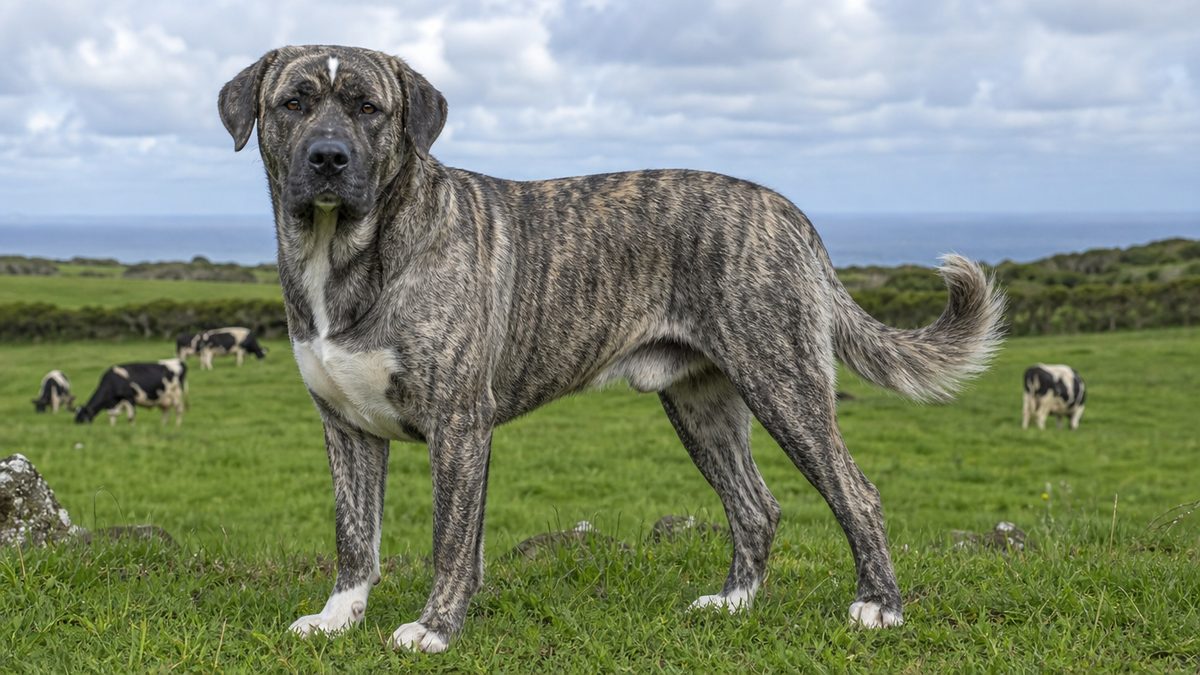
An Azorean cattle dog of 25 to 35 kg whose own FCI standard describes cropped ears and a docked tail, both of which Indian law prohibits outright.
Quick answer
The Saint Miguel Cattle Dog has no price in India, no Indian breeder and no lawful commercial import route. Two facts matter more than any price: its own FCI standard describes cropped ears and a docked tail, both of which Indian law forbids outright, and a Portuguese national registry gives the breed a life expectancy of 7.81 years rather than the decade-plus breed pages assume.
This page reports published registry, genomic, parasitological and veterinary research alongside Indian price and legal material. It is not a diagnosis and it is not a treatment plan. The only disease report ever published on this breed is a one-page item with no abstract indexed, and no screening scheme or prevalence figure exists for it, so nothing here should be read as reassurance about an individual dog. Consult your nearby vet, and have a veterinarian assess any individual animal, before acting on anything on this page.
Saint Miguel Cattle Dog at a glance
What the Saint Miguel Cattle Dog is
The Saint Miguel Cattle Dog is a molossoid cattle-driving breed from the island of Sao Miguel in the Azores, standing 50 to 60 cm at the withers in males and weighing 25 to 35 kg, recognised by the Federation Cynologique Internationale as standard 340.
Its own standard describes the general appearance in three words, robust and hardy, and gives the utilisation as simply cattle dog. The important proportion is that the dog is slightly longer than high. Everything else in the document is detail on a working animal.
The behaviour clause is the most specific in any standard on this site, and it is worth quoting in full because it tells a buyer exactly what they are getting. The breed is a cattle dog par excellence, equally a good guard dog for properties and people. A very determined character towards strangers but docile with its owner. Very intelligent and very receptive. While carrying out its duties driving dairy herds it bites low to avoid harming the cows' udders. However when dealing with stray cattle it may bite higher.
A breed standard that specifies the HEIGHT at which a dog bites is describing selection for a controlled bite, not a temperament quirk. This dog was bred to nip the heels of dairy cows precisely low enough to miss an udder, and to go higher when the animal is not cooperating. In an Indian residential street, the moving things at heel height are children, cyclists and scooters. That is not a reason the breed is dangerous; it is a reason it needs a job, a fence and an owner who understands what was selected.
The breed is called several things and one of them hides its only disease report
The FCI files the breed as Cao Fila de Sao Miguel with the English name Saint Miguel Cattle Dog. The standard's own history records that it is also known as the Cow Dog. And a 2008 clinical report and a 2005 genetics paper both call it the Azores Cattle Dog van Asch B, Pereira L, Pereira F.
That third name matters more than a naming footnote should. A PubMed search for the exact phrase Saint Miguel Cattle Dog returns zero with the database's own unmatched-phrase warning, and so does Fila de Sao Miguel. The breed's only published disease report and one of its two population-genetics papers are indexed under Azores Cattle Dog and are invisible to anyone searching the FCI name. Both were found here only by searching the place rather than the breed.
| Attribute | Standard 340 requires |
|---|---|
| Height, males | 50 to 60 cm at the withers |
| Height, females | 48 to 58 cm at the withers |
| Weight, males | 25 to 35 kg |
| Weight, females | 20 to 30 kg |
| Coat | Short, smooth, dense, harsh texture, light fringing on tail, anal region and back of thighs |
| Colour | Fawn, pale fawn with black overlay, or grey, light to dark, ALWAYS brindled |
| White | Permissible on forehead and chin to chest, and small marks on the feet |
| Skull and muzzle axes | Parallel. Converging is a severe fault, diverging is eliminating |
| Ears, natural | Medium, triangular, dropping, not touching the cheeks |
| Tail, natural | High set, thick, medium length, slightly curved |
Two documentary details are worth recording because they show the extraction was faithful rather than paraphrased. The standard's title line prints CAO FILA DE SAO MIGUEL) with a stray closing bracket, and its gait heading reads GAIT/MOVEMEN with the final T missing. Those are defects in the FCI's own PDF, and a summary would have silently fixed both.
Appearance, the brindle rule and where the breed came from
The Saint Miguel Cattle Dog is always brindled. The standard permits fawn, pale fawn with black overlay, or grey in light to dark tones, and then adds the words always brindled, so a solid-coloured dog of this breed does not exist under the standard.
White is tightly bounded rather than forbidden. A white mark is permissible on the forehead and from chin to chest, and small white marks are permitted on both front feet, both hind feet, or all four. Anything beyond that is outside the description. The coat itself is short, smooth, dense and of harsh texture, with light fringing only on the tail, the anal region and the back of the thighs.
The history, and the extinct breed inside it
The standard's brief historical summary is four sentences and one of them is unexpectedly important. It records a cattle dog originating on the island of Saint Miguel in the Azores, also known as the Cow Dog, whose history is linked to that of the now extinct Terceira Dog, and states that the existence of the Saint Miguel Cattle Dog has been documented since the beginning of the 19th century.
That phrase, 'the now extinct Terceira Dog', sits in a live FCI standard published in 2007. It is the cleanest primary-source statement available anywhere on the fate of the Azores' other historic molossoid, and it matters because a mastiff-type Terceira dog is periodically offered as a living breed. Note carefully that the extinct Terceira DOG is not the Barbado da Terceira, a separate herding breed with a Clube Portugues de Canicultura standard from 2004 and about 665 registered dogs. Terceira has held more than one dog, and conflating them attaches the wrong history to the wrong animal.
Two peer-reviewed papers disagree about where this breed came from
This is a genuine, unresolved scientific disagreement, and publishing it is more useful than picking a side.
| Study | Method and sample | What it found about this breed |
|---|---|---|
| van Asch 2005 | Mitochondrial control region, 143 dogs across four Portuguese breeds | Shared NO haplotypes with the other Portuguese breeds, and shared with dogs sampled in Northern Europe. Concluded maternal descent from Northern European dogs rather than Portuguese mainland dogs |
| Blaschikoff 2026 | Whole-genome sequencing, 46 dogs across ten Portuguese breeds, plus 1,770 dogs from 211 breeds on a SNP array | Shares mitochondrial haplotypes with the Portuguese Sheepdog and the Alentejo Mastiff within Haplogroup C, and with the Portuguese Warren Hound within Haplogroup A |
Both are real results and neither is obviously wrong. The 2005 work sequenced the mitochondrial control region on a small per-breed sample; the 2026 work used whole mitogenomes at far higher resolution on a different set of dogs, and reported a mitogenomic fixation index among Portuguese breeds averaging 26.75 percent at p below 0.01. Higher resolution finding shared lineages where a shorter marker found none is a perfectly ordinary outcome, and it is also possible the two studies sampled different subpopulations of a breed with about 1,742 pedigree dogs.
What both agree on is that this is a distinct population. The 2026 study found the breed forming its own cluster at eight inferred groups, and reported that it and the Terceira Cattle Dog could not be assigned to any clade in the phylogenetic tree, clustering instead with American breeds such as the Xoloitzcuintle, which the authors read as the signature of admixture between several continental breeds followed by evolution in relative isolation on the islands.
An earlier study using different parameters put this breed's runs-of-homozygosity inbreeding at 0.19 plus or minus 0.005, which is moderate rather than alarming for a breed on a single island with about 1,742 pedigree dogs. That is a better position than the Portuguese Water Dog's and considerably better than the medium and large Portuguese Warren Hound's. Insular does not automatically mean bottlenecked, and this breed is the evidence.
Recognition status, checked at the registers
The FCI holds the Saint Miguel Cattle Dog on a definitive basis as standard 340, in Group 2, Molossoid, Mastiff or Dogue type, without a working trial, with Portugal as the country of origin and English as the authentic language.
The route to definitive status took twelve years, and that is worth stating because most breed pages give only the final date. The FCI accepted the breed on a provisional basis on 10 March 1995 and on a definitive basis on 21 May 2007. Twelve years on the provisional register is a long apprenticeship, and it is the fact that separates this breed's paperwork from the two mainland Portuguese breeds recognised in a fortnight in 1954.
The FCI's own two documents label the subsection differently
The breed record's section fields read Molossian type and subsection Mastiff type, while the standard PDF prints Section 2.1 Molossoid, Dogue type Federation Cynologique Internationale. Those are the same subsection under two English renderings of the French *dogue*, not a contradiction, but a reader checking one document against the other will meet two labels and should know why. The group is 2 in both, and the FCI's own Group 2 index carries the entry CAO FILA DE SAO MIGUEL (340) (SAINT MIGUEL CATTLE DOG) among 53 breeds.
| Body | Status | Evidence read |
|---|---|---|
| FCI | Definitive since 21 May 2007, provisional from 10 March 1995 | Breed record and Group 2 index, 53 entries |
| Clube Portugues de Canicultura | National standard from 1984, revised 2007 | CPC English breed page and the 2026 genomics paper's Table 1 |
| American Kennel Club | Not established | Three plausible slugs all returned HTTP 404 titled Page not found |
| Kennel Club of India | No breed list published at all | Instrument limit, not a finding about the breed |
| Orthopedic Foundation for Animals | Not established this session | Statistics pages served a JavaScript shell and the API refused connection |
First, no AKC status. Three plausible AKC slugs for this breed all returned HTTP 404 titled Page not found, and a 404 on a URL somebody assembled proves the guess was wrong and nothing else. This site has already nearly published a false non-recognition claim from exactly that mistake on another breed, where a registry's own index misspelled the breed name in its URL. No AKC claim is made here in either direction. Second, no Orthopedic Foundation for Animals figure. OFA's statistics page returned a JavaScript shell carrying the string Searching Database and no breed names, and api.ofa.org refused the connection outright. That is an instrument failure in this session, and OFA in any case requires 100 hip evaluations before publishing a breed.
The Indian recognition route is indirect but real. India is a full FCI member represented by the Kennel Club of India, so FCI nomenclature is what Indian pedigrees are issued against and an FCI-recognised breed is in principle registrable here. The KCI itself publishes no breed list at all, so a query against its site returns nothing for this breed and nothing for any control breed either. That is an instrument limit and must not be reported as non-recognition.
Saint Miguel Cattle Dog price in India
There is no Saint Miguel Cattle Dog price in India, and the search results that appear to offer one are ranking on the words rather than on any listing. The honest Indian figure for this breed is a care cost, not a purchase price.
A Yahoo India search for saint miguel cattle dog puppies for sale india returned 6,660 results, and the Indian hosts in that set are a generic pet-store aggregator, a general classifieds site and a pet-food manufacturer, none of which carries a page for this breed. The same instrument, in the same session, returned 15,400 results across seven genuine Indian selling hosts for the Labrador control. The instrument works; the supply does not exist.
The 6,660 figure is not evidence of a market and this site has corrected three pages that argued that way. A printed result count moves by tens of percent on a fixed query within a single session and cannot measure demand. What evidences an absence is composition: general Indian pet retailers and classifieds ranking on the words 'puppies for sale india', with no page for the breed behind any of them, against a control returning seven hosts that genuinely sell the control breed.
A second signature is visible on the native-name query. Searching cao fila de sao miguel price returns template breed pages such as Petlur's, which prints its costs in US dollars, alongside www.olx.pt, the Portuguese classifieds site, inside an Indian result set. A search engine reaching for Portugal to answer an Indian price query is telling you where the market is, and it is not here.
What any rupee figure for this breed would actually be
Every rupee band offered for this breed will be one of four things, and none is a price you can act on.
- Divide the figure by 84.38, then 80, then 74. A clean quotient means a foreign asking price was converted and relabelled.
- Read the quotient for plausibility. A conversion landing on 800 or 1,500 dollars is a converted list; one landing on 6,875 is rupee-native and arbitrary.
- Check the currency and the host country. Rs is also the Pakistani rupee, and R$ is the Brazilian real with a full stop for thousands.
- Confirm the listing is for a live animal of this breed rather than a template page that exists identically for every breed on the site.
The import position, read from the instrument rather than a court's summary
India treats live dogs as a restricted import and the channel that exists is a personal pet import for an owner relocating with the animal, not a commercial one. Separately, the Department of Animal Husbandry and Dairying letter of 12 March 2024, reproduced in full in the customs instruction of 14 March 2024, names 24 comma-separated categories to be prohibited for import, breeding and sale. Entry 15 is the bare undefined phrase Mastiffs (boerbulls).
That word reaches this breed on its face, and the FCI's own filing is why. The breed record's subsection reads Mastiff type. A page that searched the list for the string Saint Miguel, found nothing and cleared the breed would be repeating an error this site has already had to correct elsewhere, where pages cleared a wolfdog line that entry 19's Wolf dogs plainly reached and cleared three terriers that entry 17's bare Terriers plainly reached.
No Indian law in force today bans owning, breeding or selling any dog breed. The Karnataka High Court quashed the March 2024 circular on 10 April 2024 and the Delhi High Court set it aside that month, and the Union has since told the courts that the quashed circular has lost its effect entirely. The instrument was never an Act, a rule or a notification; it was a D.O. letter from a Joint Secretary. Read the list from the customs instruction rather than from a court's recital, because the Karnataka judgment reproduces it ABRIDGED and drops several entries including the undefined category words. The Goa Legislative Assembly's answer of 7 August 2024 reproduces the same list independently and is the cheapest second check.
Monthly cost of ownership in India
Budget Rs 9,000 to Rs 15,000 a month for a 30 kg dog of this type in an Indian metro before any veterinary event, and note that this breed is unusually cheap to groom and sits right at the top edge of the standard Indian parasite dose band.
Every figure below was read live from the seller's own page on 9 September 2026. The weight column matters because a 25 to 35 kg dog straddles the 15 to 30 kg band Indian parasite products are priced for, so a large male needs the next band up while a female does not.
| Item | Listed price | Notes for a 25 to 35 kg dog |
|---|---|---|
| Anti-rabies vaccine, clinic chain | From Rs 699 | Dose is not weight-banded |
| 9-in-1 DHPPiL | From Rs 899 | Core, annual booster |
| Kennel cough | From Rs 1,349 | Non-core, risk-dependent |
| Puppy DP, first vaccine | From Rs 849 | First shot of the course |
| Full puppy course, seven visits from day 30 | From Rs 6,499, list Rs 8,111 | One-off, first year |
| Adult annual booster package | From Rs 3,199, list Rs 3,806 | Annual |
| NexGard Spectra, 15 to 30 kg, 3 tablets | Rs 3,308, MRP Rs 3,375 | About Rs 1,103 a month. A 35 kg male needs the band above |
| Drontal Plus deworming, 6 tablets | Rs 754, MRP Rs 838 | One tablet per 10 kg, so Rs 377 to Rs 440 a round |
| Grooming, bath, Delhi | From Rs 934 | A short harsh coat needs no styling at all |
| Overnight boarding to 24 hours, Bengaluru | Rs 899 | Standard rate at this size |
| Delhi pet dog registration | Rs 500 a year | Rs 100 per month late fee |
| Chennai pet licence | Rs 50 | 9,115 issued in 2024 |
| Microchipping, one Chennai clinic's own rate | Rs 1,250 | Clinic's own transacted price |
| Consultation | Rs 500 to Rs 1,000 | Commonly quoted Indian range |
Parasite control is the line to plan first, at about Rs 1,103 per monthly tablet for combined tick, flea and worm cover in the 15 to 30 kg band, with deworming at one Drontal Plus tablet per 10 kg costing about Rs 377 to Rs 440 a round for this breed. Grooming is the line that almost vanishes: a short, smooth, dense coat with no styling requirement means a bath from Rs 934 and nothing else.
Retail veterinary prices in India are perishable and this site has watched a food listing change product inside a week. Municipal fees are not. Delhi charges Rs 500 for a pet dog registration, renewable annually with a Rs 100 per month late fee, and has issued 18,958 certificates since 2021. Greater Chennai Corporation charges Rs 50 and issued 9,115 licences in 2024, and its six municipal pet clinics provide treatment and anti-rabies vaccination free of cost. Anchor a budget on those.
Consultation is quoted at Rs 500 to Rs 1,000 across the commonly cited Indian sources, and boarding at Rs 899 for an overnight stay to 24 hours in Bengaluru. Note that the two sources usually given for the consultation range publish it byte-identically along with an identical vaccination range, so this page counts them as one data point rather than as corroboration. Two unrelated organisations agreeing to the rupee on two separate quantities is evidence against independence, not for it.
Suitability for the Indian climate
The Saint Miguel Cattle Dog is the best-placed of the Portuguese breeds for India and still a poor fit for the plains. Its homeland at Ponta Delgada peaks at an August mean of 22.91 C and a peak wet bulb of 20.09 C, against 21.86 C in Bengaluru, 26.11 C in Chennai and 27.09 C in Kolkata.
Those figures come from NASA POWER's 2001 to 2020 climatology, queried by explicit latitude and longitude with the model's own cell elevation echoed back and checked. The Azorean cells are unusually good: Ponta Delgada returned 34.54 m against a real elevation near 36 m, an error of about one and a half metres, and Angra do Heroismo on Terceira returned 14.11 m against about 40 m. Small islands often defeat this model, and these two did not.
| Place | Annual mean C | Annual RH % | Hottest month | Peak wet bulb C |
|---|---|---|---|---|
| Ponta Delgada, Sao Miguel | 18.46 | 79.56 | August, 22.91 | 20.09 (August) |
| Angra do Heroismo, Terceira | 18.27 | 80.13 | August, 22.77 | 20.13 (August) |
| Bengaluru | 23.74 | 67.94 | April, 28.37 | 21.86 (May) |
| Pune | 23.86 | 66.80 | April, 28.93 | 22.97 (June) |
| Mumbai | 26.77 | 67.39 | May, 31.19 | 25.77 (June) |
| Chennai | 27.95 | 72.39 | May, 31.51 | 26.11 (May) |
| Delhi | 25.60 | 45.56 | June, 35.88 | 26.50 (July) |
| Kolkata | 25.81 | 73.93 | May, 31.53 | 27.09 (June) |
Ponta Delgada runs 79.56 percent annual relative humidity and Angra do Heroismo 80.13 percent. Both are HIGHER than Kolkata's 73.93, Chennai's 72.39 and Mumbai's 67.39, and vastly higher than Delhi's 45.56. So the reflex claim that Indian humidity will finish a European breed is not merely unsupported here, it is backwards: this dog comes from a wetter place than any Indian city on this table. What it has never met is heat. Frame the risk as wet-bulb load, which combines both, rather than as damp air.
The homeland is remarkably even, and that is its own problem
The Azores barely have seasons. Ponta Delgada's hottest month is August at 22.91 C and its coolest is March at 15.36 C, a spread of seven and a half degrees across the whole year. Note that the coolest month is March rather than January, which is the maritime lag and is counter-intuitive enough that it is worth stating explicitly.
A dog selected in a place with a seven-degree annual range has no physiological experience of a Delhi June at 35.88 C or a Chennai May at 31.51 C, and no experience of a monsoon either. The gap on wet bulb is about six degrees to Chennai and seven to Kolkata, which is narrower than the Alentejo breeds' eight to nine, and still far outside anything the population has adapted to.
Bengaluru at 21.86 C and Pune at 22.97 C peak wet bulb are the two workable Indian cities, and Bengaluru is genuinely close: 1.77 C above the homeland's August peak. Note the months, because they are counter-intuitive and this site has corrected pages that got them wrong. Bengaluru peaks in April and is coolest in December, Pune peaks in April and is coolest in December, and Delhi peaks in June.
What Indian law says about keeping this dog outside
Second Schedule Part IV paragraph 21(1) of the Prevention of Cruelty to Animals (Dog Breeding and Marketing) Rules 2017 bars keeping certain dogs in outdoor facilities without the attending veterinary practitioner's written approval, naming among them dogs not accustomed to local temperatures and dog breeds that cannot tolerate the temperatures prevalent in the area or region in question, such as long-haired breeds in high temperature locations. That was read from the gazette itself.
This is a short-coated breed, so the long-haired illustration does not catch it. The category above it does, on any honest reading, for a dog from a place whose hottest month averages 22.91 C being kept outdoors in Chennai. Get the written veterinary approval, and understand that enforcement is a separate question from what the text says.
The heat risk, quantified
UK primary-care records for 905,543 dogs in 2016 identified 395 confirmed heat-related illness events, an incidence of 0.04 percent and an event fatality rate of 14.18 percent, 95 percent confidence interval 11.08 to 17.96. Roughly one dog in seven that develops heat illness dies of it. Of 879 events with a recorded trigger, 652, or 74.2 percent, were exertional, against 113 environmental and 46 from vehicular confinement.
Two transferable factors apply even though this breed was never modelled. Dogs at or above their breed and sex mean bodyweight carried 1.42 times the odds, 95 percent confidence interval 1.12 to 1.80. A heavy 35 kg male of a 25 to 35 kg breed is in that band. This page claims no breed-specific odds ratio, because importing one onto a breed the authors never studied would be fabrication wearing a citation.
Temperament and who should not buy one
The Saint Miguel Cattle Dog is very intelligent, very receptive and docile with its owner, and has a very determined character towards strangers, which is the standard's own phrase and the single most decision-relevant sentence in the document.
This is not a guardian breed in the Rafeiro do Alentejo sense, and it is not a companion herding breed in the Border Collie sense. It is a driving dog that also guards properties and people, selected on an island where the same dog moved dairy cattle in the morning and watched the farm at night. Both halves are real and both come home with the dog.
Who this breed suits
- Owners with a securely fenced property in Bengaluru, Pune or a hill station.
- Handlers with working-breed experience who will give the dog a job rather than a routine.
- Households with few unannounced visitors, or a genuine plan for managing them.
- Owners who want a short-coated dog and will not tolerate a grooming bill.
- Buyers who understand that a controlled bite was selected for and has to be managed rather than trained away.
Who should not buy one
- Apartment households, where a determined-towards-strangers dog meets a corridor of strangers daily.
- Families with young children, because a heel-nipping drive and running children are a predictable combination.
- First-time owners, since the breed's intelligence makes early errors stick rather than fade.
- Owners in Chennai, Kolkata or Mumbai planning outdoor housing, for the wet-bulb and legal reasons above.
- Anyone attracted by the cropped-ear photographs, which show a dog that cannot lawfully be produced in India.
The heel-nipping question, handled properly
A dog bred to bite the heels of cattle at a controlled height will offer that behaviour to anything that moves away from it at speed. In an Indian street that is children, cyclists, scooters and street dogs. The management is ordinary and it works: a solid recall trained at low arousal before it is needed, a place command, a long line in open ground until the recall is genuinely proofed, and a household rule that nobody runs from the dog. What does not work is punishing the behaviour, which in a determined breed converts a herding nip into a conflict.
Part IV of the Second Schedule to the Dog Breeding and Marketing Rules 2017 requires separate housing for a vicious or aggressive dog and forbids the use of sedation to control its behaviour. An owner who acquires a determined working breed and then medicates the determination out of it is outside the Rules. Consult your nearby vet about a behaviour plan, not about a sedative.
One genuine advantage is worth stating. The largest UK longevity study's supplementary data classifies this breed as mesocephalic, not brachycephalic, alongside the other Portuguese natives and against the Fila Brasileiro, the Mastiff, the Bullmastiff and the Neapolitan Mastiff. A normal muzzle on a molossoid is a real welfare advantage in an Indian climate, and it is why the heat problem here is one of mass and origin rather than of airway.
Training a driving breed, and what it resists
Train a Saint Miguel Cattle Dog early, consistently and with a job attached, because the standard describes a very intelligent and very receptive dog that is docile with its owner, and the thing it will not do is change its mind about strangers.
The training profile here is easier than the Portuguese guardian breeds and harder than a companion herding breed. Very receptive means it learns fast, including things you did not intend to teach. Docile with its owner means the relationship carries the work. Very determined towards strangers means the one behaviour an Indian city most needs modified is the one that was selected hardest for.
The socialisation programme, and why it cannot slip
Socialise this breed deliberately from eight weeks and hold the programme through the whole first year. A determined breed that has met few strangers builds a narrow definition of normal, and in an Indian household normal has to include delivery riders, autorickshaws, cattle in the road, street dogs, festival noise, watchmen, children on cycles and daily household staff.
- Weeks 8 to 16: introduce one new class of person, vehicle or noise a day at a distance the puppy stays relaxed at. Never let it rehearse a reaction.
- Weeks 16 to 26: move from exposure to neutrality. Aim for a dog that notices and disengages rather than one that greets.
- Months 6 to 12: hold the ground exactly when the dog becomes harder to take out, because this is the month that decides the adult.
- Months 6 to 18: proof the recall on a long line before you need it, in the presence of the things that move.
- Throughout: pay for calm, so the dog learns that switching off is part of the job.
What it will not do
It will not accept a stranger into the house because you say so, will not stop assessing, and will not reliably ignore something running past at heel height without training that specific choice. Those are the traits the buyer paid for. Manage them with gates, a place command, a long line and a predictable role, and stop trying to erase them.
Clubs for numerically small breeds sometimes recommend close breeding to hold type in a population of a few thousand dogs, and this breed has about 1,742. Second Schedule Part II paragraph 6(3) of the 2017 Rules prohibits in-breeding, defined as breeding between relatives of the second to fourth grade within the first four generations, and incest breeding between parents and children or brother and sister. Only out breeding and line breeding are permitted. An Indian owner following a foreign club's line-breeding guidance would be outside the Rules.
Training cannot fix provenance. Because there is no Indian breeder, an Indian owner of this breed has almost certainly imported an adult or acquired a mislabelled brindle molossoid. Verify what you actually have before planning a programme, and remember that a solid unbrindled coat rules the dog out under FCI 340 whatever the paperwork says.
Daily exercise requirement
Give a Saint Miguel Cattle Dog two substantial sessions a day totalling 60 to 90 minutes, both at the cool ends of the day in India, because the standard describes free and easy movement in a dog bred to drive dairy herds across island pasture.
This is a working requirement rather than a walk. A driving dog that gets two twenty-minute street walks will find its own outlet, and the outlets available in an Indian neighbourhood are barking at the gate and chasing what moves. Neither is a training failure; both are an exercise failure.
The Indian timing rule
Exercise this breed before 7 am and after 6 pm from March to October, and treat the middle of the day as unavailable in every city on this page except Bengaluru and Pune. At Chennai's May peak wet bulb of 26.11 C and Kolkata's June 27.09 C, a dog whose homeland tops out at 20.09 C has very little evaporative headroom. Of 879 UK heat-related illness events with a recorded trigger, 652 were exertional, so moving the walk is worth more than shortening it.
- Walk before 7 am and after 6 pm from March to October, testing the ground with the back of your hand first.
- Carry water on every session over 20 minutes, not only on hot days.
- Watch the panting rhythm rather than waiting for collapse, because heat illness is a progression.
- Cool with room-temperature water on belly, groin and paws, move to shade and airflow, and never use ice.
- Stop and consult your nearby vet if the dog is unsteady, vomits, or its gums turn brick red or grey.
Give the drive somewhere to go
The most useful thing an owner can build for this breed is a structured moving-object game with rules, because that is what the dog was made for. Herding-style ball work with a clear start and stop, flirt-pole work with an explicit out, and scentwork all satisfy a driving dog far better than distance. An Indian summer removes most of the physical options for weeks at a time, and a dog that has learned to work its brain indoors will settle when the outdoors closes.
Of the six breeds in this Portuguese, Azorean and Brazilian cluster, this one has the lightest coat load and one of the smallest bodies. A short, smooth, dense coat with no undercoat requirement and no styling means no clipping question, no matting and no drying problem after a monsoon bath. Combined with 25 to 35 kg rather than 45 to 60, it makes this the most physically practical of the Portuguese breeds in an Indian climate. The constraint is temperament and law, not coat.
Grooming and the cropping question
Groom a Saint Miguel Cattle Dog once a week with a rubber curry mitt and nothing else. The standard specifies short, smooth, dense hair of harsh texture with light fringing only on the tail, the anal region and the back of the thighs, so there is no coat to maintain and no styling to buy.
This is the cheapest coat in this cluster of six breeds. A bath from Rs 934 at an Indian chain covers the whole job, and no professional grooming is needed at any point in the dog's life. In the monsoon, towel the dog dry rather than letting a dense harsh coat sit damp, and check the ear canals weekly, but there is no matting problem, no clipping decision and no drying ordeal.
The cropping and docking question, which is not cosmetic in India
This is the section that matters, and no page ranking for this breed carries it. FCI Standard 340 says two things a buyer must read together with Indian law.
On the ears: Set above the level of the eyes; when not cropped they are of medium size, triangular and dropping but not touching to the cheeks. They are cropped with rounded tips in countries where ear cropping is not forbidden.
On the tail: High set, thick, medium length and slightly curved. Docked at the 2nd or 3rd vertebra in countries where tail docking is not forbidden.
Second Schedule Part II paragraph 6(8) of the Prevention of Cruelty to Animals (Dog Breeding and Marketing) Rules 2017 provides that there shall be no tail docking, ear cropping, de-barking, de-clawing, branding, dyeing, injecting substances to enhance visual appeal, performing a surgery or procedure to camouflage or hide any defect or infirmity or any other kind of mutilation of any body part of the pup, and that any change of appearance by artificial means is strictly forbidden. That clause was read from the gazette itself. The standard's own conditional wording therefore resolves the question rather than creating a conflict: in India, this breed's lawful appearance is the natural-eared, undocked one, and it is fully compliant with the standard in that form.
The practical consequence for a buyer is immediate. Most photographs of this breed online show a cropped, docked dog, because most of them come from countries where the procedures are lawful. An Indian buyer shown such a photograph and then offered a matching puppy is being offered either an imported adult or a mutilation performed illegally in India. Ask which, and walk away from the second.
| Feature | FCI standard 340 | Lawful in India |
|---|---|---|
| Ears cropped with rounded tips | Permitted where cropping is not forbidden | No. Prohibited by Second Schedule Part II para 6(8) |
| Ears natural, triangular, dropping | Fully described and correct | Yes |
| Tail docked at 2nd or 3rd vertebra | Permitted where docking is not forbidden | No. Prohibited by the same paragraph |
| Tail natural, high set, slightly curved | Fully described and correct | Yes |
| Dewclaw removal | Rear dewclaws permissible; removal not required | De-clawing is named in the same prohibition |
| Dyeing or altering the brindle | Not contemplated | No. Dyeing is named in the same prohibition |
One more grooming-adjacent point specific to this breed's origin. Azorean dogs carry a documented parasite burden, and the mechanism the researchers give is climatic rather than local carelessness: a 2024 survey of 205 dogs on Sao Miguel and Terceira found 53 percent overall gastrointestinal parasitism, and the authors attribute the level partly to the peculiar climatic conditions of the islands, with mild temperature and high relative humidity. India offers the humidity and much more heat, so a weekly coat and skin check is worth more here than the brushing this coat does not need.
Health problems, parasites and life span
The Saint Miguel Cattle Dog has a life span of about 7.81 years on the best available evidence, 95 percent confidence interval 7.10 to 8.51, measured on 1,553 dogs in Portugal's compulsory national microchip registry.
That figure comes from period life tables built at the University of Porto on the Sistema de Informacao de Animais de Companhia, covering 278,116 dogs with confirmed deaths. It is the only measured lifespan this breed has, and it sits below the Portuguese all-breed mean of 8.91 years and below the ten-breed Portuguese mean of 8.3.
| Breed | Population in study | Life expectancy at birth, years | 95% CI |
|---|---|---|---|
| Portuguese Water Dog | 384 | 10.85 | 9.80 to 11.89 |
| Portuguese Pointing Dog | 2,560 | 9.23 | 8.84 to 9.61 |
| Terceira Cattle Dog | 104 | 8.62 | 7.78 to 9.46 |
| Castro Laboreiro Dog | 810 | 8.44 | 7.71 to 9.16 |
| Alentejo Mastiff (Rafeiro do Alentejo) | 3,486 | 8.03 | 7.73 to 8.33 |
| Portuguese Sheepdog | 435 | 7.93 | 7.35 to 8.51 |
| Portuguese Podengo | 77,706 | 7.86 | 7.51 to 8.22 |
| Saint Miguel Cattle Dog | 1,553 | 7.81 | 7.10 to 8.51 |
| Estrela Mountain Dog | 3,536 | 7.50 | 6.66 to 8.33 |
| Transmontano Mastiff | 1,009 | 6.73 | 6.35 to 7.11 |
This breed is the only one of the ten whose male and female figures are effectively identical, at 7.81 for males and 7.80 for females. In six of the other nine breeds the females live longer. That is a small observation on a modest sample and it is recorded rather than explained.
This is a life table from a registry, not a cause-of-death study. It measures how long dogs of this breed actually lived in Portugal, which is what a buyer wants to know, but it says nothing about what they died of and cannot separate breed biology from how the breed is kept. A working cattle dog on an Azorean farm faces risks a pet does not. Quote the number with its interval, which runs nearly a year and a half wide.
The largest UK study considered this breed and excluded it
McMillan 2024 built medians for 155 purebred groups from UK primary-care data. Its Supplementary Table S5 carries a dedicated row reading Saint Miguel Cattle Dog, inclusion flag N, FCI group Pinscher and Schnauzer, Molossoid and Swiss Mountain and Cattledogs, body size Large, cephalic index Mesocephalic.
That N is decisive. A breed missing from the results can be absent for three reasons, genuinely excluded, merged into another breed's row, or filed under a different name, and only Table S5 separates them. Here it says the breed was considered and not included, so there is no UK median lifespan for this breed. For comparison, the same tables give the Mastiff 9.0 years on 1,419 deaths and the Bullmastiff 10.2 years on 1,169 deaths.
The only disease report ever published on this breed
One clinical paper names this breed, and it is easy to miss. In 2008, Varejao, Prada and Rodrigues published Cerebellar cortical degeneration in two Azores Cattle Dog littermates in the Journal of Small Animal Practice, volume 49, issue 7, page 371. It is a single-page item and PubMed indexes no abstract for it, so this page reports its title, journal and identifiers and nothing more.
Two things are worth saying carefully about it. First, that two affected animals were littermates is the observation that makes a report of this kind worth publishing at all, because it points toward a heritable process rather than an acquired one. Second, this page does not know how many dogs were involved beyond the two named, what the outcome was, or whether any genetic work followed, because the full text was not reached. No prevalence claim is made and none should be inferred. Ask a breeder whether they know of neurological disease in the line, and consult your nearby vet about any puppy showing incoordination.
A PubMed search for the exact phrase Saint Miguel Cattle Dog returns zero with the database's own unmatched-phrase warning, and so does Fila de Sao Miguel. This report is indexed under a third English name, Azores Cattle Dog, and was found here only by searching the place rather than the breed. That is the single most repeated research failure on rare breeds: an absence is only an absence for the name you searched, and this breed has at least four names in English and Portuguese.
The parasite burden, at home and in India
The breed's homeland already carries a heavy parasite load, and the figures are recent. A 2024 survey collected faecal samples from 205 dogs and 115 cats on Sao Miguel and Terceira and found overall gastrointestinal parasitism in dogs of 53 percent, comprising hookworms at 42.44 percent, Trichuris vulpis at 17.56 percent, Toxocara canis at 12.68 percent and Cystoisospora at 4.39 percent, with lungworm at 0.49 percent. The authors note the samples came mainly from kennels and attribute the level partly to mild temperature and high relative humidity.
India offers the same humidity and far more heat, plus a tick-borne burden the Azores do not have. Among 584 client-owned dogs tested at the State Animal Health Centre in Salt Lake, Kolkata between July 2024 and December 2025, molecular prevalence was 76.54 percent for Babesia gibsoni, 55.75 percent for Anaplasma species, 28.94 percent for Hepatozoon, 27.10 percent for Babesia canis and 16.61 percent for Ehrlichia canis, and 72.9 percent of the 584 dogs screened carried two or more pathogens. A Kerala study of 120 clinically affected dogs found Babesia species at 66.7 percent, 80 of 120.
Both Indian studies sampled clinic caseloads or clinically suspected dogs rather than random populations, so those percentages describe dogs presented to a vet rather than dogs in general. That caveat is mandatory. The practical reading is that year-round tick control is not optional, and that a negative blood smear is weak evidence: the West Bengal study found microscopy missed 130 of 158 Babesia canis positives and 146 of 169 Hepatozoon positives. Ask for PCR when the picture fits and the smear is clean. No breed-specific hip dysplasia rate exists for this breed, so screen the individual parents.
Feeding a working cattle dog in India
Feed a Saint Miguel Cattle Dog to a body condition score of 4 or 5 out of 9 across two measured meals, and cut the ration hard when the Indian hot season shortens the work, because this is a dog whose real energy expenditure swings with the season more than a companion breed's does.
At 25 to 35 kg with a working metabolism, the arithmetic is manageable and the discipline is not. Owners feed for the dog they walked in January and keep feeding it in May, when the walks have halved. By July the dog is carrying weight into the worst wet-bulb weeks of the year, which is exactly when bodyweight matters most: dogs at or above their breed and sex mean carried 1.42 times the odds of heat-related illness.
Body condition, checked by hand
Assess body condition weekly with your hands rather than by eye. On a short-coated brindle dog the outline is more honest than on a coated breed, but brindle patterning genuinely disguises shape, and a dark brindle dog can carry two kilos invisibly. You should feel the ribs under light pressure without seeing them, and find a waist from above and a tuck from the side.
- Weigh the dog monthly on the same scale and record it, because the trend beats any single reading.
- Feed two measured meals by weight rather than by volume.
- Cut the ration by 10 to 20 percent when the hot season shortens the sessions, and restore it when they come back.
- Hold a growing puppy visibly lean through the first eighteen months, not just the first six.
- Withhold food and heavy water for an hour either side of exercise.
What Indian food costs, and why no monthly figure appears here
A monthly kibble number is arithmetic on grams per day rather than a quoted price, and Indian listings for large bags are unstable. The listing this site previously used for a 15 kg large-breed bag now serves a 4 kg dry plus ten wet pouches combination at Rs 4,594 against an MRP of Rs 5,220, a different product entirely. Read the feeding guide on the bag you actually buy, weigh a day's ration and multiply.
The stable lines are worth budgeting first. Combined tick, flea and worm cover through NexGard Spectra runs about Rs 1,103 per monthly tablet in the 15 to 30 kg band, which covers a female and most males of this breed but not a heavy 35 kg male. Deworming with Drontal Plus at one tablet per 10 kg costs about Rs 377 to Rs 440 a round, and given the Azorean parasite data and the Indian tick burden, that is a line to keep rather than trim.
Indian breed sites publish per-breed monthly cost rows assembled from a small set of preset component lines rather than observed for the breed, and the mechanism is provable because the totals are the sum of three presets. That is why unrelated breeds of completely different sizes share a total to the rupee. If you meet a monthly total for this breed on an Indian site, pull a second unrelated breed from that same site and compare the component lines before believing either.
Month by month through the first year
Raise a Saint Miguel Cattle Dog puppy on relentless early socialisation and an explicit plan for the heel-nipping drive, because both the guarding threshold and the chase habit are set in the first year and neither is cheap to change later.
This timeline assumes a lawfully imported puppy or, more realistically for India, an adult of unknown age. Read the later rows too.
| Age | What is happening | What you do about it in India |
|---|---|---|
| Under 8 weeks | Legally cannot be sold. Rule 8(1)(a) of the 2017 Rules requires that pups less than eight weeks in age are not sold | Walk away from any seller offering one. This is a Rule, not a schedule paragraph |
| 8 to 12 weeks | Core vaccination begins; a clinic chain's course runs seven visits from day 30 | Anti-rabies from Rs 699, 9-in-1 from Rs 899. Begin exposure at a distance the puppy stays relaxed at |
| 3 to 4 months | The window is open and closing on a determined breed | One new class of person, vehicle or noise a day. Delivery riders, autos, cattle and household staff are the categories that matter |
| 4 to 6 months | Chase behaviour appears; the puppy starts targeting movement | Teach the interrupt and the out now, on a long line, before there is anything to interrupt |
| 6 to 9 months | Guarding emerges and owners quietly stop taking the dog out | Do the opposite. This month decides the adult. Keep the exposure programme running |
| 9 to 12 months | First Indian hot season at near-adult mass | Move walks before 7 am and after 6 pm. Shift half the daily budget indoors |
| 12 to 18 months | Physical maturity; drive fully online | Register the dog: Rs 500 in Delhi, Rs 50 in Chennai. Start a real structured job |
| 18 to 24 months | Settled adult | Screen hips if you intend to breed, and consult your nearby vet first. Re-run every socialisation category once |
The conversation to have before the puppy arrives
Ask the seller whether the litter has been cropped or docked, and ask before you see photographs. FCI 340 describes both procedures as normal in countries that permit them, so a breeder abroad may treat the question as routine. In India both are prohibited under Second Schedule Part II paragraph 6(8), so a cropped puppy in India is either an import or an offence. There is no third possibility and the answer decides whether you continue.
Rule 8(1)(a) of the Prevention of Cruelty to Animals (Dog Breeding and Marketing) Rules 2017 provides that pups less than eight weeks in age are not sold. Second Schedule Part II paragraph 6(8) provides that there shall be no tail docking, ear cropping, de-barking, de-clawing, branding, dyeing or injecting substances to enhance visual appeal, and that any change of appearance by artificial means is strictly forbidden. Both were read from the gazette itself. Note the citation forms: 8(1)(a) is a Rule, 6(8) is a Second Schedule paragraph, and the Rules stop at 13.
Head to head against the breeds buyers cross-shop
Compare the Saint Miguel Cattle Dog against the Cane Corso, the Boerboel, the Fila Brasileiro and the Rajapalayam, because those are the medium-to-large protective breeds an Indian buyer is realistically choosing between, and the differences on Indian law alone decide most of it.
The most useful column in the table below is the legal one, because three of these five breeds are named or reached by the 2024 Indian customs list and two are not, and two of the five have standards that describe cropping India forbids.
| Breed | Male weight | Named or reached by the 2024 list | Standard describes cropping or docking |
|---|---|---|---|
| Saint Miguel Cattle Dog | 25 to 35 kg | Reached by the undefined word Mastiffs | Yes, both, conditional on the country |
| Cane Corso | not given here | Named outright, entry 23 | Yes, historically |
| Boerboel | not given here | Named twice, as Boerboel and inside Mastiffs (boerbulls) | No |
| Fila Brasileiro | not given here | Named outright, entry 4 | No |
| Rajapalayam | not given here | Not named and not reached | No |
That table is about a quashed and unenforced instrument, so none of it is a live prohibition today. It matters because the instrument can be remade after proper consultation, which the Karnataka High Court expressly left open, and because a buyer choosing a breed now is choosing exposure to that possibility.
The comparison that decides it in India
Against an Indian working breed, this dog loses on availability, veterinary familiarity and the rescue safety net, and wins on nothing an Indian buyer can act on. Against the other imported molossoids it does better than most people expect: it is smaller, shorter-coated, mesocephalic rather than brachycephalic, and from a humid climate rather than a dry one.
- Availability: the Rajapalayam is obtainable and this breed is not, on a controlled search.
- Airway: this breed is mesocephalic, where the Fila Brasileiro, the Mastiff and the Bullmastiff are classified brachycephalic in the same supplementary data.
- Coat: this breed wins outright. Short, harsh, no styling, no matting, no clipping decision.
- Humidity: this breed comes from a place at 79.56 percent annual relative humidity, higher than any Indian city on this page.
- Heat: it comes from a place whose hottest month averages 22.91 C, which is the constraint that does not go away.
There is a narrow case for this breed on a fenced property in Bengaluru or Pune for an experienced owner with a lawful pet-relocation route, who wants a short-coated working dog and will manage a determined-towards-strangers temperament. There is no case for it in a coastal metro flat, and no case at all for buying one from any Indian seller, because no lawful Indian supply exists. Everything else is a preference for a rare name.
Mistakes Indian owners actually make with this breed
The six errors below recur with imported molossoid working breeds in India, and each is predictable from documents that already exist.
1. Buying the cropped-ear photograph
Most images of this breed online show a cropped, docked dog, because FCI 340 describes both as normal where they are lawful. In India both are prohibited by Second Schedule Part II paragraph 6(8). A buyer who wants the dog in the photograph is asking for an offence to be committed. The natural-eared dog is fully correct under the same standard.
2. Assuming the breed is clear of the Indian list because its name is not on it
The 2024 list carries the bare undefined phrase Mastiffs (boerbulls) as entry 15, and the FCI's own record files this breed's subsection as Mastiff type Federation Cynologique Internationale. Checking for the string Saint Miguel and stopping is the reasoning this site has had to correct on other pages. The list is quashed and unenforced today, which is a better reason to relax about it.
3. Reading the ban list from a court judgment rather than the instrument
The Karnataka High Court judgment that quashed the circular reproduces the list abridged, dropping entries including the undefined category words. A page built on the judgment alone will clear breeds the instrument actually reached. Read the customs instruction, and cross-check it against the Goa Legislative Assembly's independent reproduction of 7 August 2024.
4. Treating a heel-nipping drive as aggression
The standard records that the breed bites low while driving dairy herds to avoid harming the cows' udders, and may bite higher with stray cattle. That is selection for a controlled bite, not for hostility. Punishing it converts a working behaviour into a conflict. Train the interrupt and the out, use a long line while proofing, and give the drive a structured outlet.
5. Believing a lifespan figure from a breed page
The only measured lifespan this breed has is 7.81 years, 95 percent confidence interval 7.10 to 8.51, on 1,553 dogs in Portugal's national registry. The largest UK longevity study considered the breed and excluded it, so there is no UK median to quote either. Any figure above nine years for this breed is somebody's estimate.
6. Searching only the FCI name and concluding nothing exists
The exact phrases Saint Miguel Cattle Dog and Fila de Sao Miguel both return zero in PubMed. The breed's only disease report and one of its two genetics papers are indexed under Azores Cattle Dog van Asch B, Pereira L, Pereira F. An absence is only an absence for the name you searched, and this breed has at least four names.
The Azores hold more than one dog and they are not interchangeable. This breed is the Cao Fila de Sao Miguel, FCI 340, from Sao Miguel. The Barbado da Terceira, or Terceira Cattle Dog, is a separate herding breed from Terceira with a Clube Portugues de Canicultura standard from 2004, no FCI recognition, about 665 registered dogs and its own registry life expectancy of 8.62 years. And the Terceira DOG referred to in this breed's own standard is a third animal, which the FCI describes as extinct. Three Azorean dogs, three different answers, and attaching one's data to another is the easiest error available here.
Adoption and responsible sourcing
Adopt rather than import, because there is no lawful commercial route to bring a Saint Miguel Cattle Dog into India for sale and no Indian breeder to buy one from, and the working-type dogs that need homes in India are already here.
India treats live dogs as a restricted import and the channel that exists is a personal pet import for an owner relocating with the animal. That means any Indian offer of a Saint Miguel Cattle Dog puppy is a mislabelled dog, an illegal import, or a listing for an animal that does not exist. The search evidence on this page supports the third: the Indian hosts ranking for the breed's sale query are a general pet-store aggregator, a general classifieds site and a pet-food manufacturer, none of which has a page for the breed.
What you are actually being offered
The commonest substitution for this breed is any brindle molossoid, and the standard gives you an unusually sharp test. The coat must be always brindled in fawn, pale fawn with black overlay or grey; white is permitted only on the forehead, from chin to chest, and as small marks on the feet; and the skull and muzzle axes must be parallel, with diverging axes an eliminating fault. A solid fawn dog, a heavily white dog, or one with a markedly downfaced muzzle is not this breed.
- Ask which registry the pedigree sits on, and expect a Livro de Origens Portugues number or nothing.
- Ask whether the litter has been cropped or docked, before you look at photographs.
- Check the coat against the standard: always brindled, white only where permitted, parallel axes.
- Ask to see the parents in the place they live, and ask specifically about neurological disease in the line.
- Walk away from any pup offered below eight weeks, which Rule 8(1)(a) of the 2017 Rules prohibits outright.
The adoption route that works in India
Adopt a medium working-type dog from an Indian rescue. Every metro on this page has rescues placing 20 to 35 kg short-coated mixes with exactly the deterrent presence and trainability people want from this breed, at a fraction of the cost, with a climate fit this breed does not have and none of the legal complexity. Greater Chennai Corporation's six municipal pet clinics provide treatment and anti-rabies vaccination free of cost, which makes a rescue dog's first year materially cheaper.
If the appeal is specifically this breed, support it where it lives. The Clube Portugues de Canicultura published its national standard in 1984 and revised it in 2007, and keeps the studbook the breed's roughly 1,742 pedigree dogs sit on Blaschikoff L, Serra O, Simoes F, Ginja C. A single-island population is conserved by Azorean and Portuguese breeders managing a shallow gene pool, not by exports.
This breed's own genetics tell you what it is: a population that could not be assigned to any clade in a 2026 phylogenetic tree, that clusters with American breeds rather than with mainland Portuguese ones, and that two peer-reviewed studies still disagree about the maternal origin of. That is a scientifically interesting animal in the middle of being understood, on one island, with fewer than two thousand pedigree dogs. Adopt locally, and if you want to help this breed, help it in the Azores.
One closing note on registration, which Indian owners of any working breed should not skip. Delhi charges Rs 500 for a pet dog registration, renewable annually with a Rs 100 per month late fee, and has issued 18,958 certificates since 2021. Greater Chennai Corporation charges Rs 50 and issued 9,115 licences in 2024. Microchipping at one Chennai clinic's own transacted rate is Rs 1,250. A registered, microchipped dog is a dog that comes back, and for a determined 30 kg working breed that matters more than it does for a lapdog.
Saint Miguel Cattle Dog questions people actually ask
What is a Saint Miguel Cattle Dog?
A Saint Miguel Cattle Dog is a molossoid cattle-driving breed from the island of Sao Miguel in the Azores, standing 50 to 60 cm at the withers in males and weighing 25 to 35 kg. The FCI recognises it as standard 340, provisionally from 10 March 1995 and definitively from 21 May 2007. Its own standard calls it a cattle dog par excellence and equally a good guard dog.
Do Saint Miguel cattle dogs need veterinary care?
Yes, and more of it in India than in the Azores. Core vaccination, year-round tick control and annual boosters are the baseline: anti-rabies from Rs 699 and the 9-in-1 from Rs 899 at an Indian clinic chain, with combined parasite cover around Rs 1,103 a month. The Azorean parasite survey found 53 percent of 205 island dogs carrying gastrointestinal parasites, and India's burden is heavier.
How do I choose commercial dog food for my Saint Miguel Cattle Dog?
Choose by the feeding guide on the bag rather than by the brand, feed two measured meals by weight, and adjust the ration down when the Indian hot season shortens the exercise. Target a body condition score of 4 or 5 out of 9, assessed weekly by hand, because a dark brindle coat hides two kilos easily and heavier dogs carry higher heat-illness odds.
What can a Saint Miguel Cattle Dog Eat?
A Saint Miguel Cattle Dog eats a complete diet appropriate to a 25 to 35 kg working dog, split across two meals, with food and heavy water withheld for an hour either side of exercise. This page publishes no monthly rupee food figure because the Indian listing previously used for a large-breed bag now serves a different product entirely, and a monthly figure is arithmetic rather than a quoted price.
What is a Cao Fila de Sao Miguel?
The Cao Fila de Sao Miguel is the same breed as the Saint Miguel Cattle Dog, under its Portuguese name. The FCI files it that way and gives Saint Miguel Cattle Dog as the English rendering. It is also called the Cow Dog in its own standard's history, and the Azores Cattle Dog in the scientific literature, and that fourth name is where its only disease report is indexed.
Are Cao Fila de Sao Miguel dogs good?
They are good at the job they were made for and a poor fit for most Indian homes. The standard describes a very determined character towards strangers, docile with its owner, and a dog that bites low at cattle heels by design. On a fenced rural property with an experienced handler that is excellent. In an apartment with a corridor of strangers it is the wrong animal.
Are Cao Fila de Sao Miguel smart?
The FCI standard calls the breed very intelligent and very receptive, which is a working assessment by the people who select the dogs. Ignore the intelligence-ranking claims that circulate for this breed, including inside search engines' own answer boxes: the well-known obedience ranking those numbers come from covers around 130 registry breeds and does not include this one, so any rank given for it was invented.
Do Cao Fila de Sao Miguel shed?
Yes, but lightly and without any grooming difficulty. The standard specifies short, smooth, dense hair of harsh texture with light fringing only on the tail, the anal region and the back of the thighs. A rubber curry mitt once a week handles it, there is no matting problem, and no professional grooming is needed at any point in the dog's life.
How long does a Saint Miguel Cattle Dog live?
The best evidence gives 7.81 years, with a 95 percent confidence interval of 7.10 to 8.51, from period life tables built on Portugal's compulsory national microchip registry covering 278,116 dogs with confirmed deaths, of which 1,553 were this breed. The largest UK longevity study considered the breed and excluded it, so no UK median exists for it either.
What is the price of a Saint Miguel Cattle Dog in India?
There is no Saint Miguel Cattle Dog price in India, because there is no Indian supply. The Indian hosts that rank for the breed's sale query are a general pet-store aggregator, a general classifieds site and a pet-food manufacturer, none of which has a page for the breed, while the same engine returns the Portuguese classifieds site for the native-name price query.
Are the ears of a Saint Miguel Cattle Dog supposed to be cropped?
Not in India. FCI Standard 340 says the ears are cropped with rounded tips only in countries where ear cropping is not forbidden, and describes the natural ear as medium, triangular and dropping. India forbids ear cropping and tail docking under Second Schedule Part II paragraph 6(8) of the 2017 Rules, so the lawful and fully correct Indian version of this breed is natural-eared and undocked.
Is the Saint Miguel Cattle Dog banned in India?
No breed is banned in India today. The March 2024 customs list that named 24 categories, including the undefined word Mastiffs which reaches this breed on its face, was quashed by the Karnataka High Court on 10 April 2024 and set aside by the Delhi High Court that month, and the Union has told the courts it is not acting on it. Unbanned is accurate; settled all-clear is not.
How big does a Saint Miguel Cattle Dog get?
Males stand 50 to 60 cm at the withers and weigh 25 to 35 kg; females stand 48 to 58 cm and weigh 20 to 30 kg. That is a medium to large dog rather than a mastiff, and considerably smaller than the Rafeiro do Alentejo at 66 to 74 cm and 45 to 60 kg, which is the Portuguese breed it is most often confused with by size.
Does the Saint Miguel Cattle Dog have any inherited diseases?
One clinical report names the breed, on cerebellar cortical degeneration in two littermates, published in the Journal of Small Animal Practice in 2008 under the name Azores Cattle Dog. It is a single-page item with no abstract indexed, so this page reports its existence and nothing about its findings. No prevalence figure and no screening scheme exist for this breed. Consult your nearby vet about any puppy showing incoordination.
Compare with similar breeds
Saint Miguel Cattle Dog sits in 3 Bonbeno groups. Each one compares it directly against the breeds it is genuinely an alternative to, on the same figures.