
Dog breed profile
Silken Windhound Price in India, MDR1 Risk and Care Guide
What a Silken Windhound costs in India, why the ivermectin question has to be settled before anything else, and why this is the one sighthound in this group developed in a hot humid climate.
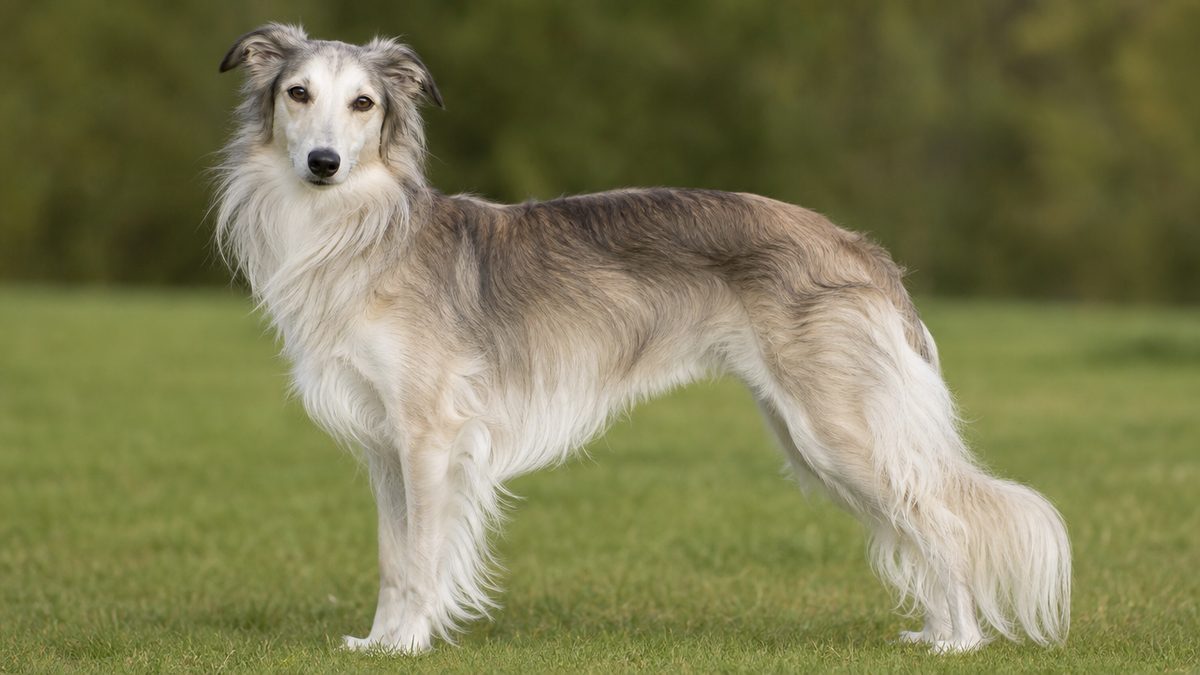
Quick answer
The Silken Windhound price in India is quoted at Rs 80,000 to Rs 1,50,000 by two sites that print the identical figure and the identical monthly cost table, so it is one number rather than two. The more important number for an Indian owner is different: the ABCB1 multidrug-sensitivity mutation runs at a 28.1 percent allele frequency in this breed, which makes ivermectin a question to settle before the dog arrives.
This guide is general information for Indian pet owners and is not a diagnosis. Consult your nearby veterinarian before acting on anything here, and specifically before giving any Silken Windhound ivermectin or another macrocyclic lactone for mange, heartworm prevention or parasite control, because a large minority of the breed carries a mutation that makes those drugs dangerous. Treat any sudden change in your dog's condition as urgent.
Silken Windhound at a glance, rated for India
What the Silken Windhound is, and whether it counts as a breed
The Silken Windhound is a modern American sighthound of 47 to 60 cm, recognised by the United Kennel Club on 18 March 2011 and registered by the International Silken Windhound Society since 1999. Bonbeno tests every modern breed against two conditions, a written standard anywhere and a studbook anywhere, and this breed clears both.
The UKC's own breed standard tells the story plainly. A Borzoi breeder, working from options considered since 1975, set out to produce a smaller hound with the poise and sporting ability of the larger sighthounds, a long coat and good all-round health. The foundation stock combined show and coursing Borzoi lines, a multi-generational line of small Whippet-based lurchers, and Whippets from both show and coursing lines. The breed arrived with the D litter whelped in 1985, the name Silken Windhound was officially adopted in 1998, and the International Silken Windhound Society was chartered in 1999.
The two-condition test, applied honestly
| Condition or register | Verdict | Evidence |
|---|---|---|
| A written breed standard exists | Yes | The Official UKC Breed Standard, with a size clause, a fault list and three disqualifications |
| A studbook exists | Yes, twice over | The ISWS maintains all pedigrees and DNA-verified registrations, and the UKC registers the breed |
| UKC | Full breed, Sighthound and Pariah group | Listed in the conformation group, not in the register-only Bloodlines Listing Service group |
| AKC | Foundation Stock Service | Breed code 459, breed group Foundation Stock Service, year recognized 0 |
| FCI | Absent | Not in the 41-entry letter S index nor in the 20-entry provisional register |
| Kennel Club of India | Follows FCI nomenclature | India is an FCI full member, so no FCI number means no ordinary KCI pedigree route |
That last row of the UKC line is worth dwelling on, because it is the one a careless reading gets wrong. The UKC operates a separate Bloodlines Listing Service group for breeds it will register while stating that no standard exists, and its ten entries are the Alapaha Blue Blood Bulldog, American Exhibition Bully, Armenian Gampr, Duitsch Herder, Hollandse Herder, Mechelse Herder, Phu Quoc Ridgeback, Russian Salon Dog, Russian Tsvetnaya Bolonka and Yakutian Laika. The Silken Windhound is not one of them. It sits in the full conformation group with a real standard, so the register-without-standard case does not apply here.
What the standard actually asks for
The size clause gives 18 and a half to 23 and a half inches, 47 to 60 cm, penalising dogs over or under the ideal to the extent of the deviation. The standard's own opening words call the breed an elegant, small to medium-sized sighthound with a moderately long, silky coat. The dog should be approximately square or slightly rectangular, sleek, built from fine bladed bone and smooth muscle, and never look frail. The coat is soft and silky, may be straight, slightly wavy or curly, with longer feathering along the back of the forelegs, the brisket, the hindquarters, around the neck and on the tail, and must never be woolly or profuse enough to obscure the outline. All colours and markings are acceptable. The three disqualifications are unilateral or bilateral cryptorchidism, viciousness or extreme shyness, and albinism.
The UKC standard's history section describes a dog of about 18 to 24 inches at the shoulder, while its own Size clause gives 18 and a half to 23 and a half inches. Those are not the same range. The Size clause is the operative one, and the history is prose. It is a minor thing, and it is the kind of internal disagreement worth checking in any standard before quoting a figure from the wrong part of it.
Silken Windhound price in India, and why two figures are one figure
Two Indian sites quote a Silken Windhound price of Rs 80,000 to Rs 1,50,000, and they print exactly the same number. Two unrelated sites agreeing to the rupee on both ends of a range is one data point, not two confirmations.
poodles.in quotes Rs 80,000 to Rs 1,50,000. happypet.care quotes Rs 80,000 to Rs 1,50,000. Unlike the Scottish Deerhound and the Sloughi, where the same two sites disagree by five to eight times, here they agree perfectly, and perfect agreement between unrelated publishers is evidence of copying rather than of measurement.
The monthly cost row is a preset, and it can be traced
| Line | Silken Windhound | Also appears on |
|---|---|---|
| Food, monthly | Rs 2,250 to Rs 3,000 | The Saluki page on the same site |
| Health, monthly | Rs 1,200 to Rs 1,800 | A different preset from the Saluki's Rs 600 to Rs 1,200 |
| Grooming, monthly | Rs 1,200 to Rs 1,800 | A different preset from the Saluki's Rs 700 to Rs 1,200 |
| Monthly total | Rs 4,650 to Rs 6,600 | The sum of the three lines above |
| Buying price | Rs 80,000 to Rs 1,50,000 | Identical on both Indian sites |
The total is arithmetic: 2,250 plus 1,200 plus 1,200 is 4,650, and 3,000 plus 1,800 plus 1,800 is 6,600. The food line is shared with the Saluki page on the same site while the health and grooming lines are not, which is exactly what a menu of preset lines assigned per breed looks like. A matching total is a consequence of that mechanism rather than a finding about what a Silken Windhound costs in Pune.
The division tests are inconclusive, and that is the honest answer
Rs 80,000 divided by 80 is exactly USD 1,000, which looks like a converted price until you divide the other end: Rs 1,50,000 by 80 is 1,875, which is not a figure a seller would print. At 75 the pair is 1,066.67 and 2,000; at 84.38 it is 948.09 and 1,777.67; at 74 it is 1,081.08 and 2,027.03. No rate produces a plausible price at both ends, so this band does not carry the clean signature of a converted foreign list. It is more likely rupee-native and arbitrary, copied once and repeated.
The Silken Windhound holds no FCI number, so it has no ordinary Kennel Club of India pedigree route. Dogs are a Restricted import into India under DGFT Trade Notice 22/2022-23, which permits entry only for a pet accompanying an owner with a valid pet book, for research on CPCSEA recommendation, or for Defence and Police use, and states that applications for trading or breeding purposes shall be duly rejected. Between those two facts, a documented Indian breeding population is very hard to establish, and any seller quoting a price should be asked how the founding dogs entered the country and what register the litter is recorded in.
What a Silken Windhound actually costs to keep in India
Budget roughly Rs 3,500 to Rs 8,000 a month for a 15 to 25 kg Silken Windhound in an Indian metro, and settle one genotype question before you spend anything on parasite control. Unlike the purchase price, every line of the cost of ownership traces to a published Indian rate card.
This is the smallest sighthound in Bonbeno's current sighthound group, so most consumables are cheaper than for a Deerhound or a Saluki. The one line that behaves differently is parasite prevention, and it behaves differently for a genetic reason rather than a financial one.
| Item | Published figure | Source and caveat |
|---|---|---|
| Puppy core vaccination course | From Rs 6,499 | Vetic national page, a promotional floor from one chain |
| Annual booster | From Rs 3,199 | Vetic national page |
| Anti-rabies, single dose | Rs 699 privately, free at a Chennai municipal clinic | Vetic against Greater Chennai Corporation Greater Chennai Corporation |
| Consultation | Rs 500 to Rs 1,000 | VOSD, treated as one data point |
| Monthly parasite cover | About Rs 1,103 | NexGard Spectra 15 to 30 kg. Read the note below before using it |
| ABCB1 genotype | One-off, before any macrocyclic lactone | A single buccal-swab test, and the most important spend on this list |
| Boarding, per 24 hours | Rs 500 to Rs 2,000 | VOSD range |
| Municipal registration, Delhi | Rs 500 | MCD pet dog registration |
| Municipal licence, Chennai | Rs 50 | Greater Chennai Corporation, 9,115 licences issued in 2024 |
The most widely sold Indian monthly parasite tablet for a dog of this size combines afoxolaner with milbemycin oxime, which is a macrocyclic lactone. The ABCB1 mutation that causes hypersensitivity to macrocyclic lactones runs at a 28.1 percent mutant allele frequency in this breed. That does not make the product automatically unsafe, and it does mean the genotype should be known first. Discuss the result and the dosing with your nearby veterinarian before starting any macrocyclic lactone in a Silken Windhound.
Where the money actually goes
- One genotype test, once. It is the cheapest decision on this page and it governs every parasite and heartworm choice for the dog's life.
- Year-round tick control, chosen around that result. Among 584 client-owned dogs screened at a Kolkata animal health centre, 76.54 percent were positive for *Babesia gibsoni* and 72.9 percent of the dogs screened carried two or more pathogens. Those are clinic cases rather than a population sample, and they still make the cover non-negotiable.
- Grooming tools rather than salon visits. The standard says the breed is shown in a natural coat with minimal trimming, so a comb, a slicker and a nail clipper cover it.
- Food at a genuinely modest level. A 47 to 60 cm sighthound eats considerably less than the 45 kg dogs elsewhere in this group.
One caution on the published Indian figure. Both Indian pages give a monthly grooming line of Rs 1,200 to Rs 1,800 for this breed and Rs 700 to Rs 1,200 for the Saluki, which has a feathered variety with long silky ear, leg, thigh and tail furnishings. Those two coats are not two-thirds apart in maintenance cost. Build your budget from the rate-card table above instead.
Heat tolerance: the one sighthound here developed in a humid summer
A Silken Windhound is more heat-tolerant than its long coat suggests, because the breed was developed in a place with hot humid summers rather than a cold or arid one. The limiting factor is the coat and the timing, not the origin.
Bonbeno pulled NASA POWER climatology by explicit latitude and longitude, echoing the returned grid-cell elevation so a wrong cell could not pass unnoticed. Austin in central Texas returned a cell at 184.44 m against a real elevation near 149 m, an error of 35.44 m, which is acceptable.
| Place | Annual mean temperature | Annual mean relative humidity | Hottest month mean | Coolest month mean |
|---|---|---|---|---|
| Austin, central Texas | 20.20 C | 68.71 percent | 30.14 C (Aug) | 9.29 C (Jan) |
| Pune | 23.86 C | 66.80 percent | 28.93 C (Apr) | 19.62 C (Dec) |
| Bengaluru | 23.74 C | 67.94 percent | 28.37 C (Apr) | 20.22 C (Dec) |
| Mumbai | 26.77 C | 67.39 percent | 31.19 C (May) | 23.19 C (Jan) |
| Delhi | 25.60 C | 45.56 percent | 35.88 C (Jun) | 13.61 C (Jan) |
| Chennai | 27.95 C | 72.39 percent | 31.51 C (May) | 24.09 C (Jan) |
| Kolkata | 25.81 C | 73.93 percent | 31.53 C (May) | 17.31 C (Jan) |
Read the Austin row against Mumbai
Austin runs 68.71 percent annual relative humidity with an August mean of 30.14 degrees Celsius. Mumbai runs 67.39 percent with a May mean of 31.19 degrees NASA POWER climatology API. Those two lines are close enough that a Silken Windhound's summers at home and a Mumbai summer are recognisably the same kind of weather. That is unusual and worth saying: of the sighthounds in this group, this is the only one whose development climate resembles an Indian coastal summer rather than a desert or a Highland glen.
Where Austin differs is the winter. Its January mean of 9.29 degrees is colder than any plains Indian month, which is why the breed carries a coat at all. So the honest framing is that the breed met humid heat during its formation and also had a season off from it, and an Indian dog does not.
What that means practically
- Pune and Bengaluru are the best Indian fit, cooler in absolute terms at around 67 percent humidity and peaking in April rather than May.
- Mumbai and Chennai are workable for a house dog with reliable indoor cooling, walked at dawn and after dark.
- Delhi is easy in winter and hard from April to July, where the June mean alone is 35.88 degrees.
- Do not clip the coat to cool the dog. The standard asks for a natural coat with minimal trimming, and a silky coat over thin sighthound skin is providing sun protection rather than trapping heat.
The one sighthound with a modelled figure, the Greyhound, carried 4.26 times the odds of heat-related illness against Labrador Retrievers in a 905,543-dog UK cohort at p = 0.001, and the authors attributed it to high lean muscle mass rather than to fat. The Silken Windhound was not separately modelled, because a breed type needed five or more cases and/or 5,000 or more dogs to enter that model. The group finding transfers even though a breed number does not exist. Indian law also bars keeping outdoors, without written veterinary approval, breeds that cannot tolerate local temperatures, naming long-haired breeds in high temperature locations, under Second Schedule Part IV paragraph 21(1).
Temperament: a sighthound selected for the house from the start
The UKC standard describes an alert, friendly and intelligent expression and an intelligent hound of balanced character that shows strong prey drive in the field and is gentle, affectionate and devoted in the home. That was the design brief, not an accident.
The breed's founding aim, as the standard's own history records, was a smaller hound with a wonderful temperament, a long coat and all-round good health, carrying the poise and sporting ability of the larger sighthounds. Temperament was an explicit selection target from the beginning, which separates this breed from the ancient sighthounds where temperament is described rather than chosen.
Living with one in an Indian flat
- The best apartment fit in this group. At 47 to 60 cm, quiet, clean and content to sleep once exercised, a Silken Windhound suits an Indian flat far better than a 76 cm Deerhound.
- Genuinely affectionate at home. The standard's own words are gentle, affectionate, devoted companion animals in the home.
- Strong prey drive in the field, and the standard says so directly. Cats, squirrels and poultry on an Indian street will trigger a chase.
- Temperament faults are disqualifying. Viciousness or extreme shyness disqualifies a dog under this standard, which is a stronger position than most sighthound standards take.
- Trainable by sighthound standards. An intelligent hound of balanced character responds to reward-based work, and the breed competes in agility, obedience and scent work as well as coursing.
Who should not buy this breed in India
Households with free-roaming cats or poultry, owners who want a guard dog, and anyone who cannot give the dog daily off-property running. There is one more group: anyone who will not test for the ABCB1 mutation before using a routine parasite product, because in this breed that decision has to be made once and made properly.
Selecting for temperament and health from the founding litters is a real advantage, and the standard's disqualification of viciousness and extreme shyness is more than most sighthound standards do. What a young breed cannot give you is population data. There is no median survival figure, no breed-specific reference interval, and no large health survey, and this page will not borrow the Whippet's numbers to fill the gap.
Training a Silken Windhound, which is easier than the group average
Train a Silken Windhound with short reward-based sessions and expect real cooperation. The standard describes an intelligent hound of balanced character, and the breed competes in agility, obedience and scent work as well as in coursing.
Socialise early and widely. Between eight and sixteen weeks, expose the puppy to lifts, stairs, traffic, motorbikes, markets and handling by strangers. Indian law sets the timetable: the Dog Breeding and Marketing Rules 2017 record that puppies are vaccinated from about seven to eight weeks with the course usually completed near eighteen weeks.
What works
- Short varied sessions. Three to five minutes with changes of exercise, because a sighthound that repeats the same thing ten times disengages.
- Reward-based work only. A breed selected against extreme shyness still shuts down under correction.
- A long line for the first two years. Fifteen metres of line gives distance control without gambling on recall against live quarry.
- Sports as an outlet. Lure coursing is the obvious one, and agility, obedience and scent work all suit this breed's temperament and its size.
- A stand for examination, taught early, so that routine veterinary handling does not need sedation.
What does not work
Harsh handling, long repetitive drills, afternoon sessions in Indian heat, and any plan that depends on recall working when a cat crosses the road. Manage the environment: fenced ground, a long line, and a lead in every unfenced space.
House training is usually settled by four months. A stand for examination and calm foot and ear handling take about eight weeks of thirty-second daily sessions. Lead manners take two months. A working recall in a fenced field is achievable by twelve months, which is quicker than most sighthounds. Recall in an open Indian street with live quarry present is still not a target to set.
One legal note that applies to every breed on this site. Tail docking, ear cropping, de-barking, de-clawing and any change of appearance by artificial means are strictly forbidden under Second Schedule Part II paragraph 6(8) of the 2017 Rules. Nothing in the Silken Windhound standard calls for any of them; it asks for a long flexible tail reaching past the hock and small fine ears folded back along the neck.
Exercise: a coursing hound that fits in a flat
A Silken Windhound needs two good outings a day plus a weekly chance to gallop safely, and at 47 to 60 cm it is the easiest breed in this group to exercise inside an Indian city. It sprints, then sleeps.
The standard describes a smooth effortless trot with good reach and drive, a loin that must be flexible enough to sustain the double suspension gallop the breed shows at top speed, and classic lines and athletic build as the hallmarks of a true coursing dog. That is a real sighthound in a manageable package.
A workable Indian week
- Two outings a day, 30 to 45 minutes each, at the coolest hours. In Mumbai and Chennai that means before 06:30 and after sunset for most of the year.
- One free gallop a week inside a fully fenced space on grass or soft earth. Fifteen minutes is plenty.
- Lure coursing or a flirt pole where fenced ground is unavailable, which satisfies the chase without an open street.
- Agility, obedience or scent work, which the breed is well suited to and which can be done indoors on the worst Indian afternoons.
- Nothing hard within two hours of a meal, in either direction.
Surfaces and growth
Indian cities are tarmac, concrete and stone. Test the surface with the back of your hand for five seconds in summer before every walk, and keep galloping to grass or soft earth, because a sighthound at speed on hard ground takes joint and pad damage that a distance target never shows. For a dog of this size the growth plates close around 12 to 15 months, so free movement on grass is fine at any age while forced distance running and repeated jumping wait until then.
Lure coursing and long runs mean more tick exposure, and in India that means more parasite prevention. Before you increase the dose or the frequency of any macrocyclic lactone product, get the ABCB1 genotype, because the mutant allele runs at 28.1 percent in this breed and hypersensitivity to that drug class is exactly what it causes. Ask your nearby veterinarian which non-macrocyclic options are available in India if the result comes back affected.
Mental work is a genuine substitute here in a way it is not for a 45 kg hound. A short scent game, a food-finding routine and five minutes of trick training take real energy out of an intelligent small sighthound on the days when the weather makes going outside a bad idea.
Grooming a silky feathered coat in Indian humidity
Groom a Silken Windhound two or three times a week with a comb through the feathering, and do not trim it. The standard says the breed is shown in a natural coat with minimal trimming, and specifically that the feathering framing the ears and face should not be trimmed.
The coat is soft and silky, straight, slightly wavy or curly, with longer feathering along the back of the forelegs, the brisket, the hindquarters, around the neck and on the tail. The face, feet and front of the forelegs carry shorter hair, and the hocks are naturally short. It must never be woolly, nor profuse enough to obscure the outline, nor so long as to interfere with the function of a coursing hound. There is no heavy undercoat to blow, so shedding is moderate rather than dramatic.
A routine that works in Indian conditions
- Comb the feathering two or three times a week, behind the ears, on the neck ruff, the brisket, the back of the thighs and the tail. That is where mats form, and in humid weather they form faster.
- Dry the ears and neck ruff properly after any bath or swim. Air drying long silky hair in an Indian monsoon is how skin problems start.
- Check the skin under the ruff and thigh feathering. Sighthound skin is thin and a mat sitting against it in humid weather goes sore quickly.
- Run a daily tick check in season, and remember that the ruff and feathering hide ticks in a way a Sloughi's coat cannot. The 2017 Rules make regular de-ticking part of routine grooming, in Second Schedule Part IV paragraph 27.
- Trim nails fortnightly, since Indian tile floors give no natural wear.
Do not clip, and here is the reason
Indian groomers routinely suggest a summer clip for any long-coated dog. For this breed that is doubly wrong. The standard is explicit that the dog is shown in a natural coat with minimal trimming and that facial and ear feathering should not be trimmed, and a silky coat over thin, lightly pigmented sighthound skin is providing sun protection. Provide shade, airflow and a cool floor instead. Indian law asks the same of anyone housing dogs outdoors: Second Schedule Part IV paragraph 21(2) requires separate outside shade large enough to hold every animal at once and to protect them from direct sun.
Indian breed pages give this breed a monthly grooming line of Rs 1,200 to Rs 1,800 and the Saluki Rs 700 to Rs 1,200 poodles.in, Saluki Price in India, Diet. A feathered Saluki carries long silky hair on the ears, legs, thighs and tail underside, so the two coats are much closer in maintenance than the price gap suggests. Both figures are presets. In practice a comb, a slicker brush and a nail clipper are one-off purchases and the recurring grooming cost for this breed is close to zero.
Silken Windhound health: one dominant question, and several honest gaps
The Silken Windhound's most important health issues in India come down to a single drug-sensitivity gene, because the breed is young enough that almost no population-level data exists. What is known is precise; what is unknown is stated as unknown here rather than borrowed from a related breed.
1. The ABCB1 multidrug sensitivity mutation
A four-base-pair deletion in the canine ABCB1 gene, which encodes P-glycoprotein, causes a frameshift and produces hypersensitivity to macrocyclic lactone drugs including ivermectin. A North American survey of 5,368 dogs genotyped between 1 May 2004 and 30 September 2007 identified the ABCB1-1Delta allele in nine breeds, and the Silken Windhound is one of them, alongside the Collie, Longhaired Whippet, Australian Shepherd, Shetland Sheepdog, Old English Sheepdog, Border Collie and German Shepherd Dog.
A later European survey put a number on it. From genotyping data on 4,729 individuals collected between 2012 and 2014, the mutant allele frequency in the Silken Windhound was 28.1 percent. For scale within that same study, the Smooth Collie ran at 58.5 percent, the Rough Collie 48.3 percent, the Australian Shepherd 35 percent, the Shetland Sheepdog 30.3 percent, the Longhaired Whippet 24.3 percent and the Border Collie 0 percent.
| Breed | Mutant allele frequency |
|---|---|
| Smooth Collie | 58.5 percent |
| Rough Collie | 48.3 percent |
| Australian Shepherd | 35 percent |
| Shetland Sheepdog | 30.3 percent |
| Silken Windhound | 28.1 percent |
| Miniature Australian Shepherd | 26.1 percent |
| Longhaired Whippet | 24.3 percent |
| White Swiss Shepherd | 16.2 percent |
| Border Collie | 0 percent |
Ivermectin is cheap, widely available and routinely used in India for demodectic and sarcoptic mange, and milbemycin oxime, another macrocyclic lactone, is in the commonest monthly parasite tablet sold for a dog of this size. In a breed where the mutant allele runs at 28.1 percent, a genotype test before any of that is not a precaution, it is the sequence. Consult your nearby veterinarian, get the ABCB1 result, and put it in writing in the clinical file so that a locum in an emergency does not have to guess.
2. What the breed does NOT appear to carry
A 2025 survey genotyped 63 breeds, including 16 sighthound breeds, for the SERPINF2 variant behind delayed postoperative haemorrhage. The variant allele was not detected in any Silken Windhound tested, alongside the Afghan Hound and the Pharaoh Hound, while the Greyhound ran at 29 percent T/T and the Saluki at 30 percent allele prevalence. That is a genuine negative rather than an untested gap, and it is one of the few clean pieces of good news available for this breed. The closely related Windsprite, the renamed Longhaired Whippet, showed a 3 percent allele prevalence with no T/T genotypes in the same survey.
3. Anaesthesia still applies, by group membership
The published sighthound review names four idiosyncrasies: a nervous demeanour with stress-induced complications including hyperthermia; a lean body with a high surface-area-to-volume ratio predisposing to hypothermia; higher packed cell volume with lower serum protein, complicating pre-anaesthetic blood work; and impaired hepatic drug biotransformation with prolonged recovery, especially from thiopental. Thiopental, or any other thiobarbiturate, should not be used, propofol and ketamine with diazepam are recommended alternatives, isoflurane maintenance is preferred, and core temperature must be monitored during anaesthesia and into recovery. Bonbeno's Greyhound page carries the same protocol, because it applies to the group rather than to one breed.
4. Reported conditions in the literature
The published clinical literature on this breed is genuinely small. One case report describes an epidural myelolipoma in a 12-year-old spayed female Silken Windhound presenting with three months of lethargy and cervical and lumbosacral spinal pain; the mass sat at the level of the L7 vertebra, proved on cytology and histopathology to be composed of adipose tissue and haematopoietic elements, and the lumbosacral pain resolved after surgery. Epidural myelolipomas are rarely reported in either human or veterinary medicine, so this is a single case rather than a breed predisposition, and it is recorded here because it is the entire breed-specific clinical literature outside the drug-sensitivity papers.
The gaps, stated as gaps
- No lifespan data. The breed appears nowhere in the 344-breed supplementary classification of the largest UK longevity study, so it was never considered rather than considered and excluded. For scale, the Whippet in that study has a median survival of 13.4 years on 1,483 deaths and the Borzoi 12.0 years on 43 deaths McMillan KM, Bielby J, Williams CL. Neither figure belongs to this breed. The AKC's record carries a life expectancy of 12 to 15 years and the UKC standard reports that most live into their late teens with the oldest known dog passing twenty, both of which are breed-community observations rather than cohort measurements.
- No breed-specific blood values. The one study comparing sighthound breeds against each other tested eight, and the Silken Windhound is not among them. Its conclusion, that applying the Greyhound laboratory profile to other sighthounds is not recommended, therefore applies here as a warning rather than as a measurement.
- No heat-illness odds ratio. Not separately modelled, because a breed type entered that model only with five or more cases and/or 5,000 or more dogs.
Searching PubMed for the quoted phrase Silken Windhound returns zero records with a quoted-phrase-not-found warning, which looks like an empty literature. Searching the single word Windhound returns three papers, one of them titled Epidural myelolipoma in a Silken Windhound and two of them the ABCB1 breed-distribution studies. A zero on one name form is a zero on one name form, and it is why this page reports three papers rather than none.
The Indian health load, as everywhere, is parasitic. Among 584 client-owned dogs screened at a Kolkata animal health centre, 76.54 percent were positive for *Babesia gibsoni*, 55.75 percent for *Anaplasma* species and 16.61 percent for *Ehrlichia canis*, and 72.9 percent of the dogs screened carried two or more pathogens at once. Those are clinic cases rather than a random sample. They make tick control essential, and in this breed the choice of product depends on a genotype.
Feeding a Silken Windhound in India
Feed a Silken Windhound to a lean sighthound body condition on two meals a day, away from exercise, and keep the quantity modest because this is a 15 to 25 kg dog rather than a large hound. The standard's build clause is the target: sleek, from fine bladed bone and smooth muscle, and never looking frail.
The UKC standard asks for a dog approximately square or slightly rectangular, with a chest deep with moderate spring of rib, a brisket reaching as nearly as possible to the elbow, and a graceful upsweep to the tuck-up that creates the breed's distinctive underline. That underline is the feeding target. If it flattens, the dog is heavy.
A practical Indian feeding plan
- Two meals a day for an adult, morning and evening, avoiding the hottest hours when appetite drops anyway.
- Three to four meals a day for a puppy to six months, then three to nine months.
- No hard exercise for two hours either side of a meal, since the standard's own chest description is deep.
- Weigh monthly and record it. On a 20 kg dog a one-kilogram change is five percent and easy to miss under a silky coat.
- Do not feed for coat. A good coat comes from health and grooming, and extra fat on a sighthound flattens the underline the standard asks for.
Indian availability is easy for a dog this size. Every national brand sells a medium adult formula, and a vet-balanced home diet on chicken, curd, rice and vegetables works well. Measure the quantity rather than filling a bowl, because the coat hides weight gain on this breed more than on a Sloughi or a Greyhound.
Use your hands rather than your eyes. You should feel the ribs with light pressure, feel a clear waist behind the ribs, and feel the tuck-up rising sharply to the loin. The coat will disguise all three if you only look. Ask your veterinarian to record a body condition score at every visit, and have the score written into the file so that changes over a year are visible.
Two Indian adjustments. Appetite falls through April and May in most of the country, and a dog eating less in the hot weeks is behaving normally. And because tick-borne disease is a routine clinic finding here, a sudden loss of appetite is a reason to test rather than to change the food.
One caution on the published figure. Both Indian pages give this breed a monthly food line of Rs 2,250 to Rs 3,000, and the same site gives the identical food line to the Saluki, a dog considerably taller and heavier. Build the food budget from the pack's own feeding guide and your dog's measured weight.
The first year with a Silken Windhound puppy in India
Plan the first year around the socialisation window that closes near sixteen weeks, growth plates that close around 12 to 15 months for a dog this size, and one genotype test that should be done before any parasite product is given.
| Age | What is happening | What you do |
|---|---|---|
| Under 8 weeks | With the litter. Indian law prohibits sale under eight weeks | Refuse any younger puppy, under Rule 8(1)(a) |
| 8 to 12 weeks | Core vaccination course under way from about seven to eight weeks | Socialise safely and constantly, and start daily handling of feet, ears and mouth |
| 8 to 12 weeks | Before any macrocyclic lactone product | Run the ABCB1 genotype and record the result in the clinical file |
| 12 to 16 weeks | Socialisation window closing | Lifts, stairs, traffic, crowds, other dogs, strangers, and combing the feathering daily |
| 16 to 18 weeks | Vaccination course usually complete near eighteen weeks | Short cool-hour lead walks. Register with the municipality |
| 4 to 8 months | Fast growth, coat starting to come in | No forced running, no repeated jumping. Free movement on grass |
| 8 to 12 months | Adolescence, recall degrades | Long line on. Introduce lure coursing or a flirt pole in a fenced space |
| 12 to 15 months | Growth plates closing, adult coat filling | Build real distance and speed work, and increase grooming frequency |
Six checks before you collect a puppy
- Age at least eight weeks and a microchip. Rule 8(1)(a) prohibits sale below eight weeks and Rule 8(1)(e) requires every pup sold to be micro-chipped with a full treatment and vaccination record kept.
- ABCB1 genotype on the parents, or a written commitment to test the puppy before any macrocyclic lactone.
- Registration paperwork. Ask which body the litter is recorded with: the International Silken Windhound Society, the UKC, or the AKC Foundation Stock Service.
- A coat and outline check against the standard, since a coat woolly or profuse enough to obscure the outline is faulted.
- Both testicles descended in a male, since unilateral or bilateral cryptorchidism is a disqualification under this standard.
- A truthful account of origin, since dogs are a Restricted import into India and applications for trading or breeding purposes are to be duly rejected.
A growing sighthound has a large surface area for its mass and no judgement about when to stop. From March to October in most of India, take a puppy out before 06:30 and after sunset, keep sessions short, and stop at the first sign of heavy open-mouthed panting. Consult your nearby veterinarian at once if a puppy becomes unsteady, vomits or collapses after exertion, and do not attempt to cool it with ice water.
One more piece of Indian law worth knowing if you are dealing with a breeder rather than an importer. Second Schedule Part II paragraph 6(3) prohibits in-breeding, defined as breeding between relatives of the second to fourth grade in straight or side line within the first four generations, and incest breeding between parents and children or between brother and sister. In a young breed with a small founding population, that clause is more likely to bite than in an established one, so ask about the coefficient of inbreeding rather than only about the pedigree.
Silken Windhound against the small sighthounds Indian buyers cross-shop
An Indian buyer looking at a Silken Windhound is usually also considering a Whippet, an Italian Greyhound or an adopted Indian dog. The three things that separate them here are drug sensitivity, data availability and how easy each is to actually obtain.
| Silken Windhound | Whippet | Saluki | Indian Pariah Dog | |
|---|---|---|---|---|
| Height | 47 to 60 cm | Small by McMillan's classification | 58 to 71 cm average | Medium landrace |
| Coat | Soft silky with feathering | Short and close | Feathered or smooth | Short |
| Median survival, UK cohort | None exists | 13.4 years on 1,483 deaths | 13.3 years on 169 deaths | No cohort study exists |
| ABCB1 drug sensitivity | 28.1 percent mutant allele | Longhaired Whippet 24.3 percent; the standard Whippet is not in that list | Not in the affected-breed list | Not in the affected-breed list |
| SERPINF2 bleeding allele | Not detected | 25 percent | 30 percent | Not surveyed |
| Anaesthesia caution | Applies as a sighthound | Applies as a sighthound | Applies as a sighthound | Standard protocol |
| Registry route in India | No FCI number, so no ordinary KCI pedigree | FCI 162, full KCI route | FCI 269, full KCI route | No registry needed |
| Indian availability | Two sites quoting one identical price | Advertised widely | No verifiable transaction price | Free from any shelter |
Two rows carry most of the decision. The ABCB1 row is the reason this breed needs a different conversation with an Indian vet from any other sighthound, and it is a manageable difference once the genotype is known. The SERPINF2 row runs the other way and is genuinely favourable: the bleeding variant that complicates surgery in the Greyhound, Saluki, Whippet and Deerhound was not detected in any Silken Windhound tested.
The registry row is the practical obstacle. Without an FCI number there is no ordinary Kennel Club of India pedigree route for this breed, and dogs are a Restricted import with breeding and trading applications to be duly rejected. A Whippet or a Saluki buyer in India at least has a paper trail available in principle. A Silken Windhound buyer usually does not.
For an Indian apartment household that wants a small quiet sighthound, this breed's temperament and size are genuinely well suited, and its development climate is closer to an Indian coastal summer than any other sighthound in this group. Against that, there is no verifiable Indian supply, no FCI pedigree route, no longevity data, and a drug-sensitivity gene that has to be tested for. A Whippet gives you most of the same dog with a registry route and a published median survival, and an adopted Indian dog gives you the climate fit for nothing.
Five mistakes Indian Silken Windhound owners make
Most avoidable problems with this breed in India come from five errors, and the first one can kill a dog.
1. Giving ivermectin without a genotype
The ABCB1 mutation causing hypersensitivity to macrocyclic lactones runs at a 28.1 percent mutant allele frequency in this breed, and ivermectin is one of the cheapest and most freely used drugs in Indian small-animal practice, particularly for mange. Test first, record the result in the clinical file, and discuss every parasite and heartworm product with your nearby veterinarian in light of it.
2. Assuming the standard monthly parasite tablet is fine
The commonest Indian monthly product for a dog of this size combines afoxolaner with milbemycin oxime, which is a macrocyclic lactone. It is not automatically unsafe, and the genotype should still come first. In a country where 76.54 percent of dogs screened at one Kolkata centre were positive for *Babesia gibsoni*, skipping parasite control is not the alternative either.
3. Clipping the coat for the Indian summer
The standard says the breed is shown in a natural coat with minimal trimming and that ear and face feathering should not be trimmed. A silky coat over thin sighthound skin is sun protection. Cool the environment instead, and note that Indian law bars keeping breeds that cannot tolerate local temperatures in outdoor facilities without written veterinary approval.
4. Treating two identical Indian prices as two sources
poodles.in and happypet.care both quote Rs 80,000 to Rs 1,50,000 and both print the same monthly cost row. Byte-identical agreement between unrelated publishers is copying, not corroboration. Ask about registration, the ABCB1 status of the parents and the origin of the founding stock before you discuss money.
5. Borrowing the Whippet's health numbers
The Whippet has a median survival of 13.4 years on 1,483 deaths in a UK cohort. The Silken Windhound has no such figure, and appears nowhere in that study's 344-breed classification. The two breeds share ancestry and that is not the same as sharing data, so this page publishes the gap rather than filling it.
Silken Windhound owners often keep the dog indoors as a house companion and exercise it early and late, which happens to be exactly the right management for an Indian summer. Keep doing it, add a fenced weekly gallop, and the breed's small size makes the whole routine easier than for any other sighthound in this group.
Adoption and responsible sourcing for a Silken Windhound in India
Adopt before you buy, and if you buy, settle three things before money changes hands: which register the litter is recorded in, the parents' ABCB1 status, and how the founding dogs entered India.
Why adoption comes first here
There is no documented Indian breeding population for this breed and no FCI pedigree route through the Kennel Club of India. The two Indian sites that do carry a page for the breed at least serve one, which is more than can be said for the Taigan and the Xigou, where the same site returns an HTTP 200 page titled Dog Breed Not Found. Meanwhile every Indian city has shelters full of heat-adapted dogs that cost nothing. If you want a small, quiet, affectionate, low-odour house dog, an adopted Indian Pariah Dog gives you that without a drug-sensitivity gene to manage. If you specifically want a small sighthound with a registry route, the Whippet holds FCI standard 162 and has real longevity data behind it.
If you are buying, verify these seven things
- Which register the litter is in, whether that is the International Silken Windhound Society, the UKC, or the AKC Foundation Stock Service.
- Both parents' ABCB1 genotype, in writing, and a plan for testing the puppy if they are not available.
- A microchip number, which Rule 8(1)(e) makes mandatory on every pup sold in India.
- Age at least eight weeks, under Rule 8(1)(a).
- A vaccination record consistent with a course started at seven to eight weeks and completed near eighteen weeks.
- No altered ears or tail, prohibited under Second Schedule Part II paragraph 6(8), and check that both testicles are descended in a male since cryptorchidism is a disqualification in the breed standard United Kennel Club.
- An honest account of how the founding stock entered India, since dogs are a Restricted import and applications for trading or breeding purposes are to be duly rejected.
A seller who cannot name the register the litter is recorded in. A seller who has never heard of the ABCB1 test. A price quoted before you have asked a question, particularly the Rs 80,000 to Rs 1,50,000 band that both Indian pages copy from one another. And a long-coated small sighthound offered cheaply, which may be a Longhaired Whippet, a Borzoi cross or something else entirely. None of those is a fraud unless it is sold as something it is not.
What you owe the dog if you go ahead
An ABCB1 genotype before any macrocyclic lactone, year-round tick control chosen around that result in a country where 72.9 percent of dogs screened at one Kolkata centre carried two or more blood pathogens, daily off-property running at cool hours, two or three grooming sessions a week, and a written note in the clinical file covering both the drug sensitivity and the sighthound anaesthesia protocol.
Bonbeno does not sell animals, broker puppy sales or take breeder listings, and nothing on this page is an offer. Where data does not exist, this page says so rather than borrowing a related breed's numbers.
Silken Windhound questions Indian buyers need answered
How much do Silken Windhounds cost?
Two Indian sites quote Rs 80,000 to Rs 1,50,000 and they print the identical figure, so it is one data point rather than two independent estimates. No Indian listing carries a Silken Windhound with a verifiable transaction price, and there is no lawful commercial import route into India for breeding or sale stock.
Is the Silken Windhound a real breed?
Yes, on both halves of the usual test. A written standard exists, published by the United Kennel Club, which recognised the breed on 18 March 2011 and files it in the full Sighthound and Pariah conformation group. A studbook exists too: the International Silken Windhound Society, chartered in 1999, maintains all pedigrees and DNA-verified registrations for the breed.
Is the Silken Windhound recognised by the FCI or the AKC?
Not by the FCI, which holds the breed in neither its definitive letter S index of 41 breeds nor its 20-entry provisional register. The AKC records it in the Foundation Stock Service with breed code 459 and a year recognized value of zero, which is a recorded but not fully recognised status, and the breed does appear by name in the AKC's own site-wide index.
Can a Silken Windhound have ivermectin?
Not without a genotype first. The ABCB1 mutation that causes hypersensitivity to macrocyclic lactones including ivermectin was found at a 28.1 percent mutant allele frequency in Silken Windhounds in a 4,729-dog European survey, higher than the Longhaired Whippet at 24.3 percent. Test the dog and discuss the result with your nearby veterinarian before any such drug is given.
How big is a Silken Windhound?
The UKC standard's size clause gives 18 and a half to 23 and a half inches, or 47 to 60 cm, and penalises dogs over or under the ideal to the extent of the deviation. The same document's history section says about 18 to 24 inches, so the standard is slightly inconsistent with itself and the size clause is the one that governs.
How long does a Silken Windhound live?
No cohort study gives a figure. The breed appears nowhere in the 344-breed classification table of the largest UK longevity study, so it was never considered rather than considered and excluded. The AKC's own record carries a life expectancy of 12 to 15 years, and the UKC standard reports that most live into their late teens, which is a breed-club observation rather than measured data.
What breeds is the Silken Windhound made from?
The UKC standard's history names them. A Borzoi breeder began the programme, and the foundation combined show and coursing Borzoi lines, a multi-generational line of small Whippet-based lurchers, and Whippets from both show and coursing lines. The breed arrived with a litter whelped in 1985 and the name was officially adopted in 1998.
Does the sighthound bleeding risk apply to this breed?
On current evidence, no. A 2025 survey genotyped 63 breeds including 16 sighthound breeds for the SERPINF2 variant behind delayed postoperative haemorrhage, and the variant allele was not detected in any Silken Windhound tested, alongside the Afghan Hound and the Pharaoh Hound. That is a genuine negative rather than an untested gap.
Does the sighthound anaesthesia warning still apply?
Yes, by group membership. The published review states that thiopental, or any other thiobarbiturate, should not be used in sighthounds, that propofol and ketamine with diazepam are recommended alternatives, that isoflurane maintenance is preferred, and that core body temperature must be monitored during anaesthesia and into recovery.
Can a Silken Windhound cope with Indian heat?
Better than the coat suggests. The breed was developed in the United States, and central Texas runs an annual mean relative humidity of 68.71 percent with an August mean of 30.14 degrees Celsius, which is close to Mumbai's summer profile. The long silky coat is the limiting factor rather than the origin, so shade, timing and airflow matter more than the thermometer.
What does a Silken Windhound cost per month in India?
Budget roughly Rs 3,500 to Rs 8,000 a month for a 15 to 25 kg dog covering food, parasite control, routine veterinary care and grooming, using Indian rate cards rather than a template. The parasite line needs a genotype decision first, because the commonest Indian monthly tablet contains milbemycin oxime, a macrocyclic lactone.
Why does a PubMed search for this breed return nothing?
Because of how the phrase is indexed rather than because the literature is empty. The query for the quoted full breed name returns zero records with a quoted-phrase-not-found warning, while searching the single word Windhound returns three papers, one of them titled Epidural myelolipoma in a Silken Windhound. A zero on one name form is a zero on one name form.
Are Silken Windhounds good pets?
Yes, and unusually for a sighthound that was the design brief rather than an accident. The UKC standard's history records that the founding aim was a smaller hound with a wonderful temperament, a long coat and all-round good health, and the standard describes an intelligent hound of balanced character that shows strong prey drive in the field and is gentle, affectionate and devoted in the home, with viciousness or extreme shyness disqualifying. For an Indian apartment household wanting a small quiet sighthound, the temperament, the 47 to 60 cm size and a development climate close to a coastal Indian summer all fit; against that there is no verifiable Indian supply, no FCI pedigree route, and an ABCB1 drug-sensitivity gene at 28.1 percent that must be tested for before ivermectin or milbemycin.
Are Silken Windhounds the same as Borzois?
No. The Borzoi is one of the founding breeds, not the same dog. The UKC standard's history records that a Borzoi breeder set out to produce a smaller hound with the poise and sporting ability of the larger sighthounds, and that the foundation combined show and coursing Borzoi lines, a multi-generational line of small Whippet-based lurchers, and Whippets from both show and coursing lines. The breed arrived with the D litter whelped in 1985, took its name officially in 1998, and was recognised by the UKC on 18 March 2011 as a separate breed standing 18 and a half to 23 and a half inches, well below a Borzoi.
Is Silken Windhound easy to train?
Easier than the sighthound group average, which is a low bar cleared by a clear margin. The UKC standard describes an intelligent hound of balanced character, and the breed competes in agility, obedience and scent work as well as in lure coursing. With short reward-based sessions, house training is usually settled by four months, calm foot and ear handling takes about eight weeks of thirty-second daily sessions, lead manners take two months, and a working recall in a fenced field is achievable by twelve months, quicker than most sighthounds. Recall in an open Indian street with live quarry present is still not a target to set.
Compare with similar breeds
Silken Windhound sits in 1 Bonbeno group. Each one compares it directly against the breeds it is genuinely an alternative to, on the same figures.