
Breed profile
Australian Mist Cat: The Breed Somebody Actually Documented
One of the few cat breeds with a founder, a dated permission-to-experiment, a published foundation ratio and a genuine recognition trail. Here is what the registry documents actually say, and why none of it produces an Indian price.
Quick answer
The australian mist cat is a shorthaired Australian breed created under a dated, documented experimental programme, not a landrace. Dr Truda Straede was granted permission to experiment by the RASCC in June 1977, used roughly 30 foundation cats at half Burmese and a quarter each Abyssinian and domestic, and registered the breed as the Spotted Mist until 1998. No Indian price exists.
This page reports published veterinary and registry evidence for information only, and it is not a diagnosis or a treatment plan. Screening advice, weights, feeding amounts and warning signs must be checked against your own cat by a qualified veterinarian who has examined it. Consult your nearby vet before acting on anything here, and the same day if your cat shows the warning signs described in the health section.
Australian Mist at a glance
What the Australian Mist cat actually is
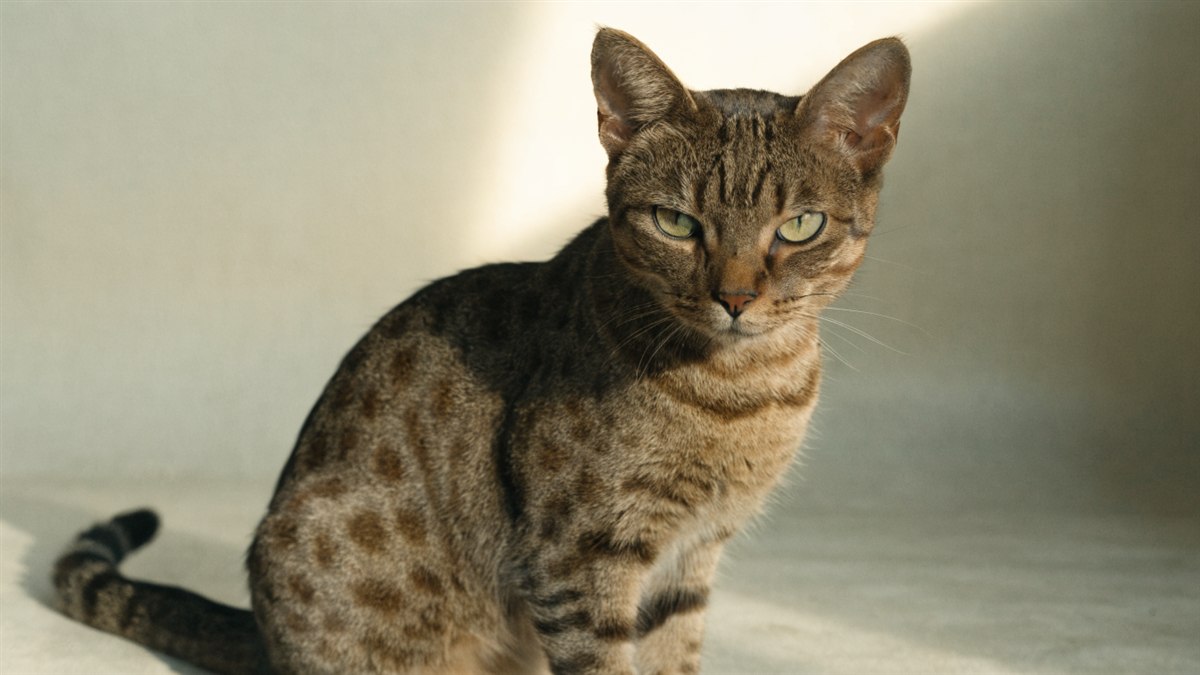
The Australian Mist is a short-haired, medium-sized, green-eyed cat carrying a spotted or marbled tabby pattern under a soft veil of ticking, and it is the first pedigree cat breed created in Australia. Three registries publish a written breed standard for it, all describing a cat of moderate type with no tendency to extremes in any characteristic Governing Council of the Cat Fancy.…. It was registered as the Spotted Mist until 1998.
Start with what makes this page different from the last three cat pages Bonbeno published. The Aegean is a Greek island landrace with no written standard in any registry and no founder anybody can name. Aphrodite's Giant is a Cypriot mountain landrace with two standards and a contested second recognition. In both cases the recurring finding was that nobody did the work: no studbook, no dated decisions, no record of which cats went in. The Australian Mist is the exact opposite, and that is the whole reason it deserves a page. Somebody wrote it all down, dated it, and published it, and most of that paperwork is still online.
So the useful question here is not whether the breed is real. It is whether the ranking pages have read any of the paperwork, and whether any of it survives contact with an Indian flat in May.
The physical animal, from the standards rather than from sales copy
The Mist is a medium to large cat in length and size, hard and muscular, and heavier than it looks. GCCF publishes a weight band of 8-15 lb, which it also gives as 4-7 kg. The head is a broad, blunt wedge with slightly rounded contours and good width between the ears, the profile shows a gentle dip rather than a break, and the chin is firm behind strong whisker pads World Cat Federation. Breed Standard. Ears run medium to large, broad at the base, with rounded tips tilted slightly forward. Legs are proportionately strong with the hind legs longer than the forelegs, and the paws are neat and oval.
Eye colour is where the standards get strict. ACF allows any shade of green and disqualifies blue, amber, gold or orange eyes outright. WCF disqualifies any eye colour other than green in an adult cat, and separately disqualifies a lack of ticking. The GCCF Breeding Policy notes that kittens can start with gold eyes carrying a green outline and develop to green as they grow, so a green rim around the pupil is the thing to look for in a kitten Australian Cat Federation Inc. ACF….
The three registries disagree about the coat, and that disagreement decides this page
The single most decision-relevant clause for an Indian buyer is the coat clause, and the three published standards do not say the same thing. This is not a quibble. Whether the cat carries an undercoat, and how much, is what determines how it sheds heat in Chennai in May, how much it drops on your sofa in a Mumbai monsoon, and whether the low-maintenance grooming claim on every ranking page survives Indian humidity.
| Registry | What the coat clause says | Undercoat mentioned |
|---|---|---|
| Australian Cat Federation, effective 1 January 2018 | Short, glossy and resilient | No |
| World Cat Federation, update 01.01.2010 | The coat is short, glossy and elastic, with undercoat | Yes, unqualified |
| GCCF breed page and Breeding Policy | Short to medium in length with a degree of undercoat, dense and resilient, smooth and silky with a glossy shine | Yes, qualified as a degree |
| The breed founder's own description | The coat is short, but resilient, and the tail is plumply furred | No |
| Cat Breeds List, a ranking page | Short, Resilient, Undercoat | Yes, copied without a source |
Read those five rows together and a real conclusion falls out. The country-of-origin registry describes a plain short coat. The two European registries that adopted the breed later describe an undercoat. The founder, who selected the coat herself over three decades, describes a short but resilient coat and says nothing about an undercoat at all. Bonbeno rates heat tolerance at 4 out of 5 on the ACF and founder reading, and explains in the climate section why the GCCF reading would pull that rating down rather than up.
Colour and pattern, and the count nobody agrees on
The Mist comes in two patterns and either six or seven colours, depending on which document you open. The founder lists six, brown, blue, chocolate, lilac, gold and peach. The Australian Mist Cat Association also lists six. The GCCF Breeding Policy and breed page list seven, adding caramel Governing Council of the Cat Fancy.…, and so do ACF, WCF and Purina India World Cat Federation. Breed Standard Purina India. Australian Mist Cat Breed…. Caramel is the odd one out because it is not a base colour at all: it is the effect of the dilute modifier gene acting on a blue, lilac or fawn base, which is why some sources count it and others do not Australian Cat Federation Inc. ACF….
What is not negotiable is the exclusion. Phaeomelanistic colours, meaning red, cream and tortoiseshell, are not allowed in any registry, and GCCF's outcross rules bar any cat showing the orange gene, the silver inhibitor gene or the white spotting gene from an outcross mating World Cat Congress. Breed Comparisons. A red, cream or tortoiseshell cat sold to you as an Australian Mist is not one. Nor is a cat with white toes, which ACF lists as a disqualification alongside blue eyes.
- Check the pattern first. Spotted carries the EMS code AUM 24 and marbled carries AUM 22, and those two are the only patterns the breed has.
- Check the eyes second. Green in any shade from chartreuse to aquamarine passes, and gold, amber, orange or blue disqualifies.
- Check for the misted veil third. The pattern must sit under random ticking in the solid colour areas, which is the effect the breed is named for.
- Check the belly last. Both spotted and marbled Mists have spotted tummies, which is a quick tell that catches a plain classic tabby.
Colour takes two years, so kitten photographs mislead
Full colour may not be reached until the cat is about two years old, and chocolate, lilac, gold and peach kittens are very much paler than adults with the rufous toning dominating the body markings. WCF states the same thing and adds caramel to the list of colours needing two years. That matters commercially. A seller showing you a pale, washed-out kitten and promising a rich adult colour is describing something the standards actually support, which also means a seller cannot be caught out by the photograph alone. Judge the pattern, the eye colour and the parents instead.
If a pedigree, an import document or an old registry entry says Spotted Mist, that is this breed under its original name and not a different cat. The name changed in 1998, when the marbled pattern was accepted and a purely spotted name no longer described the breed The Australian Mist Cat Association. A peer-reviewed veterinary review from 2015 still writes it as Australian Mist, formerly Spotted Mist, which is how thoroughly the old name persists in the literature.
The founding programme, dated from the primary documents
The founding programme ran for nine years under a written permission from a New South Wales cat control body, and the foundation cats numbered roughly 30 at a ratio of half Burmese, a quarter Abyssinian and a quarter domestic shorthair Straede TM. Description of general breed… The Australian Mist Cat Association. Dr Truda Straede ran it from her Nintu cattery, and she published the dated decisions herself. Two dates in that account contradict each other, and Bonbeno prints both.
This is the section the ranking pages do not have. Every one of them compresses the founding into a single sentence about the 1970s, three breeds and a name change. The actual record is a breeding programme with committee decisions, named individual cats, rejected applications, a disease outbreak that nearly ended it, and a thirty-six year dataset published afterwards. Reading it changes what you should ask a seller.
The dated timeline, from the founder's own account
| Date | Event | Source of the date |
|---|---|---|
| 1975 | Straede starts breeding Burmese while still wanting tabbies | The founder's summary table |
| 7 June 1977, or 28 June 1977 | The RASCC Consultative Committee grants provisional permission to experiment, for Spotted Mist Foreign Shorthairs | Her prose says 7 June and gives 7.6.77 in brackets. Her summary table on the same page says 28 June. The two do not agree |
| 28 August 1979 | The Balkis x Beren litter produces a chocolate tabby, a chocolate Abyssinian, a chocolate Burmese and a dilute Abyssinian, but no Spotted Mist | The founder's prose |
| 25 January 1980 | Nintu Horatio is born, the very first Spotted Mist, a brown spotted male | Prose and summary table agree |
| 6 May 1980 | First-generation stock is registered and accepted onto the official experimental register | Her prose gives 6.5.80; her summary table says only mid 1980 |
| 8 June 1981 | Frith produces Woozle, a blue Spotted Mist, from a mating the founder calculated as a one in sixty-four chance | The founder's prose |
| 23 September 1981 | The RASCC concurs that Woozle may be registered, having first raised concerns about Siamese type and white spotting | The founder's prose |
| 17 April 1986 | The first fourth-generation litter is born, from Nintu Freya and Nintu Orcrist, and the Spotted Mist is accepted onto the full register and made eligible for championship status | The founder's summary table |
| February 1987 | Feline leukaemia strikes the cattery, described by the founder as despair and desperate measures | The founder's summary table |
| 1997 | The marbled pattern is accepted as part of the breed | GCCF Breeding Policy, and the founder's breed description |
| 1998 | The breed changes name from The Spotted Mist to The Australian Mist | GCCF Breeding Policy |
Publish the disagreement rather than pick a date. The founder's article states in running text that the committee gave her provisional permission on the 7th of June 1977, and repeats it as 7.6.77 a paragraph later, then her own summary table at the foot of the same article gives 28 June 1977. Both are on one page, written by one person, about one committee meeting. Bonbeno cannot resolve it and will not average it. What is not in doubt is the month and year, and that the permission was written rather than assumed, which is precisely what the landrace pages could never establish.
A second, softer disagreement sits in the same article. Her prose dates the acceptance onto the experimental register to 6.5.80 while her table says only mid 1980, and an encyclopaedia entry gives May 1980 Wikipedia. Australian Mist. Breed history. Those are compatible. The June 1977 pair are not.
Which breeds went in, and in what proportion
Three breeds went in, and the proportions are published in three places that agree with each other. The founder writes that the Australian Mist has a large gene pool derived from over 30 foundation cats, half Burmese and a quarter each Abyssinian and Domestic. GCCF's breed page gives the same split as half Burmese, quarter Abyssinian and a quarter domestic shorthairs. The Australian Mist Cat Association, a GCCF full membership club, states that the Burmese provided the greatest input at 50 percent of the original genes, with the Abyssinians and Domestics at 25 percent each.
Two caveats belong with that number, and no ranking page carries either. First, the GCCF Breeding Policy, which is the most formal of these documents, describes the same gene pool of approximately 30 foundation cats consisting of Burmese, Abyssinians and Domestic Shorthairs and gives no ratio at all. Second, none of the sources gives a headcount per breed, so half Burmese is a statement about genetic contribution rather than a claim that fifteen Burmese cats walked in. Treat the ratio as the breed's own published account of its genetic make-up, not as a census.
| Founding breed | Share of the original genes | What it contributed |
|---|---|---|
| Burmese | About 50 percent | The dilution of the coat colours, four of the colours, the laid-back nature, general size and conformation, and some of the pattern |
| Abyssinian | About 25 percent | The ticking that creates the misted veil, two colours including the cinnamon gene behind gold and peach, and a touch of lively intelligence |
| Domestic shorthair | About 25 percent | The best spots, the agouti ground, and vigour, with the founder crediting uncosseted cat genes for better teeth, kidneys and mothering and for stabilising litter size near the feline average of four |
The GCCF Breeding Policy adds two restrictions that a buyer can actually use. Only usual and sorrel Abyssinians were used, and although one silver Abyssinian was used once in the early outcrossing, no silver cats from that mating entered the gene pool. Among the domestics, only brown and blue tabby cats are suitable. So a seller offering you a silver Australian Mist is offering you something the breed's own policy says was deliberately kept out.
The fourth cat nobody mentions, and the allele it explains
A Tonkinese-patterned queen entered the foundation stock in 1981, and that is the most plausible published explanation for a Siamese allele the Australian Cat Federation records as sitting in the gene pool today. The founder's account is unusually candid about it. A neighbour handed her a seal-pointed kitten with white markings and blue eyes; a daughter of that cat, a blue and white Tonkinese female she named Frith, was mated to a chocolate tabby called Clovis on a calculated one in sixty-four chance, and on 8 June 1981 produced a blue Spotted Mist she called Woozle.
The committee resisted. It wrote to her that Siamese type seems inimical to the type described in your provisional standard, and that the presence of white spotting in a cat of Siamese pattern in the parent generation would appear to be a genetic fault in the original unknown Siamese stock and might prove a serious danger to the programme. She answered that Frith herself descended from domestic and Burmese stock and that the white faults in the litter matched Clovis rather than Frith, and on 23 September 1981 the RASCC concurred that Woozle could be registered.
Now read the World Cat Congress comparison table next to that. Under special notes for the Australian Cat Federation, the entry reads that cbcs is known to be in the genepool. The cb allele is the Burmese colour restriction gene that every Australian Mist must carry two copies of, and cs is the Siamese allele; a cat carrying one of each is what the fancy calls Tonkinese pattern. Bonbeno cannot prove Frith is the source, because no published pedigree study traces it, and says so plainly. What can be said is that the founder recorded admitting a Tonkinese-patterned foundation queen in 1981 and the country-of-origin registry records the Siamese allele in the gene pool now. No other page has put those two documents side by side.
It was never a one-woman programme, and the record says so
Three other breeders were officially on the Spotty programme, and the founder names them. Clare Molony had one litter containing one spotty male, which she sold as a pet. Virginia Weekes, prefix Chamati, stayed for a few years and contributed Nintu Myrddin. Bette Diver, prefix Zhona, bred several litters and found a foundation cat called Just Fred, then withdrew after feline leukaemia appeared in her cattery. A larger group of unofficial participants kept female kittens and bred the occasional litter, which the founder credits with keeping bloodlines separated and protecting the stock when the 1987 leukaemia outbreak hit.
That last detail is a genuine husbandry lesson rather than a historical footnote. A closed programme concentrated in one building is one disease outbreak away from ending, and this one nearly was.
The dataset at the end of it, which is the rarest thing here
The founder kept a litter card for every litter from 1979 and published a summary of thirty-six years of it. Between 1979 and 2014 she bred 792 litters, of which 588 were Australian Mist, alongside 64 Abyssinian or Somali, 52 Burmese, 37 Maine Coon, 27 domestic or crossbred and 21 Siamese, Balinese or Oriental. Those six breed figures sum to 789 rather than 792, a gap of three litters that the article does not explain. The 792 total is the one her own percentage rests on, since 588 of 792 is the 74 percent she reports for Australian Mist litters. Bonbeno flags the three-litter gap rather than quietly correcting it, because a reader checking this page against the source should find the same discrepancy. Those 792 litters produced 3,566 kittens, of which 3,462 were live born and 104 were dead at birth, and those three figures do reconcile exactly. Mean survival to twelve weeks across the whole period was 86 percent, and the long-term trend in survival of kittens born alive improves over time but levels off at 95 percent rather than reaching 100.
No landrace has anything like this, and very few pedigree breeds do either. It is one cattery rather than a population study, and the founder is candid that she ascertained most causes of death herself as a zoology major rather than as a veterinarian. Read it as an unusually honest breeder's log, not as epidemiology. Even so, it is the only published multi-decade kitten-survival series this breed has, and the health section below uses it rather than borrowing another breed's numbers.
A landrace buyer cannot verify anything, because there is nothing to check against. An Australian Mist buyer can. Ask for the registered prefix, ask which cat registry the pedigree sits on, ask whether any outcross generation appears in the last four generations, and check the answers against the outcross rules below. The paperwork exists, so a seller who cannot produce it has told you something.
Which registries recognise the Australian Mist, checked one by one
Six of the nine World Cat Congress member associations recognise the Australian Mist at full status, and three do not recognise it at all. That is a real breed recognition trail rather than an assertion, and Bonbeno checked the four negatives against the registries' own published breed lists rather than taking the table's word for it.
Breed recognition is where the landrace pages on this site kept collapsing. The Aegean has no standard anywhere. Aphrodite's Giant has one registry that publishes standards and a second whose status the World Cat Congress table contradicts. The Australian Mist is the clean case, and it is worth showing exactly what clean looks like, because it gives an Indian buyer a checkable list.
| Association | Recognition status | Breed code | Allowable outcrosses |
|---|---|---|---|
| Australian Cat Federation (ACF) | Full | AUM | None |
| Co-ordinating Cat Council of Australia (CCC of A) | Full | None recorded | None |
| Cat Fanciers' Association (CFA) | Not recognised | Not applicable | Not applicable |
| Fédération Internationale Féline (FIFe) | Not recognised | Not applicable | Not applicable |
| Governing Council of the Cat Fancy (GCCF) | Full | AUS | Abyssinian, Burmese and Domestic Shorthair, with colour restrictions |
| New Zealand Cat Fancy (NZCF) | Full | AUM | None |
| Southern Africa Cat Council (SACC) | Not recognised | Not applicable | Not applicable |
| The International Cat Association (TICA) | Full | AUM | None |
| World Cat Federation (WCF) | Full | AM | None |
Verifying the negatives, because an absence is easy to assert and easy to get wrong
Bonbeno read the complete published breed lists of CFA and FIFe and found no Australian Mist in either. CFA's recognised-breeds page runs through Birman, Bombay, British Shorthair, Burmese and Burmilla with nothing Australian between them. FIFe's breed page lists every fully recognised and preliminarily recognised breed by category, including the Burmilla and the Burmese, and does not carry this breed at any status. Both negatives match the WCC table, which is the check the ranking pages skip.
The WCF positive was verified the same way. WCF's shorthair breed-standards index lists Australian Mist (AUM) between Arabian Mau and Bengal, without the asterisk WCF uses to mark a standard belonging to another World Cat Congress organisation, and the standard behind that link is a WCF document dated 01.01.2010 World Cat Federation. Breed Standard. Note the small inconsistency that follows: WCF's own index and standard use AUM, while the World Cat Congress table records WCF's breed code as AM World Cat Federation. Breed Standards…. Codes drift between documents, so quote the document you are holding.
What Bonbeno could not verify, stated plainly
TICA's own site returned HTTP 403 to every request made from this environment, on three different user agents and through two different tools, so no figure or wording on this page comes from TICA directly. TICA's full recognition and its AUM breed code are reported here from the World Cat Congress comparison table, which TICA is a member of and which publishes the nine associations side by side. That is a real source and a weaker one than the registry itself, and the distinction is worth stating rather than hiding.
Two commonly repeated recognition dates could not be traced to a primary document from here either. The claim that NZCF granted championship status on 1 January 1999 and the claim that WCF accepted the breed at championship status in August 2004 both appear in the encyclopaedia entry, sourced to breed-club pages rather than to registry minutes. The claim that GCCF granted championship status in February 2017 is sourced to a GCCF council-minutes PDF that Bonbeno could not retrieve. Bonbeno reports those three dates as unverified, and does not repeat them as facts.
Two GCCF dates are solid, because GCCF publishes them itself. The first Australian Mists were imported into the UK in 2007, and the breed gained preliminary GCCF recognition in 2011. GCCF now files the breed under Section 5, Burmese, Group 2, publishes a Standard of Points, a Registration Policy and a Breeding Policy for it, and lists two breed clubs.
The outcross split, which is the most useful line in the whole table
Only one registry of the nine keeps the studbook open, and it is not the one in the country of origin. GCCF permits breeders to outcross to Abyssinian, Burmese and Domestic Shorthair with colour restrictions, and ACF, CCC of A, NZCF, TICA and WCF all record allowable outcrosses as none. The ACF standard says the same thing in its own breeders' notes, where the allowable outcross line simply reads none.
The GCCF Breeding Policy explains why this matters, and it is blunt. Current understanding is that a breed needs no fewer than 60 unrelated cats to provide sufficient genetic diversity, health and vigour, so the Australian Mist is a breed still in development and further outcrossing is needed to widen its gene pool. The same document records that very little outcrossing has taken place in Australia since 2000, and none in the USA. Set that against a founding pool of about 30 cats and the arithmetic speaks for itself.
- GCCF outcross rules bar three genes outright. No cat displaying the orange gene, the silver inhibitor gene or the white spotting gene may be used in any outcross mating.
- GCCF requires a long-hair DNA test on every domestic used. All Domestic Shorthair cats used in an outcross must be tested free of the long-hair gene.
- CCC of A restricts who may work below the full register. Only holders of experimental licences may breed from less than full register stock descended from the foundation stock Abyssinian, Burmese and Australian domestic tabbies.
- GCCF warns imports carry the risk. Since the vast majority of Australian lines are already in the UK, GCCF's Breeding Policy calls the possibility of importing genuinely new lines unlikely, and advises DNA testing any imported cat before it travels.
Recognised, and in one country with no breeders at all
New Zealand recognises the breed at full status and has nobody breeding it. The World Cat Congress special-notes column for NZCF reads that there are no registered breeders in New Zealand, and that although it is a recognised breed there have been no desexed animals shown. That is a genuinely instructive line for an Indian reader, because it proves recognition and availability are independent. A registry can carry a full standard for a cat nobody in the country owns.
No Indian body appears anywhere in this trail. The nine World Cat Congress member associations are ACF, CCC of A, CFA, FIFe, GCCF, NZCF, SACC, TICA and WCF, and none of them is Indian. So an Indian buyer holding a certificate has to ask which of those nine issued it, and a certificate from none of them is a piece of paper rather than a pedigree.
Ask for the registry name, the breed code and the registration number, then check the code against this table. ACF, NZCF and TICA use AUM, GCCF is recorded as AUS, and WCF appears as both AM and AUM depending on which document you read World Cat Federation. Breed Standards…. If a seller cannot name the issuing registry, stop there. Do not accept a CFA or FIFe registration for this breed under any circumstance, because neither body recognises it and neither can have issued one Fédération Internationale Féline. Breeds.
Australian Mist cat price in India, and why no honest figure exists
There is no Australian Mist cat price in india, and Bonbeno will not print one. Two Indian all-breed price guides that claim to cover every breed omit this one entirely, India's largest pet retailer lists it fiftieth of fifty with no figure attached, and the highest-ranking Indian-domain breed page carries no price at all Heads Up For Tails. 50 Popular Cat Breeds… Purina India. Australian Mist Cat Breed…. The only dated, verifiable price anywhere is Australian.
Say that first, because it is the most useful sentence on this page for an Indian buyer, and because every rupee figure circulating for this breed describes a market that does not exist. What follows is the evidence, not an empty search result.
What Bonbeno checked, and what each source returned
| Source | What it claims to cover | Australian Mist result |
|---|---|---|
| Heads Up For Tails, 50 Popular Cat Breeds In India | Fifty breeds available to Indian buyers | Present, at number 50 of 50. Gives a life expectancy of 12-16 years and a suitable for the Indian climate verdict. No price anywhere on the page |
| Supertails, Cat Price in India 2026: All Breeds | An all-breeds Indian price guide | Absent. The breed name does not appear on the page |
| PawSpace, Cat Price in India: All Breeds | A second all-breeds Indian price guide | Absent. The breed name does not appear on the page |
| Supertails, 40 Best Cat Breeds for Our Climate | Forty breeds rated for Indian conditions with price bands | Absent. The only Australian on the page is the Australian Veterinary Association |
| Purina India breed library | A branded Indian breed reference | Present as a breed page. No price, no availability statement, no Indian context |
| Petlur, an India-facing pet marketplace | Breed info plus a marketplace | Present, priced at USD 700 to 1000. No rupee figure and no Indian listing |
Read the pattern rather than the rows. The breed exists in Indian breed lists as a name and vanishes the moment money is mentioned. That is what an absent market looks like from the inside, and it is a stronger finding than any range Bonbeno could have invented.
The prices the ranking pages do quote, and why they fall apart
Two ranking pages carry a number, and both fail a check you can run yourself. Cat Breeds List gives a kitten price of an average 700 to 1000 US dollars in the top line of its table cell, then states in the very next sentence of the same cell that an Australian Mist kitten typically ranges from 800 to 1,200 US dollars for pet prices only. A page that contradicts itself inside one table cell is not a price source. Petlur reproduces the 700 to 1000 US dollar figure, wraps it in four sentences that say only that prices vary by breeder, reputation and quality, and offers no Indian listing at all.
Neither converts to rupees, neither names a seller in India, and neither explains why a cat with no lawful Indian breeding supply would have an Indian price. Bonbeno does not convert them either, because a converted figure printed on an Indian page reads as an Indian price and would be a fabrication dressed as arithmetic.
The one real, dated price, and where it applies
The breed founder publishes her own price and it is the only figure on this page Bonbeno would defend. Nintu cattery states that the price for all kittens born after 1 September 2025 is 1,700 Australian dollars for an Australian Mist, with breeding stock by negotiation and retired cats priced by age, on a page last updated on 1 June 2026. That is a dated, current, named-seller figure from the fountainhead of the breed.
It is also unavailable to you. Her selling policy requires kittens to be at least twelve weeks old, vaccinated twice, desexed unless they are breeding stock, microchipped and registered, and she sells only to buyers who intend to keep the cat indoors. A cattery visit is required to join the booking list, and her page states plainly that one should never buy sight unseen unless it is completely unavoidable.
Why no Indian supply chain can form, in three documents
The reason there is no Indian price is structural, and it is written down in three places. Take them in order.
- India classifies the animal as Restricted and rejects breeding applications. Under ITC (HS) 01061900, other mammals including pet cats and dogs sit in the Restricted category, and paragraph 6 of the governing trade notice states that any applications for trading or breeding purposes, or applications made on behalf of another person or entity, shall be duly rejected.
- The only easy route in carries a two-cat cap and a two-year residence test. Up to two pets may be imported as passenger baggage without DGFT authorisation, and only by persons transferring their residence to India after two years of continuous stay abroad, with only cats and dogs importable under baggage rules.
- The founder does not sell entire kittens, and has not for over thirty years. Nintu states that it never sells entire kittens except to registered breeders and has not done so for more than 30 years, which closes the only route by which genuine founding stock could reach a new market.
- Five of the six recognising registries forbid outcrossing, so a population cannot be rebuilt locally either. ACF, CCC of A, NZCF, TICA and WCF all record allowable outcrosses as none, leaving GCCF as the sole open studbook.
Put those four together and the conclusion is not that the breed is expensive in India. It is that no lawful chain exists by which a breeding population could start here, which is a different and more useful thing to know before you go looking.
What you are actually being offered when a listing says Australian Mist
The founder's own warning is the sharpest published statement on this, and it is worth quoting closely. Despite all our efforts, she writes, popular web marketing sites regularly contain ads for Australian Mist which on investigation invariably turn out to be scams. That is the breed founder, on her own site, describing the online market for her own breed.
Bonbeno's own checks found the same texture. One long-standing Australian Mist information domain, formerly hosting a breeders' listing, no longer serves the breed at all: a request to it on 20 August 2026 redirected to an unrelated host and returned an Indonesian-language online-gambling page. Bonbeno does not link it and names it nowhere on this page, because sending readers to it would be the harm. Treat any Indian listing for this breed as one of four things until proven otherwise.
- A different breed entirely. A brown spotted domestic shorthair, a Bengal cross or an Abyssinian cross can carry spots and a warm ground colour without being this breed.
- A generic marketplace shell. A page that exists identically for every breed name, priced in dollars, with no listing behind it.
- An advance-payment scam. Exactly what the breed founder describes, and the reason her own cattery insists on a physical visit before joining a booking list.
- A genuine imported pet with a pedigree. Possible, rare, and checkable: ask which of the nine World Cat Congress associations issued the pedigree, then ask to see the import authorisation or the transfer-of-residence baggage documentation.
Bonbeno found no Indian seller, no Indian listing and no Indian price for this breed, and no source with a method behind a rupee figure. If a range appears on this page in future it will carry the seller, the date and the city it came from. Until then, the number you should plan around is not a purchase price at all. It is the monthly cost below, which applies to any medium-sized shorthaired cat you bring home, including the one already sitting in an Indian shelter.
Monthly cost of keeping a medium shorthaired cat in India
Budget Rs 2,300 to Rs 4,600 a month at the low end and Rs 4,600 to Rs 9,000 in the mid range for a cat of this size in India, with the professional grooming line mostly deleted because the Mist is short-haired. That published cost table is India-specific and veterinarian-reviewed, and one of its own totals does not add up. Bonbeno shows the working.
The purchase price for this breed is unobtainable, so the recurring cost is the only number an Indian reader can actually plan against. It is also the number that applies whether the cat is a pedigree import or the indie kitten in your building's stairwell, which is the honest frame for this section.
The published Indian monthly cost table, and where it breaks
The most detailed Indian source Bonbeno found is Supertails' 2026 cat price guide, written by Shama Hiregange, published 25 March 2026 and reviewed by Dr Anees Ibrahim, BVSc and AH, a senior veterinarian. A vet-reviewed Indian cost table is worth more than any overseas lifetime-cost figure, so this page uses it and then checks it.
| Cost line | Budget | Mid range | Premium | Applies to an Australian Mist |
|---|---|---|---|---|
| Cat food, dry plus wet | Rs 800 to 1,500 | Rs 1,500 to 3,000 | Rs 3,000 to 6,000 | Yes, and this is the line that decides the total |
| Litter and litter box | Rs 300 to 600 | Rs 600 to 1,200 | Rs 1,200 to 2,500 | Yes, and higher than average, because this is a cat bred to live indoors |
| Routine vet visits | Rs 300 to 600 | Rs 600 to 1,000 | Rs 1,000 to 2,000 | Yes, at roughly one visit per two to three months |
| Professional grooming | Rs 500 to 1,000 | Rs 1,000 to 2,000 | Rs 2,000 to 4,000 | Largely no. The source itself flags this line as a long-haired-breed cost |
| Treats and snacks | Rs 150 to 300 | Rs 300 to 600 | Rs 600 to 1,500 | Yes, and worth capping, for reasons the feeding section explains |
| Toys and enrichment | Rs 100 to 300 | Rs 300 to 600 | Rs 600 to 1,500 | Yes, and this is the line to spend on rather than trim |
| Flea and tick prevention | Rs 150 to 300 | Rs 300 to 600 | Rs 600 to 1,200 | Yes, year-round in most of India |
| Printed total | Rs 2,300 to 4,600 | Rs 4,600 to 9,000 | Rs 9,000 to 21,700 | Two of the three totals check out. The third does not |
Check the arithmetic before you plan against it. The budget column's seven lines sum to Rs 2,300 at the low end and Rs 4,600 at the high end, matching the printed total exactly. The mid-range column sums to Rs 4,600 and Rs 9,000, again matching. The premium column's seven lines sum to Rs 9,000 at the low end, which matches, and to Rs 18,700 at the high end, against a printed total of Rs 21,700. The gap is Rs 3,000 and it is not explained by the kitten-food row, which is an alternative to the adult cat-food row rather than an addition to it. Use Rs 18,700 as the honest premium ceiling, or better, ignore the premium column, because most of what inflates it is grooming this breed does not need.
The same guide states a headline monthly cost of Rs 2,000 to Rs 8,000 and separately gives annual running costs of Rs 24,000 to Rs 96,000, which are the same claim. Its own detailed table runs past that ceiling. Both figures are in one document, so read the headline as a typical-household range and the table as a line-item worst case.
The Australian Mist adjustment, line by line
Three lines move for this breed specifically, and they move in different directions.
- Grooming comes down. GCCF notes as an added bonus that the Mist's coat does not require much grooming, and the founder's own selection produced a short coat rather than a maintained one. Delete most of the Rs 500 to 4,000 professional grooming line and buy a comb instead.
- Litter comes up. This is a breed selected across decades to live wholly indoors, and its people-centredness is what makes that possible. An indoor cat uses the tray every day of its life, so plan at the upper end of the Rs 300 to 1,200 band rather than the lower.
- Enrichment comes up, and is not optional. The AAFP and ISFM environmental needs guidelines organise a healthy feline environment around five pillars and note that unwanted behaviours are a leading cause of pet abandonment and euthanasia. For a cat bred to stay inside, the Rs 100 to 1,500 toys and enrichment line is the cheapest health insurance on the table.
- Food stays where it is, and gets watched. Both GCCF and the breed's own UK club warn that the Mist enjoys food and has a tendency to become overweight. Spending less on food is not the saving; portioning it is.
First-year and one-off costs, from the same Indian table
| Item | Frequency | Published Indian cost |
|---|---|---|
| Initial vet check-up | One time | Rs 500 to 1,500 |
| Vaccination, full first-year schedule | Annual | Rs 1,500 to 3,000 |
| Deworming, initial courses | One time | Rs 300 to 600 |
| Spay or neuter surgery | One time | Rs 3,000 to 8,000 |
| Litter box plus initial litter stock | One time | Rs 600 to 2,500 |
| Cat carrier | One time | Rs 800 to 3,000 |
| Scratch post or cat tree | One time | Rs 800 to 4,000 |
| Grooming kit, brush and nail clippers | One time | Rs 400 to 1,500 |
A second Indian source prices the individual shots, and it is worth carrying because vaccination is the one cost a seller may claim to have already covered. Rabies runs Rs 300 to Rs 500 per shot, the FVRCP combination Rs 500 to Rs 1,000, and the feline panleukopenia shot Rs 400 to Rs 800, all varying by clinic and city. Set those against the Rs 1,500 to Rs 3,000 first-year vaccination line above and the two sources agree, which is reassuring and rarer than it should be.
Notice what the one-off column does to the argument about buying. Setup for any cat runs into several thousand rupees before a single month of running cost, and none of it is breed-specific. Somebody paying a large premium for a breed they cannot verify has usually underfunded the part that actually determines the cat's life.
Plan Rs 3,000 to Rs 6,000 a month for a healthy adult Australian Mist or Mist-type cat in an Indian city, and treat that as the floor rather than the answer. It assumes home grooming rather than a salon, mid-range food, year-round parasite prevention, and a real enrichment spend. It excludes emergencies entirely. Every figure in it comes from a published Indian cost table rather than from a global average, and the arithmetic has been checked against its own columns.
Heat tolerance in Indian conditions, rated 4 out of 5
Bonbeno rates the Australian Mist 4 out of 5 for heat tolerance in Indian conditions, and the reasoning comes from the coat clause and the head shape rather than from the country of origin. A short, glossy, resilient coat over a moderate, non-brachycephalic head is a genuinely heat-tolerant combination. The rating drops to 3 if your cat matches the GCCF and WCF coat length description instead.
Reason from the coat, never from the country. Australia is not one climate, and this breed was developed around Sydney and later in Victoria, both temperate. A cat developed in Darwin and a cat developed in Hobart would share a passport and nothing else. What actually predicts how an animal copes with 44 degrees in Sri Ganganagar is the insulation it wears and whether it can open its airway.
The two anatomical facts that earn the four
Take the coat first. The ACF standard, which is the country-of-origin document, describes the coat in five words: short, glossy and resilient. The breed founder, who selected that coat over three decades, describes it as short but resilient with a plumply furred tail, and elsewhere as a short, fine coat. Neither mentions an undercoat. A short single coat with no dense underlayer is the best coat a cat can wear in Indian summer, because it traps the least still air and dries fastest after humidity or a wet-cloth wipe-down.
Take the head second, because it matters more than most pages realise. Panting is a cat's emergency cooling route, and a shortened face obstructs it. This breed's standards forbid the shortening. ACF requires a profile with a gentle dip and not a break, a broad nose, strong whisker pads and a firm chin, and it faults a pinched muzzle. WCF describes the nose as already broad at the nose leather with the nose and forehead equally long. That is a moderate, open airway. The contrast with the contemporary Burmese, one of this breed's founders, is instructive: the ALX1 variant that produces the rounded contemporary Burmese head is the same variant that produces a lethal craniofacial defect in the homozygous state, and heterozygous cats simply carry a shortened facial structure. The Mist standards deliberately did not go there, and an Indian buyer benefits from that decision every May.
Why it is a four and not a five
Two registries describe a different coat, and if your cat has that coat the rating falls. WCF says the coat is short, glossy and elastic, with undercoat, stated without qualification. GCCF says short to medium in length with a degree of undercoat, dense and resilient Governing Council of the Cat Fancy.…. Medium length plus a dense undercoat is a materially warmer garment than short and single, and it also mats and holds moisture in a Mumbai or Kochi monsoon in a way a single coat does not.
So the honest rating is conditional, and Bonbeno would rather publish the condition than a tidy number. Part the fur over the shoulder and look. If you can see a paler, softer underlayer beneath the top coat, treat your cat as a 3 and manage it accordingly. If the coat is uniform to the skin, it is a 4. No ranking page tells you to check, because no ranking page noticed the standards disagree.
| Factor | What the documents say | Effect on Indian heat tolerance |
|---|---|---|
| Coat, ACF and the founder | Short, glossy and resilient. No undercoat mentioned | Strongly positive |
| Coat, WCF and GCCF | Short to medium with undercoat, dense and resilient | Moderately negative, and the reason this is a 4 not a 5 |
| Head and muzzle | Moderate wedge, gentle dip not a break, broad nose, pinched muzzle faulted | Strongly positive. Panting is unobstructed |
| Body mass | Medium to large, hard and muscular, heavier than it appears, 4 to 7 kg | Mildly negative. More mass per unit of skin means slower heat shedding |
| Colour | Warm rufous toning even in pale colours, ground colour paler than pattern | Neutral. The palest ground colours reflect marginally better in direct sun |
| Lifestyle by design | Selected across decades to live wholly indoors | Positive if the indoor space is ventilated, negative in a sealed flat during a power cut |
What Indian summer actually looks like, from Indian sources
The numbers a cat has to live through are published. In its April 2026 heatwave guidance, the India Meteorological Department reported maximum temperatures ranging between 40 and 44 degrees Celsius across parts of northwest, central and peninsular India, with a highest recorded temperature of 44.5 degrees at Sri Ganganagar in Rajasthan, and temperatures markedly above normal by 5 degrees or more in several regions. The department separately flagged warm night conditions in parts of north India as further increasing discomfort and health risk, and hot and humid conditions over coastal and eastern regions including Odisha, West Bengal, Tamil Nadu and Andhra Pradesh.
Warm nights are the part that matters for a cat, and almost no breed page mentions them. A cat sheds accumulated heat overnight. A night that stays warm removes the recovery window, so two consecutive 43 degree days with warm nights are far harder on an animal than a single 45 degree day followed by a cool night. The IMD guidance names warm night conditions as a distinct hazard for exactly this reason.
The trend is also going the wrong way. A systematic review of Indian temperature projections records that heatwaves were observed in 9 states in 2015 and in 23 states by 2020, and names Rajasthan, Madhya Pradesh, Maharashtra and Telangana as among the most heatwave-prone states, with mean maximum summer temperatures exceeding 40 degrees. A cat bought today will live through more of those summers than one bought a decade ago.
The indoor design, and how it cuts both ways in India
This breed was built to live indoors, which is unusual and directly relevant. The founder's stated primary aim was to create a people-centred indoor cat, and she sells only to buyers who intend to keep the cat indoors Straede TM. Kittens for sale. Nintu Cattery…. GCCF describes the breed as happy to live as indoor cats.
In India that design is mostly a gift. An indoor cat is out of direct sun, off hot concrete, away from monsoon-season parasite pressure and away from traffic. It is a liability in exactly one situation, and it is a common one: a closed flat with the windows shut and no power. A sealed room in a power cut can be hotter than shade outdoors, because there is no air exchange at all. Plan for it before it happens rather than during it.
- Open a cross-draught before you leave, not after. Two openings on different walls move far more air than one window wide open.
- Give the cat a tiled floor it can reach. Bathroom and kitchen tile is the cheapest cooling surface in an Indian home and cats find it unprompted.
- Put water in three places, not one. Cats drink poorly from a single bowl next to the food, and a wide, shallow bowl away from the feeding station gets used more.
- Never shave a Mist to cool it down. The coat shades the skin and a shaved cat sunburns and overheats faster, and the standards penalise a woolly or sleek coat precisely because coat texture is functional.
- Wipe down with a damp cloth on the worst days. Evaporation from a damp coat helps a cat that cannot sweat, and a short coat dries fast enough not to stay wet.
City by city, where it differs
| Setting | The dominant problem | What to do about it |
|---|---|---|
| Delhi, Jaipur, Lucknow and the northwest plains | Dry extreme heat with warm nights and temperatures markedly above normal | Cooling and airflow are the whole job. Peak indoor hours are 12 to 5, so keep the cat's resting spot on the shaded side of the flat |
| Mumbai, Chennai, Kochi and the coasts | Humidity rather than peak temperature, and hot and humid conditions flagged by IMD | Airflow beats cooling. Humidity is also when a degree of undercoat starts to mat, so comb weekly instead of monthly |
| Bengaluru and Pune | Mild by Indian standards, with sharp afternoon sun | The easiest cities in India for this cat. Watch weight rather than heat, because a comfortable indoor cat moves less |
| Kolkata and the east | Combined heat and humidity through a long season | Both problems at once. Ventilate, comb weekly, and check ears after every damp week |
| Any city, during a power cut | No air exchange at all in a closed flat | This is the real risk for an indoor-designed breed. Leave a ventilation path whenever the flat is empty |
India's largest pet retailer rates this breed suitable for the Indian climate and gives no reasoning at all. Purina India's breed page goes further and states the cat needs some outdoor space. That is the reverse of the breed's founding purpose. The founder's stated aim was a people-centred indoor cat and her own selling policy requires buyers to keep it indoors. Following the Indian-facing page instead of the breed's own documents would put a cat bred for indoor life onto an Indian street in May.
Temperament and household fit, and the one Indian page that disagrees
Temperament in this breed was selected for deliberately rather than observed afterwards, which is genuinely unusual and is written into the registry's own breeding policy. The result is an affectionate, people-centred, lap-seeking cat that is tolerant of children and other pets, and that becomes lonely if left alone for long periods. One Indian-facing page contradicts all of it.
Most breed pages describe temperament as though it happened. Here it was an engineering requirement. The GCCF Breeding Policy states that the Australian Mist was developed to be the perfect companion cat, that this was the intention of the breed's founder, and that it must remain a key aim when making any selection for breeding suitability. A breeder producing an unfriendly Mist is failing the standard, not producing a variant. That is a sentence you can hold a seller to.
What the founder actually selected, in her own words
The founder's description is specific enough to be checkable rather than flattering. She describes cats that are always relishing the company and affection of humans, friendly and intelligent, happy to be handled, and very disinclined to bite or scratch, which she gives as the reason they suit households with children. She notes a propensity to crawl into the nearest lap with or without invitation and to constantly hang around to see what people are up to, and calls them an excellent companion for the home worker and the invalid.
Two of her observations are more useful than the warm ones. First, temperament is such that even many males are able to live in small groups with other males, which is not true of most breeds and matters if you already have a cat. Second, she records that later maturation of both males and females is being selected for, so a Mist stays kittenish longer than an average shorthair.
Her most honest line is the one nobody quotes. While it is not possible to alter the inherent behaviours which enable the cat to hunt, she writes, these characteristics can be redirected towards interacting with people. Nobody bred the hunting out. They bred a cat willing to aim it at a wand toy instead. Plan enrichment on that basis.
The clubs and the registry, and where they agree
| Source | What it says | Standing |
|---|---|---|
| GCCF Breeding Policy | A gentle loving breed that thrives on human companionship, ideal for families and for disabled and elderly people | Registry policy document. Highest standing here |
| GCCF breed page | Lively and inquisitive as kittens, maturing into gentle cats happy to be handled, tolerant of children, other cats and dogs, and happy to live as indoor cats | Registry breed page |
| Australian Mist Cat Association | A laid back people loving personality, great with children, integrates well with other pets, tolerant, loves being handled | GCCF full membership breed club |
| The breed founder | Disinclined to bite or scratch, lap-seeking, suits very young children, and later-maturing by selection | The person who made the selections |
| Purina India | Playful and curious, sociable and dependent, somewhat talkative, and not widely recognised as one of the best breeds for children | Branded Indian breed page. The only source in this table that disagrees |
Four sources built on the breeding programme say this is a notably child-tolerant cat, and the highest-ranking Indian-domain page says it is not widely recognised as one of the best breeds for children. Bonbeno publishes the disagreement rather than smoothing it. The four agreeing sources include the registry that writes the breeding policy and the person who selected the trait, and none of them is selling you a cat on that page. The Indian page cites nothing. Weigh accordingly, and note that Purina India also carries the outdoor-space claim the climate section demolishes and a no-inherited-problems claim the health section demolishes.
Who this cat suits in an Indian household
- A household with someone home most of the day. Work-from-home, a joint family, a retired parent or a student household all suit a cat that was explicitly bred to sit with people.
- A flat rather than a house with a gate. This is a cat designed for apartment living and for staying inside, which is the normal Indian urban housing pattern anyway.
- A home with children old enough to be shown how to hold a cat. The disinclination to scratch is a real selected trait, and it is not a licence to let a toddler carry the animal around.
- A home that already has a cat or a cat-tolerant dog. GCCF records tolerance of other cats and dogs, and the founder records males living in small groups, so a second animal solves the loneliness problem cleanly.
Who should not buy this breed
Say this part plainly, because the sales copy never does. A household where everyone leaves at nine and returns at nine should not keep this cat alone. GCCF states the breed does need the companionship of humans or other cats, and Purina India describes it as sociable and dependent, which is the same observation phrased as a warning. A cat selected across forty years for people-centredness is a cat that suffers from an empty flat in a way an independent landrace does not.
Three other households should look elsewhere. Anyone who wants a cat that roams outdoors is buying against the breed's entire design and against the founder's sale conditions. Anyone who wants a low-interaction, decorative, aloof cat will find this one on their keyboard. And anyone whose real reason for wanting it is rarity should read the price section again, because in India the rarity is the absence of a supply chain rather than a scarce luxury.
Loneliness is a health problem, not a mood
The veterinary framing is stronger than the sentimental one. The AAFP and ISFM environmental needs guidelines note that several diseases as well as unwanted feline behaviours have been associated with stressful environmental situations, that cats often do not express overt signs of stress, and that studies suggest even stoic cats can carry elevated catecholamines and other stress hormones. The guidelines also record that adverse behaviours are a leading cause of pet abandonment and euthanasia.
For a breed engineered to want company, that is the whole risk profile in one paragraph. The mitigation is cheap and it is not a mystery: a second cat, a predictable routine, resources separated across the flat, and vertical space to retreat to.
Sources split on vocalisation and neither is wrong. Purina India calls the Mist somewhat talkative, while nothing in the ACF, WCF or GCCF standards mentions voice at all, because a breed standard describes conformation rather than noise Australian Cat Federation Inc. ACF…. What the founding does predict is a Burmese-influenced cat, and Burmese lines are conversational. Expect a cat that talks to you, and expect it to talk more when it is left alone, which is the signal worth listening to.
Training approach, and the two levers the founding gives you
To train an Australian Mist, use food and use people, because the breed's own documents say both levers are unusually strong. The Abyssinian line contributed a marked desire for food, and the whole programme selected for a cat that wants to be near you Straede TM. Description of general breed…. Harness training works, the founder trains her own cats to it, and it is the single most useful skill for an Indian flat.
Cats are not untrainable, they are unbribable by praise. This one is bribable by food, which changes everything. The Australian Mist Cat Association records that Mists have a desire for food which comes down the Abyssinian route and seem to enjoy any food, and GCCF says simply that as a breed the Mist enjoys food Governing Council of the Cat Fancy.…. A food-motivated cat is a trainable cat, and the same trait is the reason the feeding section below is strict.
Start with the four things that actually matter in India
- Carrier training, first and above everything. An Indian summer emergency, a monsoon-season vet visit and a power cut all end with a cat in a box. Leave the carrier open in the room with a blanket and a daily treat inside from week one, and never let its only appearance be the day of an injection.
- Comb tolerance, second. Two minutes of combing a week is trivial for a cat trained at twelve weeks and a wrestling match for one trained at two years. Pair the comb with food every session until the cat comes to the comb.
- Harness and lead, third. The founder states that both her breeds are amenable to being trained to a harness. In a flat with no safe outdoor access, a harness converts a balcony or a corridor into legitimate enrichment.
- Handling for health checks, fourth. Mouth, ears and belly, ten seconds each, every few days, with food. The health section names three things you will need to check by hand, and a cat that permits it is a cat you catch problems in early.
What this breed resists
The Mist does not resist training in the way an aloof breed does. What it resists is being ignored, and that shows up as behaviour rather than as refusal. A people-centred cat left alone all day does not become independent; it becomes noisy, insistent and inventive. The AAFP and ISFM guidelines are direct about the consequence, noting that environmental needs are often not addressed until the cat exhibits signs that attract the care-giver's attention, and that those signals are usually behaviours the owner labels bad, inappropriate or aggressive.
So the training problem here is scheduling rather than obedience. Twice-daily interactive play at fixed times solves more Mist behaviour problems than any correction will, and it is also how you redirect the hunting drive the founder says cannot be removed.
Realistic timelines for an Indian household
| Skill | Start at | Reliable by | Note |
|---|---|---|---|
| Litter tray | The day the kitten arrives, which is at least 12 weeks in a responsible sale | Within days | Kittens sold at 12 weeks are almost always already trained by the breeder |
| Name response and coming when called | 12 to 14 weeks | 16 to 20 weeks | Food-led. Call, then feed, every single time, for two weeks |
| Carrier as a safe place | 12 weeks | 6 to 8 weeks of daily exposure | The highest-value skill on this list for Indian conditions |
| Comb tolerance | 12 weeks | 4 to 6 weeks | Two minutes, twice a week, always paired with food |
| Harness acceptance indoors | 16 weeks | 4 to 8 weeks of short sessions | Indoors first, always. Never take a cat outside on a harness in Indian midday heat |
| Tolerating mouth, ear and belly checks | 12 weeks | 8 to 12 weeks | Ten seconds per area, then food. Build the habit before you need it |
| Settling alone for a working day | Never fully, for this breed | Not applicable | GCCF states the breed needs the companionship of humans or other cats. Solve this with a second cat, not with training |
Socialisation, and the window that closes
Do the introductions early, because a cat bred for tolerance still has to meet the things it will be expected to tolerate. GCCF records the breed as tolerant of children, other cats and dogs, and the Australian Mist Cat Association says they integrate well with other pets The Australian Mist Cat Association. Tolerance is a disposition, not a substitute for exposure. Introduce the doorbell, the pressure cooker, the vacuum, the building watchman, visiting relatives and the carrier while the kitten is still finding everything interesting.
The founder's phrasing is worth keeping in mind here. She describes a conviction, in her cats, that no person or animal could do anything but love them, which leads to ease of integration with any but the extremely aggressive. That is a strong asset and it has a failure mode: a cat with no fear of a stranger is a cat that walks up to the wrong dog on an open stairwell.
What not to do
- Do not train with a spray bottle or a raised voice. A cat selected for people-centredness learns that people are unpredictable, and you lose the lever the breeding gave you.
- Do not free-feed to make training easier. A food-motivated indoor breed with a documented tendency to become overweight is the worst candidate for a permanently full bowl.
- Do not skip play because the cat seems calm. GCCF describes kittens as lively and inquisitive maturing into gentle cats, and gentle is not the same as satisfied.
- Do not use the carrier only for the vet. One aversive association will undo six months of work, and in an emergency you will lose the twenty minutes you did not have.
The breed founder does not release a kitten before twelve weeks, and by then it is vaccinated twice, desexed unless it is breeding stock, microchipped and registered. That is the standard to hold any seller to, of any breed, anywhere in India. A kitten offered to you at six or eight weeks has been taken from its mother during the window in which cats learn to be cats, and no amount of later training fully replaces it.
Daily exercise requirement, and what happens without it
Give an Australian Mist two structured play sessions a day of roughly 15 minutes each, plus permanent vertical space and something to hunt between sessions. The requirement is high not because the breed is athletic but because it is indoor by design, so every calorie it burns is a calorie you arranged.
An outdoor cat exercises itself. This one was deliberately built not to, which transfers the entire job to you. The founder describes the people-centredness of the breed as contributing to their ability to be wholly indoor pets and to their willingness to remain indoors between dusk and dawn. That is a design success and an owner obligation in the same sentence.
Why fifteen minutes twice a day, and not one long session
Cats hunt in short bursts, many times a day, and the veterinary guidelines put a number on it. The AAFP and ISFM environmental needs guidelines describe cats as solitary hunters that may eat 10 to 20 small prey per day. A cat's natural activity pattern is therefore a dozen or more brief, intense episodes rather than one endurance session, which is why a single long play block leaves a cat bored eight hours later and why two short ones spaced apart work better.
Match the play to the pattern. A wand toy moved like a bird or a mouse, allowed to hide, allowed to be caught, and finished with a small food reward, closes the hunt-catch-eat sequence the way a real hunt would. A laser pointer never lets the cat catch anything, which is why it frustrates more cats than it satisfies. If you use one, finish every session by landing the dot on a physical toy or a treat.
The kitten and the adult are different animals
GCCF describes Mists as lively and inquisitive as kittens who mature into gentle cats, and the founder adds that kittens are lively but sober up somewhat on maturity, with later maturation being actively selected for Straede TM. Description of general breed…. So expect a demanding first eighteen months and a calmer cat after that, and expect the calm to be genuine rather than a sign the cat has given up.
The trap is that the calm adult still needs the exercise. A gentle, undemanding cat that stops asking for play is the easiest cat in the world to under-exercise, and this breed's food drive means the consequences land on the scale within months.
The weight consequence, with a real number attached
Under-exercising this breed is not a comfort issue, it is a lifespan issue, and UK veterinary records quantify it. Analysing cats that died after nine months of age, the VetCompass life-table study found that lifespan decreased by 0.02 years for each 100 g of increase or decrease in adult bodyweight away from the median adult bodyweight within the breed and sex strata. Being purebred, entire, or at a non-ideal bodyweight were all significantly linked to a decreased lifespan.
Work that through for a cat in the GCCF weight band of 4 to 7 kg. A cat carrying 1 kg above its own strata median is 10 units of 100 g away from it, which the model associates with roughly 0.2 years of life. That is a modest-sounding figure for one kilogram, and it compounds with everything else an overweight indoor cat is more likely to develop. The point is not the decimal. The point is that the association is measured rather than asserted, and the lever is a wand toy.
| Time | Activity | Why then |
|---|---|---|
| Early morning, before the heat | 15 minutes of wand play, ending in a catch and a small meal | Cats are naturally crepuscular, and Indian mornings are the coolest active window |
| Mid morning | Food puzzle or scattered kibble portioned from the daily ration | Works the hunting drive without your involvement, and slows a fast eater |
| Afternoon, the hottest hours | Nothing. Cool tile, water, shade, sleep | IMD flags 40 to 44 degree maxima across much of India in the hot season. Do not make a cat run in it |
| Evening, after sundown | 15 minutes of wand or chase play, ending in the main meal | The second natural activity peak, and the session that decides how the cat sleeps |
| Overnight | Access to vertical space and a window with a view | The founder records willingness to remain indoors between dusk and dawn, which is when a cat would otherwise patrol |
Vertical space is the cheapest thing you can buy in an Indian flat
Floor area is expensive in an Indian city and height is nearly free. A cat's usable territory is measured in three dimensions, and a shelf, a wardrobe top and a windowsill triple a small room's value to a cat. The AAFP and ISFM guidelines build their framework around five pillars of a healthy feline environment, of which providing a safe place and providing multiple separated key resources are the two that vertical space directly serves.
One Indian detail belongs here. A window with a mesh or grille is a legitimate enrichment surface and an open unmeshed window on the fourth floor is a fall risk, and cats routinely misjudge a pigeon on a ledge. Mesh the windows before you bring the cat home rather than after the first incident.
What happens without it
- Weight first, quickly. A food-motivated indoor cat with a tendency to become overweight gains it faster than an owner notices, because the change is gradual and the cat is fluffy.
- Behaviour second. The veterinary guidelines note that environmental needs usually go unaddressed until the cat produces a behaviour the owner labels bad or aggressive.
- Stress-related illness third. Several diseases as well as unwanted behaviours have been associated with stressful environmental situations, and cats often show no overt signs of stress.
- The relationship last. Adverse behaviours are a leading cause of pet abandonment and euthanasia, which is the endpoint this whole section exists to avoid.
Weigh the cat once a month on a kitchen scale, at the same time of day, and write it down. A cat that gains 100 g a month gains 1.2 kg a year, which on a 5 kg frame is a quarter of its bodyweight and is the sort of drift no photograph reveals. The VetCompass model ties deviation from the strata median directly to shortened lifespan, so the notebook is doing real work. Discuss the target weight for your individual cat with your nearby vet rather than guessing from the breed band.
Grooming and coat care in Indian humidity
Groom an Australian Mist once a week with a fine comb, and add a skin and ear check after every damp week. That is more than the registry's low-maintenance claim and far less than the daily routine one Indian-facing page prescribes, and the gap between those two claims is the reason this section exists.
Two sources describe the same cat and give opposite instructions. GCCF says the coat is short to medium with a dense resilient texture, smooth and silky, and adds that an added bonus is that it does not require much grooming. Purina India's need-to-know panel says the breed requires grooming everyday. One of those is written by the registry that publishes the breed's Standard of Points and the other is a template field on a branded breed library page. Neither is right for Indian conditions on its own.
Weekly, and why weekly rather than never
The low-maintenance claim is honest about the coat and silent about the climate. A short single coat genuinely needs little combing in a temperate house. Indian humidity changes two things about that. A coat that stays slightly damp through a coastal monsoon week holds debris and dander against the skin, and any degree of undercoat, which WCF and GCCF both describe this breed as having, begins to felt where the top coat rubs Governing Council of the Cat Fancy.….
So the routine is short and non-negotiable rather than long. Comb the whole cat once a week with a fine metal comb, spending most of that time on the four places that mat first.
- Behind the ears and under the jaw, where the cat's own grooming reaches least well.
- The armpits and the groin, where skin folds hold moisture in humid weather.
- The base of the tail, which an older or heavier cat stops reaching first.
- Along the spine and flanks, which is also where you will spot flea dirt earliest on a pale ground colour.
The two-minute skin check that earns its place in India
Run the comb, then run your hands. You are checking for four things: flea dirt, scabs or crusting, damp patches that have not dried, and any smell from the ears. A cat that was trained at twelve weeks to accept handling makes this trivial, which is why the training section put it fourth on the list.
Ears deserve their own habit in coastal and eastern India. This breed's standards describe medium to large ears, broad at the base, which are easier to inspect than a folded or tufted ear, so use that advantage. Look and smell rather than probing, and take anything you find to a veterinarian rather than pouring a shop-bought solution into an ear you have not had examined.
The overseas care advice on this breed's own site does not transfer to India
This is worth flagging carefully, because the source is the breed founder herself and she is the most authoritative voice on this cat in the world. Her Health Spot page reprints a tick article from a local community paper, Living Heritage, which advises removing a tick by holding the end of a burning cigarette on or near it, or soaking it in methylated spirits until it backs out. She adds her own comment immediately underneath that she would not really advise the heat trick, calling it a bit risky with all that fur around.
Three things follow. First, the founder partly disavows the advice on her own page, so do not read it as her recommendation. Second, the source is a community newspaper reprint rather than veterinary guidance. Third, and most relevant here, the seasonality in the same article is explicitly Sydney's: it states that around Sydney ticks are seasonal, that immunity fades over the cool part of the year or during hot dry summers, and that animals need watching when there is a damp warm spring. None of that seasonal calendar describes India. Take your parasite-prevention schedule from your nearby vet, who knows the tick and flea pressure of your city, and do not remove a tick with heat or solvent on the basis of a 1990s community-paper clipping.
The general principle behind this is the one Bonbeno applies to every imported breed. Care guidance published by an overseas club or founder is written for the climate that club lives in, and the parts that are climate-dependent are precisely the parts that do not travel.
Bathing, shaving and the things not to do
| Decision | Bonbeno's position | Why |
|---|---|---|
| Routine bathing | Not needed for a healthy cat | A short glossy coat self-maintains, and frequent bathing strips the oils that give the coat the gloss the standards ask for |
| Bathing on veterinary advice | Follow the vet, and dry the cat properly | Never leave a cat damp in humid weather. Towel until the coat feels dry to the skin, especially behind the ears |
| Shaving in summer | Never | The coat shades the skin. A shaved cat sunburns and heats faster, and the standards fault coat texture faults precisely because texture is functional |
| Professional grooming | Not required | The published Indian cost table flags this line as a long-haired-breed expense, so a Mist owner can delete most of it |
| Nail trims | Every two to three weeks for an indoor cat | An indoor-designed cat does not wear its claws down on a fence, so the job transfers to you |
| Scratching post | Mandatory, and tall enough to stretch on | It is claw maintenance and territory marking at once, and the cheapest furniture insurance you will buy |
Shedding, and what the pattern hides
Expect moderate, year-round shedding rather than seasonal moults, because an air-conditioned or fan-cooled Indian flat gives a cat few temperature cues to moult against. The practical consequence is a steady low-level shed instead of two heavy ones, which is easier on your furniture and harder to notice as a change.
One breed-specific detail is worth knowing. The Mist pattern is deliberately soft-edged, with the pattern sitting under a veil of ticking, and the GCCF Breeding Policy notes that some cats show over-masking where the coat pattern is obscured by ticking, and that the pattern can also fade as the cat gets older. So a Mist whose spots look less distinct at seven than at two is probably just ageing, not ill. That is a genuinely reassuring thing to know before you take an older cat to a vet over a coat change, and no ranking page mentions it.
A dull, greasy or staring coat, bald patches, scabbing along the spine or at the tail base, persistent scratching, or a coat the cat has stopped grooming are all reasons to book an appointment rather than to buy a shampoo. A cat that stops grooming is usually telling you it is in pain, overweight enough that it cannot reach, or unwell. Consult your nearby vet rather than treating a coat problem at home.
Health risks and lifespan, with the missing evidence named
The Australian Mist has two conditions its own registry tells buyers to screen for, pyruvate kinase deficiency and progressive retinal atrophy, and both have a commercial genetic test. Beyond those, the honest finding is how little anybody has looked: 31 cats in the published hypokalaemia table and exactly one cat in the published craniofacial table Lyons LA, Erdman CA, Grahn RA, Hamilton MJ. Discuss all of this with your nearby vet.
Start with the range of claims, because they are absurdly far apart. Purina India states that there are no reports of inherited problems in the Australian Mist cat breed. Petlur lists six conditions under Health Issues: feline infectious peritonitis, feline leukaemia, feline immunodeficiency virus, chronic renal failure, hypertrophic cardiomyopathy and diabetes mellitus. Neither is right, and the second is worse than the first. Petlur's six are common feline conditions with no published breed-linked evidence in this cat, and its list omits both of the conditions the breed's own registry actually names.
Pyruvate kinase deficiency, the one condition with a real documented case
Pyruvate kinase deficiency is an inherited red-cell enzyme disorder that can cause haemolytic anaemia, it is inherited as an autosomal recessive, and a DNA test exists Langford Vets Diagnostic Laboratories. Langford Vets, part of the University of Bristol, lists the Australian Mist by name among the breeds affected, alongside the Abyssinian, Somali, Bengal, Egyptian Mau, Maine Coon, Norwegian Forest, Savannah, Siberian, Singapura, Tonkinese, Asian, Ocicat and Russian.
The breed's own record is unusually specific and unusually reassuring. The GCCF Breeding Policy states that the Australian Mist has undergone extensive DNA testing and is believed to be a relatively healthy breed, that one Australian Mist was found to be a carrier of pyruvate kinase deficiency, and that mandatory DNA testing for all cats used for breeding was written into the Australian Mist Registration Policy so breeders can eradicate it. The breed club puts the same event in sequence: to gain GCCF recognition a selection of cats were extensively DNA tested, the breed came back with one carrier cat, the Registration Policy was changed as a result, and to date all GCCF cats tested have come back with Normal status.
The founder names the source of it. She records PK deficiency as one unwanted inheritance from the Abyssinian foundation stock, showing up in one subject tested, and notes that at the time the DNA test was available in the US and UK but not yet in Australia. She also reports a follow-up: Val King had a further 6 cats tested and none were PK deficiency carriers.
The abbreviations for this condition do not agree across the sources, and the confusion is expensive. The testing laboratory writes PKDef, the GCCF Breeding Policy writes PK Def, GCCF's breed page writes PKDef, and the encyclopaedia entry abbreviates it to PKD Governing Council of the Cat Fancy.… Governing Council of the Cat Fancy.… Wikipedia. Australian Mist. Breed history. Ask your vet or the seller for a pyruvate kinase deficiency DNA test, spelled out in full, and ask to see the certificate. Initials get you the wrong test, and a certificate for a different condition tells you nothing about this one.
Burmese hypokalaemia, and what the numbers really show
The Burmese hypokalaemia variant has not been found in a single Australian Mist, and almost nobody has looked. Both halves of that sentence matter, and no other page carries either.
The condition itself is well characterised in the Burmese. It is an inherited episodic muscle weakness caused by a nonsense mutation in the WNK4 gene, inherited as a highly penetrant autosomal recessive, and it presents most often between 2 and 10 months of age with passive ventroflexion of the head and neck as its most characteristic sign. A DNA test reports Normal, Carrier or Affected.
The peer-reviewed review that pooled the genotyping is explicit about this breed's exposure. It states that all cases to date have been observed in Burmese, Bombay and Tonkinese cats, although the potential exists for the problem to develop in breeds based on Burmese outcrossings, such as the Burmilla, Australian Mist, formerly Spotted Mist, and Tiffanie. A laboratory breed-risk list reproduced on the founder's own site names the Australian Mist among the breeds at risk.
Then look at what the testing found.
| Breed | Normal | Carrier | Affected | Total tested | WNK4 allele frequency |
|---|---|---|---|---|---|
| Australian Mist | 31 (100%) | 0 (0%) | 0 (0%) | 31 | 0 |
| Burmese | 1,654 (79%) | 411 (20%) | 34 (1.6%) | 2,099 | 0.1141 |
| Bombay | 89 (72%) | 26 (21%) | 9 (7%) | 124 | 0.1774 |
| Burmilla | 116 (87%) | 17 (13%) | 0 (0%) | 133 | 0.0639 |
| Tiffanie | 14 (67%) | 7 (33%) | 0 (0%) | 21 | 0.1667 |
| Tonkinese | 18 (95%) | 0 (0%) | 1 (5%) | 19 | 0.0526 |
| Asian | 20 (77%) | 6 (23%) | 0 (0%) | 26 | 0.1154 |
| All breeds combined | 1,942 (79%) | 467 (19%) | 44 (2%) | 2,453 | 0.1131 |
Now the discrepancy inside that paper, which Bonbeno has not seen reported anywhere. Table 1 records 31 Australian Mist cats tested, all normal, with an allele frequency of zero. The Results text of the same article states that only 21 Australian Mist cats were tested and that no affected or carrier cats were detected. Twenty-one and thirty-one, one paper, one dataset. Bonbeno cannot resolve which is correct and prints both rather than choosing the more flattering one. The conclusion survives either way, and so does the caveat: on a sample somewhere between 21 and 31 cats, this breed shows no WNK4 carriers at all, and a sample that size cannot exclude a low carrier rate.
GCCF's Breeding Policy reaches the same conclusion in plainer language, saying that because Burmese formed part of the original make-up of the breed, conditions like hypokalaemic polymyopathy could exist in the breed, however breeders that have DNA tested have found no evidence of this. It then adds the practical rule: since Burmese remain an approved outcross, only use Burmese that are clear of hypokalaemia.
The Burmese head defect, where the honest answer is that nobody has looked
One Australian Mist has ever been genotyped for the ALX1 craniofacial variant in the published literature. One. The paper that identified the variant genotyped 3,250 Burmese and found 151 carriers, genotyped 133 Bombays and found 43 carriers, and genotyped 2,456 cats from other breeds including Persian, Exotic Shorthair, Scottish Fold, Selkirk Rex and British Shorthair and found none. Its Table 3 row for the Australian Mist reads: tested 1, carrier 0, wildtype 1.
That is not evidence the breed is clear. It is evidence the question has not been asked. Bonbeno will not convert a sample of one into a reassurance, and will not do the opposite either by importing the Burmese carrier rate onto this page. The Burmese figure of roughly 6 percent belongs to Burmese cats and says nothing about an Australian Mist.
What the registries do is treat it as an inbound outcross risk rather than a breed problem. GCCF's Breeding Policy advises that when using imported Burmese for outcrossing, breeders confirm the cat has been DNA tested and is clear of the lethal head defect gene and of GM2. GCCF's breed page mentions the Burmese head defect for the same reason, noting that a DNA test now exists at the University of Bristol's Langford unit so UK breeders can breed from cats free of it. That is a sensible position and it is not the same as a clean bill of health.
Neonatal isoerythrolysis, which is a breeding risk rather than an owner risk
Both A and B blood groups exist in the Australian Mist, and that creates a real hazard for kittens rather than for adults. Neonatal isoerythrolysis occurs when a type b queen is mated to a type A male: type A kittens that suckle in the first 24 hours absorb maternal antibodies that destroy their red blood cells, usually killing them. GCCF states that both groups exist in this breed and strongly advises breeders test to establish blood groups before mating.
A DNA test exists, based on the CMAH gene, and it has one limitation worth knowing: it detects the b allele, so it distinguishes type b from non-b but cannot tell type A from type AB. The founder's own small samples show why testing beats assuming. Of four of her cats blood-typed, 2 of the 3 females were carriers of b and the one male was not, while a separate set of 6 cats tested by another breeder produced no b carriers at all.
Progressive retinal atrophy, inherited from the Abyssinian side
Progressive retinal atrophy is bilateral degeneration of the retina causing progressive vision loss and eventual blindness, it is inherited as an autosomal recessive, and it affects Abyssinian cats. Because the Abyssinian is both a founding breed and an approved GCCF outcross, GCCF requires that breeders choosing to outcross to Abyssinians use only cats that have tested clear for both PK deficiency and PRA. GCCF's breed page lists PRA as one of the two conditions a buyer should confirm the breeder routinely tests for.
The founder's own kitten-mortality data, which is the only long series this breed has
Nobody has run a population health survey on the Australian Mist. What exists instead is one breeder's thirty-six years of litter cards, published as a summary. Across 792 litters bred between 1979 and 2014, mean survival to twelve weeks was 86 percent, and the long-term trend in survival of kittens born alive improves over the period but levels off at 95 percent.
| Cause | Share of post-natal deaths | What the founder says about it |
|---|---|---|
| One-off or unknown causes | More than one third | Not always possible to determine the cause |
| Respiratory disease | About one fifth | Losses lessened over the years with improved vaccines and fewer carrier queens |
| Hernias | About one fifth | All recorded hernias were very large and obvious, requiring immediate euthanasia |
| Heart defects | Just over one in ten | Largely hole in the heart, with a few patent ductus arteriosus |
Read the heart line carefully, because it is the easiest line on this page to misuse. Those are congenital defects in newborn kittens, described by the founder as largely septal defects with a few patent ductus arteriosus. They are not hypertrophic cardiomyopathy, and this breed has no published HCM mutation of its own. Do not accept a Maine Coon MYBPC3 or a Ragdoll HCM certificate as though it covered an Australian Mist, and do not let anyone tell you a screening result from another breed transfers. The founder is also candid that she ascertained most of these causes herself as a zoology major rather than as a veterinarian, so treat the table as a careful breeder's log and not as pathology.
Two further threats appear in her record and both are relevant to Indian catteries. Feline leukaemia struck in 1987 and she describes losing entire litters to premature birth and reduced viability from infected mothers. Feline infectious peritonitis losses generally occurred after kittens left for their new homes, and she notes that current genetic research has established a genetic basis for susceptibility and confirmed its prevalence in the Burmese, one of the breed's foundation breeds.
Lifespan, and the number this breed does not have
No breed-specific life expectancy study exists for the Australian Mist. The UK VetCompass life tables, built on 7,936 confirmed feline deaths, reported breed figures only for the 12 breeds with 15 or more recorded deaths, and this breed is not among them. So every lifespan figure you will read for this cat is a breed-club estimate or a copied one.
| Source | Claimed life expectancy | What it rests on |
|---|---|---|
| GCCF breed page | 15 to 18 years | Registry breed-page statement, no study cited |
| Heads Up For Tails, India | 12 to 16 years | Indian retailer breed list, no study cited |
| Cat Breeds List and Petlur | 12 to 16 years | Breed-directory tables, no study cited |
| UK VetCompass, purebred cats overall | 10.41 years at age 0 (95% CI 9.99 to 10.83) | Life tables from 7,936 confirmed deaths |
| UK VetCompass, crossbred cats | 11.89 years at age 0 (95% CI 11.76 to 12.03) | The same study |
| UK VetCompass, all UK companion cats | 11.74 years at age 0 (95% CI 11.61 to 11.87) | The same study |
| UK VetCompass, Australian Mist | No figure exists | Fewer than 15 recorded deaths, so no breed row was published |
Two findings follow. First, the breed-club claim of 15 to 18 years sits four to seven years above the measured figure for purebred UK cats as a class, so treat it as an aspiration rather than a forecast. Second, purebred status itself is a risk factor: in the same study purebred cats had 1.83 times the odds of dying before three years of age compared with crossbred cats, and crossbred cats lived 1.27 years longer on average. If you are choosing this breed for longevity, the evidence does not support the choice. Choose it for temperament, which is the trait somebody actually selected for.
The screening panel to ask for, by name
- Pyruvate kinase deficiency, spelled out in full. Mandatory for all breeding cats under the GCCF Australian Mist Registration Policy, and the one condition with a documented carrier in this breed.
- Progressive retinal atrophy. Named by GCCF as the second condition to confirm the breeder routinely tests for, and required on any Abyssinian used as an outcross.
- Blood group, on both parents, if you are buying from a breeder. Both A and b exist in the breed, and a type b queen bred to a type A male risks losing the litter.
- Long-hair gene, on any domestic shorthair used in an outcross. GCCF requires it, and it is also why a semi-longhaired kitten can appear in an otherwise correct litter.
- Burmese hypokalaemia and the head defect, on any Burmese used as an outcross. Not on the Mist itself, where nobody has found either, but on the outcross parent, which is where the risk enters.
- Nothing from another breed. No Persian, Scottish Fold, Maine Coon or Ragdoll certificate covers this cat, and the ALX1 paper genotyped roughly 2,400 cats from those brachycephalic breeds and found the variant in none of them.
A cat holding its head low with the chin tucked toward the chest, walking with a swaying or crouching gait, or bobbing its head while moving may be showing the muscle weakness pattern described in the hypokalaemia literature, and needs a serum potassium check. Sudden lethargy with pale gums may indicate haemolytic anaemia. Bumping into furniture, hesitating in dim light or dilated pupils that do not respond may indicate retinal degeneration. Consult your nearby vet the same day for any of these, and take the condition names on this page with you so the right tests get ordered. Nothing here replaces an examination of your own cat.
Feeding and nutrition through the life stages in India
Feed an Australian Mist measured portions twice a day and never free-feed it, because two independent breed sources record the same food drive and the same tendency to become overweight. There is no breed-specific nutrition study for this cat, so what follows is general feline nutrition applied to a documented behavioural trait, priced against Indian figures.
The feeding problem in this breed is not fussiness. It is enthusiasm. The Australian Mist Cat Association traces the desire for food down the Abyssinian route and says Mists seem to enjoy any food, then warns in the same paragraph that it is important they have a balanced diet and do not over-eat as they do have a tendency to become overweight. GCCF repeats the warning almost word for word. Two sources built on the breeding programme independently flag the same risk, which is as close to a breed-specific nutrition finding as this cat has.
What a cat actually needs, and why the bowl is not a suggestion
Cats are obligate carnivores and every cat must obtain 41 different and specific nutrients from its food, with the proportions varying by age, lifestyle and overall health, so a growing kitten needs a different balance from a less active senior. The practical instruction that follows is to feed the right quantity to maintain ideal body condition in accordance with the feeding guidelines on the pack. Note what that says: the guideline is a starting point and body condition is the target.
For this breed, translate that into three habits. Weigh or measure the daily ration once in the morning, split it across meals and any training treats, and take treats out of the ration rather than adding them to it. A cat that works for its food through a puzzle feeder eats the same calories more slowly and spends the afternoon hunting, which is exactly what the exercise section is trying to buy you.
Life stage by life stage
| Life stage | What changes | Indian monthly food cost band |
|---|---|---|
| 12 weeks to 6 months | Kitten formulation, higher protein for growth, four small meals a day falling to three | Rs 1,000 to 2,000 budget, Rs 2,000 to 3,500 mid range |
| 6 to 12 months | Still kitten food, three meals falling to two, growth slowing and appetite staying high | Rs 1,000 to 2,000 budget, Rs 2,000 to 3,500 mid range |
| 12 months to 18 months | Transition to adult food, and the point at which most weight gain starts in this breed | Rs 800 to 1,500 budget, Rs 1,500 to 3,000 mid range |
| Adult, 18 months to 8 years | Two measured meals, ration set by body condition rather than by the pack | Rs 800 to 1,500 budget, Rs 1,500 to 3,000 mid range |
| Senior, 8 years onward | Senior formulation, more frequent weight checks, and a vet conversation about kidneys and teeth | Rs 800 to 1,500 budget, Rs 1,500 to 3,000 mid range |
Kitten food is the more expensive line in India, and the source explains why in one phrase: higher protein needs. Do not shorten the kitten phase to save money. A cat that reaches twelve months undernourished carries that for life, and a cat moved to adult food at six months usually just eats more of it.
Wet food is a hydration decision in India, not a luxury
Combining dry and wet food is recommended by vets for hydration, which matters more in Indian conditions than in the temperate climates most feeding advice is written for. A cat that eats only dry food in a 42 degree April is relying entirely on voluntary drinking to stay hydrated, and cats are poor voluntary drinkers.
- Add one wet meal a day through the hot season, even if the rest of the ration is dry, and reduce the dry portion to match.
- Place water away from the food bowl, because many cats will not drink beside where they eat.
- Use wide, shallow bowls so the cat's whiskers do not touch the sides, which is a common and easily fixed reason a cat drinks less than it should.
- Put water at three points in the flat, including one near where the cat sleeps, since an indoor cat drinks where it happens to be.
Body condition beats the weighing scale, and both beat the pack
The GCCF weight band for this breed runs 8 to 15 lb, which it also gives as 4 to 7 kg, and that band is nearly twice as wide at the top as at the bottom. A 7 kg Mist can be a large, correct male in hard muscular condition, which is exactly what the standard describes, or an overweight female. The breed band cannot tell you which, so stop using it as a target.
Use the ribs instead. You should be able to feel the ribs easily under a thin layer of covering without pressing, see a waist behind the ribs when you look down, and see a tuck-up when you look from the side. Combine that with the monthly weight the exercise section asks you to record, and you have a system rather than an impression. The UK life-table study attaches a real cost to getting it wrong, associating a 0.02 year reduction in lifespan with each 100 g of deviation from the median adult bodyweight within a breed and sex stratum.
What this page will not tell you about diet
Nobody has published a nutrition or metabolic-disease study on the Australian Mist. There is no breed prevalence figure for diabetes, kidney disease, urinary disease or obesity in this cat, and Bonbeno will not import one from a founding breed to fill the gap. A number borrowed from the Burmese describes Burmese cats. What can be said honestly is that this breed's own registry and its own club both warn about weight, that the UK population evidence ties weight deviation to lifespan, and that portion control is therefore the highest-value thing you do at home Teng KTY, Brodbelt DC, Church DB.
One historical note from the founder is worth keeping, because it is the only diet-adjacent breed claim with a documented basis. She credits the domestic shorthair foundation with a dose of uncosseted cat genes that improved teeth, kidneys and mothering qualities and helped stabilise litter sizes around the feline average of four. That is a breeder's observation across her own lines rather than a study, and this page treats it as such.
Feeding this breed needs no special or imported diet. Every requirement above is met by mainstream kitten, adult and senior cat food sold through Indian pet retail and veterinary clinics, and the Indian cost tables on this page are built from exactly those products. If a seller tells you the breed requires a specific imported food, that is a sales claim and not a nutritional one. Ask your nearby vet to set the target weight and the daily ration for your individual cat, then measure it.
Month by month through an Australian Mist kitten's first year in India
An Australian Mist kitten should reach you no earlier than 12 weeks, already vaccinated twice, desexed unless it is breeding stock, microchipped, registered and pedigreed, because that is the breed founder's own published selling standard. The first year then splits into a socialisation phase, a monitoring phase and a weight-control phase, and the Indian calendar decides which arrives first.
Most breed timelines are written as though the year happens in a vacuum. In India the kitten's first summer and first monsoon land inside this twelve-month window, and they change what you should be doing in a given month far more than the kitten's age does. Read the table, then read the seasonal note under it.
| Age | What is happening | What you do |
|---|---|---|
| 0 to 12 weeks, at the breeder | Two vaccinations against feline infectious enteritis and feline upper respiratory disease, desexing unless breeding stock, microchipping, registration and pedigree paperwork | Visit. The founder's own cattery requires a visit before you can even join the booking list, and says one should never buy sight unseen unless completely unavoidable |
| 12 to 14 weeks, arrival | The kitten leaves everything it knows. Litter habits are usually already established by the breeder | One quiet room first, with the tray, water, food and a hiding place separated from each other. Open the carrier and let the kitten come out on its own |
| 3 to 4 months | Peak curiosity, and the window in which normal household noise becomes normal | Introduce the doorbell, the pressure cooker, the vacuum, the watchman and visiting relatives. Start comb sessions of two minutes twice a week, always with food |
| 4 to 5 months | Rapid growth on kitten food, four small meals falling to three | Start the monthly weight log. Begin name-and-food recall. Keep the carrier open in the room as furniture |
| 5 to 6 months | The age band in which Burmese-line muscle weakness first appears in affected cats, most often between 4 and 6 months | Watch the neck and the gait, and know the signs. Book the first independent veterinary check if the breeder has not already scheduled one |
| 6 to 8 months | Energy peaks. Adult teeth are in. The kitten tests every vertical surface in the flat | Mesh the windows if you have not. Introduce the harness indoors in short sessions. Confirm the scratching post is tall enough to stretch on |
| 8 to 10 months | Growth slows while appetite does not, which is where this breed starts to gain | Hold the ration. Move from three meals to two. Weigh monthly and write it down |
| 10 to 12 months | Transition to adult food, and the beginning of the long maturation this breed was selected for | Change food gradually over 7 to 10 days. Expect a kittenish cat for months yet, because later maturation is a selected trait |
| 12 months to 2 years | Colour is still developing. Chocolate, lilac, gold, peach and caramel may not reach full expression until about two years | Stop worrying about a pale coat. Judge the pattern and the eye colour instead |
The Indian seasonal overlay, which matters more than the month number
Whenever your kitten arrives, one of these three seasons is its first, and each has a different job attached.
- A summer arrival. The kitten meets 40 to 44 degree maxima and warm nights in its first weeks, at an age when it has the least thermal reserve it will ever have. Prioritise airflow, three water points and a cool tile floor over everything else on the training list.
- A monsoon arrival. Humidity is the problem rather than heat. Start the weekly comb and the ear check immediately, and dry the kitten fully if it gets damp.
- A winter arrival, in the north. The easiest start, and the one that produces complacency. Use the calm months to build carrier tolerance and comb tolerance before the first summer arrives.
- Any arrival, during a power cut. Have the plan already made. A sealed flat with no air exchange is the specific risk for a breed designed to live indoors.
The health milestones inside the first year
Three things belong on the calendar rather than in your memory. First, the vaccination schedule: an Indian first-year course is published at Rs 1,500 to Rs 3,000, with rabies at Rs 300 to Rs 500 per shot, FVRCP at Rs 500 to Rs 1,000 and feline panleukopenia at Rs 400 to Rs 800 Supertails. Cat Vaccination Prices…. Confirm with your vet exactly which shots the breeder gave and when, and get it in writing.
Second, the muscle-weakness window. Affected cats in the Burmese-line literature usually develop signs between 2 and 10 months of age, with the majority between 4 and 6 months, and the most characteristic sign is passive ventroflexion of the head and neck. No Australian Mist has been reported with the WNK4 variant, on a published sample of somewhere between 21 and 31 cats, so this is a watch rather than an expectation. Knowing the sign costs you nothing and knowing it late costs a great deal.
Third, the eyes. The GCCF Breeding Policy notes that kitten eye colour can start as gold with a green outline and develop to green as the kitten grows, so a green rim around the pupil in a young kitten is normal and a fully gold adult eye is a disqualification under the ACF standard Australian Cat Federation Inc. ACF…. Separately, and unrelated to colour, progressive retinal atrophy is one of the two conditions the registry names, so any hesitation in dim light or bumping into furniture is a veterinary appointment rather than clumsiness.
Desexing, and why it is already done in a proper sale
The founder's kittens go to pet homes desexed, and she states that Nintu never sells entire kittens except to registered breeders and has not done so for more than 30 years. Two things follow for an Indian buyer. A seller offering you an entire kitten of this breed is not operating the way the breed's own founder does. And if you do acquire an entire cat, the UK life-table evidence is blunt about the cost of leaving it that way: entire cats had 4.29 times the odds of death before three years of age compared with neutered cats, and neutered cats lived 1.07 years longer on average.
Indian spay or neuter surgery is published at Rs 3,000 to Rs 8,000 as a one-time cost. Discuss the timing with your nearby vet rather than defaulting to a number from an overseas page, because early-neutering protocols differ and your vet is looking at your cat.
It is not for training tricks. It is for building four tolerances that pay out for the next fifteen years: the carrier, the comb, the hands on the body, and being alone for a few hours without distress. A breed selected across four decades for people-centredness gives you an unusually cooperative animal to build them with Straede TM. Description of general breed…. Miss the window and you spend the cat's adulthood negotiating with it instead.
How the Australian Mist compares, against its own parents and against what Indians actually buy
Compare this breed on two axes at once, because only one of them is about the cat. On temperament and documentation it beats almost everything in this table. On Indian availability it loses to every breed with a published rupee price, including the free one.
Three groups of cats sit next to this one in a buyer's shortlist. Its own founding breeds, the Bengal and other spotted cats it gets confused with, and the landraces this site has already documented. Each comparison teaches something different.
| Breed | Published Indian price | Pattern and coat | Breed-linked conditions with a test | Documentation quality |
|---|---|---|---|---|
| Australian Mist | None. Absent from both Indian all-breed price guides checked | Spotted or marbled, short, misted veil of ticking | Pyruvate kinase deficiency and progressive retinal atrophy, both named by GCCF | Exceptional. Dated founding decisions, a published foundation ratio, three written standards |
| Burmese, a founding breed | None. Also absent from the Indian all-breed price guide | Sepia, solid, short and close | WNK4 hypokalaemia, with 411 carriers and 34 affected among 2,099 tested, plus GM2 and the ALX1 head defect | Very good. Long-established, heavily studied |
| Abyssinian, a founding breed | None. Also absent from the Indian all-breed price guide | Ticked, no spots or stripes on the body, short | Pyruvate kinase deficiency and progressive retinal atrophy, both inherited into the Mist from this side | Very good |
| Bengal | Rs 30,000 to Rs 80,000 | Spotted and rosetted, short, high contrast | Not assessed on this page | Good, and widely available in India |
| Bombay | Rs 10,000 to Rs 30,000 | Solid black, short and glossy | Carries the WNK4 variant at 26 carriers and 9 affected among 124 tested | Good |
| Indian domestic spotted tabby | Rs 0 to Rs 2,000 | Frequently spotted, short, and often strikingly close to a Mist at a glance | None specific. Crossbred cats lived 1.27 years longer than purebreds in UK life tables | None, and it does not need any |
| Aegean | None. No Indian supply and no written standard in any registry | Bicolour or tricolour, semi-long | None documented anywhere | Very poor. A landrace with no studbook and no founder |
| Aphrodite's Giant | None. No lawful Indian supply | Shorthair and semi-longhair, large | None documented anywhere | Poor. Two standards, a contested second recognition, no health data |
Australian Mist against the Bengal, which is the comparison buyers actually make
Both are spotted, and that is where the resemblance ends. The Bengal is described in India's most detailed cat price guide as the wild child of the cat world, always on the move, and it warns explicitly that if you are away from home all day or prefer a calm sleepy cat, a Bengal will probably drive you mad. The Australian Mist was selected for the opposite outcome, a gentle cat that thrives on human companionship and is happy to live indoors Governing Council of the Cat Fancy.….
Look at the coats and they separate visually too. A Bengal's pattern is high contrast against a clear ground. The Mist's is deliberately soft-edged, with the pattern merging slightly into an agouti ground under a veil of random ticking, which is the effect the breed is named for Australian Cat Federation Inc. ACF…. A high-contrast, rosetted, clear-ground spotted cat offered to you as an Australian Mist is very likely a Bengal or a Bengal cross.
The decisive difference in India is not the cat. The Bengal has a published Indian price band, city-by-city market notes and breeders you can visit. The Australian Mist has none of those. If what you want is a spotted, low-grooming cat you can actually buy in Chennai, you are choosing between a Bengal and a spotted Indian domestic, and the Mist is not on that list.
Australian Mist against its own parents
Buyers who find this breed often end up looking at the Burmese and the Abyssinian, and the health comparison is the interesting one. The Mist inherited its two named conditions from the Abyssinian side and, so far as anybody has tested, none of the Burmese ones.
Pyruvate kinase deficiency came in with the Abyssinian foundation stock, by the founder's own account, and progressive retinal atrophy is an Abyssinian condition that GCCF requires be tested for on any Abyssinian used as an outcross Governing Council of the Cat Fancy.…. On the Burmese side, the WNK4 hypokalaemia variant was found in 411 carriers and 34 affected cats among 2,099 Burmese tested and in zero Australian Mists among the 21 to 31 tested, and the ALX1 craniofacial variant was found in 151 carriers among 3,250 Burmese and has been tested in exactly one Australian Mist.
Read those Burmese numbers as Burmese numbers. They belong on the Burmese page and they describe Burmese cats. They appear here only to show what a properly tested breed's data looks like next to a barely tested one, which is the honest comparison to draw.
Australian Mist against the landraces this site has documented
Bonbeno has published pages on the Aegean and Aphrodite's Giant, and the contrast is the whole reason this page exists. On both of those, the recurring finding was that nobody did the work: no dated decisions, no named founder, no studbook, no health data, and in the Aegean's case no written standard in any registry at all.
The Australian Mist has all of it. A named founder with a published account, a committee permission dated to a fortnight in June 1977, a first cat with a name and a birth date, an acceptance onto a full register on 17 April 1986, three written standards, a formal breeding policy, a registration policy with mandatory DNA testing, and a thirty-six year kitten-mortality dataset published by the breeder herself Straede TM. Some Statistics from 36 Years….
And it changes nothing about Indian availability. All that documentation, and an Indian buyer still cannot lawfully obtain one for breeding, still finds no rupee price in any Indian guide, and still faces the same marketplace shells and scams the landrace pages found. That is the honest lesson of putting these four pages side by side: documentation tells you whether a breed is real, and import law tells you whether you can have one. They are separate questions.
What to buy instead, depending on what you actually wanted
- If you wanted the spots, look at a spotted Indian domestic shorthair, which is free to Rs 2,000, available in every Indian city, and genuinely close to a Mist at a glance.
- If you wanted the temperament, adopt an adult rather than buying a kitten. An adult rescue's personality is already visible, which the Indian guide names as the main advantage of adoption over buying.
- If you wanted the low grooming, almost any short-coated cat qualifies, and the Indian cost table shows grooming is the line that separates cheap cats from expensive ones.
- If you wanted this specific breed, accept that the honest route is a lawful pet import under the transfer-of-residence baggage rules, not a purchase in India, and read the adoption section before you start.
In UK veterinary life tables built on 7,936 confirmed deaths, crossbred cats lived 11.89 years at age 0 against 10.41 years for purebred cats, and purebred cats had 1.83 times the odds of dying before three years of age. The free cat in the middle row of that table outlived the expensive ones. That is not an argument against pedigree cats, which people choose for predictable temperament. It is an argument against paying a premium for rarity, which is the only thing this breed can offer an Indian buyer right now.
Mistakes Indian buyers and owners make with this breed
Ten mistakes account for almost everything that goes wrong with an Australian Mist in India, and eight of them are traceable to a specific sentence on a specific ranking page. Each one below names the wrong claim, the document that corrects it, and what to do instead.
Bonbeno lists these in the order they happen, from the search that starts the process to the vet visit that ends it.
1. Believing the page that says the breed has no inherited problems
Purina India's breed page states that there are no reports of inherited problems in the Australian Mist cat breed. The GCCF Breeding Policy records a documented pyruvate kinase deficiency carrier in this breed and mandatory DNA testing written into the Registration Policy as a direct result, and GCCF's own breed page tells buyers to ensure the breeder routinely tests for PKDef and PRA Governing Council of the Cat Fancy.…. The registry that writes the breeding policy names two conditions. Believe the registry.
2. Accepting the opposite error, a copied list of six conditions
The mirror-image mistake is treating a marketplace's health list as breed evidence. Petlur lists feline infectious peritonitis, feline leukaemia, feline immunodeficiency virus, chronic renal failure, hypertrophic cardiomyopathy and diabetes mellitus under Health Issues for this breed. Those are general feline conditions, none of them is a documented breed-linked finding in the Australian Mist, and the list omits both conditions the registry actually names. A list that is simultaneously alarming and useless is worse than no list.
3. Asking for the test by its initials
This one costs money rather than health, and it is easy to avoid. The condition is written PKDef by the testing laboratory, PK Def by the GCCF Breeding Policy, PKDef by GCCF's breed page and PKD by the encyclopaedia entry Governing Council of the Cat Fancy.… Wikipedia. Australian Mist. Breed history. Ask for a pyruvate kinase deficiency DNA test in full words, and read the condition name printed on the certificate before you accept it.
4. Taking a screening certificate from another breed
No certificate from another breed covers this cat. The ALX1 paper genotyped roughly 2,400 cats from other brachycephalic breeds including Persian, Exotic Shorthair, Scottish Fold, Selkirk Rex and British Shorthair and found the variant in none of them, which is exactly why a certificate from those breeds proves nothing here. A Maine Coon or Ragdoll cardiac certificate is likewise irrelevant, and this breed has no published HCM mutation of its own. If a seller offers one, they are either confused or counting on you being.
5. Following the outdoor-space advice on the Indian page
Purina India's need-to-know panel says the breed needs some outdoor space. The founder's stated primary aim was to create a people-centred indoor cat, her sale conditions require buyers to keep the cat indoors, and GCCF describes the breed as happy to live as indoor cats Straede TM. Kittens for sale. Nintu Cattery… Governing Council of the Cat Fancy.…. Following the Indian page would put an indoor-designed cat on an Indian street, in traffic, in heat, and among unvaccinated animals.
6. Assuming Australia means heat-adapted
India's largest pet retailer rates the breed suitable for the Indian climate and gives no reasoning. The reasoning matters because it changes what you do. This cat scores well on Indian heat because of a short coat and an unshortened muzzle, not because of a passport, and the score drops if your particular cat carries the degree of undercoat that two of the three standards describe World Cat Federation. Breed Standard Governing Council of the Cat Fancy.…. Part the fur over the shoulder and look before you decide how much cooling this animal needs.
7. Free-feeding a food-motivated indoor breed
Both the registry and the breed club warn that the Mist enjoys food and tends to become overweight, and this is a cat with no fence to patrol The Australian Mist Cat Association. The UK life-table study associates a 0.02 year reduction in lifespan with every 100 g of deviation from the median adult bodyweight in a breed and sex stratum. A permanently full bowl is the single most common and most reversible mistake on this list.
8. Leaving it alone all day and calling it independence
GCCF states the breed needs the companionship of humans or other cats, and Purina India, in a rare moment of agreement, calls it dependent Purina India. Australian Mist Cat Breed…. A cat selected across four decades for people-centredness does not learn to enjoy an empty flat. The veterinary guidelines link stressful environments to both illness and the unwanted behaviours that are a leading cause of abandonment. Get a second cat, or get a different breed.
9. Paying before seeing, for a cat you cannot verify
The breed founder writes on her own site that popular web marketing sites regularly contain ads for Australian Mist which on investigation invariably turn out to be scams, and her cattery requires a physical visit before a buyer can even join the booking list. When the person who created the breed says the online market for it is a scam market, that is the strongest possible warning and it is free. Bonbeno found no Indian listing for this breed anywhere, and it does not link listings in any case.
10. Treating a breed-club lifespan as a forecast
GCCF's breed page gives a life expectancy of 15 to 18 years, and Indian pages give 12 to 16 Heads Up For Tails. 50 Popular Cat Breeds…. No breed-specific study exists, because the breed did not reach 15 recorded deaths in the UK life-table dataset and so received no published row. The measured figure for UK purebred cats as a class is 10.41 years at age 0. Plan financially and emotionally against the measured number, and be delighted if your cat beats it.
| The mistake | The correction |
|---|---|
| Shaving the cat to keep it cool in May | The coat shades the skin. Shave and the cat sunburns and overheats faster. Wipe with a damp cloth instead |
| Removing a tick with heat or methylated spirits, copied from the breed's own overseas health page | That advice is a community-paper reprint calibrated to Sydney's tick season, and the founder herself disavows the heat method. Ask your nearby vet for a removal method and a prevention schedule for your city |
| Rejecting a pale kitten as the wrong colour | Chocolate, lilac, gold, peach and caramel may not reach full expression until about two years of age. Judge the pattern and the eye rim instead |
| Accepting an entire kitten because it was cheaper | The founder never sells entire kittens except to registered breeders. Entire cats had 4.29 times the odds of death before three years in UK records Teng KTY, Brodbelt DC, Church DB |
Almost every error above comes from one habit: reading a breed page and stopping. Every claim on this page that matters is checkable in a document you can open yourself. The GCCF Breeding Policy, the ACF standard, the WCF standard, the World Cat Congress comparison table and the two peer-reviewed papers are all public, and all of them are listed in the citations at the foot of this page. When a seller's claim and a registry document disagree, the document is not a second opinion.
Adoption, responsible sourcing and the cat already near you
Adopt, because in India that is the only route to this cat's temperament that actually works. India's import rules classify cats as Restricted, reject any application made for breeding or trading purposes, and permit at most two pets as accompanied baggage for someone transferring residence after two years abroad. Everything else on offer is a rare breed name attached to something else.
This is not the disclaimer at the end of a sales page. For this breed in this country, adoption is the recommendation, and the reasoning has been building through every section above.
The import route, stated exactly, so you can judge it yourself
Bonbeno read the governing trade notice rather than summarising a summary of it, because this document is routinely misquoted. Under ITC (HS) 01061900, other mammals including pet cats and dogs are classified Restricted. The specific policy conditions listing permitted purposes, and the condition prohibiting import of commercial animals for breeding, are written about dogs; the operative constraints for a cat are the Restricted classification, the baggage rules, and paragraph 6. That precision matters, and most pages that cite this notice get it wrong in one direction or the other.
| Requirement | What the notice says |
|---|---|
| Classification | ITC (HS) 01061900, mammals other, is Restricted |
| The baggage route | Up to two pets, without DGFT authorisation, only for persons transferring residence to India after two years of continuous stay abroad. Only cats and dogs may be imported under baggage rules |
| More than two, or under two years abroad | Import authorisation from DGFT is required, with applications examined by DAH&D on justification and supporting documents |
| Breeding or trading | Any applications for trading or breeding purposes, or made on behalf of another person or entity, shall be duly rejected |
| Permitted entry points | Airports and seaports of Delhi, Mumbai, Chennai, Hyderabad, Bangalore and Kolkata, with quarantine at the government station of those ports where required; DAHD added Kochi for pets arriving under the baggage rules in October 2024 |
| Advance NOC | An advance No Objection Certificate from the Regional or Quarantine Officer of AQCS, obtained seven days before travel, relaxable up to three days |
| Lead time | Owners are advised to start the authorisation process at least two months before travel |
Read the breeding line together with the founder's selling policy and the picture closes. India rejects breeding applications outright, and the breed's founder does not sell entire kittens to anyone but a registered breeder and has not for over thirty years Straede TM. Kittens for sale. Nintu Cattery…. No lawful path exists by which an Indian breeding population of this cat could begin. Note also that GCCF is the only registry with an open outcross policy at all, so even a breeder abroad cannot widen the pool freely.
Adoption in India, with the trade-offs stated honestly
The Indian cat price guide sets out the comparison better than most, and its conclusion is worth quoting on its own terms. For first-time cat parents, it says, adoption is often the smarter choice financially and emotionally, because adult rescue cats skip the chaotic kitten phase and often arrive already litter-trained. It names CUPA in Bengaluru and Friendicoes in Delhi as starting points.
It is also honest about what you give up. Adoption gives less certainty about parentage and health history and mostly offers mixed breeds, while a reputable breeder offers wider breed choice and better documentation. For this breed in India, that trade-off is not available anyway, because there is no reputable Indian breeder to trade against.
One advantage of adoption is specific to this breed's selling point. The Australian Mist's whole value is a predictable temperament, selected over four decades. An adult rescue cat's temperament is not predicted, it is observed. You can meet a calm, people-seeking, lap-occupying adult cat at a shelter this week and know exactly what you are getting, which is a stronger guarantee than any pedigree offers.
What to look for if you want a Mist-type cat from a shelter
- A short, glossy coat with soft-edged spots on a paler ground. Spotted tabby is common in Indian domestic cats, and a warm-toned brown spotted shorthair is close to the Mist look at a glance.
- A cat that approaches you rather than one that watches you. The founder describes cats that crawl into the nearest lap with or without invitation, so test for that rather than for markings.
- A spotted belly and a ringed tail with a dark tip. These are the pattern features the standards describe, and they are free to check.
- An adult rather than a kitten, if you work full days. An adult already knows how to be alone for a few hours, which the section on temperament explains this breed's true representatives never quite learn.
If you buy anyway, the verification checklist
Bonbeno does not link listings and does not recommend breeders. If you proceed regardless, these are the checks that are actually verifiable from the documents on this page.
- Name the registry. Ask which of the nine World Cat Congress associations issued the pedigree, and reject any claim of CFA or FIFe registration, because neither recognises the breed World Cat Congress. Breed Comparisons.
- Check the breed code against the registry named. ACF, NZCF and TICA use AUM, GCCF is recorded as AUS, and WCF appears as AM or AUM depending on the document.
- Ask for the pyruvate kinase deficiency certificate in full words, and read the condition name printed on it.
- Ask for the progressive retinal atrophy result too, which GCCF names as the second condition a buyer should confirm.
- Ask whether either parent is an outcross generation, and if so to which breed, and for that parent's own test results.
- Insist on twelve weeks minimum, desexed, microchipped and twice vaccinated, which is the breed founder's own published standard and a reasonable floor for any cat in India.
- Refuse to pay before seeing the cat and the mother in person. This is the founder's own rule, and the reason she gives is that the online market for her breed is a scam market.
- For an imported cat, ask to see the DGFT authorisation or the transfer-of-residence documentation and the AQCS advance NOC.
Bonbeno intended to quote India's Prevention of Cruelty to Animals (Pet Shop) Rules, 2018 here, and could not. The copy hosted on the Department of Animal Husbandry and Dairying website is a 15-page image scan with no extractable text layer at all. That has a consequence readers should know: any summary of those rules you encounter online, including tidy quoted rule numbers, was generated rather than read, unless its author found a machine-readable copy. This page therefore quotes nothing from that document and states no rule number from it. If you need the pet shop rules for a complaint or a purchase dispute, ask for the gazette text rather than relying on a web summary.
Adopt an Indian cat, and use this page's checklists on it. The weekly comb, the three water bowls, the mesh on the windows, the monthly weight log, the twice-daily play, the carrier training and the vet conversation about parasite prevention are the things that determine how long and how well a cat lives in an Indian home. None of them depends on the breed. The Australian Mist is a genuinely well-made, well-documented breed that an Indian buyer currently cannot obtain, and knowing that is worth more than a price range somebody made up.
Australian Mist cat questions, answered from the primary documents
How much does an Australian Mist cat cost?
No verifiable Australian Mist cat price in india exists. Two Indian all-breed price guides that claim to cover every breed omit this one, India's largest pet retailer lists it fiftieth of fifty with no figure, and the only dated price anywhere is the breed founder's own Australian price of 1,700 Australian dollars for kittens born after 1 September 2025.
Are Australian Mist cats rare outside Australia?
Yes. The GCCF Breeding Policy states that Australian Mists are bred only in Australia, the UK and the USA, and the World Cat Congress records that New Zealand recognises the breed at full status while having no registered breeders at all. Bonbeno found no Indian breeder, listing or price.
What cat breeds were crossed to create the Australian Mist?
Three breeds were crossed: Burmese, Abyssinian and domestic shorthair. The published ratio is half Burmese and a quarter each Abyssinian and domestic, across a gene pool of roughly 30 foundation cats. The founder also recorded admitting one Tonkinese-patterned queen as foundation stock in 1981.
What kinds of coat patterns and colors does an Australian Mist have?
Two patterns and either six or seven colours, depending on the document. The patterns are spotted, coded AUM 24, and marbled, coded AUM 22. The colours are brown, blue, chocolate, lilac, gold and peach, with caramel counted by ACF, WCF and GCCF but not by the founder or the UK breed club.
What is unique about Australian Mists?
Four features identify one. Green eyes in any shade from chartreuse to aquamarine, a soft misted veil of ticking over the pattern, a spotted belly in both patterns, and an intricate letter M on the forehead. Blue, gold, amber or orange eyes and white toes are disqualifications under the ACF standard.
Are Australian Mist cats friendly?
Gentle, people-centred and lap-seeking, because temperament was selected for rather than observed. The GCCF Breeding Policy states the breed was developed to be the perfect companion cat and that this must remain a key aim in breeding selection. The founder describes cats very disinclined to bite or scratch.
Are Australian Mist cats good for first-time cat owners?
Yes on temperament and no on sourcing. The breed is tolerant, low-grooming and bred for indoor life, which suits a first-time owner well. Finding a genuine one in India is the hard part, because there is no Indian supply and the breed founder herself warns that online ads for the breed invariably turn out to be scams.
Is Australian Mist cat Hypoallergenic?
No published source establishes this breed as hypoallergenic. The ACF, WCF and GCCF standards describe coat texture and length and say nothing about allergens, and the one ranking page that raises the question concedes there is no definitive answer because individual cats and individual people differ. Discuss allergies with your doctor and your nearby vet before committing.
Was the Australian Mist called something else before?
Yes. It was registered as the Spotted Mist until 1998, and the founder's original 1977 application was for Spotted Mist Foreign Shorthairs. The name changed when the marbled pattern was accepted, because a purely spotted name no longer described the breed. A 2015 veterinary review still writes it as Australian Mist, formerly Spotted Mist.
Which registries recognise the Australian Mist?
Six of the nine World Cat Congress member associations recognise it at full status: ACF, CCC of A, GCCF, NZCF, TICA and WCF. Three do not, namely CFA, FIFe and SACC, and Bonbeno verified the CFA and FIFe absences against their own complete published breed lists rather than taking the comparison table's word for it.
Can an Australian Mist handle Indian heat?
Yes, better than most pedigree cats, rated 4 out of 5. The reason is a short glossy coat and an unshortened muzzle that leaves panting unobstructed, not the country of origin. The rating drops to 3 if your cat carries the degree of undercoat that the WCF and GCCF coat clauses describe.
Does the Australian Mist inherit Burmese hypokalaemia or the Burmese head defect?
Neither has been found in this breed, and almost nobody has looked. The pooled WNK4 dataset recorded zero carriers among Australian Mists, on a sample its table gives as 31 and its text gives as 21. For the ALX1 craniofacial variant, exactly one Australian Mist has ever been genotyped in the published literature.
How long do Australian Mist cats live?
No breed-specific study exists. GCCF's breed page claims 15 to 18 years and Indian pages claim 12 to 16, none citing data. The UK VetCompass life tables published breed figures only for the 12 breeds with 15 or more recorded deaths, and this breed is not among them. Purebred UK cats overall averaged 10.41 years at age 0.
Can I import an Australian Mist into India?
Only as your own pet, not for breeding. Cats sit in the Restricted category, up to two may come as accompanied baggage for someone transferring residence after two years of continuous stay abroad, entry is limited to seven named ports, and any application made for trading or breeding purposes shall be duly rejected. The full route, which covers cats too, is set out in how to import a dog to India.
What should an Australian Mist be tested for before I buy one?
Two conditions, by name. Pyruvate kinase deficiency, which is mandatory for all breeding cats under the GCCF Australian Mist Registration Policy after one carrier was found in the breed, and progressive retinal atrophy, inherited from the Abyssinian side. Ask for both certificates in full words and read the condition printed on them.
Compare with similar breeds
Australian Mist sits in 1 Bonbeno group. Each one compares it directly against the breeds it is genuinely an alternative to, on the same figures.