
Breed profile
Swedish Vallhund: Price in India, Health and Care
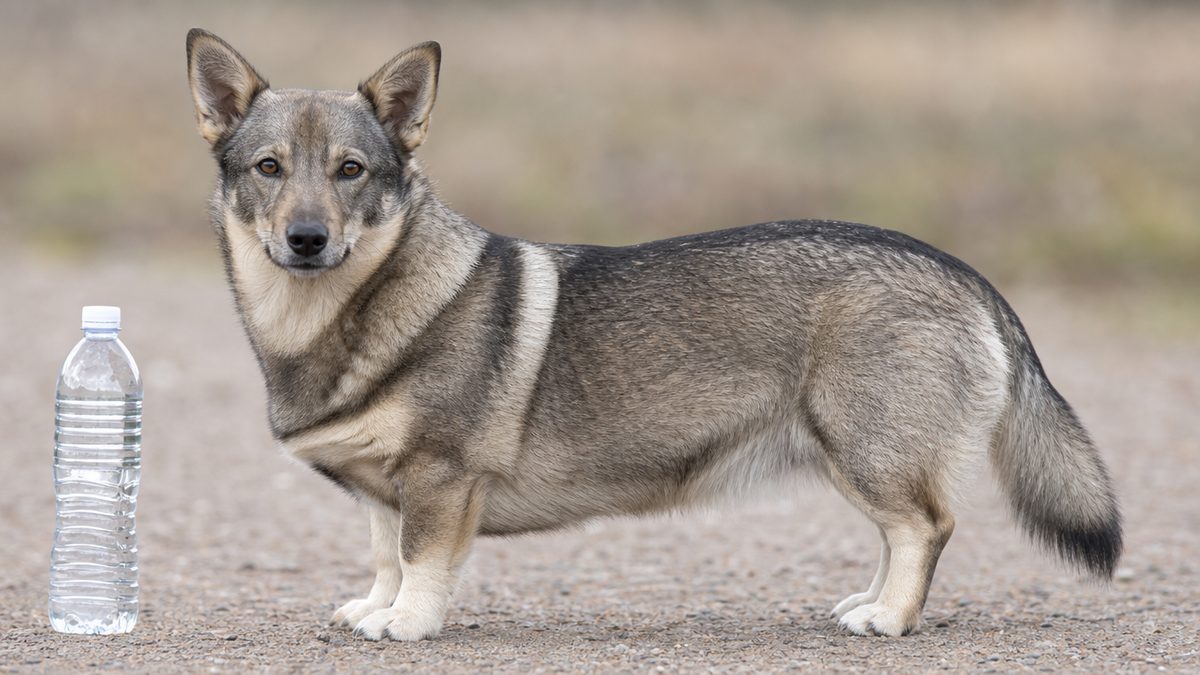
A 33 cm Swedish herding spitz with the lowest measured genetic diversity of any breed UC Davis has tested, a breed-specific retinopathy carried by most of the population, and no real Indian market.
Quick answer
The Swedish Vallhund has no established Indian price, because no verifiable Indian litter exists and the pages quoting rupee figures are running template cost rows. Budget roughly Rs 6,000 to Rs 9,000 a month to keep one in an Indian city. Ask any seller for the MERTK retinopathy DNA result first.
This page reports published veterinary research and registry data for general information. It is not a diagnosis and it is not a treatment plan. Screening decisions, vaccination timing, feeding amounts and any anaesthetic or eye-testing question for your own dog must be settled with a qualified veterinarian who has examined the animal. Consult your nearby vet before acting on anything here, and seek immediate veterinary attention if your dog shows sudden vision loss, collapse in heat, or signs of pain.
Swedish Vallhund at a glance
What the Swedish Vallhund is, and what its standard actually says
The Swedish Vallhund is a small, short-legged Nordic herding spitz recognised by the FCI as standard 14, filed in Group 5 Spitz and primitive types, Section 3 Nordic Watchdogs and Herders, and accepted on a definitive basis on 3 January 1954.
Sweden is the country of origin and English is the authentic language of the standard, which matters because it means the English text governs and no translation can be blamed for a figure you disagree with. The breed is not subject to a working trial. Its Swedish name is Vastgotaspets, after the province of Vastergotland where it was found, and the FCI also prints Vizigothic Spitz as an alternative English name.
The measurements, and the number the standard refuses to give
The standard sets an ideal height rather than a range. Males stand 33 cm at the withers and females 31 cm, with a tolerance of 2 cm above or 1 cm below those figures, which works out as 32 to 35 cm for a male and 30 to 33 cm for a female. The required proportion of height at withers to body length is 2:3, and the chest must reach no less than one third of the way to the ground.
The FCI standard gives no weight at all. That is not an oversight to be filled in from a listing site: the words size and weight head the section and only heights follow. Indian pages that print a confident kilogram range are supplying a number the governing standard declines to give, and puppiezo.com's 10 to 16 kg is an example. Where a weight is useful, as it is for dosing a parasiticide, weigh the animal.
| Point | FCI standard 14 | AKC standard, effective 2005 |
|---|---|---|
| Male height | 33 cm ideal, tolerance +2 and -1 cm | 12.5 to 13.5 inches, about 31.8 to 34.3 cm |
| Female height | 31 cm ideal, tolerance +2 and -1 cm | 11.5 to 12.5 inches, about 29.2 to 31.8 cm |
| White markings | Over 30 percent of base colour is a severe fault | Over one third of total colour is a very serious fault |
| Blue eyes | Disqualifying fault | Not named among the eliminating faults |
| Tail | Long, or any length of naturally short tail | Long, stub or bob, and may be shown docked |
| Dewclaws | Not mentioned | May be removed |
Two of those rows have consequences in India. The AKC standard says a tail may be shown natural or docked and that all tail types are equally acceptable, and it permits dewclaw removal. The FCI text describes only naturally occurring tails and never mentions docking. Indian law settles it: Second Schedule Part II paragraph 6(8) of the 2017 Rules forbids tail docking, de-clawing and any other kind of mutilation of any body part of the pup, in those words. A docked Vallhund is lawful in an American show ring and unlawful to produce in India.
Coat colour, and the marking you should check first
The coat colour is a sable pattern in grey, greyish brown, greyish yellow, reddish yellow or reddish brown, with darker guard hairs along the back, neck and sides, and lighter hair on muzzle, throat, chest, belly, buttocks, feet and hocks. The topcoat is of moderate length, hard and close-lying over a soft, very dense undercoat.
The harness markings are the feature to look for, not the colour. Lighter markings on the shoulders, which the standard calls harness markings, and light cheek markings are described as highly desirable, and their absence is listed as a fault. The AKC goes further and calls the harness markings essential. A dog sold to you as a Swedish Vallhund with a flat, unmarked coat is worth a second look.
The FCI disqualifies blue eyes and black, white, liver brown or blue coat colour outright. The breed's own Swedish breeding strategy explains why the rule is needed: it records that long-haired Vallhunds can be born, as can dogs of non-approved colour including black, white, liver brown and blue, and dogs with blue eyes, and it attributes this to other breed elements in the foundation stock. Bjorn von Rosen's own 1942 survey notes described the surviving farm dogs as obviously of mixed breed, not seldom with clear elements of collie blood. No published study has genotyped the merle locus in this breed, and UC Davis lists no merle test for it while it does sell this breed a natural bobtail test, a PRA-prcd test and coat-colour panels, so the honest position is that the colours occur and their genetic basis has not been established.
The genetics: the least diverse breed UC Davis has measured
The Swedish Vallhund retains about 7 percent of the genetic diversity still present in village dogs, which UC Davis calls the lowest amount found in any breed it has tested to date.
That figure comes from the Veterinary Genetics Laboratory's own report on 105 Swedish Vallhunds, updated 10 October 2019, which compares allele frequencies in the breed against a village-dog reference population from the Middle East, Southeast Asia, Taiwan and Pacific island nations. Most larger popular breeds have retained 40 percent or more. The report also notes that modern breeds are generally said to hold 87 percent of the diversity present when their registries closed, so if that holds here, the Vallhund's diversity was low at the founding and has not simply been squandered since.
What the numbers look like locus by locus
Across 33 short tandem repeat loci on 25 chromosomes, the mean number of alleles per locus is 4.909 and the effective number is 2.588, with observed heterozygosity 0.570 against an expected 0.568 and a mean inbreeding coefficient of -0.006. In plain terms, the breed has very few variants to work with, but breeders have been pairing the least related animals available, so the population is not additionally inbred on top of its narrow base.
Two internal inconsistencies in that report are worth knowing, because a careful reader will hit them. Its prose gives the mean allele count as 4.55 and the effective count as 2.57, while its own Table 3 gives 4.909 and 2.588. And the prose says allele numbers per locus vary from as few as three, naming AHTk211, while its own table lists REN247M23 with two alleles. Neither error changes the conclusion, and we quote the table rather than the summary.
How many dogs founded the breed, and why two documents disagree
Two current primary documents give different answers, and this is the clearest unsettled fact about the breed. The Swedish breed club's breeding strategy states the breed is based on 13 individuals, 3 males and 10 bitches. The UC Davis report describes a revival from four true-to-type dogs, one male called Mopsen and three females called Vivi, Lessi and Topsy, whose five offspring were the foundation.
The two rest on different evidence. The Swedish document is the national breed club writing about its own studbook. The UC Davis account cites Wikipedia, an AKC lifestyle article, the American breed club and a pet-information site for its history section, which is weaker provenance for a headcount even though the laboratory work around it is first-hand. We print both and follow neither, and note that the DNA result is compatible with either story, because a bottleneck of four and a bottleneck of thirteen closely related farm dogs both produce a narrow breed.
| Measure | Value | Source and denominator |
|---|---|---|
| Retained genetic diversity vs village dogs | 7 percent | UC Davis, 105 dogs, 33 STR loci |
| Major DLA class I haplotypes held | 4 of 6 | UC Davis, 105 dogs |
| Major DLA class II haplotypes held | 2 of 4 | UC Davis, 105 dogs |
| Internal relatedness, mean | -0.005, range -0.260 to 0.435 | UC Davis, 105 dogs |
| Dogs above the full-sibling equivalent | About one quarter, IR 0.085 to 0.435 | UC Davis, 105 dogs |
| Pedigree mean inbreeding | 27.02 percent | Jansson 2015, cited in the Swedish strategy |
| Mean kinship | 25.75 percent | Jansson 2015, cited in the Swedish strategy |
| Yearly inbreeding coefficient, 2012 to 2018 | 1.1 to 2.5 percent, mean 1.66 | SKK Avelsdata over 5 generations |
The pedigree figure is the one that startles people. A mean inbreeding coefficient of 27.02 percent is higher than the 25 percent produced by mating full siblings, measured across roughly 17 to 25 generations since the breed's founders. That is not evidence of reckless breeding. It is what happens when a whole population descends from a handful of related animals, and it sits alongside a yearly inbreeding coefficient averaging 1.66 percent, which shows current matings are deliberately wide.
UC Davis is explicit that the lack of diversity has not been a problem so far, because the founders happened to be healthy and were spared many of the simple and complex disorders present in other pure breeds. The practical risk is different and worth stating plainly: a breed this narrow has little room to absorb a new genetic disease, and it has already met one in the MERTK retinopathy. That is an argument for buying only from a breeder who tests, not an argument against the dog.
Swedish Vallhund price in India: there is not one, and here is the proof
No verifiable Swedish Vallhund price exists in India, because no verifiable Indian litter exists. Every rupee figure ranking for this query traces to a template, a house price point or a foreign cost guide.
We ran the query on DuckDuckGo with the India region set on 9 September 2026, with a Labrador Retriever control that returned ten genuine Indian Labrador pages in the same session. The Vallhund query returned real results, so the search worked. What it returned is the finding.
The number one result prints the Whippet's cost row
poodles.in ranks first for the Indian query and publishes a monthly cost band of Rs 3,550 to Rs 5,400 for the Swedish Vallhund, built from three lines: food Rs 2,250 to Rs 3,000, health Rs 600 to Rs 1,200 and grooming Rs 700 to Rs 1,200. Those sum exactly, 2,250 plus 700 plus 600 giving 3,550, and 3,000 plus 1,200 plus 1,200 giving 5,400.
We then pulled two control breeds from the same site. Its Whippet page prints all seven of those figures identically, to the rupee. The Whippet is a 47 to 51 cm sighthound and the Vallhund is a 33 cm herding spitz, and no honest costing puts them on the same food line. Its Pug page differs on food and health but repeats the same Rs 700 to Rs 1,200 grooming line, which places grooming as a site-wide constant and food and health as size-bucket presets. The Vallhund figure is therefore a template constant shared with named other breeds, not an observation about this dog.
The same page's spec card should be distrusted for the same reason. It labels the breed Medium Breed and prints an ideal weather band of 15 to 25 C, both of which recur across unrelated breeds on that site. A dog whose governing standard sets an ideal height of 33 cm is not a medium breed, and a size label propagates into food quantity, crate sizing and drug dosing advice.
The number two result sells no Vallhunds at all
puppiezo.com holds positions two and three and carries no Swedish Vallhund price. The five rupee figures on its Vallhund page are Rs 76,499, Rs 92,599, Rs 94,999, Rs 98,999 and Rs 1,20,000, and they belong to a carousel of animals named Fizey, Samy, Yoki, Kuzo, Dugu, Kazuka, Doir and Tugi. Counting the breed words on that page returns Maltipoo 30 times, Poodle 30, Goldendoodle 5, Rottweiler 4, Doxiepoo 3 and Cane Corso once. Not one animal offered on the page is a Swedish Vallhund. Rs 98,999 in particular is a house price point that Bonbeno has now recorded on more than ten breed pages of that one site, attached to whichever puppy is in stock.
| Figure | Where it appears | What it really is |
|---|---|---|
| Rs 50,000 to Rs 1,00,000 | poodles.in buying price | Round rupee-native band on a page whose cost row is a template |
| Rs 3,550 to Rs 5,400 a month | poodles.in running cost | Identical to the same site's Whippet row, to the rupee |
| Rs 98,999 | puppiezo.com carousel | House price point, attached to a Maltipoo on this page |
| Rs 76,499 / 92,599 / 94,999 / 1,20,000 | puppiezo.com carousel | Prices of named non-Vallhund puppies |
| No rupee figure at all | dogmatchup.com, hepper.com | US dollar cost guides ranking on an India query |
We ran the division tests on every one of those figures. Rs 5,400 divided by 84.38 gives 63.99, close to a round 64 dollars, but that is arithmetic noise rather than evidence: 5,400 is the sum of three preset rupee lines and the same row appears on the Whippet page. Rs 50,000 and Rs 1,00,000 divide cleanly at a flat 80 to 625 and 1,250, which proves nothing, because any figure ending in three zeros divides cleanly at 80 by construction, and no seller anywhere prices a dog at 625 dollars and its littermate at 1,250. These are round rupee-native numbers, not conversions.
There is no affordable route and no expensive route, because there is no route. Dogs are a Restricted import into India and applications to import for trading or breeding purposes are rejected, so no lawful commercial supply chain can form for a breed with no Indian breeding population. On recognition, the Kennel Club of India is the answer to a question buyers often ask badly. India is a full member of the FCI, represented by the Kennel Club of India in Chennai, so the KCI issues pedigrees against FCI nomenclature and the breed's FCI standard 14 is therefore the standard that would apply to any Indian-registered Vallhund. The KCI publishes no public breed list, so its silence on this breed is a limit of the instrument rather than evidence of non-recognition. If someone offers you a Swedish Vallhund puppy in India, the questions that matter are which registry the litter is recorded with, which parents were DNA tested for the MERTK retinopathy, and whether the dog is actually a Vallhund rather than a Corgi cross. Ask those before you ask the price.
Monthly cost of ownership in an Indian city
Keeping a 10 to 16 kg dog like this in an Indian metro costs roughly Rs 6,000 to Rs 9,000 a month once parasite control, food, vaccination amortised across the year and a municipal licence are counted. Every line below comes from a named Indian seller's own page, read on 9 September 2026.
The cost of ownership for a small double-coated dog is dominated by two things Indian buyers routinely underestimate, which are year-round parasite control and the electricity to keep the animal cool. It is not dominated by grooming, because this coat is brushed rather than clipped.
| Item | Price | Source and note |
|---|---|---|
| NexGard Spectra, 7.5 to 15 kg, 3 tablets | Rs 3,032, MRP Rs 3,093 | Supertails, so about Rs 1,011 a month for ticks, fleas and roundworm |
| Anti-rabies, single dose | Rs 699 | Vetic national page |
| 9-in-1 DHPPiL | Rs 899 | Vetic national page |
| Kennel cough | Rs 1,349 | Vetic national page |
| Adult annual booster course | From Rs 3,199 | Vetic, struck-through list price Rs 3,806 |
| Puppy course, first year | From Rs 6,499 | Vetic, struck-through list price Rs 8,111 |
| Bathing, salon | From Rs 934 | Vetic Delhi grooming list |
| Complete bath and styling | From Rs 1,869 | Vetic Delhi grooming list |
| Home boarding, Bengaluru | Rs 499 to Rs 899 per stay tier | PawSpace published plans |
| Delhi MCD pet dog registration | Rs 500, renewal Rs 500 | Municipal Corporation of Delhi |
| Chennai GCC pet licence | Rs 50 | Greater Chennai Corporation |
| Microchipping, Chennai | Rs 1,250 | SKS Veterinary Hospital, clinic's own transacted price |
Getting the parasite dose band right
Buy the 7.5 to 15 kg pack, not the 15 to 30 kg one. This is a small dog and most adults will sit inside that band, so the relevant figure is Rs 3,032 for three tablets, about Rs 1,011 a month. The larger pack that most Indian cost articles quote costs Rs 3,308 and would be a dosing error as well as an overspend. Neither price divides cleanly at 84.38, 80 or 74, so these are rupee-native figures rather than converted dollar prices.
Two lines in that table come from sources worth naming separately, because they are the ones Indian cost articles most often omit. PawSpace publishes its Bengaluru home-boarding tiers openly rather than on request, and the Chennai microchipping figure of Rs 1,250 is a clinic's own transacted price rather than a general range. Parasite control is not optional here and the Indian literature is why. A West Bengal study of 584 dogs screened at veterinary clinics found Babesia gibsoni in 76.54 percent and reported that 72.9 percent of the 584 dogs screened carried two or more pathogens. A southern Indian study of 120 dogs found Babesia in 66.7 percent, with a pre-monsoon peak between March and May. Both sampled clinically suspected dogs or clinic caseloads rather than random populations, so read them as the burden among dogs brought to a vet, not as a national prevalence. Even discounted for that, the tick pressure is nothing a Swedish dog's ancestors met.
What the ranking pages get wrong about running cost
The Rs 3,550 to Rs 5,400 band on the top-ranking Indian page is too low and is not about this breed anyway, as the price section shows. Our band is higher for three reasons: it prices the correct parasite pack, it spreads a real Rs 3,199 annual booster across twelve months, and it includes the municipal licence that Indian cost articles almost never mention.
- Budget Rs 1,011 a month for combined tick, flea and worm cover, every month of the year.
- Budget Rs 270 a month as the amortised share of a Rs 3,199 annual booster.
- Budget Rs 42 a month for a Delhi registration renewal, or Rs 4 in Chennai.
- Budget the rest for food, which is the largest and most variable line.
- Budget separately for electricity, because cooling is a real cost for a double-coated northern dog in India.
Greater Chennai Corporation licenses pet animals at Rs 50, and its six municipal veterinary clinics provide treatment and anti-rabies vaccination free of cost. For an owner in Chennai that removes the single most repeated recurring line from the budget entirely, and it is a better fact than any breed price we could have quoted.
Heat tolerance: what a Swedish farm dog meets in an Indian city
The Swedish Vallhund's homeland averages 7.16 C across the year and 18.01 C in its warmest month, so an Indian metro presents it with heat it has no evolutionary experience of. The threat is heat, not humidity, and that distinction changes what you should actually do.
We queried NASA POWER by explicit latitude and longitude for Vara in Vastergotland, the district where the breed was found in 1942, at 58.2617 N and 12.9578 E. The model returned a cell elevation of 74.57 m against a real town elevation near 58 m, an error of about 17 m, so the cell describes the town and the figures are usable. A second Vastergotland point at Skara returned a different cell at 122.29 m, an error of about 12 m, which confirms the terrain is not being flattened into a single square.
| Place | Annual mean C | Warmest month | Annual humidity percent | Peak wet bulb C |
|---|---|---|---|---|
| Vara, Vastergotland | 7.16 | July, 18.01 | 85.71 | July, 15.17 |
| Delhi | 25.60 | June, 35.88 | 45.56 | July, 26.50 |
| Chennai | 27.95 | May, 31.51 | 72.39 | May, 26.11 |
| Mumbai | 26.77 | May, 31.19 | 67.39 | June, 25.77 |
| Bengaluru | 23.74 | April, 28.37 | 67.94 | May, 21.86 |
| Kolkata | 25.81 | May, 31.53 | 73.93 | June, 27.09 |
| Hyderabad | 26.10 | May, 33.30 | 60.30 | June, 23.35 |
The humidity warning everyone gives is the wrong warning
Vara runs an annual relative humidity of 85.71 percent, which is higher than Chennai at 72.39, Mumbai at 67.39, Bengaluru at 67.94 and Delhi at 45.56. A Swedish farm in Vastergotland is a damp place. So the standard line that Indian humidity will finish a northern breed is simply false for this dog, and repeating it sends owners to the wrong intervention.
What the Vallhund has never met is heat, and heat combined with moisture. Its peak wet-bulb load at home is 15.17 C in July. Chennai's peak is 26.11 C in May, Delhi's 26.50 C in July, and even Bengaluru, the mildest large Indian city, reaches 21.86 C. Kolkata is worse still at 27.09 C in June, and Hyderabad, which many buyers assume is dry, still reaches 23.35 C. The gap of nearly eleven degrees of wet bulb is the number that matters, because wet bulb is what limits a dog's ability to shed heat by panting. Maharashtra and Tamil Nadu buyers should read the Mumbai and Chennai rows rather than the Bengaluru one.
Kolkata and Hyderabad are added above from cells checked the same way, at errors of about 2 m and 41 m against their real elevations, so both describe the city rather than the terrain behind it. Two Indian cities are worth naming precisely, because their peaks land where owners do not expect. Delhi is hottest in June at 35.88 C rather than May, and Bengaluru is hottest in April at 28.37 C and coolest in December rather than January. Planning a summer routine around May in Delhi gets the worst month wrong.
What to actually do
- Walk before sunrise and after dark from March to June, and treat any midday walk on hot ground as off-limits.
- Keep the dog indoors on hot afternoons, because Indian law bars keeping a dog that cannot tolerate local temperatures in an outdoor facility without the attending veterinary practitioner's written approval.
- Provide constant shade and water, and a hard cool surface to lie on rather than a padded bed.
- Plan for power cuts, because a cooling plan that depends on a fan or air conditioner fails during load shedding.
- Never shave the coat, and read the grooming section for why.
Second Schedule Part IV paragraph 21(1) of the 2017 Rules is the clause that applies, and it names three categories that must not be kept in outdoor facilities without written veterinary approval: dogs not accustomed to the temperatures prevalent in the area, breeds that cannot tolerate them such as long-haired breeds in high temperature locations, and sick, infirm, aged or young animals. A Nordic double-coated breed in Chennai is squarely inside the second category.
The English Wikipedia article states that the breed does well in hot climates because of its double layer coat, as long as the dog is provided cool shade and water. That sentence carries no citation at all in the article's own wikitext, while the sentences around it are individually sourced. It is the single most consequential claim about this breed for an Indian buyer and it rests on nothing. The coat does help against radiant heat, which is a real and often-missed point, but a coat that evolved for an 18 C July is not a reason to relax about a 35.88 C June.
Hall 2020 in Animals is the best available evidence on what actually triggers canine heat illness, and it is not what most owners assume. Of 879 heat-related illness events with a recorded trigger in a cohort of 905,543 UK dogs, 652, or 74.2 percent, were exertional, against 113 environmental and 46 from vehicular confinement. The breed itself was not separately modelled in that study, so we claim no Vallhund-specific odds ratio. The transferable lesson is that the danger is the walk you take, not the car you left them in.
Temperament and household fit: a loud dog in a small body
The Swedish Vallhund is watchful, energetic, fearless and alert by its own standard, and it is genuinely loud. Noise, not size or coat, is the reason most Vallhunds fail in Indian apartments.
The FCI standard's behaviour clause is four words long: watchful, energetic, fearless and alert. The AKC adds intelligent, friendly, eager to please, active and steady, and requires a sound temperament that is neither vicious nor shy. The Swedish breed club describes the typical character as watchfulness, energy and confident liveliness, in a dog that is easy to teach, loyal to its family, uninterested in strangers and content to stay on its own property.
The barking is the breed, not a training failure
This dog works cattle by barking and nipping at the hock, and the Swedish club describes exactly that working method. A herding instinct expressed through voice does not switch off because you moved to a flat in Pune. You can teach a reliable quiet cue and you can reduce the triggers, but you cannot make this a quiet breed, and anyone selling you one as an easy apartment dog is not describing the animal.
The nipping half matters as much in an Indian household. A heeler drives stock by moving in on heels, and small running children present the same stimulus. That is not aggression and it is not a fault in the dog, but it is a management job from the first week.
Who this breed suits
- Suits an owner who wants a small dog with a real working brain and will give it a job.
- Suits a ground-floor or independent house where barking does not travel through a shared wall.
- Suits a household that walks at dawn and dusk by habit rather than as a summer concession.
- Suits an owner who will socialise a naturally aloof dog with strangers and other animals early.
- Does not suit a first-time owner who wants a calm companion and has heard the word spitz and imagined an Indian Spitz.
- Does not suit a high-rise flat with immediate neighbours and a strict society noise policy.
- Does not suit a home where the dog will be alone all day, because an under-worked heeler invents work.
- Does not suit anyone buying on looks after seeing a Corgi and being offered something cheaper.
Sound sensitivity is a recorded issue in the breed rather than a general dog-owner worry. The Swedish club records that sound sensitivity and gunshot reactivity occur, and states that extremely gun-shy dogs must not be used for breeding. In India that translates directly to Diwali, to construction, and to the horns of any main road. Ask a breeder what the parents are like in noise, and plan a quiet interior room before your first festival season.
Between 1997 and 2018, 300 Swedish Vallhunds completed the Swedish Kennel Club's mentalbeskrivning hund assessment, and 171 had completed the newer BPH behaviour and personality description by 2018. The breed club says plainly that no compiled summary of those results exists yet and that it wants to build a breed profile from them. So the temperament picture above rests on the standards, the club's own description and its working-instinct testing, not on a published behavioural dataset. Where a number does not exist we would rather say so.
Training: what works, and the two instincts you have to redirect
Train a Swedish Vallhund with short, food-paid, problem-solving sessions, and spend the first six months redirecting two hardwired behaviours, which are barking to move things and nipping at heels.
The breed is quick to learn and eager to please, which sounds easy and is not, because a dog that learns quickly learns the wrong thing quickly too. A Vallhund that discovers barking makes the delivery rider go away has just been reinforced by the world, and it will repeat the experiment daily.
The herding instinct is measurable, and about half the breed has it strongly
The Swedish breed club runs its own herding aptitude tests with assessors it trains itself. Across 1994 to 2013 it recorded 879 tests on 756 individual dogs, an average of 22 percent of all registered Vallhunds in that period, and found that 52 percent had good, very good or excellent herding aptitude while 48 percent had none or less good aptitude. That near half-and-half split is genuinely useful for a buyer, because it means the strength of the instinct is not a given and you can ask what the parents scored.
A workable first-year plan
- Start a quiet cue in week one, paying silence rather than punishing sound, before barking becomes self-rewarding.
- Teach an incompatible behaviour for heel-nipping, such as running to a mat, and use it every time children run.
- Socialise deliberately with strangers, because the standard describes a dog uninterested in people outside its family.
- Build noise tolerance early and gently, given the recorded sound sensitivity in the breed.
- Add scent work or trick chains by month four, because this dog needs a job more than it needs a longer walk.
- Train in the cool hours only, since heat ends a session's usefulness long before the dog looks tired.
Keep sessions to five or ten minutes and end while the dog still wants more. A Vallhund is trainable to a level that surprises people who expect a stubborn spitz, and it competes in agility, obedience, rally, tracking and herding events. What it resists is repetition without purpose, which reads to it as a reason to invent something better.
Do not train on hot ground. Paw pads burn on Indian tarmac and concrete well below the air temperatures that feel survivable to a person in shoes, and a dog that associates training with pain stops offering behaviour. Move the session indoors onto a hard cool floor between March and June, which also suits a breed that would rather solve a puzzle than jog.
Daily exercise needs, and what happens without them
Plan about an hour of activity a day for an adult Swedish Vallhund, split into two cool-hour sessions, with at least a third of it being mental work rather than walking.
One Indian listing page puts the exercise routine at 45 to 60 minutes a day, and for once that is a reasonable figure, although it sits on a page that sells no Vallhunds. The important qualification is that a herding dog's exercise needs are not satisfied by distance. An hour of lead walking leaves a Vallhund physically tired and mentally unemployed, which is the state in which it starts managing your household.
What under-exercise looks like in this breed
- Barking at every sound in the stairwell, which is the default job a bored watchdog gives itself.
- Herding the family, expressed as circling and heel-nipping when people move quickly.
- Resource guarding of doorways and sofas, because a dog with no job takes on security.
- Destructive chewing in the hours the household is out.
An Indian weekly pattern that works
Split the hour rather than taking it in one block, because heat makes a single long session unsafe for most of the Indian year. A workable pattern is 30 minutes before sunrise, 20 minutes after dark, and 10 to 15 minutes of scent games, food puzzles or trick chains indoors during the day. In the April to June peak, shift almost all of the physical work into the pre-dawn slot and lean harder on indoor work.
This dog is built to move. The standard requires sound movement with good reach and drive, and calls for agility and endurance in a herding dog. The short legs are not a limitation on stamina, and a fit Vallhund will out-last most owners on a cool-weather trek.
Do not exercise this dog hard in the heat. Hall 2020 found that 652 of 879 heat-related illness events with a recorded trigger, 74.2 percent, were exertional, so the walk itself is the commonest cause of canine heat illness rather than a hot car. In an Indian April, an enthusiastic dog that will not stop is a risk factor rather than a reassurance, because this breed does not self-regulate well when it is working.
Grooming and coat care in Indian humidity
Brush a Swedish Vallhund thoroughly once or twice a week, more during the two annual coat drops, and never clip or shave the double coat. Grooming this breed is a brush and a bin bag, not a salon appointment.
The coat is a topcoat of moderate length, hard, tight and lying close to the body, over an undercoat that is soft and very dense. The hair is short on the head and the front of the legs and longer on the neck, throat, chest and the back of the hind legs. A soft coat, a stand-off coat, a coat that is too short or too long, and a lack of undercoat are all listed as severe faults, which tells you the club is defending a specific working coat rather than a look.
Why you must not shave it
The undercoat is the insulation and it works in both directions. It slows radiant heat reaching the skin, and it holds the still-air layer that lets the dog manage its own temperature. Clip it off and you expose skin to Indian sun, remove the buffer against radiant gain, and often get a coat that never grows back correctly. A dog that sheds heat mainly by panting does not benefit from having its coat removed, because dogs do not sweat through the skin the way people do.
The AKC standard is explicit that dogs are to be shown in an untrimmed, natural state, and lists woolly, curly or open coats as faults with fluffy coats as a serious fault. So a groomer who wants to scissor a Vallhund into shape is working against the breed as well as against its heat management.
A realistic Indian grooming routine
- Brush twice a week year-round with a slicker and an undercoat rake, and daily during a coat drop.
- Bathe rarely, roughly every six to eight weeks or when genuinely dirty, using a mild shampoo.
- Dry the dog properly after every bath and after monsoon walks, especially the ear canals and the dense ruff.
- Check between the pads for grass seeds and tar, which is where a low-slung dog collects things.
- Check the ears weekly, because a dense coat plus monsoon damp is a predictable otitis setup.
The ear point deserves emphasis for India. Overseas breed clubs routinely tell owners to towel a dog off and let it air dry, which is sound advice in a Swedish autumn and poor advice in a Mumbai monsoon. This breed has prick ears, which helps a great deal and is the reason Wikipedia's claim that ear problems are rare is broadly fair, but an open ear canal that stays damp for hours is still an ear canal that stays damp.
Grooming cost is where an Indian owner saves real money on this breed. A salon bath in Delhi starts at Rs 934 and a complete bath and styling at Rs 1,869, and the styling is exactly what this coat should not have. Buy a good rake once and you have replaced most of the line. That is why the template cost row's grooming figure of Rs 700 to Rs 1,200 a month is not merely borrowed from a Whippet page, it is the wrong shape of cost for the breed.
Expect two heavy coat drops a year and constant light shedding in between. In an air-conditioned Indian flat the seasonal cues blur, and many northern breeds shed moderately all year instead of dropping cleanly twice. Plan for that rather than being surprised by it, and keep the grooming outdoors or on a balcony.
Health risks, screening and life expectancy
The Swedish Vallhund is a long-lived breed with one serious inherited disease. McMillan 2024 gives a median survival of 14.0 years and a hazard ratio of 0.65 against crossbreds, while a MERTK-linked retinopathy runs through most of the population and has a DNA test.
Life expectancy, from the study rather than from a pet-food page
McMillan 2024 includes this breed, and finding that took a spelling correction: the study's supplementary tables file it as Swedish Valhund with one L, so a correctly spelled search returns nothing. Table S3 gives 61 dogs, 22 deaths, a median survival of 14.0 years with a lower 95 percent confidence bound of 12.5 and no upper bound reached, and a hazard ratio of 0.65 (0.43 to 0.99) at p 0.04 against the crossbred group. Table S5 confirms it was included in the survival analysis, classed KC Pastoral group, FCI Spitz and primitive types, body size Small.
A hazard ratio below 1 with a confidence interval that clears 1 is worth pausing on, because it means this breed's risk of early death was significantly lower than crossbred dogs, which is the opposite of the usual purebred result. The sample is small at 22 deaths, so treat it as a real but lightly evidenced finding.
The breed club's own 2018 health survey agrees in direction. Of 117 dead dogs in a survey of 772, 10 (8 percent) died aged 1 to 4, 29 (25 percent) at 5 to 9, 63 (54 percent) at 10 to 14 and 15 (13 percent) at 15 or more, and 518 of the 772 dogs (67 percent) were entirely healthy up to the survey. Wikipedia and the UC Davis report both state an average lifespan of 15 years; Wikipedia sources that to a pet-food brand's breed gallery, and the survey data above does not support it as an average. We follow McMillan's 14.0-year median and print the disagreement.
Swedish Vallhund retinopathy, the one disease that decides a purchase
Swedish Vallhund retinopathy is a breed-specific progressive retinal atrophy. Cooper 2014 described it from 324 dogs examined in seven countries across three continents, finding 113 affected, an estimated prevalence of 34.9 percent, with multifocal red and brown discoloration of the tapetal fundus that progresses to retinal thinning. Electroretinography showed gradual loss of both rod and cone function at stages 2 and 3, with night blindness appearing first in late stage 2 and reduced day vision in stage 3. Pedigree analysis indicated simple autosomal recessive inheritance, and six known canine retinal degeneration genes and vitamin E deficiency were excluded. That paper carries a published correction, which changes none of the figures quoted here.
Ahonen 2014 mapped it to canine chromosome 17 and found MERTK expression six times higher in affected retinas. Everson 2017 then identified the variant: a 6 to 8 kb LINE-1 retroelement inserted into intron 1 of MERTK, absent from whole genome sequences of 49 dogs of other breeds, with a pooled odds ratio of 23.41 (10.99 to 49.86) across 73 cases and 186 controls at p 1.3 x 10⁻²⁷.
| Programme | Finding | Denominator |
|---|---|---|
| Cooper 2014, seven countries | 34.9 percent affected | 113 of 324 dogs examined |
| Swedish eye screening, 2000 to 2018 | 13 percent affected | 74 of 552 dogs screened |
| US CERF examinations, via UC Davis | 10 percent diagnosed | Share of CERF examinations |
| DNA and hereditary results, worldwide | 69 percent carry an allele | 594 of 861 dogs tested |
Those four figures are not in conflict once you read the denominators. The carrier rate of 594 of 861, or 69 percent, is the one that explains the rest: in a recessive disease this widespread, how many dogs look affected depends entirely on which dogs are examined and at what age, and the age of onset is variable. The Swedish figure of 74 of 552 counts a national screening programme; Cooper's 34.9 percent counts dogs presented for a study of the disease. Note also that the Swedish and American programmes disagree on rank order: PPM was the commonest hereditary eye finding in the CERF data at 15 percent, while in the Swedish data PPM was 12 of 552 at 2.2 percent and retinopathy led.
The Swedish breed club describes the retinopathy as mild in most affected dogs, with development usually stopping at an early stage and the dog showing no symptoms of impaired vision. UC Davis notes the disorder is not caused by any of the seven known canine PRA mutations and is diagnosed by ophthalmoscopic examination by a specialist. A marker test was produced in 2014 following Ahonen and a more specific DNA test in 2018 following Everson, so this is a disease you can test your way around rather than one you have to gamble on. Discuss testing and any vision change with your nearby vet.
The rest of the health issues, with real numbers
Hip dysplasia occurs but rarely causes clinical trouble. Swedish screening of 463 dogs returned grade A in 143 (31 percent), B in 182 (39 percent), C in 115 (25 percent), D in 22 (5 percent) and E in 1 (0.2 percent), so 70 percent sit at A or B, and about 32 percent of the population is hip-screened. The club's own cross-tabulation of hip grade against reported hip problems is worth one correction: it prints 1 of 169 grade-A dogs as 0.06 percent, when 1 of 169 is 0.6 percent. The pattern it describes still holds, and the other four rows reconcile exactly.
The 2018 survey's disease list, by frequency among 772 dogs, runs retinopathy 13 percent, skeletal and joint problems 12 percent, pyometra 9 percent of bitches, cataract 7 percent, prostate problems 7 percent of males, tumours 7 percent, then allergy, arthrosis, disc herniation, hip problems, cruciate injury and urinary stone at 2 to 3 percent each, with epilepsy at 1.3 percent. Two rarer findings exist in the literature: a first report of tapetal dysplasia in a 15-year-old male Vallhund, and two Swedish Vallhunds among four animals in a case series of concurrent dermoid sinus and spina bifida.
The bobtail: about half the breed, and a lethal double dose
About half of all Swedish Vallhund puppies are born with a natural bobtail, and the allele that causes it kills embryos that inherit two copies. That single fact governs how the breed is bred and what a buyer should ask.
The Swedish breed club counted it directly. Between 2012 and 2018, 727 bobtailed and 711 long-tailed puppies were born, so the split is close to even. A Vallhund can be born with anything from a full tail to almost none, and even a dog with no visible tail still has two to four tail vertebrae. Complete absence of tail vertebrae, or anury, does not occur in this breed. The FCI standard accommodates all of it, permitting long tails and every length of naturally short tail, with no norm for carriage.
The mutation, and what homozygosity does
The cause is the C189G mutation in the T-box transcription factor gene T, the same variant first described in bobtailed Pembroke Welsh Corgis. Hytonen 2009 tested 23 further breeds, 360 dogs including 156 natural short-tails, and found the mutation in 17 of them with a perfect correlation to the short-tail phenotype, while 6 breeds carried neither it nor any other coding change in T. Crucially, no dog in the entire study was homozygous, which is why the double dose is presumed lethal before birth.
Two sources, two figures, one honest reading
Hytonen 2009 reports that in the Swedish Vallhund specifically, litter size fell by 29 percent when both parents were short-tailed. The breed club's own figures for 1990 to 1996 compare 385 puppies from two bobtailed parents against 361 from parents where only one was bobtailed, and report the only real difference as 1.38 fewer puppies per litter from the bobtail-to-bobtail pairings.
Those two figures agree rather than conflict. Against the breed's average litter of about 4.5 to 4.8 puppies, a loss of 1.38 is close to 29 percent, so the club's count and the paper's percentage describe the same effect, with slightly different comparison groups. Print both and the reader can check the arithmetic.
Where the two genuinely part company is the conclusion. The club states that several countries prohibit mating bobtail to bobtail, says it does not consider there is established evidence that such a ban is needed, and recommends only that a completely tailless dog should not be mated to another bobtailed dog as a precaution. The peer-reviewed position is that homozygosity is presumed lethal. Both are on the record and a buyer should know the breed club and the literature are not saying the same thing.
A bobtail is not a defect, a docking, or a sign of poor breeding, and the club actively wants the allele preserved, recommending that one dog in each breeding combination should carry a congenital bobtail. What it does mean is that a litter advertised as all-bobtail from two bobtailed parents has probably lost puppies you were never told about. Ask what both parents' tails are, and ask the litter size. And be clear that a short tail in an Indian-bred dog must be congenital: docking is prohibited under Second Schedule Part II paragraph 6(8) of the 2017 Rules.
Feeding and nutrition for a small, long-backed working dog
Feed a Swedish Vallhund to a lean body condition above everything else, because a long back on short legs makes every extra kilogram a spinal and joint cost rather than a cosmetic one.
Weight control is the whole nutrition strategy for this breed, and it is not a general platitude. The Vallhund carries the chondrodysplasia mutation that shortens the legs and lengthens the back. A long spine with short supporting limbs is a lever, and body weight is the load on it. You should be able to feel the ribs easily under a thin covering and see a waist from above.
How much, and why we will not print a gram figure
The FCI standard gives no weight for the breed at all, so any daily gram figure derived from a breed weight is derived from a number the governing standard declines to state. Feed to the pack's chart for your dog's actual measured weight, then adjust by body condition every fortnight for the first year. Adult Vallhunds commonly sit somewhere around 9 to 16 kg, but weigh yours rather than assuming.
One ranking Indian page prints a calorie line of 1,200 and 600 kcal a day for this breed, on the same page whose monthly cost row is copied from its Whippet page. Treat that figure the way you would treat the cost row.
Practical Indian feeding notes
- Split the day's ration into two meals, and feed the larger one in the cool of the evening.
- Feed the cooler part of the day in summer, because a dog that is heat-stressed eats badly and then binges.
- Store kibble in an airtight container away from humidity, since Indian monsoon damp turns an open bag rancid faster than most owners expect.
- Keep treats inside the daily calorie budget, which matters more in a training-heavy breed that is paid in food.
- Add water to dry food in hot months to lift total fluid intake.
Puppy feeding follows the standard small-breed pattern of four meals a day to about four months, three to about six months, then two. There is no breed-specific Indian feeding literature for the Swedish Vallhund and we are not going to invent one. Discuss any growth or diet plan with your nearby vet, who can weigh the dog and score its condition properly.
This is a hardy farm dog by history and by its own club's description, and owners often read that as licence to be casual. The health survey behind that reputation also records skeletal and joint problems in 12 percent of 772 dogs and back problems in 5 percent, with disc herniation the commonest of the back findings. Lean body condition is the cheapest intervention available against both.
Month by month through the first year in India
Plan the first year around three fixed points: the eight-week legal floor on sale, the vaccination course, and the arrival of the first hot season, whenever that falls relative to the puppy's age.
| Age | What matters most | India-specific note |
|---|---|---|
| Before 8 weeks | The puppy stays with its litter | Rule 8(1)(a) of the 2017 Rules forbids selling a pup under eight weeks |
| 8 to 10 weeks | Home settling, crate, name, toilet routine | Vaccination course starts; Vetic prices a puppy course from Rs 6,499 |
| 10 to 14 weeks | Socialisation window, people, surfaces, sounds | Introduce festival-level noise gently, given recorded sound sensitivity |
| 3 to 4 months | Quiet cue and anti-nipping work begin in earnest | Train indoors on cool floors if this falls in March to June |
| 4 to 6 months | Lead manners, recall, first real problem-solving games | Register with the municipality; Delhi charges Rs 500, Chennai Rs 50 |
| 6 months | Sterilisation discussion with your vet | Rule 8(1)(b) bars sale of a dog over six months that is not sterilised |
| 6 to 9 months | Growth plateau, watch body condition closely | Do not add distance work in the hot months |
| 9 to 12 months | Adult exercise pattern, first eye examination | Ask for the MERTK retinopathy result if you have not already |
The two things to do that most Indian owners skip
Book a specialist eye examination rather than relying on a general check. The retinopathy is diagnosed by ophthalmoscopic examination by a qualified veterinary specialist and shows as multifocal discoloration of the tapetal fundus long before an owner notices any vision change. A DNA result from the parents is better still, and if the breeder cannot produce one, the puppy's own test is the fallback.
Get the municipal paperwork done in the first six months. Delhi's MCD registers pet dogs at Rs 500 with the same fee at renewal and a Rs 100 per month late fee, and Greater Chennai Corporation licenses pet animals at Rs 50. Chennai also runs six veterinary clinics that provide treatment and anti-rabies vaccination free of cost, which is worth building the first-year plan around if you live there.
A seller offering a puppy before eight weeks is breaking Rule 8(1)(a) of the Prevention of Cruelty to Animals (Dog Breeding and Marketing) Rules 2017, and an early-separated puppy from a breed with recorded sound sensitivity is a poor bet behaviourally as well. The same Rules require breeding dogs to have been tested for genetic defects including progressive retinal atrophy and hip dysplasia, so a breeder cutting one corner is worth asking about the others.
Swedish Vallhund against the breeds Indian buyers cross-shop
Most people considering a Swedish Vallhund in India are really choosing between it and a Corgi, and the decisive difference is a single retrogene rather than anything visible in the show ring.
| Breed | McMillan median lifespan | Deaths in study | Hazard ratio vs crossbred | Second FGF4 retrogene |
|---|---|---|---|---|
| Swedish Vallhund | 14.0 years | 22 | 0.65 (0.43 to 0.99), p 0.04 | Absent, per UC Davis |
| Cardigan Welsh Corgi | 13.1 years | 69 | 0.69 (0.55 to 0.88), p under 0.01 | Present |
| Pembroke Welsh Corgi | 13.2 years | 221 | 0.72 (0.63 to 0.82), p under 0.001 | Present |
| Finnish Lapphund | 13.8 years | 23 | 0.77 (0.51 to 1.16), p 0.21 | Not applicable |
The retrogene, and why it is the whole argument
Brown 2017 identified an FGF4 retrogene on canine chromosome 12 that is responsible for chondrodystrophy and intervertebral disc disease, and measured an odds ratio of 51.23 (46.69 to 56.20) for intervertebral disc disease in dogs carrying it. UC Davis states that the Swedish Vallhund carries the chondrodysplasia mutation that shortens the legs and lengthens the back but lacks that second retrogene, which the Corgi has, and adds that this asymmetry suggests the Welsh Corgi descended from the Vallhund rather than the reverse.
Two honest qualifications belong with that. Brown 2017 does not name the Swedish Vallhund, so the breed-specific half of the claim rests on UC Davis alone rather than on the primary genetics paper. And the Swedish breed club, citing the same UC Davis work, notes that the breed nonetheless still reports back problems in 5 percent of surveyed dogs, so lacking the retrogene reduces the risk rather than removing it. UC Davis itself warns breeders not to introduce the second mutation by crossing toward Corgi type.
Choosing between them in an Indian household
- Choose the Vallhund for a longer median lifespan, a lower measured back-disease risk and a lighter, less exaggerated frame.
- Choose a Corgi if availability decides it, because a Corgi can actually be found in India and a Vallhund essentially cannot.
- Choose neither if the household cannot tolerate a barking dog, because both are vocal heelers.
- Choose an Indian Spitz if what appealed was a small, alert, pricked-ear northern-looking dog that copes with the climate.
That last option deserves more respect than it usually gets. A buyer drawn to a small, watchful, prick-eared spitz can have one that is available, affordable, acclimatised and not carrying a 69 percent retinopathy allele frequency. The honest comparison is not only Vallhund against Corgi, it is imported rarity against a dog you can meet this week.
Mistakes Indian owners actually make with this breed
Six mistakes account for most Swedish Vallhund problems in India, and five of them are made before the dog arrives.
- Buying on a quoted Indian price. The two highest-ranking Indian pages publish a template cost row and a house price carousel respectively, so a rupee figure is not evidence a dog exists.
- Assuming a Corgi-like dog is a Corgi. The two breeds differ on the retrogene that drives disc disease, and an Indian seller offering a cheap Corgi alternative may be offering a cross.
- Skipping the MERTK retinopathy question. With 594 of 861 tested dogs carrying at least one allele, this is the first question, not a technicality.
- Shaving the coat for summer. The undercoat is insulation against radiant heat, and removing it makes the dog hotter and burns skin.
- Underestimating the noise. This is a herding breed that works by barking, and a shared-wall flat is where that becomes a housing dispute.
- Exercising in the heat because the dog seems willing. Exertional triggers accounted for 652 of 879 heat-illness events with a recorded trigger.
The mistake that is really a sourcing failure
Docking deserves separate mention because it sits at the junction of a standard and a law. The AKC standard permits a docked tail and treats all tail types as equally acceptable, while about half of Vallhund puppies are born with a natural bobtail anyway. In India, Second Schedule Part II paragraph 6(8) of the 2017 Rules forbids tail docking outright, along with de-clawing and any other kind of mutilation of any body part of the pup. So a short-tailed puppy in India should be short-tailed because of the T-box allele, and an owner should ask which it is.
The mistake this site has watched an answer engine make
Do not accept a rupee band from an AI summary. Bonbeno has repeatedly documented answer engines stating that no Indian price exists for a rare breed and then printing a confident rupee band derived by dividing a foreign asking price, and in one case quoting a figure from a page whose raw markup contains no rupee figure at all. For this breed, the figures in circulation are a template sum and a Maltipoo's price. Trace any number to the page it came from, then check what that page is actually selling.
Ask for the litter's registration, the parents' MERTK retinopathy DNA results, a current eye certificate and hip scores, and the import paperwork for whichever parent came from abroad. Dogs are a Restricted import into India and applications to import for trading or breeding purposes are rejected, so a commercially bred Indian Vallhund line has no lawful origin story. A seller who cannot answer those questions is selling you something else.
Adoption and responsible sourcing
Adopt rather than import, because there is no lawful commercial route to a Swedish Vallhund in India and the traits that drew you to the breed are available in dogs already waiting in Indian shelters.
Start from the legal position. Dogs enter India as a Restricted import, and applications to import for trading or breeding purposes are rejected, which leaves a genuine relocating owner's pet, defined research and defence or police use as the only routes. That is why no Indian Vallhund market exists, and it is a better reason than rarity for treating any Indian offer with suspicion.
What to look for instead
The Vallhund's appeal is a small, alert, watchful, pricked-ear dog with a working brain and a hardy constitution. Indian shelters and municipal pounds are full of small to medium desi dogs that match that description and are already adapted to the climate you actually live in. Greater Chennai Corporation's six veterinary clinics provide treatment and anti-rabies vaccination free of cost, which lowers the running cost of an adopted dog further.
- Contact your city's established shelters and rescue networks first, and ask specifically for a small, high-energy, people-oriented dog.
- Ask any rescue for the dog's noise tolerance and its behaviour around running children, since those are the two Vallhund-shaped traits that matter.
- Register the adopted dog with your municipality, at Rs 500 in Delhi or Rs 50 in Chennai.
- Budget the same Rs 1,011 a month for parasite control, because tick-borne disease does not care about pedigree.
- Have a specialist eye examination done if you adopt any dog with a suspected spitz or herding background and unexplained night-time hesitancy.
If you are determined to have this specific breed
Work through the breed's own institutions rather than a marketplace. The breed is held by Specialklubben for Vastgotaspets under the Swedish Kennel Club, which publishes its breeding strategy openly, requires a maximum inbreeding coefficient of 6.25 percent for puppies advertised on its own puppy pages, and recommends that breeding animals should not leave more than about 20 puppies or 4 litters and no more than about 80 grandchildren. A breeder who works to those rules is findable, and the honest answer for an Indian buyer is usually a long wait and a legitimate relocation rather than a quick purchase.
The global population is estimated at about 7,000 dogs, with just over a third in Sweden and the rest spread across Finland at about 1,200, the United States at 960, France and New Zealand at about 600 each, the United Kingdom at 440, Australia at 300, Denmark at 200, the Netherlands at 130, Switzerland at 110 and Canada at 100. India appears in none of those figures.
It is genetics. A breed retaining 7 percent of village-dog diversity, with a mean pedigree inbreeding coefficient above the full-sibling equivalent and a 69 percent carrier rate for its signature disease, is a breed whose health depends entirely on the quality of the breeding decisions behind your individual puppy. In a country with no established breeding population, no breed club and no realistic way to verify any of it, the probability that an Indian-offered Vallhund was bred to those standards is low. An adopted Indian dog carries none of that risk.
Swedish Vallhund questions Indian buyers ask
How much does a Swedish Vallhund cost?
No verifiable Swedish Vallhund price exists in India. The two pages ranking highest for the query publish template data rather than observations: poodles.in prints a Rs 50,000 to Rs 1,00,000 buying band beside a monthly cost row identical to its Whippet page, and puppiezo.com carries no Vallhund figure at all. Treat any quoted Indian price as unsourced until a seller shows you a registered litter.
Is a Swedish Vallhund a Corgi?
No. The Swedish Vallhund is a separate FCI breed, standard 14, and it is taller on the leg, shorter in the body and lighter than either Welsh Corgi. The genetic difference matters more than the shape: UC Davis reports the Vallhund carries the chondrodysplasia mutation that shortens the legs but lacks the second FGF4 retrogene that the Corgi carries, and that retrogene has an odds ratio of 51.23 for intervertebral disc disease.
How long do Swedish Vallhunds live?
McMillan 2024 gives a median survival of 14.0 years for the Swedish Vallhund on 22 deaths, with a hazard ratio of 0.65 against crossbred dogs at p 0.04, which is a significantly lower risk of early death. The Swedish breed club's own 2018 survey of 772 dogs found half reach at least 12 years and more than one in ten reaches 15.
Can a Swedish Vallhund handle Indian heat?
Only with real management, and not outdoors. Its homeland at Vara averages 18.01 C in the warmest month, while Chennai's coolest month averages 24.09 C, so the dog never meets a Swedish summer temperature in coastal India. Indian law also bars keeping a dog that cannot tolerate local temperatures in an outdoor facility without written veterinary approval.
What is Swedish Vallhund retinopathy?
Swedish Vallhund retinopathy is a breed-specific progressive retinal atrophy caused by disruption of the MERTK gene. Everson 2017 identified a 6 to 8 kb LINE-1 insertion in intron 1 of MERTK and measured an odds ratio of 23.41 across 73 cases and 186 controls. It appears as multifocal red and brown discoloration of the tapetal fundus, then night blindness, then reduced day vision.
Do Swedish Vallhunds bark a lot?
Yes. The breed works stock by barking and nipping at the hocks, and the Swedish breed club describes it as a genuine cattle herder that drives animals with voice. Expect a loud, opinionated dog, which is the single most common reason a Vallhund fails in an Indian apartment rather than heat or grooming.
Why are some Swedish Vallhunds born without a tail?
About half of all Swedish Vallhund puppies are born with a natural bobtail, 727 of 1,438 born between 2012 and 2018. The cause is the C189G mutation in the T-box gene T, and Hytonen 2009 found no dog homozygous for it in 360 dogs across 23 breeds, which means the double dose is presumed lethal before birth.
Is the Swedish Vallhund a healthy breed?
It is healthy for a breed with almost no genetic diversity. The Swedish club's 2018 survey found 518 of 772 dogs completely healthy, and hip screening of 463 dogs returned 70 percent at grade A or B. The offsetting fact is that UC Davis measured only 7 percent of village-dog genetic diversity retained, the lowest of any breed it has tested.
How much does it cost to keep a Swedish Vallhund in India per month?
Budget roughly Rs 6,000 to Rs 9,000 a month in a metro. That is built from a real 7.5 to 15 kg parasite dose at about Rs 1,011 a month, food for a 10 to 16 kg dog, an annual vaccination booster from Rs 3,199 spread across the year, and grooming that is mostly your own brushing rather than a salon bill.
Is it legal to import a Swedish Vallhund into India?
Not for sale or breeding. Dogs are a Restricted import and applications for trading or breeding purposes are rejected, so the only lawful routes are a genuine relocating owner's pet under baggage rules or the narrow research and defence categories. That is the practical reason no Indian Vallhund market exists.
Should I shave a Swedish Vallhund in summer?
No. The coat is a hard topcoat over a soft dense undercoat, and that undercoat is what slows radiant heat gain and lets the dog cool by evaporation from the skin and airway. Shaving removes the insulation and exposes skin to sun. Brush the dead undercoat out instead, and manage heat by timing walks and providing shade and water.
What health tests should a Swedish Vallhund breeder show me?
Ask for the MERTK retinopathy DNA result first, then a current eye examination certificate and a hip score. Indian law already requires breeding dogs to have been tested for genetic defects including progressive retinal atrophy and hip dysplasia, so a breeder who cannot produce those results is not merely unhelpful, they are outside the 2017 Rules.
Is a Swedish Vallhund a good family dog?
For a family that can live with the noise, yes. The FCI standard's behaviour clause is four words, watchful, energetic, fearless and alert; the AKC adds intelligent, friendly, eager to please, active and steady, and requires a temperament neither vicious nor shy; and the Swedish breed club describes a dog that is easy to teach, loyal to its family, uninterested in strangers and content to stay on its own property. Two instincts need managing from the first week. It works stock by barking, which is why most Vallhunds fail in Indian apartments, and it drives by nipping at heels, so small running children present the same stimulus as cattle, which is not aggression but is a management job. No compiled behavioural dataset exists yet, so this rests on the standards and the club's own description.
Compare with similar breeds
Swedish Vallhund sits in 3 Bonbeno groups. Each one compares it directly against the breeds it is genuinely an alternative to, on the same figures.