
Breed group profile
Warren Hound: Which Breeds, and Price in India
Not a breed but a group of Mediterranean rabbit-hunting dogs, and a name the FCI applies to exactly two of its members while the English-speaking internet applies it to a dozen.
Quick answer
There is no single warren hound price in India, because there is no single warren hound. The name covers a group of Mediterranean rabbit-hunting breeds, and the FCI uses it in exactly two of its own breed names out of the six breeds in the group it files them under. Before you ask what one costs, you have to decide which one you mean.
This page is reference information and not veterinary advice. It covers a group of breeds rather than one, so every health finding here is attributed to the specific breed it was measured in, and none should be transferred to another member of the group without checking. For anything concerning your own dog, consult your nearby vet.
Warren hound traits, rated for India
Warren hound is not a breed, and the FCI proves it in two documents
Warren hound is the English name for a group of Mediterranean rabbit-hunting dogs, and the single most useful thing to know is that no registry anywhere holds a breed called the warren hound.
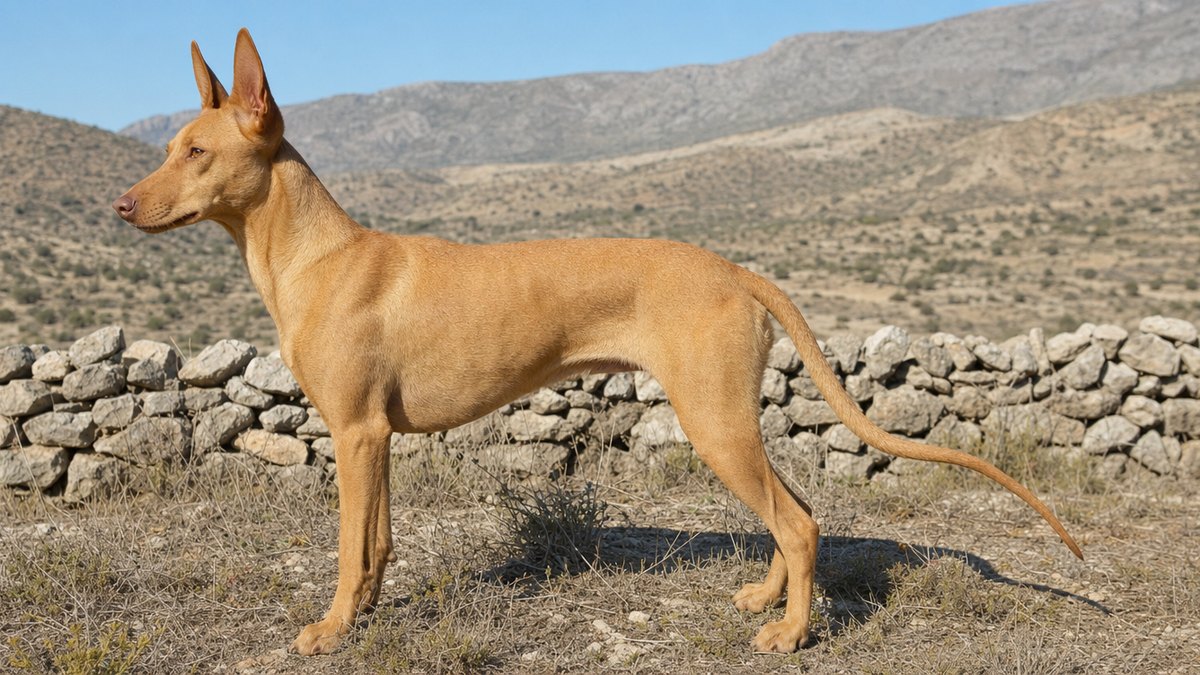
The top-ranking source says so plainly. The warren hounds are a group of Mediterranean rabbit-hunting dog breeds; in Spanish this type is called podenco, in Catalan coniller and in Portuguese podengo. Most have erect ears, a smooth or in some cases wire coat, a slender body and a whip-like tail, and, unlike hounds or sighthounds that rely on one sense, warren hounds tend to work with three: smell, sight and hearing.
The FCI uses the phrase for exactly two breeds
This is the correction this page exists to make, and it is checkable in one document. Reading the FCI's own Group 5 nomenclature on 9 September 2026, the phrase warren hound appears in exactly two breed names.
| Country | FCI name as printed | Number | Validity date |
|---|---|---|---|
| Italy | CIRNECO DELL'ETNA | 199 | 30 October 2016 |
| Portugal | PODENGO PORTUGUES (PORTUGUESE WARREN HOUND-PORTUGUESE PODENGO) | 94 | 4 November 2008 |
| Spain | PODENCO CANARIO (CANARIAN WARREN HOUND) | 329 | 24 June 1987 |
| Spain | PODENCO IBICENCO (IBIZAN PODENCO) | 89 | 26 May 1982 |
| Taiwan | TAIWAN DOG | 348 | 9 June 2015 |
| Thailand | THAI RIDGEBACK DOG | 338 | 26 May 2003 |
English sources routinely call the Ibizan Hound the Ibizan Warren Hound. The FCI does not. Its printed name for breed 89 is PODENCO IBICENCO (IBIZAN PODENCO). The FCI's letter-P index confirms it, listing PODENCO IBICENCO whose record resolves to IBIZAN-PODENCO-89. If you are citing the FCI, cite the name the FCI prints.
The same table proves its own format. Rows read 30 October 2016 as 10/30/2016 and 4 November 2008 as 11/4/2008, and elsewhere in Group 5 there are rows reading 2/28/2018, 11/25/1999, 11/14/2022 and 9/15/2021. Values of 30, 28, 25 and 14 cannot be months, so the first field is the month throughout. That check costs ten seconds and it is the difference between the Ibizan Podenco being recognised in May 1982 and in December 1982.
The two dogs the FCI files somewhere else
Section 7 contains two breeds no warren-hound list includes, the Taiwan Dog and the Thai Ridgeback Dog, and it excludes one that every list does include.
The Pharaoh Hound, FCI 248, sits in Section 6, Primitive type, filed under Malta. Its Maltese name, *Kelb tal-Fenek*, literally means rabbit dog. So the one breed in the whole group whose native name says outright that it hunts rabbits is the one the FCI does not file with the rabbit hunters.
It means warren hound is a descriptive English category, not a registry category. There is no warren-hound group to look a breed up in, no warren-hound standard, no warren-hound studbook and no warren-hound health scheme. Anything presented as a fact about warren hounds in general is a generalisation across breeds that different registries file in different places, and it needs checking against the specific breed you care about.
How many breeds are actually in the group
That depends who is counting, and the range is wide. Wikipedia's enumeration runs to more than twenty entries once size and coat varieties are included, naming among others the Barrocal Algarvio, the Ca Coniller de Menorca, the Charnaigre and the Cirneco di Lampedusa as extinct or probably extinct, the Cretan Hound, the Guicho of Galicia, the Maneto, the Podenco Andaluz in three sizes and three coats, the Podenco Enano del Hierro, the Podenco Orito, the Podenco Palmero, the Podenco Paternero, the Podengo Crioulo of Brazil, the Podengo Galego and the Xarnego Valencia.
Spain alone accounts for a large share. Counting the podenco-type names in the Anexo to Real Decreto 558/2001, seven of Spain's 33 national canine breeds are warren hounds: Ca Eivissenc, Podenco Andaluz, Podenco Canario, Podengo Galego, Podenco Paternino, Podenco Valenciano and Can Guicho o Quisquelo. That is more than a fifth of the country's entire official canine patrimony in one functional group.
Wikipedia's own description flags the exceptions: the Cretan Hound usually has rose ears and a curly or curved tail rather than erect ears and a whip tail, the Barrocal Algarvio is long-haired, and the Podenco Paternino and some Campaneros have a robust, almost mastiff-like body. So even the physical description of a warren hound has named counter-examples inside the group. Treat the erect-eared, smooth-coated, whip-tailed picture as the commonest form rather than as a definition.
Warren hound price in India, and why the question needs rewriting first
There is no warren hound price in India because there is no warren hound to price, and the honest first step is to establish which of the group's breeds a seller is actually offering.
Google's own People Also Ask box for this term asks How much does a Podengo cost?, which is the right instinct applied to the wrong noun: even Podengo covers three sizes and two coats within one FCI breed. We answer that question verbatim in the FAQ below, and the answer is the same shape as this section.
The Indian legal position, which applies to every member of the group
India's import policy for pet dogs and cats is restricted and permitted only with a DGFT authorisation, and the guidance sets out the permitted purposes exhaustively: research by an R&D organisation with a CPCSEA recommendation, internal security by the Defence and Police Forces, a therapy or emotional-support dog on a medical certificate, or a dog already with the applicant as a pet for at least two years where the applicant is transferring residence to India. It then states in two consecutive clauses that dogs for commercial purposes like breeding, as a gift or for other purposes are not allowed to be imported, and that new born puppies are not allowed.
- Import authorisation is applied for under ITC(HS) code 01061900.
- The application goes to the Department of Animal Husbandry, Dairying and Fisheries for a no-objection certificate, then to a monthly inter-ministerial Exim Facilitation Committee, and is issued by DGFT headquarters.
- Entry is only through the airports and seaports of Delhi, Mumbai, Chennai, Hyderabad, Bengaluru and Kolkata and, since October 2024, Kochi airport. The full route is set out in how to import a dog to India.
- An advance no-objection certificate must be obtained from the port's Regional or Quarantine Officer seven days before the dog arrives.
- Applicants without an importer-exporter code may use the permanent IEC number IIHIE0153E.
What to ask a seller who says warren hound
Because the term has no registry meaning, a seller using it has told you nothing verifiable. Three questions convert it into something checkable.
- Which FCI number? If the answer is 94 it is a Portuguese Podengo, if 329 a Podenco Canario, if 89 an Ibizan Podenco, if 248 a Pharaoh Hound and if 199 a Cirneco dell'Etna. If there is no number, there is no FCI breed.
- Which size and coat variety? The Portuguese Podengo alone has three sizes and two coat types inside one FCI standard, each judged separately for the CACIB.
- Which register issued the pedigree, and can it be verified? For a Spanish podenco outside the FCI, the answer would be a regional register, and Spain's national list carries seven podenco-type breeds whose keepers are separately documented.
This site has repeatedly found that an answer engine asked for an Indian price for a rare European breed will state that no Indian price exists and then print one anyway, converted from a euro or dollar asking price at a single rate. The test is arithmetic: divide both ends of any rupee band by the same number, and if the quotient is identical and round at both ends, the band is a conversion rather than an observation. Run that test before you believe any warren hound price you are shown.
India's import rules live in five instruments, not one
India's import rules for a pet dog are not a single document, and the DGFT's own guidance says so by listing the instruments it depends on. It names five: Trade Notice No. 22/2022-23, DGFT Notification No. 3/2015-2020 of 25 April 2016, and Customs Circulars 25/2013 of 1 July 2013, 15/2013 of 8 April 2013 and 94/2002 of 23 December 2002. We read that guidance by downloading the file and extracting it with pypdf rather than trusting a rendering of it: nine pages, 13,596 characters, a real text layer, retrieved at HTTP 200 and 195,481 bytes on 10 September 2026.
The import rules then split into two routes, and conflating them is the commonest error a reader makes. Under the baggage route, a person transferring residence to India after two years of continuous stay abroad may bring up to two pets with no DGFT authorisation, and the guidance states flatly that only cats and dogs can be imported under baggage rules, anchoring the route to Customs Circular 15/2013. Under the authorisation route falls everything else: a stay abroad shorter than two years, an animal not carried as passenger baggage, more than two animals, and every temporary import.
Page one of the DGFT guidance says New born puppies are not allowed. Its own FAQ, later in the same file, says New born puppies of less than 7 months are not to be allowed. A seven-month-old dog is not a newborn by any ordinary reading, so those two sentences describe very different rules inside one document, and we publish the disagreement rather than quoting whichever is convenient. Plan against the stricter reading, allow the two months the same guidance advises before travel, and confirm the current position with the Regional Authority before booking anything.
Neither route opens a lawful path to buying a warren hound abroad and bringing it to India, which is the only conclusion that matters for the price question. Import for commercial purposes such as breeding, import as a gift and import for other purposes are each barred by name, and short-duration import as a tourist is described as generally not permitted.
The cost of ownership for a warren hound in India
The cost of ownership for a warren hound in India would depend entirely on which breed you meant, because the group spans from a Podengo Pequeno under 30 cm to a large Podenco Andaluz working in packs.
We price components from named Indian providers rather than assemble a monthly total, and every figure was checked against the 84.38, 80 and 74 divisors to confirm it is rupee-native rather than a converted dollar price.
| Line | Indian figure | Source |
|---|---|---|
| Puppy core vaccination course | Starts at Rs 6,499 on the national page | Vetic, 50-plus clinics |
| Annual booster | Starts at Rs 3,199 | Vetic |
| Anti-rabies, single dose | Rs 699 | Vetic |
| 9-in-1 DHPPiL, single dose | Rs 899 | Vetic |
| Tick and worm control, monthly | About Rs 1,103 for a 15 to 30 kg dog | NexGard Spectra via Supertails |
| Deworming, per dose | About Rs 125.67 per tablet at one per 10 kg | Drontal Plus via Supertails |
| Grooming, bathing in Delhi | From Rs 934 | Vetic Delhi rate card |
| Municipal registration, Delhi | Rs 500 new, Rs 500 renewal | MCD Delhi |
| Municipal licence, Chennai | Rs 50 | Greater Chennai Corporation |
The identical 9-in-1 vaccine costs Rs 600 at a Goa government veterinary hospital including the certificate, from Rs 899 at a Vetic clinic and from Rs 1,999 through a vet-at-home service that also charges a Rs 699 visit fee. That is 3.3 times on one drug and twelve times on anti-rabies. For any breed in this group, which route you use will matter more than which breed you chose.
The two cost lines this group adds that most breeds do not
First, fencing. These are jumping dogs, and secure high fencing is not optional. Second, and far more important in India, heartworm prophylaxis. The one breed-specific heartworm figure that exists for any member of this group is alarming, and we set it out in the health section below. Monthly prevention for an outdoor-going hound in India is a fixed cost rather than a precaution.
Two Indian municipal facts are worth more than any breed price. Greater Chennai Corporation in Tamil Nadu issued 9,115 pet licences in 2024 at Rs 50 each and runs six municipal pet clinics providing treatment and anti-rabies vaccination free of cost. Delhi's MCD has issued 18,958 pet dog certificates since 2021 and rejected 71 of 1,006 applications in FY 2026-27. In Karnataka and Maharashtra we could find no live municipal page publishing a current pet fee, and we quote none rather than repeat a figure that traces to nothing.
Heat tolerance and the Indian climate
Warren hounds have the best heat prospects of any European group this site has measured against India, and the reason is straightforward: they come from hot places and they are built lean and short-coated.
The group's homelands run from the Canary Islands off the African coast to Sicily, Malta, the Balearics, Portugal and the Spanish Levante. We measured three of those with NASA POWER, echoing the cell elevation on every point and comparing it against the real one, because a cell that has the wrong altitude gives the right answer for the wrong place.
| Place | Cell elevation | Elevation error | Annual mean T2M | Annual mean RH2M | Peak Stull wet bulb |
|---|---|---|---|---|---|
| Puerto del Rosario, Fuerteventura | 25.76 m | +0.76 m | 20.26 C | 77.5 percent | 20.62 C (Aug) |
| Arrecife, Lanzarote | 26.63 m | +5.63 m | 20.11 C | 78.0 percent | 20.60 C (Aug) |
| Las Palmas, Gran Canaria | 109.29 m | +101.29 m | 20.18 C | 78.2 percent | 20.58 C (Aug) |
| Cartagena, Spanish Levante | 123.68 m | +113.68 m | 18.40 C | 69.0 percent | 21.65 C (Aug) |
| Bengaluru | 841.72 m | -78.28 m | 23.74 C | 67.8 percent | 21.86 C (May) |
| Pune | 635.99 m | +75.99 m | 23.86 C | 66.7 percent | 22.97 C (Jun) |
| Hyderabad | 494.59 m | -47.41 m | 26.09 C | 60.2 percent | 23.35 C (Jun) |
| Mumbai | 97.15 m | +83.15 m | 26.77 C | 67.3 percent | 25.77 C (Jun) |
| Chennai | 48.95 m | +42.95 m | 27.94 C | 72.4 percent | 26.11 C (May) |
| Kolkata | 7.35 m | -1.65 m | 25.80 C | 73.8 percent | 27.09 C (Jun) |
Fuerteventura, Lanzarote and Gran Canaria are three separate islands returning three separate cells, and they agree on the annual mean within 0.15 C and on the August wet bulb within 0.04 C. That is corroboration, unlike two nearby points inside one grid square, which is one reading returned twice. The Fuerteventura cell is also the most accurate this project has queried anywhere, at +0.76 m against the real town elevation.
What the numbers mean for a warren hound in India
Read the humidity column first, because it dismantles the usual assumption. The Canary Islands run 77.5 to 78.2 percent annual relative humidity, which is higher than Chennai's 72.4, higher than Kolkata's 73.8 and far higher than Delhi's 45.5 NASA POWER climatology 2001 to 2020…. A Canarian podenco is not going to be shocked by damp air. It comes from damp air.
What differs is heat. The Canary peak wet bulb of 20.62 C sits 5.49 degrees below Chennai's 26.11 C and 6.47 degrees below Kolkata's 27.09 C NASA POWER climatology 2001 to 2020…. Against Bengaluru's 21.86 C the gap is 1.24 degrees, and against Pune's 22.97 C it is 2.35. Cartagena's 21.65 C is within 0.21 C of Bengaluru's peak.
On the Indian plateau, at Bengaluru, Pune and to a lesser extent Hyderabad, a short-coated warren hound is close to its homeland in the terms that matter physiologically. On the coastal plains at Chennai, Mumbai and Kolkata, and on the northern plains at Delhi, it is five to six and a half degrees of wet bulb outside them. Same group, same breed, opposite answers depending on where in India you live, and no page that gives a single country-wide verdict is telling you enough.
Two structural points support the good rating. These are lean, light-framed dogs with large erect ears and a narrow deep chest, which is a heat-shedding shape rather than a heat-trapping one. That shape is what makes the group genuinely heat-tolerant rather than merely heat-experienced, and it is worth being precise about the word: heat-tolerant means the dog sheds heat efficiently, not that it can be worked through an Indian afternoon. No dog in this group can. And large erect ears drain and ventilate far better in an Indian monsoon than folded or pendulous ones do, which removes one of the commonest Indian ear problems before it starts.
Indian law still supplies the operative rule. Second Schedule Part IV paragraph 21(1) bars keeping in outdoor facilities, without the attending veterinary practitioner's written approval, dogs not accustomed to the temperatures prevalent locally. Paragraph 15 requires the temperature within indoor housing to be ambient and comfortable depending on the breeds of dogs housed inside, which puts the assessment on the keeper, breed by breed.
Temperament and household fit across the group
Warren hounds are independent, high-stamina hunting dogs with very strong prey drive, and the household question they raise is the same across the group even though their sizes are not.
We are describing a group rather than a breed, so this section is deliberately general, and every specific claim below is attributed.
The defining functional trait is that these dogs work three senses together rather than one: smell, sight and hearing. That is not a curiosity. It means a warren hound picks up a rabbit through cover, then follows it by eye across open ground, then locates it again by ear, and the whole sequence is self-rewarding.
What that means in an Indian home
- Cats, rabbits and birds are a problem, not a training project. This is a rabbit-hunting group by definition.
- Fencing has to be high and secure, because the group's jumping ability is one of its selected traits.
- Recall is hard, because the pursuit sequence outcompetes it once triggered.
- They are often quiet indoors relative to their outdoor energy, which is a genuine advantage for Indian flats.
- They are independent rather than biddable, which suits an experienced owner and frustrates a novice.
Google's own question box for this term asks Why is Dogo Argentino banned in India?, which tells you that Indian readers arriving here are worried about breed bans. The short answer is that no Indian law in force today bans owning, breeding or selling any dog breed. A Department of Animal Husbandry circular of 12 March 2024 listed breeds it proposed to restrict; the Karnataka High Court quashed it on 10 April 2024, the Delhi High Court set it aside on 16 April 2024, and the Centre told the Bombay High Court on 24 January 2025 that it is not acting on it. Nothing in that list, quashed or otherwise, reached any warren hound by name. But the list carried the bare, undefined word Canario, which on its face reaches Canary Island breeds, so anyone reading a reproduction of it should check what the instrument actually says rather than what a summary says it says.
Size, which is the one thing that genuinely varies
The Portuguese Podengo alone comes in small, medium and large, each in long-and-wire-haired and smooth-and-short-haired forms, and the FCI awards the CACIB separately to each of the six combinations. The Podenco Ibicenco has smooth-haired and rough-haired varieties. Wikipedia's list adds the Podenco Andaluz in three sizes and three coats and the Ca Coniller de Menorca in three sizes and two coats.
A small Podengo Pequeno and a large Podenco Andaluz share a group, a job description and a temperament profile, and share almost nothing about how they fit into a house. Anyone told they are getting a warren hound and not told the size and coat has been told the least informative half of the description.
The AKC's Ibizan Hound record states that Beezers are very athletic and require a lot of exercise. It is not uncommon for an Ibizan to be able to jump five or six feet from a standing position, so a tall, secure fence is the order of the day for owners of this breed. Five to six feet from standing is 1.5 to 1.8 metres, which is taller than most Indian compound gates and most balcony rails. That figure is published for one breed of the group and we do not transfer it to the others, but it is the reason every fencing sentence on this page is worded as a requirement rather than a suggestion.
Training a warren hound, and what the group resists
To train a warren hound you accept that the hunting sequence is not negotiable and build management around it, because a dog that hunts by sight, scent and hearing together has three separate ways to stop listening to you.
There is no group-wide training literature and we will not invent one. What is well established is the functional description, and the training implications follow from it directly.
- Build a recall away from a moving small animal, on a long line, before the dog is six months old rather than after.
- Manage the fence line rather than trusting it, because these dogs jump and were selected to.
- Teach a reliable settle indoors, since the group's indoor calm is real but has to be established rather than assumed.
- Use scent work as the main daily mental load, because it uses the sense the dog most wants to use.
- Socialise heavily between eight and sixteen weeks, which India's rules make convenient by noting that puppy vaccination can start at seven to eight weeks and is usually complete by eighteen.
Indian rules a breeder of any warren hound would meet
Three clauses of the Second Schedule to the 2017 Rules apply to any small imported population, and it is worth knowing which is which because they are frequently miscited.
| Provision | What it says | Correct citation form |
|---|---|---|
| Tail docking and ear cropping | Both prohibited among a list of mutilations, with no breed exception | Second Schedule Part II para 6(8) |
| Creating new breeds | Breeding to create new breeds of dogs or unusual looks strictly prohibited | Second Schedule Part II para 6(9) |
| In breeding | Relatives of the 2nd to 4th grade in straight or side line within the first four generations | Second Schedule Part II para 6(3) |
| Mating age | Female dogs shall not be mated after the age of eight years | Second Schedule Part II para 6(4) |
| Genetic-defect testing | Dogs shall have been tested for genetic defects, including a named but illustrative list | Second Schedule Part III para 8(10) |
| Sale of puppies | Pups less than eight weeks in age are not sold | Rule 8(1)(a) |
The Rules themselves run from 1 to 13 and there is no Rule 14, so anything numbered above 13 is a Second Schedule paragraph rather than a Rule. Rule 6 does exist and is a different provision headed requirements to be met by breeders and establishments; it is the hook that gives the Second Schedule force, which is exactly why the confusion is so easy. Cite the paragraph as a paragraph.
One clause with real teeth for this group specifically
Second Schedule Part III paragraph 8(10) requires that dogs shall have been tested for genetic defects, and the list it gives is expressly including rather than exhaustive: hip dysplasia, progressive retinal atrophy, night blindness, hypothyroidism, entropion, ectropion, overshot, undershot jaw where the incisors do not touch or mesh, wry mouth, two or more missing teeth, and unilateral cryptorchid or full cryptorchid males. Because the word is *including*, a defect is not outside the clause merely for being unlisted, and the primary lens luxation described in the health section below is exactly the kind of testable inherited eye disease a breeder would be expected to have screened for.
Daily exercise requirement
A warren hound needs long daily exercise with a genuine outlet for the hunting sequence, and in India that exercise moves to the cool hours and the outlet has to be something other than live prey.
These are dogs bred for sustained rough-country hunting rather than for short sprints, working three senses at once across broken ground. The requirement is therefore both physical and cognitive, and meeting only one of the two produces a difficult dog.
- Work the dog before sunrise and after dark from March to October on the Indian coastal and northern plains.
- On the plateau, at Bengaluru and Pune, the window is genuinely wider, because the wet-bulb gap is one to two degrees rather than five to six NASA POWER climatology 2001 to 2020….
- Give the nose real daily work: scatter feeding, tracking games, scent boxes.
- Use a long line rather than off-lead freedom anywhere the dog could leave and follow something.
- Carry water on every outing and offer it before the dog asks for it.
Reading the wet bulb rather than the thermometer
Chennai peaks at a Stull wet bulb of 26.11 C in May and Kolkata at 27.09 C in June. Those are monthly means, so individual afternoons run above them. Against a homeland peak of 20.62 C, a Canarian podenco has perhaps five and a half degrees less margin than it evolved with, and no way to tell you it has spent it.
Indian boarding operators warn about generator backup for air conditioning during BESCOM load shedding from March to May. For a lean short-coated dog the risk is lower than for a heavy-coated one, but a kennel run without backup power in an Indian summer is a bad place for any breed.
Grooming and coat care in Indian humidity
Grooming a warren hound is among the lightest jobs in dogs, because most of the group carries a smooth short coat, and the group's large erect ears solve an Indian problem before it starts.
Most warren hounds have a smooth coat, with wire coats in some members and a long coat in the Barrocal Algarvio. Several breeds carry more than one coat variety within one standard: the Portuguese Podengo has long-and-wire-haired and smooth-and-short-haired forms in each of its three sizes, and the Podenco Ibicenco has smooth-haired and rough-haired varieties.
The Indian advantage most breed pages never mention
Large erect ears. A pendulous or folded ear traps warm moist air against the canal, which is why so much Indian ear disease clusters in drop-eared breeds after the monsoon. An erect ear ventilates and drains. For a group defined partly by erect ears, that removes one of the most common Indian veterinary complaints from the routine almost entirely.
- A rubber mitt once a week covers a smooth coat, and a weekly strip covers a wire one.
- Dry to the skin after every monsoon soaking anyway, because thin skin over a lean frame chafes.
- Watch for sunburn on pale-pigmented noses and ear edges, which is a real risk on a thin-coated dog in Indian sun.
- Check nails often, because a dog exercised on tile and paving does not wear them as it would on rock.
- Price grooming from a rate card rather than a package: haircut from Rs 1,359 and bathing from Rs 934 in Delhi, against a wider Rs 300 to Rs 2,000 market range.
Indian studies of dogs tested at veterinary clinics report heavy burdens: 56 of 178 dogs positive for Ehrlichia canis in Odisha, Babesia in 80 of 120 dogs in Kerala with a pre-monsoon peak from March to May, 51 of 442 positive by PCR in Andhra Pradesh, and in West Bengal 72.9 percent of the 584 dogs screened carrying two or more pathogens. Those studies sampled clinically suspected dogs or clinic caseloads rather than random populations, so read them as the burden among dogs tested at veterinary clinics. A short coat makes ticks easy to find, which is genuinely useful, but finding is not preventing.
Health issues, screening and life span
Warren hounds have three specific, measured, screenable health findings that no general page about them carries, and one of the three is the single most important number on this page for an Indian reader.
Because this is a group rather than a breed, we attribute every finding to the breed it was actually measured in, and we do not transfer any of them across the group.
One: heartworm, and why it matters more in India than in Spain
A 2010 survey of Gran Canaria, which the authors describe as a hyperendemic area for canine dirofilariasis, found an overall canine prevalence of 19 percent, and a considerably higher 43 percent in the autochthonous Canarian Warren Hound. The same study found 33 percent prevalence in the island's cats, which is higher than in its dogs, and specific *Dirofilaria immitis* antibodies in 12 percent of the island's human inhabitants. An earlier survey of the same island covering 2000 to 2008 established the trend.
It is not a claim that this breed is genetically susceptible. It is a measurement of an autochthonous working hound that lives outdoors in a warm mosquito climate, against a general dog population that includes indoor pets. India is heartworm-endemic and the same lifestyle produces the same exposure. For any dog of this group kept in India, monthly heartworm prevention is not optional, and the test-before-you-start rule applies as it does everywhere: talk to your nearby vet before beginning a preventive on an untested adult dog.
Two: primary lens luxation, which is testable
Tzouganakis and colleagues investigated the allele frequency of the PLL-causing ADAMTS17 c.1473+1G>A intron 10 mutation in the Portuguese Podengo population in the United Kingdom, across two groups totalling 82 dogs.
| Genotype | Dogs | Share |
|---|---|---|
| Homozygous for the mutant allele, affected genotype | 1 | 1.2 percent |
| Heterozygous, carrier | 13 | 15.8 percent |
| Homozygous wild type, clear | 68 | 83 percent |
| Total tested | 82 | 100 percent |
1 plus 13 plus 68 is 82, exactly the stated total. And the mutant allele frequency the paper reports as 0.09 reproduces from the genotypes: two mutant alleles from the homozygote plus thirteen from the heterozygotes is 15, over 164 alleles in 82 dogs, which is 0.0915. The authors describe that frequency as high and conclude that genetic testing should be considered for each dog prior to breeding. They also tested whether the mutation correlates with short stature and could not establish one, at p = 0.590.
Three: blood type, which matters the day it matters
Spada and colleagues determined Dog Erythrocyte Antigen status in 92 Ibizan Hounds from Ibiza and compared them with previously reported Spanish Greyhounds. Prevalence was DEA 1 in 75 percent, DEA 4 in 98.9 percent and DEA 7 in 25 percent, significantly higher expression of DEA 1 and DEA 7 than in Spanish Greyhounds. The probability of sensitising a recipient to DEA 1 by transfusing untyped blood among Ibizan Hounds was 18.5 percent, and between Ibizan Hounds and Spanish Greyhounds 13.7 percent; the probability of an acute haemolytic reaction on a second incompatible transfusion was 3.5 percent and 1.9 percent respectively.
Because transfusion in India frequently happens on untyped blood, and because a hunting hound is a dog that gets injured. Knowing that three quarters of a breed are DEA 1 positive, and that the sensitisation risk from an untyped first transfusion within the breed is nearly one in five, is the kind of fact that changes a decision in an emergency room. Ask your vet whether typing is available before you need it.
Genetics, and one favourable finding
Suarez and colleagues reported nuclear and mitochondrial analysis of five Canary Island dog breeds including the Canarian Warren Hound, identifying 168 alleles in autosomal microsatellites and 16 mitochondrial haplotypes, with observed heterozygosity from 0.556 to 0.783 and expected from 0.737 to 0.943, and describing three new haplotypes exclusive to particular breeds, of which A33+ is the Canarian Warren Hound's. Blaschikoff and colleagues sequenced whole genomes from 46 unrelated dogs across ten Portuguese native breeds at 9 to 16 times coverage and merged them with 1,770 dogs from 211 breeds, reporting recent admixture between the Algarve Barrocal and the Portuguese Warren Hound.
And one clearly favourable result. An 18-year Canary Islands pathology registry covering 7,362 samples from 5,240 female dogs found that local breeds including the Canary Warren Hound carried among the lowest odds ratios for mammary tumours of any breed studied, against a crossbred reference, in a dataset where 89.2 percent of the tumours diagnosed were malignant.
Two case reports, and a naming trap inside the literature
Two single-case papers exist and are worth knowing about rather than generalising from. Van Tongern and colleagues described cerebellar cortical abiotrophy in two Portuguese Podenco littermates, and Buijtels and colleagues described minimal external masculinisation in an SRY-negative XX male Podenco.
The 2000 paper is titled with Podenco, the Spanish form, for dogs it describes as Portuguese; the Portuguese form is Podengo. That is not pedantry, because it affects retrieval: a search on one spelling misses papers filed under the other. PubMed searches confirm the split, with podenco[tiab] returning 10 records and podengo[tiab] returning 8, and the two sets overlapping only partly.
Screening databases, and the search discipline behind these numbers
OFA holds no warren hound code, because it files the group's members individually. Reading 435 canine breed codes out of OFA's own data-name markup, with Labrador Retriever LR, Bulldog BU and Beagle BE passing as in-document controls, the group appears as PORTUGUESE PODENGO PPG, PORTUGUESE PODENGO PEQUENO PPD, IBIZAN HOUND IH, PHARAOH HOUND PH and CIRNECO DELL ETNA CDE. Searching the fragment PODENC returns zero, so OFA holds no Podenco Canario and no Podenco Andaluz entry at all.
PubMed's title-and-abstract field does not stem plurals, and this group demonstrates it in both directions. "warren hound"[tiab] returns 5 records while "warren hounds"[tiab] returns 0; and podengo[tiab] returns 8 while podengos[tiab] returns 1, that one being a paper already in the singular set. Elsewhere on this site the trap runs the other way, with a singular returning nothing and the plural returning the only two relevant papers. The rule that survives both cases is simple: run singular and plural, and union the results.
On life span we publish nothing group-wide. There is no cohort study covering warren hounds as a category, and averaging across a group whose members range from under 30 cm to large hunting hounds would produce a number describing no actual dog.
Feeding a lean hunting hound in India
Feed a warren hound to a visibly lean condition, because these are deep-chested, light-framed dogs whose correct weight looks thin to an owner used to a Labrador.
That is the single most useful feeding point for the group and it is a shape argument rather than a breed one. A dog with a narrow deep chest, a marked tuck-up and a whip tail is meant to show outline. Owners who feed to hide the ribs on such a dog are overfeeding it.
- Weigh the ration rather than scooping it, because the group spans a very wide size range and a scoop does not.
- Split into two meals and keep both away from the hottest hours of an Indian day.
- Do not exercise hard within an hour either side of a full meal, given the chest depth of the type.
- Assess condition by hand monthly, feeling the ribs under a short coat rather than looking for them.
- Keep water available in more than one place through the Indian summer and refresh it twice daily.
Because this group spans several size classes, use the weight band rather than the breed. NexGard Spectra for a 15 to 30 kg dog works out at about Rs 1,103 per month, and Drontal Plus at about Rs 125.67 per tablet dosed at one per 10 kg. Re-price before committing, because Indian retail figures in this category have gone stale inside days in our own records. And remember that neither product covers heartworm on its own, which for this group is the risk that matters most.
We publish no monthly Indian food total. A monthly kibble figure is arithmetic rather than a quoted price, and computing one for a group that ranges from a Podengo Pequeno to a large Podenco Andaluz would produce a number that describes no dog in it.
Month by month through the first year
The first year of a warren hound is a socialisation and management project, and the milestones worth tracking are legal and behavioural, because no growth curve exists for a group.
We anchor this timeline to Indian rules rather than to any breed's growth data, since the group spans several size classes and a single curve would be meaningless.
| Age | What should be happening | Anchor |
|---|---|---|
| Under 8 weeks | The puppy stays with its dam. India prohibits sale of pups under eight weeks | Rule 8(1)(a), 2017 Rules |
| 7 to 8 weeks | Core vaccination can begin | Second Schedule Part III, 2017 Rules |
| 8 to 16 weeks | Heaviest socialisation window: traffic, surfaces, other dogs, visitors, small animals at a distance | Behavioural |
| By 18 weeks | Core vaccination course usually complete | Second Schedule Part III, 2017 Rules |
| At sale | Every pup sold must be micro-chipped with records maintained | Rule 8(1)(e), 2017 Rules |
| Before breeding | Genetic-defect testing required, on an expressly non-exhaustive list | Second Schedule Part III para 8(10) |
| Over 6 months | Not to be sold without prior sterilisation unless to another licensed breeder | Rule 8(1)(b), 2017 Rules |
| 6 to 12 months | Recall and fence-line management established before adolescent prey drive peaks | Behavioural |
The one screening decision to make in the first year
If your dog is a Portuguese Podengo, or is described as one, the ADAMTS17 test for primary lens luxation is a single DNA test with a clear answer, and the published carrier rate in the UK population is 15.8 percent. Doing it in the first year costs nothing but the test and settles a question that otherwise surfaces as an emergency in middle age. For other members of the group, ask the breeder what the parent club screens for, and treat a breeder who says nothing as having answered.
The warren hound breeds compared, and where each is registered
The most useful comparison across this group is not size or coat but registration, because that is what tells you whether a dog offered under one of these names can be verified at all.
We set out the group's FCI members first, since those are the ones with an international paper trail.
| Breed | FCI name | Number | FCI group and section | Recognised |
|---|---|---|---|---|
| Portuguese Podengo | PORTUGUESE WARREN HOUND-PORTUGUESE PODENGO | 94 | Group 5 Section 7 | 4 November 2008 |
| Podenco Canario | CANARIAN WARREN HOUND | 329 | Group 5 Section 7 | 24 June 1987 |
| Ibizan Hound | IBIZAN PODENCO | 89 | Group 5 Section 7 | 26 May 1982 |
| Cirneco dell'Etna | CIRNECO DELL'ETNA | 199 | Group 5 Section 7 | 30 October 2016 |
| Pharaoh Hound | PHARAOH HOUND | 248 | Group 5 Section 6 | 24 June 1987 |
| Taiwan Dog | TAIWAN DOG | 348 | Group 5 Section 7 | 9 June 2015 |
| Thai Ridgeback | THAI RIDGEBACK DOG | 338 | Group 5 Section 7 | 26 May 2003 |
First, the Pharaoh Hound is in a different section from the rest, even though its Maltese name means rabbit dog. Second, the Taiwan Dog and the Thai Ridgeback are in the same section as the podencos, and neither is a Mediterranean rabbit hound. The FCI's Section 7 is Primitive type Hunting Dogs, which is a wider category than warren hound, and reading it as a warren-hound list gets you two breeds too many and one too few.
| Breed as named in the Anexo | FCI status | State prototype printed? |
|---|---|---|
| Ca Eivissenc (Podenco Ibicenco) | Recognised, FCI 89 | Yes |
| Podenco Canario | Recognised, FCI 329 | Yes |
| Podenco Andaluz | Not recognised | Yes |
| Podengo Galego | Not recognised | Yes |
| Can Guicho o Quisquelo | Not recognised | Yes |
| Podenco Paternino | Not recognised | No, added in 2016 |
| Podenco Valenciano | Not recognised | No, added in 2016 |
Seven of the 33 breeds Spain lists as its national canine breeds are podenco-type warren hounds. That is more than a fifth of the entire official canine patrimony of a country, devoted to one working function. No English page about warren hounds makes that observation, and it is the clearest single statement of how central this group is in Iberia.
And one comparison an Indian reader will want
Of the whole group, the breeds most likely to be genuinely obtainable internationally are the Ibizan Hound and the Pharaoh Hound, both long-established FCI and AKC breeds. Which means that in India, where none of the group has a population, those two are the names most likely to be attached to a dog being sold under the warren hound label. That is a reason to ask for the FCI number and the issuing register rather than to accept the group name.
How the registries classify the group into breed groups
Registries classify these dogs into two different breed groups, and which answer you get depends on which registry you ask. The FCI files every one of them in Group 5, Spitz and primitive types. The American Kennel Club files the same dogs in its Hound Group. That single disagreement is where the English name comes from. Warren hound is a breed-group label borrowed from the hound tradition and applied to dogs the FCI does not classify as hounds at all, which is why looking for a warren-hound section in the FCI nomenclature finds nothing.
| Breed | FCI group and section | AKC breed group or class | AKC recognition |
|---|---|---|---|
| Ibizan Hound | Group 5 Section 7 | Hound Group | 1978 |
| Pharaoh Hound | Group 5 Section 6 | Hound Group | 1983 |
| Cirneco dell'Etna | Group 5 Section 7 | Hound Group | 2015 |
| Portuguese Podengo Pequeno | Inside FCI 94, one breed | Hound Group | 2013 |
| Portuguese Podengo, Medio and Grande | Inside FCI 94, one breed | Miscellaneous Class, assigned to the Hound Group | Miscellaneous since 1 January 2014 |
| Podenco Canario | Group 5 Section 7 | Not held | None |
The FCI holds the Portuguese Podengo as one breed, number 94, in three sizes and two coats judged separately for the CACIB. The AKC splits the same dog in two. The Pequeno is a fully recognised Hound Group breed from 2013 with its own parent club, while the Medio and Grande have sat in the Miscellaneous Class since 1 January 2014, eligible for companion events since 2008, assigned to the Hound Group for whenever they advance, and represented by a separate club. So one registry counts one breed and the other counts two, and a buyer told only Portuguese Podengo has been told which of the three neither.
The AKC opens its Pequeno record Classified as a hound, the alert and playful little Portuguese Podengo Pequeno is a quick, athletic rabbit hunter of ancient lineage, and its exercise section says the breed was bred originally for rabbit hunting. Read those two clauses together and the page writes itself. The job is rabbit hunting; the hound is a filing decision taken afterwards, by one registry, and not shared by the FCI. The AKC also holds no Podenco Canario and no Podenco Andaluz, and its complete breed selector carries Foundation Stock Service entries such as the Calupoh and the Nenets Laika, so that absence is a considered one rather than an index limit.
Mistakes readers make with warren hounds
The commonest mistake is treating warren hound as a breed name, and the second is transferring a health finding from one member of the group to another.
Five errors, and the check that settles each
- Treating it as a breed. No registry holds a breed of this name. The FCI uses the phrase in exactly two of its breed names and has no warren-hound group.
- Calling FCI 89 the Ibizan Warren Hound. The FCI's printed name is IBIZAN PODENCO Federation Cynologique Internationale.
- Reading FCI Group 5 Section 7 as the warren hound list. It contains the Taiwan Dog and the Thai Ridgeback and excludes the Pharaoh Hound.
- Transferring the 43 percent heartworm figure across the group. It was measured in Canarian Warren Hounds on Gran Canaria and describes an exposure profile, not a breed susceptibility.
- Searching one spelling only. podenco[tiab] returns 10 and podengo[tiab] returns 8, and the sets are not the same.
The health-transfer mistake, spelled out
Three of the findings on this page belong to three different breeds, and none of them has been measured in the others.
| Finding | Measured in | Known in the rest of the group? |
|---|---|---|
| Dirofilaria immitis at 43 percent | Canarian Warren Hound, Gran Canaria | No comparable figure published |
| ADAMTS17 lens luxation, allele frequency 0.09 | Portuguese Podengo, United Kingdom | Not tested in the Spanish podencos |
| DEA 1 at 75 percent, DEA 7 at 25 percent | Ibizan Hound, Ibiza | Not tested in the Portuguese or Canarian breeds |
| Haplotype A33+ | Canarian Warren Hound | Exclusive to that breed in the study that found it |
| Low mammary tumour odds | Canary Warren Hound, Canary registry | Not measured elsewhere |
A group page is the easiest place in the world to produce a false statement, because every specific finding about one member reads naturally as a fact about all of them. The five rows above come from five different studies of three different breeds in three different countries. The correct reading of the table is that this group has been studied in patches, and that most of the boxes are simply empty.
One more, about Indian breed bans
Because Google's own question box for this term asks why the Dogo Argentino is banned in India, it is worth being precise. No Indian law in force today bans owning, breeding or selling any dog breed. A Department of Animal Husbandry letter of 12 March 2024 proposed restrictions on a list of breeds, and that list survives publicly only through its reproduction in a customs instruction of 14 March 2024. The Karnataka High Court quashed it on 10 April 2024, the Delhi High Court set it aside on 16 April 2024, and the Centre told the Bombay High Court on 24 January 2025 that it is not acting on it. The list contained four bare, undefined category words, one of which is Canario, and that word reaches Canary Island breeds on its face even though no podenco is named.
Adoption and responsible sourcing
You cannot adopt a warren hound in India, and the group's own rescue situation in Europe is the strongest argument this page can make against buying one anywhere.
There is no Indian population of any member of this group, no Indian breeder and no lawful import route for a purchase. What exists instead, in Spain and Portugal, is a very large surplus of ex-hunting podencos in rescue, which is why the group's rescue organisations are among the most active in European dog welfare.
What people are actually asking for
Google's four questions for this term are What type of breed is a hound dog?, Why is Dogo Argentino banned in India?, How much does a Podengo cost? and Are podenco dogs good pets?. Read together, they describe a reader who is not sure what category they are looking at, is worried about Indian legality, and wants to know whether the dog is a workable pet. This page answers all four, and none of the answers is a price.
- Indian pariah dogs are the closest genuine match on build, heat tolerance, independence and prey drive, and are free to adopt through shelters.
- Indian sighthound types are already adapted to this climate and are available here in a way no podenco is.
- Local shelter adults come with a known temperament, which for a high-prey-drive dog matters far more than any breed description.
- Foster before adopting any high-drive hound, because the fence question and the cat question are answered in practice rather than on paper.
Ask which FCI number the dog is registered under, which register issued the pedigree, and whether the parents were screened for anything. For a Portuguese Podengo, ask specifically whether both parents were tested for the ADAMTS17 mutation, since a single DNA test settles it and the published UK carrier rate is 15.8 percent. For any dog of the group going to a hot country, ask about heartworm status and start prevention on veterinary advice.
A last note on what this page is and is not
This is a group page, and it exists because the group name gets used as though it were a breed name. If you arrived here looking for one specific dog, the individual breed pages linked from this page carry the detail: the Podenco Canario as the Canarian Warren Hound, the Portuguese Podengo as the Portuguese Warren Hound, the Ibizan Hound as the FCI's Ibizan Podenco, and the Pharaoh Hound which the FCI files separately. Each of those has its own standard, its own registry position and its own health picture, and none of them is interchangeable with the others.
Warren hound questions, answered from the registers
What type of breed is a hound dog?
Hound is a working category rather than a breed, and it splits in two. Scent hounds such as the Beagle and the Bloodhound track by nose, and sighthounds such as the Greyhound and the Galgo Espanol course by eye. Warren hounds sit awkwardly in that division, because they work smell, sight and hearing together rather than relying on one, which is why the FCI files them under primitive types rather than under hounds at all.
Why is Dogo Argentino banned in India?
It is not. No Indian law in force today bans owning, breeding or selling any dog breed. A Department of Animal Husbandry letter of 12 March 2024 proposed restricting a list of breeds including the Dogo Argentino, and it survives publicly only through a customs instruction of 14 March 2024. The Karnataka High Court quashed it on 10 April 2024, the Delhi High Court set it aside on 16 April 2024, and the Centre told the Bombay High Court on 24 January 2025 that it is not acting on it.
How much does a Podengo cost?
There is no reliable Indian figure, and the question needs narrowing before it can be answered anywhere. The FCI's Portuguese Podengo, breed 94, comes in three sizes and two coat types, six combinations judged separately, so a single price for a Podengo describes six different dogs. In India none of them has a population, and pet import is restricted with commercial imports, gifts and newborn puppies all barred outright.
Are podenco dogs good pets?
For the right household, yes, and the qualifications are consistent across the group. They are usually quiet and undemanding indoors, low-maintenance to groom and affectionate with their own people. They also have very strong prey drive, jump well enough to leave most gardens, and are independent rather than biddable. They are generally unsuitable in homes with cats, rabbits or birds, and they need secure high fencing rather than good intentions.
What is the warren hound price in India?
There is no warren hound price in India, and there is no warren hound. The name covers a group of Mediterranean rabbit-hunting breeds rather than one breed, no member of the group has an Indian population, and India's pet import policy bars import for commercial purposes, as a gift or for other purposes, and bars newborn puppies. Any Indian listing under this name should be asked for an FCI number.
Which breeds are warren hounds?
The FCI's own Group 5 Section 7 holds six breeds: the Cirneco dell'Etna, the Portuguese Podengo, the Podenco Canario, the Podenco Ibicenco, the Taiwan Dog and the Thai Ridgeback. Only the middle four are Mediterranean rabbit hounds. Wider English lists add the Pharaoh Hound, which the FCI files in Section 6, plus the Podenco Andaluz, the Maneto, the Ca de Conills, the Cretan Hound, the Podengo Galego and many more.
Is the Ibizan Hound a warren hound?
In ordinary English usage yes, and in the FCI's own nomenclature no. The FCI prints breed 89 as PODENCO IBICENCO with the parenthetical IBIZAN PODENCO, not as a warren hound. The two FCI breed names that do contain the phrase are the Portuguese Podengo, breed 94, and the Podenco Canario, breed 329. If you are quoting the FCI, quote the name it prints.
Do warren hounds cope with Indian heat?
Better than most European groups, and the answer differs by Indian city. Their Canary homeland peaks at a Stull wet bulb of 20.62 C and the Spanish Levante at 21.65 C, against Bengaluru's 21.86 C and Pune's 22.97 C, so the plateau is close to home. Chennai at 26.11 C and Kolkata at 27.09 C are five to six and a half degrees above the homeland peak, which is a real gap even for a lean short-coated dog.
What health problems do warren hounds have?
Three specific findings exist, each measured in one breed and none transferable to the others. Dirofilaria immitis at 43 percent in Canarian Warren Hounds on Gran Canaria against 19 percent in the island's dogs overall. A primary lens luxation mutation in the Portuguese Podengo, ADAMTS17, at an allele frequency of 0.09 with 15.8 percent carriers in 82 UK dogs. And Dog Erythrocyte Antigen 1 in 75 percent of 92 Ibizan Hounds, which matters for transfusion.
Do warren hounds need special screening before breeding?
For the Portuguese Podengo, yes and it is a single DNA test: the ADAMTS17 intron 10 mutation causing primary lens luxation was found at an allele frequency of 0.09 across 82 UK dogs, with one affected genotype and thirteen carriers, and the authors conclude genetic testing should be considered for each dog prior to breeding. India separately requires testing for genetic defects at Second Schedule Part III paragraph 8(10), on a list the gazette expressly describes as including rather than exhaustive.
Why does the FCI put the Thai Ridgeback with the podencos?
Because Group 5 Section 7 is not a warren-hound section. Its name is Primitive type Hunting Dogs, which is a wider functional grouping covering primitive hunting dogs anywhere. That section holds the Cirneco dell'Etna, the Portuguese Podengo, the Podenco Canario, the Podenco Ibicenco, the Taiwan Dog and the Thai Ridgeback Dog. Reading it as a warren-hound list gives you two breeds too many and leaves out the Pharaoh Hound, which sits in Section 6.
How many Spanish breeds are warren hounds?
Seven of the thirty-three. Counting the podenco-type names in the Anexo to Real Decreto 558/2001, the Ca Eivissenc, Podenco Andaluz, Podenco Canario, Podengo Galego, Podenco Paternino, Podenco Valenciano and Can Guicho o Quisquelo are all warren hounds. That is more than a fifth of Spain's entire official canine patrimony devoted to one working function, and only two of the seven are recognised by the FCI.
Compare with similar breeds
Warren Hound sits in 1 Bonbeno group. Each one compares it directly against the breeds it is genuinely an alternative to, on the same figures.